Home > Money > Question
Need Expert Advice?Our Gurus Can Help
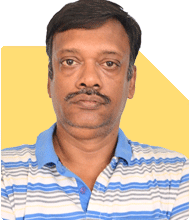
Naveenn

Naveenn Kummar  |233 Answers  |Ask -

Financial Planner, MF, Insurance Expert - Answered on Sep 04, 2025

Naveenn Kummar has over 16 years of experience in banking and financial services.
He is an Association of Mutual Funds in India (AMFI)-registered mutual fund distributor, an Insurance Regulatory and Development Authority of India (IRDAI)-licensed insurance advisor and a qualified personal finance professional (QPFP) certified by Network FP.
An engineering graduate with an MBA in management, he leads Alenova Financial Services under Vadula Consultancy Services, offering solutions in mutual funds, insurance, retirement planning and wealth management.... more
Asked by Anonymous - Aug 21, 2025Hindi

Money

Hi Sir, I’m 24 years old. Currently, my investments are as follows: * PPF – ₹2,78,931 balance, contributing ₹12,500 monthly, maturity on 1st April 2036. * SBI Recurring Deposit – ₹2,40,000 balance, contributing ₹10,000 monthly, maturity around July 2026. * HDFC Fixed Deposit – ₹1,67,891 balance, maturity on 5th May 2026, at 6.60% interest. * HDFC Balanced Advantage Fund – ₹4,500 one-time investment. * ICICI Prudential Gold ETF – SIP of ₹525/month for the last 3 months. Mutual Funds with 10% annual step-up SIPs: * Parag Parikh Flexi Cap – invested ₹9,075 till now, ₹1,575 SIP. * Edelweiss Midcap – invested ₹5,025 till now, ₹525 SIP. * Tata Small Cap – invested ₹5,025 till now, ₹1,575 SIP. * ICICI Prudential Nifty 50 Index – invested ₹1,500 till now, ₹1,500 SIP. Sir, I need your guidance regarding my investment scenario. My goal is to build a corpus of ₹2 Crore (inflation adjusted Rs.6.8 Crore) by the age of 45.

Ans: Dear Sir,

Thank you for sharing your detailed investment portfolio and goals. Considering your age (24 years) and your target of building a ?2 Crore corpus (?6.8 Cr inflation-adjusted) by age 45, here’s an assessment and guidance.

1. Current Investment Snapshot

PPF: ?2.78 L, ?12,500/month, matures 2036

Recurring Deposit (SBI): ?2.4 L, ?10,000/month, matures 2026

HDFC FD: ?1.67 L, matures 2026, 6.6% interest

Mutual Funds: Small one-time and SIP investments with step-up in Parag Parikh Flexi Cap, Edelweiss Midcap, Tata Small Cap, and ICICI Nifty 50 ETF

Observation: Your current equity allocation is relatively small compared to your long-term goal, and most of your corpus is in low-growth instruments (PPF, RD, FD).

2. Goal Analysis

Target: ?2 Cr nominal (~?6.8 Cr with 7% inflation) in 21 years

Current corpus: ~?9–10 L invested in equity and ~?7 L in debt/PPF/FDs

Estimated growth: With current SIPs and step-up, you may fall short of the goal due to low investment amounts in high-growth assets.

3. Recommended Strategy

Increase Equity Allocation:

To achieve ?2 Cr by age 45, you should increase monthly SIP contributions in equity mutual funds significantly, ideally ?25k–30k/month, with step-up aligned with salary growth.

Diversified Portfolio:

Maintain 40–50% in large-cap/flexi-cap funds,

30–40% in mid & small-cap funds for higher growth,

10–20% in balanced or debt-oriented funds for stability.

Long-Term Focus:

Equity investments should be held for the long term, minimizing withdrawals during market volatility.

Continue your PPF and RD investments as safe, debt-oriented instruments, but they alone will not meet your corpus target.

Systematic Step-Up:

Ensure annual SIP increase of 10% or more to leverage salary growth and compounding effect.

Regular Review:

Review your portfolio every 6–12 months to rebalance allocations, track progress toward your goal, and adjust SIP amounts if required.

4. Summary

Your current investment discipline is commendable, but the quantum of equity SIPs is too low for your ambitious goal.

Focus on higher equity exposure, continue safe instruments like PPF/FDs for debt portion, and implement step-up SIPs consistently.

Regular review with a QPFP professional will help you adjust your strategy and stay on track for achieving the ?2 Cr corpus.

Best regards,
Naveenn Kummar, BE, MBA, QPFP
Chief Financial Planner | AMFI Registered MFD
www.alenova.in
https://www.instagram.com/alenova_wealth
DISCLAIMER: The content of this post by the expert is the personal view of the rediffGURU. Users are advised to pursue the information provided by the rediffGURU only as a source of information to be as a point of reference and to rely on their own judgement when making a decision.
Money

You may like to see similar questions and answers below

Ramalingam

Ramalingam Kalirajan  |10870 Answers  |Ask -

Mutual Funds, Financial Planning Expert - Answered on May 31, 2024

Listen
Money
Dear Sir I am 26 years old and started earning 1 year back. My take home salary is little more than 50,000 pm. An amount of Rs.5,600 pm is being deducted from salary by employer on account of EPF and I have also a PPF account having annual deposit of 25,000.00 I have already started investing Rs.5100.00 per month in three different Mutual Funds i.e. Kotak Small Cap Fund, Nippon Large Cap Fund and PP Flexi Cap Fund, each. Now, I am thinking to start investing Rs.5100.00 through SIP in HDFC Balance Dynamic Fund. All the above investments have been started with a very long term view of 25 years since I am planning to retire by the time I reached to 50 years age and my Goal is achieve corpus of atleast 10.00 crores. Kindly suggest, whether :- (1) My current investments (including proposed SIP) are sufficient to achieve the proposed Goal ? (2) Any modification is required in the present investment strategy ? Kindly note that at present I am a bachelor, planing for marriage in next two years and I do not have any requirement of construction/acquisition of permanent asset (residential house) since I am residing in parental home with my parents.
Ans: Your proactive approach to financial planning at the age of 26 is commendable. Building a strong investment portfolio early in life sets a solid foundation for achieving long-term goals. Let’s assess your current investments and proposed plans to ensure you are on the right track to reach your goal of accumulating Rs 10 crores by the age of 50.

Evaluating Your Current Investments
Your monthly income is slightly more than Rs 50,000, with Rs 5,600 deducted for EPF and an additional Rs 25,000 annually in PPF. You are also investing Rs 5,100 per month in three different mutual funds. Let’s break down the effectiveness of these investments.

Employee Provident Fund (EPF)
The EPF is a stable and secure form of savings. It offers tax benefits and a decent rate of return. Over the long term, it will contribute significantly to your retirement corpus.

Public Provident Fund (PPF)
The PPF is another excellent long-term investment with tax benefits. Your annual deposit of Rs 25,000 in the PPF will grow substantially over 25 years due to the power of compounding.

Mutual Funds
Your current investment of Rs 5,100 per month in each of three mutual funds (small cap, large cap, and flexi cap) is well diversified. Small cap funds offer high growth potential, while large cap funds provide stability. Flexi cap funds add flexibility to your portfolio by investing across market capitalizations.

Proposed Investment in HDFC Balanced Dynamic Fund
Adding a balanced dynamic fund to your portfolio is a strategic move. These funds balance equity and debt investments, reducing risk while providing growth. This aligns with your long-term goal and adds a layer of stability to your investments.

Assessing the Adequacy of Your Current Investments
Estimating Future Corpus
To achieve Rs 10 crores by the age of 50, consistent and strategic investments are crucial. Considering the power of compounding and historical market returns, your current investments appear promising. However, regular monitoring and adjustments are necessary to stay on track.

Diversification and Risk Management
Your portfolio is well-diversified across different asset classes and fund categories. This diversification reduces risk and enhances the potential for growth. However, ensure periodic review and rebalancing to maintain the desired asset allocation.

Recommendations for Your Investment Strategy
Continue with Regular SIPs
SIP investments are effective for long-term wealth creation. They mitigate market volatility and inculcate financial discipline. Continue your existing SIPs and proposed investment in the balanced dynamic fund.

Increase Investment Gradually
As your income grows, consider increasing your SIP amounts. Incremental increases in investments will significantly impact your corpus over the long term. Aim to increase your SIPs by at least 10% annually.

Emergency Fund and Insurance
Ensure you have an adequate emergency fund, ideally covering 6-12 months of expenses. Also, consider health and term insurance to protect against unforeseen events. This will safeguard your financial plan and provide peace of mind.

Regular Reviews and Adjustments
Financial planning is not a one-time activity. Regularly review your investments and make necessary adjustments based on market conditions and life changes. Consulting with a Certified Financial Planner can provide professional guidance.

Conclusion
Your current and proposed investments are on a good path towards achieving your goal of Rs 10 crores by age 50. Continue with disciplined investing, regular reviews, and necessary adjustments. Your proactive approach and long-term vision are commendable and will serve you well in your financial journey.

Best Regards,

K. Ramalingam, MBA, CFP,

Chief Financial Planner,

www.holisticinvestment.in

..Read more

Ramalingam

Ramalingam Kalirajan  |10870 Answers  |Ask -

Mutual Funds, Financial Planning Expert - Answered on May 04, 2024

Asked by Anonymous - Apr 10, 2024Hindi
Listen
Money
Hello Experts, I am 35 year old planning to have a corpus of ?5cr in next 20 years. I have 20lacs fixed deposit and invest in below mutual funds via SIPs and also planning to increase it by 5k per month Sukanya Samriddhi : 1.5 Lacs VPF : 1.2 Lacs NPS: 1.5 Lacs (Tier 1 - 75% equity) Monthly SIPs: Parag Parekh flexi cap - 5k UTI Index fund- 2k Kotak Emerging equity : 2k Mirae asset emerging bluechip: 1k SBI Blue chip: 1k Nippon India tax saver :0.5k Axis long term equity :1.5k Axis mid cap: 1k HDFC Mid cap opportunities: 1k Axis small cap fund: 5k
Ans: Given your age and goal of accumulating 5 crores in 20 years, your current investment strategy appears well-diversified. Here are some suggestions to optimize your portfolio:

Review Asset Allocation: Ensure your asset allocation aligns with your risk tolerance and long-term goals. Consider increasing exposure to equity for higher growth potential.
Increase Equity Allocation: Given your long investment horizon, consider gradually increasing your equity allocation to capitalize on potential market growth.
Regularly Monitor Performance: Periodically review the performance of your mutual funds and make adjustments if necessary to ensure they continue to meet your investment objectives.
Consider Tax Planning: Explore tax-efficient investment options such as ELSS funds and NPS Tier 1 for additional tax benefits.
Continue Systematic Investing: Maintain discipline in your SIP investments and consider increasing your SIP amounts over time to accelerate wealth accumulation.
Emergency Fund: Ensure you have an adequate emergency fund in place to cover unexpected expenses, typically equivalent to 3-6 months of living expenses.
By implementing these strategies and staying committed to your long-term financial goals, you can work towards achieving your target corpus of 5 crores in 20 years. Always seek professional advice from a Certified Financial Planner to tailor your investment strategy to your specific needs and circumstances.

..Read more

Ramalingam

Ramalingam Kalirajan  |10870 Answers  |Ask -

Mutual Funds, Financial Planning Expert - Answered on May 10, 2024

Asked by Anonymous - May 05, 2024Hindi
Listen
Money
Hi sir, I am 33.5 years old and want to built a corpus of 5 crore by the age of 40. My current investment are: Mutual funds - 37 lac Fixed deposits of around 50 lac PPF - 25 lac Gold and Gold bonds - 20 lac Indian stocks - 1 lac mainly HDFC US stocks - 7 lac mainly etfs This is my and my wifes combines portfolio For next 6.5 years we will be investing in Sip - 2 lac per month PPF - 25k per month Sovereign Gold - 12g every year Nifty 50 etf niftybees 30k per month only days when market is down. Please guide me.
Ans: It's impressive to see your proactive approach towards building wealth and securing your financial future. With a well-diversified portfolio and a systematic investment plan in place, you're on the right track to achieve your goal of reaching a corpus of 5 crore by the age of 40.

Your current investment mix demonstrates a balanced approach, encompassing various asset classes like mutual funds, fixed deposits, PPF, gold, and stocks, both domestic and international. Diversification is key to managing risk and maximizing returns over the long term.

Continuing with your SIPs, PPF contributions, and sovereign gold investments will further strengthen your portfolio's foundation. SIPs in equity mutual funds provide exposure to the equity market, offering the potential for higher returns over time. PPF and sovereign gold investments offer stability and act as a hedge against market volatility.

Your strategy of investing in Nifty 50 ETF during market downturns is commendable as it allows you to capitalize on market opportunities and accumulate units at lower prices, potentially enhancing your long-term returns.

Active vs. Passive Management:
While you've included both actively managed mutual funds and index funds (ETFs) in your portfolio, it's important to understand the differences between the two. Actively managed funds aim to outperform the market through active stock selection and portfolio management, while index funds passively track a specific index's performance.

Benefits of Actively Managed Funds:
Actively managed funds offer the potential for higher returns compared to index funds, especially during market inefficiencies or when skilled fund managers can identify lucrative investment opportunities. Additionally, active management allows for flexibility in portfolio construction and adjustments based on market conditions.

Potential Disadvantages of Index Funds:
While index funds offer low expense ratios and broad market exposure, they may lack the potential for outperformance compared to actively managed funds. Additionally, they're subject to tracking error, which occurs when the fund's performance deviates from the index it's designed to replicate.


Regularly review your portfolio's performance and rebalance as needed to ensure alignment with your financial goals and risk tolerance. Consider consulting with a Certified Financial Planner (CFP) to fine-tune your investment strategy and address any specific concerns or objectives you may have.

Stay disciplined with your savings and investment approach, and continue to monitor market trends and economic indicators. With patience, perseverance, and prudent financial management, you're well-positioned to achieve your target corpus by the age of 40.

Best Regards,
K. Ramalingam, MBA, CFP,
Chief Financial Planner,
www.holisticinvestment.in

..Read more

Ramalingam

Ramalingam Kalirajan  |10870 Answers  |Ask -

Mutual Funds, Financial Planning Expert - Answered on Oct 31, 2025

Money
Hello Sir. I am 42 year old NRI, working and living in UAE. I am regular investor in MF for past 4 year and already accumulated 27 Lakh in Investment with Current Value of 36.8 Lakh. I wanted to have 20 crore in my retirement corpus and 2 Crore for my Daughter Higher studies. Time line is next 20 year. My current SIP as follow: 1.HDFC Mid Cap Fund - 5000 Per Month 2. Nippon India Multicap Fund - 5000 Per Month 3. SBI Contra Fund - 5000 Per Month 4. Nippon India Small Cap Fund - 5000 Per Month 5. Kotak Multicap Fund - 5000 per Month 6. Samco Active Momentum Fund - 5000 Per Month 7. Mirae Asset Midcap Fund - 5000 Per Month 8. AXIS Silver ETF FOF - 5000 Per Month 9. HDFC Flexi Cap Fund - 10000 per month 10. Tata Gold ETF Fund of Fund - 5000 Per month 11. ICICI Prudential Passive Multi Asset FOF - 5000 Per Month 12. Nippon India MNC Fund - 5000 Per month 13. Aditya Birla Multi Asset Allocation Fund - 10000 Per month 14. HDFC Retirement Fund Equity Saving Fund - 10000 Per Month Total Mutual Fund SIP - 85000 Per Month ULIP Plans: 1. HDFC Life Click 2 Invest - FLEXI Cap & NIFty 500 Multi factor 50 Fund - 10000 Per month for next 5 year - 15 Year Policy - for my daughter Education. 2. Canara HSBC Ulip - Nifty 500 Multi Factor 50 Fund - 15000 per month for next 7 year - 20 Year Policy - for my daughter education. Besides 15000 per month recurring deposit to have lumpsum to investment for major market investment. Please let me know if it is enough to achieve my goal. I am planning to retire at the age of 65. My employer gratitude is currently at 35 lakh.
Ans: You have displayed excellent financial discipline. At age 42, you already have structured investments, clear goals, and consistent savings. Your focused SIP approach and clarity of purpose reflect deep commitment toward long-term wealth creation and family security. This foundation can easily grow into the life goals you have mentioned—Rs 20 crore for retirement and Rs 2 crore for your daughter’s education. With a few refinements, your portfolio can achieve these goals efficiently and with better control over risks.

» Understanding your current financial position

You are an NRI earning and living in the UAE, which gives you a tax advantage on your income. You already have Rs 36.8 lakh in investments and contribute Rs 85,000 per month through SIPs. Besides this, you have ULIPs worth Rs 25,000 per month and a recurring deposit of Rs 15,000 per month. That totals Rs 1,25,000 per month in structured savings. You also have an employer gratuity of Rs 35 lakh.

Your total investment experience of four years shows maturity in handling risk. You have used mutual funds well to accumulate wealth. The growth from Rs 27 lakh invested to Rs 36.8 lakh current value is a healthy outcome. It indicates proper fund selection and market discipline.

However, there are areas where your plan can become more efficient. You can simplify overlapping funds, review the ULIPs, and strengthen the asset allocation balance.

» Goal clarity and time horizon

You have two main goals:

Retirement corpus of Rs 20 crore in the next 20 years.

Education fund of Rs 2 crore for your daughter in the same period.

Both goals are long-term and growth-oriented. This means equity will remain your main wealth builder. The timeline gives you enough compounding years to benefit from equity markets. However, to meet both goals smoothly, your portfolio structure should avoid duplication and maintain clarity between goals.

» Review of existing mutual fund structure

Your current mutual fund portfolio has 14 SIPs across multiple categories—mid cap, small cap, multi cap, contra, flexi cap, multi asset, and thematic. While this shows diversification, it also brings overlap and dilution. You currently invest in too many funds with similar mandates. This can make your portfolio harder to monitor.

Having many funds doesn’t always mean higher diversification. It can reduce focus and cause repetition of the same stocks across schemes. Mid cap and multicap funds already offer diversification. You hold multiple funds in both categories. This duplication can lead to inefficiency.

Your portfolio has strong exposure to active equity funds, which is good. Actively managed funds are better than index funds because they use research-based stock selection. Fund managers actively manage risk and take advantage of sector opportunities. Index funds simply replicate the market and ignore valuation. They also cannot handle market corrections smartly. For long-term wealth creation, active funds remain superior.

However, you should trim the number of schemes and focus on fewer, high-conviction funds that align with each goal. Around six to eight funds are enough for your corpus size and SIP amount.

» Review of gold and multi-asset exposure

You invest in silver and gold ETFs and multi-asset funds. While diversification across asset classes is good, overexposure to precious metals can limit growth. Gold and silver are protection assets. They preserve value but do not grow fast. You have three different funds related to gold and multi-asset exposure. These can be merged or reduced to one or two.

Keeping 10% to 15% in such assets is enough. The rest should continue in equity to build the corpus. Multi-asset funds already include gold exposure, so adding separate gold ETFs duplicates that exposure.

» ULIP review and recommendation

You hold two ULIP plans for your daughter’s education—Rs 10,000 and Rs 15,000 per month. ULIPs combine insurance with investment, but they usually carry higher costs. Fund options are limited, and returns often trail good mutual funds. ULIPs also restrict flexibility in switching or withdrawing.

Since these ULIPs are still early, you may consider surrendering them and redirecting future premiums to mutual funds. You can use the existing balance once the lock-in period ends. By shifting that Rs 25,000 monthly contribution to well-chosen equity mutual funds, you will gain higher compounding potential and full liquidity. For long-term education goals, mutual funds are more efficient than ULIPs.

» Asset allocation and diversification

A proper asset allocation ensures smooth growth and safety. Based on your risk profile and goals, a suggested mix is:

70% in equity mutual funds (large, mid, and flexi-cap).

20% in hybrid and multi-asset funds.

10% in gold or fixed-income instruments for stability.

This blend gives growth from equity and protection from hybrid or debt allocation. Within equity, keep a balance between large-cap, mid-cap, and flexi-cap funds. Avoid having more than two funds in each category.

» SIP allocation and simplification plan

Currently, you are investing Rs 85,000 across too many schemes. Streamlining will make tracking easier and returns more efficient. You can consolidate the funds to around seven or eight strong performers spread across equity, hybrid, and gold categories. This approach will reduce overlap and simplify rebalancing later.

Do not invest directly without review. Direct mutual funds appear to save cost, but the absence of professional monitoring often leads to mistakes. Investors in direct plans may exit at wrong times or choose funds based on short-term past returns. That affects long-term wealth creation.

Investing through regular plans with a Certified Financial Planner ensures expert monitoring, periodic rebalancing, and emotional discipline during market volatility. The value of such guidance often outweighs the cost difference.

» Expected growth and corpus sufficiency

With your current monthly investments of Rs 1.25 lakh and existing corpus, your goals are within reach if you maintain consistency for the next 20 years. Equity mutual funds, managed actively and reviewed regularly, can deliver sufficient long-term growth to reach Rs 20 crore and Rs 2 crore goals.

However, inflation and currency movement should also be considered since you are an NRI. You may need to increase your SIP by 5% to 10% every year as income grows. This step-up approach will provide a margin of safety.

Avoid pausing or withdrawing SIPs even during market corrections. Those phases often give the best accumulation advantage.

» Emergency fund and liquidity for NRIs

As an NRI, maintaining liquidity in both India and UAE is important. Keep at least six months’ living expenses in an NRE savings account or liquid fund for emergencies. In India, you may also maintain a small emergency reserve in a low-volatility liquid mutual fund. This ensures easy access in case of family needs or sudden travel.

Do not use long-term investments for emergency purposes. That disrupts compounding and goal progress.

» Protection through insurance and family cover

Your investment portfolio is strong, but wealth protection is equally vital. You should have term insurance coverage of at least 15 times your annual income. This ensures your daughter’s education and family lifestyle remain secure in case of unforeseen events.

Buy a separate term plan in India rather than mixing insurance with ULIPs. Health insurance should cover both you and your family in India as well as UAE, depending on residence status. Add a top-up policy to cover major hospitalisation costs.

Avoid endowment or money-back policies. They offer poor returns and reduce flexibility. Term insurance and health cover are pure protection tools.

» Gratuity and retirement integration

Your current employer gratuity of Rs 35 lakh is a good foundation for your retirement fund. You can let it grow as a separate component. When you finally retire, you can integrate that amount with your retirement corpus. Do not use it for consumption before retirement.

At age 65, your corpus should provide inflation-protected income for 25 to 30 years. Systematic withdrawals from mutual funds will give more flexibility and tax efficiency than annuities. Annuities often provide low returns and restrict access to capital. A diversified mutual fund-based withdrawal plan allows better control and legacy planning.

» NRI-specific considerations

As an NRI investor, continue investing through NRE/NRO accounts in mutual funds that accept NRI participation. Keep track of FATCA and KYC compliance regularly. Use online tracking to monitor all folios in one place.

Ensure nomination and estate planning are updated for all investments. NRIs sometimes miss this step, which creates legal complications later. Create a Will in India covering all Indian assets. This helps your family access them without delay.

Also check your repatriation options for maturity proceeds when you eventually move back to India or retire elsewhere. Keep your financial records and folios in joint names where possible.

» Behavioural and psychological readiness

You have already shown great discipline by staying invested for four years and maintaining SIPs across multiple funds. Continue this patience. Avoid chasing short-term performance or frequent fund changes.

Market cycles will test your emotions, but the investor who stays consistent gains the most. Always remember that time in the market matters more than timing the market.

Increase your SIPs slowly with income growth. Even a small annual increment makes a big difference over 20 years. Focus on long-term goals, not short-term fluctuations.

» Final Insights

Your overall financial foundation is strong. You already save a significant part of your income, invest systematically, and have a clear vision for your daughter’s education and your retirement. With small refinements—simplifying mutual funds, reducing duplication, exiting ULIPs after lock-in, and maintaining annual reviews—you can easily reach your Rs 20 crore and Rs 2 crore goals within the next 20 years.

Continue your disciplined SIPs, step them up yearly, and keep your protection and liquidity in place. Avoid complex or unregulated products. Stay with actively managed mutual funds through Certified Financial Planner-guided regular plans.

You are on the right path. Just keep the discipline, patience, and clarity that you already have. Your financial independence and your daughter’s future education goals are well within reach.

Best Regards,

K. Ramalingam, MBA, CFP
Chief Financial Planner,

www.holisticinvestment.in

https://www.youtube.com/@HolisticInvestment

..Read more

Latest Questions
Ravi

Ravi Mittal  |676 Answers  |Ask -

Dating, Relationships Expert - Answered on Dec 04, 2025

Asked by Anonymous - Dec 02, 2025Hindi
Relationship
My married ex still texts me for comfort. Because of him, I am unable to move on. He makes me feel guilty by saying he got married out of family pressure. His dad is a cardiac patient and mom is being treated for cancer. He comforts me by saying he will get separated soon and we will get married because he only loves me. We have been in a relationship for 14 years and despite everything we tried, his parents refused to accept me, so he chose to get married to someone who understands our situation. I don't know when he will separate from his wife. She knows about us too but she comes from a traditional family. She also confirmed there is no physical intimacy between them. I trust him, but is it worth losing my youth for him? Honestly, I am worried and very confused.
Ans: Dear Anonymous,
I understand how difficult it is to let go of a relationship you have built from scratch, but is it really how you want to continue? It really seems to be going nowhere. His parents are already in bad health and he married someone else for their happiness. Does it seem like he will be able to leave her? So many people’s happiness and lives depend on this one decision. I think it’s about time you and your BF have a clear conversation about the same. If he can’t give a proper timeline, please try to understand his situation. But also make sure he understands yours and maybe rethink this equation. It really isn’t healthy. You deserve a love you can have wholly, and not just in pieces, and in the shadows.

Hope this helps

...Read more

Mayank

Mayank Chandel  |2562 Answers  |Ask -

IIT-JEE, NEET-UG, SAT, CLAT, CA, CS Exam Expert - Answered on Dec 04, 2025

Career
My son will be appearing for JEE Main & JEE Advanced 2026 and will participate in JoSAA Counselling 2026. I request clarification regarding the GEN-EWS certificate date requirement for next year. I have already applied for an EWS certificate for current year 2025, and the application is under process. However, I am unsure whether this certificate will be accepted during JoSAA 2026, or whether candidates will be required to submit a fresh certificate for FY 2026–27 (issued on or after 1 April 2026). My concern is that if JoSAA requires a certificate issued after 1 April 2026, students will have only 1–1.5 months to complete the entire procedure, which is difficult considering normal government processing timelines. Also, during current JEE form filling, students are asked to upload a GEN-EWS certificate issued on or after 1 April 2025, or an application acknowledgement. This has created confusion among parents regarding which year’s certificate will finally be valid at the time of counselling. I request your kind guidance on: Which GEN-EWS certificate will be accepted for JoSAA Counselling 2026 — a certificate for FY 2025–26 (issued after 1 April 2025), or a new certificate for FY 2026–27 (issued after 1 April 2026)?
Ans: Hi
You need not worry about the EWS certificate. Even if you apply for the next year's certificate on 1 Apr 2026, the second session of JEE MAINS will still be held, followed by JEE ADVANCED, which will be held in May. JOSAA starts in June. so you will have 2 months in hand for fresh EWS certificate.

...Read more

DISCLAIMER: The content of this post by the expert is the personal view of the rediffGURU. Investment in securities market are subject to market risks. Read all the related document carefully before investing. The securities quoted are for illustration only and are not recommendatory. Users are advised to pursue the information provided by the rediffGURU only as a source of information and as a point of reference and to rely on their own judgement when making a decision. RediffGURUS is an intermediary as per India's Information Technology Act.

Close  

You haven't logged in yet. To ask a question, Please Log in below
Login

A verification OTP will be sent to this
Mobile Number / Email

Enter OTP
A 6 digit code has been sent to

Resend OTP in120seconds

Dear User, You have not registered yet. Please register by filling the fields below to get expert answers from our Gurus
Sign up

By signing up, you agree to our
Terms & Conditions and Privacy Policy

Already have an account?

Enter OTP
A 6 digit code has been sent to Mobile

Resend OTP in120seconds

x