Need Expert Advice?Our Gurus Can Help
Agricultural Land Sale: Tax Implications and LTCG Benefit?

Ramalingam Kalirajan |10893 Answers |Ask -Follow
Mutual Funds, Financial Planning Expert - Answered on Feb 04, 2025
Ramalingam Kalirajan has over 23 years of experience in mutual funds and financial planning.
He has an MBA in finance from the University of Madras and is a certified financial planner.
He is the director and chief financial planner at Holistic Investment, a Chennai-based firm that offers financial planning and wealth management advice.... more
He has an MBA in finance from the University of Madras and is a certified financial planner.
He is the director and chief financial planner at Holistic Investment, a Chennai-based firm that offers financial planning and wealth management advice.... more
Asked by Anonymous - Aug 22, 2024Hindi
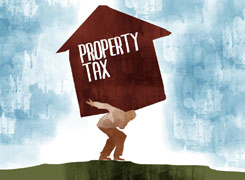
I purchased a agricultural land in 2019 & now selling it in small residential plots. I'm also incurring cost of developing the area like electricity, road etc. This sale may go beyond FY 2024-25 as there is not much demand. I'll be investing this sale proceeds in buying another residential plot in city & taking some loan in current FY for this new plot. I want to understand that what would be my tax liability in this case, can I get LTCG tax benefit by buying residential plot?. If I dont buy any plot or property then also what would be my tax liability for selling agricultural land in plots.
Ans: Your tax liability depends on several factors, including the nature of the land, how it is being sold, and how you reinvest the proceeds. Let's break it down step by step.
1. Taxation on Sale of Agricultural Land
The tax treatment of your sale depends on whether your land qualifies as a rural agricultural land or urban agricultural land under the Income Tax Act.
Rural Agricultural Land: If the land is in a rural area (outside notified municipality limits or beyond a specified population threshold), it is not considered a "capital asset" under the Income Tax Act. No capital gains tax is applicable.
Urban Agricultural Land: If the land is within a municipality or close to it, it is considered a capital asset. Capital gains tax will apply.
Since you are developing the land and selling it in small plots, tax treatment will depend on whether the sale is considered a capital gain or business income.
2. Is the Sale Taxed as Capital Gains or Business Income?
Capital Gains Tax: If you are simply selling agricultural land as a capital asset, long-term capital gains (LTCG) apply if held for more than 2 years. Otherwise, short-term capital gains (STCG) apply.
Business Income Tax: Since you are incurring costs on development (roads, electricity, etc.) and selling it in smaller plots, the tax department may treat this as a business activity rather than a capital gain transaction. In that case:
Profit from sale will be taxed as business income at slab rates instead of LTCG.
Expenses on development (electricity, roads, etc.) can be deducted from your total income.
No LTCG tax benefits will apply since it is treated as business income.
If the tax department considers it capital gains, here’s how it will be taxed:
3. If Taxed Under Long-Term Capital Gains (LTCG)
LTCG Calculation:
Sale Price – Indexed Cost of Purchase – Indexed Cost of Development = LTCG
LTCG is taxed at 20% with indexation benefit.
Exemptions Available:
Section 54F: If you use full sale proceeds to buy a residential house, you can claim full exemption. However, buying a residential plot alone does not qualify for exemption unless you construct a house within 3 years.
Capital Gains Bonds (Section 54EC): You can invest up to Rs 50 lakhs in NHAI/REC bonds within 6 months to get exemption.
4. If Taxed Under Short-Term Capital Gains (STCG)
If the land is considered urban agricultural land and sold within 2 years, the gain is added to your income and taxed as per income tax slab rates.
No exemption under Section 54F or 54EC is available.
5. If Taxed as Business Income
Profits are taxed as per your income slab (which could go up to 30% plus cess).
Development costs like roads, electricity, etc., are deductible.
No LTCG exemptions apply (like 54F or 54EC).
6. What Happens if You Do Not Buy Any Property?
If considered LTCG, you will pay 20% tax with indexation on gains.
If considered business income, you will pay slab rate tax on profits.
If considered STCG, it is added to your total income and taxed at slab rates.
7. Your Case – Tax Planning Considerations
Since you are selling in plots and incurring development costs, there is a high chance that this will be treated as business income rather than LTCG.
Buying a residential plot alone does not qualify for LTCG exemption. You need to construct a house within 3 years for exemption.
If you want to reduce tax liability, consider investing in capital gain bonds (54EC) or a ready-to-move residential house (54F).
If the sale extends beyond FY 2024-25, capital gains will be split across years, allowing tax planning opportunities.
Final Thoughts
Confirm whether the land is rural or urban to determine if capital gains tax applies.
Understand how the tax department may classify your sale—as capital gains or business income.
If it's business income, reinvesting in a residential plot won’t give tax benefits.
If you want to save tax, either buy a house (not just a plot) or invest in capital gains bonds.
Let me know if you need more clarity on specific points.
Best Regards,
K. Ramalingam, MBA, CFP,
Chief Financial Planner,
www.holisticinvestment.in
https://www.youtube.com/@HolisticInvestment
1. Taxation on Sale of Agricultural Land
The tax treatment of your sale depends on whether your land qualifies as a rural agricultural land or urban agricultural land under the Income Tax Act.
Rural Agricultural Land: If the land is in a rural area (outside notified municipality limits or beyond a specified population threshold), it is not considered a "capital asset" under the Income Tax Act. No capital gains tax is applicable.
Urban Agricultural Land: If the land is within a municipality or close to it, it is considered a capital asset. Capital gains tax will apply.
Since you are developing the land and selling it in small plots, tax treatment will depend on whether the sale is considered a capital gain or business income.
2. Is the Sale Taxed as Capital Gains or Business Income?
Capital Gains Tax: If you are simply selling agricultural land as a capital asset, long-term capital gains (LTCG) apply if held for more than 2 years. Otherwise, short-term capital gains (STCG) apply.
Business Income Tax: Since you are incurring costs on development (roads, electricity, etc.) and selling it in smaller plots, the tax department may treat this as a business activity rather than a capital gain transaction. In that case:
Profit from sale will be taxed as business income at slab rates instead of LTCG.
Expenses on development (electricity, roads, etc.) can be deducted from your total income.
No LTCG tax benefits will apply since it is treated as business income.
If the tax department considers it capital gains, here’s how it will be taxed:
3. If Taxed Under Long-Term Capital Gains (LTCG)
LTCG Calculation:
Sale Price – Indexed Cost of Purchase – Indexed Cost of Development = LTCG
LTCG is taxed at 20% with indexation benefit.
Exemptions Available:
Section 54F: If you use full sale proceeds to buy a residential house, you can claim full exemption. However, buying a residential plot alone does not qualify for exemption unless you construct a house within 3 years.
Capital Gains Bonds (Section 54EC): You can invest up to Rs 50 lakhs in NHAI/REC bonds within 6 months to get exemption.
4. If Taxed Under Short-Term Capital Gains (STCG)
If the land is considered urban agricultural land and sold within 2 years, the gain is added to your income and taxed as per income tax slab rates.
No exemption under Section 54F or 54EC is available.
5. If Taxed as Business Income
Profits are taxed as per your income slab (which could go up to 30% plus cess).
Development costs like roads, electricity, etc., are deductible.
No LTCG exemptions apply (like 54F or 54EC).
6. What Happens if You Do Not Buy Any Property?
If considered LTCG, you will pay 20% tax with indexation on gains.
If considered business income, you will pay slab rate tax on profits.
If considered STCG, it is added to your total income and taxed at slab rates.
7. Your Case – Tax Planning Considerations
Since you are selling in plots and incurring development costs, there is a high chance that this will be treated as business income rather than LTCG.
Buying a residential plot alone does not qualify for LTCG exemption. You need to construct a house within 3 years for exemption.
If you want to reduce tax liability, consider investing in capital gain bonds (54EC) or a ready-to-move residential house (54F).
If the sale extends beyond FY 2024-25, capital gains will be split across years, allowing tax planning opportunities.
Final Thoughts
Confirm whether the land is rural or urban to determine if capital gains tax applies.
Understand how the tax department may classify your sale—as capital gains or business income.
If it's business income, reinvesting in a residential plot won’t give tax benefits.
If you want to save tax, either buy a house (not just a plot) or invest in capital gains bonds.
Let me know if you need more clarity on specific points.
Best Regards,
K. Ramalingam, MBA, CFP,
Chief Financial Planner,
www.holisticinvestment.in
https://www.youtube.com/@HolisticInvestment
Asked on - May 06, 2025 | Answered on May 06, 2025
Hello Sir,
I asked my another question couple of months back but somehow now its disappeared. I wanted to know more in details that if I dont incur any expenses on sale of agriculture land (like road, sewer, electricity, park etc.) in plots then what are my options. e.g. I purchased agriculture land in Rs. 40 Lacs in 2019 & total sum I received 1 Cr. in different small plots sale during 2024-25 & 2025-26 & I purchased another plot (or a house) in residential colony of 80 Lacs in 2025-26 then is there any tax liability on me in any of F.Y. where I sold plots? If yes then how much tax & in which year?
Thanks
Ans: Yes, there can be tax liability, depending on how the transaction is treated:
If treated as Capital Gains (land held as investment, no development done):
Land held since 2019, so Long-Term Capital Gain (LTCG) applies.
Sale Amount: Rs. 1 crore (in F.Y. 2024–25 and 2025–26)
Purchase Price: Rs. 40 lakh (indexed)
Capital Gains: Rs. 60 lakh (approx., after indexation)
If you buy a residential house (not just a plot) worth Rs. 80 lakh in 2025–26:
You can claim full exemption under Section 54F, since all sale proceeds are reinvested.
No tax liability in that case.
If you only buy a residential plot (without constructing a house within 3 years):
No exemption under Section 54F.
You will pay 20% LTCG tax on indexed gains in proportion to sale in each year.
E.g.,
If Rs. 50 lakh was received in 2024–25 → LTCG tax applies in that year.
If Rs. 50 lakh was received in 2025–26 → tax applies in that year.
Please note:
Buying only a plot won’t save tax. You must construct a house within 3 years for exemption.
Let me know if you want help estimating indexed cost or LTCG year-wise.
Best Regards,
K. Ramalingam, MBA, CFP,
Chief Financial Planner,
www.holisticinvestment.in
https://www.youtube.com/@HolisticInvestment
If treated as Capital Gains (land held as investment, no development done):
Land held since 2019, so Long-Term Capital Gain (LTCG) applies.
Sale Amount: Rs. 1 crore (in F.Y. 2024–25 and 2025–26)
Purchase Price: Rs. 40 lakh (indexed)
Capital Gains: Rs. 60 lakh (approx., after indexation)
If you buy a residential house (not just a plot) worth Rs. 80 lakh in 2025–26:
You can claim full exemption under Section 54F, since all sale proceeds are reinvested.
No tax liability in that case.
If you only buy a residential plot (without constructing a house within 3 years):
No exemption under Section 54F.
You will pay 20% LTCG tax on indexed gains in proportion to sale in each year.
E.g.,
If Rs. 50 lakh was received in 2024–25 → LTCG tax applies in that year.
If Rs. 50 lakh was received in 2025–26 → tax applies in that year.
Please note:
Buying only a plot won’t save tax. You must construct a house within 3 years for exemption.
Let me know if you want help estimating indexed cost or LTCG year-wise.
Best Regards,
K. Ramalingam, MBA, CFP,
Chief Financial Planner,
www.holisticinvestment.in
https://www.youtube.com/@HolisticInvestment
Asked on - Jun 04, 2025 | Answered on Jun 04, 2025
Hello Sir,
Thanks for clarifying things. So as per your explanation, selling a big land in small parts(different plots of different size) in rural area (area is outside the limit of Nagar Nigam) & buying a single property(plot) in urban area doesn't attract any penalty or tax liability if my purchase is within the amount of LTCG. Here condition is (in case of buying a plot) that I should build a house on plot within 3 yrs of buying the same. It doesn't matter that sale & purchase is happening in 2 different FYs. Am I correct, please confirm.
I've 2 more small queries:
1. If I built a single room on new plot with boundary of plot, is it good enough?
2. How the LTCG will be calculated for each FY as I purchased land & paid full amount in 2019 but it is partially sold in FY 2024-25 & 2025-26. I mean how property's base value be considered in 2 separate FY when property is sold.
Thanks
Ans: Yes, you're correct. Selling rural agricultural land (outside Nagar Nigam limits) has no capital gains tax—it's not a capital asset under the Income Tax Act. So no LTCG, even if sold in parts.
1. A single room with boundary wall may not qualify as a “residential house” under Section 54F unless it’s clearly habitable. Better to construct a proper house.
2. If the land was urban, LTCG in each FY would be based on proportionate sale amount minus proportionate indexed cost from 2019 for the sold portion.
Best Regards,
K. Ramalingam, MBA, CFP,
Chief Financial Planner,
www.holisticinvestment.in
https://www.youtube.com/@HolisticInvestment
1. A single room with boundary wall may not qualify as a “residential house” under Section 54F unless it’s clearly habitable. Better to construct a proper house.
2. If the land was urban, LTCG in each FY would be based on proportionate sale amount minus proportionate indexed cost from 2019 for the sold portion.
Best Regards,
K. Ramalingam, MBA, CFP,
Chief Financial Planner,
www.holisticinvestment.in
https://www.youtube.com/@HolisticInvestment
DISCLAIMER: The content of this post by the expert is the personal view of the rediffGURU. Users are advised to pursue the information provided by the rediffGURU only as a source of information to be as a point of reference and to rely on their own judgement when making a decision.
MoneyReply


You may like to see similar questions and answers below

Mihir Tanna |1090 Answers |Ask -Follow
Tax Expert - Answered on Jul 20, 2023



T S Khurana |536 Answers |Ask -Follow
Tax Expert - Answered on Aug 10, 2024

T S Khurana |536 Answers |Ask -Follow
Tax Expert - Answered on Sep 21, 2024


Ramalingam Kalirajan |10893 Answers |Ask -Follow
Mutual Funds, Financial Planning Expert - Answered on Jun 04, 2025


Latest Questions
Ramalingam Kalirajan |10893 Answers |Ask -Follow
Mutual Funds, Financial Planning Expert - Answered on Dec 15, 2025

Ramalingam Kalirajan |10893 Answers |Ask -Follow
Mutual Funds, Financial Planning Expert - Answered on Dec 15, 2025


Radheshyam Zanwar |6746 Answers |Ask -Follow
MHT-CET, IIT-JEE, NEET-UG Expert - Answered on Dec 15, 2025


Ramalingam Kalirajan |10893 Answers |Ask -Follow
Mutual Funds, Financial Planning Expert - Answered on Dec 15, 2025


Ramalingam Kalirajan |10893 Answers |Ask -Follow
Mutual Funds, Financial Planning Expert - Answered on Dec 15, 2025


Ramalingam Kalirajan |10893 Answers |Ask -Follow
Mutual Funds, Financial Planning Expert - Answered on Dec 15, 2025



Samraat Jadhav |2508 Answers |Ask -Follow
Stock Market Expert - Answered on Dec 15, 2025

Ramalingam Kalirajan |10893 Answers |Ask -Follow
Mutual Funds, Financial Planning Expert - Answered on Dec 15, 2025


Reetika Sharma |425 Answers |Ask -Follow
Financial Planner, MF and Insurance Expert - Answered on Dec 15, 2025


Radheshyam Zanwar |6746 Answers |Ask -Follow
MHT-CET, IIT-JEE, NEET-UG Expert - Answered on Dec 15, 2025