Home > Money > Question
Need Expert Advice?Our Gurus Can Help
Reetika

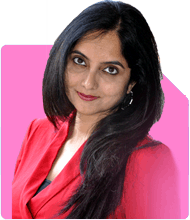
Reetika Sharma  |590 Answers  |Ask -

Financial Planner, MF and Insurance Expert - Answered on Jan 28, 2026

Reetika Sharma is a certified financial planner and CEO of F-Secure Solutions.
She advises clients about investments, insurance, tax and estate planning and manages high net-worth individual’s portfolios.
Reetika has an MBA in finance from the Institute of Chartered Financial Analysts of India (ICFAI) and an engineer degree from NIT, Jalandhar.
She also holds certifications from the Financial Planning Standards Board India (FPSB), Association of Mutual Funds in India (AMFI) and Insurance Regulatory and Development Authority of India (IRDAI).... more
Deepak Question by Deepak on Jan 12, 2026Hindi
Money

how to plan for saving at age 49

Ans: Hi Deepak,

Please share more details such as income, expenses, family, current assets & liabilities, financial goals etc for me to help you.

Best Regards,
Reetika Sharma, Certified Financial Planner
https://www.instagram.com/cfpreetika/
Asked on - Jan 28, 2026 | Answered on Jan 31, 2026
Income 150000 per month. Monthly expenses 30000, EMI for home loan ( 50 lakhs pending) - 49470, personal loan 37230. I can start investing 30000 to 35000 per month
Ans: Hi,

It is goos that you want to start saving now, it is never too late to start the same. It is important to start investing at your age to live a comfortable life. First let us look at some details:
1. Make sure to have an emergency fund of 7-8 lakhs in liquid funds or in FD. It will take care of your expenses and EMI's in uncertain situations.
2. Have adequate term and health insurance for yourself and family.
3. Start investing 35000 per month in the form of mutual funds to generate 1 crores at your age of 60. Consistent investment in equity and balanced funds can secure your future.

If you are new to this, you should connect woth a professional to start your journey.
Hence consult a a professional Certified Financial Planner - a CFP who can guide you with exact funds to invest in keeping in mind your age, requirements, financial goals and risk profile. A CFP periodically reviews your portfolio and suggest any amendments to be made, if required.

Let me know if you need more help.

Best Regards,
Reetika Sharma, Certified Financial Planner
https://www.instagram.com/cfpreetika/
DISCLAIMER: The content of this post by the expert is the personal view of the rediffGURU. Users are advised to pursue the information provided by the rediffGURU only as a source of information to be as a point of reference and to rely on their own judgement when making a decision.
Money

You may like to see similar questions and answers below

Ramalingam

Ramalingam Kalirajan  |11047 Answers  |Ask -

Mutual Funds, Financial Planning Expert - Answered on May 18, 2024

Listen
Money
Saving plan at age of 41
Ans: Crafting a Savings Plan at 41
At 41, it's important to have a solid savings plan in place to secure your financial future. Let's outline a comprehensive strategy tailored to your needs.

Assessing Financial Goals
Short-Term Needs
Identify short-term financial goals such as emergency funds, upcoming expenses, and debt repayment.

Long-Term Objectives
Consider long-term goals such as retirement planning, children's education, and wealth accumulation.

Establishing a Budget
Track Expenses
Analyze your current spending habits to identify areas where you can cut back and redirect funds towards savings.

Set Priorities
Allocate a portion of your income towards savings, ensuring you prioritize essentials while still allowing for discretionary spending.

Building an Emergency Fund
Financial Safety Net
Set aside funds equivalent to 3-6 months of living expenses to cover unforeseen emergencies like medical expenses or job loss.

High Liquidity
Keep your emergency fund in easily accessible and liquid accounts such as savings accounts or liquid mutual funds.

Retirement Planning
Retirement Corpus
Calculate the amount you'll need for a comfortable retirement and determine how much you need to save each month to reach that goal.

Retirement Accounts
Explore retirement savings options such as Employee Provident Fund (EPF), Public Provident Fund (PPF), or National Pension System (NPS) for tax benefits and long-term growth.

Education Planning
Children's Education
Estimate the cost of your children's education and start investing in education-focused instruments like mutual funds or education savings plans.

Systematic Investment Plans (SIPs)
Consider SIPs in mutual funds with a suitable risk profile and investment horizon to gradually build a corpus for education expenses.

Review and Adjust
Regular Monitoring
Regularly review your savings plan to ensure it remains aligned with your financial goals and make adjustments as needed.

Stay Disciplined
Maintain discipline in sticking to your savings plan, even during times of economic uncertainty or market volatility.

Conclusion
By following a structured savings plan tailored to your financial goals and lifestyle, you can build a strong financial foundation and work towards achieving long-term prosperity and security.

Best Regards,

K. Ramalingam, MBA, CFP,

Chief Financial Planner,

www.holisticinvestment.in

..Read more

Ramalingam

Ramalingam Kalirajan  |11047 Answers  |Ask -

Mutual Funds, Financial Planning Expert - Answered on May 23, 2024

Money
How to plan for saving at age of 41.
Ans: Comprehensive Financial Planning for a 41-Year-Old
At 41, planning for your financial future is crucial. You have a substantial number of working years ahead, allowing ample time to build a robust retirement corpus. This guide will help you develop a comprehensive plan, aligning with your financial goals, risk tolerance, and investment horizon.

Understanding Your Financial Goals
At this stage, it’s essential to clearly define your financial goals. These might include retirement planning, children's education, and maintaining a comfortable lifestyle. Setting specific, measurable, achievable, relevant, and time-bound (SMART) goals will guide your investment strategy.


Your proactive approach to financial planning at 41 is commendable. This diligence and foresight will significantly enhance your financial security and future comfort.

Importance of Increasing Savings and Investments
To build a substantial retirement corpus, increasing your savings and investments is critical. Allocating a higher portion of your income towards savings will leverage the power of compounding, accelerating your corpus growth.

Diversification: The Key to Risk Management
Diversification is essential for managing risk and optimizing returns. By spreading your investments across various asset classes, such as equities and debt, you can balance risk and reward effectively.

Equity Mutual Funds for Long-Term Growth
Equity mutual funds are ideal for long-term growth. They invest in stocks, which can offer high returns over time. Actively managed equity funds, in particular, can outperform the market due to the expertise of fund managers.

Disadvantages of Index Funds
Index funds passively track a market index and lack flexibility. They may underperform in volatile markets as they cannot adapt to changes. Actively managed funds have the potential to capitalize on market opportunities for better returns.

Debt Mutual Funds for Stability
Debt mutual funds provide stability to your portfolio. They invest in fixed-income securities and are less volatile than equity funds. This stability is essential for balancing the higher risks associated with equities.

Hybrid Funds for Balanced Exposure
Hybrid funds invest in both equities and debt, offering a balanced risk-reward ratio. They provide moderate returns and stability, making them suitable for investors seeking a balanced portfolio.

Benefits of Regular Funds Over Direct Funds
Regular funds, accessed through a Mutual Fund Distributor (MFD) with a Certified Financial Planner (CFP) credential, come with professional advice. This guidance is crucial for navigating complex financial markets and achieving your goals. Direct funds require self-management, which can be challenging without expert knowledge.

Importance of a Certified Financial Planner
A Certified Financial Planner (CFP) can offer tailored advice based on your financial goals and risk tolerance. Their expertise helps in creating a customized investment strategy, ensuring your path to a secure retirement is clear and achievable.

Increasing Your SIP Contributions
Consider increasing your SIP contributions as your income grows. Allocating an additional amount each month can significantly boost your retirement corpus over time. This adjustment leverages the power of compounding to accelerate your investment growth.

Portfolio Review and Rebalancing
Regularly reviewing and rebalancing your portfolio is essential to maintain alignment with your financial goals. This process involves adjusting your asset allocation to ensure optimal performance and risk management.

Emergency Fund and Insurance Coverage
Maintaining an emergency fund is crucial for financial security. This fund provides a financial cushion for unexpected expenses, ensuring you don’t need to dip into your investments. Adequate insurance coverage protects against unforeseen events, safeguarding your financial health.

Efficient Tax Planning
Effective tax planning can maximize your investment returns. Utilize tax-saving instruments and strategies to minimize your tax liability. For instance, investing in Equity-Linked Savings Schemes (ELSS) can provide tax benefits under Section 80C of the Income Tax Act.

Setting Realistic Expectations
Investing is a long-term endeavour. It’s essential to set realistic expectations for returns and remain patient. Market fluctuations are normal, and staying invested during volatile periods is key to achieving your financial goals.

Staying Informed About Market Trends
Keeping yourself informed about market trends and economic developments helps you make better investment decisions. Regularly educate yourself on financial markets and investment strategies to adapt your plan as needed.

Seeking Professional Guidance
While self-learning is valuable, professional guidance from a Certified Financial Planner (CFP) is essential. A CFP can provide personalized advice, ensuring your investments are well-managed and aligned with your goals.

Systematic Withdrawal Plans (SWPs)
A Systematic Withdrawal Plan (SWP) can provide regular income during retirement. SWPs allow you to withdraw a fixed amount periodically, ensuring a steady cash flow while keeping your capital invested.

Conclusion
Your goal of securing a financially stable future is attainable with disciplined investing, diversification, and professional guidance. By following the strategies outlined in this guide and regularly reviewing your progress, you can achieve financial independence and secure your future.

Best Regards,

K. Ramalingam, MBA, CFP

Chief Financial Planner

www.holisticinvestment.in

..Read more

Ramalingam

Ramalingam Kalirajan  |11047 Answers  |Ask -

Mutual Funds, Financial Planning Expert - Answered on May 22, 2025

Asked by Anonymous - May 18, 2025
Money
I am 28 M single, have a salary of 40k,how would I go about making a saving so that I am settled at 35-38 years of age.I am not fully knowledgeable of stocks and other options, personal spending is around 20k per month out of the 40k on the salary.
Ans: It's commendable that you're thinking ahead about your financial future. At 28, with a monthly income of Rs. 40,000 and personal expenses around Rs. 20,000, you have a solid foundation to build upon. Let's explore a comprehensive approach to help you become financially settled by the age of 35-38.

Understanding Your Current Financial Position
Income and Expenses: You have a surplus of Rs. 20,000 each month after expenses.

Age Advantage: Being 28 gives you a 7-10 year horizon to plan and invest.

Financial Goals: Aiming to be financially settled by 35-38 is a realistic and achievable goal.

Building a Strong Financial Foundation
Emergency Fund: Aim to save at least 3-6 months' worth of expenses, i.e., Rs. 60,000 to Rs. 1,20,000.

Health Insurance: Ensure you have adequate health coverage to protect against unforeseen medical expenses.

Life Insurance: Consider term insurance if you have dependents or plan to have in the future.

Strategic Savings and Investments
Systematic Investment Plans (SIPs): Start with a monthly SIP of Rs. 5,000 to Rs. 10,000 in diversified mutual funds

Public Provident Fund (PPF): Invest Rs. 1,500 to Rs. 2,000 monthly for long-term, tax-free returns.

Recurring Deposits (RDs): Allocate Rs. 2,000 to Rs. 3,000 monthly for short-term goals.

Enhancing Financial Literacy
Educational Resources: Read books and articles on personal finance to deepen your understanding.

Workshops and Seminars: Attend financial planning workshops to gain practical insights.

Consult a Certified Financial Planner: Seek professional advice to tailor a plan specific to your goals.

Monitoring and Adjusting Your Plan
Regular Reviews: Assess your financial plan every 6 months to ensure alignment with your goals.

Adjust Contributions: Increase your investment amounts as your income grows.

Stay Informed: Keep abreast of market trends and adjust your portfolio accordingly.

Final Insights
By consistently saving and investing wisely, you can achieve financial stability by 35-38. Starting early and staying disciplined are key to building wealth over time. Remember, financial planning is a continuous process that adapts to your evolving life circumstances.

Best Regards,

K. Ramalingam, MBA, CFP,

Chief Financial Planner,

www.holisticinvestment.in

https://www.youtube.com/@HolisticInvestment

..Read more

Ramalingam

Ramalingam Kalirajan  |11047 Answers  |Ask -

Mutual Funds, Financial Planning Expert - Answered on Jul 09, 2025

Money
What should savings fir retirement at 40
Ans: The plan should focus on future income, risk protection, and wealth growth.

Understanding Your Retirement Goal
Retirement at 40 means long years without salary.

You need income for the next 40–45 years.

Monthly expenses will rise due to inflation.

You must replace your current income with passive income.

Corpus must handle lifestyle, emergencies, and major goals.

Identifying Future Expenses
Start with current monthly expenses.

Multiply them by inflation to estimate future needs.

Consider:

Household needs

Child education

Family medical costs

Travel and lifestyle

Emergency funds

All must be included in your retirement budget.

Estimating Corpus Requirement
Your corpus should last at least 40 years.

You need to generate monthly income from this.

Income must be inflation-adjusted each year.

Passive income must match or exceed expenses.

Building the Right Asset Allocation
Mix of asset classes is very important.

Each asset plays a different role in your plan.

You need to choose:

Equity funds for growth

Debt funds for stability

Liquid funds for emergencies

Why You Should Avoid Index Funds
Index funds simply copy the index.

They do not beat the market.

They follow passive approach with no strategy.

No fund manager is monitoring actively.

In down markets, they fall just like the index.

Active funds can protect downside and grow better.

Fund managers in active funds take smart calls.

They shift allocation when market moves.

This flexibility helps you grow wealth safely.

Why Direct Plans May Hurt Your Growth
Direct plans have no expert support.

You are on your own during market falls.

No help in choosing right category or fund.

No help in reviewing or switching funds.

Most investors panic and withdraw wrongly.

Regular funds give access to Certified Financial Planner.

You get timely help, rebalancing, and reviews.

MFD with CFP can customise your investments.

Long-term success needs expert involvement.

Peace of mind also matters in retirement planning.

Creating Monthly Income Stream Post-Retirement
SIP builds wealth while you earn.

SWP gives income once you retire.

Equity mutual funds help with long-term growth.

Debt and hybrid funds help with monthly payouts.

Proper mix will ensure safety and returns.

Do not depend only on growth assets.

Shift partly to income-generating funds as you retire.

Retirement Without Real Estate Dependency
Real estate does not give regular income.

Selling property has issues like black money, delays.

Rental yields are low and uncertain.

Property may not sell when you need money.

So, retirement should not depend on real estate.

Use only surplus property sale for large needs.

Build core retirement income from mutual funds.

Key Things to Do Before Retiring at 40
Build liquid corpus of at least Rs. 3–4 crores.

Create emergency fund of Rs. 10–15 lakhs.

Buy family health insurance of Rs. 25–30 lakhs.

Buy term insurance till child turns independent.

Set aside money for child’s education and marriage.

Choose regular mutual fund route via MFD with CFP.

Invest monthly through SIPs in diversified funds.

Increase SIP amount with salary growth.

Track all investments once every 6 months.

Take advice from Certified Financial Planner regularly.

Tax Rules for Mutual Fund Withdrawals
Equity fund LTCG above Rs. 1.25 lakhs taxed at 12.5%.

STCG taxed at 20%.

Debt fund gains taxed as per income slab.

Plan redemptions smartly to reduce tax burden.

Use SWP to avoid sudden big tax.

Spread withdrawals across financial years.

Risk Coverage for a Retiree
Retirement needs risk-free income.

Do not invest in risky stocks.

Avoid F&O, crypto, or unregulated products.

Keep 20% in conservative hybrid funds.

Shift equity to safer assets in phases.

Buy long-term health insurance now.

Renew policies without gap every year.

Keep emergency fund in liquid mutual fund.

Asset Allocation Suggestions (No Scheme Names)
Equity mutual funds: 60% (growth)

Hybrid funds: 25% (balanced income)

Debt funds: 10% (stability)

Liquid funds: 5% (emergency)

This is a broad mix. You must personalise it based on risk.

Mistakes to Avoid While Planning Early Retirement
Overestimating future rental or sale value of property.

Investing in real estate for retirement income.

Ignoring health insurance till later years.

Investing only in one type of asset.

Ignoring inflation while calculating future needs.

Relying on direct funds without expert guidance.

Holding index funds expecting higher returns.

Retirement Plan Should Be Flexible
Review goals once every year.

Make adjustments based on market changes.

Shift from equity to hybrid as you age.

Make your plan future-proof for 40 years.

Stay disciplined during market corrections.

Avoid emotional decisions based on short-term events.

Always invest with a clear purpose.

Retirement at 40 with Child Needs Planning
Child education is expensive now.

It will become costlier after 10–15 years.

Set up separate fund for education and marriage.

Do not use retirement fund for these goals.

Start SIP for child-related needs separately.

Make sure this fund grows consistently.

Choose moderate-risk funds for this goal.

If You Have LIC, ULIP or Investment Plans
If you are holding such policies, review them carefully.

Most of them give low returns with high lock-in.

Check IRR and maturity benefits.

Consider surrendering them if long term return is low.

Reinvest proceeds into mutual funds.

Use regular funds with help of Certified Financial Planner.

Get long-term support and better growth.

Why Expert Help Matters in Retirement Plan
Retirement planning is a 30–40 year plan.

DIY investors often take wrong steps.

Choosing the wrong fund affects returns.

Not reviewing plan at right time creates shortfall.

CFP can help you stay on track.

MFD provides access to correct funds.

Together, they build right strategy for your needs.

Finally
Retiring at 40 is possible, but needs serious preparation.

You must build a strong, diversified, liquid retirement corpus.

Avoid real estate dependency and index funds.

Do not invest in direct plans without expert support.

Every investment should generate stable, tax-efficient income.

Health cover, term cover, and emergency buffer must be ready.

Track your plan and adjust every year with expert advice.

Stay disciplined and focused. Peaceful early retirement can be achieved.

Best Regards,
K. Ramalingam, MBA, CFP,
Chief Financial Planner,
www.holisticinvestment.in
https://www.youtube.com/@HolisticInvestment

..Read more

Latest Questions
Ramalingam

Ramalingam Kalirajan  |11047 Answers  |Ask -

Mutual Funds, Financial Planning Expert - Answered on Feb 27, 2026

Asked by Anonymous - Feb 27, 2026Hindi
Money
I am a corporate IT employee working as a senior development lead in an MNC with 17 years of experience. I am 40 years old with 6 years old son. My current portfolio includes the following. 1. PF balance is 26 lakhs 2. company shares worth 19lakhs. 3. mutual funds worth 1.4 crores. 4. I have life insurance policy worth 20 lakhs as asset 5. NPS corpus 14 lakhs 6. Home worth 1 crores I have a home loan outstanding of rupees 63 lakhs for 12 years and EMI of which is 68000 rupees with 8.5 percent ROI. My gross salary is 3.75 lakhs and in-hand salary is Rs 221000. I get a bonus of 15 percent of my gross salary and a annual raise of 7 percent. My basic salary is Rs. 128000. I do mutual fund SIP of 1 lakh a month. Other savings in each month includes or deducted are Pf 31k, NPS 17k and company share 16k. . I want to retire in 3/5 years. Also keep in mind that : 1. My current Monthly expenses of 50k is excluding loan emi. 2. I will keep SIP 1 lakhs and will not prepay home loan till I retire or suggest should I prepay or grow my Mutual fund instead. 3. The retirement expenses should rise as per inflation and a bit more for lifestyle upgrade. 4.Also I have a term insurance of 50lakhs which I will continue post retirement aswell. 5. I am planning to settle my home loan outstanding with my gratuity, company share and full and final settlement when I leave company. Assuming my monthly current expenses as 50k and can be increased with inflation and lifestyle upgrade and having own home, Suggest if I can retire in 3 or 5 years taking into consideration of my loan outstanding liability and 1 kid of 6 years old's future expenses like study and marriage and my retirement expenses ?
Ans: You have built a very strong financial base at 40. Your savings rate is excellent. Your discipline in SIP, PF, NPS and equity exposure shows maturity. Very few people at your age reach this level of corpus. That is a big positive.

Now let us evaluate this calmly and practically.

» Your Current Financial Position

– Mutual Funds: Rs 1.4 crore
– PF: Rs 26 lakhs
– NPS: Rs 14 lakhs
– Company Shares: Rs 19 lakhs
– Home Value: Rs 1 crore
– Outstanding Loan: Rs 63 lakhs
– Monthly Expense (excluding EMI): Rs 50,000
– EMI: Rs 68,000

Your total financial assets are strong. But retirement decision depends on cash flow sustainability, not just asset size.

» Retirement in 3 Years – Is It Practical?

If you retire at 43:

– Your son will be only 9 years old.
– You will have at least 40+ years of post-retirement life.
– Education costs will rise sharply after 5–10 years.
– Inflation will steadily increase your lifestyle expenses.

Today expense is Rs 50k. In 10–12 years it can easily double or more. Also lifestyle upgrade is expected, as you rightly mentioned.

Even if you clear the home loan using gratuity, shares and settlement:

– Your investible corpus will reduce.
– You will depend fully on investments for income.
– No salary cushion.
– Child education peak years not yet started.

Retiring in 3 years looks aggressive and financially tight.

» Retirement in 5 Years – More Realistic?

If you work till 45:

– Your MF corpus may grow significantly with continued Rs 1 lakh SIP.
– PF and NPS will also grow.
– Bonus and annual increment will add strength.
– You will reduce risk of sequence of return shock.

By 45, if your corpus grows meaningfully and loan is closed, early retirement becomes more realistic.

Even then, you must evaluate whether corpus can generate inflation-adjusted income for 40+ years without erosion.

» Home Loan – Prepay or Continue?

Current loan rate: 8.5%

You are investing heavily in equity mutual funds.

Long-term equity returns historically beat 8.5%. So from a pure mathematical view, continuing SIP instead of prepaying makes sense.

But retirement planning is not only maths. It is about risk comfort.

If your plan is to close loan using:

– Gratuity
– Company shares
– Final settlement

That is a reasonable strategy. It preserves compounding now and gives mental freedom at retirement.

I would not suggest aggressive prepayment now if retirement corpus growth is priority.

» Child Education & Marriage Planning

Your son is 6.

– Higher education likely in 12 years.
– Marriage maybe 20+ years later.

Education cost inflation is higher than normal inflation.

You must mentally earmark a separate corpus within your mutual funds for:

– Graduation
– Post graduation (if abroad, very high cost)

This amount should not be mixed with retirement corpus.

If this segregation is not done, early retirement becomes risky.

» Risk in Company Shares

You have Rs 19 lakhs in company shares.

– This is concentration risk.
– Your salary and wealth both depend on same company.

Before retirement, gradually reduce this exposure and diversify into professionally managed mutual funds.

» Term Insurance

You mentioned:

– Rs 50 lakh term cover
– Rs 20 lakh life policy (investment type)

At 40 with dependent child and non-working spouse, Rs 50 lakh term cover is on the lower side.

If you retire early, income stops. But responsibility remains.

You may need to review total risk cover adequacy before retirement decision.

» Retirement Income Sustainability

Today expense Rs 50k.

After loan closure and lifestyle upgrade, assume:

– Rs 70k–80k in near future
– With inflation, it may cross Rs 1.5–2 lakh per month in 20–25 years.

Retirement corpus must survive:

– Market volatility
– Inflation
– Child education withdrawal
– Medical inflation
– 40+ years longevity risk

Early retirement at 43 needs a very large cushion. At present, it appears borderline unless markets perform very strongly.

» What I Would Suggest

– Target retirement at 45 instead of 43.
– Continue Rs 1 lakh SIP strictly.
– Do not prepay loan now.
– Close loan fully at exit using settlement and shares.
– Reduce company stock concentration slowly.
– Separate child education corpus mentally and structurally.
– Review term cover adequacy.
– Keep 2 years expenses in safe instruments before retirement to manage market volatility.

» Important Behavioural Question

Ask yourself:

Do you want complete retirement?
Or financial independence with option to consult, freelance, part-time?

At 45, shifting to lower stress income option may be wiser than full retirement.

That reduces pressure on corpus.

» Final Insights

– You are financially disciplined and ahead of many peers.
– Retirement in 3 years looks risky.
– Retirement in 5 years can be possible if markets support and corpus grows strongly.
– Child education and longevity are the biggest risk factors.
– Loan closure at retirement is a good psychological move.
– Focus on building bigger margin of safety.

Early retirement is possible for you. But it should be done with strength, not stress.

Best Regards,

K. Ramalingam, MBA, CFP,
Chief Financial Planner,
www.holisticinvestment.in

https://www.youtube.com/@HolisticInvestment

...Read more

Dr Dipankar

Dr Dipankar Dutta  |1856 Answers  |Ask -

Tech Careers and Skill Development Expert - Answered on Feb 26, 2026

Ramalingam

Ramalingam Kalirajan  |11047 Answers  |Ask -

Mutual Funds, Financial Planning Expert - Answered on Feb 26, 2026

Money
Hi Ramalingam Sir, Very fond of your guidance. I`ve invested in ICICI Prudential Guranteed Income Plan with PPT of 10 Years & Policy Term is 11 Years. The Yearly Premium is 5 lakhs with Guaranteed Early Income i.e which started from 2nd year onwards is 1.19 Lacs. After 11th year Guaranteed Yearly Income will be 6.38 Lacs. I started this Policy in 2022. Very soon I realized that this is not worth of investing my money. I decided to stop Premium after 2 years which made my Policy as Paid up status which means all benefits are reduced but Policy is Active. I changed myself as I did mistakes in Past (by taking this policy) and now I read each clause very carefully. Now in this case If i surrender, the Surrender value is calculated based on Guaranteed factor X Total premium paid - Income already Paid. Now currently Surrender value is 2.9 Lacs as GV factor is 50%. This factor will improve Gradually with time and by 9th year it will went to 90%. I want to Surrender but now will incur heavy loss (approx. 4.8 lacs) ( to me while in 9th year at least I`ll get 90% of my Premiums back. So pl. advice what is right approach as when should i think for Surrender. As of now by God grace I`m not in any financial emergency. Further is my understanding correct that SV will rise with time. Thanks in advance for your guidance.
Ans: It is very good that you have started reading your policy papers so closely now. Most people do not take the time to understand the fine print, but you have already taken a big step by identifying that this plan does not match your long-term goals. Your ability to stop the premium early shows you are now in control of your money.

» Understanding your paid-up policy and surrender value

Your understanding of how the Surrender Value (SV) works is mostly right. In these types of plans, the Guaranteed Surrender Value factor does go up as the years pass. However, there is a catch. While the percentage factor increases, the insurance company also deducts the income they have already paid out to you from the final amount. Even if you wait until the 9th year to get 90% of your premiums back, you are losing out on the "time value" of that money. Money sitting in a low-yield environment for nine years loses its buying power because of inflation.

» The math behind surrendering now versus later

If you surrender today, you take a big loss of Rs. 4.8 lakhs. This feels painful. But if you keep the money locked in just to avoid the loss, you are essentially letting the company hold your remaining Rs. 2.9 lakhs for several more years at a very low return. A 360-degree view suggests that if you take the money out now and put it into a productive asset like a diversified portfolio of actively managed mutual funds, that money can work much harder for you. Actively managed funds are great because a professional fund manager chooses the best stocks to beat the market, unlike other options that just follow a fixed list.

» Why regular funds and expert guidance matter

Since you mentioned you want to be careful now, it is better to invest through regular plans with the help of a Certified Financial Planner. Many people think direct funds are better because of lower fees, but they often end up making emotional mistakes or picking the wrong funds without a guide. A regular plan gives you access to professional advice and periodic reviews, which ensures you stay on track. This expert support is worth much more than the small cost difference, especially when you are trying to recover from a past investment mistake.

» Opportunity cost and your next steps

Since you do not have a financial emergency, you have a great chance to build wealth. Instead of waiting years just to get your original 5 lakhs back, you can take what is left and start a Systematic Investment Plan (SIP). Over the next seven to eight years, a well-managed equity fund could potentially grow that small amount into something much larger than what the insurance policy would ever pay. The loss you take today is the "fees" for a valuable lesson, but staying in the plan is a continuous cost.

» Tax rules to keep in mind

When you move your money to equity mutual funds, remember the tax rules. If you hold your investment for more than a year, it is called Long Term Capital Gain (LTCG). Any profit above Rs. 1.25 lakh is taxed at 12.5%. If you sell before one year, the profit is taxed at 20%. This is still very efficient compared to many other products.

» Finally

The best approach is usually to exit such low-yield insurance-cum-investment plans as soon as possible. Since your policy is already paid-up, it is not eating new money, but it is wasting your old money. Surrendering now and moving the funds into actively managed mutual funds through a regular plan will likely put you in a much stronger position by the 11th year compared to waiting for the policy to mature.

Best Regards,

K. Ramalingam, MBA, CFP,

Chief Financial Planner,

www.holisticinvestment.in
https://www.youtube.com/@HolisticInvestment

...Read more

DISCLAIMER: The content of this post by the expert is the personal view of the rediffGURU. Investment in securities market are subject to market risks. Read all the related document carefully before investing. The securities quoted are for illustration only and are not recommendatory. Users are advised to pursue the information provided by the rediffGURU only as a source of information and as a point of reference and to rely on their own judgement when making a decision. RediffGURUS is an intermediary as per India's Information Technology Act.

Close  

You haven't logged in yet. To ask a question, Please Log in below
Login

A verification OTP will be sent to this
Mobile Number / Email

Enter OTP
A 6 digit code has been sent to

Resend OTP in120seconds

Dear User, You have not registered yet. Please register by filling the fields below to get expert answers from our Gurus
Sign up

By signing up, you agree to our
Terms & Conditions and Privacy Policy

Already have an account?

Enter OTP
A 6 digit code has been sent to Mobile

Resend OTP in120seconds

x