Need Expert Advice?Our Gurus Can Help
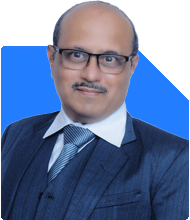
Nitin Narkhede | Answer |Ask -Follow
MF, PF Expert - Answered on May 19, 2025
Nitin Narkhede, founder of the Prosperity Lifestyle Hub, is a certified financial advisor with eight years of experience in helping clients design and implement comprehensive financial life plans.
As a mentor, Nitin has trained over 1,000 individuals, many of whom have seen remarkable financial transformations.
Nitin holds various certifications including the Association Of Mutual Funds in India (AMFI), the Insurance Regulatory and Development Authority and accreditations from several insurance and mutual fund aggregators.
He is a mechanical engineer from the J T Mahajan College, Jalgaon, with 34 years of experience of working with MNCs like Skoda Auto India, Volkswagen India and ThyssenKrupp Electrical Steel India.... more
As a mentor, Nitin has trained over 1,000 individuals, many of whom have seen remarkable financial transformations.
Nitin holds various certifications including the Association Of Mutual Funds in India (AMFI), the Insurance Regulatory and Development Authority and accreditations from several insurance and mutual fund aggregators.
He is a mechanical engineer from the J T Mahajan College, Jalgaon, with 34 years of experience of working with MNCs like Skoda Auto India, Volkswagen India and ThyssenKrupp Electrical Steel India.... more
Asked by Anonymous - May 18, 2025

Hello Sir, Me and my wife are aged at 32 years. We both have an income of 2.76 lakhs. Also i am getting rent 24k per month. We are having a home loan of 67 lakhs with emi of 70k ( i am paying more as tenure is 30 years ). We both are investing 50k in sip per month. We have 1 lakh in account and no emergency fund and apart from sip only company pf is our investments. My question is should i sell my rental property and prepay the homeloan ? I am paying car loan worth 14lakhs from the rental income as of now as i dont want to pressurise my salary for car loan emi. Let me know if any other suggestions for our finances. Note - we are planning for a baby too.
Ans: Dear Friend,
With a combined monthly income of ?2.76 lakh and ?24,000 rental income, you’re managing a ?70,000 home loan EMI and a ?14 lakh car loan. While investing ?50,000/month in SIPs is commendable, the lack of an emergency fund and only ?1 lakh in savings poses a risk—especially with a baby on the way. Prioritize creating a 6–9 month emergency corpus. Consider selling the rental property if its returns are modest, as it can ease loan pressure and improve liquidity. Also, reassess SIP amounts temporarily, ensure adequate life and health insurance, and avoid straining future cash flow with multiple EMIs.
Regards, Nitin Narkhede -Founder Prosperity Lifestyle Hub,
Free webinar https://bit.ly/PLH-Webinar
With a combined monthly income of ?2.76 lakh and ?24,000 rental income, you’re managing a ?70,000 home loan EMI and a ?14 lakh car loan. While investing ?50,000/month in SIPs is commendable, the lack of an emergency fund and only ?1 lakh in savings poses a risk—especially with a baby on the way. Prioritize creating a 6–9 month emergency corpus. Consider selling the rental property if its returns are modest, as it can ease loan pressure and improve liquidity. Also, reassess SIP amounts temporarily, ensure adequate life and health insurance, and avoid straining future cash flow with multiple EMIs.
Regards, Nitin Narkhede -Founder Prosperity Lifestyle Hub,
Free webinar https://bit.ly/PLH-Webinar
DISCLAIMER: The content of this post by the expert is the personal view of the rediffGURU. Users are advised to pursue the information provided by the rediffGURU only as a source of information to be as a point of reference and to rely on their own judgement when making a decision.
MoneyReply


You may like to see similar questions and answers below

Ramalingam Kalirajan |10874 Answers |Ask -Follow
Mutual Funds, Financial Planning Expert - Answered on May 06, 2024

Ramalingam Kalirajan |10874 Answers |Ask -Follow
Mutual Funds, Financial Planning Expert - Answered on Jul 10, 2025

Ramalingam Kalirajan |10874 Answers |Ask -Follow
Mutual Funds, Financial Planning Expert - Answered on Sep 04, 2025
Latest Questions

Mayank Chandel |2569 Answers |Ask -Follow
IIT-JEE, NEET-UG, SAT, CLAT, CA, CS Exam Expert - Answered on Dec 08, 2025

Mayank Chandel |2569 Answers |Ask -Follow
IIT-JEE, NEET-UG, SAT, CLAT, CA, CS Exam Expert - Answered on Dec 08, 2025
Asked by Anonymous - Nov 18, 2025Hindi

Sir I passed class 12th from Maharashtra board (PCMB + English) I scored 48 in chemistry 52 in physics and 46 in biology I have a marksheet from Nios board which consists only one subject biology in which I scored 58 marks , My question is am I eligible for admission in mbbs ( govt college ) if I score good in Neet 2026 ??? Can I combine state board (PCB)marksheet + Nios ( biology marksheet) to fullfill 50% PCB aggregate score ?? I am from general Ews category please resolve my query
Ans: I recommend appearing for all 5 subjects through NIOS
Asked on - Dec 08, 2025 | Answered on Dec 08, 2025
Am I ineligible for mbbs?? Will they reject me?
Ans: Might be as you gave PCMB already from MS board. There is not concrete answer in counselling brochure.
Mayank Chandel |2569 Answers |Ask -Follow
IIT-JEE, NEET-UG, SAT, CLAT, CA, CS Exam Expert - Answered on Dec 08, 2025

Mayank Chandel |2569 Answers |Ask -Follow
IIT-JEE, NEET-UG, SAT, CLAT, CA, CS Exam Expert - Answered on Dec 08, 2025

Mayank Chandel |2569 Answers |Ask -Follow
IIT-JEE, NEET-UG, SAT, CLAT, CA, CS Exam Expert - Answered on Dec 08, 2025


Anu Krishna |1746 Answers |Ask -Follow
Relationships Expert, Mind Coach - Answered on Dec 08, 2025


Ramalingam Kalirajan |10874 Answers |Ask -Follow
Mutual Funds, Financial Planning Expert - Answered on Dec 08, 2025


Samraat Jadhav |2499 Answers |Ask -Follow
Stock Market Expert - Answered on Dec 08, 2025


Ramalingam Kalirajan |10874 Answers |Ask -Follow
Mutual Funds, Financial Planning Expert - Answered on Dec 08, 2025



Radheshyam Zanwar |6737 Answers |Ask -Follow
MHT-CET, IIT-JEE, NEET-UG Expert - Answered on Dec 08, 2025