Home > Money > Question
Need Expert Advice?Our Gurus Can Help
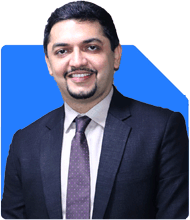
Mihir

Mihir Tanna  |1090 Answers  |Ask -

Tax Expert - Answered on Jun 11, 2025

Mihir Ashok Tanna, who works with a well-known chartered accountancy firm in Mumbai, has more than 15 years of experience in direct taxation.
He handles various kinds of matters related to direct tax such as PAN/ TAN application; compliance including ITR, TDS return filing; issuance/ filing of statutory forms like Form 15CB, Form 61A, etc; application u/s 10(46); application for condonation of delay; application for lower/ nil TDS certificate; transfer pricing and study report; advisory/ opinion on direct tax matters; handling various income-tax notices; compounding application on show cause for TDS default; verification of books for TDS/ TCS/ equalisation levy compliance; application for pending income-tax demand and refund; charitable trust taxation and compliance; income-tax scrutiny and CIT(A) for all types of taxpayers including individuals, firms, LLPs, corporates, trusts, non-resident individuals and companies.
He regularly represents clients before the income tax authorities including the commissioner of income tax (appeal).... more
Asked by Anonymous - Jun 11, 2025

Money

Hello sir, Recently we sell the property and right now 40 lakhs cash in hand. I am planning to put it in FD for monthly income. Right now I don't have any loans or any liabilities. Infact nearly 50k I am investing monthly in mutual funds. Already 10 lakhs FD in wife savings account and more than 20 lakhs KVP in post office on my children name. I am actually planning for passive income apart from my salary. With this income I am planning to roam around the india twice in a year with family. Without tax deduction or TDS how to segregate this 40 lakh for passive income. Getting a monthly salary more than a lakh. But I don't want to use my salary money for any enjoyments, it is for only MF investments, domestic expenses and future savings. Kindly guide me please.

Ans: Your query is subject to many factors like your risk appetite, how you are planning your trips etc. Usually for such kind of goals (wherein fund is required after 6-8 months), people invest in liquid mutual fund. On redemption TDS will not be deducted but tax will be applicable.
DISCLAIMER: The content of this post by the expert is the personal view of the rediffGURU. Users are advised to pursue the information provided by the rediffGURU only as a source of information to be as a point of reference and to rely on their own judgement when making a decision.
Money

You may like to see similar questions and answers below
Reetika

Reetika Sharma  |423 Answers  |Ask -

Financial Planner, MF and Insurance Expert - Answered on Sep 17, 2025

Asked by Anonymous - Jun 04, 2024Hindi
Money
Hi sir I have huge tax paid to it dept around 50k every month. Basic 1,05,831.00 Hra 42,332.00. Special allowance 1,16,414.00. Tax deducted cols Pf 12,700.00. Profession tax 200. Income tax 48,607.00. I have total 1.5 lakhs for 80c Hra full declared I don't have anything apart from these I have home loan which is under construction 80 percent completed but possession is dec ending I don't know how to save my tax Need some inputs Which places I can invest or donation or insurance so that I can reduce my tax Any advice please suggest me based on my above salary pay slip Every month 48k is getting deducted.. Lots of commitments i have like personal loan , gold loan , home loan, mutual funds My whole salary is going to all these sectors Please advise so that I can pay min tax with good investment if possible.. Income tax
Ans: Hi,

With your salary, you can claim the following:
1. HRA - already done by you
2. 80C - 1.5 lakhs done by you
3. Home Loan Deduction - can be done
4. Sec 80D - Health Insurance and medical checkup for self, family and parents

Doing donation or any other investment just to save tax is not a wise idea. Best is to invest smartly so that you can generate good returns with time.
You and no1 can escape from this vicious cycle of paying income tax.

If you need help with investments, can consult a professional Certified Financial Planner - a CFP who can guide you with exact funds to invest in keeping in mind your age and risk profile.

Best Regards,
Reetika Sharma, Certified Financial Planner
https://www.instagram.com/cfpreetika/

..Read more

Ramalingam

Ramalingam Kalirajan  |10881 Answers  |Ask -

Mutual Funds, Financial Planning Expert - Answered on Aug 18, 2025

Asked by Anonymous - Aug 02, 2025Hindi
Money
HI sir am 55 year with annual income of 15 lacs my investment are as below One full paid flat in chennai - 50 lacs - Cr mrkt vlue 72 lacs MF investment cr value _ 1.80 cr equity investment cr value - 1.3 cr Real estate Forced sale value - 1 cr I need to allocate for my daughter education who will be starting her UG by next year want to keep aside some 25-40 lacs i want some steady passive income once am 60 monthly say 1 lac. i stay in a rented house and have let out my flat for 20k per month apart from this have some good gold saved for my daughter. Have loans for 12 lac as on date. advise on how to plan to get a monthly regular income from above by not eroding the capital
Ans: You have built a strong portfolio.
Your focus on your daughter’s future and your own financial stability is appreciable.

Let’s now work through each of your priorities in detail.

» Understanding Your Current Financial Snapshot

– Your flat in Chennai is rented out for Rs. 20,000/month.
– Its current market value is Rs. 72 lakh.
– Mutual funds are valued at Rs. 1.80 crore.
– Direct equity holdings are Rs. 1.3 crore.
– Real estate (excluding the Chennai flat) has forced sale value of Rs. 1 crore.
– You have gold saved for your daughter.
– Outstanding loan amount is Rs. 12 lakh.
– You are staying in a rented house.
– You want to set aside Rs. 25–40 lakh for your daughter’s UG education.
– You want a steady Rs. 1 lakh per month after age 60.

This is a very strong base. You have enough to meet both your goals comfortably.

» Plan for Daughter’s Education – 2026

– You wish to allocate Rs. 25 to 40 lakh for UG expenses.
– Since she’s starting UG next year, keep funds safe and liquid.
– Choose ultra short-duration or low-duration debt mutual funds via regular plan.
– Avoid equity or aggressive hybrid funds for this portion.
– These debt funds can give better returns than FDs and remain liquid.
– Use systematic withdrawal plan (SWP) for annual or semi-annual college fees.
– Gold savings can be used for PG or marriage later.
– Keep Rs. 5 lakh buffer for emergency from the education corpus.

Allocate this amount immediately in phased manner from mutual funds.

» Outstanding Loan of Rs. 12 Lakh – Action Plan

– Check if this is a personal loan or secured loan.
– If interest rate is above 9%, consider partial repayment.
– Don’t liquidate equity or MF fully to clear the loan.
– Instead, redeem Rs. 5-6 lakh from mutual funds or real estate only.
– Continue remaining EMIs. Let MF portfolio grow.

Clearing high-interest loans early is smart. But don’t disturb wealth creation too much.

» Housing and Rent Situation – Review

– You’re staying in a rented house. Your flat is rented out for Rs. 20,000/month.
– Evaluate moving back into your own flat after retirement if feasible.
– This saves rent outgo and increases monthly savings post-retirement.
– If not possible, continue renting and earning from your flat.

Don’t sell your flat now. Keep it for steady rent income or self-use later.

» Creating Passive Monthly Income of Rs. 1 Lakh Post 60

Your aim is clear:
From age 60, generate Rs. 1 lakh/month (Rs. 12 lakh/year) without eroding capital.

Let’s look at how this can be structured from age 60.

MF Corpus Growth by Age 60
– Current MF: Rs. 1.80 crore.
– 5 years of moderate growth (say 9%) could take this to Rs. 2.75 crore.
– Equity corpus of Rs. 1.3 crore could become around Rs. 2 crore.
– Total MF + Equity: ~Rs. 4.75 crore.

Asset Allocation From Age 60
– Shift 60% to conservative hybrid and balanced advantage funds.
– Keep 30% in equity mutual funds for growth.
– Keep 10% in short-term debt for liquidity buffer.

Using SWP From Mutual Funds
– Use SWP from hybrid or balanced funds to withdraw Rs. 1 lakh/month.
– Expected withdrawal rate can be 3%–4% of corpus yearly.
– This gives you Rs. 12 lakh annually without touching principal much.
– Hybrid funds give moderate growth and lower volatility.
– Avoid annuities. They give poor returns and block capital.

Rental Income
– Rs. 20,000/month rental income continues.
– This can increase with inflation.
– So total monthly income becomes Rs. 1.2 lakh or more.

Taxation Awareness
– SWP from equity-oriented funds is taxed.
– LTCG beyond Rs. 1.25 lakh annually is taxed at 12.5%.
– STCG taxed at 20%.
– Debt fund gains taxed as per slab.
– Regularly redeem units with highest cost (FIFO method).
– Use capital gain exemptions where possible.
– A Certified Financial Planner can optimise this further.

Emergency Buffer
– Keep Rs. 15–20 lakh separately in liquid or short-term debt funds.
– This helps in any medical or house-related emergency post 60.
– This should not be touched for monthly income needs.

Don’t Redeem Equity Shares Fully
– Keep your direct equity for long-term growth.
– Trim high-risk or non-dividend stocks gradually.
– Shift some part to mutual funds for steady withdrawal.

» Real Estate Asset – Forced Sale Value Rs. 1 Crore

– Don’t count this in retirement plan actively now.
– This can be a backup reserve.
– Consider selling if maintenance becomes difficult post age 65.
– Invest proceeds in mutual funds or SWP-based schemes.
– Or use it to support daughter’s PG or marriage later.

Let this be your future flexi-asset.

» Restructure Portfolio for Future Safety

Your mutual funds and equity are quite strong.
But consider these suggestions to improve structure:

– Move from direct funds to regular plans via MFD who is a CFP.
– Direct plans lack personal guidance. Wrong moves can hurt wealth.
– Regular plan through a Certified Financial Planner ensures rebalancing, SWP planning, tax efficiency.
– Regular funds give higher risk-adjusted returns in the long term with correct allocation.

Avoid DIY investing beyond a point. In retirement, stable guidance is more important than saving commission.

» Avoid These for Regular Income

– Don’t use index funds.
– They offer no downside protection.
– No flexibility to shift sectors.
– Actively managed funds adjust to market cycles better.
– They reduce volatility during crisis periods.

– Don’t invest in annuities.
– Returns are poor. Capital gets locked.
– No inflation adjustment in most annuities.
– Post-death, your heirs may get little or nothing.

Avoid these traps. Stay flexible and growth-oriented with moderate risk.

» Gold for Daughter – Ideal Usage

– Your gold can be used for her wedding or long-term wealth transfer.
– Don’t sell it now for UG needs.
– You can convert some physical gold to Sovereign Gold Bonds (SGBs) for future if needed.
– But only if holding for 8 years or more.

Treat this as her emotional and financial reserve.

» Estate Planning – Prepare Early

– Write a registered Will by age 60.
– Clearly mention asset transfer to daughter or spouse.
– Include MF, equity, real estate, gold, and insurance.
– Assign nominees correctly in all investments.
– Review once in 3 years.

Good estate planning avoids legal issues later.

» Suggested Allocation Summary (At Age 60)

– Mutual Funds (Hybrid + SWP focus): Rs. 2.5–3 crore
– Equity MF (Growth allocation): Rs. 1–1.2 crore
– Short-term Debt / Liquid Funds (Emergency): Rs. 20 lakh
– Rental Income: Rs. 20,000/month
– Real estate reserve (long-term): Rs. 1 crore
– Gold reserve (for daughter): As is

This setup supports your Rs. 1 lakh/month target easily.

» Finally

You have built your wealth wisely and carefully.
Your portfolio is strong and diversified.
You are now in a position to enjoy financial freedom.

With some reallocation, SWP planning, and focus on steady funds, your post-retirement life can be stress-free.

Avoid real estate additions. Avoid direct plan investing.
Avoid annuities and index funds.

Focus on goal-based investing with professional guidance.
Ensure your money works for you, not the other way around.

Best Regards,
K. Ramalingam, MBA, CFP,
Chief Financial Planner,
www.holisticinvestment.in
https://www.youtube.com/@HolisticInvestment

..Read more

Ramalingam

Ramalingam Kalirajan  |10881 Answers  |Ask -

Mutual Funds, Financial Planning Expert - Answered on Aug 25, 2025

Asked by Anonymous - Aug 24, 2025Hindi
Money
Hello sir, I am a 34 years old IT professional with an annual income of 12 Lakh Salary. My EPF savings so far is 24000,(monthly deposit of 1800), Term insurance investment of 16000 per annum, Family medical insurance of 12000 per annum. I have a home of 35L with 7.7 % interest rate started this year and I am paying 250156 per month interest in a tenure of 360 months. I am also investing in Sukanya Samruddhi account for my child started 2023 with a total contribution of 180000 as of now (1.5 L per annum). I am also paying a monthly house rent of 20000. Alongside I am receiving 19500 per month as rental income as well. My monthly housing expense is around 18000. I have also invested in Fixed deposit amounting to total of 650000. Please advise me a efficient investment strategy so that I can ensure that I have enough corpus during my retirement as well as safeguarding my daughter's future as I am the sole income earner of my family of three person. How can I structure my salary so as to reduce tax burden.
Ans: You have shared your situation in great detail. That itself is a very strong step. You are only 34, and already covering important areas like EPF, insurance, Sukanya Samriddhi and home purchase. Your clarity about retirement and your daughter’s future is praiseworthy. Let me take a 360-degree view of your situation and guide you with a structured plan.

» Income and Current Commitments

Your annual income is Rs. 12 lakh.

EPF contribution is modest at Rs. 1,800 per month.

Term insurance is Rs. 16,000 yearly.

Family medical insurance is Rs. 12,000 yearly.

Home loan EMI is very high at around Rs. 2.5 lakh per month.

Rental income is Rs. 19,500 monthly, which partly offsets the Rs. 20,000 rent outflow.

Monthly housing expenses are Rs. 18,000.

You also hold Rs. 6.5 lakh in Fixed Deposit.

Sukanya Samriddhi contribution of Rs. 1.5 lakh per year is a good long-term step.

» First Assessment of Home Loan

EMI shown is Rs. 2.5 lakh monthly. That seems unusually high for Rs. 35 lakh loan.

At 7.7% with 360 months, EMI should be about Rs. 25,000, not Rs. 2.5 lakh.

Please recheck the figure. If EMI is Rs. 25,000, then it is manageable.

If it is really Rs. 2.5 lakh, then you are over-committed and must restructure.

For this advice, I will assume it is Rs. 25,000, since that is logical.

» Insurance Protection Review

You are the sole earner for a family of three.

Term insurance of Rs. 16,000 premium suggests a cover of Rs. 1–1.5 crore.

This is not sufficient. At least Rs. 2.5–3 crore cover is needed at your age.

Term insurance is the cheapest way to safeguard your family.

Please increase the cover to protect against income loss risk.

Health cover of Rs. 12,000 per annum seems adequate, but check sum insured.

With rising medical costs, keep minimum of Rs. 10 lakh cover for family.

» Sukanya Samriddhi Account

Your contribution of Rs. 1.5 lakh yearly is the maximum limit.

This builds a strong education and marriage corpus for your daughter.

The scheme is tax-free and government backed, very safe.

Continue till maturity. It will grow into a solid base.

But do not depend only on this for education. You need parallel market-linked growth.

» Fixed Deposit Holdings

Rs. 6.5 lakh in FD is safe but returns are low.

FD interest is fully taxable.

Keeping some FD is fine for emergency needs.

But over time, move surplus into mutual funds for growth.

» Retirement Planning Gap

Current EPF balance is Rs. 24,000 only.

Monthly contribution of Rs. 1,800 is small for a Rs. 12 lakh salary.

By retirement, this will not be sufficient.

You need to build a much larger retirement corpus through equity investments.

At least 25–30% of monthly income should be invested for retirement.

» Investment Strategy for Growth

Continue Sukanya contribution for daughter’s future.

Keep Rs. 3–4 lakh in FD as emergency fund.

Divert remaining FD into mutual funds gradually through systematic transfers.

Focus on actively managed diversified equity funds, not index funds.

Index funds look low-cost, but they lack protection in market downturns.

Actively managed funds by skilled managers give better risk-adjusted return.

Invest through Certified Financial Planner guided distributor, not direct funds.

Direct funds may save commission, but you lose personalised planning and review.

Regular funds with expert monitoring keep you disciplined and aligned.

» Monthly Cash Flow Structuring

Salary income: Rs. 1 lakh monthly (after tax approx).

Rental income: Rs. 19,500 monthly.

Rent expense: Rs. 20,000 monthly.

Home loan EMI: Rs. 25,000 monthly (assuming corrected figure).

Household expenses: Rs. 18,000 monthly.

Sukanya contribution: Rs. 12,500 monthly equivalent.

Insurance premiums: Around Rs. 2,300 monthly equivalent.

Balance available can be invested in mutual funds for growth.

Start with Rs. 20,000 per month in diversified equity funds.

Increase by 5–10% every year as income grows.

» Tax Saving Opportunities

Continue EPF, Sukanya, and home loan repayment.

These already qualify for Section 80C benefit.

With Rs. 1.5 lakh Sukanya, plus EPF, you already exhaust 80C.

Term insurance premium also comes under 80C.

Home loan interest up to Rs. 2 lakh yearly is deductible under Section 24(b).

Medical insurance premium qualifies under Section 80D.

Use National Pension System (NPS) for additional Rs. 50,000 deduction under 80CCD(1B).

Avoid investing just for tax saving. Tax saving should align with long-term goals.

» Child’s Education and Marriage Planning

Sukanya will cover part of the need.

Education costs are rising faster than inflation.

You need an additional education corpus of Rs. 25–30 lakh in 15 years.

Marriage may need Rs. 20–25 lakh.

Build this through equity mutual funds with long horizon.

Start dedicated SIPs for education and marriage goals.

» Risk Diversification Approach

Do not depend on one product.

Mix of EPF, Sukanya, mutual funds, and FD gives balance.

Equity gives growth, debt gives stability.

Keep gold allocation up to 5–10% for diversification.

Avoid ULIPs and endowment policies. They give poor returns and low insurance.

If you hold any such LIC plans, better to surrender and redirect to mutual funds.

» Managing Rent and House Ownership

You are paying Rs. 20,000 rent and also paying EMI.

Rental income offsets rent expense almost fully.

Long term, consider moving into own house when financially comfortable.

This will reduce dual outflow.

Till then, keep using rent as tax benefit also.

» Emergency and Liquidity Planning

Keep six months’ expenses in liquid form.

This should be around Rs. 5–6 lakh.

FD or liquid mutual funds are good for this.

Do not touch emergency fund for investments.

» Reviewing Portfolio Regularly

Review investments every year.

Increase SIP amount with income.

Rebalance equity and debt allocation when markets swing too much.

Track insurance cover as responsibilities change.

Adjust goals when daughter’s needs get clearer.

» Finally

You have already created a strong base with Sukanya, insurance, and EPF.

Main gaps are in retirement savings and child’s higher education planning.

Strengthen life insurance cover.

Build long-term wealth through diversified equity mutual funds.

Use professional Certified Financial Planner support to avoid emotional mistakes.

Avoid index funds and direct funds, as they reduce quality of planning.

Balance safety with growth. Stay consistent for next 20–25 years.

This will ensure both retirement comfort and your daughter’s secure future.

Best Regards,
K. Ramalingam, MBA, CFP,

Chief Financial Planner,

www.holisticinvestment.in

https://www.youtube.com/@HolisticInvestment

..Read more

Latest Questions
Nayagam P

Nayagam P P  |10854 Answers  |Ask -

Career Counsellor - Answered on Dec 14, 2025

Asked by Anonymous - Dec 12, 2025Hindi
Career
Hello, I am currently in Class 12 and preparing for JEE. I have not yet completed even 50% of the syllabus properly, but I aim to score around '110' marks. Could you suggest an effective strategy to achieve this? I know the target is relatively low, but I have category reservation, so it should be sufficient.
Ans: With category reservation (SC/ST/OBC), a score of 110 marks is absolutely achievable and realistic. Based on 2025 data, SC candidates qualified with approximately 60-65 percentile, and ST candidates with 45-55 percentile. Your target requires scoring just 37-40% marks, which is significantly lower than general category standards. This gives you a genuine advantage. Immediate Action Plan (December 2025 - January 2026): 4-5 Weeks. Week 1-2: High-Weightage Chapter Focus. Stop trying to complete the entire syllabus. Instead, focus exclusively on high-scoring chapters that carry maximum weightage: Physics (Modern Physics, Current Electricity, Work-Power-Energy, Rotation, Magnetism), Chemistry (Chemical Bonding, Thermodynamics, Coordination Compounds, Electrochemistry), and Maths (Integration, Differentiation, Vectors, 3D Geometry, Probability). These chapters alone can yield 80-100+ marks if practiced properly. Ignore topics you haven't studied yet. Week 2-3: Previous Year Questions (PYQs). Solve JEE Main PYQs from the last 10 years (2015-2025) for chapters you're studying. PYQs reveal question patterns and difficulty levels. Focus on understanding why answers are correct, not memorizing solutions. Week 3-4: Mock Tests & Error Analysis. Take 2-3 full-length mock tests weekly under timed conditions. This is crucial because mock tests build exam confidence, reveal time management weaknesses, and error analysis prevents repeated mistakes. Maintain an error notebook documenting every mistake—this becomes your revision guide. Week 4-5: Revision & Formula Consolidation. Create concise formula sheets for each subject. Spend 30 minutes daily reviewing formulas and key concepts. Avoid learning new topics entirely at this stage. Study Schedule (Daily): 7-8 Hours. Morning (5:00-7:30 AM): Physics concepts + 30 PYQs. Break (7:30-8:30 AM): Breakfast & rest. Mid-morning (8:30-11:00): Chemistry concepts + 20 PYQs. Lunch (11:00-1:00 PM): Full break. Afternoon (1:00-3:30 PM): Maths concepts + 30 PYQs. Evening (3:30-5:00 PM): Mock test or error review. Night (7:00-9:00 PM): Formula revision & weak area focus. Strategic Approach for 110 Marks: Attempt only confident questions and avoid negative marking by skipping difficult questions. Do easy questions first—in the exam, attempt all basic-level questions before attempting medium or hard ones. Focus on quality over quantity as 30 well-practiced questions beat 100 random questions. Master NCERT concepts as most JEE questions test NCERT concepts applied smartly. April 2026 Session Advantage. If January doesn't deliver desired results, April gives you a second chance with 3+ months to prepare. Use January as a practice attempt to identify weak areas, then focus intensively on those in February-March. Realistic Timeline: January 2026 target is 95-110 marks (achievable with focused 50% syllabus), while April 2026 target is 120-130 marks (with complete syllabus + experience). Your reservation benefit means you need only approximately 90-105 marks to qualify and secure admission to quality engineering colleges. Stop comparing yourself to general category cutoffs. Most Importantly: Consistency beats perfection. Study 6 focused hours daily rather than 12 distracted hours. Your 110-mark target is realistic—execute this plan with discipline. All the BEST for Your JEE 2026!

Follow RediffGURUS to Know More on 'Careers | Money | Health | Relationships'.

...Read more

Dr Dipankar

Dr Dipankar Dutta  |1841 Answers  |Ask -

Tech Careers and Skill Development Expert - Answered on Dec 13, 2025

Asked by Anonymous - Dec 12, 2025
Career
Dear Sir/Madam, I am currently a 1st year UG student studying engineering in Sairam Engineering College, But there the lack of exposure and strict academics feels so rigid and I don't like it that. It's like they don't gaf about skills but just wants us to memorize things and score a good CGPA, the only skill they want is you to memorize things and pass, there's even special class for students who don't perform well in academics and it is compulsory for them to attend or else the student and his/her parents needs to face authorities who lashes out. My question is when did engineering became something that requires good academics instead of actual learning and skill set. In sairam they provides us a coding platform in which we need to gain the required points for each semester which is ridiculous cuz most of the students here just look at the solution to code instead of actual debugging. I am passionate about engineering so I want to learn and experiment things instead of just memorizing, so I actually consider dropping out and I want to give jee a try and maybe viteee , srmjeee But i heard some people say SRM may provide exposure but not that good in placements. I may not be excellent at studies but my marks are decent. So gimme some insights about SRM and recommend me other colleges/universities which are good at exposure
Ans: First — your frustration is valid

What you are experiencing at Sairam is not engineering, it is rote-based credential production.

“When did engineering become memorizing instead of learning?”

Sadly, this shift happened decades ago in most Tier-3 private colleges in India.

About “coding platforms & points” – your observation is sharp

You are absolutely right:

Mandatory coding points → students copy solutions

Copying ≠ learning

Debugging & thinking are missing

This is pseudo-skill education — it looks modern but produces shallow engineers.

The fact that you noticed this in 1st year already puts you ahead of 80% students.

Should you DROP OUT and prepare for JEE / VITEEE / SRMJEEE?

Although VIT/SRM is better than Sairam Engineering College, but you may face the same problem. You will not face this type of problem only in some top IITs, but getting seat in those IITs will be difficult.
Instead of dropping immediately, consider:

???? Strategy:

Stay enrolled (degree security)

Reduce emotional investment in college rules

Use:

GitHub

Open-source projects

Hackathons

Internships (remote)

Hardware / software self-projects

This way:

College = formality

Learning = self-driven

Risk = minimal

...Read more

DISCLAIMER: The content of this post by the expert is the personal view of the rediffGURU. Investment in securities market are subject to market risks. Read all the related document carefully before investing. The securities quoted are for illustration only and are not recommendatory. Users are advised to pursue the information provided by the rediffGURU only as a source of information and as a point of reference and to rely on their own judgement when making a decision. RediffGURUS is an intermediary as per India's Information Technology Act.

Close  

You haven't logged in yet. To ask a question, Please Log in below
Login

A verification OTP will be sent to this
Mobile Number / Email

Enter OTP
A 6 digit code has been sent to

Resend OTP in120seconds

Dear User, You have not registered yet. Please register by filling the fields below to get expert answers from our Gurus
Sign up

By signing up, you agree to our
Terms & Conditions and Privacy Policy

Already have an account?

Enter OTP
A 6 digit code has been sent to Mobile

Resend OTP in120seconds

x