Home > Money > Question
Need Expert Advice?Our Gurus Can Help
Purshotam

Purshotam Lal  | Answer  |Ask -

Financial Planner, MF and Insurance Expert - Answered on Sep 18, 2025

Purshotam Lal has over 38 years of experience in investment banking, mutual funds, insurance and wealth management.
He is an Association of Mutual Funds in India (AMFI)-registered mutual fund distributor, an Insurance Regulatory and Development Authority of India (IRDAI)-certified insurance advisor and founder of Finphoenix Services LLP.
He holds an MBA in finance from the Faculty of Management Studies (FMS), Delhi University and a chartered financial analyst (CFA) degree. He also holds certified associate of the Indian Institute of Bankers (CAIIB), fellow of the Insurance Institute of India (FIII) and National Institute of Securities Markets (NISM) certifications.... more

sandeep Question by sandeep on Aug 12, 2025Hindi

Money

I am 60 with saving in mutual funds around 80 lakh . i want to withdraw 1 lakh per month as my pension. will there be any capital gain.

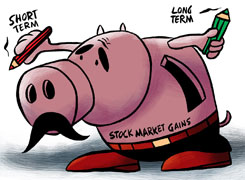
Ans: If you withdraw Rs 1 lakh per month from MF scheme even delivering linear return of 8% annually (which is not possible at all as returns on MFs are market linked and fluctuates), your savings in mutual funds may exhaust in around 10 Years time. In equity oriented MFs (65% or more equity), investments withdrawn on FIFO basis are taxable as short term capital gain (Taxed at 20%) for < 1 Year and Long term capital gain (Taxed at 12.5% flat, if LTCG exceed Rs 125000 in a year) for > 1 year investments. Short Term Capital Gains on Debt funds < 24 months are taxed at applicable slab rates and > 24 months LTCG at 12.50%.
DISCLAIMER: The content of this post by the expert is the personal view of the rediffGURU. Users are advised to pursue the information provided by the rediffGURU only as a source of information to be as a point of reference and to rely on their own judgement when making a decision.
Money

You may like to see similar questions and answers below

Ramalingam

Ramalingam Kalirajan  |10870 Answers  |Ask -

Mutual Funds, Financial Planning Expert - Answered on Jul 24, 2024

Asked by Anonymous - Jul 24, 2024Hindi
Listen
Money
Dear Sir, i have been investing in mutual funds since 2008 total invested money so far is 14 lakh through sip and lumsum, now current value is around 37 lakh . what shall be my capital gain if i withdraw this amount. sandeep
Ans: Understanding Your Capital Gains
Sandeep, you have been investing in mutual funds since 2008. Your total investment is Rs 14 lakh through SIPs and lump sums. Now, the value of your investment is Rs 37 lakh.

Calculating Capital Gains
Your capital gain is the profit you earn from your investments. It is the difference between the current value and the amount you invested.

So, the calculation is:

Total Investment: Rs 14 lakh
Current Value: Rs 37 lakh
Capital Gain: Rs 37 lakh - Rs 14 lakh = Rs 23 lakh
Taxation on Capital Gains
Long-Term Capital Gains (LTCG)
Since you have held the mutual funds for more than three years, they are considered long-term investments. Long-term capital gains (LTCG) on equity mutual funds are taxed at 10% if the gains exceed Rs 1 lakh in a financial year. (In the recent budget, LTCG tax on equity mutual funds is revised to 12.5%. LTCG exemption is revised from 1 lakh to 1.25 lakh per financial year)

Steps to Consider
Plan for Taxes
Understand that LTCG above Rs 1 lakh will be taxed at 10%./ revised to 1.25 lakh and 12.5% respectively.
Calculate the tax liability on your Rs 23 lakh gain.
Reinvest Wisely
Consider reinvesting your gains in other mutual funds.
Diversify your portfolio for better risk management and returns.
Consult a Certified Financial Planner
Get professional advice to optimize your tax and investment strategy.
Benefits of Actively Managed Funds
If you decide to reinvest, consider the advantages of actively managed funds:

Expertise: Professional managers aim to outperform the market.
Flexibility: Fund managers can adjust strategies based on market conditions.
Avoid Index Funds
Limited Growth: Index funds only replicate the market.
No Active Management: Lack of professional decision-making.
Regular Funds Over Direct Funds
Expert Guidance: Regular funds come with the benefit of professional management.
Time-Saving: A CFP can manage your investments, saving you time and effort.
Final Insights
You have done well by investing regularly in mutual funds. To maximize your gains and minimize tax, plan your withdrawals carefully. Consider reinvesting in actively managed funds and consult a Certified Financial Planner for tailored advice.

Best Regards,

K. Ramalingam, MBA, CFP,

Chief Financial Planner,

www.holisticinvestment.in

..Read more

Ramalingam

Ramalingam Kalirajan  |10870 Answers  |Ask -

Mutual Funds, Financial Planning Expert - Answered on Oct 21, 2024

Asked by Anonymous - Oct 21, 2024Hindi
Money
Dear Mr. Ramalingam, Good Morning, I am 66 years old and have Rs.20 L of my retirement funds. Advice me on investing in some good mutual Funds, I can wait upto 5 years to withdraw the amount please
Ans: You’ve accumulated Rs 20 lakhs for your retirement, and you’re willing to invest it with a five-year horizon. This time frame, though relatively short, can still allow for reasonable growth if invested wisely. At the age of 66, balancing growth and safety is key.

Understanding Your Risk Tolerance
Moderate Risk Approach: At your age, it’s prudent to avoid high-risk investments. However, moderate risk exposure is necessary to generate inflation-beating returns.

Capital Preservation with Growth: You want to grow your funds but also ensure the preservation of your capital. The goal should be to strike the right balance between safety and returns.

Diversified Portfolio for Stability
Combination of Equity and Debt: A good strategy would be a 50-60% allocation to debt and the rest in equity. Debt mutual funds provide stability, while equity funds offer potential growth.

Avoid Full Equity Exposure: Considering your age and time horizon, avoiding complete exposure to equity is important. While equity can generate high returns, it can also be volatile, which may not align with your objective.

Choosing Debt Mutual Funds
Low to Moderate Risk Debt Funds: You should consider investing in low to moderate risk debt mutual funds. These funds offer stability and reasonable returns over a five-year period, helping protect your capital from market volatility.

Taxation Advantage: Debt mutual funds are taxed as per your income tax slab, and long-term gains can be more tax-efficient if held for over three years. This provides a dual benefit of stable returns and tax savings.

Adding Some Equity for Growth
Actively Managed Equity Funds: To outpace inflation and achieve decent returns over five years, you can invest a small portion in actively managed equity funds. These funds allow flexibility and the potential for higher growth than traditional options.

Avoid Index Funds: While index funds have lower costs, they simply mirror the market’s performance. For a time horizon like five years, actively managed funds are better suited as they can adapt to market conditions and aim to outperform.

Opt for Regular Plans Over Direct Funds
Benefits of Regular Funds: Although direct funds have lower expense ratios, they lack the personalized advice you get from investing through a Mutual Fund Distributor with a Certified Financial Planner. Their expertise can make a difference in the performance and structure of your portfolio.

Professional Guidance: The cost difference between direct and regular plans is minimal when compared to the benefits of professional advice, including regular reviews, rebalancing, and timely switches to better-performing funds.

Focus on Liquidity and Flexibility
Short-Term Liquidity: Though your investment horizon is five years, it’s wise to ensure some liquidity for unforeseen expenses. Consider keeping a portion of your funds in a liquid mutual fund or short-term debt fund, which can be accessed easily in case of an emergency.

Flexibility of Mutual Funds: One of the advantages of mutual funds is the ease with which you can withdraw or switch funds based on your financial situation. This flexibility is crucial as you may need to adjust your investments over the five years.

Systematic Withdrawal Plan (SWP)
Plan for Withdrawals: As you approach the end of your investment horizon, consider setting up a Systematic Withdrawal Plan (SWP). This allows you to withdraw a fixed amount monthly while your corpus continues to generate returns.

Minimise Tax Impact: An SWP is a tax-efficient way of withdrawing funds. Since only the gains are taxed, the tax burden is lighter compared to lump-sum withdrawals.

Wealth Protection Through Insurance
Ensure Adequate Health Insurance: At 66, having comprehensive health insurance is vital. It helps protect your investments from being depleted by medical expenses. Ensure that your health insurance coverage is sufficient, and review it regularly to keep pace with medical inflation.

Life Insurance is Not a Priority: Since your primary goal is capital preservation and growth, life insurance isn’t a focus at this stage. Instead, ensure that your existing policies (if any) are aligned with your current needs.

Review and Rebalance Annually
Monitor Portfolio Performance: It’s important to review your portfolio every year. If any of your funds underperform or market conditions change, a Certified Financial Planner can guide you to rebalance and realign your investments.

Avoid Timing the Market: Stick to your strategy without attempting to time the market. Frequent buying and selling can lead to unnecessary taxes and missed growth opportunities.

Stay Disciplined and Focus on Your Goal
Discipline is Key: The most important factor in any investment strategy is discipline. Stay committed to your investment plan for the full five-year period to allow your money to grow optimally.

Avoid Panic During Market Fluctuations: Markets can be volatile, especially when you have an equity component in your portfolio. Avoid making hasty decisions based on short-term market movements.

Final Insights
To achieve a balanced and growth-oriented portfolio with your Rs 20 lakhs, opt for a mix of equity and debt mutual funds. Prioritise stability while allowing for some growth with a small equity exposure. Regularly review your investments, stay disciplined, and ensure adequate insurance coverage to protect your wealth and financial security.

Best Regards,

K. Ramalingam, MBA, CFP,

Chief Financial Planner,

www.holisticinvestment.in

https://www.youtube.com/@HolisticInvestment

..Read more

Naveenn

Naveenn Kummar  |233 Answers  |Ask -

Financial Planner, MF, Insurance Expert - Answered on Sep 10, 2025

Latest Questions
Ravi

Ravi Mittal  |676 Answers  |Ask -

Dating, Relationships Expert - Answered on Dec 04, 2025

Asked by Anonymous - Dec 02, 2025Hindi
Relationship
My married ex still texts me for comfort. Because of him, I am unable to move on. He makes me feel guilty by saying he got married out of family pressure. His dad is a cardiac patient and mom is being treated for cancer. He comforts me by saying he will get separated soon and we will get married because he only loves me. We have been in a relationship for 14 years and despite everything we tried, his parents refused to accept me, so he chose to get married to someone who understands our situation. I don't know when he will separate from his wife. She knows about us too but she comes from a traditional family. She also confirmed there is no physical intimacy between them. I trust him, but is it worth losing my youth for him? Honestly, I am worried and very confused.
Ans: Dear Anonymous,
I understand how difficult it is to let go of a relationship you have built from scratch, but is it really how you want to continue? It really seems to be going nowhere. His parents are already in bad health and he married someone else for their happiness. Does it seem like he will be able to leave her? So many people’s happiness and lives depend on this one decision. I think it’s about time you and your BF have a clear conversation about the same. If he can’t give a proper timeline, please try to understand his situation. But also make sure he understands yours and maybe rethink this equation. It really isn’t healthy. You deserve a love you can have wholly, and not just in pieces, and in the shadows.

Hope this helps

...Read more

Mayank

Mayank Chandel  |2562 Answers  |Ask -

IIT-JEE, NEET-UG, SAT, CLAT, CA, CS Exam Expert - Answered on Dec 04, 2025

Career
My son will be appearing for JEE Main & JEE Advanced 2026 and will participate in JoSAA Counselling 2026. I request clarification regarding the GEN-EWS certificate date requirement for next year. I have already applied for an EWS certificate for current year 2025, and the application is under process. However, I am unsure whether this certificate will be accepted during JoSAA 2026, or whether candidates will be required to submit a fresh certificate for FY 2026–27 (issued on or after 1 April 2026). My concern is that if JoSAA requires a certificate issued after 1 April 2026, students will have only 1–1.5 months to complete the entire procedure, which is difficult considering normal government processing timelines. Also, during current JEE form filling, students are asked to upload a GEN-EWS certificate issued on or after 1 April 2025, or an application acknowledgement. This has created confusion among parents regarding which year’s certificate will finally be valid at the time of counselling. I request your kind guidance on: Which GEN-EWS certificate will be accepted for JoSAA Counselling 2026 — a certificate for FY 2025–26 (issued after 1 April 2025), or a new certificate for FY 2026–27 (issued after 1 April 2026)?
Ans: Hi
You need not worry about the EWS certificate. Even if you apply for the next year's certificate on 1 Apr 2026, the second session of JEE MAINS will still be held, followed by JEE ADVANCED, which will be held in May. JOSAA starts in June. so you will have 2 months in hand for fresh EWS certificate.

...Read more

DISCLAIMER: The content of this post by the expert is the personal view of the rediffGURU. Investment in securities market are subject to market risks. Read all the related document carefully before investing. The securities quoted are for illustration only and are not recommendatory. Users are advised to pursue the information provided by the rediffGURU only as a source of information and as a point of reference and to rely on their own judgement when making a decision. RediffGURUS is an intermediary as per India's Information Technology Act.

Close  

You haven't logged in yet. To ask a question, Please Log in below
Login

A verification OTP will be sent to this
Mobile Number / Email

Enter OTP
A 6 digit code has been sent to

Resend OTP in120seconds

Dear User, You have not registered yet. Please register by filling the fields below to get expert answers from our Gurus
Sign up

By signing up, you agree to our
Terms & Conditions and Privacy Policy

Already have an account?

Enter OTP
A 6 digit code has been sent to Mobile

Resend OTP in120seconds

x