Home > Money > Question
Need Expert Advice?Our Gurus Can Help
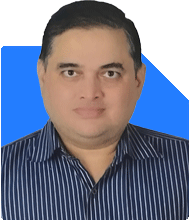
Milind

Milind Vadjikar  | Answer  |Ask -

Insurance, Stocks, MF, PF Expert - Answered on Sep 23, 2024

Milind Vadjikar is an independent MF distributor registered with Association of Mutual Funds in India (AMFI) and a retirement financial planning advisor registered with Pension Fund Regulatory and Development Authority (PFRDA).
He has a mechanical engineering degree from Government Engineering College, Sambhajinagar, and an MBA in international business from the Symbiosis Institute of Business Management, Pune.
With over 16 years of experience in stock investments, and over six year experience in investment guidance and support, he believes that balanced asset allocation and goal-focused disciplined investing is the key to achieving investor goals.... more
Asked by Anonymous - Sep 23, 2024Hindi
Listen
Money

Sir, I am 46, I am looking for advice, i have some where 20 funds of 60L portfolio. But i am currently looking at overlap of funds and wanted to balance it out may be bring it to 10 to 13 funds. So i am listing some of the funds from long term perspective, which is 5 to 10 years . Please let me know if those funds are good or any change required from overall portfolio. I will be spending 10 to 15% on ICICI Bluechip fund , removing hdfc 50 index + Canara rebeco Bluechip due to overlap of 54%.22.5% on Midcap - HDFC Midcap oppurtunities and Motilal oswal midcap fund and i no more be investing on SBI Maganum midcap fund and removing PGIM Midcap fund as star rating 1 and majorly star rating 4/5. I am also planinng to add Debt fund of 15% ( New investment to balance portfolio, Gsec 2036 bond, let me know if any thing which can give more than 8 %) for next 5 to 8 years. Also atleast i am expecting my portfolio to generate > 15% to 20% return. My stratergy , I see all overlap of stocks is between 9-14% . whichever has more than 30% overlap reducing it. I am looking at horizon of 5 to 10 years. I will continue doing sip of 1 lakh per month may be increasing by 5% every year for next 7 years. I am already having 60L portfolio and planning to increase 1 crore by mid of next year. Reason i am asking now is in future i dont want do major rebalance MF. i would like to sustain the model so that i get return consistantly. Please guide me on my stratergy and plan. If any changes in the portfolio. After sip stop i will start the SWP withdrwal of 4 to 5%. I am looking for generating 4 to 5 crores in next 7 to 10 years. Let me know how i can reach the goal.

Ans: You have a prudent and highly admirable approach to optimize number of funds in your portfolio eliminating excess overlap and below par performance.

ICICI Pru Bluechip, HDFC Mid-Cap opportunities and Motilal Oswal Midcap Funds are good funds in their category so no need to change.

Also your choice of nifty gsec 2036 fund(hdfc/Nippon) to balance your portfolio asset allocation looks apt.

My only slight concern is your return expectation. We should follow the principle of 'hope for the best and be prepared for the worst'.

Considering your lumpsum and sip amounts, reaching target of 4-5 Cr in 7 years even with top-up appears challenging.

However if you stick to top end of your time horizon i.e. 10 years, corpus target looks comfortably achievable even without top-up.
(Modest return of 13% assumed)

As you get closer to your target, transfer your gains to liquid or ultra short duration debt funds to protect it from volatility.

*Investments in mutual funds are subject to market risks. Please read all scheme related documents carefully before investing

You may follow us on X at @mars_invest for updates

Happy Investing!!
DISCLAIMER: The content of this post by the expert is the personal view of the rediffGURU. Users are advised to pursue the information provided by the rediffGURU only as a source of information to be as a point of reference and to rely on their own judgement when making a decision.
Money

You may like to see similar questions and answers below
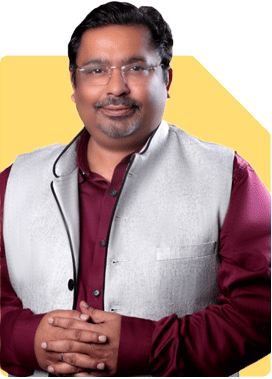
Omkeshwar

Omkeshwar Singh  | Answer  |Ask -

Head, Rank MF - Answered on Mar 17, 2020

Money
I am Binoy working in UAE as a sales executive age 39. From kochin, Kerala. May I kindly get some advice for my mutual funds portfolio? I am doing below mutual funds SIP direct growth. & I stopped some SIPs and hold the funds. Now I am doing 96k SIP. Need to start & continue total 1 lakh SIP for the next 8 to 10 years. Now current total SIP value is around 27 lakhs. This SIP s are for my retirement monthly income 30 to 35k (all are current value) after 10 years, and for my 2 children’s education 35 lakhs lumpsum after 10 & 15 years respectively. I am thinking to stop ICICI pru blue chip & Birla frontline equity and to start Mirae large cap & one more Multi cap fund. I am moderate to little aggressive risk taker. What are the changes required? Should I hold the stopped funds or I need to redeem and deposit it to another funds? if to do so, in which funds I need to invest this lumpsum amounts? Please advise me for the necessary changes required to make a good portfolio to invest for the next 8-10 years. Looking forward to get your reply positively.  Fund name Catgory Star Rating Binoy Nair     LARGE CAPS & HYBRID     AXIS BLUE CHIP EQUITY Equity - Large Cap Funds: 5 ICICI BLUE CHIP EQUITY Equity - Thematic Funds: - Global 4 BIRLA FRONTLINE EQTY Equity - Large Cap Funds: 3 ICICI PRU DEBT& EQUITY Hybrid - Aggressive Hybrid Fund 3 MULTI CAPS     KOTAK STANDARD MULTCAP Equity - Multi Cap Funds: 3 AXIS MULTICAP Equity - Multi Cap Funds: 5 AXIS FOCUSED 25 Equity - Focused Funds: 5 Franklin India Focused Equity Equity - Focused Funds: 2 MIDCAP, LARGE & MIDCAP     AXIS MIDCAP Equity - Mid Cap Funds: 3 HDFC MIDCAP Equity - Mid Cap Funds: 2 MIRAE ASSET EMERGING BLUECHIP EQUITY Equity - Large & Mid Cap Fund 4 STOPPED SIPs     FRANKLIN SMALLER COMPANIES Equity - Small cap Fund 2 BIRLA FOCUSED EQUITY Equity - Focused Funds: 4 HDFC HYBRID EQUITY Hybrid - Aggressive Hybrid Fund 4
Ans: You may continue with the 5 & 4 rated funds; however for others better alternative is available

Equity - Large Cap Funds:

- LIC MF Large Cap Fund-Regular Plan-Growth

- Axis Bluechip Fund - Regular Plan - Growth

- Kotak Bluechip Fund - Growth

- Mirae Asset Large Cap Fund - Growth Plan

Equity - Mid Cap Funds:

- Motilal Oswal Midcap 30 Fund (MOF30)-Regular Plan-Growth Option

- DSP Midcap Fund - Regular Plan - Growth

Equity - Value Funds:Tata Equity P/E Fund Regular Plan -(Growth Option)

Equity - Focused Funds:

- Axis Focused 25 Fund - Regular Plan - Growth Option

- Motilal Oswal Focused 25 Fund (MOF25)- Regular Plan Growth Option

Equity - Large & Mid Cap Fund

- BOI AXA Large & Mid Cap Equity Fund Regular Plan- Growth

- Canara Robeco Emerging Equities - Regular Plan - GROWTH

- Tata Large & Mid Cap Fund- Regular Plan - Growth

Hybrid - Aggressive Hybrid Fund

- Axis Equity Hybrid Fund - Regular Plan Growth

- Dsp Equity And Bond Fund - Growth

- Motilal Oswal Equity Hybrid Fund-regular Plan Growth

..Read more

Naveenn

Naveenn Kummar  |233 Answers  |Ask -

Financial Planner, MF, Insurance Expert - Answered on Sep 04, 2025

Asked by Anonymous - Aug 12, 2025
Money
Good Afternoon Sir I am Anand from Delhi.I am a 37 yrs old Central Govt Salaried Person. I am looking for long term investment and a goal of 10 crores in 15 years. I am contributing 20000 per month in provident fund and 60000 per month in MF through SIP and have planned for 10 percent step up.I have started investing from 2023 and have approx 7 lakhs in PF and 6 lakhs MF portfolio. Please review my portfolio and also suggest deletions you it as I feel I have too many funds.I am planning to stop my SIP in Kotak Multi Cap Fund and do it instead in Parag Parikh Flexi Cap and Motillal Midacp fund. Please suggest. My portfolio is as under. 1. Nifty 50 Index10000 2. Parag Parikh Flexicap10000 3. Motilal Midcap10000 4. Edelweiss Aggressive Hybrid Fund7000 5. Nippon Small Cap5000 6. Quant Small Cap5000 7. SBI Contra5000 8. Motilal MicroCap2000 9. ICICI Pru Gold ETF2000 10. Motilal NASDAQ ETF4000
Ans: Good Evening Anand Ji,

Thank you for sharing your detailed portfolio. At age 37, with a goal of ?10 crores in 15 years, you are on the right track — your current SIP of ?60,000/month + 10% step-up along with PF contribution can help you reach this corpus, provided you stay disciplined.

???? Current Portfolio (monthly SIP):

Nifty 50 Index – ?10,000

Parag Parikh Flexicap – ?10,000

Motilal Midcap – ?10,000

Edelweiss Aggressive Hybrid – ?7,000

Nippon Small Cap – ?5,000

Quant Small Cap – ?5,000

SBI Contra – ?5,000

Motilal MicroCap – ?2,000

ICICI Pru Gold ETF – ?2,000

Motilal NASDAQ ETF – ?4,000

Observations:

Too many funds (10 in total) → causes overlap, doesn’t improve returns.

Overexposure to small-cap (Nippon, Quant, Motilal MicroCap) → higher risk. Keep small-cap allocation ≤20%.

Edelweiss Aggressive Hybrid is not necessary if you already have equity + PF exposure.

Contra funds are thematic — not core holdings.

NASDAQ ETF adds global exposure but keep to

..Read more

Ramalingam

Ramalingam Kalirajan  |10872 Answers  |Ask -

Mutual Funds, Financial Planning Expert - Answered on Sep 16, 2025

Asked by Anonymous - Sep 15, 2025Hindi
Money
Please review my current mutual fund portfolio my aim is another 24 years i am 36 now started one year back most my i know too many funds. so i want to keep it to 4 to 5 funds and increase money in same. 1 SBi Focused regular 4k sip (started with 2k in 2023 increased 1k in 24 and 25) -- planning to continue 2 ppfas flexi cap 3k sip(started in mar 2024) -- continue 3 nippon small cap 3k sip (strated i june 2024) -- continue 4 mirae asset elss 2k sip(started in mar 2024) -- stop once reach 1 lakh current around 58k invested 5 zerodha nifty 250 large-mid 2k sip ( started from jun 2024) -- stop once reach 1 lakh current around 36k invested 6 hsbc multi cap 2k sip ( started from dec 2024) stop once reach 1 lakh current around 24k invested 7 motilal oswal 500 momentum 50 2k sip( started from oct 2024) -- continue 8 motilal oswal mid cap 2k sip (stated from july 2025) -- continue please give us your insights if i need to add one mid/small more or continue exist?
Ans: You have done well to start early at age 36.
A 24-year horizon gives you a powerful advantage.
You also seem clear in your intent to consolidate.
Too many funds create overlap and confusion.
Your step to reduce and focus is absolutely right.

» Reviewing Your Existing Portfolio

– You currently hold 8 different mutual funds.
– Some are for short goals (ELSS, HSBC, Zerodha).
– Others are long-term growth funds (Focused, Flexi, Small, Mid, Momentum).
– Your SIP commitment shows great discipline.
– Let us go through each one and evaluate.

» SBI Focused Fund – Continue

– This is a focused equity fund.
– A good long-term holding for wealth creation.
– Fund size and management are stable.
– You already increased SIP gradually.
– Continue and increase gradually with income growth.
– Avoid replacing this. It adds quality.

» PPFAS Flexi Cap – Continue

– One of the most consistent flexi-cap funds.
– Balanced risk and global exposure strategy.
– It fits long-term goals well.
– Fund manager is known for stability.
– You started recently. Give it time.
– Continue without changes. Increase SIP steadily.

» Nippon Small Cap – Continue

– Small caps bring growth but higher volatility.
– You are young. You can handle this.
– Don't go overboard with small-cap exposure.
– Keep this as your only small-cap fund.
– Avoid adding more in this category.
– Continue but cap exposure below 20% total.

» Mirae Asset ELSS – Stop After Rs.1L

– ELSS is mainly for tax saving.
– Once Rs.1 lakh 80C is done, no need.
– Keep it only if you lack 80C coverage.
– Else, stop after your Rs.1 lakh investment.
– No long-term need to retain it.
– Shorter lock-in makes it manageable.

» Zerodha Nifty 250 – Stop After Rs.1L

– This is an index fund.
– Index funds blindly copy market index.
– No fund manager input. No downside protection.
– Returns are average, not exceptional.
– Active funds give better value with skill.
– Stop at Rs.1 lakh as planned.
– Avoid further investment in index options.

» HSBC Multi Cap – Stop After Rs.1L

– Multi-cap is already covered via flexi cap.
– Also, Focused Fund gives good diversification.
– No need for overlap through this fund.
– Performance and consistency are also average.
– Stop SIP after reaching Rs.1 lakh.
– Do not increase this one further.

» Motilal Oswal 500 Momentum 50 – Continue

– This is a thematic strategy-driven fund.
– Momentum funds are volatile but can outperform.
– Keep exposure moderate, not more than 15%.
– Track performance closely every 2 years.
– Continue for now, but with caution.
– Increase SIP only if performance justifies it.

» Motilal Oswal Mid Cap – Continue

– Mid-cap is a must in long-term portfolio.
– Gives strong growth potential with some risk.
– Stick to only one mid-cap fund.
– You started recently, give it time.
– Continue and increase SIP slowly over years.

» Ideal Fund Count for You

– Keep only 4 or 5 mutual funds.
– This keeps your tracking easy and efficient.
– More funds create duplication and stress.
– Your long-term portfolio can be:

1 Focused Equity Fund

1 Flexi Cap Fund

1 Mid Cap Fund

1 Small Cap Fund

1 Thematic Fund (optional - Momentum)

– This keeps it clean and balanced.

» Recommended Action Plan Now

– Continue SBI Focused, PPFAS Flexi Cap, Nippon Small Cap.
– Continue Motilal Oswal Mid Cap and Momentum 500.
– Stop SIP in ELSS after Rs.1 lakh is reached.
– Stop Zerodha index fund after Rs.1 lakh is reached.
– Stop HSBC Multi Cap after Rs.1 lakh is reached.
– Increase SIPs in Focused, Flexi, Mid gradually.
– Keep total SIP in Small and Momentum limited.
– Let core SIPs go into Focused and Flexi Cap.

» Asset Allocation Tips

– Equity should be 80% or more at your age.
– Within equity, use this breakdown:

40% – Flexi + Focused (core funds)

25% – Mid Cap

15% – Small Cap

10% – Momentum

10% – Others (short-term goals, ELSS if needed)

– This keeps your portfolio aggressive but smart.

» Avoid Direct Plans – Stick with Regular Funds

– Direct plans save commission but offer no guidance.
– Mistakes in selection and timing are costly.
– Regular funds through a Certified Financial Planner help.
– You get human support, behaviour control and reviews.
– Good advice adds more value than saved fee.

» Don’t Add More Funds Now

– You already hold enough categories.
– Adding one more mid/small-cap fund is unnecessary.
– Instead, increase SIP in existing mid/small-cap fund.
– This keeps focus and improves compounding effect.
– Less clutter. More growth.

» Don’t Replace Core Funds

– Don’t shift from Focused or Flexi Cap funds.
– They are long-term wealth creators.
– Allow them time to show results.
– Avoid jumping to new trendy funds.

» Monitor SIPs Annually

– Review once in a year.
– Check returns against benchmarks and peers.
– Don’t panic with short-term underperformance.
– See 3 to 5 year consistency.
– Only then decide to switch or increase.

» Understand Tax Impact Clearly

– For equity MFs, LTCG above Rs.1.25 lakh taxed at 12.5%.
– STCG (below 1 year) taxed at 20%.
– Avoid frequent redemptions to save tax.
– Let funds grow for 10+ years.
– ELSS lock-in is 3 years but stay longer.
– Plan redemptions smartly after year 20.

» Insurance Must Be Separate

– Don't mix investment and insurance.
– Buy a pure term insurance plan separately.
– Don’t buy ULIPs or endowment policies.
– If you hold them, surrender and move to MFs.
– Insurance is for protection, not returns.

» Build Emergency Fund Separately

– Keep 6 months of expenses in a liquid fund.
– Don’t use equity mutual funds for emergencies.
– This protects SIPs during tough times.
– Helps you avoid stopping or redeeming in panic.

» Use a Certified Financial Planner

– A professional adds structure to your goals.
– They keep your asset mix balanced.
– They stop you from making emotional decisions.
– Use one to guide you for 24 years.
– Long-term plans need expert review and tracking.

» Finally

– You have started very well.
– You show great clarity and intent.
– Just reduce the clutter now.
– Focus only on 4 to 5 good funds.
– Gradually increase SIPs in your top 3.
– Don’t add new funds for now.
– Monitor and review once each year.
– Let compounding do its job slowly.
– Follow discipline, patience and planning.
– Stay invested for full 24 years.

Best Regards,
K. Ramalingam, MBA, CFP,
Chief Financial Planner,
www.holisticinvestment.in

https://www.youtube.com/@HolisticInvestment

..Read more

Latest Questions
Nayagam P

Nayagam P P  |10852 Answers  |Ask -

Career Counsellor - Answered on Dec 07, 2025

Career
Hello, I’m a student who recently joined the Integrated M.Sc Physics program at Amrita University. I’m aiming for a strong academic foundation and a clear career path. Could you please guide me on the following: How good is this course for research careers or higher studies (IISc, IITs, abroad)? What are the placement prospects after Integrated M.Sc Physics at Amrita? Does the program help in preparing for alternate options like UPSC, CDS/AFCAT, or technical roles? What skills (coding, research projects, certifications) should I start early to make the most of this degree?
Ans: Sree, Program Overview and Academic Foundation: Congratulations on joining the Integrated M.Sc Physics program at Amrita University. This five-year integrated program represents a rigorous pathway designed to equip you with advanced theoretical and experimental physics knowledge combined with cutting-edge scientific computing skills. The curriculum uniquely integrates a minor in Scientific Computing, which adds substantial computational capability to your profile—a critical advantage in today's research and professional landscape. The program incorporates comprehensive coursework spanning classical mechanics, electromagnetism, quantum mechanics, statistical physics, advanced laboratory work, and specialized topics in materials physics, optoelectronics, and computational methods, positioning you excellently for both research and professional careers.
Research Career Prospects: IISc, IITs, and Beyond: For research-oriented careers, the Integrated M.Sc Physics program at Amrita provides an exceptional foundation. Amrita's curriculum specifically aligns with GATE and UGC-NET examination syllabi, and the institution emphasizes early research engagement. The faculty at Amrita actively publish research in Scopus-indexed journals, with over 60 publications in international venues within the past five years, exposing you to active research environments.
To pursue research at premier institutions like IISc, you would typically follow the PhD pathway. IISc accepts M.Sc graduates through their Integrated PhD programs, and with your Amrita M.Sc, you're eligible to apply. You'll need to qualify the relevant entrance examinations, and your integrated program's emphasis on research fundamentals provides strong preparation. The final year of your Integrated M.Sc is intentionally structured to be nearly free of classroom commitments, enabling engagement with research projects at institutes like IISc, IITs, and National Labs. According to Amrita's data, over 80% of M.Sc Physics students secured internship offers from reputed institutions during academic year 2019-20, directly facilitating research career transitions.
Placement and Direct Employment Opportunities: Amrita University boasts a comprehensive placement ecosystem with strong corporate and government sector connections. According to NIRF placement data for the Amrita Integrated M.Sc program (5-year), the median salary in 2023-24 stood at ?7.2 LPA with approximately 57% placement rate. However, these figures reflect general placement trends; physics graduates often secure higher packages in specialized technical roles. Many graduates join software companies like Infosys (with early offers), Google, and PayPal, where their strong analytical and computational skills command competitive compensation packages ranging from ?8-15 LPA for entry-level positions.
The Department of Corporate and Industrial Relations at Amrita provides intensive three-semester life skills training covering linguistic competence, data interpretation, group discussions, and interview techniques. This structured placement support significantly enhances your employability in both government and private sectors.
Government Sector Opportunities: UPSC, BARC, DRDO, and ISRO: Your M.Sc Physics degree opens multiple avenues for prestigious government employment. UPSC Geophysicist examinations explicitly list M.Sc Physics or Applied Physics as qualifying degrees, enabling you to compete for Group A positions in the Geological Survey of India and Central Ground Water Board. The age limit for geophysicist positions is 32 years (with relaxation for reserved categories), and the exam comprises preliminary, main, and interview stages.
BARC (Bhabha Atomic Research Centre) actively recruits M.Sc Physics graduates as Scientific Officers and Research Fellows. Recruitment occurs through the BARC Online Test or GATE scores, with positions in nuclear science, radiation protection, and atomic research. BARC Summer Internship programs are available, offering ?5,000-?10,000 monthly stipends with opportunity for future scientist recruitment.
DRDO (Defense Research and Development Organization) recruits M.Sc Physics graduates through CEPTAM examinations or GATE scores for roles involving defense technology, weapon systems, and laser physics research. ISRO (Indian Space Research Organisation) regularly advertises scientist/engineer positions through competitive recruitment for candidates with strong physics backgrounds, offering opportunities in satellite technology and space science applications.
Other significant employers include the Indian Meteorological Department (IMD) recruiting as scientific officers, and NPCIL (Nuclear Power Corporation of India Limited), offering stable government service with competitive compensation packages exceeding ?8-12 LPA for scientists.
Alternate Career Pathways: UPSC, CDS, and AFCAT: UPSC Civil Services (IFS - Indian Forest Service): M.Sc Physics graduates qualify for UPSC Civil Services examinations, with the forest service offering opportunities for science-based administrative roles with potential to reach senior government positions.
CDS/AFCAT (Armed Forces): While AFCAT meteorology branches specifically require "B.Sc with Maths & Physics with 60% minimum marks," the technical branches (Aeronautical Engineering and Ground Duty Technical roles) require graduation/integrated postgraduation in Engineering/Technology. An M.Sc Physics integrates well with technical qualifications, though you would need engineering background for direct officer entry. However, you remain eligible for specialized technical interviews if applying through alternate defence channels.
UGC-NET Examination: This pathway leads to Assistant Professor positions in central universities and colleges across India. NET-qualified candidates receive scholarships of ?31,000/month for 2-year JRF positions with PhD pursuit, transitioning to Assistant Professor salaries of ?41,000/month in government institutions. This route provides long-term academic career security with research opportunities.
Private Sector Technical Roles
M.Sc Physics graduates are increasingly valued in data science, software engineering, and technical consulting. Companies actively recruit physics graduates for software development, where strong problem-solving and logical reasoning translate to competitive packages of ?10-20 LPA. Specialized domains including quantum computing development, financial modeling, and scientific computing offer premium compensation. Your minor in Scientific Computing makes you particularly attractive to technology companies requiring computational expertise.
International Opportunities and Higher Studies Abroad
An M.Sc from Amrita facilitates admission to PhD programs at international institutions. German universities offer tuition-free or low-fee MSc Physics programs (2 years) with scholarships like DAAD providing €850+ monthly stipends. US universities accept M.Sc graduates directly for PhD positions with full funding (tuition coverage + stipend). These pathways require GRE scores and strong Statement of Purpose articulating research interests. Research collaboration opportunities exist with Max Planck Institute (Germany) and CalTech Summer Research Program (USA), both welcoming Indian M.Sc students.
Essential Skills and Certifications to Develop Immediately: Programming Languages: Start learning Python immediately—it's universally used in research and industry. Dedicate 2-3 hours weekly to data analysis, scientific computing libraries (NumPy, SciPy, Pandas), and machine learning fundamentals. MATLAB is equally critical for physics applications, particularly numerical simulations and data visualization. Aim to complete MATLAB certification courses within your first year.
Research Tools: Learn Git/version control, LaTeX for scientific documentation, and data analysis frameworks. These skills are indispensable for publishing research papers and collaborating on projects.
Certifications Worth Pursuing: (1) MATLAB Certification (DIYguru or MathWorks official courses) (2) Python for Data Science (complete certificate programs from platforms like Coursera) (3) Machine Learning Fundamentals (for expanding technical versatility) & (4) Scientific Communication and Technical Writing (develop through departmental workshops)
Strategic Internship Planning: Leverage Amrita's research connections systematically. In your third year, apply to BARC Summer Internship, IISER Internships, TIFR Summer Fellowships, and IIT Internship programs (like IIT Kanpur SURGE). These expose you to frontier research while establishing connections for future PhD or scientist recruitment. Target 2-3 research internships across different specializations to develop versatility.

TO SUM UP, Your Integrated M.Sc Physics degree from Amrita positions you exceptionally well for competitive research careers at IISc/IITs, prestigious government scientist roles at BARC/DRDO/ISRO, and international PhD opportunities. The program's scientific computing emphasis differentiates you in the job market. Immediate priorities: (1) Master Python and MATLAB within the first two years; (2) Engage in research projects starting year 2-3; (3) Target internships at premiere research institutions; (4) Prepare GATE while completing your degree for maximum flexibility in recruitment; (5) Consider UGC-NET for long-term academic stability. Your career trajectory will ultimately depend on developing strong research fundamentals, demonstrating consistent excellence in specialization areas, and strategically selecting internship and research opportunities. The rigorous Amrita program combined with disciplined skill development positions you for exceptional career success across multiple sectors. Choose the most suitable option for you out of the various options available mentioned above. All the BEST for Your Prosperous Future!

Follow RediffGURUS to Know More on 'Careers | Money | Health | Relationships'.
Asked on - Dec 07, 2025 | Answered on Dec 07, 2025
Thankyou
Ans: Welcome Sree.

...Read more

Ramalingam

Ramalingam Kalirajan  |10872 Answers  |Ask -

Mutual Funds, Financial Planning Expert - Answered on Dec 06, 2025

Asked by Anonymous - Dec 06, 2025Hindi
Money
Dear Sir/Ma'am, I need some guidance and advice for continuing my mutual fund investments. I am a 36 year old male, married, no kids yet and no debts/liabilities as such. I have couple of savings in PPF, NPS, Emergency funds and long term investing in direct stocks. I recently started below mentioned SIPs for long term to grow wealth. Request you to review the same and let me know if I should continue with the SIPs or need to rationalize. Kindly also advice on how to invest a lumpsum amount of around 6lacs. invesco small cap 2000 motilal oswal midcap 2700 parag parikh flexicap 3000 HDFC flexicap 3100 ICICI prudential largecap 3100 HDFC large and midcap 3100 HDFC gold etf FOF 2000 ICICI Pru equity and debt fund 3000 HDFC balanced advantage fund 3000 nippon india silver etf FOF 2000
Ans: You already built a solid foundation. Many investors delay planning. But you started early at 36. That gives you a strong advantage. You have no liabilities. You have long term thinking. You also have diversified savings like PPF, NPS, Emergency funds and direct stocks. That shows clarity and discipline. This approach builds wealth with less stress over time.

You also started systematic investments in equity funds. That is a positive step. Your selection covers multiple categories like large cap, mid cap, small cap, flexi cap, hybrid and precious metals. So the intent is right. You are trying to create a broad portfolio. That gives balance.

» Your Portfolio Composition Understanding
Your current SIP list includes:

Small cap

Mid cap

Flexi cap

Large cap

Large and mid cap

Hybrid category

Gold and Silver FoF

Equity and Debt allocation fund

Dynamic hybrid fund

This shows you are trying to cover many segments. But too many categories can create overlap. When there is overlap, you get confusion during review. It also makes portfolio discipline difficult. You may think you are diversified. But the holdings inside may repeat. That reduces efficiency.

Your portfolio now looks like:

Equity dominant

Hybrid for stability

Metals for hedge

So the broad direction is fine. But simplifying helps in long-term habit building.

» Fund Category Duplication
You hold:

Two flexi cap funds

One large and mid cap fund

One pure large cap fund

One mid cap fund

One small cap fund

Flexi cap funds already invest across large, mid, small. Then large and mid also overlaps. So the large cap exposure gets repeated. That may not add extra benefit. But it increases monitoring complexity.

So I suggest rationalising. Keep one fund per category in core. Keep satellite space for only high conviction.

» Core and Satellite Strategy
A structured portfolio follows core and satellite method.

Core portfolio should be:

Simple

Long term

Stable

Satellite portfolio can be:

High growth

Concentrated

Based on your thinking level, you can structure like this:

Core funds:

One large cap

One flexi cap

One hybrid equity and debt fund

One balanced advantage type fund

Satellite funds:

One mid cap

One small cap

One metal allocation if needed

This division gives clarity. You can continue SIPs with review every year. No need to stop and restart often. That reduces behavioural mistakes.

» Your Current SIP List Review with Suggested Streamlining

You can consider continuing:

One flexi cap

One large cap

One mid cap

One small cap

One balanced advantage

One equity and debt hybrid

You may reconsider keeping both flexi caps and both gold silver funds. One of each category is enough. Because too many funds do not increase returns. It complicates tracking.

Precious metal funds should not be more than 5 to 7 percent in your portfolio. This is because metals are hedge assets. They do not create compounding like equity. They act as protection during cycles. So keep them small.

» How to Use the Rs 6 Lakh Lump Sum
You asked about lump sum investing. This is important. Lump sum should not go fully into equity at one time. Markets move in cycles. So use a staggered method. You can invest the lump sum through STP (Systematic Transfer Plan). You can keep the amount in a liquid fund and set STP toward your chosen growth funds over 6 to 12 months.

This reduces timing risk. It also creates discipline. So your Rs 6 lakh can be deployed gradually. You may use 50% towards core equity funds and 30% toward satellite growth category. The remaining 20% can go into hybrid category. This gives balance and comfort.

» Regular Funds Over Direct Funds
One important point many investors miss. Direct funds look cheaper. But they demand deep knowledge, discipline, and behaviour control. Most investors lose more through emotional selling and wrong timing than they save on expense ratio.

With regular funds through a Mutual Fund Distributor with Certified Financial Planner qualification, you get guidance, structure and correction. The advisory discipline protects you during market extremes. That is more valuable than a small saving in expense ratio.

A personalised planner also tracks portfolio drift, rebalancing need and category shifts. So regular fund investing gives long-term benefit and behaviour coaching.

» Actively Managed Funds over Index or ETF
Some investors choose index funds or ETF thinking they are simple and cheap. But they ignore drawbacks.

Index funds or ETF will not avoid weak companies in the index. They will invest whether the company grows or struggles. There is no fund manager decision making. So when markets are at peak, index funds continue aggressive exposure. In downturns also they fall fully. There is no cushion.

Actively managed funds work with research teams. They can avoid bad sectors. They can shift allocation based on market and economy. Over long term, this gives better alpha and stability. So continuing with actively managed funds creates better wealth compounding.

» SIP Continuation Strategy
Once the rationalisation is done, continue SIPs every month without interruption. Pause and restart behaviour damages compounding power. SIP works best when you go through all market cycles. You benefit more during corrections because cost averaging works.

So continue SIP amount. You can also review SIP increase every year based on income. Increasing SIP by 10 to 15 percent every year helps you reach large corpus faster.

» Asset Allocation Based Approach
One key point in wealth creation is having the right asset mix. Equity gives growth. Hybrid gives balance. Metals give hedge. Debt gives safety. Your asset allocation should stay aligned to your risk profile and time horizon.

Since you are young and have long term horizon, higher equity allocation is fine. But as time moves, rebalancing is important. Rebalancing protects gains and restores allocation.

So review your asset allocation every year or during major life events like child birth, home buying or retirement planning.

» Behaviour Management
Many portfolios fail not due to bad funds. They fail due to bad decisions. Selling during correction. Stopping SIP when market falls. Chasing past return performance. These mistakes reduce wealth.

Your discipline so far is good. Continue to stay patient during volatility. Equity rewards patience and time.

» Financial Goals Clarity
Since you have no children now, you can decide your long-term goals. Typical goals may include:

Retirement

Future child education

Dream lifestyle purchase

Health care reserves

When goals are clear, investment purpose becomes stronger. So you can map each fund category to goal horizon. Short-term goals should not use equity. Long-term goals should use equity with hybrid support.

» Role of Review and Monitoring
Review once in a year is enough. Frequent review can create anxiety. Annual review helps check:

Fund performance

Expense drift

Category relevance

Allocation balance

Then adjust only if needed. This progress helps you stay confident and aligned.

» Taxation Awareness
Equity mutual funds taxation rules are:

Short term (below one year holding) taxable at 20 percent

Long term (above one year holding) gains above Rs 1.25 lakh taxable at 12.5 percent

Debt mutual funds are taxed as per your income slab.

So always hold equity funds for long term. That reduces tax impact and gives better growth.

» SIP Increase Plan
You can create a simple plan to increase SIP over time. For example:

Increase SIP at every salary increment

Increase SIP during bonus time

Use rewards or extra income for investing

This habit accelerates wealth. So by the time you reach 45 to 50 years, your investments could reach a strong level.

» Insurance and Protection
Before investing large, ensure you have term insurance and health insurance. If not already done, it is important. Insurance protects wealth. Without insurance, even a small medical event can impact investment plan. So review this part also. Since you are married, cover both.

» Wealth Behaviour Mindset
You are already disciplined. Just keep these simple principles:

Invest without stopping

Review once a year

Avoid funds overlap

Follow asset allocation

Avoid reacting to media noise

This helps you reach long term milestones.

» Finally
You are on the right track. Only fine tuning and simplification is needed. Your discipline is visible. Your portfolio will grow well with structure, patience and periodic review. Use the Rs 6 lakh with STP approach. And continue SIP with rationalised categories.

With time and consistency, wealth creation becomes effortless and peaceful. You just need to stay committed and avoid overthinking during market movements.

Best Regards,
K. Ramalingam, MBA, CFP,

Chief Financial Planner,

www.holisticinvestment.in

https://www.youtube.com/@HolisticInvestment

...Read more

Dr Dipankar

Dr Dipankar Dutta  |1837 Answers  |Ask -

Tech Careers and Skill Development Expert - Answered on Dec 05, 2025

Career
Dear Sir, I did my BTech from a normal engineering college not very famous. The teaching was not great and hence i did not study well. I tried my best to learn coding including all the technologies like html,css,javascript,react js,dba,php because i wanted to be a web developer But nothing seem to enter my head except html and css. I don't understand a language which has more complexities. Is it because of my lack of experience or not devoting enough time. I am not sure. I did many courses online and tried to do diplomas also abroad which i passed somehow. I recently joined android development course because i like apps but the teaching was so fast that i could not memorize anything. There was no time to even take notes down. During the course i did assignments and understood the code because i have to pass but after the course is over i tend to forget everything. I attempted a lot of interviews. Some of them i even got but could not perform well so they let me go. Now due to the AI booming and job markets in a bad shape i am re-thinking whether to keep studying or whether its just time waste. Since 3 years i am doing labour type of jobs which does not yield anything to me for survival and to pay my expenses. I have the quest to learn everything but as soon as i sit in front of the computer i listen to music or read something else. What should i do to stay more focused? What should i do to make myself believe confident. Is there still scope of IT in todays world? Kindly advise.
Ans: Your story does not show failure.
It shows persistence, effort, and desire to improve.

Most people give up.
You didn’t.
That means you will succeed — but with the right method, not the old one.

...Read more

DISCLAIMER: The content of this post by the expert is the personal view of the rediffGURU. Investment in securities market are subject to market risks. Read all the related document carefully before investing. The securities quoted are for illustration only and are not recommendatory. Users are advised to pursue the information provided by the rediffGURU only as a source of information and as a point of reference and to rely on their own judgement when making a decision. RediffGURUS is an intermediary as per India's Information Technology Act.

Close  

You haven't logged in yet. To ask a question, Please Log in below
Login

A verification OTP will be sent to this
Mobile Number / Email

Enter OTP
A 6 digit code has been sent to

Resend OTP in120seconds

Dear User, You have not registered yet. Please register by filling the fields below to get expert answers from our Gurus
Sign up

By signing up, you agree to our
Terms & Conditions and Privacy Policy

Already have an account?

Enter OTP
A 6 digit code has been sent to Mobile

Resend OTP in120seconds

x