Home > Money > Question
Need Expert Advice?Our Gurus Can Help

Will 1 lakh per month be enough in 10 years? | Reader Q&A
Milind

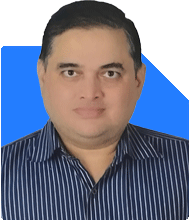
Milind Vadjikar  | Answer  |Ask -

Insurance, Stocks, MF, PF Expert - Answered on Dec 05, 2024

Milind Vadjikar is an independent MF distributor registered with Association of Mutual Funds in India (AMFI) and a retirement financial planning advisor registered with Pension Fund Regulatory and Development Authority (PFRDA).
He has a mechanical engineering degree from Government Engineering College, Sambhajinagar, and an MBA in international business from the Symbiosis Institute of Business Management, Pune.
With over 16 years of experience in stock investments, and over six year experience in investment guidance and support, he believes that balanced asset allocation and goal-focused disciplined investing is the key to achieving investor goals.... more

aparna Question by aparna on Dec 05, 2024Hindi
Listen
Money

1 lakh per month may not be sufficient in 10 years from now, could you also suggest any instrument that will help me grow this annuity? So that I am financially stable for howmanyever years I live.

Ans: Hello;

That is exactly the reason why I advised you to retain PPF and NPS accounts till 50 & 60 years of age which you may utilise to top-up your annuity corpus at appropriate stages.

This is a relatively safe option.

Other option is to put entire corpus in a conservative hybrid debt type mutual fund and do a SWP at max 3%.

If you increase SWP rate you run the risk of eating into your corpus during unforeseen drawdowns, declining interest rates and sideways market movements.

3% SWP on a 3 Cr corpus may yield you monthly income of around 65 K post-tax.

So the fund has to generate 8% minimum returns to ensure purchasing power of your corpus, which cannot be assured.

Best wishes;
DISCLAIMER: The content of this post by the expert is the personal view of the rediffGURU. Users are advised to pursue the information provided by the rediffGURU only as a source of information to be as a point of reference and to rely on their own judgement when making a decision.
Money

You may like to see similar questions and answers below
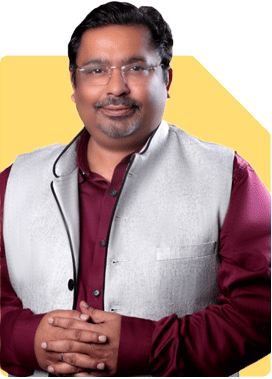
Ramalingam

Ramalingam Kalirajan  |10925 Answers  |Ask -

Mutual Funds, Financial Planning Expert - Answered on May 08, 2024

Listen
Money
Hi I am 59 years old, wanted to retire early by end of the year. I have saved 1.5 crores using various instruments FD, PPF and mutual funds. I would need 1 lakh per month. Please advise.
Ans: It's fantastic that you're planning ahead for your retirement. You've done a commendable job of saving up a substantial amount through different investment instruments.

Retiring early is a significant milestone, and it's essential to ensure your savings can support your desired lifestyle. With a corpus of 1.5 crores, generating 1 lakh per month for your expenses is achievable.

Given your age and retirement goal, it's crucial to focus on preserving and growing your savings while ensuring a steady stream of income. Consider transitioning a portion of your savings into income-generating assets such as dividend-paying stocks or debt funds.

Diversification is key to managing risk and maximizing returns. Spread your investments across different asset classes to minimize volatility and maintain a balanced portfolio.

Consulting with a Certified Financial Planner can provide personalized guidance on optimizing your investment strategy for retirement. They can help assess your financial situation, recommend suitable investment options, and create a comprehensive retirement plan tailored to your needs.

Remember to regularly review and adjust your investment portfolio to ensure it remains aligned with your retirement goals and risk tolerance. With careful planning and prudent investing, you can enjoy a fulfilling retirement with financial security and peace of mind.

..Read more

Ramalingam

Ramalingam Kalirajan  |10925 Answers  |Ask -

Mutual Funds, Financial Planning Expert - Answered on Jun 04, 2024

Listen
Money
Hello Sir, I am 33 years old. I want to retire after 10 years. My monthly salary is 85k now. I want to generate a fixed income of rupees 1.2 lakh per month.What would be the best option to invest. I am having 18 lakh in ppf as of now. I invest yearly 1.5 lakh.and mutual fund of about 10 lakh
Ans: Early Retirement Dreams: Planning for Your Future Lifestyle
Retiring at 43 with a fixed monthly income of Rs. 1.2 lakh is an ambitious goal, and it requires careful planning. Let's explore some key points to consider:

Understanding Your Target:

Early Retirement: Retiring at 43 means you'll have a longer retirement period than usual. You'll need a larger corpus to generate your desired income.

Monthly Income: A fixed income of Rs. 1.2 lakh per month translates to Rs. 1.44 lakh per year (considering 12 months).

Let's Do the Math (Estimates):

Investment Corpus: To generate Rs. 1.44 lakh yearly income, assuming an 8% return (considering inflation), you'd need a corpus of around Rs. 1.8 crore (corpus amount = annual income desired / return rate).
Your Current Savings:

PPF: Your existing Rs. 18 lakh in PPF and yearly contributions of Rs. 1.5 lakh are good! PPF offers guaranteed returns and tax benefits.

Mutual Funds: Your Rs. 10 lakh in mutual funds is also a positive step towards building your corpus.

Planning the Gap:

There's a gap between your current savings and the target corpus (Rs. 1.8 crore - your existing savings). Let's explore ways to bridge this gap:

Increase Investments: Consider increasing your monthly mutual fund investments based on your budget. A CFP can help you determine a suitable amount.

Investment Time Horizon: You have 10 years until your desired retirement. This allows for aggressive investment options, but also carries more risk.

Investment Options:

Actively Managed Equity Funds: These funds have fund managers who try to outperform the market by picking promising stocks. They have the potential for higher returns than passively managed options but also involve higher risk.

Debt Funds: Consider including some debt funds in your portfolio to balance the risk. Debt funds offer lower potential returns but also lower risk.

Remember: Actively managed funds can outperform the market but also carry more risk. A CFP can help you choose the right mix of funds based on your risk tolerance.

A CFP Can Help:

A Certified Financial Planner (CFP) can create a personalized plan for you. They can:

Analyze Your Risk Tolerance: Are you comfortable with potential market fluctuations? A higher risk tolerance allows for potentially higher returns through aggressive investments.

Create an Investment Strategy: A CFP can recommend a mix of actively managed equity and debt funds to balance risk and growth potential.

Factor in Inflation: Inflation reduces the purchasing power of money. A CFP will consider inflation to ensure your retirement corpus meets your future needs.

Beyond Investments:

Here are some additional strategies to consider:

Employer Benefits: Explore maximizing tax-saving options offered by your employer (if applicable).

Review Expenses: Can you identify areas to cut back on your current expenses? Saving more now allows for a larger corpus later.

Early Retirement Considerations:

Retiring early means losing out on potential future income growth. Healthcare costs may also rise in your retirement years. A CFP can help you consider these factors.

Taking Charge of Your Future:

Retiring early is a dream, and with careful planning and professional guidance, it can be achieved. Actively managed funds can be a powerful tool for growth, but remember, they also carry risk. Consulting a CFP can help you navigate your options and make informed investment decisions to secure your desired lifestyle in retirement.

Don't wait! Schedule a consultation with a CFP to get started on your early retirement journey.

Best Regards,

K. Ramalingam, MBA, CFP,

Chief Financial Planner,

www.holisticinvestment.in

..Read more

Ramalingam

Ramalingam Kalirajan  |10925 Answers  |Ask -

Mutual Funds, Financial Planning Expert - Answered on Sep 12, 2024

Money
I am now, 60 years , self dependant bachelor, I do not required to leave a legacy and so, I request you please to suggest me, to get periodical income (say monthly/Qly/hly) income or to get immediate annuity. I have now Rs.6.5 lacs available for lumpsum investment. for survival commitments, I have other income.
Ans: At 60 years old, and as a self-dependent bachelor without the need to leave a legacy, you have the flexibility to prioritize investments that will generate steady periodic income for you. With Rs. 6.5 lakhs available for lump sum investment, you can select from several options that suit your needs—be it monthly, quarterly, or annual income.

Since your survival commitments are covered by other income sources, you can focus on supplementing your finances with reliable income streams, ensuring stability without taking excessive risks. Let’s explore the most appropriate choices and help you identify the right mix of investments.

Investment Options for Periodical Income
The goal is to ensure that your Rs. 6.5 lakh corpus works for you, providing regular payouts and safeguarding your capital at the same time. Below are six possible options that you can explore.

1. Systematic Withdrawal Plan (SWP) in Mutual Funds
One of the most popular strategies for retirees is investing in mutual funds with a Systematic Withdrawal Plan (SWP). In this method, you invest your lump sum into a mutual fund and regularly withdraw a pre-determined amount (monthly, quarterly, etc.) based on your needs.

An SWP allows you to earn a periodic income without fully liquidating your investments. You still hold the mutual fund units, which have the potential for appreciation over time.

Benefits of SWP:

Flexibility to choose withdrawal amount and frequency.
You retain ownership of your investment, allowing capital to potentially grow.
It offers better tax efficiency compared to fixed deposits as only the capital gains portion of the withdrawal is taxed, not the principal.
SWP is especially useful for drawing a steady income while keeping your capital intact in the long term.
Types of Funds to Consider:

Balanced Hybrid Funds: A combination of equity and debt funds, offering moderate returns with lower risk.
Debt Funds: For those looking for more stability, debt funds provide reliable returns with lesser market volatility.
An SWP gives you flexibility while generating regular income. If managed correctly, it ensures that your principal stays intact, and you can earn a stable 6-8% return annually, depending on the type of fund and market conditions.

2. Senior Citizens’ Savings Scheme (SCSS)
A highly reliable and secure government-backed scheme, the Senior Citizens’ Savings Scheme (SCSS) is specially designed for people aged 60 and above. It’s a suitable option for retirees looking for a guaranteed income stream with minimal risk.

Key Features:

Interest Rate: Offers a fixed interest rate of approximately 8.2% (subject to quarterly revisions by the government).
Tenure: It has a maturity period of 5 years, which can be extended by 3 years.
Income Payout Frequency: Interest is paid quarterly, ensuring regular income.
Investment Limit: You can invest up to Rs. 15 lakhs in SCSS, but your Rs. 6.5 lakh corpus can still earn a substantial income.
SCSS is a safe, low-risk option that gives retirees a steady quarterly income. Its higher interest rate, compared to regular savings accounts and fixed deposits, makes it an attractive option. The principal is secure, and the interest payouts are regular, making it ideal for retirees looking for safety and stability.

3. Post Office Monthly Income Scheme (POMIS)
For a monthly payout option, the Post Office Monthly Income Scheme (POMIS) is another solid, low-risk option backed by the Government of India. This scheme is designed to provide a fixed monthly income, and is highly suitable for retirees like you.

Key Features:

Interest Rate: Currently offering around 7.4% interest annually, but payouts are made monthly.
Tenure: It has a fixed tenure of 5 years.
Investment Limit: Rs. 4.5 lakhs for individuals and Rs. 9 lakhs for joint accounts.
Payout Frequency: As the name suggests, you will receive income every month.
While POMIS doesn’t offer any capital appreciation, it is a safe and guaranteed source of monthly income. It is a popular choice among those seeking risk-free income options.

4. Fixed Deposits (FDs) with Regular Payouts
Bank Fixed Deposits (FDs) are a familiar option to many, offering assured returns over a fixed tenure. For senior citizens, most banks offer an additional 0.50% interest over the regular rates, making FDs slightly more lucrative.

Key Features:

Interest Rate: Senior citizens generally receive between 6-7% interest, depending on the bank.
Payout Frequency: FDs allow you to opt for monthly, quarterly, half-yearly, or annual interest payouts.
Tenure: You can choose the FD tenure based on your needs, ranging from 1 year to 10 years.
Though FDs offer predictable and safe returns, they don’t provide any capital appreciation, unlike mutual funds. Moreover, premature withdrawal from FDs may incur penalties, and the returns are fully taxable.

For someone looking for steady income without the volatility of the stock market, FDs remain a viable option. However, the interest rates are generally lower than those provided by government-backed schemes like SCSS and POMIS.

5. Immediate Annuity Plan
An Immediate Annuity Plan provides a guaranteed income for life or for a specified period, depending on the plan you choose. Once you invest your lump sum, the insurance company will start paying you immediately.

Key Features:

Guaranteed Lifetime Income: The annuity provides fixed payouts for life, ensuring you don’t outlive your savings.
Immediate Payout: You start receiving income shortly after making the investment.
Risk-Free: The payout is guaranteed, so you don’t need to worry about market volatility or fluctuations.
However, once invested in an annuity plan, your money is locked up, and you lose access to your capital. Additionally, annuity returns are typically lower, around 5-6%, and lack flexibility compared to SWPs or other investment options.

6. Corporate Bonds and Debentures
If you are comfortable with a slightly higher risk than FDs or SCSS, Corporate Bonds and Debentures can provide better returns while offering fixed, periodic payouts.

Key Features:

Interest Rate: High-rated bonds typically offer returns of around 7-9%.
Payout Frequency: You can choose bonds with monthly, quarterly, or annual interest payouts.
Risk: Corporate bonds carry more risk than government-backed schemes, as they depend on the financial health of the issuing company. However, selecting bonds with a high credit rating (AA and above) can reduce this risk.
Corporate bonds are an option for those who want higher returns without taking on too much risk. However, unlike government-backed options, they do come with some level of default risk, albeit minimal if you stick to top-rated bonds.

Suggested Investment Strategy
Given that you have Rs. 6.5 lakhs available, you should diversify your investments to balance risk, income, and capital growth. Here’s a suggested plan:

Systematic Withdrawal Plan (SWP): Invest Rs. 2.5 lakhs in a balanced or debt mutual fund. You can withdraw a fixed amount monthly or quarterly while your capital has the potential to appreciate over time.

Senior Citizens’ Savings Scheme (SCSS): Invest Rs. 2 lakhs in SCSS for quarterly interest payouts at a relatively high interest rate.

Post Office Monthly Income Scheme (POMIS): Invest Rs. 1.5 lakhs for assured monthly income with no risk to your capital.

Corporate Bonds or FDs: You can invest Rs. 50,000 in high-rated corporate bonds or a senior citizen FD for further income and liquidity.

This diversified approach ensures you get regular income through low-risk options like SCSS and POMIS, with the potential for growth through SWPs.

Finally
At your stage in life, it's important to prioritize stability and assured income. You have a variety of investment options, from SWPs and SCSS to annuities, all of which can help you maintain financial independence. Avoid locking all your capital into one option, as flexibility is key in case your needs or financial situation change.

By spreading your investments across secure and income-generating schemes, you can enjoy regular income while keeping some room for potential growth.

Best Regards,

K. Ramalingam, MBA, CFP,
Chief Financial Planner,
www.holisticinvestment.in

..Read more

Latest Questions
Reetika

Reetika Sharma  |458 Answers  |Ask -

Financial Planner, MF and Insurance Expert - Answered on Dec 24, 2025

Asked by Anonymous - Dec 16, 2025Hindi
Money
Hello Advait sir, I am 48 year having privet Job. I have started investment from 2017, current value of investment is 82L and having monthly 50K SIP as below. My goal to have 2.5Cr corpus at the age of 58. Please advice... 1. Nippon India small cap -Growth Rs 5,000 2. Sundaram Mid Cap fund Regular plan-Growth Rs 5,000 3. ICICI Prudential Small Cap- Growth Rs 10,000 4. ICICI Prudential Large Cap fund-Growth Rs 5,000 5. ICICI Prudential Balanced Adv. fund-Growth Rs 5,000 6. DSP Small Cap fund Regular Growth Rs 5,000 7. Nippn India Pharma Fund- Growth Rs 5,000 8. SBI focused Fund Regular plan- Growth Rs 5,000 9. SBI Dynamic Asset Allocation Active FoF-Regular-Growth Rs 5,000
Ans: Hi,

It is great that you are investing since 2017. Long investments and patience always gives results.
You can easily achieve your goal corpus by the time you turn 58, if investment done correctly.

The funds you mentioned have so much overlapping and scattered. It needs rework and complete reallocation. Maximum of 5 funds should be there. Take the help of a professional to align your portfolio with your goal and customized profile.

A random portfolio like yours can create an opposite impact and generate negative to zero returns.

And try to increase the monthly SIP by 10% each year. This will take care of inflation power.

Hence do consult a professional Certified Financial Planner - a CFP who can guide you with exact funds to invest in keeping in mind your age, requirements, financial goals and risk profile. A CFP periodically reviews your portfolio and suggest any amendments to be made, if required.

Let me know if you need more help.

Best Regards,
Reetika Sharma, Certified Financial Planner
https://www.instagram.com/cfpreetika/

...Read more

Reetika

Reetika Sharma  |458 Answers  |Ask -

Financial Planner, MF and Insurance Expert - Answered on Dec 24, 2025

Money
Hello and namaskar.. I am 36 years old. Need your guidance in the following funds- (a) parag parekh flexi cap - 7500/- per month (B) GROWW nifty midcap 150 index fund -2500/- per month (C) mirae asset ELLS tax saver -5000/- (D) pGIM india mid cap opp. Fund -5000/- (E) quant small cap fund-4000/- (F) ICICI prudential equity and debt fund - 3000 (G) HDFC FLEXI CAP FUND - 4000 (H) Uti nifty 50 index fund - 5000 Additionally I want to invest 1lakh annually. Tell me where to invest this additional amount. These funds are ok or I should exit from any fund and invest in any other fund. I want to get 2 crore till the end of 2035. Am I going on the right track.
Ans: Hi Rajesh,

Appreciate your dedication in investing in mutual funds for long term. The funds selected by you are very random and not recommended for your goal. Overall investments are also not in alignment, this portfolio is a very random one.
Currently you are investing 36000 per month - keep your investments simple in largecap, midcap, smallcap and mutlicap fund. Keep additional 1 lakh as well in these funds.

You should consider exiting funds like quant and shift to more stable ones.

Your current funds are direct, but direct funds are over-rated. A random portfolio like this can instead give less returns than a professionally designed one. It is always better to go for a regular portfolio suggested by a professional. Proper funds with a designed dedicated plan will help you reach your goal of 2 crores in 10 years in an efficient way.

Hence do consult a professional Certified Financial Planner - a CFP who can guide you with exact funds to invest in keeping in mind your age, requirements, financial goals and risk profile. A CFP periodically reviews your portfolio and suggest any amendments to be made, if required.

Let me know if you need more help.

Best Regards,
Reetika Sharma, Certified Financial Planner
https://www.instagram.com/cfpreetika/

...Read more

Reetika

Reetika Sharma  |458 Answers  |Ask -

Financial Planner, MF and Insurance Expert - Answered on Dec 24, 2025

Money
I am 62 years old and I forgot to apply for a monthly pension from EPFO, even though I worked for my previous company for 13 years. I am currently working for another company, but when I try to apply online, I don't see Form 10D; only Form 31 is showing, even though I have left my previous company. pls confirm me what is a issue.
Ans: Hi,

The issue is that you are still employed and online application for monthly pension i.e. Form 10D is available only after you have left service and updated your date of exit on the EPFO portal.
But as you are currently active with a new employer, the system only permits Form 31 for partial withdrawals.

Since you meet the requirements for a superannuation pension (age 62 with 13 years of service), please follow these steps to proceed:

1. Verify Your Service History - Check the "Service History" section of your UAN portal. Ensure your previous employer has officially updated your Date of Exit. The online system cannot process a pension claim without this status update.
2. Use the Offline Application Method - If the online portal remains restricted or encounters technical errors, you must submit a physical application.
* Download Form 10D: Obtain the hard copy from the official EPFO website.
* Employer Attestation: Complete the form and have it signed by your previous employer.
* Alternative Attestation: If your previous employer is unavailable or the company has closed, you may have the form attested by a Gazetted Officer, a Magistrate, or your Bank Manager.
3. Submission Details - Submit the signed form to your regional EPFO office along with the following:
* Three passport-sized photographs.
* A cancelled cheque (for the account where you wish to receive the pension).
* Valid proof of age.

For real-time status updates or specific account queries, you can reach the **EPFO helpline at 14470.

Let me know if you need more help.

Best Regards,
Reetika Sharma, Certified Financial Planner
https://www.instagram.com/cfpreetika/

...Read more

DISCLAIMER: The content of this post by the expert is the personal view of the rediffGURU. Investment in securities market are subject to market risks. Read all the related document carefully before investing. The securities quoted are for illustration only and are not recommendatory. Users are advised to pursue the information provided by the rediffGURU only as a source of information and as a point of reference and to rely on their own judgement when making a decision. RediffGURUS is an intermediary as per India's Information Technology Act.

Close  

You haven't logged in yet. To ask a question, Please Log in below
Login

A verification OTP will be sent to this
Mobile Number / Email

Enter OTP
A 6 digit code has been sent to

Resend OTP in120seconds

Dear User, You have not registered yet. Please register by filling the fields below to get expert answers from our Gurus
Sign up

By signing up, you agree to our
Terms & Conditions and Privacy Policy

Already have an account?

Enter OTP
A 6 digit code has been sent to Mobile

Resend OTP in120seconds

x