Home > Money > Question
Need Expert Advice?Our Gurus Can Help

Worried about retirement at 45 with family responsibilities? I can help.
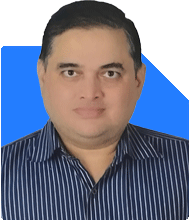
Milind

Milind Vadjikar  | Answer  |Ask -

Insurance, Stocks, MF, PF Expert - Answered on Apr 13, 2025

Milind Vadjikar is an independent MF distributor registered with Association of Mutual Funds in India (AMFI) and a retirement financial planning advisor registered with Pension Fund Regulatory and Development Authority (PFRDA).
He has a mechanical engineering degree from Government Engineering College, Sambhajinagar, and an MBA in international business from the Symbiosis Institute of Business Management, Pune.
With over 16 years of experience in stock investments, and over six year experience in investment guidance and support, he believes that balanced asset allocation and goal-focused disciplined investing is the key to achieving investor goals.... more
Asked by Anonymous - Apr 12, 2025Hindi

Listen
Money

I'm 45 years old with no significant retirement savings at the moment. I have a family to support, including a spouse and children, and I want to ensure financial security for them while also building a sufficient retirement corpus over the next 15 years. With limited time left until retirement, I'm concerned about how to balance current family responsibilities like children's education, household expenses, and any existing loans with aggressive savings and investment strategies for retirement. I'd like to know: What should my investment plan look like given my age and responsibilities? How much should I aim to invest monthly or annually to reach a comfortable retirement corpus? What are the best instruments like mutual funds,,NPS, PPF, or others for someone in my situation? Also, how can I protect my family's future financially while prioritizing my retirement goals?

Ans: Hello;

What is your current in-hand monthly income & regular monthly expenses?

Any EPF/MF investment done before?

Age of kids?

Age of retirement?

Please provide these inputs so as to advise you suitably.

Thanks;
DISCLAIMER: The content of this post by the expert is the personal view of the rediffGURU. Users are advised to pursue the information provided by the rediffGURU only as a source of information to be as a point of reference and to rely on their own judgement when making a decision.
Money

You may like to see similar questions and answers below

Ramalingam

Ramalingam Kalirajan  |10841 Answers  |Ask -

Mutual Funds, Financial Planning Expert - Answered on May 27, 2024

Asked by Anonymous - May 27, 2024Hindi
Money
I am 45 yr old, with EPF of 45L, kids plan of 12L PPF of 18L, no housing loan and stocks of 70Lacs.. how do I plan for my retirement. My earnings are 3lac and want to retire by 50
Ans: Planning for Early Retirement: A Holistic Approach
Congratulations on your financial journey so far! Your decision to plan for early retirement at 50 is commendable. Let’s walk through a comprehensive strategy to ensure your retirement is both comfortable and secure.

Assessing Your Current Financial Health
You've laid a strong foundation with diverse investments. Here’s a summary of your assets:

EPF (Employee Provident Fund): Rs 45 lakh
Kids’ Education Plan: Rs 12 lakh
PPF (Public Provident Fund): Rs 18 lakh
Stocks: Rs 70 lakh
Being debt-free, especially without a housing loan, is a great position. It allows you to focus on building your wealth further.

Estimating Future Financial Needs
Estimating future expenses is crucial. Consider factors like inflation, healthcare costs, and potential lifestyle changes post-retirement. Currently, your earnings are Rs 3 lakh per month. Post-retirement, aim to replace at least 70% of this income to maintain a comfortable lifestyle. Calculate your expected monthly expenses and include a buffer for unexpected costs.

Diversification and Risk Management
Your investment diversification is commendable. However, it requires ongoing assessment. As you near retirement, transitioning from stocks to mutual funds can help mitigate risk. Mutual funds offer professional management and diversification, which can be particularly beneficial in volatile markets.

Transitioning from Stocks to Mutual Funds
Stocks can be volatile, especially as you approach retirement. Gradually shifting to mutual funds can help secure your retirement corpus. Mutual funds, especially actively managed ones, are overseen by experts who can adapt to market changes and aim for stable returns. This transition should be done gradually to balance growth and stability.

Maximizing Your EPF and PPF
EPF and PPF are pillars of your long-term savings due to their tax benefits and stable returns. Continue maximizing your contributions to these accounts. EPF provides security and steady growth, while PPF offers risk-free returns and tax benefits under Section 80C.

Enhancing Your Kids’ Education Fund
Your kids' education plan is at Rs 12 lakh, which is a good start. However, education costs are rising. Consider increasing this corpus. Invest in diversified funds with a moderate risk profile. Actively managed funds can be a good choice here, offering professional management and potential for higher returns.

Health Insurance: A Priority
Health expenses can significantly impact your retirement funds. Ensure you have adequate health insurance coverage. Review your current policy and consider increasing the coverage to safeguard against rising medical costs.

Building an Emergency Fund
An emergency fund is essential. Aim to save at least 6 to 12 months' worth of living expenses. This fund should be easily accessible and will protect you against unforeseen expenses without disrupting your investment strategy.

Structuring Your Stock Portfolio
Your stock portfolio is substantial at Rs 70 lakh. Regularly review your holdings to ensure a balanced approach across different sectors and market capitalizations. As mentioned, gradually transition from direct stock investments to actively managed mutual funds. These funds benefit from professional expertise and research, offering potentially better risk-adjusted returns.

Regular Review and Rebalancing
Regularly review and rebalance your portfolio. Ensure it aligns with your risk tolerance and retirement goals. Rebalancing helps capture gains and reduces exposure to underperforming assets.

Planning for Inflation
Inflation erodes purchasing power over time. Your retirement corpus must grow faster than inflation. Actively managed funds often outpace inflation and provide better real returns. Regularly update your financial plan to reflect current inflation rates.

Retirement Corpus Calculation
Calculate the corpus needed for a comfortable retirement by considering life expectancy, inflation, and desired lifestyle. Use financial planning tools or consult a Certified Financial Planner to get accurate estimates. This will help in setting a clear savings target.

Creating a Withdrawal Strategy with SWP
Plan a systematic withdrawal strategy for your retirement funds to ensure a steady income stream while preserving your corpus. A Systematic Withdrawal Plan (SWP) can be highly beneficial. SWP allows you to withdraw a fixed amount at regular intervals, providing a steady cash flow and tax efficiency. It also helps in managing market risks and ensures your corpus lasts longer.

Continuous Learning and Adaptation
Stay informed about financial markets and investment opportunities. Financial planning is dynamic. Adapt your strategy based on changing economic conditions and personal circumstances.

Retirement Goals and Dreams
Retirement is not just about financial security. It’s about achieving your dreams and enjoying life. Plan activities and goals you want to pursue post-retirement. Whether it’s travel, hobbies, or spending time with family, having clear goals will keep you motivated and focused.

Seeking Professional Guidance
While you are managing well, professional guidance can enhance your strategy. A Certified Financial Planner (CFP) can provide personalized advice, considering your unique circumstances and goals. Regular consultations can keep your plan on track.

Tax Planning
Effective tax planning can significantly impact your retirement corpus. Understand the tax implications of your investments. Opt for tax-efficient investments. Utilize all available tax benefits to maximize your savings.

Preparing for Market Volatility
Market volatility is inevitable. Prepare a strategy to handle market downturns. Diversify your investments and avoid panic selling. Long-term investment in actively managed funds can help navigate market fluctuations effectively.

Estate Planning
Ensure your estate planning is in order. Create a will and consider setting up trusts if necessary. This secures your assets and ensures your wishes are honored.

Maintaining Financial Discipline
Maintain financial discipline throughout your pre-retirement phase. Avoid unnecessary expenses and impulsive investments. Stick to your financial plan and review it periodically.

Conclusion
Your current financial health is robust. With careful planning and disciplined execution, you can achieve your goal of retiring by 50. Diversify, review, and adapt your investments. Focus on tax efficiency and inflation protection. Seek professional guidance when needed. Your dedication to securing a comfortable future is commendable. Continue on this path with confidence and clarity.

Best Regards,

K. Ramalingam, MBA, CFP,

Chief Financial Planner,

www.holisticinvestment.in

..Read more

Milind

Milind Vadjikar  | Answer  |Ask -

Insurance, Stocks, MF, PF Expert - Answered on Sep 10, 2024

Listen
Money
Hi, My name is Kunal, I am 38 years old and my wife is 30 years old. I will be retired at the age of 60. I have two kids, a boy(9 years) and a girl(3 years). My basic is 57000 and I get 3% annual increment on basic. My take home salary is 48000. I have PPF(12500/M), SSY(2000/M) and LIC(5850/M) and our monthly expenses around 20000. I want to buy a home, children's educational expenses and my retirement goals are 1 Cr. Can you give a valuable strategy, how and where to invest to get my all goals?
Ans: I presume you have endowment type life insurance policy from LIC, the returns from which are not up to the mark. If you can surrender it and take a term insurance plan then you can still save around 50K annually after factoring Term Plan premium of 20K pa, considering your current annual payment to LIC of ~70K. That translates to investible surplus of 4K + current monthly disposal income after expenses: 7K, So 11K SIP can be initiated. 4K SIP for 15 years will led to corpus of 22L+(13%return assumed) for daughter's education

If surrendering the LIC policy is not an option then you can still deploy the current balance of 7K + incremental disposable part of salary each year into a SIP for 22 years considering conservative return of 13% it can still build a retirement corpus of 1Cr+ as desired.

You can fund son's higher education through PPF but for daughter's education you need to hike investments in SSY also to 1.5L pa and for house you will need to find home loan(Use EPF partial withdrawal towards down payment)

Here it pertinent to note that you may need to increase your income in some way maybe either job change or spouse working so to have additional funds to invest for your goal fulfillment. Happy to help if you have any further queries.

..Read more

Ramalingam

Ramalingam Kalirajan  |10841 Answers  |Ask -

Mutual Funds, Financial Planning Expert - Answered on Jul 30, 2025

Asked by Anonymous - Jul 11, 2025Hindi
Money
Hi I am 32 . I am earning 1.10 L Per month. I have personal loan of 3.5 L out of which 2 L is paid as of now(12k per month). Have 4.5 k per month for term insurance, have 25k as lumpsum in less, have 2.5k per month for index fund. No kids as of now and planning for it. How to plan my investment for the future to have better retirement and have good returns from the age of 45
Ans: At age 32, you are already doing many things right.
You are earning well. You are paying your loan regularly.
You have term insurance. You are saving and investing.
That shows clarity and responsibility.

With better planning, you can achieve early financial freedom.
Let us go step by step and explore a full 360-degree plan.

? Focus on Closing Personal Loan Early
– Personal loan interest is very high.
– Even 12% interest eats your returns.
– Try to pay off the remaining Rs.1.5 lakh soon.
– Use your annual bonus or extra income to close it.
– Once loan is over, you free up Rs.12,000 every month.
– This amount can be used for long-term wealth building.

? Avoid Investing in Index Funds Going Forward
– Index funds just copy the market, they do not beat it.
– They have no active fund manager to protect you in a crash.
– Market corrections will hurt you more in index funds.
– Index funds suit foreign markets, not Indian retail investors.
– You need better risk-adjusted performance.
– Actively managed funds do better in a growing market like India.

? Stop Future SIPs in Index Funds
– Redeem the index fund once you see profit.
– If gains are more than Rs.1.25 lakh, 12.5% LTCG applies.
– For short term, 20% STCG applies.
– After exit, switch to actively managed regular mutual fund.
– This will give you better control and higher growth.

? Always Invest Through Certified Financial Planner’s MFD Channel
– Direct plans save commission, but lose expert guidance.
– You end up doing guesswork alone.
– You may miss rebalancing, tax planning, or asset shift.
– Regular plans via CFPs give full-service support.
– You get annual review, performance check, goal mapping.
– This helps in both return and peace of mind.

? Build Emergency Fund First Before More Investments
– You need 4–6 months of expenses in liquid mutual fund.
– It must be easy to access during job loss or emergency.
– You are planning to start a family. So expenses may rise.
– Emergency fund will protect your SIPs during tough times.
– Without this fund, you may stop SIPs midway.

? Shift the Rs.25,000 Lumpsum in Savings Account
– Savings account returns are very low.
– Keep only Rs.10,000 in savings for routine expenses.
– Rest Rs.15,000 can be shifted to liquid fund.
– From there, do weekly STP to equity mutual funds.
– This builds better returns with low risk.

? Start Long-Term SIP for Retirement from Now
– Retirement is 28 years away if you plan till 60.
– But since you want returns from age 45, we plan till then.
– That’s only 13 years left. So time is limited.
– Start SIP in equity mutual fund now with Rs.5,000–7,000 monthly.
– Use actively managed flexicap or multi-cap funds.
– Over 13 years, this SIP can build huge corpus.

? After Loan Closure, Increase SIP Aggressively
– You will save Rs.12,000 every month after loan is over.
– Use this full amount for long-term SIP.
– That means total SIP becomes Rs.17,000 or more monthly.
– This is the most powerful wealth creation method.
– Early SIP gives strong compounding.

? Invest Separately for Child-Related Goals
– You are planning for a child soon.
– Child education will need funds from age 3 onwards.
– Start a separate SIP of Rs.2,000–3,000 monthly.
– Use balanced advantage fund or hybrid fund.
– This gives safety with growth.
– Increase it over time as income grows.

? Don’t Mix Insurance with Investment
– Only term insurance is needed.
– No need for ULIP, endowment, or LIC saving plans.
– They give poor returns and lock-in.
– If you already have them, surrender and shift to mutual funds.
– Keep insurance and investment separate always.

? Review and Rebalance Your Portfolio Yearly
– Funds don’t perform equally every year.
– Your goals and life also change yearly.
– Rebalancing helps you stay aligned with your targets.
– Your Certified Financial Planner will review and guide every year.
– This improves long-term performance and reduces risk.

? Increase SIP by 10% Each Year
– As salary grows, increase SIP also.
– If your SIP stays flat, your goals may fall short.
– Use bonus, hike, or incentives to boost SIP yearly.
– This keeps your investments ahead of inflation.

? Avoid Real Estate for Wealth Creation
– Real estate is illiquid and expensive.
– No proper return tracking.
– Maintenance costs, taxes, and delay in selling are major issues.
– Mutual funds offer better transparency, growth, and liquidity.

? Consider Health Insurance for Family
– Don’t depend only on company insurance.
– Buy a family floater health plan outside.
– As your family grows, this becomes more useful.
– It also protects your investments from medical emergencies.

? Don’t Chase Fancy or Trendy Funds
– Sectoral or theme-based funds are risky.
– They give returns in short bursts, then fall sharply.
– For wealth creation, use diversified funds only.
– Avoid NFOs or fund offers without strong history.

? Use SIP in Growth Option Only
– Don’t choose IDCW (dividend) options.
– Dividends are now taxed as per your slab.
– Growth option helps full compounding.
– This is the best way to build retirement corpus.

? Tax Planning Must Be Done Smartly
– ELSS funds are useful for tax saving.
– They also give better returns than PPF or LIC.
– Invest only in one or two ELSS funds.
– Don’t mix ELSS with long-term SIP. Keep them separate.

? Avoid Investing in Gold for Retirement
– Gold is not a wealth builder.
– It is a hedge, not a growth tool.
– Keep gold only for consumption, not retirement.
– Equity mutual funds will beat gold over long term.

? After Age 40, Start Shifting to Low-Risk Funds
– From age 45, you need returns regularly.
– Shift 25% of your portfolio to hybrid or balanced fund.
– In next few years, increase the portion step by step.
– This reduces risk when nearing your usage age.

? Don’t Touch Retirement Corpus for Any Other Goal
– Keep this investment separate and untouched.
– Use separate SIPs for short goals like car or travel.
– Mixing goals creates confusion and shortage later.
– Treat retirement as non-negotiable.

? Create a Written Financial Plan With Goals and Review Points
– Put your income, expenses, loan, SIPs, and goals in one place.
– This gives clarity and commitment.
– Update it every year with a Certified Financial Planner.
– Without a plan, your investment gets directionless.

? Don’t Compare Your Returns With Others
– Every investor has different goals and risk level.
– Focus on your own path.
– Returns depend on time, discipline, and asset mix.
– Comparing only brings doubt and poor decisions.

? Don’t Delay. Start Today
– The earlier you start, the stronger the growth.
– Each year’s delay reduces the final amount heavily.
– No need to wait for market low.
– Start SIP with what you have now. Increase later.

? Finally
– You are on a very good path at age 32.
– Clear off the personal loan soon.
– Stop index funds and shift to regular, actively managed funds.
– Don’t go for direct plans. Use Certified Financial Planner-guided channel.
– Build emergency fund. Start goal-based SIPs.
– Increase SIP every year. Review yearly.
– Plan for child, insurance, and retirement separately.
– Avoid distractions like real estate, gold, or fancy funds.
– Build wealth with clarity, patience, and guidance.

Best Regards,
K. Ramalingam, MBA, CFP,
Chief Financial Planner,
www.holisticinvestment.in
https://www.youtube.com/@HolisticInvestment

..Read more

Ramalingam

Ramalingam Kalirajan  |10841 Answers  |Ask -

Mutual Funds, Financial Planning Expert - Answered on Jul 12, 2025

Money
Hi I am 32 . I am earning 1.10 L Per month. I have personal loan of 3.5 L out of which 2 L is paid as of now(12k per month). Have 4.5 k per month for term insurance, have 25k as lumpsum in less, have 2.5k per month for index fund. No kids as of now and planning for it. How to plan my investment for the future to have better retirement and have good returns from the age of 45.
Ans: You're 32 and earning Rs. 1.10 lakh monthly. You’ve paid off a good part of your personal loan. You have term insurance in place. You also invest in an index fund monthly. You plan for retirement and early financial freedom from age 45. This is a good time to strengthen your financial life.

? Review and Close Debt First
– You still owe Rs. 1.5 lakh on your personal loan.
– Continue paying Rs. 12,000 monthly to clear it soon.
– Try prepaying extra if surplus is available.
– Ending loans gives peace and cash flow.
– Avoid taking any new personal loans.
– Credit card loans and EMIs also need to be avoided.

? Emergency Fund is Non-Negotiable
– First build an emergency fund of 6 months’ expenses.
– That includes rent, bills, EMIs, and lifestyle spends.
– Keep this in liquid mutual funds, not savings account.
– It gives safety during job loss or family emergency.
– Don’t mix emergency fund with other goals.
– Withdraw only during real emergencies.

? Reconsider Your Index Fund SIP
– Index funds copy stock market performance.
– In India, they don’t offer protection during falls.
– They lack human guidance and smart decision-making.
– In falling markets, index fund will fall equally.
– You also miss chances to beat the market.
– Actively managed funds have a real fund manager.
– These funds aim to deliver better than the index.
– They change the portfolio based on research and timing.
– That helps manage risk and improve returns.
– Shift your Rs. 2,500 SIP to active mutual funds.
– Do it via regular plan through a Certified Financial Planner.

? Avoid Direct Plans, Use Regular Plans
– Direct funds may look cheaper but are risky.
– You don’t get fund advice or personalised guidance.
– A wrong fund can lead to poor results.
– Regular plans are managed with advisor support.
– You get reviews, risk assessment, and behaviour support.
– Especially during volatile times, guidance matters more than returns.
– It saves you from emotional mistakes.

? Revisit Insurance Decisions
– You pay Rs. 4,500 monthly for term insurance.
– That seems high unless coverage is very large.
– Reassess if policy premium suits your income.
– Term insurance is must. But amount should be right.
– It should cover 10-15 times your annual income.
– Don't mix insurance with investment.
– Don’t buy endowment, ULIP or money-back policies.
– If you already hold any of them, check surrender value.
– Reinvest that amount into mutual funds.

? Plan Monthly Budget With Clear Allocations
– Your income is Rs. 1.10 lakh per month.
– Allocate expenses first – rent, food, EMIs, lifestyle.
– Then fix SIPs for investment.
– Avoid spending what is left after saving.
– Instead, spend what is left after investing.
– Ideal allocation can be 30% investing, 60% living, 10% for goals.
– Over time, increase SIP amount as income grows.

? Fix Clear Goals Before Investing
– Goals make investments meaningful and focused.
– You want early retirement at 45.
– Also planning to start a family soon.
– List short-term, medium-term, and long-term goals.
– Match each goal to a suitable mutual fund.
– Don’t mix retirement investment with home or child expenses.
– Separate SIPs for each goal is a wise step.

? Focus on Retirement Planning Aggressively
– You want good returns from age 45.
– So you have 13 years to invest now.
– That’s a powerful time window.
– Start a dedicated SIP for retirement.
– Use diversified equity mutual funds for this.
– Choose large-cap, mid-cap, and flexi-cap types.
– Equity is ideal for 10+ year horizons.
– Stay invested fully without withdrawing midway.

? Use Step-Up SIP Feature
– Start with a basic SIP now.
– But increase amount every year as salary grows.
– This is called step-up SIP.
– It builds long-term wealth steadily.
– You won’t feel the pinch, but results will be big.

? Child Planning Means Goal Planning
– If you’re planning for kids, goal planning becomes more important.
– Child’s school and college will need big amounts.
– Start SIPs now to avoid burden later.
– Use hybrid or balanced funds for mid-term child goals.
– For education or marriage goals beyond 10 years, use equity funds.
– Keep each goal separate to track properly.

? Avoid Real Estate for Investment
– Real estate demands big capital and loans.
– It is illiquid and returns are slow.
– Property selling is complex and involves risk.
– It is not fit for young investors like you.
– Use mutual funds for wealth creation instead.

? Don’t Fall for Fancy Investments
– Avoid stock tips, crypto, F&O, and unknown apps.
– Many look exciting but are not safe.
– Focus on proven, long-term investment methods only.
– Discipline is more important than product.

? Diversify But Don’t Overdo It
– Have 3 to 4 well-chosen mutual funds only.
– Too many funds cause overlap and confusion.
– Choose funds from different categories.
– Large-cap, flexi-cap, mid-cap, and hybrid can be considered.
– Decide mix based on your risk level.

? Consider Tax Saving Wisely
– If you need to save under Section 80C, use ELSS funds.
– ELSS has a 3-year lock-in.
– But it also offers equity returns and tax benefit.
– Invest in ELSS only after covering retirement and emergency fund.
– Don’t invest just for tax saving.

? Use Liquid Funds for Short-Term Needs
– If any goal is within 2 years, use liquid funds.
– Don’t invest short-term money in equity.
– Use these funds for travel, gadgets or child birth costs.
– These funds give better returns than savings account.

? Know Taxation of Mutual Funds
– Equity mutual funds held over 1 year are long-term.
– Gains above Rs. 1.25 lakh get 12.5% tax.
– Gains under 1 year are short-term and taxed at 20%.
– Debt funds are taxed as per your income slab.
– Plan redemptions accordingly to reduce tax.

? Automate Investments, Reduce Manual Actions
– Setup SIPs as auto-debit from your account.
– This builds habit and avoids delays.
– Manual investing is harder to follow long-term.

? Don’t Time the Market
– Don’t wait for the “right time” to invest.
– Invest every month regularly.
– Market ups and downs will average out.
– Waiting wastes precious compounding time.

? Review Once a Year, Not Monthly
– Don't keep checking fund performance every week.
– Review once or twice a year with your CFP.
– Make changes only when goals or income change.
– Don’t chase best-performing funds always.

? Behaviour Is More Important Than Return
– Many investors get scared and stop investing.
– Staying calm during market falls is key.
– Your behaviour decides your success more than fund return.
– That’s why guidance from a CFP is vital.

? Track Goals, Not Just Portfolio
– Don’t just look at profits.
– Check if goals are on track.
– Track each SIP’s progress towards its target.
– Adjust SIPs when salary or expenses change.

? Finally
– You are already doing many things right.
– You earn well and are financially aware.
– But small improvements will make big difference.
– Avoid index funds. Shift to active mutual funds.
– Stop direct plans. Use regular funds with a CFP.
– Focus more on retirement and child-related goals.
– Plan debt-free and disciplined life.
– With 13 years of focus, your goal of early returns at 45 is possible.
– Take steps today and build future steadily.

Best Regards,
K. Ramalingam, MBA, CFP,
Chief Financial Planner,
www.holisticinvestment.in
https://www.youtube.com/@HolisticInvestment

..Read more

Latest Questions
Reetika

Reetika Sharma  |354 Answers  |Ask -

Financial Planner, MF and Insurance Expert - Answered on Nov 12, 2025

Asked by Anonymous - Nov 06, 2025Hindi
Money
I am 55 years old NRI. I looking forward my superannuation after 3 years at 58. Currently I have following investments (1) SIP MF Invested 1.4 cr, MV 2.01 cr. Montly SIP of 5.28 lakhs, can continue for 1 year more. MF Diversified into Small Cap 40%, Mid Cap 25% Large Cap 10%, Flexi Cap 15%. (2) FD for 1.0 cr @ 6.75% (3) Shares MV 40.0 lakh (4) CG Bond 19.0 lakh (5) 3 flats MV 2.25 Cr (6) Land MV 2.25 cr (7) 1 underconstruction flat Paid 50.0 laks, balance 1.5cr to be paid in next 2 years (8) 2 Sons education and marriage liability 2.5 cr in next 4 years. (9) Loan o/s of Rs 50.0 lakh (10) I am expecting monthly expenses of Rs 2.0 lakh per month. Pls advise suitability of my portfolio to generate montly income of Rs 2 lakh for next 30 years post retirement. If any additional investment or re-arrangement required, pls advise. My SIP are (a) Parag Parekh Flexi 50K (b) Aditya Birla Frontlline 23K (c) Mirae Large & Small 15K, (d) Nippon Growth 33K, (e) Nippon Large Cap 35K, (f) DSP small 12K, (g) Nippon Small Cap 27K, (h) Quant Small 49K, (i) Quant Active 25K, (j) Quant Flexi 25K, (k) HDFC Small 30K, (l) PGIM Midcap 51K, (m) Motilal Oswal Mid Cap 93K (n) Motilal Large & Midcap 29K and (o) Motilal Momentum 50 Index 31K.
Ans: Hi,

You are on the right path towards a steady and comfortable retirement post 3 years. Let us assess the entire financial one at a time.

1. FD - 1 crore. This entire amount can be treated as your emergency fund. Although use 50% of this fund to close your personal loan.
2. Direct equity - 40 lakhs. You can consider moving this entire allocation to mutual funds as direct equity investment is quite risky if you do not much about it.
3. CG Bonds - 19 lakhs - good debt investment option.
4. Life and health insurance - can increase the covers, specially now when you have time. Post retirment would be difficult for you.
5. 3 Flats worth 3 cr - with monthly rental income of 50k.
6. Plot worth 2.25 crores and Flat which will be fully paid before retirement from salary.
7. Physical Gold - good to carry.
8. Personal loan - 50 lakhs. Consider closing it using amount from your FD.
9. Current MF corpus - 2.08 crore with ongoing monthly SIP of 3.5 lakhs. It will become 4.25 crores at your age of 58 if you continue investing.

> Current ongoing SIPs have a lot of overlapping which should be avoided to get the best return on investments. This entire allocation needs a thoughtful and careful planning.
- For retirement, your current MF corpus and stocks would be sufficient to fund your retirement in addition to your rental income. You will also get your PF and gratuity while retiring. These will fund your retirement in initial 5 years.
- For later years, post the age of 63, start SWP from your MF portfolio wrt your expenses (inflation adjusted).
- Work with a professional to reallocate the funds in your current portfolio so as to fund your retirment wrt to retirment strategy.
- Refrain from buying any policy to lock-in your funds.
- A professional can design a bucket strategy for your mutual fund corpus. This way, you will get your monthly expenses and the rest portfolio keeps on growing. This fund will never end and you will leave a great fortune for your kids.

Hence do consult a professional Certified Financial Planner - a CFP who can guide you with exact funds to invest in keeping in mind your age, requirements, financial goals and risk profile. A CFP periodically reviews your portfolio and suggest any amendments to be made, if required.

Let me know if you need more help.

Best Regards,
Reetika Sharma, Certified Financial Planner
https://www.instagram.com/cfpreetika/

...Read more

Reetika

Reetika Sharma  |354 Answers  |Ask -

Financial Planner, MF and Insurance Expert - Answered on Nov 12, 2025

Money
Dear sir, Hope you are doing well. Sir I am central govt employee ,36 yrs of age working in Bengaluru . I have invested in lands in tier 2 cities 3 plots(in hubli) for which loan has been cleared. monthly sips of 12000 in MF for education of daughters which i am expecting to give me good compounding yield over period of 12 years from now. purchased stocks of 5 lakhs & kept it for long term. as of now i dont have any loans and my salary and expenses and savings are at par . I may relocate to hubli (my native also)as part of rotational transfer of my job. once i relocate i am planning to buy a house as i have left 23 years of govt service , Is it wise to go for home loan & emis for a period of 23 yeras or wait for some more time to shell off the existing plots . I have health and term cover . as part of job i may relocate again to bengaluru after 3 years again.& i wish to settle down in Hubli after my service. currently planning to rent a house in hubli which is near to kv school to avoid transportation hassles for daughters. 1.should i purchase a land which is near by kv or should i go for outskirts of the city ( i should consider travel distances for my daugters school &colleges)? currently one daughter is in 2nd standard other is in nursery. 2.any other investment would you suggest for good returns as i am expecting salary hike from 8 th pay commission.
Ans: Hi Ijaz,

If you relocate to Hubli, getting into another fresh loan for 23 years is not a wise decision. Instead wait for some years and shell off existing plots to buy a home later.
Also your overall savings seem less. you should consider increasing your investments in mutual funds instead of direct stocks to get benefit of compounding. Use the hike from upcoming pay commission completely into starting new aggressive SIPs for your future. This way, you can buy a home in Hubli faster than you may plan to and that too without any loan.

For SIPs, you should consult a professional Certified Financial Planner - a CFP who can guide you with exact funds to invest in keeping in mind your age, requirements, financial goals and risk profile. A CFP periodically reviews your portfolio and suggest any amendments to be made, if required.

Let me know if you need more help.

Best Regards,
Reetika Sharma, Certified Financial Planner
https://www.instagram.com/cfpreetika/

...Read more

Reetika

Reetika Sharma  |354 Answers  |Ask -

Financial Planner, MF and Insurance Expert - Answered on Nov 12, 2025

Money
Hi Sir, I am working in IT company and there is no job security I am 41 years old and my salary is 1.24 lakh monthly so I invest as much earliest to secure my future...plz suggest me Current investment PF 7 lakh. PPF 4.80 lakh (12500 Monthly investing) FD 4.5 lakh ( emergency fund) MF 8.50 Lakh HDFC Multicap fund 26k monthly SIP. HDFC Nifty 50 index fund 4k sip Jio BlackRock Flexi cap fund 18k sip just started. LIC and TATA AIA 8k monthly plan And Want to start 12k SIP in small & midcap fund. Target is 5 crore for retirement and want to achieve asap. Plz suggest if my allocations are correct and how I can achieve my goals as earliest
Ans: Hi Vijay,

You are right in saying that there is no job security. One needs to be prepared for times ahead.

- PF - continue this investment.
- PPF - not of use to you, hence contibute bare minimum of 500 only once a year to keep the account active. Instead redirect the 12.5k monhly to aggressive mutual funds tto build wealth.
- FD - for emergecny fund - good hold.
- LIC and Tata AIA - policies like these are of no use , usually give 4-5% return and lock your money. Try to surrender if not at loss and reinvest into balanced funds.
- MF - current SIP 48k with total corpus of 8.5 lakhs till now. The current funds are average and overlapping. Need reallocation. And want to take your monthly investment to 60k.

Consider investing in 4 funds - 1 largecap, 1 midcap, 1 smallcap and 1 flexicap - 15k each.

If you decide to stop PPF contribution and LIC tata policies - redirect those 20.5k per month to momentum funds.

Achieving it fast is very tough. Slowly and consistently - you can achieve this target of 5 crores in next 14 years with 10% annual stepup. And if you add additional 20.5k per month into contribution, this can be achieved in 12.5 years.

You can also a professional Certified Financial Planner - a CFP who can guide you with exact funds to invest in keeping in mind your age, requirements, financial goals and risk profile. A CFP periodically reviews your portfolio and suggest any amendments to be made, if required.

Let me know if you need more help.

Best Regards,
Reetika Sharma, Certified Financial Planner
https://www.instagram.com/cfpreetika/

...Read more

Ravi

Ravi Mittal  |674 Answers  |Ask -

Dating, Relationships Expert - Answered on Nov 12, 2025

Relationship
Hello Sir, I'm really struggling with my family's behavior after my arranged marriage. They pushed me into it, and now they're constantly guilt-tripping me and badmouthing my wife and her family. It's getting really tough to handle, and I'm feeling overwhelmed. Can you please offer some advice on how to deal with this situation? I just want to be happy and have my family's support.
Ans: Dear Suraj,
I understand how difficult it must be when your family is giving you a hard time, especially when your wife is also suffering because of it. It is important to stand up for your partner if you think they are being unfair to her. It is important to set a boundary from the very beginning. Politely tell your family that while you love and respect them very much, you neither appreciate nor will tolerate this unfair treatment from them. Tell them that you expect their support, you expect them to love your wife as much as they love you, and most importantly, you never expected them to behave in this manner. Let them know how much their behavior has affected you. Sometimes people don’t understand that they are hurting someone with their words. And saying all these might create a little conflict, but it is important to stand up for what’s right, even if it is to family.

Other than that, communicate with your wife. Let her know that you are by her side and you realize that for no fault of her own she is suffering because of your family’s treatment and you are very sorry for that. Sometimes, even a few kind words from your partner can improve a situation.

Hope this helps.

...Read more

Reetika

Reetika Sharma  |354 Answers  |Ask -

Financial Planner, MF and Insurance Expert - Answered on Nov 12, 2025

Asked by Anonymous - Oct 12, 2025Hindi
Money
I am 55 years old and expecting a monthly expenses of INR 2.00 lacs post retirement at age 58 [i.e. after 3 years from now]. I have following investment as of now: [i] Monthly SIP of INR 3.5 lacs, expecting to continue till age 58. [ii] Present MF corpus stand at INR 2.08 crore [investment amt INR 1.34 crore [iii] FD for INR 1.00 crore @6.75% [iv] Equity Direct INR 45.0 lacs [v] CG Bonds INR 19 lacs, maturity 2029 [vi] Life Insurance INR 30.0 lacs, coverage till 65 years [v] Family floater Health Insurance INR 10.0 lacs - covering self & spouse [vi] One vacant plot - market value INR 2.25 crore [vii] 3 flats - market value INR 3.0 crore , all rented out generating rental of INR 6.0 lacs p.a. [viii] 1 under construction flat - Paid INR 50 lacs, remaining amt to be paid INR 1.5 crore - expected to be met by salary saving - no debt [ix] Gold - physical - INR 25.0 lacs [x] Liability towards 2 sons education - INR 1.5 crore spread over next 4 years and their marriages - INR 1.0 crore [xi] Personal Loan outstanding INR 50.0 lacs. Investment in MF is spread over small cap - 40%, mid-cap - 30%, large cap - 10%, Flexi Cap - 20%. Need your guidance towards (a) existing investment capability to generate a post-tax income of INR 2.0 lacs p.m. for next 30 years (b) if its not suitable, whats your advice to balance the existing investment or any additional investment required?
Ans: Hi,

You are on the right path towards a steady and comfortable retirement after 3 years. Let us assess the entire financial one at a time.

1. Current MF corpus - 2.08 crore with ongoing monthly SIP of 3.5 lakhs. It will become 4.25 crores at your age of 58 if you continue investing.
2. FD - 1 crore. This entire amount can be treated as your emergency fund. Although use 50% of this fund to close your personal loan.
3. Direct equity - 45 lakhs. You can consider moving this entire allocation to mutual funds as direct equity investment is quite risky if you do not much about it.
4. CG Bonds - good debt investment option.
5. Life and health insurance - can increase the covers, specially now when you have time. Post retirment would be difficult for you.
6. 3 Flats worth 3 cr - with monthly rental income of 50k.
7. Plot worth 2.25 crores and Flat which will be fully paid before retirement from salary.
8. Physical Gold - good to carry.
9. Personal loan - 50 lakhs. Consider closing it using amount from your FD.

Goals:
1. Sons education - 1.5 crores
2. Sons marriage - 1 crore
3. Post-Retirement income - 2 lakhs monthly

- For education and marriage goal, you can consider tossing your plot valued at 2.25 crores and invest the amount in balanced funds. These will be more than enough for both goals for your 2 sons.
- Retirement - The MF corpus and stocks would be sufficient to fund your retirement in addition to your rental income. You will also get your PF and gratuity while retiring. These will fund your retirement in initial 5 years.
- For later years, post the age of 63, start SWP from your MF portfolio wrt your expenses (inflation adjusted).
- Work with a professional to reallocate the funds in your current portfolio so as to fund your retirment wrt to retirment strategy.
- Refrain from buying any policy to lock-in your funds.
- A professional can design a bucket strategy for your mutual fund corpus. This way, you will get your monthly expenses and the rest portfolio keeps on growing. This fund will never end and you will leave a great fortune for your kids.

Hence do consult a professional Certified Financial Planner - a CFP who can guide you with exact funds to invest in keeping in mind your age, requirements, financial goals and risk profile. A CFP periodically reviews your portfolio and suggest any amendments to be made, if required.

Let me know if you need more help.

Best Regards,
Reetika Sharma, Certified Financial Planner
https://www.instagram.com/cfpreetika/

...Read more

Reetika

Reetika Sharma  |354 Answers  |Ask -

Financial Planner, MF and Insurance Expert - Answered on Nov 12, 2025

Asked by Anonymous - Nov 06, 2025Hindi
Money
Respected Experts, My monthly mutual fund investments at the moment is Rs. 40000 (total SIP gradually increased over past years) which I have been doing for the last 7 and half years. I am 42 yr old. My total portfolio value till now is around Rs. 42,50,000. I want to create a corpus of around 2.5 Crore in the next 10 years. 1. HDFC Children's Gift Fund - (Lock-in) - Regular Plan - Rs. 10000. 2. ICICI Prudential Midcap Fund - Direct Growth - Rs. 5000 3. ICICI Prudential Multicap Fund - Growth - Rs. 2000 4. Axis Large Cap Fund - Regular Growth - Rs. 4500 5. Axis Focussed 25 Fund - Regular Growth - Rs. 2000 6. SBI Focussed Equity Fund - Regular Growth - Rs. 4500 7. Invesco India Small Cap Fund - Regular Growth - Rs. 5000 8. Edelweiss Multi Cap Fund - Regular Growth - Rs. 7000 I want to increase the SIP of around Rs. 10000 in my mutual funds now to make total SIP value of Rs. 50000. I am thinking about increasing Rs. 7000 in Axis Large Cap Fund (which will take its total Sip value to Rs. 11500) and Rs. 3000 in Axis Focussed Fund (which will take its total Sip value to Rs. 5000). Kindly suggest me following two points: 1) Possibility of creating a corpus of around 2.5 Crore in the next 10 years with these funds and what should be the right yearly increase in my SIP value. 2) Increasing of SIP of Rs. 7000 in Axis Large Cap Fund and Rs. 3000 in Axis Focussed Fund is right choice or should I increase in my other mutual funds. Your expert opinion will be appreciated.
Ans: Hi,

At the age of 42, you are headig in right direction. And I really appreciate your dedication in investing for past 7.5 years and creating an amazing corpus for yourself.
Currently you are investing 40k monthly in mutual funds and want to increase it to 50k per month which is a very good decision as step-up SIP can make a huge positive impact in your wealth creation.

- If you continue investing at this pace, with a monthly investment of 50k for next 10 years, you can easily achieve 2.5 crores with a CAGR of 13%. And if you step-up with 10% yearly investment, you can get more than 3 crores after 10 years.
- However the funds you mentioned are lil overlapping. It needs some minor re-allocation. You have 2 multi cap funds and 2 focused funds. You can keep one of both the funds.
- Increasing 10k SIP - Add 3500 to Axis Largecap (total 8000), 6500 in good Momentum fund.

As your portfolio size is quite big, it would be really better for you to work with a professional who reviews your portfolio periodically and changes it as per the requirement.
Hence a professional Certified Financial Planner - a CFP who can guide you with exact funds to invest in keeping in mind your age, requirements, financial goals and risk profile.

Let me know if you need more help.

Best Regards,
Reetika Sharma, Certified Financial Planner
https://www.instagram.com/cfpreetika/

...Read more

Anu

Anu Krishna  |1733 Answers  |Ask -

Relationships Expert, Mind Coach - Answered on Nov 12, 2025

Naveenn

Naveenn Kummar  |230 Answers  |Ask -

Financial Planner, MF, Insurance Expert - Answered on Nov 12, 2025

Asked by Anonymous - Nov 10, 2025Hindi
Money
I’m a 27-year-old working professional. Around 10 months ago, due to an urgent medical emergency, I had to take a payday loan. Since then, things have gone downhill — I ended up borrowing from multiple lenders to manage repayments, and now the total outstanding amount has grown to around ₹8 lakhs. My monthly salary is ₹55,000. I’ve already exhausted all my savings, have no assets to sell, and borrowing from friends or family isn’t an option. I even tried applying for a debt consolidation loan, but that didn’t work out either. The lenders are now calling me constantly — even reaching out to my references — and they aren’t willing to negotiate or offer any settlement plan. I’ve already cut down my living expenses to the bare minimum, but I still can’t keep up with the EMIs. I know I made a mistake and have learned my lesson the hard way, but right now, I feel completely stuck. Can someone please guide me on how to get out of this payday loan debt trap? What practical steps can I take to manage or resolve this situation? Any advice would be deeply appreciated.
Ans: You are in a tough situation — but please know that you can recover from this. Many people who fall into payday or app-loan debt traps eventually manage to come out, provided they take disciplined, structured steps. The key now is to stop the bleeding, regain control, and rebuild systematically.

Let’s go step-by-step, calmly and practically.

1. Stop borrowing further

This is the most important step.
Every new short-term loan or “quick fix” will only deepen the hole.
Even if you miss payments now, do not take another app loan or credit advance to repay existing ones. You must stop the debt spiral.

2. List all your debts clearly

Write down every lender, outstanding balance, interest rate, and due date.
Prioritize them in three categories:

High-interest / payday apps (these can have 24–100% annual rates or hidden fees)

Personal loans / credit cards (moderate interest, regulated lenders)

Friends / informal borrowings (zero or low interest, but moral pressure)

Knowing exactly what you owe helps you plan repayment logically, not emotionally.

3. Prioritize survival, not perfection

Right now, your focus should be on keeping your job, maintaining mental stability, and avoiding harassment.
You are earning ?55,000/month — protect that income. Keep aside your essential expenses (rent, food, commute) first.
Whatever remains after necessities will form your debt repayment pool.

If, say, ?15,000–?20,000/month is what you can afford to repay, that’s your realistic capacity — not what lenders demand.

4. Communicate only in writing

Many payday lenders and app-based collectors use illegal intimidation — calling references, shaming borrowers, or using fake legal threats.
These tactics violate RBI guidelines. You have rights.

Do not argue over phone calls.

Ask for all communication in writing or email.

If they harass your references, you can file a written complaint with the local Cyber Crime Cell or email RBI Ombudsman (if it’s a registered NBFC).

Save all screenshots and call logs.

If a lender isn’t RBI-registered, it is an illegal app lender — and you owe them only what was actually disbursed, not inflated fees or harassment penalties.

5. Seek formal credit counselling

You can get free or low-cost help through registered credit counselling agencies:

DebtDoctor, DEBT CLINIK, ICICI Foundation’s Disha Financial Counselling, Abhay Credit Counselling (by RBI).

You can also contact CreditMantri, Paytm CreditMate, or your local bank’s grievance desk.

A counsellor will assess your situation and may help you design a repayment plan or even negotiate with legitimate lenders for rescheduling.

6. Try structured negotiation

Once you know your true monthly repayment ability, contact each legitimate lender (banks/NBFCs) with a written request like this:

“I’m facing temporary financial hardship due to medical expenses and job-related constraints. I intend to repay fully, but request a repayment restructuring or a reduced EMI plan for the next 6–12 months. Kindly treat this as a genuine request and allow time to regularize payments.”

Banks and registered NBFCs sometimes allow restructuring or moratoriums for genuine hardship.
App-based payday lenders often don’t — but even then, if they are illegal, you can stop engaging and report them.

7. Repair credit over time

Your credit score will dip temporarily, but it’s recoverable.
Once you stabilize your cash flow, start with a secured credit product (like a credit card against FD) to rebuild your record.
It may take 1–2 years, but it’s achievable.

8. Emotional and mental health check

Constant calls and pressure can cause anxiety and burnout.
Take this seriously. Talk to someone you trust, or seek online counselling support (e.g., MindPeers, YourDOST, Manas helpline).
Staying mentally steady is essential to executing your recovery plan.

9. Concrete monthly action plan

Here’s how to proceed starting this month:

Month 1–2:

Stop all new borrowing.

Prepare full debt list.

Inform each lender of your financial hardship.

File complaints if harassed.

Open a new clean salary account (avoid auto-debits).

Month 3–6:

Start paying small, regular amounts to the most aggressive or legal lenders.

Keep proof of each payment.

Negotiate settlements only with written confirmation.

Month 7–12:

Continue repayments systematically.

Begin rebuilding an emergency fund of even ?1,000–?2,000/month.

10. Long-term perspective

You are 27. You have decades ahead to rebuild your financial life.
Yes, this phase is painful — but it will pass. Once you clear these debts and recover stability, build these habits:

Never borrow for consumption or short-term gaps.

Maintain 6 months’ emergency savings.

Use credit only within your repayment capacity.

Track your net worth monthly.

hope atleast now taken health insurance

Disclaimer / Guidance:
The above analysis is generic in nature and based on limited data shared. For accurate projections — including inflation, tax implications, pension structure, and education cost escalation — it is strongly advised to consult a qualified QPFP/CFP or Mutual Fund Distributor (MFD). They can help prepare a comprehensive retirement and goal-based cash flow plan tailored to your unique situation.
Financial planning is not only about returns; it’s about ensuring peace of mind and aligning your money with life goals. A professional planner can help you design a safe, efficient, and realistic roadmap toward your ideal retirement.

Best regards,
Naveenn Kummar, BE, MBA, QPFP
Chief Financial Planner | AMFI Registered MFD
https://members.networkfp.com/member/naveenkumarreddy-vadula-chennai

...Read more

DISCLAIMER: The content of this post by the expert is the personal view of the rediffGURU. Investment in securities market are subject to market risks. Read all the related document carefully before investing. The securities quoted are for illustration only and are not recommendatory. Users are advised to pursue the information provided by the rediffGURU only as a source of information and as a point of reference and to rely on their own judgement when making a decision. RediffGURUS is an intermediary as per India's Information Technology Act.

Close  

You haven't logged in yet. To ask a question, Please Log in below
Login

A verification OTP will be sent to this
Mobile Number / Email

Enter OTP
A 6 digit code has been sent to

Resend OTP in120seconds

Dear User, You have not registered yet. Please register by filling the fields below to get expert answers from our Gurus
Sign up

By signing up, you agree to our
Terms & Conditions and Privacy Policy

Already have an account?

Enter OTP
A 6 digit code has been sent to Mobile

Resend OTP in120seconds

x