Need Expert Advice?Our Gurus Can Help
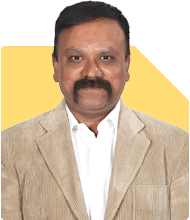
Nayagam P

Nayagam P P  |12560 Answers  |Ask -

Career Counsellor - Answered on Jul 09, 2026

Nayagam is a certified career counsellor and the founder of EduJob360.
He started his career as an HR professional and has over 10 years of experience in tutoring and mentoring students from Classes 8 to 12, helping them choose the right stream, course and college/university.
He also counsels students on how to prepare for entrance exams for getting admission into reputed universities /colleges for their graduate/postgraduate courses.
He has guided both fresh graduates and experienced professionals on how to write a resume, how to prepare for job interviews and how to negotiate their salary when joining a new job.
Nayagam has published an eBook, Professional Resume Writing Without Googling.
He has a postgraduate degree in human resources from Bhartiya Vidya Bhavan, Delhi, a postgraduate diploma in labour law from Madras University, a postgraduate diploma in school counselling from Symbiosis, Pune, and a certification in child psychology from Counsel India.
He has also completed his master’s degree in career counselling from ICCC-Mindler and Counsel, India.
... more
parul Question by parul on Jul 09, 2026
Career

My son is getting mechatronics in thapar and ece in jaypee.which one is better option

Ans: Parul Madam, Choose ECE at Jaypee Institute of Information Technology over Mechatronics at Thapar Institute of Engineering & Technology. ECE offers broader career opportunities across semiconductors, VLSI, embedded systems, telecommunications, IT/software, and higher studies. Mechatronics is an emerging but comparatively niche branch with fewer core recruiters. Unless your son has a strong passion for robotics and industrial automation, Jaypee ECE provides better long-term flexibility, stronger ROI, and wider employability. All The Best for Your Son's Prosperous Future!

Follow RediffGURUS to Know More on 'Careers | Money | Health | Relationships'.
Career

You may like to see similar questions and answers below

Latest Questions
Ramalingam

Ramalingam Kalirajan  |11466 Answers  |Ask -

Mutual Funds, Financial Planning Expert - Answered on Sep 16, 2026

Asked by Anonymous - Sep 16, 2026
Money
I Am 37 yrs old, working in a product-based semiconductor company. Family with housewife and one daughter 9 yrs old. Current salary is 3.3L after deduction, take home is around 2.3L. One home and housing plot worth 1cr(EMIs completed). My liabilities are, One more house currently I am residing in (worth 1.4cr, loan 1cr, still 19years EMI left) car loan (28k per month for next 2.8yrs), Hand loan from brother (5L, paying only interest /1rupee). I have MF 21.5L, Indian shares 10L, US Shares 10L, SSY 6L, NPS 6.5L, PF 26L. Insurance 3.5cr personal term policy, 1cr term policy from company. Ancient properties ~1Cr. My future requirements are 6Cr for retirement carpus, 2cr for my kid higher studies and marriage. In next 13 yrs I want to make this corpus and retire at the age of 50. Please suggest. My salary breakdown Deduction before take home:- PF-21k+21K Corporate NPS-18K ESPP-23K Take home: -2.3L Home loan-81K Car loan-28K Personal loan:-5K Investments:- SSY:-4K MFs:-54K (Distributed to multi cap, small cap, multi-asset funds) Chitti:-13K Rental income: -27K (from my first house and the house in my native place) Annually I used to get 2-3L as performance bonus, that fund I use for insurance premium payments and my daughter school fee.
Ans: » First priority: separate your goals

Your two major goals are:

– Retirement at age 50: Rs.6 crore
– Daughter higher education and marriage: Rs.2 crore
– Total future requirement: Rs.8 crore

I would not treat Rs.8 crore as one single investment goal.

Your daughters education goal has a nearer time horizon. Retirement has a longer horizon. So both should have separate investment strategies.

Also, Rs.2 crore for education and marriage 13 years from now may need to be reviewed periodically because education costs can rise faster than normal inflation.

» Your present financial position

You already have approximately Rs.80 lakh in financial assets:

– Mutual funds: Rs.21.5 lakh
– Indian shares: Rs.10 lakh
– US shares: Rs.10 lakh
– SSY: Rs.6 lakh
– NPS: Rs.6.5 lakh
– PF: Rs.26 lakh

This is a good base.

You also have significant property assets, but I would not depend on property appreciation for your Rs.8 crore financial goals.

Your retirement planning should mainly depend on financial assets and regular savings.

» Your biggest strength is your monthly saving

Your current monthly allocations are quite substantial:

– PF: Rs.42,000 including employer contribution
– Corporate NPS: Rs.18,000
– ESPP: Rs.23,000
– Mutual funds: Rs.54,000
– SSY: Rs.4,000
– Chitti: Rs.13,000

So your overall wealth creation is much higher than the Rs.54,000 MF SIP alone.

This is an important point.

Do not judge your retirement plan only by looking at the MF SIP.

PF, NPS, ESPP and other investments also form part of your retirement wealth.

» Do not increase equity exposure blindly

You already have:

– Indian shares
– US shares
– Mutual funds
– ESPP
– PF
– NPS

There is a reasonable amount of diversification, but your ESPP creates an additional concentration risk if you continue accumulating a large amount of your employer company shares.

Your salary, career and ESPP are already connected to the same company.

So periodically review the overall exposure to your employer stock. Avoid allowing one company to become a very large portion of your total financial assets.

» Mutual fund portfolio

Your Rs.54,000 monthly MF investment is currently spread across multi-cap, small-cap and multi-asset categories.

The broad approach is reasonable, but the portfolio should be checked for overlap.

You do not need many funds simply for diversification.

For a 13-year retirement goal, the important factors are:

– Appropriate equity allocation
– Diversification across market segments
– Fund quality and consistency
– Avoiding excessive small-cap exposure
– Regular portfolio review
– Gradually reducing risk as age 50 approaches

Small-cap exposure can be useful for long-term wealth creation, but it should not become the main retirement allocation.

» Use your future cash-flow increases carefully

Your car loan of Rs.28,000 will finish in about 2.8 years.

This Rs.28,000 should not become lifestyle expenditure after the loan ends.

Redirect it towards your financial goals.

Similarly, whenever your salary increases, increase your investments rather than allowing the entire salary increase to be absorbed by expenses.

This can make a major difference over the next 13 years.

» Home loan needs special attention

Your second house has a value of around Rs.1.4 crore and the outstanding loan is around Rs.1 crore, with 19 years remaining.

This is one area that needs serious review.

You want to retire at 50, but the home loan could continue until around age 56.

That creates a mismatch.

Before retiring at 50, you should ideally have a clear plan for the outstanding home loan.

You can consider using future bonuses, salary increases and the car-loan amount after closure to accelerate repayment, depending on the interest rate and your investment returns.

Do not take a decision based only on investment return expectations. Your retirement at 50 should be debt-light.

» Brother loan and personal loan

The Rs.5 lakh hand loan should also be reviewed immediately.

If the Rs.1 mentioned means 1% monthly interest, the effective cost is significant. In that case, clearing this liability should get priority over increasing investments.

Your Rs.5,000 personal-loan EMI should also be tracked and closed as per its interest cost and remaining tenure.

The objective is simple:

By age 50, your regular income should not be supporting large EMIs.

» What to do with the annual bonus

You receive Rs.2–3 lakh annually.

Currently, you use this for insurance premiums and your daughters school fees.

That is perfectly fine if these expenses are already part of your annual budget.

However, do not treat the bonus as regular retirement funding.

If there is any surplus after these expenses, use it for:

– Debt reduction
– Daughter education corpus
– Retirement investments

This gives your plan an additional boost without putting pressure on your monthly cash flow.

» Daughter goal needs its own bucket

Your daughter is currently 9.

Her higher education may begin around age 17–19. Therefore, the education portion of the Rs.2 crore target has a much shorter horizon than your retirement goal.

Keep this money separate from your retirement corpus.

As the education date gets closer, gradually move the required amount towards relatively stable assets.

Do not keep the entire education corpus in aggressive equity until the actual requirement date.

Marriage planning can have a longer horizon and can therefore follow a different asset allocation.

» Retirement at age 50

Retiring at 50 is possible only if you build two things:

– Sufficient corpus
– Sufficient income from that corpus

The Rs.6 crore target should therefore not be treated as a magic number.

You should calculate your expected expenses at age 50 and then check whether Rs.6 crore can support those expenses for the rest of your life.

You may potentially live for 30–40 years after retirement.

So inflation and healthcare costs are very important.

Also, retirement at 50 means you cannot depend on normal employment income for another 10–15 years. Hence, the corpus needs to be stronger than what would be required for someone retiring at 60.

» Important retirement milestone: age 45

I would create an important checkpoint at age 45.

At 45, review:

– Actual retirement corpus
– Outstanding home loan
– Daughter education corpus
– Annual family expenses
– Health insurance
– Life insurance
– Emergency reserve
– Equity exposure
– Employer stock exposure

If the numbers are not moving towards the required level, age 50 retirement can be reconsidered before making the final decision.

There is no harm in targeting 50 and eventually deciding that 52 or 53 gives much better financial comfort.

» Insurance review

Your personal term insurance of Rs.3.5 crore is substantial.

The additional Rs.1 crore company term cover is useful while you remain employed, but it should not be counted as permanent family protection because employment can change.

The personal cover is therefore more important.

Check that the cover is sufficient until your major liabilities and daughters financial requirements are substantially addressed.

Also maintain adequate family health insurance. Your financial plan should not depend only on the employer medical cover.

» Emergency fund

With a Rs.81,000 home-loan EMI, Rs.28,000 car EMI and family responsibilities, maintain a proper emergency reserve.

I would target at least 9–12 months of essential family expenses and EMIs.

This is especially important because you work in a specialised semiconductor industry where a job change or employment gap can affect cash flow.

Keep the emergency reserve separate from equity investments.

» Property should not be the retirement solution

You already own substantial property.

That is useful for family security, but I would not add more property to achieve your Rs.8 crore target.

Your future surplus should mainly strengthen liquid financial assets and retirement investments.

The first house is already generating rental income of Rs.27,000, which is useful cash flow.

» A simple priority order

For the next few years, I would follow this sequence:

– Maintain adequate emergency reserve.

– Continue disciplined retirement and goal investments.

– Review and reduce expensive debt.

– Do not allow employer shares to become excessive.

– Keep daughters education corpus separately identifiable.

– When the car loan ends, redirect the full Rs.28,000 towards your goals.

– Increase investments whenever salary increases.

– Use surplus annual bonus for debt reduction or goal funding.

– Around age 45, start reducing the risk of money required for near-term education.

– Around age 47–48, seriously work towards becoming debt-free before retirement.

» Final Insights

Your financial position at age 37 is encouraging.

The biggest positive is that you already have around Rs.80 lakh in financial assets and are directing a substantial amount of your income towards wealth creation.

The biggest challenge is not your present corpus. It is the combination of:

– Rs.8 crore total goal
– Retirement at only 50
– Rs.1 crore home loan
– Daughter education and marriage
– Long post-retirement period

So I would not suggest simply increasing your Rs.54,000 MF SIP and assuming everything will work out.

Your entire cash flow needs to be planned.

The most important move is to make sure every salary increase and every loan closure increases your long-term investment capacity.

With disciplined investing, controlled liabilities and periodic goal reviews, you have a reasonable opportunity to build a substantial corpus over the next 13 years. The exact retirement date should finally be decided based on the corpus and your actual expenses at that time, not age 50 alone.

Best Regards,

K. Ramalingam, MBA, CFP,

AMFI-Registered MFD – ARN 4188

www.holisticinvestment.in

https://www.linkedin.com/in/ramalingamcfp/

...Read more

Ramalingam

Ramalingam Kalirajan  |11466 Answers  |Ask -

Mutual Funds, Financial Planning Expert - Answered on Sep 16, 2026

Money
I am retired at the age of 57 years. I have withdrawn 25% of EPF amount as advance after one year of retirement, I am planning to withdraw balance 95% of EPF amount after completion of 3 years, ie at the age of 60. How the Income Tax will be calculated on the acumulated Intrest amount post retirement after 57 year, while withdrawing final EPF
Ans: » EPF tax treatment after retirement

Your question is important because EPF treatment after retirement can be slightly different from normal EPF withdrawal rules.

The key point is that retirement at age 57 and withdrawal at age 60 does not automatically make the entire EPF interest taxable.

» Tax treatment of EPF withdrawal

If your EPF withdrawal qualifies as an exempt withdrawal under the applicable provident fund rules, the accumulated EPF balance, including eligible interest, is generally not taxed merely because you withdraw it after retirement.

Therefore, the fact that you leave the EPF balance for three years after retirement does not, by itself, mean that the entire interest earned during those three years becomes taxable.

» Interest earned after retirement

This is the important part of your question.

After retirement, you are no longer making fresh employee contributions. EPFO may continue to credit interest on the balance for the period for which the account remains eligible for interest.

The tax treatment depends on the nature of the interest and the applicable provident fund rules.

– Interest relating to the normal eligible EPF balance can continue to enjoy the applicable tax exemption.

– Interest relating to a taxable contribution account, such as interest arising from contributions above the prescribed tax-exempt contribution limits, can be taxable.

– Therefore, you should not assume that all interest credited between age 57 and 60 will automatically be added to your taxable income.

» Your 25% advance withdrawal

The 25% EPF amount you have already withdrawn is also relevant.

An EPF advance is different from final settlement. You should retain your EPFO statement showing:

– Balance before the advance

– Amount withdrawn as advance

– Interest credited subsequently

– Balance remaining in the account

– Taxable and non-taxable portions, if separately shown

This will make the position much clearer when you finally settle the account at age 60.

» Withdrawal at age 60

At age 60, you will be treated as a senior citizen for income-tax purposes, subject to the applicable residential status and tax rules.

However, becoming a senior citizen does not itself change an otherwise exempt EPF withdrawal into taxable income.

Your other income during that financial year will still matter for your overall income-tax position.

» One important point to verify

Since you retired at 57 and intend to keep the EPF balance until 60, I suggest obtaining your latest EPFO member passbook or statement before final withdrawal.

Check specifically whether the interest credited after retirement is shown as:

– Non-taxable EPF interest, or

– Taxable interest, if any.

This is much safer than assuming that the entire post-retirement interest is taxable.

» 360-degree retirement view

Since you are already retired, the bigger question is not only the tax on EPF interest.

You should also review:

– How much EPF should be withdrawn at 60

– Your monthly retirement-income requirement

– Pension income, if any

– Bank FD and other fixed-income income

– Income-tax liability after retirement

– Emergency reserve

– Medical and health-insurance requirements

– How the remaining retirement corpus should be invested for 20–30 years

At age 60, preserving purchasing power becomes very important. Keeping the entire retirement corpus only in low-return products may create an inflation risk over a long retirement period.

» Final Insights

In your situation, the entire interest accumulated from age 57 to 60 should not automatically be treated as taxable merely because you retired at 57.

The exact treatment depends on the nature of your EPF balance and whether any portion falls under the taxable contribution and interest rules.

Before making the final withdrawal, obtain the latest EPFO statement and check the taxable and non-taxable components. This can help you avoid unnecessary tax or incorrect reporting.

Best Regards,

K. Ramalingam, MBA, CFP,

AMFI-Registered MFD – ARN 4188

www.holisticinvestment.in

https://www.linkedin.com/in/ramalingamcfp/

...Read more

Dr Nagarajan J S K

Dr Nagarajan J S K   |3310 Answers  |Ask -

NEET, Medical, Pharmacy Careers - Answered on Sep 15, 2026

Career
Namastai sir mai aapasai yaha puchana chahata hu ki marai pass MHT CET exama kai leai sirf 90 din hai aour mai abataka aasi koi khasa padhai nahi ki jasi karani chahiye thi vaiseai sirf tution jata hu vo jo bolatai hai vo sunta hu lekha leta hu jo lekhana padata hai vo aour fira bahi routine shuru hai mera aor exama kai leai to bachai hai sirf 90 dina to app batao agara mai aajasai mana lagakara 8 ya 9 ghantai ki padhai shuru karu to in 90 dina mai muzai 200 outof MHT CET exama mai kitanai mark mila sakatai hai real real batao mai pura ka pura aaapnpar trust karakara yaha question pucha raha hu
Ans: HI ABHISHEK,
GREETINGS FROM THE REDIFFGURUS!

Hi,

You can achieve a score of 200/200!

Before addressing your query, I noticed you didn’t mention whether you're focusing on Engineering or Pharmacy.

If you’re aiming for Engineering, there’s no need to worry about Biology. However, if you’re concentrating on Pharmacy, the syllabus indicates that questions will come from Chemistry, Biology, and Physics. Indirectly, it suggests that you should also have a good grasp of Math, as you need it to solve problems in Physics.

Regarding your timeline, you have 85 days left. This is the perfect time to revise subjects rather than preparing new topics. You should have reached the revision stage by now, but if not, you should aim to complete your initial preparation within the next 5-10 days.

To make your revisions more efficient, combine topics that are common in Physics and Chemistry. This will reduce your revision time and help you answer questions more effectively.

Similarly in Chemistry, you can combine hydrocarbons, alcohols, and aldehydes along with their properties and preparations.

By organizing your study materials in this way, you’ll easily reach your target.

Additionally, to help improve your focus, try practicing meditation for half an hour each day before starting your daily activities.

All the best!

...Read more

Nayagam P

Nayagam P P  |12560 Answers  |Ask -

Career Counsellor - Answered on Sep 15, 2026

Asked by Anonymous - Sep 15, 2026
Career
Sir I have passed class 12 PCB from CBSE board in 2025. Now I want to go into maths related fields like engineering and technology so what if I join NIOS single subject maths then can I join government engineering I am eligible for the MH-CET, wbjee. I know that IIT and NIT do not accept dual mark sheets, but do other colleges like DTU, HBTU, NSUT, AKTU still accept them? And will I be eligible for the MH-CET WBJEE and other entrance exam whereas pcm elegible..?
Ans: Yes, you are eligible for engineering admissions. MHT CET CAP, WBJEE, and most state-level counselling authorities accept an additional NIOS Mathematics marksheet in combination with your original CBSE PCB marksheet to fulfill the PCM subject requirement. Major institutions such as DTU, NSUT (through JAC Delhi), HBTU, and AKTU (through UPTAC) also routinely accept dual marksheets for eligibility verification.

During online registration, you should declare your primary CBSE passing status and upload both valid marksheets (CBSE PCB and NIOS Mathematics) for document verification.

However, it is strongly recommended that you carefully review the official 2027 Information Brochures of all relevant examinations and counselling authorities before applying, as eligibility rules and document requirements are subject to change each year. All The Best for Your Prosperous Future!

Follow RediffGURUS to Know More on 'Careers | Money | Health | Relationships'.

...Read more

Ramalingam

Ramalingam Kalirajan  |11466 Answers  |Ask -

Mutual Funds, Financial Planning Expert - Answered on Sep 15, 2026

Asked by Anonymous - Sep 14, 2026
Money
It's been 15 days since I have posted a question and still no answers. This is really pathetic. If you cant respond a basic question in a week or two then the same should be mentioned. Its really unprofessional and dissatisfying service provide by Redid gurus. Reposting for your reference, Hi expert, In 2010, I made a one-time lump-sum investment of approximately 50000k each in the following 13 funds. I have not added fresh capital to these funds since 2010: DSP-BR India TIGER Fund – Regular Plan - IDCW DSP-BR Top 100 Equity Fund – Regular Plan - IDCW Franklin India Flexi Cap Fund – Regular Plan - IDCW HSBC Large Cap Fund – Regular Plan - IDCW (Formerly L&T India Large Cap Fund / HSBC Advantage India Fund) HSBC Progressive Themes Fund – Regular Plan - IDCW Nippon India Growth Fund – Regular Plan - IDCW Nippon India Power & Infra Fund – Regular Plan - IDCW SBI Magnum Midcap Fund – Regular Plan - IDCW SBI Contra Fund – Regular Plan - IDCW (Formerly SBI Magnum Sector Funds Umbrella Contra) Sundaram Large Cap Fund – Regular Plan - IDCW Sundaram Diversified Equity Fund – Regular Plan - IDCW HDFC Infrastructure Fund – Regular Plan - IDCW Edelweiss Mid Cap Fund – Regular Plan - IDCW (Payout) Part from the above active monthly SIPs (Current Portfolio – ₹40,000/month total) I am currently investing ₹10,000 per month in each of the following 4 funds: HDFC Children's Gift Fund – Regular Plan (Growth) (Includes lock-in) Mirae Asset Large & Midcap Fund – Regular Plan (Growth) (Formerly Mirae Asset Emerging Bluechip Fund) Parag Parikh Flexi Cap Fund – Regular Plan (Growth) HDFC Multi Cap Fund – Regular Plan (Growth). Considering my current valuation in the legacy 2010 funds alongside my 40,000 monthly SIPs, what is a realistic, risk-adjusted corpus projection for 2035 (10 years) and 2040 (15 years) assuming standard equity growth rates? Also the one time payments I made should I leave those funds or reallocate? Basically which are the food funds and which arent.
Ans: You have actually done the difficult part well — you started investing early and continued your SIPs. The main issue now is not whether to invest more, but whether 13 old holdings are still needed in the portfolio.

» One correction in the old investment amount

You mentioned approximately “Rs.50,000k each”. I assume you mean around Rs.50,000 each.

If so, the original investment across 13 funds was roughly Rs.6.5 lakh. Since these investments are from 2010, the present value could be substantially higher, but the current valuation is essential before giving a proper corpus estimate.

» What I see in the legacy portfolio

The 13 old funds have a lot of overlap.

You have exposure to:

– Large-cap equity
– Mid-cap equity
– Flexi-cap/diversified equity
– Contra/value-oriented equity
– Infrastructure and thematic funds
– Sector-oriented funds

The biggest concern is not that all these funds are bad.

The concern is having too many funds doing similar jobs.

Some of these old funds may still be good investments. But a fund that was suitable in 2010 does not automatically remain the best choice in 2026.

» What should be retained

I would broadly divide the legacy holdings into three groups.

First, diversified equity categories.

– These can continue if their long-term performance, portfolio quality and fund-management consistency remain good.

Second, thematic/sector funds.

– These need more caution.

– Infrastructure, power and theme-based funds can perform very well during favourable cycles.

– But they can also go through long periods of underperformance.

– They should not form a major part of a core retirement portfolio.

Third, overlapping large-cap funds.

– Holding several large-cap funds does not necessarily give better diversification.

– There is usually considerable overlap in the underlying companies.

Therefore, the portfolio can be simplified without reducing its equity exposure.

» Your current Rs.40,000 SIP

This is actually the stronger part of your present strategy.

You are putting Rs.10,000 each into four different equity categories.

The broad structure gives you exposure to:

– Children's long-term goal
– Large and mid-sized companies
– Flexible diversified equity
– Multi-cap equity

This is much cleaner than maintaining 13 old funds.

However, even here, I would review the overlap between the diversified categories.

More funds does not mean more diversification.

» Should you immediately sell the 2010 investments?

No.

I would not recommend selling all the old investments just because they are old.

There are three things to check first:

– Current value of each fund
– Capital gains and tax impact
– Whether each fund still has a clear role in your portfolio

Since your investments are from 2010, many of them may have substantial accumulated gains.

A wholesale switch could create an unnecessary tax liability.

Also, do not judge a fund only by its current return.

Fund consistency, downside protection, portfolio quality, category performance and fund-management changes also matter.

» What I would do with the old funds

My preference would be consolidation rather than complete disruption.

– Stop fresh investment into weak or unnecessary categories.

– Retain the better diversified holdings where they still fit your asset allocation.

– Gradually exit excessive thematic/sector exposure.

– Consolidate overlapping funds.

– Redirect future SIPs towards a smaller number of well-selected categories.

This can make the portfolio much easier to monitor.

You dont need 17 funds to build a strong long-term portfolio.

» 2035 corpus expectation

There is one important limitation.

You have not provided the current market value of each of the 13 legacy investments.

Therefore, a precise projection would be misleading.

Your Rs.40,000 monthly SIP alone can become a meaningful corpus over the next 10 years if equity markets deliver reasonable long-term returns.

The existing 2010 corpus will be an additional and potentially significant contributor.

So your 2035 corpus should be assessed using:

– Current value of all legacy investments
– Rs.40,000 monthly SIP
– Any future SIP increases
– Reasonable equity return assumptions
– Tax and costs at the time of withdrawals

I would use a range rather than promise a single number.

» 2040 corpus expectation

The 15-year horizon is even more favourable for equity investing.

Compounding becomes much more powerful over this period.

If you maintain Rs.40,000 monthly SIPs and increase them gradually with your income, your eventual corpus can be considerably higher than what a flat Rs.40,000 SIP would produce.

This is where your strategy can become really powerful.

The most important factor is not finding the perfect fund.

It is maintaining a disciplined investment rate for the next 10–15 years.

» IDCW option needs review

Almost all your old investments are in IDCW options.

For long-term wealth creation, IDCW is generally not my preferred structure.

IDCW payouts are not extra returns. The NAV gets adjusted when a distribution is made.

If you do not need periodic cash from these investments, the growth option is generally more suitable for a long-term accumulation objective.

But do not switch blindly.

First check the current value, accumulated gains and tax impact.

» A better portfolio structure

Instead of maintaining 13 legacy funds plus 4 SIP funds, I would aim for a simpler structure.

– Core diversified equity allocation

– Large and mid-cap exposure

– Multi-cap/flexi-cap exposure

– Limited mid-cap exposure where suitable

– Limited thematic exposure, only if there is a clear reason

– Separate debt/PPF/FD allocation for stability and near-term goals

This gives you a much clearer portfolio.

» One more important point

Your Children's Fund has a lock-in.

Therefore, that investment should be linked specifically to the child's goal and the required year of money.

As the goal approaches, gradually reducing equity exposure becomes important.

Do not remain 100% equity just because the investment has performed well historically.

» My overall assessment

Your investing discipline since 2010 is a big positive.

The portfolio does not look like something that needs to be completely thrown away.

It needs cleaning.

I would rate the situation like this:

– Long-term investing discipline: Strong
– Equity exposure: Good
– Number of funds: Too many
– Category overlap: High
– Thematic exposure: Needs review
– IDCW usage: Needs review
– Current SIP structure: Reasonably well organised
– Need for consolidation: High

The next step should be a fund-by-fund assessment of the 13 legacy holdings, but without looking only at past returns.

If you provide the current value of each of those 13 investments, I can classify them into “Continue”, “Hold but gradually consolidate” and “Consider exiting”, while also assessing the likely 2035 and 2040 corpus more meaningfully.

» Final Insights

You do not have a bad portfolio.

You have an old portfolio that has accumulated too many moving parts over 16 years.

That is actually a much easier problem to solve.

I would avoid unnecessary churning, protect the benefit of your old investments, control taxation, simplify overlapping holdings and continue the Rs.40,000 SIP with periodic increases.

With a 10–15 year horizon, disciplined investing and a cleaner portfolio, you have a good opportunity to build a substantial corpus.

Best Regards,

K. Ramalingam, MBA, CFP,
AMFI-Registered MFD – ARN 4188
www.holisticinvestment.in
https://www.linkedin.com/in/ramalingamcfp/

...Read more

DISCLAIMER: The content of this post by the expert is the personal view of the rediffGURU. Investment in securities market are subject to market risks. Read all the related document carefully before investing. The securities quoted are for illustration only and are not recommendatory. Users are advised to pursue the information provided by the rediffGURU only as a source of information and as a point of reference and to rely on their own judgement when making a decision. RediffGURUS is an intermediary as per India's Information Technology Act.

Close  

You haven't logged in yet. To ask a question, Please Log in below
Login

A verification OTP will be sent to this
Mobile Number / Email

Enter OTP
A 6 digit code has been sent to

Resend OTP in120seconds

Dear User, You have not registered yet. Please register by filling the fields below to get expert answers from our Gurus
Sign up

By signing up, you agree to our
Terms & Conditions and Privacy Policy

Already have an account?

Enter OTP
A 6 digit code has been sent to Mobile

Resend OTP in120seconds

x