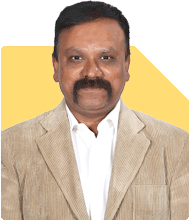
Need Expert Advice?Our Gurus Can Help
Ramalingam

Ramalingam Kalirajan  |11482 Answers  |Ask -

Mutual Funds, Financial Planning Expert - Answered on Sep 15, 2026

Ramalingam Kalirajan has over 26 years of experience in MF distribution and wealth management. He holds an MBA in Finance from the University of Madras and is a CFP (Certified Financial Planner) credentialed professional. He is the Director of Holistic Investment, a Chennai-based AMFI-registered Mutual Fund Distribution (ARN-4188) and APMI-registered PMS Distribution firm (APRN07386), helping clients build long-term wealth through mutual funds and other investment solutions.... more
Asked by Anonymous - Sep 14, 2026
Money

It's been 15 days since I have posted a question and still no answers. This is really pathetic. If you cant respond a basic question in a week or two then the same should be mentioned. Its really unprofessional and dissatisfying service provide by Redid gurus. Reposting for your reference, Hi expert, In 2010, I made a one-time lump-sum investment of approximately 50000k each in the following 13 funds. I have not added fresh capital to these funds since 2010: DSP-BR India TIGER Fund – Regular Plan - IDCW DSP-BR Top 100 Equity Fund – Regular Plan - IDCW Franklin India Flexi Cap Fund – Regular Plan - IDCW HSBC Large Cap Fund – Regular Plan - IDCW (Formerly L&T India Large Cap Fund / HSBC Advantage India Fund) HSBC Progressive Themes Fund – Regular Plan - IDCW Nippon India Growth Fund – Regular Plan - IDCW Nippon India Power & Infra Fund – Regular Plan - IDCW SBI Magnum Midcap Fund – Regular Plan - IDCW SBI Contra Fund – Regular Plan - IDCW (Formerly SBI Magnum Sector Funds Umbrella Contra) Sundaram Large Cap Fund – Regular Plan - IDCW Sundaram Diversified Equity Fund – Regular Plan - IDCW HDFC Infrastructure Fund – Regular Plan - IDCW Edelweiss Mid Cap Fund – Regular Plan - IDCW (Payout) Part from the above active monthly SIPs (Current Portfolio – ₹40,000/month total) I am currently investing ₹10,000 per month in each of the following 4 funds: HDFC Children's Gift Fund – Regular Plan (Growth) (Includes lock-in) Mirae Asset Large & Midcap Fund – Regular Plan (Growth) (Formerly Mirae Asset Emerging Bluechip Fund) Parag Parikh Flexi Cap Fund – Regular Plan (Growth) HDFC Multi Cap Fund – Regular Plan (Growth). Considering my current valuation in the legacy 2010 funds alongside my 40,000 monthly SIPs, what is a realistic, risk-adjusted corpus projection for 2035 (10 years) and 2040 (15 years) assuming standard equity growth rates? Also the one time payments I made should I leave those funds or reallocate? Basically which are the food funds and which arent.

Ans: You have actually done the difficult part well — you started investing early and continued your SIPs. The main issue now is not whether to invest more, but whether 13 old holdings are still needed in the portfolio.

» One correction in the old investment amount

You mentioned approximately “Rs.50,000k each”. I assume you mean around Rs.50,000 each.

If so, the original investment across 13 funds was roughly Rs.6.5 lakh. Since these investments are from 2010, the present value could be substantially higher, but the current valuation is essential before giving a proper corpus estimate.

» What I see in the legacy portfolio

The 13 old funds have a lot of overlap.

You have exposure to:

– Large-cap equity
– Mid-cap equity
– Flexi-cap/diversified equity
– Contra/value-oriented equity
– Infrastructure and thematic funds
– Sector-oriented funds

The biggest concern is not that all these funds are bad.

The concern is having too many funds doing similar jobs.

Some of these old funds may still be good investments. But a fund that was suitable in 2010 does not automatically remain the best choice in 2026.

» What should be retained

I would broadly divide the legacy holdings into three groups.

First, diversified equity categories.

– These can continue if their long-term performance, portfolio quality and fund-management consistency remain good.

Second, thematic/sector funds.

– These need more caution.

– Infrastructure, power and theme-based funds can perform very well during favourable cycles.

– But they can also go through long periods of underperformance.

– They should not form a major part of a core retirement portfolio.

Third, overlapping large-cap funds.

– Holding several large-cap funds does not necessarily give better diversification.

– There is usually considerable overlap in the underlying companies.

Therefore, the portfolio can be simplified without reducing its equity exposure.

» Your current Rs.40,000 SIP

This is actually the stronger part of your present strategy.

You are putting Rs.10,000 each into four different equity categories.

The broad structure gives you exposure to:

– Children's long-term goal
– Large and mid-sized companies
– Flexible diversified equity
– Multi-cap equity

This is much cleaner than maintaining 13 old funds.

However, even here, I would review the overlap between the diversified categories.

More funds does not mean more diversification.

» Should you immediately sell the 2010 investments?

No.

I would not recommend selling all the old investments just because they are old.

There are three things to check first:

– Current value of each fund
– Capital gains and tax impact
– Whether each fund still has a clear role in your portfolio

Since your investments are from 2010, many of them may have substantial accumulated gains.

A wholesale switch could create an unnecessary tax liability.

Also, do not judge a fund only by its current return.

Fund consistency, downside protection, portfolio quality, category performance and fund-management changes also matter.

» What I would do with the old funds

My preference would be consolidation rather than complete disruption.

– Stop fresh investment into weak or unnecessary categories.

– Retain the better diversified holdings where they still fit your asset allocation.

– Gradually exit excessive thematic/sector exposure.

– Consolidate overlapping funds.

– Redirect future SIPs towards a smaller number of well-selected categories.

This can make the portfolio much easier to monitor.

You dont need 17 funds to build a strong long-term portfolio.

» 2035 corpus expectation

There is one important limitation.

You have not provided the current market value of each of the 13 legacy investments.

Therefore, a precise projection would be misleading.

Your Rs.40,000 monthly SIP alone can become a meaningful corpus over the next 10 years if equity markets deliver reasonable long-term returns.

The existing 2010 corpus will be an additional and potentially significant contributor.

So your 2035 corpus should be assessed using:

– Current value of all legacy investments
– Rs.40,000 monthly SIP
– Any future SIP increases
– Reasonable equity return assumptions
– Tax and costs at the time of withdrawals

I would use a range rather than promise a single number.

» 2040 corpus expectation

The 15-year horizon is even more favourable for equity investing.

Compounding becomes much more powerful over this period.

If you maintain Rs.40,000 monthly SIPs and increase them gradually with your income, your eventual corpus can be considerably higher than what a flat Rs.40,000 SIP would produce.

This is where your strategy can become really powerful.

The most important factor is not finding the perfect fund.

It is maintaining a disciplined investment rate for the next 10–15 years.

» IDCW option needs review

Almost all your old investments are in IDCW options.

For long-term wealth creation, IDCW is generally not my preferred structure.

IDCW payouts are not extra returns. The NAV gets adjusted when a distribution is made.

If you do not need periodic cash from these investments, the growth option is generally more suitable for a long-term accumulation objective.

But do not switch blindly.

First check the current value, accumulated gains and tax impact.

» A better portfolio structure

Instead of maintaining 13 legacy funds plus 4 SIP funds, I would aim for a simpler structure.

– Core diversified equity allocation

– Large and mid-cap exposure

– Multi-cap/flexi-cap exposure

– Limited mid-cap exposure where suitable

– Limited thematic exposure, only if there is a clear reason

– Separate debt/PPF/FD allocation for stability and near-term goals

This gives you a much clearer portfolio.

» One more important point

Your Children's Fund has a lock-in.

Therefore, that investment should be linked specifically to the child's goal and the required year of money.

As the goal approaches, gradually reducing equity exposure becomes important.

Do not remain 100% equity just because the investment has performed well historically.

» My overall assessment

Your investing discipline since 2010 is a big positive.

The portfolio does not look like something that needs to be completely thrown away.

It needs cleaning.

I would rate the situation like this:

– Long-term investing discipline: Strong
– Equity exposure: Good
– Number of funds: Too many
– Category overlap: High
– Thematic exposure: Needs review
– IDCW usage: Needs review
– Current SIP structure: Reasonably well organised
– Need for consolidation: High

The next step should be a fund-by-fund assessment of the 13 legacy holdings, but without looking only at past returns.

If you provide the current value of each of those 13 investments, I can classify them into “Continue”, “Hold but gradually consolidate” and “Consider exiting”, while also assessing the likely 2035 and 2040 corpus more meaningfully.

» Final Insights

You do not have a bad portfolio.

You have an old portfolio that has accumulated too many moving parts over 16 years.

That is actually a much easier problem to solve.

I would avoid unnecessary churning, protect the benefit of your old investments, control taxation, simplify overlapping holdings and continue the Rs.40,000 SIP with periodic increases.

With a 10–15 year horizon, disciplined investing and a cleaner portfolio, you have a good opportunity to build a substantial corpus.

Best Regards,

K. Ramalingam, MBA, CFP,
AMFI-Registered MFD – ARN 4188
www.holisticinvestment.in
https://www.linkedin.com/in/ramalingamcfp/
DISCLAIMER: The content of this post by the expert is the personal view of the rediffGURU. Users are advised to pursue the information provided by the rediffGURU only as a source of information to be as a point of reference and to rely on their own judgement when making a decision.
Money

You may like to see similar questions and answers below

Omkeshwar

Omkeshwar Singh  | Answer  |Ask -

Head, Rank MF - Answered on Jun 10, 2022

Listen
Money
I am 48. Sir I have SIP in the following funds. Please let me know if I should continue or need to do any change in my investment. 1) ADITYA BIRLA SUN LIFE FRONTLINE EQUITY FUND-GROWTH Rs.1000 13.06.2016 (date) 2) DSP MID CAP FUND--GROWTH Rs.3000 12.06.2017 3) HDFC MID CAP OPPORTUNITIES FUND-GROWTH Rs.2000 20.12.2016 4) ICICI PRUDENTIAL VALUE DISCOVERY FUND-GROWTH Rs.1000 14.06.2016 5) MIRAE ASSET EMERGING BLUECHIP FUND-GROWTH Rs.1000 14.06.2016 6) MIRAE ASSET TAX SAVER FUND-GROWTH Rs.2000 19.12.2016 7) HDFC CHILDRENS GIFT FUND-GROWTH Rs.1000 13.06.2016 8) AXIS FLEXI CAP FUND-GROWTH Rs.3000 02.06.2021 9) MIRAE ASSET HYBRID-EQUITY FUND-GROWTH Rs.1500 02.06.2021 10) MIRAE ASSET MIDCAP FUND-GROWTH Rs.3000 05.07.2021 11) NIPPON INDIA SMALL CAP FUND -GROWTH Rs.1000 26.12.2017 Sir I have invested lump sum amount in the following funds. Please suggest whether to continue or exit. 1) ADITYA BIRLA SUN LIFE BANKING AND FINANCIAL Rs.50,000 22.08.2016 (date) Rs.79,647 (present value) SERVICES FUND-GROWTH 2) ADITYA BIRLA SUN LIFE FRONTLINE EQUITY Rs.50,000 22.08.2016 Rs.87,455 FUND-GROWTH 3) ADITYA BIRLA SUN LIFE SMALL CAP FUND-GROWTH Rs.100,000 29.06.2017 Rs.132,490 4) HDFC HYBRID EQUITY FUND-GROWTH Rs.120,273 01.06.2018 Rs.178,746 5) ICICI PRUDENTIAL BLUECHIP FUND-RETAIL-GROWTH Rs.20,042 22.02.2018 Rs.31,422 6) L&T INDIA VALUE FUND-GROWTH Rs.25,000 22.08.2016 Rs.48,505 7) L&T INDIA VALUE FUND-GROWTH Rs.150,000 17.04.2017 Rs.245,565 8) MIRAE ASSET TAX SAVER FUND-GROWTH Rs.25,000 22.08.2016 Rs.61,878 9) MIRAE ASSET TAX SAVER FUND-GROWTH Rs.105,000 28.04.2017 Rs.216,372 10) ADITYA BIRLA SUN LIFE PURE VALUE FUND-GROWTH Rs.50,000 06.11.2018 Rs.65,281 11) ADITYA BIRLA SUN LIFE TAX RELIEF 96-GROWTH Rs.100,000 06.11.2018 Rs.128,895 12) L&T EMERGING BUSINESS FUND-GROWTH Rs.100,000 13.12.2017 Rs.155,097 13) MIRAE ASSET BANKING & FINANCIAL Rs.264,987 16.12.2020(STP) Rs.273,346 SERVICES FUND-GROWTH 14) MIRAE ASSET BANKING & FINANCIAL Rs.50,000 23.11.2021 Rs.44,129 SERVICES FUND-GROWTH 15) MIRAE ASSET GREAT CONSUMER FUND-GROWTH Rs.180,000 13.12.2017 Rs.284,600 16) MIRAE HEALTHCARE FUND-GROWTH Rs.200,000 09.11.2018 Rs.401,429 17) MIRAE ASSET MIDCAP FUND-GROWTH Rs.235,462 9.12.2020(STP) Rs.280,601 18) NIPPON INDIA SMALL CAP FUND-GROWTH Rs.100,000 12.12.2017 Rs.178,693 19) TATA FLEXI CAP FUND-GROWTH Rs.100,000 09.11.2018 Rs.149,127 20) TATA INDIA CONSUMER FUND-PLAN A-GROWTH Rs.100,000 09.11.2018 Rs.141,382 21) UTI SMALL CAP FUND-GROWTH Rs.100,523 22.12.2020(STP) Rs.137,025
Ans: Too many funds, please consolidate it in 4 to 5 funds

..Read more

Omkeshwar

Omkeshwar Singh  | Answer  |Ask -

Head, Rank MF - Answered on Feb 20, 2020

Money
I do a regular investment per month of Rs 9000 as SIP in mutual funds. The funds I am holding currently are:  Name of the Fund Category RankMF Star Rating MohitBhardwaj     1. DSP Equal Nifty 50 Fund-Reg (G)  -Rs 2000 Index Funds - Nifty 2 2. DSP Equity Opportunities Fund-Reg (G) -Rs 1000 Equity - Large & Mid Cap Fund 4 3. DSP Natural Res & New Energy Fund-Reg (G)  - Rs 1000 Equity - Sectoral Fund - Energy & Power 2 4. Franklin India Prima Fund (G)- Rs 1000 Equity - Mid Cap Fund: 2 5. Franklin India Taxshield (G)- Rs 1000 Equity - ELSS 4 6. ICICI PruBluechip Fund (G)- Rs 1000 Equity - Large Cap Fund: 2 7. ICICI Pru Value Discovery Fund (G) - Rs 1000 Equity - Value Fund: 2 8. ICICI Pru Value Fund-16 (G) – Rs 1000 Equity - Value Fund: 2 9. ICICI Pru Value Fund-17 (G)  Equity - Value Fund: 2 10. ICICI Pru Value Fund-18 (G) Equity - Value Fund: 2 11. Invesco India Growth Opp Fund (G) Equity - Large & Mid Cap Fund 4 12. L&T Hybrid Equity Fund-Reg (G)  Hybrid - Aggressive Hybrid Fund 5 13. MotilalOswalMulticap 35 Fund-Reg (G) Equity - Multi Cap Fund: 5 14. Nippon India Capital Builder Fund-IV-A (G)      15. Nippon India NiveshLakshya Fund (G) Debt - Long Duration Fund 5 16. Quantum Long Term Equity Value Fund-Reg (G)   Equity - Value Fund: 2 17. Parikh Long Term Equity Fund-Reg (G) Equity - Multi Cap Fund: 5 18. Tata Hybrid Equity Fund-Reg (G) Hybrid - Aggressive Hybrid Fund 5 I have invested Rs 351,388 till now and my market value is Rs 386,870 which means my annual return is 5.2 per cent. Shall I continue to invest in the above funds or shall I switch to some other better fund as per your advice and what will be my capital (return) if I continue to invest for next 10 years as my current age is 35 years and I wish to invest till my age reach 50.
Ans: You may continue with 4 and 5 star rated funds; for remaining you may consider from below:

Equity - Value Fund:

  • Tata Equity PE Fund - Growth
  • UTI Value Opportunities Fund - Growth Plan

Equity - Multi Cap Fund:

  • UTI Equity Fund – Growth
  • Axis Multicap Fund – Growth

Equity - Large Cap Fund:

  • UTI Mastershare Unit Scheme - Growth Plan
  • LIC MF Large Cap Fund-growth

Equity - Mid Cap Fund:

  • MOSL Midcap 30 Fund – Growth
  • DSP midcap – growth

Equity - Small Cap Fund:

  • Kotak Small Cap Fund – Growth
  • Axis Small cap Fund - Growth

..Read more

Ramalingam

Ramalingam Kalirajan  |11482 Answers  |Ask -

Mutual Funds, Financial Planning Expert - Answered on Nov 01, 2024

Asked by Anonymous - Oct 31, 2024Hindi
Money
I started monthly sip since oct 2022 in the following funds. Mirae asset midcap fund regular growth (2000) Parag parikh flexi cap regular (2000) Sbi midcap reg(2000) Sbi magnum global reg(2000)(stopped investing since Aug 2024, but not redeemed) Pgim mid cap reg(2000) (stopped investing since feb 2024, but not redeemed) From jan 2024 Nippon small cap fund (500 ,gradually increased to 6500 from july 2024) Quant small cap direct (2000) from July 2024 Also hsbc mid cap reg (3000) from may 2024 Sbi contra fund reg(3000) from may 2024 Quant mid cap reg (3000) from may2024 Please advice , whether l am investing in the right funds and suggest if any corrections or rectification to be done. Your advice will be of great help Should I increase/alter or continue for another 5/7 years with the same funds Please advice Regards
Ans: You’ve structured a diversified portfolio of mid-cap, small-cap, flexi-cap, and contra funds, which shows a well-considered approach. Let's take a closer look to evaluate each aspect.

1. Portfolio Structure and Goals Alignment

Investing in mid-cap and small-cap funds provides growth opportunities. However, these funds also come with higher risk and volatility.

Including a flexi-cap fund like Parag Parikh is a wise choice. Flexi-cap funds bring stability by dynamically investing across large, mid, and small caps. This adds a level of risk management.

Adding contra funds such as the SBI Contra Fund brings diversification and the potential to benefit from out-of-favor sectors. This is a good balance against mid-cap and small-cap funds.

Your portfolio choices display strategic thought, but it may need a few adjustments to maximize returns and minimize risk.

2. Insights on Fund Selection: Regular vs. Direct

You’ve wisely chosen regular plans for most funds. Investing through a Certified Financial Planner (CFP) can offer ongoing insights and proactive management, especially when markets fluctuate. This adds significant value for long-term investors, as MFDs with CFP credentials offer experienced guidance and assistance with changes in tax laws, like the recent CG taxation updates.

Direct funds might have lower fees, but they can lack the support and expertise that a CFP-backed plan offers. Regular plans ensure the added advantage of advisory support, making it easier to align investments with your goals.

3. Re-evaluating Sector and Market Cap Allocation

Mid-Cap Allocation: With multiple mid-cap funds (Mirae, SBI, HSBC, and Quant), your exposure here is relatively high. While mid-cap funds can yield higher returns, they are susceptible to volatility. It might be wise to reduce the number of mid-cap funds and focus on the most consistent performer among them. For example, continuing with one or two robust mid-cap funds rather than four can bring simplicity and reduce overlapping.

Small-Cap Allocation: Small caps add substantial growth potential but come with high volatility. Starting with a lower SIP amount in the Nippon Small Cap fund and gradually increasing it reflects a balanced approach. Ensure you’re comfortable with small-cap risks, as these funds tend to have longer recovery periods after market corrections.

Flexi-Cap and Contra Funds: The inclusion of Parag Parikh Flexi Cap and SBI Contra Fund introduces both flexibility and contrarian strategies into your portfolio. Retaining these is recommended, as they provide a counterbalance to the mid- and small-cap funds, improving portfolio stability.

4. Evaluating the Role of Fund Overlap and Rationalizing Choices

Having multiple funds in the same category, especially within mid-cap and small-cap funds, can lead to overlapping holdings. Overlap means you may own similar stocks across different funds, which could limit diversification and increase risk without added benefits.

Consider streamlining your investments by selecting the most reliable performers in each category. This approach optimizes your portfolio, making it easier to track and manage.

5. Suggestions for Portfolio Refinement and Long-Term Growth

To maintain simplicity while achieving growth, here are some suggestions:

Reduce the Number of Mid-Cap Funds: Retain the top-performing mid-cap fund that aligns with your goals. For instance, focusing on Mirae or Quant Mid Cap may bring optimal returns without the need for multiple funds in this category.

Small-Cap Funds: Continue with the gradual increase in your SIP in Nippon Small Cap if the fund performance and your risk tolerance remain aligned. Quant Small Cap can complement Nippon Small Cap, but monitor its performance over the next year to decide if it remains suitable for your portfolio.

Avoid Frequent Changes: SIPs work best when maintained over long periods. Continue with your SIPs in chosen funds consistently for at least 5–7 years to allow compounding and market cycles to benefit your investments.

6. Should You Increase Your Investment Amount?

Assessing Contribution Levels: If you have the capacity to increase your SIP, consider doing so in funds with balanced exposure like flexi-cap or balanced advantage funds. These funds are typically better suited for conservative increases as they manage volatility effectively.

Long-Term Perspective: Given your 5–7 year timeframe, additional contributions in mid-cap or flexi-cap funds may offer solid returns. Avoid increasing allocation to small-cap funds too aggressively due to their higher risk.

7. Understanding the Disadvantages of Index Funds in Your Portfolio

While index funds offer passive growth, they lack the active management needed to outperform the market. Actively managed funds, like those in your portfolio, are better suited to deliver returns above the index through stock selection and sector rotation. These funds aim to maximize gains during bullish markets and minimize losses during downturns, which is critical for achieving your financial goals.

8. Tax Implications on Future Gains

The recent changes in Capital Gains (CG) taxation should be considered:

Equity Funds (like mid-cap, small-cap, flexi-cap): Long-term capital gains (LTCG) above Rs 1.25 lakh are taxed at 12.5%. Short-term gains are taxed at 20%.

Debt Funds (if considered in the future): Gains are taxed as per your income tax slab, regardless of holding duration.

Understanding these implications allows you to plan redemptions and adjust investments efficiently.

Finally

Your current portfolio reflects strategic and goal-oriented thinking. With a few refinements—such as consolidating funds, monitoring performance, and potentially increasing SIPs in stable fund categories—you can optimize growth while managing risk effectively.

For best results, consider annual reviews with your Certified Financial Planner to keep your investments aligned with any changes in goals or market conditions.

Best Regards,
K. Ramalingam, MBA, CFP
Chief Financial Planner,
www.holisticinvestment.in
https://www.youtube.com/@HolisticInvestment

..Read more

Latest Questions
Archana

Archana Deshpande  |136 Answers  |Ask -

Image Coach, Soft Skills Trainer - Answered on Oct 09, 2026

Asked by Anonymous - Jul 09, 2026
Career
I have taken a 12th-grade drop year, and this year I have to take admission. But my parents are not supporting me. Last year also, because of all these issues, my admission got delayed, and this year again, no one in my family is taking it seriously. They don't allow me to meet anyone or even go outside the house. They don't even let me go to the terrace. They keep saying, "Whatever you want to achieve, do it from home. People who really want to succeed can do it from anywhere." I don't have any problem studying from home. In fact, after my drop year, I started preparing for CA, and everything was going well initially. But after a few months, my mother started taking away my phone. She wouldn't let me talk to anyone, go outside, or even step onto the terrace. Along with that, there was a lot of mental and emotional abuse. My mother uses extremely abusive and degrading language toward me, and it has become very difficult for me to handle. Because of the constant verbal abuse and emotional stress, I often can't concentrate on my studies. Whenever I study peacefully for two days, the same traumatic cycle starts all over again the next day. This only happens to me in my family. I am the only daughter after my two elder brothers. I can't even share these things with anyone because none of my friends have to go through anything like this. Sometimes, if I simply go to the terrace, my mother starts shouting at me and uses extremely abusive language. Even if I use my phone only for studying, I am not allowed to keep it. I can't even talk to someone to refresh my mind or reduce stress, and I'm not allowed to meet my friends or go outside either. Sometimes, it becomes so overwhelming that I feel like I don't want to live in this house anymore. I feel trapped, emotionally exhausted, and completely isolated. All I want is a peaceful environment where I can study, focus on my future, and live with basic freedom and dignity.
Ans: Hi!!

I want you to understand that your desire to study, build a career and have some basic freedom is absolutely justified. You are not asking for too much. You are asking for an environment where you can concentrate on your studies, take decisions about your future and live with dignity.

From what you have shared, I feel your problem is not your ability to study or your willingness to work hard. You have already proved that you can prepare for CA and stay focused when things are going well. The real concern here is the environment in which you are expected to study.

You really need to understand that a peaceful mind is essential for effective learning. When you are constantly exposed to shouting, abusive language and emotional stress, it becomes difficult to concentrate, regardless of how determined you are to succeed. So please don't blame yourself for struggling with your studies. You are trying to focus on your future while simultaneously dealing with a very distressing situation at home.
Having said that, I would like you to think about something important. Your education and your future cannot remain on hold because of the circumstances you are facing today. You have already lost valuable time because of delays in admission, and I don't want you to lose another year waiting for things to improve on their own.
You need support, and you need to take practical steps towards securing your future.
First, identify a trusted adult who can understand your situation and help you. It could be a relative, a teacher, a former school counsellor or another responsible person you feel comfortable approaching. Please don't assume that nobody will understand you simply because your friends may not be experiencing the same difficulties. You don't have to deal with this alone.

Second, make your admission a priority. Find out the courses available to you, the eligibility requirements, the deadlines and the documents you need. If you cannot manage the process independently, seek help from a trusted adult who can guide you. You need a concrete plan rather than being caught in the same cycle of conflict and uncertainty.

Third, please understand that respecting your parents does not mean accepting abusive behaviour as something you deserve. You can love your family and still recognise that certain words and behaviours are hurting you. You don't have to fight or argue with your mother to prove your point. When things become heated, try to avoid escalating the situation and prioritise your emotional and physical safety.

And finally, please don't isolate yourself emotionally. You need someone with whom you can talk openly, someone who can listen without judging you. If the situation at home continues to feel unbearable, a counsellor or a trusted adult outside the family can help you work through it and explore safe options.

Remember, this difficult phase of your life does not define your future. You have ambitions, you want to study, and you want to become independent. Hold on to those goals, but don't feel that you have to achieve everything through sheer willpower while dealing with this distress alone.

Your future matters. Your mental well-being matters. And you deserve to live with dignity.

I would like to ask you two important questions -
* First, are you physically safe at home, or has the abuse ever become physical?
*Second, is there any trusted relative, teacher or other adult who could help you with your admission process?
I am asking because I want you to have advice that is practical for your situation, not just words of encouragement

Tc ! Best wishes always..

...Read more

Archana

Archana Deshpande  |136 Answers  |Ask -

Image Coach, Soft Skills Trainer - Answered on Oct 09, 2026

Asked by Anonymous - Oct 01, 2026
Career
I studied in an English-medium school, but during school and college most of my friends and even teachers were more comfortable speaking Hindi, so that became my natural communication language. Now after many years, I work in an office where English is used much more regularly. I can understand English and I can write basic things, but when I have to speak suddenly, I sometimes struggle to find the right words. Even for a simple question to a colleague, I first rehearse the sentence in my mind two or three times before saying it. If someone suddenly asks me something in English, I sometimes fumble even though I know what I want to say. I also depend quite a lot on ChatGPT to help me frame emails, messages and sometimes even replies because I worry about making grammar mistakes or sounding less professional. Recently, a new girl joined our office who speaks very confidently in English and seems more comfortable talking to people who are also very fluent or part of what feels like an ‘elite’ group. She does speak with us, but not as much, and sometimes I become more conscious about my own English when I see how naturally she communicates. I know everyone has a different communication style, but this has made me wonder whether my lack of fluency is affecting how people perceive me at work. How can I improve my spoken English and workplace communication so that I can speak spontaneously and confidently without mentally preparing every sentence first?
Ans: Hi!!!
First of all, you need to understand that being fluent in English does not necessarily mean being a good communicator. Communication is about how effectively you express your thoughts, ideas and feelings, and not merely about the language you speak.
From what you have shared, I feel your problem is not that you don't know English, but that you have become conscious of your English. The more you worry about making grammatical mistakes or using the wrong words, the more you hold yourself back. And the more you hold yourself back, the less opportunity you give yourself to become fluent.
You really need to ask yourself this question: Am I more concerned about communicating my thoughts, or about how people will judge my English? The moment you start worrying about the latter, you shift your focus from what you want to say to how you should say it. That is where the hesitation begins.
Remember, you don't have to speak perfect English to communicate confidently. You need to be clear, comfortable and willing to express yourself. Even people who speak English very fluently make grammatical mistakes, fumble for words and struggle to articulate their thoughts at times. It is perfectly normal!
So, what do you need to do?
Start speaking in English more often, even when you know your sentences may not be perfect. Don't rehearse every sentence in your mind before speaking. Allow yourself to think and speak at the same time. Initially, you may fumble, pause or use simpler words, but that is absolutely fine. Fluency comes with practice, not with the constant fear of making mistakes.
Make English a part of your everyday life. Speak to your colleagues in English, participate in conversations, share your opinions in meetings and practise expressing your thoughts aloud. Read aloud, listen to good English speakers and try summarising what you have read or heard in your own words. These small, consistent efforts will help you develop greater spontaneity and confidence.
And about using ChatGPT to frame your emails and messages — there is absolutely nothing wrong with using a tool to improve your communication. However, don't let the tool become a substitute for your own ability to think and express yourself. Try drafting your message first, and then use ChatGPT to refine it. Observe the changes, understand why they were made and gradually incorporate those learnings into your own communication.
As far as the new girl in your office is concerned, please don't allow her fluency to become a yardstick against which you Hi!!!
First of all, you need to understand that being fluent in English does not necessarily mean being a good communicator. Communication is about how effectively you express your thoughts, ideas and feelings, and not merely about the language you speak.
From what you have shared, I feel your problem is not that you don't know English, but that you have become conscious of your English. The more you worry about making grammatical mistakes or using the wrong words, the more you hold yourself back. And the more you hold yourself back, the less opportunity you give yourself to become fluent.
You really need to ask yourself this question: Am I more concerned about communicating my thoughts, or about how people will judge my English? The moment you start worrying about the latter, you shift your focus from what you want to say to how you should say it. That is where the hesitation begins.
Remember, you don't have to speak perfect English to communicate confidently. You need to be clear, comfortable and willing to express yourself. Even people who speak English very fluently make grammatical mistakes, fumble for words and struggle to articulate their thoughts at times. It is perfectly normal!
So, what do you need to do?
Start speaking in English more often, even when you know your sentences may not be perfect. Don't rehearse every sentence in your mind before speaking. Allow yourself to think and speak at the same time. Initially, you may fumble, pause or use simpler words, but that is absolutely fine. Fluency comes with practice, not with the constant fear of making mistakes.
Make English a part of your everyday life. Speak to your colleagues in English, participate in conversations, share your opinions in meetings and practise expressing your thoughts aloud. Read aloud, listen to good English speakers and try summarising what you have read or heard in your own words. These small, consistent efforts will help you develop greater spontaneity and confidence.
And about using ChatGPT to frame your emails and messages — there is absolutely nothing wrong with using a tool to improve your communication. However, don't let the tool become a substitute for your own ability to think and express yourself. Try drafting your message first, and then use ChatGPT to refine it. Observe the changes, understand why they were made and gradually incorporate those learnings into your own communication.
As far as the new girl in your office is concerned, please don't allow her fluency to become a yardstick against which you measure yourself. She may be more comfortable speaking English, but that does not make her more intelligent, more capable or a better professional than you. Everyone has a different background, different experiences and a different starting point.
Stop comparing, start practising and, most importantly, stop underestimating yourself.
You have already identified what you need to improve, and that is the first step towards change. Now, give yourself the opportunity to work on it without being overly critical of yourself.
Remember, the objective is not to impress people with your English. It is to express yourself with confidence, clarity and conviction.
When you stop trying to speak perfect English and start focusing on communicating effectively, you will gradually find your voice!

...Read more

Archana

Archana Deshpande  |136 Answers  |Ask -

Image Coach, Soft Skills Trainer - Answered on Oct 09, 2026

Asked by Anonymous - Oct 01, 2026
Career
I recently received feedback at work that I should be more assertive. The strange part is that I don’t consider myself shy - I speak when I have something to say and I’m quite comfortable with my colleagues. But the problem comes when I have a different opinion from someone senior. For example, last week during a team meeting, my manager suggested doing something in a particular way. I could clearly see one issue with the approach and had a different suggestion in mind, but when it was my turn to speak, I said something like, ‘Yes, that should be okay, maybe we can try it,’ instead of clearly explaining what I actually felt. Later, I discussed the same point with a colleague and realised I had actually been right about the concern, but by then the decision was already made. This happens with me quite often - I don’t want to sound argumentative or disrespectful, so I automatically soften my words and sometimes end up agreeing even when I genuinely have another opinion. How can I become more assertive in these situations, speak confidently to senior people and put forward a different viewpoint without coming across as rude, aggressive or overconfident?
Ans: Hi!!

*Being assertive does not mean being aggressive or disrespectful* It means expressing your thoughts and feelings confidently and respectfully!

If you hesitate to disagree, consider whether you fear judgment, offending the person, or challenging their authority! Identifying the cause can help you address it. Respecting someone’s position does not require agreeing with every opinion; your perspective may reveal something they have overlooked.

When you have a concern, pause, organise your thoughts, and state them clearly. For example: *“I understand your approach\. However, I have a concern we may want to consider before proceeding.”” You can be polite without being apologetic and respectful without being submissive.

Practise expressing your views in smaller situations. It may feel uncomfortable at first, but confidence will grow with experience.Trust your judgement and speak up when your input matters. You can disagree with someone without disrespecting them—that is true assertiveness!

Remember assertiveness is about respecting yourself and the other person equally! Understanding that you have as much right to express your opinion as the other person .

...Read more

Dr Upneet

Dr Upneet Kaur  |86 Answers  |Ask -

Marriage counsellor - Answered on Oct 09, 2026

Asked by Anonymous - Sep 28, 2026
Relationship
I’m facing a small but recurring issue with my wife when it comes to money. I’m naturally more of a saving person—I like keeping some money aside for future expenses, emergencies, children’s needs and other things that may come up unexpectedly. My wife, on the other hand, feels that if we can comfortably afford something now, there is no point in always postponing it just to save more. It’s not that either of us is irresponsible with money, and thankfully we don’t have any major financial problems, but this difference in our thinking keeps coming up every few weeks. Sometimes it starts with something as simple as buying something for the house or planning a holiday and then turns into a discussion about our overall spending habits. I don’t want her to feel that I’m controlling how she spends her money, and at the same time, I don’t want to feel guilty for wanting to save. How can couples with very different financial habits find a middle ground and decide together how much to spend, save and keep aside for the future without making money become a regular source of tension in the marriage?
Ans: Hello sir. I hope you are in good health. Coming to your question, financial management remains a little sensitive topic specially when both members are earning.
You both have different habits and different thinking in terms of financial management and I think both are correct. The only thing with which the things can be sorted out is that you both sit and discuss and mutually come to a specific percentage of income which should be saved and which should be kept aside for holidays or for home fund. This way you both will clearly know and then you will not have problem in spending or saving.
I hope this solves your problem.
All the best..take care !!

...Read more

Dr Upneet

Dr Upneet Kaur  |86 Answers  |Ask -

Marriage counsellor - Answered on Oct 09, 2026

Asked by Anonymous - Sep 28, 2026
Relationship
I’m a little confused about how I should handle situations involving my husband and his parents. Whenever they have an argument or disagreement, I usually prefer to stay quiet because I feel that if I get involved, the situation could become even more complicated. I don’t want his parents to feel that I’m trying to create a distance between them, and I also don’t want to say something in the heat of the moment that I may regret later. But after the argument is over, my husband sometimes tells me that he expected me to support him because I’m his wife. From my point of view, supporting him doesn’t necessarily mean agreeing with him or taking his side every time, especially when I don’t know the complete context of their disagreement. At the same time, I can understand why he may feel hurt if he thinks I’m simply standing by and watching when he needs me. How should to handle these situations when disagreements with in-laws keep creating tension in the marriage? Is there a healthy way for a spouse to show support without automatically taking sides or disrespecting the other family members?
Ans: Hello mam. I hope you are in good health.
Well, coming to your question, you can definitely take your partner's side by understanding the things on which the disagreements happen. For example you disagree with your partner at a specific point of time, in public you should try to calm the situation and take his side if possible but after that in private you can share your opinion and correct him if he is wrong somewhere. This way he ll feel that yes you support him but on the other hand he ll also realize that where he went wrong. Probably the situations will get better with this.
I really appreciate your nature that you don't want to disrespect other family members. Its very good and shows your upbringing and your intent of maintaining relationships.
Keep it up...take care !!

...Read more

Ramalingam

Ramalingam Kalirajan  |11482 Answers  |Ask -

Mutual Funds, Financial Planning Expert - Answered on Oct 08, 2026

Money
Hi ..I have registered a app called finsolalgo They told I got allocation for ipo which I kept 1 lac prev but they asked I need to pay 6lac ...which I couldn't pay...now they blocked my one lac saying as I didn't pay full allocation my amount blocked for 3 months but am not getting fater 3 months who will release my funds and all am feeling bad to believe them...now wat should I do ...finsolalgo is this company registered with sebi when I asked they told s we registered we have ruled and regulations ...that's y blocked like that ..wat should I do now
Ans: It is good that you have stopped and are checking this before paying another Rs.6 lakh.

Based on what you have described, I would be very cautious. The process you were told about does not look like the normal IPO application process.

» How a genuine IPO application normally works

In a normal IPO, the application money is blocked in your own bank account through ASBA or an approved UPI mandate.

If shares are allotted, the required amount is debited.

The remaining blocked amount is released after the allotment process. SEBI describes this process clearly.

A company or app normally cannot simply say:

– You paid Rs.1 lakh.

– You received an allocation of Rs.7 lakh.

– You must arrange another Rs.6 lakh.

– Otherwise your original Rs.1 lakh will remain blocked for 3 months.

That is a major point requiring verification.

» About the Rs.1 lakh being blocked

First check where exactly the Rs.1 lakh is blocked.

If it is genuinely blocked in your own bank account under an IPO ASBA/UPI mandate, contact your bank immediately and ask:

– Who has placed the mandate?

– What is the IPO name?

– Who is the sponsor bank?

– What is the application number?

– What is the registrar's name?

– What is the UPI mandate reference?

Do not depend only on what the FinsolAlgo app or its representatives are telling you.

If the money was actually transferred to a bank account controlled by the app/company/person, the situation is more serious. Do not send the additional Rs.6 lakh merely to release the earlier Rs.1 lakh.

» Is FinsolAlgo SEBI registered?

I checked the SEBI recognised-intermediary information available currently.

I could not verify a SEBI registration under the name "FinsolAlgo" from the information available to me.

This does not by itself prove that the entity is fraudulent. The legal entity name may be different from the app or trade name.

So ask them for:

– Exact legal company name.

– SEBI registration number.

– Category of SEBI registration.

– Registered office address.

– Name of the stock broker/intermediary handling the IPO application.

Then independently verify these details on SEBI's recognised intermediary records. SEBI maintains a searchable list of registered intermediaries.

Do not accept a statement such as "we are SEBI registered and we have our own rules" as proof.

» What you should do now

I would suggest these steps in this order:

– Do NOT pay the additional Rs.6 lakh.

– Do NOT pay any "release fee", "penalty", "tax", "processing charge" or similar amount.

– Do NOT share your OTP, UPI PIN, bank password or other banking credentials.

– Take screenshots of the entire conversation with FinsolAlgo.

– Save the payment receipt for the Rs.1 lakh.

– Save the IPO allocation message and all documents they provided.

– Contact your bank directly through its official customer-care channel.

– Ask the bank whether there is actually an IPO-related ASBA/UPI block on your Rs.1 lakh.

– If the bank confirms that no genuine IPO mandate exists, immediately inform the bank that you suspect an unauthorised or potentially fraudulent transaction.

– If money has already gone to another bank account, inform your bank immediately and ask about the appropriate fraud-reporting process.

» Do not wait for three months

I would not simply wait for three months based on their verbal assurance.

If this is a genuine IPO, there should be proper documentation and an identifiable IPO process.

There should also be a recognised intermediary, sponsor bank, registrar and application details.

The normal IPO process does not depend merely on an app telling you that your money will be released after three months. SEBI's own explanation says that funds are blocked for the IPO process and are subsequently debited or unblocked based on allotment.

» My assessment

The requirement to arrange another Rs.6 lakh after supposedly getting a Rs.7 lakh allocation is the biggest concern here.

Please do not try to recover the Rs.1 lakh by paying another Rs.6 lakh.

That can increase your exposure substantially.

Your immediate priority should be to establish where the Rs.1 lakh actually sits and whether there is a genuine IPO mandate.

If you share the exact message received from FinsolAlgo about the Rs.7 lakh allocation and the Rs.6 lakh payment, I can examine the wording and tell you which parts look normal and which parts are red flags.

Best Regards,

K. Ramalingam, MBA, CFP,
AMFI-Registered MFD – ARN 4188

www.holisticinvestment.in

https://www.linkedin.com/in/ramalingamcfp/

...Read more

Dr Nagarajan J S K

Dr Nagarajan J S K   |3317 Answers  |Ask -

NEET, Medical, Pharmacy Careers - Answered on Oct 08, 2026

Career
I am a student and NEET aspirant. I appeared for Class 10 in 2024 and passed Class 10 in 2024. I completed and passed Class 12 in 2026. I also appeared for NEET (UG) 2026, including the re-examination, but unfortunately I could not qualify for admission. My Class 12 marks are relatively low, although I have successfully passed Class 12 in 2026. Therefore, I am considering appearing for the Class 12 Improvement Examination in 2027 to improve my marks. I would like to kindly ask for clarification regarding the following: Since I have already passed Class 12 in 2026, am I eligible to appear for the Class 12 Improvement Examination in 2027? If I improve my Class 12 marks in 2027, will I remain eligible to appear for NEET (UG) 2027? Will appearing for the Class 12 Improvement Examination in 2027 create any issue during NEET counselling or MBBS admission if I qualify NEET 2027? Will my one-year gap after Class 12 (2026–2027), due to preparing for NEET, cause any problem in NEET eligibility or during MBBS admission? If improvement is permitted, which Class 12 marks/marksheet would be considered for NEET 2027 eligibility and admission?
Ans: HI ALAM,
GREETINGS FROM THE REDIFFGURUS!
The Advantages of NEET:

* NO UPPER AGE LIMIT
* UNLIMITED ATTEMPTS for HSC
* UNLIMITED ATTEMPTS FOR NEET
* A MINIMUM AGGREGATE PERCENTAGE OF 50% (varying by category) IS SUFFICIENT TO QUALIFY FOR NEET (except for AIIMS)
* ASPIRANTS CAN PRESENT DIFFERENT BOARD EXAM MARK SHEETS.

Due to these factors, the number of NEET aspirants is higher compared to other exams.

If you have the required marks to appear for NEET, you can proceed with your preparation. As you mentioned that your HSC marks are low (specifics not disclosed), focus on strengthening your weak subjects to help you achieve your goal. Simply aiming for improvement is not enough; you need to make significant progress.

You are planning to take the improvement exam for your marks. While preparing for this, it is essential to enhance your understanding of the subjects that are also relevant for NEET. There is a possibility that you might achieve the same level of marks you previously obtained in HSC if you do not make substantial improvements. Therefore, concentrate on honing the subjects necessary for NEET as well.

BEST WISHES.

...Read more

DISCLAIMER: The content of this post by the expert is the personal view of the rediffGURU. Investment in securities market are subject to market risks. Read all the related document carefully before investing. The securities quoted are for illustration only and are not recommendatory. Users are advised to pursue the information provided by the rediffGURU only as a source of information and as a point of reference and to rely on their own judgement when making a decision. RediffGURUS is an intermediary as per India's Information Technology Act.

Close  

You haven't logged in yet. To ask a question, Please Log in below
Login

A verification OTP will be sent to this
Mobile Number / Email

Enter OTP
A 6 digit code has been sent to

Resend OTP in120seconds

Dear User, You have not registered yet. Please register by filling the fields below to get expert answers from our Gurus
Sign up

By signing up, you agree to our
Terms & Conditions and Privacy Policy

Already have an account?

Enter OTP
A 6 digit code has been sent to Mobile

Resend OTP in120seconds

x