Home > Money > Question
Need Expert Advice?Our Gurus Can Help
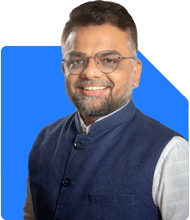
Vivek

Vivek Shah  | Answer  |Ask -

Financial Planner - Answered on Jun 19, 2023

Vivek Shah is a SEBI registered investment advisor and certified financial planner from FPSB India. He has over 18 years of experience in financial planning.
Shah founded Finrise, a financial planning and wealth management firm, in 2011. He believes that equity investment is the only way to generate long term wealth.
He has an MBA in finance, a degree in chartered accountancy and is a registered life planner from Kinder Institute of Life Planning, USA.... more
Asked by Anonymous - May 24, 2023Hindi
Listen
Money

CAN I OPEN TWO/MULTIPLE DEMAT ACCOUNTS, ONE IN MY INDIVIDUAL NAME AND ONE IN JOINT NAME WITH MY SON/DAUGHTER, EITHER WITH SAME SERVICE PROVIDER, OR DIFFERENT SERVICE PROVIDER.

Ans: Ideally you should have only one demat account.

But if you want, Yes you can open multiple demat accounts.

ideally you should have demat holding with 2 service provider for administration, tax reports.
DISCLAIMER: The content of this post by the expert is the personal view of the rediffGURU. Users are advised to pursue the information provided by the rediffGURU only as a source of information to be as a point of reference and to rely on their own judgement when making a decision.
Money

You may like to see similar questions and answers below

Ramalingam

Ramalingam Kalirajan  |10949 Answers  |Ask -

Mutual Funds, Financial Planning Expert - Answered on May 20, 2024

Listen
Money
Can i open 2 or more PPF account ?
Ans: Understanding the Public Provident Fund (PPF)
The Public Provident Fund (PPF) is a popular savings-cum-tax-saving instrument in India. It offers attractive interest rates, tax benefits under Section 80C, and a secure way to build a retirement corpus. However, there are strict rules governing PPF accounts, including limitations on the number of accounts one can hold.

Rules Regarding Multiple PPF Accounts
Single Account Rule
According to the rules established by the Government of India, an individual is allowed to open only one PPF account in their name. This is strictly enforced to prevent the misuse of tax benefits and to ensure systematic savings.

Penalty for Multiple Accounts
If an individual opens more than one PPF account, the additional account(s) will be considered invalid. The government will merge the accounts, and only one will be recognized as valid. The contributions made to the additional accounts will not earn any interest, and the tax benefits will not apply.

Joint Accounts and Minor Accounts
While you cannot open multiple accounts in your name, you can open a PPF account for a minor child where you act as the guardian. However, the total contributions to the guardian's account and the minor's account together cannot exceed the maximum limit of ?1.5 lakh in a financial year.

Advantages of a PPF Account
Tax Benefits: Contributions up to ?1.5 lakh per year are eligible for tax deduction under Section 80C of the Income Tax Act.
Safety and Returns: PPF offers a government-guaranteed return, making it a safe investment.
Long-Term Savings: With a 15-year maturity period, PPF encourages long-term savings, which can be extended in blocks of 5 years.
Managing Your PPF Account
Contribution Limits
Ensure that your annual contributions do not exceed ?1.5 lakh, whether the deposits are made in a single account or split between your account and a minor's account. Exceeding this limit will result in the excess amount not earning interest.

Regular Deposits
To keep your PPF account active, deposit a minimum of ?500 each financial year. Missing this minimum contribution can result in the account becoming inactive, requiring a penalty for reactivation.

Alternatives for Diversifying Savings
Since you can only have one PPF account, consider other investment options to diversify your savings:

National Savings Certificate (NSC): Similar to PPF in terms of safety and tax benefits but with shorter maturity periods.
Equity-Linked Savings Scheme (ELSS): Offers market-linked returns with tax benefits under Section 80C.
Sukanya Samriddhi Yojana (SSY): If you have a daughter, this scheme offers higher interest rates and tax benefits.
Conclusion
To directly address your query: No, you cannot open two or more PPF accounts in your name. Doing so will violate the rules set by the Government of India, leading to potential penalties and invalidation of additional accounts. Stick to one PPF account and consider other tax-saving and investment instruments to diversify your portfolio and maximize your returns.

Your disciplined approach to investing and adherence to the rules will ensure a secure financial future.

Best Regards,

K. Ramalingam, MBA, CFP,

Chief Financial Planner,

www.holisticinvestment.in

..Read more

Latest Questions
Nayagam P

Nayagam P P  |10865 Answers  |Ask -

Career Counsellor - Answered on Jan 07, 2026

Career
In Gujarat GSEB board school- my kids name is written (Name+ father name _+ surname ) but I Aadhar card only Name + surname ) so data not match with aapar id. What to do ??
Ans: Bhupendra Sir, Your child's name mismatch between GSEB school records (Name + Father's Name + Surname) and Aadhaar Card (Name + Surname only) is a recognized issue since June 2025, when Gujarat officially changed school name-recording formats to align with Aadhaar. AAPAR ID generation requires exact name matching between these documents, so this mismatch must be resolved immediately. According to UIDAI guidelines 2025, father's name is optional in Aadhaar but can be legally added for minors using supporting documents like birth certificates or school records, making this a straightforward administrative fix rather than a legal complication. Here are your three best practical options, ranked by speed and effectiveness: Option 1 (FASTEST & RECOMMENDED)—Update Aadhaar to include father's name: Visit the nearest Aadhaar Seva Kendra by booking an appointment online at UIDAI Appointments website, bring child's original Aadhaar card, birth certificate or school admission record showing the full name (Name + Father's Name + Surname), your ID proof, and Rs.50-75 as the demographic update fee. Request the staff to update the name field to include the father's name, fill the demographic update form with the complete name as written in school records, attach photocopies of your supporting documents, provide biometric verification if requested, and collect your URN/SRN (Update Request Number)—save this for tracking. The UIDAI will process the update within 15-30 days; you'll receive SMS and email confirmation when complete. Once Aadhaar is updated with the father's name, immediately inform your school, which will automatically update the student's data in the UDISE+ system and generate the AAPAR ID within 2-3 days. Your child can then download the AAPAR ID through DigiLocker Website by logging in with Aadhaar and OTP. Total timeline: 5-6 weeks. Cost: Rs.50-75. Option 2 (ALTERNATIVE)—Correct School Records instead: If Aadhaar update faces unexpected issues, approach your school with a notarized affidavit (costing Rs.200-300 from a notary public) stating that your child's name in the Aadhaar card (Name + Surname only) is the legally correct name and requesting the school to update its records to match. Submit this affidavit along with your Aadhaar photocopy and a formal letter to the school principal, obtain a receipt, and the school will submit the correction form to GSEB within 10-20 days. Once GSEB processes the correction, the school will update UDISE+ and generate AAPAR ID. Total timeline: 6-8 weeks. Cost: Rs.200-300. Option 3 (EMERGENCY/TEMPORARY)—Request school-level AAPAR generation flag: If you need AAPAR ID urgently and cannot wait for updates, contact your school principal explaining the name mismatch; the school can file an exception request to CBSE Regional Office, marking the record as "data mismatch under correction" and providing your URN/SRN if you've applied for Aadhaar update. CBSE may approve temporary AAPAR generation with a "NOGEN" status that becomes permanent once Aadhaar is fully updated. This is not guaranteed but worth attempting if time-sensitive. Recommendation: Choose Option 1 immediately—it's fastest, cheapest (?50-75), simplest (single government office), and permanently aligns all systems. Book your Aadhaar appointment today at UIDAI's website, gather your child's birth certificate or school admission record; and within 5-6 weeks, your AAPAR ID problem will be completely resolved. Contact UIDAI / GSEB helpline / toll-free numbers if you face any complications during the process. All The Best Sir.

...Read more

Ramalingam

Ramalingam Kalirajan  |10949 Answers  |Ask -

Mutual Funds, Financial Planning Expert - Answered on Jan 07, 2026

Money
Hii sir i am 41 years old married i have two kids 2ys and 13 yrs. i have 6 lacs loan emi of Rs.30 for 3 years. my salary is 52 thousand. let me know how to recover from my debt
Ans: I appreciate your honesty and courage in sharing this situation.
Recognising the problem early is a big strength.
You can recover with discipline and patience.
Your situation is manageable.

» Your current situation clearly
– Age is 41 years.
– Married with two children.
– One child is two years old.
– One child is thirteen years old.
– Monthly salary is around Rs 52,000.

» Loan position understanding
– Total loan is around Rs 6 lakh.
– EMI is around Rs 30,000.
– Loan tenure is three years.
– EMI consumes a big income portion.

» First important reassurance
– This is not a permanent problem.
– This is a cash flow mismatch.
– With structure, it can be corrected.
– Panic will only worsen things.

» Immediate risk areas to control
– EMI takes more than half salary.
– Household expenses may be stressed.
– Emergency savings may be low.
– Any income break can hurt badly.

» Priority order must change now
– Survival comes first.
– Debt reduction comes next.
– Savings come later.
– Investments can wait temporarily.

» First step is expense control
– Track every rupee spent monthly.
– Cut non-essential expenses immediately.
– Pause discretionary spending fully.
– Lifestyle adjustment is temporary.

» Suggested expense discipline approach
– Fix a strict monthly budget.
– Separate needs from wants clearly.
– Avoid credit card usage.
– Pay only cash wherever possible.

» EMI burden needs urgent attention
– EMI at this level is heavy.
– Cash flow stress will continue.
– Relief must be created.
– Options exist here.

» Option one: Loan restructuring
– Speak to your lender immediately.
– Ask for tenure extension.
– EMI may reduce significantly.
– Total interest may increase, but relief matters.

» Option two: Balance transfer
– Check lower interest options.
– Longer tenure reduces EMI pressure.
– Do not take top-up loans.
– Only restructure existing loan.

» Option three: Partial prepayment
– Any bonus or extra income helps.
– Even small prepayments reduce stress.
– Focus on principal reduction.
– Avoid new liabilities completely.

» Emergency fund is critical
– Even Rs 20,000 buffer helps.
– Build slowly after EMI relief.
– Keep money liquid.
– This avoids fresh borrowing.

» Children responsibilities reality check
– Education costs will rise.
– Avoid borrowing for lifestyle.
– Future loans must be planned.
– Debt freedom is foundation for children’s security.

» Should you invest now
– Pause investments temporarily.
– Clearing debt is best return now.
– Mental peace improves drastically.
– Restart investing after stability.

» Role of spouse and family support
– Discuss situation openly with spouse.
– Align expectations together.
– Emotional support matters.
– Joint discipline gives faster recovery.

» Income improvement efforts
– Explore additional income skills.
– Weekend or part-time work helps.
– Skill upgrade improves long-term prospects.
– Even small increments matter.

» What to strictly avoid now
– No new loans.
– No credit card revolving balance.
– No informal borrowing.
– No risky investment ideas.

» Psychological discipline advice
– Debt recovery is slow, not instant.
– Do not compare with others.
– Focus on monthly progress.
– Celebrate small wins.

» Three-year outlook if disciplined
– Loan can be fully cleared.
– Cash flow becomes positive.
– Stress reduces significantly.
– Savings can restart confidently.

» After debt is cleared
– Build emergency fund first.
– Then start child education planning.
– Then resume retirement savings.
– Step-by-step growth is safe.

» Final Insights
Your debt is recoverable with structure.
Reduce EMI stress first.
Control expenses strictly for three years.
Avoid new borrowing completely.
With discipline, you will come out stronger.

Best Regards,

K. Ramalingam, MBA, CFP,

Chief Financial Planner,

www.holisticinvestment.in

https://www.youtube.com/@HolisticInvestment

...Read more

DISCLAIMER: The content of this post by the expert is the personal view of the rediffGURU. Investment in securities market are subject to market risks. Read all the related document carefully before investing. The securities quoted are for illustration only and are not recommendatory. Users are advised to pursue the information provided by the rediffGURU only as a source of information and as a point of reference and to rely on their own judgement when making a decision. RediffGURUS is an intermediary as per India's Information Technology Act.

Close  

You haven't logged in yet. To ask a question, Please Log in below
Login

A verification OTP will be sent to this
Mobile Number / Email

Enter OTP
A 6 digit code has been sent to

Resend OTP in120seconds

Dear User, You have not registered yet. Please register by filling the fields below to get expert answers from our Gurus
Sign up

By signing up, you agree to our
Terms & Conditions and Privacy Policy

Already have an account?

Enter OTP
A 6 digit code has been sent to Mobile

Resend OTP in120seconds

x