


Need Expert Advice?Our Gurus Can Help

Ramalingam Kalirajan |11060 Answers |Ask -Follow
Mutual Funds, Financial Planning Expert - Answered on Nov 21, 2025
Ramalingam Kalirajan has over 23 years of experience in mutual funds and financial planning.
He has an MBA in finance from the University of Madras and is a certified financial planner.
He is the director and chief financial planner at Holistic Investment, a Chennai-based firm that offers financial planning and wealth management advice.... more
He has an MBA in finance from the University of Madras and is a certified financial planner.
He is the director and chief financial planner at Holistic Investment, a Chennai-based firm that offers financial planning and wealth management advice.... more
Asked by Anonymous - Nov 21, 2025Hindi
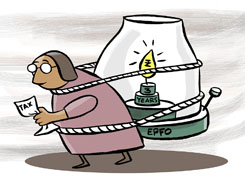
HI Sir, I am a retired person and looking to decrease my taxable income to below surcharge applicability level. Currently all funds are in fixed deposits. Can you help me identify any tax free investments like government bonds with high security since I cannot take risk of mutual funds.
Ans: You want to reduce your taxable income.
You also want to keep your savings secure.
Your savings are now in fixed deposits.
FD interest is fully taxable.
This increases your taxable income.
This may push you above surcharge levels.
So you want alternatives that give safety and tax benefits.
This is a very fair expectation for a retired person.
You need stability first.
Return comes second.
Tax efficiency comes third.
Your plan must support all three.
» Why safety should be your first filter
At your stage, protecting capital is important.
Taking high risk is not needed.
You only need safe and steady instruments.
You must avoid drastic changes.
Your savings must last long.
So the instruments we choose must be:
– Government-backed
– High security
– Predictable income
– Low volatility
– Easy to track
These qualities matter more than chasing high return.
» Why pure fixed deposits may not suit you now
FDs are safe.
But they hurt you in taxes.
All interest is taxed as per your slab.
This pushes your taxable income up.
It reduces post-tax interest.
If FD rates fall later, your income also falls.
You also cannot lower tax liability much with FDs.
So FDs alone cannot solve your need.
» Understanding tax-free investment options
You asked for tax-free instruments.
Tax-free options are limited in India.
But some choices still help you.
There are two types:
– Fully tax-free income
– Tax-saving instruments under Section 80C
Both can reduce your taxable income.
Both also suit low-risk profiles.
» Tax-free bonds (from past issuances)
Tax-free bonds were issued earlier by some government entities.
They offered tax-free interest.
They were backed by strong institutions.
They carried high security.
They gave steady returns.
Even today, you may buy them in the market.
But there are points to note:
– They trade in the secondary market
– Price may be higher or lower than face value
– Buying at high price reduces your effective yield
– But interest remains tax-free
These bonds are safe because the issuers are strong.
But you must check the yield before you buy.
Still, they are one of the safest tax-free avenues.
» Government-backed senior citizen schemes
These schemes give safety and stable income.
They also help in tax planning.
You can use them to reduce the taxable portion of your total income.
– Senior Citizens Savings Scheme (SCSS)
This scheme suits retired people very well.
The government backs it.
It gives steady interest.
Interest is taxable.
But the principal investment is eligible for deduction under Section 80C.
This lowers your taxable income.
You can invest a good amount in this.
It is safe and predictable.
It gives quarterly payout.
It also keeps your capital protected.
– PPF (if you open extension)
You said your earlier PPF matured.
You can extend it for five years at a time.
PPF interest is tax-free.
This gives safety.
This reduces tax burden.
You can use it again if you like long-term stability.
Liquidity is limited.
But tax reduction is strong.
PPF gives complete safety due to government support.
– 5-year tax-saving FD
It gives 80C benefit.
But interest is taxable.
It still reduces your taxable income for that year.
It suits low-risk investors.
But lock-in exists for five years.
» RBI Floating Rate Savings Bonds
These are government-backed bonds.
Very high security.
Interest rate resets every six months.
Interest is taxable.
But they help you shift money from FD to a safer base.
This also gives stable income.
This protects capital.
You reduce overall exposure to fully-taxable FD interest by diversifying.
» State Development Loans (SDLs) through RBI
SDLs are safer because states issue them.
They come with strong backing.
They give higher safety than corporate bonds.
Interest is taxable.
But you get predictable returns.
They suit investors who want security.
But you must buy them only through safe platforms.
However, they are not tax-free.
Still, they offer high-grade safety.
» Sovereign Gold Bonds (SGBs)
SGBs are backed by Government of India.
They give 2.5% interest.
Interest is taxable.
But capital gains after 8 years are tax-free.
This is a strong tax advantage.
This supports long-term planning.
This also lowers future taxable income.
There is no mutual fund risk here.
This is purely sovereign-backed.
But price moves with gold rates.
You must be comfortable with that.
But capital guarantee is not applicable.
So only take a small portion.
» Adding mutual fund debt funds for tax deferment
Debt mutual funds give an important advantage.
They defer tax until redemption.
Tax is not paid each year like FD interest.
This gives better control over taxable income.
You can redeem when your income is lower.
This helps in surcharge management.
Debt funds also give better liquidity than FD.
Volatility is mild.
You must choose high-quality portfolios only.
These funds suit retired people for tax timing benefits.
You will still keep risk low.
Debt funds support the “tax control” part of your plan.
This is a major advantage over FDs.
FDs force you to pay tax every year.
Debt funds let you choose when to pay.
» Adding active income–arbitrage category for tax advantage
Arbitrage funds hold equity positions, but risk is low.
They use hedged positions.
They behave like very low-risk debt instruments.
Their taxation follows equity rules.
This gives a smart tax advantage.
This can help reduce your taxable income legally.
Long-term gains above Rs 1.25 lakh get taxed at 12.5%.
Short-term gains are taxed at 20%.
This is better than being taxed at your full slab each year like FD interest.
Arbitrage funds also give good liquidity.
They help control yearly income.
They suit conservative retired investors very well.
They give safety, flexibility, and tax efficiency.
This is a strong tool for reducing the effective tax load.
» Why mutual funds are still optional
You said you want safety.
You can still avoid equity mutual funds.
Debt and arbitrage funds keep risk low.
They help reduce yearly taxable income.
So they work well for your goal.
You remain in a safe zone.
You also gain tax control.
This combination supports your retired life.
» How to stay below the surcharge level
You can reduce taxable income in these ways:
– Shift part of FD money into SCSS
– Use PPF extension for a portion
– Use 80C fully with SCSS + PPF + tax-saving FD
– Reduce annual taxable interest by shifting part to debt funds
– Use arbitrage funds for equity-tax advantage with low risk
– Add some tax-free bonds for tax-free flow
– Add SGBs for long-term tax-free capital gain
– Reduce yearly FD interest load
Each step lowers taxable income safely.
» Income planning structure (concept only, without numbers)
A simple structure may work like this:
– Some part in SCSS for stable quarterly income
– Some part in PPF for tax-free long-term growth
– Some part in tax-free bonds for tax-free interest
– Some part in SGBs for future tax-free gains
– Some part in debt mutual funds for tax deferment
– Some part in arbitrage funds for equity-tax advantage with low risk
– Some part in short-term FD for liquidity
This keeps income steady.
This keeps taxes low.
This keeps capital safe.
This reduces FD dependence.
This spreads risk across government-backed and low-risk options only.
» Liquidity planning for retired life
Liquidity is important.
You must always hold some money ready.
You cannot lock all money for long.
But you also need tax relief.
So you need layers:
– Very liquid layer: short-term FD
– Semi-liquid layer: SCSS and debt funds
– Tax-advantage layer: arbitrage funds
– Long-term safe layer: PPF and SGBs
– Tax-free layer: PPF and old tax-free bonds
This gives 360-degree stability.
» Behaviour and discipline
As a retired person, peace is important.
Your plan must be simple.
Your plan must be stable.
Your plan must not need fast changes.
Your plan must reduce taxes quietly.
Your plan must protect capital always.
Your job is only to review once a year.
Nothing more.
This reduces stress.
This keeps life calm.
» Common mistakes you must avoid
– Do not put too much in FD
– Do not depend only on taxable interest
– Do not chase high returns
– Do not buy risky bonds
– Do not pick corporate bonds with low ratings
– Do not mix too many options
– Do not ignore 80C benefits
– Avoid high-risk equity funds if you are not comfortable
These small steps protect your wealth.
» Importance of understanding tax impact
Taxes reduce income for retired people.
So planning must be smart.
You need a mix of tax-free and tax-friendly choices.
You need government-backed safety.
You need deferred-tax instruments like debt funds.
You need low-risk equity-tax category like arbitrage funds.
This is possible without taking high risk.
Your plan must reduce repeated taxable interest.
Your plan must build tax-efficient long-term sources.
» Why some earlier tax-free instruments are best for you
Earlier tax-free bonds remain one of the best low-risk options.
They offer:
– Zero tax on interest
– Government-backed security
– Predictable payouts
– No market volatility like equity
You can buy them carefully through reputed brokers only.
The yield must be checked.
Even then, they suit your nature very well.
» How to avoid surcharge
Surcharge applies on income above certain limits.
So you must:
– Reduce taxable interest
– Increase tax-free sources
– Use 80C fully
– Shift from FD to safer government schemes
– Use debt funds for tax deferment
– Use arbitrage funds for low-risk equity tax treatment
– Use structured layers of income
This keeps taxable income in your chosen range.
» How to manage income flow
You should break income into two parts:
– Taxable income
– Tax-free income
You cannot eliminate tax fully.
But you can balance both.
This helps you stay in the correct bracket.
You will enjoy peace and safety.
» Your money should serve your retired life
Your money must support comfort.
Your tax planning must support health needs.
Your interest must support monthly expenses.
Your capital must stay safe.
Your stress must stay low.
Your plan must last for your lifetime.
Safety and tax reduction go hand in hand here.
» Finally
You can reduce your taxable income safely.
You can shift part of your money into government-backed schemes.
You can use SCSS, PPF, tax-free bonds, SGBs, and 80C-based options.
You can now also use debt mutual funds for tax deferment.
You can also use active arbitrage funds for equity-tax benefit with low risk.
Each of these gives security.
Each reduces dependence on taxable FD interest.
Each protects your lifestyle.
Your plan will stay safe, simple, tax-efficient, and stable.
This gives you 360-degree peace in retired life.
Best Regards,
K. Ramalingam, MBA, CFP,
Chief Financial Planner,
www.holisticinvestment.in
https://www.youtube.com/@HolisticInvestment
You also want to keep your savings secure.
Your savings are now in fixed deposits.
FD interest is fully taxable.
This increases your taxable income.
This may push you above surcharge levels.
So you want alternatives that give safety and tax benefits.
This is a very fair expectation for a retired person.
You need stability first.
Return comes second.
Tax efficiency comes third.
Your plan must support all three.
» Why safety should be your first filter
At your stage, protecting capital is important.
Taking high risk is not needed.
You only need safe and steady instruments.
You must avoid drastic changes.
Your savings must last long.
So the instruments we choose must be:
– Government-backed
– High security
– Predictable income
– Low volatility
– Easy to track
These qualities matter more than chasing high return.
» Why pure fixed deposits may not suit you now
FDs are safe.
But they hurt you in taxes.
All interest is taxed as per your slab.
This pushes your taxable income up.
It reduces post-tax interest.
If FD rates fall later, your income also falls.
You also cannot lower tax liability much with FDs.
So FDs alone cannot solve your need.
» Understanding tax-free investment options
You asked for tax-free instruments.
Tax-free options are limited in India.
But some choices still help you.
There are two types:
– Fully tax-free income
– Tax-saving instruments under Section 80C
Both can reduce your taxable income.
Both also suit low-risk profiles.
» Tax-free bonds (from past issuances)
Tax-free bonds were issued earlier by some government entities.
They offered tax-free interest.
They were backed by strong institutions.
They carried high security.
They gave steady returns.
Even today, you may buy them in the market.
But there are points to note:
– They trade in the secondary market
– Price may be higher or lower than face value
– Buying at high price reduces your effective yield
– But interest remains tax-free
These bonds are safe because the issuers are strong.
But you must check the yield before you buy.
Still, they are one of the safest tax-free avenues.
» Government-backed senior citizen schemes
These schemes give safety and stable income.
They also help in tax planning.
You can use them to reduce the taxable portion of your total income.
– Senior Citizens Savings Scheme (SCSS)
This scheme suits retired people very well.
The government backs it.
It gives steady interest.
Interest is taxable.
But the principal investment is eligible for deduction under Section 80C.
This lowers your taxable income.
You can invest a good amount in this.
It is safe and predictable.
It gives quarterly payout.
It also keeps your capital protected.
– PPF (if you open extension)
You said your earlier PPF matured.
You can extend it for five years at a time.
PPF interest is tax-free.
This gives safety.
This reduces tax burden.
You can use it again if you like long-term stability.
Liquidity is limited.
But tax reduction is strong.
PPF gives complete safety due to government support.
– 5-year tax-saving FD
It gives 80C benefit.
But interest is taxable.
It still reduces your taxable income for that year.
It suits low-risk investors.
But lock-in exists for five years.
» RBI Floating Rate Savings Bonds
These are government-backed bonds.
Very high security.
Interest rate resets every six months.
Interest is taxable.
But they help you shift money from FD to a safer base.
This also gives stable income.
This protects capital.
You reduce overall exposure to fully-taxable FD interest by diversifying.
» State Development Loans (SDLs) through RBI
SDLs are safer because states issue them.
They come with strong backing.
They give higher safety than corporate bonds.
Interest is taxable.
But you get predictable returns.
They suit investors who want security.
But you must buy them only through safe platforms.
However, they are not tax-free.
Still, they offer high-grade safety.
» Sovereign Gold Bonds (SGBs)
SGBs are backed by Government of India.
They give 2.5% interest.
Interest is taxable.
But capital gains after 8 years are tax-free.
This is a strong tax advantage.
This supports long-term planning.
This also lowers future taxable income.
There is no mutual fund risk here.
This is purely sovereign-backed.
But price moves with gold rates.
You must be comfortable with that.
But capital guarantee is not applicable.
So only take a small portion.
» Adding mutual fund debt funds for tax deferment
Debt mutual funds give an important advantage.
They defer tax until redemption.
Tax is not paid each year like FD interest.
This gives better control over taxable income.
You can redeem when your income is lower.
This helps in surcharge management.
Debt funds also give better liquidity than FD.
Volatility is mild.
You must choose high-quality portfolios only.
These funds suit retired people for tax timing benefits.
You will still keep risk low.
Debt funds support the “tax control” part of your plan.
This is a major advantage over FDs.
FDs force you to pay tax every year.
Debt funds let you choose when to pay.
» Adding active income–arbitrage category for tax advantage
Arbitrage funds hold equity positions, but risk is low.
They use hedged positions.
They behave like very low-risk debt instruments.
Their taxation follows equity rules.
This gives a smart tax advantage.
This can help reduce your taxable income legally.
Long-term gains above Rs 1.25 lakh get taxed at 12.5%.
Short-term gains are taxed at 20%.
This is better than being taxed at your full slab each year like FD interest.
Arbitrage funds also give good liquidity.
They help control yearly income.
They suit conservative retired investors very well.
They give safety, flexibility, and tax efficiency.
This is a strong tool for reducing the effective tax load.
» Why mutual funds are still optional
You said you want safety.
You can still avoid equity mutual funds.
Debt and arbitrage funds keep risk low.
They help reduce yearly taxable income.
So they work well for your goal.
You remain in a safe zone.
You also gain tax control.
This combination supports your retired life.
» How to stay below the surcharge level
You can reduce taxable income in these ways:
– Shift part of FD money into SCSS
– Use PPF extension for a portion
– Use 80C fully with SCSS + PPF + tax-saving FD
– Reduce annual taxable interest by shifting part to debt funds
– Use arbitrage funds for equity-tax advantage with low risk
– Add some tax-free bonds for tax-free flow
– Add SGBs for long-term tax-free capital gain
– Reduce yearly FD interest load
Each step lowers taxable income safely.
» Income planning structure (concept only, without numbers)
A simple structure may work like this:
– Some part in SCSS for stable quarterly income
– Some part in PPF for tax-free long-term growth
– Some part in tax-free bonds for tax-free interest
– Some part in SGBs for future tax-free gains
– Some part in debt mutual funds for tax deferment
– Some part in arbitrage funds for equity-tax advantage with low risk
– Some part in short-term FD for liquidity
This keeps income steady.
This keeps taxes low.
This keeps capital safe.
This reduces FD dependence.
This spreads risk across government-backed and low-risk options only.
» Liquidity planning for retired life
Liquidity is important.
You must always hold some money ready.
You cannot lock all money for long.
But you also need tax relief.
So you need layers:
– Very liquid layer: short-term FD
– Semi-liquid layer: SCSS and debt funds
– Tax-advantage layer: arbitrage funds
– Long-term safe layer: PPF and SGBs
– Tax-free layer: PPF and old tax-free bonds
This gives 360-degree stability.
» Behaviour and discipline
As a retired person, peace is important.
Your plan must be simple.
Your plan must be stable.
Your plan must not need fast changes.
Your plan must reduce taxes quietly.
Your plan must protect capital always.
Your job is only to review once a year.
Nothing more.
This reduces stress.
This keeps life calm.
» Common mistakes you must avoid
– Do not put too much in FD
– Do not depend only on taxable interest
– Do not chase high returns
– Do not buy risky bonds
– Do not pick corporate bonds with low ratings
– Do not mix too many options
– Do not ignore 80C benefits
– Avoid high-risk equity funds if you are not comfortable
These small steps protect your wealth.
» Importance of understanding tax impact
Taxes reduce income for retired people.
So planning must be smart.
You need a mix of tax-free and tax-friendly choices.
You need government-backed safety.
You need deferred-tax instruments like debt funds.
You need low-risk equity-tax category like arbitrage funds.
This is possible without taking high risk.
Your plan must reduce repeated taxable interest.
Your plan must build tax-efficient long-term sources.
» Why some earlier tax-free instruments are best for you
Earlier tax-free bonds remain one of the best low-risk options.
They offer:
– Zero tax on interest
– Government-backed security
– Predictable payouts
– No market volatility like equity
You can buy them carefully through reputed brokers only.
The yield must be checked.
Even then, they suit your nature very well.
» How to avoid surcharge
Surcharge applies on income above certain limits.
So you must:
– Reduce taxable interest
– Increase tax-free sources
– Use 80C fully
– Shift from FD to safer government schemes
– Use debt funds for tax deferment
– Use arbitrage funds for low-risk equity tax treatment
– Use structured layers of income
This keeps taxable income in your chosen range.
» How to manage income flow
You should break income into two parts:
– Taxable income
– Tax-free income
You cannot eliminate tax fully.
But you can balance both.
This helps you stay in the correct bracket.
You will enjoy peace and safety.
» Your money should serve your retired life
Your money must support comfort.
Your tax planning must support health needs.
Your interest must support monthly expenses.
Your capital must stay safe.
Your stress must stay low.
Your plan must last for your lifetime.
Safety and tax reduction go hand in hand here.
» Finally
You can reduce your taxable income safely.
You can shift part of your money into government-backed schemes.
You can use SCSS, PPF, tax-free bonds, SGBs, and 80C-based options.
You can now also use debt mutual funds for tax deferment.
You can also use active arbitrage funds for equity-tax benefit with low risk.
Each of these gives security.
Each reduces dependence on taxable FD interest.
Each protects your lifestyle.
Your plan will stay safe, simple, tax-efficient, and stable.
This gives you 360-degree peace in retired life.
Best Regards,
K. Ramalingam, MBA, CFP,
Chief Financial Planner,
www.holisticinvestment.in
https://www.youtube.com/@HolisticInvestment
DISCLAIMER: The content of this post by the expert is the personal view of the rediffGURU. Users are advised to pursue the information provided by the rediffGURU only as a source of information to be as a point of reference and to rely on their own judgement when making a decision.


You may like to see similar questions and answers below


Ramalingam Kalirajan |11060 Answers |Ask -Follow
Mutual Funds, Financial Planning Expert - Answered on May 26, 2024


Samkit Maniar | Answer |Ask -Follow
Tax Expert - Answered on May 26, 2024
T S Khurana |558 Answers |Ask -Follow
Tax Expert - Answered on Aug 10, 2024


Ramalingam Kalirajan |11060 Answers |Ask -Follow
Mutual Funds, Financial Planning Expert - Answered on Aug 30, 2024
Latest Questions

Jinal Mehta |105 Answers |Ask -Follow
Financial Planner - Answered on Mar 13, 2026



Mayank Chandel |2647 Answers |Ask -Follow
IIT-JEE, NEET-UG, SAT, CLAT, CA, CS Exam Expert - Answered on Mar 13, 2026


Jinal Mehta |105 Answers |Ask -Follow
Financial Planner - Answered on Mar 13, 2026


Mayank Chandel |2647 Answers |Ask -Follow
IIT-JEE, NEET-UG, SAT, CLAT, CA, CS Exam Expert - Answered on Mar 13, 2026



Radheshyam Zanwar |6850 Answers |Ask -Follow
MHT-CET, IIT-JEE, NEET-UG Expert - Answered on Mar 13, 2026

Radheshyam Zanwar |6850 Answers |Ask -Follow
MHT-CET, IIT-JEE, NEET-UG Expert - Answered on Mar 13, 2026


Radheshyam Zanwar |6850 Answers |Ask -Follow
MHT-CET, IIT-JEE, NEET-UG Expert - Answered on Mar 13, 2026


Reetika Sharma |600 Answers |Ask -Follow
Financial Planner, MF and Insurance Expert - Answered on Mar 12, 2026

Radheshyam Zanwar |6850 Answers |Ask -Follow
MHT-CET, IIT-JEE, NEET-UG Expert - Answered on Mar 12, 2026



Nayagam P P |10941 Answers |Ask -Follow
Career Counsellor - Answered on Mar 12, 2026
