Home > Money > Question
Need Expert Advice?Our Gurus Can Help
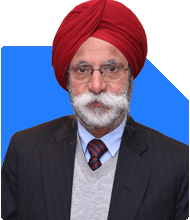
Purshotam

Purshotam Lal  |77 Answers  |Ask -

Financial Planner, MF and Insurance Expert - Answered on Jan 17, 2026

Purshotam Lal has over 38 years of experience in investment banking, mutual funds, insurance and wealth management.
He is an Association of Mutual Funds in India (AMFI)-registered mutual fund distributor, an Insurance Regulatory and Development Authority of India (IRDAI)-certified insurance advisor and founder of Finphoenix Services LLP.
He holds an MBA in finance from the Faculty of Management Studies (FMS), Delhi University and a chartered financial analyst (CFA) degree. He also holds certified associate of the Indian Institute of Bankers (CAIIB), fellow of the Insurance Institute of India (FIII) and National Institute of Securities Markets (NISM) certifications.... more
Asked by Anonymous - Jan 06, 2026Hindi
Money

Need SIP allocation advice

Ans: SIP allocation is dependent on, first your Risk Profile, Period of investment and your life goals or milestones. Most importantly, one has to have minimum time horizon of 10 years+ if intend to invest in equity MFs for reasonably good returns and getting benefits of power of compounding. Please connect to a certified financial advisor or Certified Financial Planner for taking the help.

Purshotam, CFP®, MBA, CAIIB, FIII
Certified Financial Planner
Insurance advisor
www.finphoenixinvest.com
DISCLAIMER: The content of this post by the expert is the personal view of the rediffGURU. Users are advised to pursue the information provided by the rediffGURU only as a source of information to be as a point of reference and to rely on their own judgement when making a decision.
Money

You may like to see similar questions and answers below

Ramalingam

Ramalingam Kalirajan  |10984 Answers  |Ask -

Mutual Funds, Financial Planning Expert - Answered on May 15, 2024

Asked by Anonymous - May 15, 2024Hindi
Listen
Money
Hello Sir, I am 37 year old and planning to start SIP of 10,000 pm. Please advice on how many funds I should distribute the amounts and which fund I need to go for invest. I am going to hold this SIP investment for 10 to 15 years for retirement and children education.
Ans: Embarking on a systematic investment plan (SIP) is a prudent step towards securing your future and your children's education. Let's tailor a strategy that aligns with your objectives.

Understanding Investment Allocation
Diversification is key to mitigating risk and maximizing returns over the long term. Distributing your SIP amount across multiple funds offers a balanced approach to wealth accumulation.

Fund Allocation Recommendations
For a SIP of 10,000 per month, consider allocating funds across two carefully selected categories: Large Cap and Mid Cap.

Large Cap Funds
Investing a significant portion, say 70%, in Large Cap funds provides stability and steady growth. These funds typically invest in established companies with a track record of performance and stability.

Mid Cap Funds
Allocating the remaining 30% to Mid Cap funds introduces an element of growth potential. Mid Cap funds invest in companies with medium market capitalization, offering the opportunity for higher returns over the long term.

Fund Selection Criteria
Opt for actively managed funds with a proven track record of consistent returns and experienced fund managers at the helm. Prioritize funds with low expense ratios and a focus on capital preservation.

Conclusion
By diversifying your SIP across Large Cap and Mid Cap funds, you strike a balance between stability and growth potential, aligning with your long-term goals of retirement and children's education.

Best Regards,

K. Ramalingam, MBA, CFP
Chief Financial Planner
www.holisticinvestment.in

..Read more

Ramalingam

Ramalingam Kalirajan  |10984 Answers  |Ask -

Mutual Funds, Financial Planning Expert - Answered on Jun 24, 2025

Money
Hi, Need your help to review my SIP allocation: Im 36 y/o with take home post tax 2.8L per monthly. My SIP portfolio looks like this(monthly) Digital gold investment : 35k SBI contra fund growth - 10k HDFC flexi cap fund - 10k HDFC gold ETF -10k SBI bluechip direct plan - 10k Aditya Birla sunlife direct fund -10k Bandhana small cap - 10k Plus I have invested in shares and also have few office RSUs. My immediate plan is to go for home in next 2-3 years and post that save for kids education plus retirement.Please review and suggest few more investment plans. Thanks S
Ans: You are earning well and investing regularly. This is already a good beginning. Now, let’s deeply analyse your SIP allocation and overall investment structure from a 360-degree perspective. Let’s assess your portfolio, identify gaps, and offer suggestions in a simple, structured manner.

Monthly Income and Savings Capacity
Take-home income is Rs. 2.8 lakhs per month.

Your current monthly SIP is Rs. 85,000.

This is nearly 30% of your income, which is excellent.

You also hold RSUs and direct shares, which adds further value.

You are thinking long term – home, child’s education, and retirement. That’s very good.

Let’s evaluate each investment one by one now.

Digital Gold – Rs. 35,000/month
This is a high monthly investment in digital gold.

Gold should not exceed 10-15% of total long-term portfolio.

Digital gold doesn’t give regular income or compounding benefits.

It has storage safety, but no taxation benefit.

You are also investing in gold ETF. That doubles exposure.

Better to reduce digital gold to Rs. 5,000–7,000 per month.

Shift balance to diversified mutual funds with long-term potential.

HDFC Gold ETF – Rs. 10,000/month
Another gold-based investment. This overlaps with digital gold.

You are over-allocated to gold. This limits long-term growth.

Gold should be a hedge, not a primary asset.

Please stop this SIP.

Redirect this Rs. 10,000 into equity mutual funds.

SBI Contra Fund – Rs. 10,000/month
Contra funds follow contrarian investing style.

They take risky sectoral bets.

They are not suitable for core portfolio.

Volatility can be very high in short and medium term.

You can consider reducing this to Rs. 5,000.

Redirect balance to more stable fund types.

HDFC Flexi Cap Fund – Rs. 10,000/month
Flexi-cap category offers diversification across market caps.

They allow fund manager flexibility.

This is a good choice for core allocation.

You can continue this SIP.

Increase gradually if gold allocation is reduced.

SBI Bluechip Direct Plan – Rs. 10,000/month
Important Concern:

You have invested in direct plan of this fund.

Direct plans offer lower expense ratio.

But they offer no service, review, or guidance.

There is no certified financial planner in between.

You are missing goal-based planning and rebalancing.

This can hurt your portfolio in long run.

Why Regular Plan via MFD with CFP is better:

Regular plan connects you to a CFP-certified MFD.

They help design goal-specific investment strategy.

They assist in tax planning and review periodically.

You will also get behavioural coaching during market falls.

With a direct plan, these services are absent.

Action Point:

Switch to regular plan of the same scheme via a certified MFD.

They will support with planning, not just execution.

Aditya Birla Sun Life Direct Fund – Rs. 10,000/month
Concern again:

Another direct plan investment.

Disadvantages are same as mentioned above.

No access to guided review, advisory, and rebalancing.

Regular plans are more useful when backed by a CFP-certified MFD.

Suggestion:

Stop SIP in direct plan.

Restart in regular plan through a qualified MFD.

You will benefit more in long-term wealth creation.

Bandhan Small Cap Fund – Rs. 10,000/month
Small cap funds can be volatile in short term.

But they deliver well in long term.

However, allocation should be limited to 10–15%.

Maintain current SIP amount.

Don’t increase beyond this unless risk tolerance is high.

Investment in Shares and RSUs
Individual stocks are risky if not actively monitored.

RSUs are good, but depend on employer performance.

Diversification becomes weak if you rely too much on company shares.

Regular profit booking and shifting to mutual funds is wiser.

Goals: House in 2–3 Years
This is a short-term goal.

Equity mutual funds are not suitable for this time frame.

Avoid investing further for this goal in equity or gold.

Start a separate SIP in ultra-short duration debt fund or RD.

Keep your down payment in 100% safe, low-volatility product.

Goals: Children’s Education
This is a long-term goal, assuming child is under 10.

Best suited for diversified equity mutual funds.

You can also consider child-specific mutual fund plans.

Avoid ULIP or insurance-linked products.

SIP through a CFP-guided MFD is most suitable.

Retirement Planning
At 36, you have 20–25 years to build retirement corpus.

Retirement corpus needs growth, safety, and inflation beating returns.

Equity mutual funds through regular SIPs are ideal.

Consider flexi-cap, large & mid-cap, and balanced advantage funds.

NPS can also be added for extra tax-saving and retirement focus.

Don't rely on employer RSUs alone for retirement.

Problems with Index Funds
You haven’t mentioned index funds. But if you ever consider them:

Index funds have no active management.

They can’t protect during market crashes.

They invest in poor-quality stocks just because they are in the index.

They cannot exit risky sectors in a falling market.

You get average returns, not outperformance.

Active Funds are Better Because:

They are managed by experienced fund managers.

They adapt to changing economic and market conditions.

They avoid poor-performing stocks.

They give opportunity to beat index returns.

A certified financial planner will always use active funds for long-term wealth.

Summary of Actions to Take
Reduce digital gold SIP from Rs. 35,000 to Rs. 5,000–7,000.

Stop gold ETF SIP of Rs. 10,000 fully.

Cut contra fund SIP to Rs. 5,000.

Exit direct plans and move to regular plans with help of a certified MFD.

Allocate more to flexi-cap, large & mid-cap, and hybrid equity funds.

Keep short-term goals like house purchase in debt instruments.

Track stock exposure and reduce reliance on RSUs.

Continue small cap SIP but don’t over-allocate.

Create separate SIPs for child’s education and retirement.

Final Insights
Your income level gives you strong investment potential.

You are already saving a good percentage monthly. Very good discipline.

But allocation needs reshaping to remove concentration in gold.

Direct plans offer no advisory help. That creates blind spots.

Actively managed mutual funds via certified MFDs give goal-based structure.

For short-term needs like a home, equity is not suitable.

For long-term goals like retirement and education, equity mutual funds are best.

A certified financial planner can create personalised roadmaps for each goal.

This kind of structured, reviewed investment can ensure you reach your goals without stress.

Best Regards,
K. Ramalingam, MBA, CFP,
Chief Financial Planner,
www.holisticinvestment.in
https://www.youtube.com/@HolisticInvestment


..Read more

Latest Questions
Nayagam P

Nayagam P P  |10889 Answers  |Ask -

Career Counsellor - Answered on Jan 22, 2026

Asked by Anonymous - Jan 22, 2026Hindi
Career
I am 43 year old Civil Structural Engineer working in an MNC. I am having 21 years of experience. I want to divert my carrier line which will enter me in IT mode or similar kind. I want to shift in Europe. I have bacholer and PG degree in Civil Engineering. The current design job pays me which is very less compared to my total experience. I lack presenting myself in interviews. How can I improve myself and switch the currier line in IT related work which will pay me higher. Pls guide. Requesting to reply individually at my id and not to post online. Thank you
Ans: (Answering your question on the RediffGURU platform amplifies our expertise's impact—thousands facing similar challenges benefit from our solution. Our response becomes a permanent, searchable resource for future seekers. Public contribution establishes our credibility as trusted advisors, transforming our knowledge into a valuable community asset and creating a meaningful legacy). Here is our comprehensive answer to your question: Your 21 years civil engineering expertise combined with Master's degree provides an exceptional foundation for IT transition. Strategic positioning emphasizing transferable skills, targeted certifications, and professional coaching enables successful pivot to higher-paying roles with a European relocation opportunity. OPTION 1: Technical Program/Project Management Track (Lower Risk, Faster Transition). Strategic Positioning: Position your 21 years civil engineering project management experience as directly transferable to IT program management. This approach requires minimum new technical learning while commanding premium compensation (Rs.80–120 lakhs annually in Europe equivalent). Career progression pathway: IT Project Manager (1–2 years) → Senior Program Manager → Enterprise Architect, with salary progression reaching Euro 90,000–150,000 annually. Implementation Steps: (1) Enroll in internationally recognized PMP (Project Management Professional) or CAPM certification—3-4 month preparation, Euro 500–800 cost, highly valued across Europe. (2) Simultaneously, complete cloud fundamentals certification (AWS Solutions Architect Associate, Rs.15,000–20,000)—demonstrates IT fluency without requiring coding expertise. (3) Hire career transition coach (Euro 1,500–3,000 for 5–8 sessions) specifically for mid-career IT transitions—focuses on interview narrative, addressing age concerns, positioning engineering background as strategic advantage. (4) Update LinkedIn profile emphasizing: project delivery excellence, stakeholder management, risk mitigation, cross-functional leadership—using IT-industry language. (5) Target roles: Technical Program Manager, IT Portfolio Manager, Digital Transformation Manager in companies valuing traditional project discipline. (6) Join European IT project management communities (PMI-Europe chapters, LinkedIn groups)—network strategically with hiring managers, learn European IT culture/expectations. OPTION 2: Cloud Architecture/Solutions Engineering Track (Higher Earning Potential, Structured Learning). Strategic Positioning: Pursue cloud architecture combining technical credibility with strategic thinking—highest-demand IT role (2025 data: cloud certifications top growth area globally). Salary potential: Euro 100,000–180,000 annually within 3–4 years. Career trajectory: Cloud Associate (1–2 years gaining experience) → Cloud Architect → Principal Architect, with strong European demand. Implementation Steps: (1) Enroll in structured cloud bootcamp (AWS/GCP/Azure—12–16 weeks intensive, Euro 5,000–10,000)—accelerates learning combining theoretical knowledge with practical labs. Platforms: Linux Academy, A Cloud Guru, or in-person European bootcamps (Germany, Netherlands offer excellent programs). (2) Obtain cloud certifications sequentially: AWS Solutions Architect Associate (foundational, 3-month study), then AWS Solutions Architect Professional (advanced). This demonstrates credible technical progression. (3) Develop small portfolio projects (3–4 projects deploying real cloud solutions—free-tier AWS/GCP—showcasing problem-solving: optimize costs, ensure security, design scalability). A portfolio demonstrates capability beyond certifications. (4) Hire specialized IT career coach (Euro 2,000–4,000, 8–12 sessions) —Focus on technical interview preparation (whiteboarding cloud design scenarios), behavioral storytelling (bridging civil engineering to cloud), and salary negotiation (Euro 100K+ levels). (5) Network strategically: attend cloud conferences (AWS Summit Europe, Google Cloud Next), join regional cloud user groups, and connect with CTOs/architects on LinkedIn—informational interviews learning expectations. (6) Target positions: Junior Cloud Architect, Solutions Architect, and Cloud Infrastructure Engineer in tech companies, financial services, and large enterprises modernizing infrastructure (high hiring volume in Europe). Please note, option 1 (Program Management) offers the fastest, lowest-risk transition leveraging existing expertise, achieving Euro 70–90K within 12–18 months. Option 2 (Cloud Architecture) requires 18–24 months of investment but achieves Euro 100–150K potential by years 3–4. Select Option 1 if prioritizing quick salary restoration; select Option 2 if valuing long-term earning potential and technological relevance. Regardless, professional career coaching addressing interview confidence is essential for successful transition. (Transition Safely: Expert Coaching, Fraud Prevention Guide - The above options provide a foundational framework for your career transition. However, we strongly recommend consulting a specialized Career Transition Coach with demonstrated expertise in European job placement and mid-career professional transitions. A qualified coach will develop a personalized roadmap aligned with your background, experience, and career aspirations. As you explore international opportunities, exercise heightened due diligence: thoroughly research coaching organizations and potential employers, verify credentials, check client testimonials, and confirm established track records in European placements. Be particularly cautious of fraudulent job offers and coaching services promising unrealistic outcomes (e.g., guaranteed placements, excessive upfront fees, vague service descriptions). Protect yourself by validating professional credentials through official regulatory bodies, avoiding providers requesting large advance payments, and cross-referencing company information independently. Strategic guidance from experienced, credible professionals significantly enhances transition success and European employment prospects while safeguarding your financial and professional interests). All the BEST for Your Prosperous Future!

Follow RediffGURUS to Know More on 'Careers | Money | Health | Relationships'.

...Read more

Ramalingam

Ramalingam Kalirajan  |10984 Answers  |Ask -

Mutual Funds, Financial Planning Expert - Answered on Jan 22, 2026

Asked by Anonymous - Jan 22, 2026Hindi
Money
I plan to withdraw ₹6 lakh from my EPF after completing only 3 years of service, and my PAN is linked with my EPF account. Since my service period is less than 5 years, how much TDS at 10% will be deducted at the time of withdrawal? How will this EPF withdrawal be taxed in my income tax return, and can I claim a refund of the TDS deducted if my total income falls below the taxable limit?
Ans: You are thinking ahead, and that is very important. EPF withdrawal before 5 years has tax impact, but with the right understanding, there will be no surprise later.

» EPF withdrawal before completing 5 years of service
– Your total service is only 3 years
– EPF withdrawal is treated as taxable income
– PAN is linked, so TDS applies at a lower rate
– Withdrawal amount mentioned is Rs. 6 lakh

» TDS deduction at the time of EPF withdrawal
– When PAN is linked, EPFO deducts TDS at 10%
– TDS is calculated on the taxable portion of EPF
– In practical terms, EPFO usually deducts around Rs. 60,000 as TDS
– You will receive the balance amount after TDS deduction

» Important clarity on TDS
– TDS is not final tax
– It is only an advance tax collected by EPFO
– Actual tax depends on your total income for the year

» How EPF withdrawal is taxed in your income tax return
– EPF withdrawal is added to your total income
– Employee contribution portion becomes taxable
– Employer contribution portion becomes taxable
– Interest earned also becomes taxable
– The full taxable amount is taxed as per your income tax slab

» Filing income tax return after EPF withdrawal
– EPF withdrawal amount must be declared in the return
– TDS deducted by EPFO will appear in Form 26AS
– You must include both income and TDS details correctly

» Can you claim refund of TDS deducted
– Yes, refund is fully possible
– If your total income including EPF withdrawal is below taxable limit
– Or if your final tax liability is lower than TDS deducted
– The excess TDS will be refunded after return processing

» Common misunderstanding to avoid
– Many people think 10% TDS is final tax, which is not true
– Actual tax may be zero, lower, or higher based on income slab
– Not filing return will result in loss of refund

» Planning insight from a long-term view
– EPF is a retirement-focused asset
– Early withdrawal increases tax and reduces future safety
– Withdraw only if there is real financial need
– If employment resumes soon, transfer is always cleaner

» Finally
– TDS of around Rs. 60,000 will be deducted at withdrawal
– Entire EPF withdrawal is taxable due to service below 5 years
– Refund can be claimed if total income is within limits
– Proper return filing ensures no permanent tax loss

Best Regards,

K. Ramalingam, MBA, CFP,

Chief Financial Planner,

www.holisticinvestment.in

https://www.youtube.com/@HolisticInvestment

...Read more

Ramalingam

Ramalingam Kalirajan  |10984 Answers  |Ask -

Mutual Funds, Financial Planning Expert - Answered on Jan 22, 2026

Asked by Anonymous - Jan 22, 2026Hindi
Money
I applied for EPF transfer, but the request was rejected due to a mismatch in my date of birth between EPFO records and Aadhaar/PAN. My old EPF account has a balance of ₹4.5 lakh. What is the correct procedure to get the date of birth corrected, how long does this correction process usually take, and will my EPF balance continue to earn interest during this period or will there be any loss of interest?
Ans: You have done the right thing by checking this issue early. EPF date of birth mismatch is common, and it is fully correctable. Your Rs. 4.5 lakh balance is safe, and there is no panic situation here. This can be handled in a structured and clean way.

» Why this mismatch happens
– Older EPF records were created based on employer data entry, not Aadhaar
– Even a small difference like day or month swap leads to rejection
– EPFO now treats Aadhaar as the master record
– Until DOB is matched, transfer and withdrawal requests stay on hold

» Correct procedure to update date of birth in EPFO
– Step 1: Ensure Aadhaar DOB is correct

If Aadhaar DOB is wrong, correct Aadhaar first

EPFO will not accept changes unless Aadhaar is accurate

– Step 2: Initiate “Joint Declaration” online

Login to EPFO member portal

Select “Joint Declaration” option

Choose “Date of Birth” for correction

Enter correct DOB as per Aadhaar

– Step 3: Employer verification

Current employer must digitally approve the request

No physical form is required if employer is active on EPFO portal

– Step 4: EPFO field office approval

EPFO officer verifies Aadhaar, PAN and service history

Once approved, DOB gets updated in EPFO records

» Documents usually required
– Aadhaar (mandatory)
– PAN (supporting)
– School certificate or birth certificate only if EPFO asks for extra proof
– In most cases, Aadhaar alone is enough

» How long this correction process takes
– Employer approval: 3 to 10 working days
– EPFO verification: 15 to 30 working days
– In some regional offices, it may go up to 45 days
– Follow up is possible through EPFO grievance if it crosses 30 days

» What happens to your Rs. 4.5 lakh EPF balance meanwhile
– Your EPF account remains active
– Money stays invested with EPFO
– No freeze on balance
– No deduction or penalty

» Will EPF continue to earn interest during correction
– Yes, interest continues to accrue
– EPF interest is calculated yearly, not daily
– As long as account is not withdrawn, interest is credited
– DOB correction or transfer rejection does NOT stop interest
– There is no loss of interest for this delay

» Impact on EPF transfer after DOB correction
– Once DOB is updated, submit transfer request again
– Transfer usually gets approved smoothly
– Past service period is fully preserved
– Pension eligibility and years of service remain intact

» Important points to keep in mind
– Do not apply for withdrawal while correction is pending
– Keep Aadhaar linked and active
– Track request status every week
– If employer delays, raise EPFO grievance online

» Broader financial planning insight
– EPF is a core long-term retirement pillar
– Keeping records clean avoids future delays during retirement
– Small admin issues today prevent big stress later
– You are doing the right thing by fixing this now

» Finally
– DOB correction is a process issue, not a financial loss
– Your money is safe
– Interest continues without break
– Once corrected, your EPF journey becomes smooth and future-ready

Best Regards,

K. Ramalingam, MBA, CFP,

Chief Financial Planner,

www.holisticinvestment.in

https://www.youtube.com/@HolisticInvestment

...Read more

Ramalingam

Ramalingam Kalirajan  |10984 Answers  |Ask -

Mutual Funds, Financial Planning Expert - Answered on Jan 22, 2026

Asked by Anonymous - Jan 22, 2026Hindi
Money
I resigned from my job in April 2024 and my EPF balance is ₹2.1 lakh. If I remain unemployed for 3 months, am I eligible to withdraw the full EPF amount, or is only a partial withdrawal allowed? What are the EPF rules regarding unemployment period, and does it make any difference if I do not join a new employer during this time?
Ans: You have taken a timely step by understanding EPF rules before acting. This clarity will help you avoid mistakes and protect your long-term savings.

» EPF rules after resignation and unemployment
– EPF withdrawal rules depend on the period of unemployment
– Resignation in April 2024 starts the unemployment clock from the last working day
– EPFO treats unemployment as no contribution from employer and employee

» Withdrawal eligibility after 1 month of unemployment
– After completing 1 full month without a job
– You are allowed to withdraw up to 75% of the EPF balance
– This is considered a partial withdrawal
– Remaining balance stays in the EPF account

» Withdrawal eligibility after 2 months of unemployment
– After completing 2 continuous months of unemployment
– You become eligible to withdraw 100% of the EPF balance
– This includes both employee and employer contribution
– Pension portion follows separate rules and is not paid in cash

» What happens if unemployment continues for 3 months
– Staying unemployed for 3 months does not restrict withdrawal
– Full EPF withdrawal remains allowed after 2 months itself
– No additional benefit for waiting beyond 2 months

» Does not joining a new employer make any difference
– Yes, it matters for eligibility
– If you do not join a new employer, withdrawal is allowed
– If you join a new employer, EPFO expects transfer, not withdrawal
– Even a short-term job with EPF contribution restarts employment status

» Interest on EPF during unemployment
– EPF continues to earn interest up to 36 months of no contribution
– Interest credit is done at year-end
– Withdrawing early may stop future interest accumulation

» Tax aspect to be aware of
– If total EPF service is less than 5 years, withdrawal may be taxable
– If service is 5 years or more, withdrawal is tax-free
– This includes service across multiple employers

» Practical decision guidance
– EPF is meant for retirement security
– Withdraw only if cash flow is truly needed
– If job search is ongoing, keeping EPF intact helps future compounding
– Transfer is always better than withdrawal when re-employed

» Common mistakes to avoid
– Withdrawing EPF just because it is available
– Ignoring pension portion rules
– Assuming 3 months wait gives higher benefit

» Finally
– After 2 months of unemployment, full EPF withdrawal is permitted
– 3 months of unemployment does not change eligibility
– Not joining a new employer allows withdrawal
– Joining a new employer shifts the option to transfer

Best Regards,

K. Ramalingam, MBA, CFP,

Chief Financial Planner,

www.holisticinvestment.in

https://www.youtube.com/@HolisticInvestment

...Read more

Ramalingam

Ramalingam Kalirajan  |10984 Answers  |Ask -

Mutual Funds, Financial Planning Expert - Answered on Jan 22, 2026

Asked by Anonymous - Jan 22, 2026Hindi
Money
My monthly basic salary is ₹18,000. As per EPF rules, what percentage of my salary is deducted towards EPF every month? How much EPF contribution goes from my salary, how much does my employer contribute, and how is the employer’s contribution split between EPF and EPS? Please explain with exact amounts.
Ans: EPF rules are simple and helpful for salaried people like you.

» EPF Deduction Basics
– As per EPF rules, 12% of your basic salary gets deducted every month for EPF.
– For your Rs. 18,000 basic salary, your contribution is Rs. 2,160 (12% of 18,000).*
– This amount goes to your EPF account and builds your retirement corpus steadily.*

» Employer’s Total Contribution
– Your employer also puts in 12% of your basic salary, so another Rs. 2,160 each month.
– Total EPF deposit becomes Rs. 4,320 (your share plus employer share).*
– This matching contribution is a big plus, doubling your savings power without extra cost.*

» Split of Employer’s Share
– Out of employer’s Rs. 2,160, most goes to EPF but a part goes to EPS for pension benefits.
– For salary up to Rs. 15,000, EPS gets 8.33% (Rs. 1,250 max), rest to EPF. But since your basic is Rs. 18,000, EPS is still capped at Rs. 1,250.*
– So employer’s EPF gets Rs. 910 (2,160 minus 1,250), giving you good growth in both pension and provident fund.*

» Why This Setup Works Well
– EPF gives tax free interest around 8-9%, safe and better than many options.
– Your total Rs. 4,320 monthly addition grows big over years with compounding.
– Review your EPF statement yearly to track and appreciate this steady wealth builder.*

Final Insights
– EPF is a solid 360 degree start for retirement, insurance, and loan access.
– Keep contributing fully for max benefits. Talk to your HR if salary details change.

Best Regards,

K. Ramalingam, MBA, CFP,

Chief Financial Planner,

www.holisticinvestment.in
https://www.youtube.com/@HolisticInvestment
...Read more

DISCLAIMER: The content of this post by the expert is the personal view of the rediffGURU. Investment in securities market are subject to market risks. Read all the related document carefully before investing. The securities quoted are for illustration only and are not recommendatory. Users are advised to pursue the information provided by the rediffGURU only as a source of information and as a point of reference and to rely on their own judgement when making a decision. RediffGURUS is an intermediary as per India's Information Technology Act.

Close  

You haven't logged in yet. To ask a question, Please Log in below
Login

A verification OTP will be sent to this

Mobile Number / Email

Enter OTP
A 6 digit code has been sent to

Resend OTP in120seconds

Dear User, You have not registered yet. Please register by filling the fields below to get expert answers from our Gurus
Sign up

By signing up, you agree to our
Terms & Conditions and Privacy Policy

Already have an account?

Enter OTP
A 6 digit code has been sent to Mobile

Resend OTP in120seconds

x