Home > Money > Question
Need Expert Advice?Our Gurus Can Help
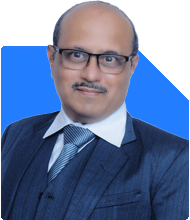
Nitin

Nitin Narkhede  | Answer  |Ask -

MF, PF Expert - Answered on Aug 23, 2025

Nitin Narkhede, founder of the Prosperity Lifestyle Hub, is a certified financial advisor with eight years of experience in helping clients design and implement comprehensive financial life plans.
As a mentor, Nitin has trained over 1,000 individuals, many of whom have seen remarkable financial transformations.
Nitin holds various certifications including the Association Of Mutual Funds in India (AMFI), the Insurance Regulatory and Development Authority and accreditations from several insurance and mutual fund aggregators.
He is a mechanical engineer from the J T Mahajan College, Jalgaon, with 34 years of experience of working with MNCs like Skoda Auto India, Volkswagen India and ThyssenKrupp Electrical Steel India.... more

Tk Question by Tk on Aug 23, 2025Hindi
Money

Sir, Iam 71yrs and heart patient. Constructing a house or buy a property is bit tough for me. Instead i want to know alternative ways to invest the house sale proceeds, may be around 40+lakhs, like investments in deposits or any other avenues for income rax purpose. Kindly guide for a safer use and then I will go for the sale of my 35 yrs old property. Thank you.

Ans: At 71, with health concerns, your priority should be **safety, liquidity, and steady income** from your ?40+ lakh proceeds. You can allocate funds across secure options: **Senior Citizens’ Savings Scheme (SCSS)** up to ?30 lakh for \~8.2% quarterly interest, **Post Office MIS** up to ?9 lakh for \~7.4% monthly income, and **RBI Floating Rate Bonds** (\~8% half-yearly payout). The balance can go into **bank FDs** with senior citizen benefits. If facing capital gains tax, invest in **54EC Bonds** to save tax. This balanced allocation ensures predictable income, low risk, and tax efficiency for long-term financial stability.
Regards, Nitin Narkhede -Founder, Prosperity Lifestyle Hub,
Free webinar https://bit.ly/PLH-Webinar
DISCLAIMER: The content of this post by the expert is the personal view of the rediffGURU. Users are advised to pursue the information provided by the rediffGURU only as a source of information to be as a point of reference and to rely on their own judgement when making a decision.
Money

You may like to see similar questions and answers below

Ramalingam

Ramalingam Kalirajan  |10870 Answers  |Ask -

Mutual Funds, Financial Planning Expert - Answered on Aug 27, 2024

Asked by Anonymous - Aug 26, 2024Hindi
Money
Sir, I am Surajit Chakraborty and I plan to sell my 10-year-old flat in Kolkata for ?64 lakh. I am currently 53 years old, in the 30% tax bracket, and intend to retire at 58. Could you please advise me on how to invest this ?64 lakh in a way that minimizes tax liability, generates a good surplus after retirement, and allows me to withdraw ?50,000 to ?60,000 per month for living expenses?
Ans: At 53, you are close to retirement. You plan to sell your flat for Rs 64 lakh and aim to secure a regular income post-retirement. Your goals are clear: minimize tax liability, generate a surplus after retirement, and have Rs 50,000 to Rs 60,000 per month for living expenses. To achieve these, a well-structured investment strategy is essential. This will involve carefully balancing between growth, income generation, and tax efficiency.

Reinvesting in Real Estate or Bonds

To save on LTCG tax, you have options like reinvesting in another property or investing in specific government bonds under Section 54EC. Reinvesting in another property can help defer or avoid LTCG tax. However, since you are nearing retirement, tying up funds in real estate may not be ideal.

Investing in Section 54EC bonds is another option. These bonds are issued by the government and have a lock-in period of 5 years. The interest earned is taxable, but your capital gains will be exempt from LTCG tax. However, these bonds may not offer the liquidity or returns you need for retirement.

Creating a Retirement Corpus

Given your goal of generating Rs 50,000 to Rs 60,000 monthly, you should focus on creating a diversified retirement corpus. The Rs 64 lakh can be split across various asset classes to balance risk, returns, and liquidity.

Investing in Debt Instruments

A significant portion of your Rs 64 lakh should be allocated to debt instruments. These provide stable and predictable returns, which are crucial for regular income post-retirement.

Senior Citizen Savings Scheme (SCSS): Once you retire, this scheme offers a safe investment with a good interest rate. The interest is taxable, but it provides regular income. The current interest rate is around 7.4% per annum, and the scheme has a 5-year lock-in period.

Monthly Income Plans (MIPs): These are mutual funds that invest predominantly in debt instruments and a small portion in equity. They offer regular income and some capital appreciation. Choose a conservative MIP for lower risk.

Bank Fixed Deposits (FDs): Though they offer lower returns, FDs are safe and provide guaranteed returns. Spread your FDs across different banks and tenures to maintain liquidity and safety.

Investing in Balanced Funds

To counter inflation and ensure your corpus grows, invest a portion in balanced or hybrid mutual funds. These funds invest in both equity and debt, offering growth potential with moderate risk.

Balanced Hybrid Funds: These funds generally invest around 40-60% in equity and the rest in debt. The equity portion helps in capital appreciation, while the debt portion provides stability. These funds can offer better returns than pure debt funds over the long term.
Systematic Withdrawal Plan (SWP)

To generate your monthly income, consider a Systematic Withdrawal Plan (SWP) from mutual funds. With SWP, you can withdraw a fixed amount regularly, which suits your need for Rs 50,000 to Rs 60,000 per month. SWP from equity-oriented funds is tax-efficient as only the capital gains portion is taxed, and that too at a lower rate.

Maintaining Liquidity

As you approach retirement, maintaining liquidity becomes crucial. Ensure a portion of your corpus is in liquid funds or short-term FDs. These will act as an emergency fund and provide easy access to cash without disturbing your long-term investments.

Evaluating Your Risk Tolerance

Since you are 5 years away from retirement, assess your risk tolerance. While equity offers higher returns, it also comes with higher risk. A balanced approach, with more weightage towards debt, is advisable. As you near retirement, consider reducing your equity exposure further.

Tax Planning for Regular Income

Your monthly withdrawals will be subject to tax. To minimize tax, consider the following:

Utilize Tax-Free Instruments: Senior Citizen Savings Scheme (SCSS) and interest from tax-free bonds (if any) can reduce your tax liability.

Opt for SWP from Equity Funds: As mentioned earlier, SWP from equity funds is more tax-efficient than regular withdrawals from debt funds.

Plan Withdrawals: Withdraw smaller amounts from different sources to stay within a lower tax slab.

Review and Rebalance Regularly

Your financial situation and market conditions may change. Regularly review your portfolio and rebalance it to ensure it continues to meet your income needs and risk profile. Consider consulting a Certified Financial Planner periodically to make informed adjustments.

Finally

Your plan to sell the flat and create a retirement corpus is a wise move. By carefully selecting and balancing your investments, you can minimize tax liability, ensure regular income, and maintain financial security during retirement. A combination of debt instruments, balanced funds, and systematic withdrawals will help you achieve your retirement goals.

Best Regards,

K. Ramalingam, MBA, CFP,

Chief Financial Planner,

www.holisticinvestment.in

..Read more

Ramalingam

Ramalingam Kalirajan  |10870 Answers  |Ask -

Mutual Funds, Financial Planning Expert - Answered on Aug 29, 2024

Money
Sir, I am Surajit Chakraborty and I plan to sell my 10-year-old flat in Kolkata for ?64 lakh. I am currently 53 years old, in the 30% tax bracket, and intend to retire at 58. Could you please advise me on how to invest this ?64 lakh in a way that minimizes tax liability, generates a good surplus after retirement, and allows me to withdraw ?50,000 to ?60,000 per month for living expenses?
Ans: At 53, you are close to retirement. You plan to sell your flat for Rs 64 lakh and aim to secure a regular income post-retirement. Your goals are clear: minimize tax liability, generate a surplus after retirement, and have Rs 50,000 to Rs 60,000 per month for living expenses. To achieve these, a well-structured investment strategy is essential. This will involve carefully balancing between growth, income generation, and tax efficiency.

Reinvesting in Real Estate or Bonds

To save on LTCG tax, you have options like reinvesting in another property or investing in specific government bonds under Section 54EC. Reinvesting in another property can help defer or avoid LTCG tax. However, since you are nearing retirement, tying up funds in real estate may not be ideal.

Investing in Section 54EC bonds is another option. These bonds are issued by the government and have a lock-in period of 5 years. The interest earned is taxable, but your capital gains will be exempt from LTCG tax. However, these bonds may not offer the liquidity or returns you need for retirement.

Creating a Retirement Corpus

Given your goal of generating Rs 50,000 to Rs 60,000 monthly, you should focus on creating a diversified retirement corpus. The Rs 64 lakh can be split across various asset classes to balance risk, returns, and liquidity.

Investing in Debt Instruments

A significant portion of your Rs 64 lakh should be allocated to debt instruments. These provide stable and predictable returns, which are crucial for regular income post-retirement.

Senior Citizen Savings Scheme (SCSS): Once you retire, this scheme offers a safe investment with a good interest rate. The interest is taxable, but it provides regular income. The current interest rate is around 7.4% per annum, and the scheme has a 5-year lock-in period.

Monthly Income Plans (MIPs): These are mutual funds that invest predominantly in debt instruments and a small portion in equity. They offer regular income and some capital appreciation. Choose a conservative MIP for lower risk.

Bank Fixed Deposits (FDs): Though they offer lower returns, FDs are safe and provide guaranteed returns. Spread your FDs across different banks and tenures to maintain liquidity and safety.

Investing in Balanced Funds

To counter inflation and ensure your corpus grows, invest a portion in balanced or hybrid mutual funds. These funds invest in both equity and debt, offering growth potential with moderate risk.

Balanced Hybrid Funds: These funds generally invest around 40-60% in equity and the rest in debt. The equity portion helps in capital appreciation, while the debt portion provides stability. These funds can offer better returns than pure debt funds over the long term.
Systematic Withdrawal Plan (SWP)

To generate your monthly income, consider a Systematic Withdrawal Plan (SWP) from mutual funds. With SWP, you can withdraw a fixed amount regularly, which suits your need for Rs 50,000 to Rs 60,000 per month. SWP from equity-oriented funds is tax-efficient as only the capital gains portion is taxed, and that too at a lower rate.

Maintaining Liquidity

As you approach retirement, maintaining liquidity becomes crucial. Ensure a portion of your corpus is in liquid funds or short-term FDs. These will act as an emergency fund and provide easy access to cash without disturbing your long-term investments.

Evaluating Your Risk Tolerance

Since you are 5 years away from retirement, assess your risk tolerance. While equity offers higher returns, it also comes with higher risk. A balanced approach, with more weightage towards debt, is advisable. As you near retirement, consider reducing your equity exposure further.

Tax Planning for Regular Income

Your monthly withdrawals will be subject to tax. To minimize tax, consider the following:

Utilize Tax-Free Instruments: Senior Citizen Savings Scheme (SCSS) and interest from tax-free bonds (if any) can reduce your tax liability.

Opt for SWP from Equity Funds: As mentioned earlier, SWP from equity funds is more tax-efficient than regular withdrawals from debt funds.

Plan Withdrawals: Withdraw smaller amounts from different sources to stay within a lower tax slab.

Review and Rebalance Regularly

Your financial situation and market conditions may change. Regularly review your portfolio and rebalance it to ensure it continues to meet your income needs and risk profile. Consider consulting a Certified Financial Planner periodically to make informed adjustments.

Finally

Your plan to sell the flat and create a retirement corpus is a wise move. By carefully selecting and balancing your investments, you can minimize tax liability, ensure regular income, and maintain financial security during retirement. A combination of debt instruments, balanced funds, and systematic withdrawals will help you achieve your retirement goals.

Best Regards,

K. Ramalingam, MBA, CFP,

Chief Financial Planner,

www.holisticinvestment.in

..Read more

Ramalingam

Ramalingam Kalirajan  |10870 Answers  |Ask -

Mutual Funds, Financial Planning Expert - Answered on Sep 02, 2024

Money
Sir, I am Surajit Chakraborty and I plan to sell my 10-year-old flat in Kolkata for ?64 lakh. I am currently 53 years old, in the 30% tax bracket, and intend to retire at 58. Could you please advise me on how to invest this ?64 lakh in a way that minimizes tax liability, generates a good surplus after retirement, and allows me to withdraw ?50,000 to ?60,000 per month for living expenses?
Ans: At 53, you are close to retirement. You plan to sell your flat for Rs 64 lakh and aim to secure a regular income post-retirement. Your goals are clear: minimize tax liability, generate a surplus after retirement, and have Rs 50,000 to Rs 60,000 per month for living expenses. To achieve these, a well-structured investment strategy is essential. This will involve carefully balancing between growth, income generation, and tax efficiency.

Reinvesting in Real Estate or Bonds

To save on LTCG tax, you have options like reinvesting in another property or investing in specific government bonds under Section 54EC. Reinvesting in another property can help defer or avoid LTCG tax. However, since you are nearing retirement, tying up funds in real estate may not be ideal.

Investing in Section 54EC bonds is another option. These bonds are issued by the government and have a lock-in period of 5 years. The interest earned is taxable, but your capital gains will be exempt from LTCG tax. However, these bonds may not offer the liquidity or returns you need for retirement.

Creating a Retirement Corpus

Given your goal of generating Rs 50,000 to Rs 60,000 monthly, you should focus on creating a diversified retirement corpus. The Rs 64 lakh can be split across various asset classes to balance risk, returns, and liquidity.

Investing in Debt Instruments

A significant portion of your Rs 64 lakh should be allocated to debt instruments. These provide stable and predictable returns, which are crucial for regular income post-retirement.

Senior Citizen Savings Scheme (SCSS): Once you retire, this scheme offers a safe investment with a good interest rate. The interest is taxable, but it provides regular income. The current interest rate is around 7.4% per annum, and the scheme has a 5-year lock-in period.

Monthly Income Plans (MIPs): These are mutual funds that invest predominantly in debt instruments and a small portion in equity. They offer regular income and some capital appreciation. Choose a conservative MIP for lower risk.

Bank Fixed Deposits (FDs): Though they offer lower returns, FDs are safe and provide guaranteed returns. Spread your FDs across different banks and tenures to maintain liquidity and safety.

Investing in Balanced Funds

To counter inflation and ensure your corpus grows, invest a portion in balanced or hybrid mutual funds. These funds invest in both equity and debt, offering growth potential with moderate risk.

Balanced Hybrid Funds: These funds generally invest around 40-60% in equity and the rest in debt. The equity portion helps in capital appreciation, while the debt portion provides stability. These funds can offer better returns than pure debt funds over the long term.
Systematic Withdrawal Plan (SWP)

To generate your monthly income, consider a Systematic Withdrawal Plan (SWP) from mutual funds. With SWP, you can withdraw a fixed amount regularly, which suits your need for Rs 50,000 to Rs 60,000 per month. SWP from equity-oriented funds is tax-efficient as only the capital gains portion is taxed, and that too at a lower rate.

Maintaining Liquidity

As you approach retirement, maintaining liquidity becomes crucial. Ensure a portion of your corpus is in liquid funds or short-term FDs. These will act as an emergency fund and provide easy access to cash without disturbing your long-term investments.

Evaluating Your Risk Tolerance

Since you are 5 years away from retirement, assess your risk tolerance. While equity offers higher returns, it also comes with higher risk. A balanced approach, with more weightage towards debt, is advisable. As you near retirement, consider reducing your equity exposure further.

Tax Planning for Regular Income

Your monthly withdrawals will be subject to tax. To minimize tax, consider the following:

Utilize Tax-Free Instruments: Senior Citizen Savings Scheme (SCSS) and interest from tax-free bonds (if any) can reduce your tax liability.

Opt for SWP from Equity Funds: As mentioned earlier, SWP from equity funds is more tax-efficient than regular withdrawals from debt funds.

Plan Withdrawals: Withdraw smaller amounts from different sources to stay within a lower tax slab.

Review and Rebalance Regularly

Your financial situation and market conditions may change. Regularly review your portfolio and rebalance it to ensure it continues to meet your income needs and risk profile. Consider consulting a Certified Financial Planner periodically to make informed adjustments.

Finally

Your plan to sell the flat and create a retirement corpus is a wise move. By carefully selecting and balancing your investments, you can minimize tax liability, ensure regular income, and maintain financial security during retirement. A combination of debt instruments, balanced funds, and systematic withdrawals will help you achieve your retirement goals.

Best Regards,

K. Ramalingam, MBA, CFP,

Chief Financial Planner,

www.holisticinvestment.in

..Read more

Ramalingam

Ramalingam Kalirajan  |10870 Answers  |Ask -

Mutual Funds, Financial Planning Expert - Answered on Feb 27, 2025

Listen
Sir, instead of buying a flat/house or constructing a house, I want to deposit the sale proceeds of my house. In such case where to, and how to invest?. I am 70+ years old with heart problem and suffer arthritis issues which desist me from travelling and walking as well. So sir,my request is to help me where to depost the proceeds with the names of institutions and very much helpful if the investment done on line. So kindly guide the ways to follow the above mentioned needs. Thank you.
Ans: I understand your concern about where to invest the proceeds from selling your house. Your health condition also makes it essential to have investments that are easy to manage online.

Factors to Consider Before Investing
Safety of Capital:

Your investment should be in low-risk options to protect your capital.
Regular Income Requirement:

You may need monthly income to cover medical and living expenses.
Liquidity and Accessibility:

Investments should be accessible online without physical visits.
Tax Implications:

Gains from the sale of property are subject to capital gains tax.
Where to Invest the Sale Proceeds?
1. Senior Citizen Savings Scheme (SCSS)
Suitable for stable and safe returns.
Interest is paid quarterly.
Maximum investment limit: Rs 30 lakh.
Lock-in period: 5 years, extendable by 3 years.
Can be invested in banks or post offices.
2. Monthly Income Fixed Deposits (FDs)
Senior citizen FDs offer higher interest rates.
Choose a monthly interest payout option.
Recommended banks: SBI, HDFC Bank, ICICI Bank, and Axis Bank.
Invest up to Rs 5 lakh per bank to ensure safety under DICGC insurance.
3. Debt Mutual Funds (For Liquidity and Tax Benefits)
Suitable for long-term capital protection with some growth.
Invest in low-risk debt funds with a short to medium duration.
Capital gains tax applies only when you withdraw money.
Can be managed entirely online through a Certified Financial Planner-backed MFD.
4. Post Office Monthly Income Scheme (POMIS)
Provides fixed monthly interest.
Maximum investment limit: Rs 9 lakh for an individual.
Safe as it is backed by the Government of India.
5. SWP (Systematic Withdrawal Plan) in Balanced Mutual Funds
Generates regular monthly income.
Better than FD as it offers higher returns with tax efficiency.
Withdrawal amounts can be adjusted as per need.
6. Tax-Free Bonds
Suitable for safe and tax-efficient returns.
Interest is tax-free and paid annually.
Can be purchased online through stock exchanges.
7. RBI Floating Rate Bonds
Interest rate adjusts every 6 months based on market rates.
Lock-in period: 7 years, but senior citizens can withdraw earlier.
Investment is safe and backed by the Government of India.
Suggested Investment Allocation
SCSS: Rs 30 lakh
POMIS: Rs 9 lakh
FDs Across Multiple Banks: Rs 10-15 lakh
Debt Mutual Funds: Rs 10 lakh
Tax-Free Bonds: Rs 10 lakh
SWP in Balanced Mutual Funds: Rs 10 lakh
This plan ensures a mix of safety, liquidity, and tax efficiency.

Final Insights
Prioritise capital protection with safe investments.
Choose options with online management for convenience.
Spread funds across different instruments for safety and returns.
Consult a Certified Financial Planner for personalised guidance.
Best Regards,

K. Ramalingam, MBA, CFP,
Chief Financial Planner,
www.holisticinvestment.in
https://www.youtube.com/@HolisticInvestment

..Read more

Ramalingam

Ramalingam Kalirajan  |10870 Answers  |Ask -

Mutual Funds, Financial Planning Expert - Answered on May 09, 2025

Asked by Anonymous - May 09, 2025
Money
Sir, what are the alternative investments, ( without buying or constructing a house) for a minimum period of 3 to 5 years?. Sir i am 71 years old, with heart and arthritis ailments. So I cannot put in any more physical efforts to buy/construct any house. Pl.guide me. Sir,if you consider and reply in a shortwhile will beof much helpful. Thank you.
Ans: At 71 years of age, with health concerns, it's crucial to focus on investments that are safe, require minimal physical effort, and align with your 3 to 5-year investment horizon. Below, I have outlined various investment options tailored to your needs, ensuring a comprehensive 360-degree perspective.

1. Government-Backed Schemes
Senior Citizens Savings Scheme (SCSS)

This scheme is designed only for senior citizens above 60 years.

It offers assured interest with quarterly payouts.

The investment duration is 5 years. It can be extended by 3 years.

The maximum amount you can invest is Rs. 30 lakhs.

It gives tax deduction under Section 80C.

Premature exit is allowed but with a small penalty.

The returns are safe as this is a government-backed scheme.

This scheme is highly suited for your need of steady income.

Post Office Monthly Income Scheme (POMIS)

This is another safe option for generating regular income.

Interest is paid monthly and the rate is fixed by the government.

You can invest up to Rs. 9 lakhs in a single account.

Joint account can hold up to Rs. 15 lakhs.

Tenure is fixed at 5 years.

It offers capital protection with low risk.

You get fixed income but there is no tax benefit.

It is easy to open and operate at your nearby post office.

2. Bank Fixed Deposits (FDs) for Senior Citizens
These deposits are safe and easy to understand.

Senior citizens get extra interest than general public.

You can choose tenure between 1 year and 5 years.

Interest can be paid monthly, quarterly, or on maturity.

Most banks offer special FD schemes for senior citizens.

Your capital is insured up to Rs. 5 lakhs per bank.

Breakable FDs offer flexibility if funds are needed early.

Laddering FDs helps manage cash flow better over time.

3. Debt Mutual Funds
These funds invest in safe instruments like bonds and securities.

They are managed by expert fund managers.

You get better returns than savings accounts or FDs.

Ideal if you want moderate returns with low risk.

Can be held for 3 to 5 years for better stability.

You can withdraw partially or fully at any time.

Taxation depends on your income slab.

For short-term and long-term, gains are taxed as per slab.

Choose funds through a Mutual Fund Distributor who is a Certified Financial Planner.

Avoid direct mutual funds. Regular plans through a trusted CFP give guidance.

Regular plans also help with tracking and rebalancing.

These funds suit conservative investors like yourself.

4. Hybrid Mutual Funds
These invest in a mix of equity and debt instruments.

They balance safety and growth better than pure equity funds.

Suitable for moderate risk appetite and medium-term goals.

They offer higher potential returns than debt mutual funds.

You can use Systematic Withdrawal Plan (SWP) for monthly income.

You withdraw a fixed amount every month as income.

Remaining investment continues to grow.

Better than bank interest in most years.

These are managed by experienced fund managers.

You get professional management and risk balancing.

They suit your 3 to 5-year investment horizon well.

5. Tax-Free Bonds
These are issued by government-backed companies.

Interest earned is fully exempt from income tax.

They offer fixed income for long periods.

Tenure is usually 10 to 20 years.

But they can be sold in the secondary market anytime.

There is no TDS on the interest received.

Capital remains protected if held till maturity.

Useful for generating tax-free income.

Liquidity may be limited, so invest part only.

Ideal for people in higher tax slabs.

6. Public Provident Fund (PPF)
PPF is a long-term savings option with tax benefits.

Though the tenure is 15 years, you can withdraw after 5 years.

Partial withdrawals are allowed from sixth year onwards.

Interest earned is tax-free.

Investment up to Rs. 1.5 lakhs per year is allowed.

Investment also gives tax deduction under Section 80C.

Since you are already 71, limit the amount you put here.

Use PPF only if you have surplus funds with long-term view.

7. Health Insurance
Health expenses can disturb your retirement savings.

A proper health policy gives peace of mind.

Make sure your plan covers pre-existing diseases.

Select a plan with low waiting periods.

Top-up plans can help increase your coverage.

Premium paid gives tax benefit under Section 80D.

Renew your health plan before expiry every year.

Do not delay or skip health insurance.

Health is your most important financial asset now.

8. Emergency Fund
Keep a separate fund for emergencies.

It should cover at least 6 months of expenses.

Keep this in savings or liquid mutual fund.

Avoid using this fund for investments.

This fund helps during medical or family needs.

Having this buffer keeps you financially stress-free.

9. Avoid Complex or Risky Investments
Avoid real estate, especially construction or buying property.

At this age, physical and legal efforts must be avoided.

Do not go for products that lock your funds.

Avoid insurance-linked investment plans like ULIPs.

These give poor returns and are not flexible.

Do not invest in shares directly.

Direct equity needs monitoring and risk taking.

Do not use index funds.

Index funds blindly copy the market.

They don’t protect capital in falling markets.

Actively managed funds are better.

Fund managers can exit bad stocks and reduce loss.

Index funds lack human decision-making.

In volatile times, this can be harmful.

10. Taxation Awareness
Interest from SCSS and FDs is taxable as per your slab.

Debt mutual fund gains are taxed as per slab.

Equity fund gains above Rs. 1.25 lakh are taxed at 12.5%.

Short-term equity gains are taxed at 20%.

Keep these in mind while planning redemptions.

Withdraw funds in parts to manage tax better.

Consult a Certified Financial Planner for personalised tax advice.

11. Role of Certified Financial Planner (CFP)
A CFP is qualified and regulated to give financial advice.

They help in goal planning and risk management.

They review your current holdings and guide on changes.

CFPs don’t push products. They suggest based on your goals.

You can invest through them using regular mutual funds.

They handle paperwork, tracking, and rebalancing.

Their fee is included in mutual fund expenses.

They act as a long-term guide in your financial journey.

Especially helpful at your age when decisions must be safe.

Select only CFPs who are registered and experienced.

12. Avoid Annuities
Annuities give very low returns.

They lock your money and lack flexibility.

Payouts are taxable in your hands.

You lose control over your capital.

Not suitable at your life stage.

Safer alternatives with better liquidity are available.

SCSS or Hybrid Funds are more beneficial.

13. Review of Existing Policies
If you hold old LIC or ULIP plans, please review them.

These plans often give low returns.

Check surrender value and consider exiting.

Reinvest the amount into better options.

Use mutual funds for flexibility and higher growth.

Take help of a Certified Financial Planner for this.

Finally
Your investment needs are clear.

You want safety, income, and peace of mind.

You do not want physical involvement or stress.

You want your money to work silently and reliably.

That is exactly what the above options offer.

They protect your capital and generate steady returns.

They are flexible and easily accessible.

They need no physical effort or frequent monitoring.

At your stage, financial peace matters most.

Not chasing high returns, but getting consistent income.

You have taken the right step by seeking advice.

Now, implement these options gradually.

Start with a basic allocation. Review it every year.

Focus on health, simplicity, and financial security.

Let your money bring comfort, not worry.

Wishing you a financially safe and relaxed retirement.

Best Regards,

K. Ramalingam, MBA, CFP,

Chief Financial Planner,

www.holisticinvestment.in

https://www.youtube.com/@HolisticInvestment

..Read more

Latest Questions
Ravi

Ravi Mittal  |676 Answers  |Ask -

Dating, Relationships Expert - Answered on Dec 04, 2025

Asked by Anonymous - Dec 02, 2025Hindi
Relationship
My married ex still texts me for comfort. Because of him, I am unable to move on. He makes me feel guilty by saying he got married out of family pressure. His dad is a cardiac patient and mom is being treated for cancer. He comforts me by saying he will get separated soon and we will get married because he only loves me. We have been in a relationship for 14 years and despite everything we tried, his parents refused to accept me, so he chose to get married to someone who understands our situation. I don't know when he will separate from his wife. She knows about us too but she comes from a traditional family. She also confirmed there is no physical intimacy between them. I trust him, but is it worth losing my youth for him? Honestly, I am worried and very confused.
Ans: Dear Anonymous,
I understand how difficult it is to let go of a relationship you have built from scratch, but is it really how you want to continue? It really seems to be going nowhere. His parents are already in bad health and he married someone else for their happiness. Does it seem like he will be able to leave her? So many people’s happiness and lives depend on this one decision. I think it’s about time you and your BF have a clear conversation about the same. If he can’t give a proper timeline, please try to understand his situation. But also make sure he understands yours and maybe rethink this equation. It really isn’t healthy. You deserve a love you can have wholly, and not just in pieces, and in the shadows.

Hope this helps

...Read more

Mayank

Mayank Chandel  |2562 Answers  |Ask -

IIT-JEE, NEET-UG, SAT, CLAT, CA, CS Exam Expert - Answered on Dec 04, 2025

Career
My son will be appearing for JEE Main & JEE Advanced 2026 and will participate in JoSAA Counselling 2026. I request clarification regarding the GEN-EWS certificate date requirement for next year. I have already applied for an EWS certificate for current year 2025, and the application is under process. However, I am unsure whether this certificate will be accepted during JoSAA 2026, or whether candidates will be required to submit a fresh certificate for FY 2026–27 (issued on or after 1 April 2026). My concern is that if JoSAA requires a certificate issued after 1 April 2026, students will have only 1–1.5 months to complete the entire procedure, which is difficult considering normal government processing timelines. Also, during current JEE form filling, students are asked to upload a GEN-EWS certificate issued on or after 1 April 2025, or an application acknowledgement. This has created confusion among parents regarding which year’s certificate will finally be valid at the time of counselling. I request your kind guidance on: Which GEN-EWS certificate will be accepted for JoSAA Counselling 2026 — a certificate for FY 2025–26 (issued after 1 April 2025), or a new certificate for FY 2026–27 (issued after 1 April 2026)?
Ans: Hi
You need not worry about the EWS certificate. Even if you apply for the next year's certificate on 1 Apr 2026, the second session of JEE MAINS will still be held, followed by JEE ADVANCED, which will be held in May. JOSAA starts in June. so you will have 2 months in hand for fresh EWS certificate.

...Read more

DISCLAIMER: The content of this post by the expert is the personal view of the rediffGURU. Investment in securities market are subject to market risks. Read all the related document carefully before investing. The securities quoted are for illustration only and are not recommendatory. Users are advised to pursue the information provided by the rediffGURU only as a source of information and as a point of reference and to rely on their own judgement when making a decision. RediffGURUS is an intermediary as per India's Information Technology Act.

Close  

You haven't logged in yet. To ask a question, Please Log in below
Login

A verification OTP will be sent to this
Mobile Number / Email

Enter OTP
A 6 digit code has been sent to

Resend OTP in120seconds

Dear User, You have not registered yet. Please register by filling the fields below to get expert answers from our Gurus
Sign up

By signing up, you agree to our
Terms & Conditions and Privacy Policy

Already have an account?

Enter OTP
A 6 digit code has been sent to Mobile

Resend OTP in120seconds

x