


Need Expert Advice?Our Gurus Can Help
Confused about Mutual Funds? Worried Investor Seeks Guidance

Ramalingam Kalirajan |11185 Answers |Ask -Follow
Mutual Funds, Financial Planning Expert - Answered on Oct 04, 2024
Ramalingam Kalirajan has over 23 years of experience in mutual funds and financial planning.
He has an MBA in finance from the University of Madras and is a certified financial planner.
He is the director and chief financial planner at Holistic Investment, a Chennai-based firm that offers financial planning and wealth management advice.... more
He has an MBA in finance from the University of Madras and is a certified financial planner.
He is the director and chief financial planner at Holistic Investment, a Chennai-based firm that offers financial planning and wealth management advice.... more
 Question by Rahu on Oct 03, 2024Hindi
How to select mutual funds and other scheme pls guide
Ans: To select mutual funds and other schemes, consider these key factors:
Investment Goals: Identify your financial objectives (retirement, education, etc.).
Risk Tolerance: Choose equity funds for higher risk and returns, or debt funds for lower risk.
Time Horizon: Longer horizons suit equity; shorter ones suit debt or hybrid funds.
Fund Performance: Check past 5-10 years' performance against benchmarks.
Expense Ratio: Lower expense ratios can boost returns.
Fund Manager’s Expertise: Look for consistent, skilled fund managers.
For a customized recommendation, contact a Certified Financial Planner (CFP) or a Mutual Fund Distributor (MFD).
Best Regards,
K. Ramalingam, MBA, CFP,
Chief Financial Planner,
www.holisticinvestment.in
https://www.youtube.com/@HolisticInvestment
Investment Goals: Identify your financial objectives (retirement, education, etc.).
Risk Tolerance: Choose equity funds for higher risk and returns, or debt funds for lower risk.
Time Horizon: Longer horizons suit equity; shorter ones suit debt or hybrid funds.
Fund Performance: Check past 5-10 years' performance against benchmarks.
Expense Ratio: Lower expense ratios can boost returns.
Fund Manager’s Expertise: Look for consistent, skilled fund managers.
For a customized recommendation, contact a Certified Financial Planner (CFP) or a Mutual Fund Distributor (MFD).
Best Regards,
K. Ramalingam, MBA, CFP,
Chief Financial Planner,
www.holisticinvestment.in
https://www.youtube.com/@HolisticInvestment
DISCLAIMER: The content of this post by the expert is the personal view of the rediffGURU. Users are advised to pursue the information provided by the rediffGURU only as a source of information to be as a point of reference and to rely on their own judgement when making a decision.
MoneyReply


You may like to see similar questions and answers below
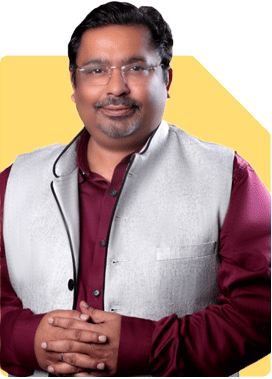
Omkeshwar Singh | Answer |Ask -Follow
Head, Rank MF - Answered on Jan 04, 2021


Ramalingam Kalirajan |11185 Answers |Ask -Follow
Mutual Funds, Financial Planning Expert - Answered on Apr 05, 2024

Ramalingam Kalirajan |11185 Answers |Ask -Follow
Mutual Funds, Financial Planning Expert - Answered on Apr 10, 2024


Ramalingam Kalirajan |11185 Answers |Ask -Follow
Mutual Funds, Financial Planning Expert - Answered on Jul 27, 2024
Latest Questions

Radheshyam Zanwar |7730 Answers |Ask -Follow
MHT-CET, IIT-JEE, NEET-UG Expert - Answered on May 25, 2026
Asked by Anonymous - May 25, 2026Hindi
Radheshyam Zanwar |7730 Answers |Ask -Follow
MHT-CET, IIT-JEE, NEET-UG Expert - Answered on May 25, 2026


Radheshyam Zanwar |7730 Answers |Ask -Follow
MHT-CET, IIT-JEE, NEET-UG Expert - Answered on May 25, 2026
Asked by Anonymous - May 25, 2026

Hello Sir,
Our son is eligible for BTECH in IIT Madras AI and data analytics, IIT kanpur cse and electricals in all IITs based on last year jee advanced josaa. Which is the best option for future growth. He is interested to opt from any of these.
Ans: Preference order: AI + DS @ IIT Madras > CSE @ IIT Kanpur > Electrical @ IIT Kanpur. Yet, the basic interest of the candidate plays a more significant role in choosing the branch and institute. The final decision will be yours and your son's.
Good luck.
Follow me if you receive this reply.
Radheshyam
Good luck.
Follow me if you receive this reply.
Radheshyam
Radheshyam Zanwar |7730 Answers |Ask -Follow
MHT-CET, IIT-JEE, NEET-UG Expert - Answered on May 25, 2026

Radheshyam Zanwar |7730 Answers |Ask -Follow
MHT-CET, IIT-JEE, NEET-UG Expert - Answered on May 25, 2026

Radheshyam Zanwar |7730 Answers |Ask -Follow
MHT-CET, IIT-JEE, NEET-UG Expert - Answered on May 25, 2026

Radheshyam Zanwar |7730 Answers |Ask -Follow
MHT-CET, IIT-JEE, NEET-UG Expert - Answered on May 25, 2026

Radheshyam Zanwar |7730 Answers |Ask -Follow
MHT-CET, IIT-JEE, NEET-UG Expert - Answered on May 25, 2026


Radheshyam Zanwar |7730 Answers |Ask -Follow
MHT-CET, IIT-JEE, NEET-UG Expert - Answered on May 25, 2026
Asked by Anonymous - May 25, 2026
Radheshyam Zanwar |7730 Answers |Ask -Follow
MHT-CET, IIT-JEE, NEET-UG Expert - Answered on May 25, 2026

