Home > Money > Question
Need Expert Advice?Our Gurus Can Help
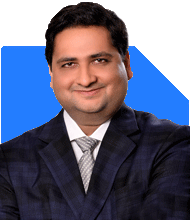
Purshotam

Purshotam Lal  | Answer  |Ask -

Financial Planner, MF and Insurance Expert - Answered on Sep 24, 2025

Purshotam Lal has over 38 years of experience in investment banking, mutual funds, insurance and wealth management.
He is an Association of Mutual Funds in India (AMFI)-registered mutual fund distributor, an Insurance Regulatory and Development Authority of India (IRDAI)-certified insurance advisor and founder of Finphoenix Services LLP.
He holds an MBA in finance from the Faculty of Management Studies (FMS), Delhi University and a chartered financial analyst (CFA) degree. He also holds certified associate of the Indian Institute of Bankers (CAIIB), fellow of the Insurance Institute of India (FIII) and National Institute of Securities Markets (NISM) certifications.... more
Asked by Anonymous - Jun 24, 2025Hindi
Money

GD evening sir, My CTC is 18lakhs per annum In stocks mostly in small cap I have invested 14lakhs In mutual funds 12lakh In ppf 10.98 lakhs Sip amt 15k RD 5k One term plan 1crore Health covered by company I wanted to save tax and should I invest in home and investment for my child

Ans: As per given information, it seems that much of the investment planning has been done by you, however you should have a broader financial plan. Which can include education, marriages of your children in future, purchase of house and also the retirement planning. It will be prudent to contact a certified financial planner in this regard. Investing in home and investment for Child are good options.
DISCLAIMER: The content of this post by the expert is the personal view of the rediffGURU. Users are advised to pursue the information provided by the rediffGURU only as a source of information to be as a point of reference and to rely on their own judgement when making a decision.
Money

You may like to see similar questions and answers below

Hardik

Hardik Parikh  | Answer  |Ask -

Tax, Mutual Fund Expert - Answered on Aug 22, 2023

Asked by Anonymous - Aug 21, 2023Hindi
Listen
Money
I work for a private company with annual CTC of Rs 17.6 lakh, What are the investments which I must do in order to save the tax, Currently I have 4 Life Insurance policies with premium Rs 1 lakh Senior Citizen health insurance of Rs 25k I have a 3 year old daughter, this year I m planning for Sukhanya Samruddhi of Rs 1.5 lakh
Ans: Hi,

Given your annual CTC of Rs 17.6 lakh and your current investments, here are some tax-saving investment options you can consider for the financial year 2023-24:

1. Equity Linked Savings Scheme (ELSS): This is a type of mutual fund that not only helps you save tax but also gives you an opportunity to grow your money. They have a lock-in period of 3 years.

2. Public Provident Fund (PPF): You've mentioned planning for Sukanya Samriddhi for your daughter, which is a great choice. In addition to that, you can also consider investing in PPF. It's a long-term investment option that offers tax-free interest.

3. Unit Linked Insurance Plan (ULIP): Since you already have life insurance policies, you might want to look into ULIPs. They offer both insurance and investment under a single integrated plan.

4. National Savings Certificate: This is another safe investment option that you can consider.

5. New Pension Scheme (NPS): It's a voluntary, long-term retirement savings scheme designed to enable systematic savings. It is a mix of equity, fixed deposits, corporate bonds, liquid funds, and government funds.

6. Fixed Deposits: Some fixed deposits offer tax-saving benefits. However, the interest earned might be taxable.

7. Senior Citizen Saving Scheme (SCSS): Since you've mentioned senior citizen health insurance, if you or your family members qualify, SCSS can be a good option. It offers a good interest rate.

Remember, the key is to diversify your investments and not put all your money into one basket. It's also essential to keep in mind the lock-in periods, returns, and tax implications of each investment option.

I hope this helps!

..Read more

Ramalingam

Ramalingam Kalirajan  |10870 Answers  |Ask -

Mutual Funds, Financial Planning Expert - Answered on Jul 17, 2024

Asked by Anonymous - Jun 26, 2024Hindi
Listen
Money
We have invested 3k from last 4 years in Aditya Birla mutual fund equity based. And last year kotak mid cap and small cap of 7k and 3k respectively. Other than this we invest in NPS 50k per year from last 5 years and have two lic policies of 5 lalk sum assured. We have two kids aged 7 and 4. Earning is 1 lakh . Expenses are home loan 31k for 32 lakh loan of 15 years , 3 years are done. Monthly expenses are 31k emi, 30k home, 15 k parents. Please suggest if this is a good way to invest for future of our children or any changes that need to be done we plan to keep investing in mutual funds for long term. Kotak Balanced Advantage Fund Growth (Regular Plan) and Kotak Small Cap Fund - Growth (Regular Plan) (Erstwhile Kotak Mid-Cap). No term insurance and there is company health insurance of my husband. I earn 10k per month.
Ans: Current Financial Situation

You have a combined monthly income of Rs. 1.10 lakh.

You have two kids aged 7 and 4.

Your monthly expenses include:

Rs. 31k home loan EMI
Rs. 30k home expenses
Rs. 15k for parents
Current Investments

You invest Rs. 3k per month in Aditya Birla mutual fund (equity-based) for the last 4 years.

You invest Rs. 7k per month in Kotak Mid Cap fund and Rs. 3k per month in Kotak Small Cap fund (last year).

You invest Rs. 50k per year in NPS for the last 5 years.

You have two LIC policies with a sum assured of Rs. 5 lakhs each.

Assessment of Current Investments

Your current mutual fund investments are good for long-term growth.

Equity mutual funds, especially mid-cap and small-cap, offer high growth potential.

NPS is a good investment for retirement savings, with tax benefits.

LIC policies provide some security but have lower returns compared to mutual funds.

Recommended Changes

Increase SIP in Mutual Funds

Consider increasing your SIPs in equity mutual funds.

This will help in wealth accumulation for your children's future.

Focus on a mix of large-cap, mid-cap, and small-cap funds.

Balanced Advantage Fund

Balanced Advantage Funds balance equity and debt.

They provide moderate growth with lower risk.

Consider allocating more to these funds for stability.

Avoiding Direct Funds

Direct funds need active management and expertise.

Regular funds, through a Certified Financial Planner, offer professional guidance.

They provide personalized advice and ongoing support.

Health and Term Insurance

You mentioned company health insurance.

Ensure it covers your entire family adequately.

Consider taking a separate term insurance policy for your husband.

Term insurance provides financial security in case of unforeseen events.

Review LIC Policies

LIC policies have lower returns compared to mutual funds.

Consider surrendering or partially surrendering them.

Reinvest the proceeds in high-return mutual funds.

Emergency Fund

Maintain an emergency fund for unforeseen expenses.

This should cover 6-12 months of living expenses.

Keep this fund in a liquid asset like a savings account or liquid mutual fund.

Final Insights

Your current investments are on the right track.

Increasing SIPs and adding balanced advantage funds can provide stability.

Ensure adequate insurance coverage and maintain an emergency fund.

Regular reviews and professional advice will help you stay on track.

Best Regards,

K. Ramalingam, MBA, CFP,

Chief Financial Planner,

www.holisticinvestment.in

..Read more

Ramalingam

Ramalingam Kalirajan  |10870 Answers  |Ask -

Mutual Funds, Financial Planning Expert - Answered on Jul 10, 2025

Asked by Anonymous - Jun 24, 2025Hindi
Money
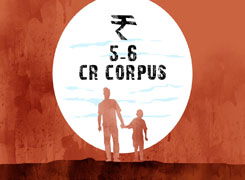
I am 34 years old male & working in MNC in India. Married and 9 months old kid. I have a salary of 23 lakhs pa. In hand salary of 1.42 lakhs. Monthly expenses: - Rent, ancillary bills & other expenses : 1,00,000 per month - Investments: 23,000/- Investment details: PPF : 65000 on yearly basis Nps : 48000 on yearly basis SIP : 108000 on yearly basis Term Insurance/ Lic (70 Lakhs) : 23000 yearly installment Health Insurance (15 lakhs): 28000 yearly installment Gold Investment: 60000 yearly basis I'm in for long term commitment for Investment like PPF,NPS,SIP(4K per month) for my retirement at 60 and SIP(5K per month) for son's education. Total Savings: SIP : 8 lakhs NPS : 2 lakhs EPF : 8 lakhs PPF : 6.5 lakhs My Savings are null as of now due strain during delivery expenses. My goal is of achieving 10CR so advise if have revise my Investment. I believe in long term approach and firm beliver in power of compounding.
Ans: You have a very strong start. Your clarity on long-term goals is very good. But, a few key adjustments are needed. Below is a 360-degree detailed guidance.

? Income and Expense Summary

Your annual salary is Rs 23 lakh.

In-hand monthly salary is Rs 1.42 lakh.

Your monthly living expenses are Rs 1 lakh.

This leaves you with a surplus of around Rs 42,000 per month.

Out of this, Rs 23,000 goes towards investments and insurance.

Right now, your savings buffer is zero. This needs to be corrected soon.

? Current Investment and Savings Overview

SIP value built so far is Rs 8 lakh. This is a strong start.

EPF accumulated is Rs 8 lakh. This will help in retirement.

PPF balance is Rs 6.5 lakh. Continue investing yearly.

NPS balance is Rs 2 lakh. This is an added retirement booster.

Gold investment is Rs 60,000 yearly. Keep gold at 5% to 10% of your total wealth.

? Emergency Fund is Missing

Right now, you have no savings buffer.

An emergency fund is essential before increasing investments.

Build at least 6 months’ expenses in a savings account or liquid mutual fund.

That means around Rs 6 lakh as an emergency fund.

Start by saving Rs 20,000 monthly in liquid mutual funds.

Pause gold investments until your emergency fund is ready.

Once built, resume your investment plan.

? Current Investment Plan - Strengths and Gaps

PPF: Good for long-term safety. Continue yearly contributions.

NPS: Helps in retirement. But partial withdrawal restrictions apply.

SIP: Helps you in wealth creation. But SIP amount looks slightly lower than required.

Term Insurance: Sum assured of Rs 70 lakh is low for your income.

Health Insurance of Rs 15 lakh is sufficient now.

Your combined monthly SIP is around Rs 9,000. This is very low.

With your income, you can invest Rs 30,000 to Rs 35,000 monthly in SIP.

? Insurance Correction Needed

Increase your term insurance to at least Rs 2 crore.

It should be 15 to 20 times your annual salary.

A higher cover protects your family in your absence.

LIC policies are often insurance-cum-investment plans.

If your LIC is a traditional or endowment plan, please surrender it.

Reinvest that amount in mutual funds for better growth.

? SIP Improvement Needed

Increase your SIP in actively managed mutual funds.

Do not select index funds.

Index funds mirror the market and give only average returns.

Actively managed funds try to beat the market.

They have professional fund managers who manage risk actively.

This approach works better in India where markets are dynamic.

Avoid direct mutual funds.

In direct funds, no one will guide you during market falls.

Instead, invest in regular plans through a Mutual Fund Distributor.

A Certified Financial Planner and MFD will provide reviews and changes.

You are already investing Rs 4,000 for retirement and Rs 5,000 for kids’ education.

Increase the retirement SIP to Rs 20,000 per month.

Increase the kids' SIP to Rs 7,500 per month over the next two years.

? Retirement Goal of Rs 10 Crore – Possible but Needs Push

You are targeting Rs 10 crore by age 60.

This is achievable with disciplined investments.

But your current SIP level is not enough.

You need to invest much higher amounts monthly.

Focus on step-by-step increases every year.

After your emergency fund is ready, increase SIPs aggressively.

Keep 60% of your investments in equity mutual funds.

Keep 20% in debt mutual funds, EPF, and PPF.

Keep 5%-10% in gold and other small holdings.

? Kids Education Goal

You have started an SIP for your son’s education.

Continue it for the next 15 to 17 years.

Do not touch this corpus for other purposes.

You may gradually shift this SIP into hybrid funds when your child is 12 years old.

This will protect your capital from sudden market corrections.

? Suggested Immediate Action Plan

Step 1: Build an emergency fund of Rs 6 lakh in 8 to 12 months.

Step 2: Increase term insurance to Rs 2 crore.

Step 3: Review your LIC. If endowment, surrender it and reinvest.

Step 4: Increase SIP to at least Rs 20,000 per month in the next 6 months.

Step 5: Review your SIP allocation towards retirement and education goals.

Step 6: Pause gold purchases for now. Build emergency fund first.

? Long-Term Action Plan

Increase SIP by 10% every year as your salary grows.

Every time you get a bonus, invest 40% of it in SIP.

Review portfolio yearly with a Certified Financial Planner.

Slowly reduce gold exposure to less than 10% of your net worth.

? Tax Saving and Withdrawal Planning

EPF, PPF, and NPS are tax-efficient. Keep contributing.

Equity mutual funds are taxed when you redeem.

LTCG above Rs 1.25 lakh is taxed at 12.5%.

Short-term gains are taxed at 20%.

Withdraw smartly to avoid higher tax during retirement.

? Portfolio Diversification

Equity mutual funds should be diversified across sectors.

Do not pick thematic or sector funds. They are too risky.

Prefer flexi-cap, large-cap, and mid-cap categories.

Debt funds are useful for safety and balancing.

PPF is already doing this for you partially.

Keep gold as a hedge. But don’t go beyond 10% of portfolio.

? Liquidity and Risk Planning

Right now, your liquidity is poor. No emergency fund creates stress.

Address this first.

Risk management is important along with returns.

Continue with health insurance for family protection.

Also cover your child under this plan.

? Role of a Certified Financial Planner

A Certified Financial Planner will do yearly portfolio rebalancing.

They will help you adjust SIP amounts for changing life goals.

They also hand-hold during market falls.

Investing through regular plans with an MFD ensures this support.

? Do Not Consider These Options

Avoid real estate. It is illiquid and hard to exit.

Avoid index funds. They simply copy the market.

Active funds work better with professional stock selection.

Do not use annuities. They give low returns and lock your money.

? Savings Habit

Rebuild your savings slowly.

Keep one month’s salary in a savings account for quick access.

Use salary surplus to build investments first, not lifestyle expenses.

? Final Insights

You have a strong long-term mindset. Stay disciplined.

Your current investments are good but need enhancement.

Focus on building your emergency fund immediately.

Increase your SIP steadily. Do not delay.

Plan goal-based investing. Don’t mix retirement and education money.

Review your portfolio once every year with a Certified Financial Planner.

Stay invested for the next 25 years with patience.

Increase your SIP yearly and build your Rs 10 crore goal step by step.

Best Regards,

K. Ramalingam, MBA, CFP,

Chief Financial Planner,

www.holisticinvestment.in
https://www.youtube.com/@HolisticInvestment

..Read more

Ramalingam

Ramalingam Kalirajan  |10870 Answers  |Ask -

Mutual Funds, Financial Planning Expert - Answered on Aug 01, 2025

Asked by Anonymous - Jul 14, 2025Hindi
Money
I will breif you about my family investment as i stay with my both parents. My father is 76 and mom age is close to 68 . Following are investment done by our family We own 4 flats in mumbai, pune and thane. Of which we are staying in one house in mumbai and our pune and thane is rent out getting monthly rent as 62,000 pm , we have shop too in thane with 60000 pm as rent. I am earning close to 1,70,000 pm form salary , my mom handle her business which she earn 1,50,000 pm , my dad is retired so he earn close 50000 pm as pension , we have close to 2 cr of which 1.85 cr in shares and 15 lakhs in mutual fund . Plus i am holding 10 lakhs in FD for emergency fund. We dont have any loan on us . We invest monthly close to 2,00,000 on shares and mutual fund and additional remaining 1,00,000 as lumpsum investment . Our monthly household expenses is close to 1,50,000 pm . I have small kid i need to save money for his future , please let me know how to plan for him. I have my family health insurance form the company i am working for 5 lakhs.
Ans: You have built a strong base with good income, zero debt, and a solid investment portfolio. Your clarity in goals and discipline in investments is excellent. Let us now plan for your child’s future in a comprehensive way.

++Your Family’s Financial Position

– Monthly income from all sources is close to Rs 4.3 lakhs.
– Monthly expenses are around Rs 1.5 lakhs, which is well-controlled.
– Rs 2 lakhs invested monthly in shares and mutual funds is a very good habit.
– Additional Rs 1 lakh invested as lumpsum is a strong surplus deployment.
– Rs 1.85 Cr in stocks shows wealth creation focus, but it adds risk.
– Rs 15 lakhs in mutual funds is a good start, but needs expansion.
– Rs 10 lakhs FD as emergency fund is sufficient for your lifestyle.
– No loans or liabilities make the structure financially stress-free.

Your foundation is very strong and ideal to build your child’s future plan on.

++Child’s Future: Key Financial Goals

– You must focus on two major child-related financial goals.
– First is higher education corpus, usually needed after 15–17 years.
– Second is partial support for wedding or life setup corpus, if possible.
– Education corpus will require focused and disciplined equity allocation.
– You already invest in equity, but need to earmark a portion for the child.

++Ideal Approach to Education Planning

– Cost of higher education is rising 8–10% per year.
– A good Indian or international degree may cost Rs 50 lakhs to Rs 1 Cr.
– You need a focused goal-based fund for this, separate from other wealth.
– Start earmarking Rs 50,000–75,000 from your monthly investments for this.
– Prefer mutual funds instead of direct equity for this goal.
– Avoid investing in index funds. They lack flexibility during market cycles.
– Actively managed diversified equity mutual funds are more suitable.
– These funds are better aligned to dynamic economic changes.
– Fund managers take tactical calls to protect and grow wealth better.

++Avoid Direct Equity for Child’s Corpus

– Direct equity is more volatile and emotionally draining in the short term.
– You may panic-sell or over-invest during emotional market phases.
– Not all stocks create long-term value.
– For child’s future, consistent compounding matters more than high returns.
– Mutual funds ensure professional management and diversification.
– They are audited, regulated and more suitable for long-term goal-based plans.

++Regular vs Direct Mutual Funds for Child’s Goal

– Do not go for direct mutual funds for this goal.
– Direct funds lack personal guidance and review support.
– For goal-based planning, regular funds via a Certified Financial Planner are better.
– A CFP will guide you to track the goal, switch assets when needed, and rebalance.
– Regular plans are also useful to avoid emotional investing behaviour.
– Slight cost is worth the long-term discipline and alignment it brings.

++Suggested Strategy to Allocate Investments

– Dedicate Rs 75,000 monthly for child’s higher education goal.
– Out of this, Rs 50,000 in diversified equity mutual funds via SIP.
– Rs 25,000 to be kept flexible for tactical lump-sum during market dips.
– Don’t invest this corpus in real estate. Avoid physical gold also.
– Maintain allocation review once in 6–12 months with your CFP.

++For Child’s Wedding or Life Setup Goal

– This is optional and depends on your surplus and values.
– You may start a small SIP of Rs 10,000–15,000 for this goal.
– Allocate this to balanced advantage or equity savings category funds.
– This goal may not need high growth, but low volatility matters more.
– Continue for next 15–20 years without withdrawals.

++Insurance Coverage and Risk Protection

– Your current health insurance is employer-linked.
– It will lapse if you quit or retire from your job.
– You must buy a standalone family floater health insurance of Rs 15–20 lakhs.
– Include both parents, spouse and child in the plan.
– Consider super-top-up of Rs 25 lakhs for low cost, high cover.
– Also check if your parents need senior citizen plans separately.
– Take a term life insurance of at least Rs 1 Cr if not already done.
– This ensures that your child’s plan runs uninterrupted in your absence.

++Emergency Fund and Backup Liquidity

– Rs 10 lakhs in FD is a very good emergency fund.
– Do not touch this for investments or expenses.
– Keep it in joint names, with sweep-in FD option if possible.
– You may also explore liquid funds for slightly better returns.
– But keep at least 50% in FD for guaranteed liquidity.

++Rental Income and Asset Usage

– Rs 1.22 lakhs rental income gives excellent support.
– Do not use this income for monthly expenses.
– Consider this as a passive inflow to be used for child’s fund or parents’ care.
– If possible, invest part of this rental income into your child’s goal corpus.
– Avoid selling any of the flats or shop for this goal.
– Real estate exit is slow and lacks liquidity when needed for education.

++Mutual Fund Taxation Rules

– When you redeem equity mutual funds, gains above Rs 1.25 lakhs/year are taxed at 12.5%.
– If redeemed before 1 year, then taxed at 20%.
– For debt funds, all gains are taxed as per your income slab.
– Hence, keep your child’s education corpus in equity-oriented hybrid or equity funds.
– Time your redemptions across financial years to reduce tax.
– Plan in advance. Don’t wait till last year of college.

++Child's Name Investments – Pros and Cons

– You can invest in your name and tag goal as "Child’s Education".
– Or you can invest in child’s name using minor account with parent as guardian.
– Minor accounts require more documentation for withdrawal.
– Taxation is clubbed with parent till child turns 18.
– Keeping in your name makes tracking and management easier.
– Use goal tracking in app or spreadsheet to stay aligned.

++Retain Flexibility in Investment Style

– Avoid rigid structures like insurance-cum-investment policies.
– They give low returns and lock your money.
– If you already have ULIP or LIC endowment policies, consider surrendering them.
– Redeploy funds in mutual funds for higher growth.
– Keep your child’s corpus liquid, flexible and market-linked.
– Equity SIPs give compounding with full liquidity and no lock-in.

++Parental Wealth and Succession Planning

– Parents are financially independent. That is excellent.
– Do prepare a Will for both parents.
– Ensure shop and rental property rights are clearly documented.
– You may create a family trust if you want future income to go to child.
– Succession planning ensures your child benefits from family wealth smoothly.

++Education Inflation vs Investment Returns

– Education cost rises 8–10% per year.
– Mutual fund SIPs in equity give 11–14% CAGR over long term.
– You are beating inflation by a healthy margin.
– Maintain SIPs for 10–15 years to reach Rs 1–1.5 Cr easily.
– Avoid stopping SIPs in market corrections. That’s when wealth is created.

++Track, Review and Rebalance Regularly

– Tag all SIPs and investments clearly as per goal.
– Review once in 6 months or 1 year.
– Rebalance if any fund is underperforming consistently for 2–3 years.
– Avoid emotional decisions. Stay with plan even in volatility.
– Use Certified Financial Planner to guide you with regular reviews.
– Don’t follow market tips or YouTube noise for child’s goal.

++Final Insights

– Your financial base is very strong. That gives you a big advantage.
– Now, add structure and discipline around your child’s future goal.
– Use mutual funds with SIP, not direct equity or real estate.
– Keep portfolio flexible, liquid and tax-efficient.
– Avoid insurance-linked investments and direct funds.
– Involve a Certified Financial Planner for personalised guidance.
– Protect your family with proper term and health insurance.
– Tag, track, review, and stay invested with patience.
– In 15 years, your child’s future will be fully secured.

Best Regards,
K. Ramalingam, MBA, CFP,
Chief Financial Planner,
www.holisticinvestment.in
https://www.youtube.com/@HolisticInvestment

..Read more

Ramalingam

Ramalingam Kalirajan  |10870 Answers  |Ask -

Mutual Funds, Financial Planning Expert - Answered on Sep 29, 2025

Asked by Anonymous - Sep 28, 2025Hindi
Money
I am 32 year old and my in hand salary is around 1.5 lacs per month with wife (32 yrs) and 1 year old son. I don't have EMI as of now because i live in joint family but I have responsibilty to take care of house hold expesne in which I spend around 65k-70k per months including my existing SIP (10k per month), term plan of 1.5 cr (1800 per month) and remaning amout I keep in saving account. Till now, i have saving of around 32 lacs. my company deduct 16k from my CTC for PF and current pf balance is around 6 lacs. Recently I have opened saving account in IDFC bank so that i can transfer my savings in this account to earn interest upto 7%. My current investment as below since last 3 months. 1. Parag parekh flexi cap fund - 5k 2. HDFC flexi cap fund - 5k I was investing 5K per month in ELSS fund as well since last 6 years (current value is 4.8 lacs) but i have stopped it 3 months ago due to new tax regime and tax deduction in this current finacial year. I am planning to start manage my money in better way and also planning to start investing another 20-30k per month but i am thinking to invest 5k in small cap and other 5k in mid cap mutual fund but very confused for investment. I am also planning to buy house in future may be after 4-5 years. Please suggest me best investment options and also suggest me to manage my money (which i keep in saving account) in better way.
Ans: – You have built Rs.32 lakh savings by age 32, which is excellent.
– You are debt-free and managing household responsibly.
– Your SIP discipline shows foresight and financial maturity.
– Your term insurance and PF balance add strong protection.
– The way you think about future goals is admirable.

» Current Income and Expense Pattern
– Monthly income of Rs.1.5 lakh is healthy for your age.
– Household expenses including SIP and insurance are around Rs.70k.
– That leaves Rs.80k monthly surplus, which is significant.
– Surplus now sits mostly in a savings account.
– Idle balance earns interest but does not grow wealth enough.

» Strengths in Your Current Setup
– High savings rate is a strong advantage for you.
– No EMI allows flexible investments in growth assets.
– Existing corpus gives stability for upcoming responsibilities.
– Term cover of Rs.1.5 crore secures family in case of risk.
– PF balance is growing and adds to retirement planning.

» Weaknesses in Current Setup
– High idle money in savings account reduces long-term growth potential.
– Too much concentration in flexi cap funds without other categories.
– ELSS stopped, though it gave disciplined long-term exposure.
– Asset allocation is not yet structured between equity, debt, and liquidity.
– No clear goal-based allocation for retirement, child, and house purchase.

» Importance of Emergency Fund
– Keep 6–8 months of expenses in liquid instruments.
– That equals Rs.5–6 lakh at minimum.
– Emergency fund should stay in liquid mutual fund or short-term debt fund.
– This gives better returns than savings account, with quick access.
– Do not lock this money in long-term products.

» Short-Term Goal: Buying House in 4–5 Years
– Money needed for house cannot be put in risky equity.
– Equity can fluctuate heavily in short span.
– Allocate savings for house into debt mutual funds or safe deposits.
– These give moderate returns and preserve capital.
– Avoid small cap or mid cap funds for this goal.

» Medium-Term Goal: Child Education
– Your son’s higher education will start in 16–18 years.
– That allows long-term investing in equity mutual funds.
– Diversify across large cap, flexi cap, mid cap, and small cap funds.
– Systematic investments will compound wealth for this goal.
– Start earmarking monthly SIPs for this objective.

» Long-Term Goal: Retirement Planning
– You have 28 years to retirement at age 60.
– Current PF corpus of Rs.6 lakh will grow steadily.
– But PF alone will not be sufficient for retirement.
– You need equity exposure through mutual funds for faster growth.
– Start separate SIPs for retirement, apart from education goal.

» Assessment of Small Cap and Mid Cap Plan
– You plan Rs.5k in small cap and Rs.5k in mid cap.
– These funds carry high volatility in short-term.
– But for long-term wealth creation, they are useful.
– Mid cap balances risk and return better than small cap.
– Allocate carefully, and avoid overexposure to small cap.

» Role of Flexi Cap Funds in Portfolio
– Flexi cap funds already present in your portfolio.
– They allow fund manager to move across segments.
– They reduce the need for you to track markets.
– Continue SIPs in flexi cap funds as core holding.
– This ensures balance between stability and growth.

» Why Not Index Funds for You
– Index funds look cheap but lack human judgment.
– They only mirror index and cannot outperform.
– In volatile times, they give no downside protection.
– Actively managed funds use research and strategy to limit risk.
– For long-term wealth, actively managed funds are superior.

» Deployment of Current Savings of Rs.32 Lakh
– Keep Rs.5–6 lakh aside as emergency reserve.
– Keep Rs.8–10 lakh in safe debt options for house goal.
– Deploy balance Rs.15–18 lakh into equity mutual funds gradually.
– Invest lump sum through STP into diversified equity funds.
– This balances safety and growth across your goals.

» Deployment of Future Monthly Surplus
– You can invest additional Rs.20–30k per month comfortably.
– Allocate part to house fund through debt mutual funds.
– Allocate part to child education through equity SIPs.
– Allocate part to retirement through equity SIPs.
– This way each goal has its own dedicated investment.

» Insurance and Protection Adequacy
– Current term cover of Rs.1.5 crore is good at your age.
– With rising income and responsibilities, increase cover to Rs.2–2.5 crore soon.
– Health cover for family must be in place.
– Review health insurance every few years for adequacy.
– Avoid investment-based insurance products in future.

» Taxation Aspects to Consider
– New tax rules affect ELSS benefit but not MF growth.
– Equity MF: LTCG above Rs.1.25 lakh taxed at 12.5%.
– STCG taxed at 20%.
– Debt MF: Gains taxed as per income slab.
– Even after tax, mutual funds are more efficient than FDs.

» Direct Funds vs Regular Funds
– Direct funds may look cheaper, but need active monitoring.
– You must track markets, fund performance, and rebalance.
– This is risky given your work and family commitments.
– Regular funds with Certified Financial Planner give guidance.
– CFP ensures you stay on track for goals without missing opportunities.

» Discipline and Behavioural Aspects
– You already show discipline in saving and SIPs.
– Next step is to align investments with goals clearly.
– Avoid temptation to time the market or shift funds frequently.
– Stay invested patiently for compounding to work.
– Review portfolio yearly with CFP to fine tune allocation.

» Psychological Comfort of Structured Planning
– Right now, surplus money sits idle in savings account.
– That creates confusion and lack of direction.
– Once you assign each rupee to a goal, clarity increases.
– You will feel more control over your financial future.
– This structure reduces anxiety and builds confidence.

» Finally
– Your foundation is very strong at age 32.
– Immediate focus should be to structure savings into goals.
– Allocate emergency reserve, house goal, education goal, and retirement separately.
– Use equity funds for long-term goals and debt funds for short-term.
– Avoid idle balances in savings account beyond emergency need.
– Increase term cover slightly as family responsibility grows.
– Stay with actively managed regular funds under CFP guidance.
– With these steps, you can achieve all goals comfortably and create lasting wealth.

Best Regards,

K. Ramalingam, MBA, CFP,

Chief Financial Planner,

www.holisticinvestment.in

https://www.youtube.com/@HolisticInvestment

..Read more

Latest Questions
Ravi

Ravi Mittal  |676 Answers  |Ask -

Dating, Relationships Expert - Answered on Dec 04, 2025

Asked by Anonymous - Dec 02, 2025Hindi
Relationship
My married ex still texts me for comfort. Because of him, I am unable to move on. He makes me feel guilty by saying he got married out of family pressure. His dad is a cardiac patient and mom is being treated for cancer. He comforts me by saying he will get separated soon and we will get married because he only loves me. We have been in a relationship for 14 years and despite everything we tried, his parents refused to accept me, so he chose to get married to someone who understands our situation. I don't know when he will separate from his wife. She knows about us too but she comes from a traditional family. She also confirmed there is no physical intimacy between them. I trust him, but is it worth losing my youth for him? Honestly, I am worried and very confused.
Ans: Dear Anonymous,
I understand how difficult it is to let go of a relationship you have built from scratch, but is it really how you want to continue? It really seems to be going nowhere. His parents are already in bad health and he married someone else for their happiness. Does it seem like he will be able to leave her? So many people’s happiness and lives depend on this one decision. I think it’s about time you and your BF have a clear conversation about the same. If he can’t give a proper timeline, please try to understand his situation. But also make sure he understands yours and maybe rethink this equation. It really isn’t healthy. You deserve a love you can have wholly, and not just in pieces, and in the shadows.

Hope this helps

...Read more

Mayank

Mayank Chandel  |2562 Answers  |Ask -

IIT-JEE, NEET-UG, SAT, CLAT, CA, CS Exam Expert - Answered on Dec 04, 2025

Career
My son will be appearing for JEE Main & JEE Advanced 2026 and will participate in JoSAA Counselling 2026. I request clarification regarding the GEN-EWS certificate date requirement for next year. I have already applied for an EWS certificate for current year 2025, and the application is under process. However, I am unsure whether this certificate will be accepted during JoSAA 2026, or whether candidates will be required to submit a fresh certificate for FY 2026–27 (issued on or after 1 April 2026). My concern is that if JoSAA requires a certificate issued after 1 April 2026, students will have only 1–1.5 months to complete the entire procedure, which is difficult considering normal government processing timelines. Also, during current JEE form filling, students are asked to upload a GEN-EWS certificate issued on or after 1 April 2025, or an application acknowledgement. This has created confusion among parents regarding which year’s certificate will finally be valid at the time of counselling. I request your kind guidance on: Which GEN-EWS certificate will be accepted for JoSAA Counselling 2026 — a certificate for FY 2025–26 (issued after 1 April 2025), or a new certificate for FY 2026–27 (issued after 1 April 2026)?
Ans: Hi
You need not worry about the EWS certificate. Even if you apply for the next year's certificate on 1 Apr 2026, the second session of JEE MAINS will still be held, followed by JEE ADVANCED, which will be held in May. JOSAA starts in June. so you will have 2 months in hand for fresh EWS certificate.

...Read more

DISCLAIMER: The content of this post by the expert is the personal view of the rediffGURU. Investment in securities market are subject to market risks. Read all the related document carefully before investing. The securities quoted are for illustration only and are not recommendatory. Users are advised to pursue the information provided by the rediffGURU only as a source of information and as a point of reference and to rely on their own judgement when making a decision. RediffGURUS is an intermediary as per India's Information Technology Act.

Close  

You haven't logged in yet. To ask a question, Please Log in below
Login

A verification OTP will be sent to this
Mobile Number / Email

Enter OTP
A 6 digit code has been sent to

Resend OTP in120seconds

Dear User, You have not registered yet. Please register by filling the fields below to get expert answers from our Gurus
Sign up

By signing up, you agree to our
Terms & Conditions and Privacy Policy

Already have an account?

Enter OTP
A 6 digit code has been sent to Mobile

Resend OTP in120seconds

x