Home > Money > Question
Need Expert Advice?Our Gurus Can Help
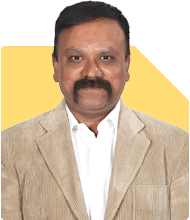
Purshotam

Purshotam Lal  | Answer  |Ask -

Financial Planner, MF and Insurance Expert - Answered on Sep 19, 2025

Purshotam Lal has over 38 years of experience in investment banking, mutual funds, insurance and wealth management.
He is an Association of Mutual Funds in India (AMFI)-registered mutual fund distributor, an Insurance Regulatory and Development Authority of India (IRDAI)-certified insurance advisor and founder of Finphoenix Services LLP.
He holds an MBA in finance from the Faculty of Management Studies (FMS), Delhi University and a chartered financial analyst (CFA) degree. He also holds certified associate of the Indian Institute of Bankers (CAIIB), fellow of the Insurance Institute of India (FIII) and National Institute of Securities Markets (NISM) certifications.... more
Panthulu Question by Panthulu on Aug 01, 2025Hindi
Money

SIR GOOD EVENING SIR MY NAME IS ARUN KUMAR AGE 36 HDFC MUTUAL FUND DEFENCE FUND I WAS EVEN MONTH SIP 5000 NOW AT THE MOMENT 60K ICICI prudential mutual funds daily 21 rupees Now at the moment 9000 invesed Nippon India mutual funds 3000 only at this time my child elder girl 7 Younger son was 5 now this is ok are not plz suggest for me

Ans: HDFC Defense fund has delivered good returns so far and you can stay with this investment. Other MF schemes names not mentioned and hence unable to comment.
DISCLAIMER: The content of this post by the expert is the personal view of the rediffGURU. Users are advised to pursue the information provided by the rediffGURU only as a source of information to be as a point of reference and to rely on their own judgement when making a decision.
Money

You may like to see similar questions and answers below

Ramalingam

Ramalingam Kalirajan  |10870 Answers  |Ask -

Mutual Funds, Financial Planning Expert - Answered on Jun 30, 2024

Money
Hi good morning sir I am himanshu I am NRI I invest in mutual fund monthly sip I have sbi small cap fund direct growth I sip this funds monthly 15 k and I have other funds mirae large cap and mid cap fund direct emergency blue chep funds direct growth also I make sip 15k I won't to continue 20 years after how much I get and how was this funds if you suggest any batter fund for me please for good wealth please ????
Ans: Himanshu, I’m excited to discuss your investment journey. You’ve chosen a well-rounded set of funds, which is commendable. Investing Rs. 15,000 monthly in SBI Small Cap Fund Direct Growth, Mirae Large Cap Fund Direct Growth, and Emergency Blue Chip Funds Direct Growth shows your commitment to building a robust financial future.

These funds have historically performed well, offering good returns over the long term. It’s wise to periodically review these investments to ensure they align with your long-term financial goals. Let's delve deeper into each aspect of your investment strategy and potential growth over 20 years.

Potential Growth Over 20 Years
Investing Rs. 15,000 monthly in each of the three funds amounts to Rs. 45,000 per month. Over 20 years, consistent investments, combined with the power of compounding, can result in substantial wealth accumulation. Historically, mutual funds in India have provided returns ranging from 10% to 15% annually.

For instance, if your investments grow at an average annual rate of 12%, your portfolio could grow significantly. While exact future returns can't be guaranteed, historical performance suggests that mutual funds can be a reliable vehicle for wealth creation.

Analyzing Fund Choices
Small Cap Funds
Small Cap funds, like your SBI Small Cap, invest in companies with smaller market capitalizations. These companies have the potential for high growth, making Small Cap funds high-risk, high-reward investments. They tend to outperform during bullish market phases but can be quite volatile during downturns. Staying invested for the long term can help mitigate this volatility and yield substantial returns.

Your choice to invest in a Small Cap fund indicates a willingness to take on higher risk for potentially higher returns. It’s crucial to monitor the performance of these funds regularly to ensure they continue to meet your investment goals.

Large Cap and Mid Cap Funds
Mirae Large Cap and Mid Cap funds offer a balance of stability and growth. Large Cap funds invest in established companies with stable returns, providing a solid foundation to your portfolio. These companies have a history of consistent performance and are less volatile compared to Small Cap stocks.

Mid Cap funds, on the other hand, invest in companies with medium market capitalizations. They offer higher growth potential than Large Cap funds but come with increased risk. Mid Cap funds can be a good addition to your portfolio, providing a blend of stability and growth.

Blue Chip Funds
Blue Chip funds invest in well-established companies with a history of strong performance. These companies are leaders in their respective industries and offer moderate returns with lower risk. Your investment in Emergency Blue Chip Funds Direct Growth adds a layer of stability to your portfolio.

Benefits of Diversification
Your portfolio is well-diversified across different market capitalizations – Small Cap, Mid Cap, and Large Cap. Diversification helps in spreading risk and optimizing returns. It ensures that your portfolio isn’t overly dependent on any single segment of the market.

Diversification across different types of funds can help in achieving a balanced risk-reward ratio. It’s essential to maintain this diversification and periodically review your portfolio to ensure it aligns with your changing financial goals and market conditions.

Regular Fund vs. Direct Fund
Investing through direct funds often has lower expense ratios compared to regular funds. This means that more of your money is invested in the market rather than being used to pay for fund management fees. Lower expense ratios can lead to slightly higher returns over the long term.

However, regular funds offer the benefit of professional advice from a Certified Financial Planner (CFP). A CFP can provide valuable insights and help you make informed decisions. They can also assist in adjusting your portfolio based on market conditions and personal financial goals. While direct funds may save you some money on fees, the value of professional advice can be substantial, especially for long-term wealth building.

Recommendations for Better Wealth Building
Equity Funds
Consider adding more equity-oriented funds to your portfolio. Equity funds generally have higher returns compared to debt funds. Look for funds with a consistent track record and good fund management. Equity funds can help in achieving higher growth, especially over long investment horizons like 20 years.

International Funds
As an NRI, you might benefit from diversifying into international funds. These funds invest in global markets, reducing dependency on the Indian market and providing exposure to global growth opportunities. International funds can add a new dimension to your portfolio, offering growth potential from different parts of the world.

Sectoral and Thematic Funds
Sectoral and thematic funds focus on specific sectors like technology, healthcare, or infrastructure. These can offer high returns if the sector performs well but come with higher risk due to concentration in a single sector. Adding sectoral funds can provide targeted exposure to high-growth areas, but it’s essential to balance them with other diversified funds to manage risk.

Regular Monitoring and Rebalancing
Regularly reviewing your portfolio is crucial. Market conditions change, and so do your financial goals. Periodic reviews with a CFP can help in rebalancing your portfolio, ensuring it remains aligned with your risk tolerance and financial objectives. Rebalancing involves adjusting your investments to maintain your desired asset allocation. This process helps in managing risk and optimizing returns.

Emergency Fund
Having an emergency fund is crucial. It ensures liquidity during unforeseen circumstances without disrupting your investment strategy. Typically, an emergency fund should cover 6-12 months of living expenses. This fund acts as a financial safety net, allowing you to handle emergencies without having to liquidate your long-term investments.

Long-Term Commitment
Staying invested for the long term is key. Market fluctuations are normal, but long-term investments tend to smooth out these ups and downs, leveraging the power of compounding. Compounding works best when investments are left to grow over an extended period. Resist the urge to make frequent changes based on short-term market movements.

Professional Guidance
A Certified Financial Planner can provide personalized advice tailored to your specific situation. They can help in creating a comprehensive financial plan, ensuring all aspects of your financial health are covered. Professional guidance can be invaluable in navigating complex financial decisions and staying on track towards your goals.

Evaluating Fund Performance
Historical Returns
When evaluating your funds, look at their historical returns. Consistently high returns over the years indicate strong fund management and good investment strategies. Compare the performance of your funds with their respective benchmarks to assess their effectiveness.

Risk-Adjusted Returns
It’s also essential to consider risk-adjusted returns. This metric takes into account the risk taken by the fund to achieve its returns. Funds with high returns but also high volatility might not be suitable for all investors. Look for funds that provide good returns with manageable risk levels.

Fund Manager’s Track Record
The experience and track record of the fund manager play a significant role in a fund’s performance. A skilled fund manager can navigate market fluctuations and make strategic decisions that enhance the fund’s returns. Check the credentials and past performance of the fund managers handling your investments.

Disadvantages of Direct Funds
While direct funds have lower expense ratios, they require more hands-on management from the investor. Without professional guidance, you might miss out on strategic adjustments and insights that a CFP can provide. Direct funds are suitable for knowledgeable investors who can actively manage their portfolios.

Benefits of Regular Funds Through CFP
Regular funds, though having higher expense ratios, come with the benefit of professional advice. A CFP can help in selecting the right funds, optimizing asset allocation, and providing strategic insights based on market conditions. The value of this professional guidance often outweighs the additional cost of regular funds.

Enhancing Your Investment Strategy
Setting Clear Goals
Clearly defining your financial goals is the first step. Knowing your objectives helps in selecting the right investment strategies. Whether it’s retirement planning, purchasing a property, or funding education, having clear goals allows you to tailor your investments accordingly.

Risk Assessment
Understanding your risk tolerance is crucial. Your risk tolerance depends on factors like age, income, financial obligations, and investment horizon. A CFP can help in assessing your risk tolerance and aligning your portfolio accordingly.

Asset Allocation
Optimal asset allocation is vital for managing risk and maximizing returns. Diversify your investments across different asset classes like equities, debt, and international funds. Regular rebalancing ensures your portfolio stays aligned with your risk tolerance and financial goals.

Periodic Review and Adjustments
Market conditions and personal circumstances change over time. Regular reviews of your portfolio help in making necessary adjustments. A CFP can assist in monitoring your investments and making strategic changes to optimize returns.

Tax Efficiency
Consider the tax implications of your investments. Different funds have different tax treatments, and it’s essential to factor this into your investment strategy. A CFP can help in selecting tax-efficient investment options and strategies to minimize your tax liability.

Avoiding Common Pitfalls
Overreacting to Market Volatility
Market volatility is inevitable. Avoid making hasty decisions based on short-term market movements. Staying committed to your long-term investment strategy is crucial for achieving your financial goals.

Lack of Diversification
Investing in a single asset class or sector can be risky. Diversification helps in spreading risk and optimizing returns. Ensure your portfolio is well-diversified across different asset classes and market segments.

Ignoring Professional Advice
Professional guidance from a CFP can significantly enhance your investment strategy. Ignoring professional advice can lead to missed opportunities and suboptimal investment decisions. Leverage the expertise of a CFP to maximize your investment potential.

Building a Robust Financial Plan
Comprehensive Financial Planning
A comprehensive financial plan covers all aspects of your financial health. It includes investment planning, tax planning, retirement planning, and estate planning. A CFP can help in creating a holistic financial plan tailored to your specific needs and goals.

Contingency Planning
Prepare for contingencies by having adequate insurance coverage and an emergency fund. Contingency planning ensures financial stability during unforeseen circumstances and protects your long-term investments.

Retirement Planning
Retirement planning is a crucial aspect of financial planning. Ensure you have a clear retirement goal and a strategy to achieve it. Regular reviews and adjustments to your retirement plan can help in staying on track towards your retirement objectives.

Staying Informed and Educated
Stay informed about market trends and financial news. Continuous learning and staying updated with financial knowledge can help in making informed investment decisions. Leverage resources like financial publications, seminars, and professional advice to enhance your financial literacy.

Final Insights
Himanshu, your current investment strategy is solid with a good mix of funds. Regular monitoring, diversification, and staying committed to long-term goals will help in achieving substantial wealth. Consider professional guidance for optimizing your portfolio and aligning it with your financial aspirations. Keep up the excellent work and stay focused on your long-term objectives.

Best Regards,

K. Ramalingam, MBA, CFP,

Chief Financial Planner,

www.holisticinvestment.in

..Read more

Ramalingam

Ramalingam Kalirajan  |10870 Answers  |Ask -

Mutual Funds, Financial Planning Expert - Answered on Jun 17, 2025

Money
Hi Sir, I m 34 year old and 2 year old child only and have question on investment if I m going on right path or not I have 8 mutual fund which is HSBC small cap (2000 monthly) parak parik flexi cap (1600 weekly) Canara blue chip (2000 monthly) uti nifty 50 index (5000 monthly) Motilal nifty microcap250 index (500 weekly) icici gold fund etf (400 weekly) Kotak emerging equity (4000 monthly) parak parik elss fund (2500 monthly) sip going on till date corpse become 11 lakh and i add more amount when market down. I have 3lakh in ppf and add more for 15 year and had 3 policy 1 is with hdfc year premium 36000 for 10 year will mature in 15 year as per market performance and will add bonus yearly by company. Second policy is with Canara hsbc where 136000 premium every year for 10 year and will mature in 20 year and it give assured return around 3700000 this is for my child i keep it and last policy with tata smart sip 6000 monthly. I have also nps account 50k yearly. Living in parents house so no tension for it. Monthly expenses 20k around. Pls suggest
Ans: You are 34, have a young child, and your investment journey has already begun. That is an excellent sign. You are thinking long-term, which is good. Let us now assess your strategy carefully and help you move towards financial freedom and child’s future security.

We will look at every component—mutual funds, insurance, PPF, NPS, and expenses—and create a complete 360-degree strategy.

Understanding Your Current Financial Snapshot
Let’s break down what you have done so far:

You have 8 mutual fund SIPs.

You invest in PPF and NPS yearly.

You hold 3 insurance-cum-investment policies.

You live in a family house, hence no EMI burden.

Monthly expenses are only Rs. 20,000.

You are saving a major part of your income. That’s a big strength.

Mutual Fund Investment Review
You are investing across 8 different mutual funds through SIPs. Your total SIP amount is high. That is very positive. But diversification must also be meaningful.

Let’s assess category-wise:

Positive Observations:

SIPs are active and consistent.

You invest extra when market falls.

You have mix of small cap, flexi cap, ELSS, large cap.

Portfolio value already reached Rs. 11 lakhs.

This shows discipline and commitment.

Concerns Identified:

Two funds are index funds.

Gold ETF SIP is ongoing.

Portfolio has overlapping and extra schemes.

Let us now address these concerns.

Problem with Index Funds
You invest in a Nifty 50 index fund and microcap 250 index fund.

But index funds have these problems:

No active fund manager to protect in bad markets.

No personalisation or research.

No performance difference in up/down markets.

Very high correlation across all index funds.

No flexibility to exit weak sectors.

You are better off with actively managed funds.

Benefits of actively managed mutual funds:

Expert fund manager takes sectoral calls.

Avoids weak-performing stocks.

Better long-term return potential.

More flexible and smart stock selection.

Please stop new investments into index funds. Slowly switch to active large cap, flexi cap, or hybrid funds through a Certified Financial Planner.

Problem with Direct Mutual Funds (if applicable)
If you are investing through direct plans, then:

Disadvantages of Direct Funds:

No one to guide during market fall.

Easy to panic and stop SIPs.

No regular rebalancing done.

Wrong asset allocation possible.

Risk of too much in one sector.

Why Regular Funds via CFP are better:

You get annual review support.

Your risk profile is considered.

Asset allocation is planned.

Emotional decisions are avoided.

You get personalised, ongoing advice.

Switch your investments from direct to regular mutual funds through a CFP-led MFD.

This small step improves your entire portfolio efficiency.

Keep SIP Count Lean
You hold 8 SIPs right now. This is slightly more than needed.

Ideal number of SIPs for you:

1 large cap

1 flexi cap

1 mid or small cap

1 ELSS for tax saving

1 hybrid fund for balance

Too many funds lead to overlap and tracking issues.

You can merge similar funds gradually. Avoid adding new schemes unnecessarily.

SIP Frequency and Gold Fund
You invest weekly in few funds. Also, you invest in a gold ETF fund.

Issues with weekly SIPs:

Difficult to track and manage

No major benefit over monthly SIP

Makes portfolio too spread out

Gold ETF issue:

Gold is not a growth asset

It only protects value, not multiplies

Fund value fluctuates with global news

Doesn't suit long-term goals like retirement or child education

Stop weekly SIPs. Convert to monthly.

Limit gold exposure to not more than 5% of your overall corpus.

Insurance Policy Review
You hold 3 insurance-based investment plans. These are:

1 market-linked ULIP type with Rs. 36,000 yearly

1 child plan with Rs. 1,36,000 yearly premium

1 SIP-linked plan from a private insurer

These are not term policies. Hence, these are all investment-cum-insurance plans.

Why these are not good for long-term:

Very low returns (5–6%)

High charges in early years

Poor transparency

Not flexible like mutual funds

Maturity amount is taxable if premium exceeds 5 lakhs in total

These funds will not beat inflation in long run.

Action Steps on Insurance
Please consider these steps:

Surrender these policies only if minimum lock-in is completed

Reinvest the amount received into mutual funds via SIP

Start a pure term insurance with high cover (at least Rs. 1 crore)

Don’t mix insurance and investment going forward

For your child’s goal, use child-focused mutual funds or hybrid funds.

Do not depend on these traditional insurance-based policies.

PPF and NPS Review
You are contributing to both PPF and NPS. This is a balanced approach.

PPF Status:

Balance is Rs. 3 lakh

Regularly contributing for 15 years

Tax-free returns

Safe and stable part of portfolio

Keep doing this every year.

NPS Contribution:

Rs. 50,000 yearly

Helps in extra tax saving

Invested in equity and debt mix

Partial withdrawal allowed after 60

You can continue contributing. But remember:

NPS maturity amount is partly taxable

Limited liquidity

Compulsory annuity purchase not needed now, but evaluate later

Continue both PPF and NPS as part of safe allocation.

Lifestyle and Expenses Planning
You live in a family house. Monthly expenses are only Rs. 20,000.

That’s a big plus. You can invest aggressively.

However, lifestyle cost will go up as child grows.

Prepare for:

Child school, college, coaching

Health expenses

Travel and family goals

Build a monthly budget and target-based investments accordingly.

Future Financial Goals – What to Do Next
You are young. Time is on your side. Here’s how to move next:

For Child Education
Use mutual funds instead of insurance

Start one child-specific SIP

Use hybrid or flexi cap mutual funds

Review fund yearly with CFP

For Retirement
Let mutual fund corpus grow for 20+ years

Avoid early withdrawals

Maintain SIP discipline

Don’t depend on PPF/NPS alone

Build large corpus with SIPs and bonuses

For Emergencies
Keep 6 months of expenses in liquid fund

Don’t touch mutual funds for emergencies

Health insurance for you and child is must

Finally
You are on a good financial path already. Your savings habit is strong. But to maximise your wealth, optimise the instruments.

Key Steps to Take Now:

Stop investing in index funds

Shift from direct to regular funds via CFP

Merge overlapping mutual funds

Review insurance policies and exit non-term plans

Start proper term insurance cover

Focus on child and retirement goals separately

Continue PPF and NPS steadily

Create an emergency fund in liquid mutual funds

Review goals once every year with a Certified Financial Planner

With this structured approach, you will create long-term wealth with clarity.

Best Regards,
K. Ramalingam, MBA, CFP,
Chief Financial Planner,
www.holisticinvestment.in
https://www.youtube.com/@HolisticInvestment

..Read more

Ramalingam

Ramalingam Kalirajan  |10870 Answers  |Ask -

Mutual Funds, Financial Planning Expert - Answered on Jul 21, 2025

Money
I am 37 yrs old married with 5 yrs boy.i earned around 90 k per month.i hv ppf of 37 lac,epf 48.50 lac.i hv 6 lac fd.lic 24k and 29 k premium paid per year,postal life insurance 36 k per year premium paid . lump sum 50 k investment in icici preduantial small cap 2 yrs ago(Currentvalue-112000),lumpsum 60 k in axis nifty 100 index fund 2 yrs ago(currentvalue-97000),lumpsum 50k sbi balance advance fund(currentvalue-78000),3.69 lac in sbi blue chip fund from 2014 which is now 5.60 lac . my present sips are on 1) 1000 sbi bluechipfund(running from 1.5 yrs) 2)2000 sbi contra fund(fresh adding) 3)2500 sbi kotak small cap(running from 2 yrs) 4)5000 parag parekh flexicap(running from 2 yrs) 5)2500 nippon small cap(fresh adding) 6)2500 axis quant fund(fresh adding) 7)motilal oswal midcap fund 2000 , TOTAL VALUATION of MUTUAL FUND-15.80 LAC,NPS value-5.73 lac(monthly 8k investment),lic pension scheme-7.8 lac . But i lost 20 lac in option trading due to which i am so much stressed,frustrated,devastated. Sometime Thinking about sucide.How can i recover these money should i stop lic..and invest more in sips ?i want some 2-3cr in 10 yrs in returns which mutual fund would be better pls suggest me?
Ans: You are going through a tough emotional and financial phase. Please take a deep breath. You have already built a strong base, and recovery is absolutely possible.

Let me guide you step-by-step, calmly and clearly.

? Your Current Financial Foundation

– You are 37, with stable income of Rs. 90,000 per month.

– Your PPF corpus is Rs. 37 lakh. This is completely safe and tax-free.

– Your EPF corpus is Rs. 48.5 lakh. This too is secure and retirement-friendly.

– Rs. 6 lakh in FD is useful as emergency money. Please do not use it for investment.

– You have Rs. 15.8 lakh in mutual funds. Most are in equity funds. This is a good sign.

– You have invested in NPS. Rs. 5.73 lakh is already built. Continue Rs. 8,000/month.

– LIC pension scheme corpus is Rs. 7.8 lakh. Annual premium is Rs. 53,000 approx.

– You lost Rs. 20 lakh in options trading. This is painful. But don’t lose hope.

? Mental Health Matters More Than Wealth

– Please remember, your son is only 5. He needs you more than money.

– The Rs. 20 lakh loss hurts. But it is reversible. You still have many assets.

– Feeling suicidal is a warning sign. Please speak to a mental health expert today.

– A Certified Financial Planner can help you financially. But emotional support is equally vital now.

– This is a phase. It will pass. Stay strong for your family.

? Should You Stop LIC Pension Plans?

– You are paying Rs. 24,000 and Rs. 29,000 yearly. These are traditional plans.

– They offer low returns. Usually 4% to 5% only.

– You also pay Rs. 36,000 to postal life insurance. Total Rs. 89,000 per year.

– These policies are not wealth creators. They reduce liquidity and returns.

– You may surrender LIC pension and postal insurance after checking surrender value.

– Reinvest the money into SIPs through a Certified Financial Planner (CFP) and trusted MFD.

– A CFP-guided regular plan will provide handholding, rebalancing and emotional coaching too.

? What Went Wrong in Option Trading?

– Options are high-risk instruments. They are not for wealth creation.

– Even professionals lose in options. No one can consistently win.

– Avoid trading in F&O, crypto, intraday. These destroy peace and capital.

– Instead, focus on long-term investing in equity mutual funds.

– Recovery will not be instant. But it will surely happen over time.

? Strengths in Your Investment Style

– You have good diversification in SIPs. You are investing Rs. 20,500/month approx.

– SIPs are spread across large cap, flexi-cap, midcap, smallcap, contra and quant.

– Mutual fund value has grown to Rs. 15.8 lakh. You have held some funds since 2014.

– Your behaviour shows long-term commitment. This is your biggest strength.

– Continue these SIPs. Increase them slowly every year by 10% if possible.

? Problems With Index Funds (As You Hold Axis Nifty 100 Fund)

– Index funds lack flexibility. They blindly copy the index.

– They cannot exit poor-performing companies early.

– They give average returns, not better returns.

– Index funds also crash during market fall. But recover slowly.

– Actively managed funds beat index funds by careful stock selection.

– A good fund manager backed by a CFP can help you outperform.

– It’s better to slowly exit Axis Nifty 100 and switch to actively managed regular funds.

? Problems With Direct Mutual Funds

– Direct funds don’t give you personalised guidance.

– No one tells you when to switch or rebalance.

– You are left alone during market volatility.

– This isolation leads to panic and poor decisions.

– With a CFP and MFD, you get strategy, advice and emotional support.

– Choose regular mutual funds through a trusted CFP for long-term stability.

? Action Plan to Build Rs. 2 to 3 Crore in 10 Years

– First, stop all trading activities completely. No intraday, no F&O, no crypto.

– Focus only on SIPs. Stay disciplined for 10 years.

– Increase SIP from Rs. 20,500/month to Rs. 30,000/month if possible.

– Step-up the SIPs by 10% each year. This helps you beat inflation.

– Keep all investments in equity mutual funds only. Avoid debt funds and hybrids.

– Avoid ULIPs, endowment policies, annuities, and insurance-based products.

– Once in a year, review your portfolio with a CFP and rebalance if needed.

– Stick to growth option. Don’t go for dividend payout.

– Reinvest lump sum from LIC surrender into well-diversified funds.

? Types of Funds That May Suit You

– Large cap for stability. Start with regular funds managed by reputed AMCs.

– Midcap for better returns. Volatile but good over 10 years.

– Small cap should be capped to 20% of SIP portfolio. Keep them for 10+ years.

– Flexi cap and contra funds are smart choices for flexibility.

– Avoid sectoral and thematic funds. Too risky for general investors.

– Quant and focused funds are okay, but don’t overdo.

– Avoid global and international funds unless goal is foreign education or travel.

? Additional Steps to Support Your Plan

– Keep Rs. 1.5 lakh in savings account or FD as emergency fund.

– Don’t touch your PPF and EPF. Let them grow till age 60.

– Use PPF for your son’s higher education or as retirement reserve.

– You can use the LIC and postal surrender amount for increasing SIPs.

– Your NPS is good. Keep investing Rs. 8,000 per month.

– At age 48, you may shift NPS to 100% equity allocation if comfortable.

– You may also consider one-time top-up in NPS before retirement.

? Tax-Efficient Strategy

– Mutual fund redemptions now have new tax rules.

– If you hold equity mutual funds for more than 1 year, gains above Rs. 1.25 lakh/year are taxed at 12.5%.

– If sold before 1 year, gains are taxed at 20%.

– So stay invested for minimum 10 years to avoid taxes and maximise growth.

– Use SWP method after 10 years to withdraw monthly.

? Emotional & Family Guidance

– Please speak openly to your spouse about the losses and current plan.

– Avoid hiding things. Teamwork brings better strength and peace.

– Talk to a psychologist or counsellor about the emotional burden.

– Spend more time with your son. He needs your time, not money.

– Avoid comparing your wealth with others. Everyone has a unique journey.

– Try meditation, yoga or journaling. It helps release stress and brings clarity.

? Finally

– You have a solid foundation in PPF, EPF, mutual funds and NPS.

– You made one mistake in trading. But your long-term plan can still win.

– No need to panic or lose hope. You are just 37. You have 20+ years of earning left.

– Use guidance of a Certified Financial Planner to track your SIP growth.

– Increase SIPs gradually. Review annually. Avoid all shortcuts.

– Your goal of Rs. 2–3 crore in 10 years is tough but achievable with focus.

– Stay away from direct funds, index funds and insurance-based products.

– Choose peace of mind and steady wealth growth over fast returns.

– Stay invested. Stay guided. Stay alive. Your best days are still ahead.

Best Regards,
K. Ramalingam, MBA, CFP,
Chief Financial Planner,
www.holisticinvestment.in
https://www.youtube.com/@HolisticInvestment

..Read more

Latest Questions
Ravi

Ravi Mittal  |676 Answers  |Ask -

Dating, Relationships Expert - Answered on Dec 04, 2025

Asked by Anonymous - Dec 02, 2025Hindi
Relationship
My married ex still texts me for comfort. Because of him, I am unable to move on. He makes me feel guilty by saying he got married out of family pressure. His dad is a cardiac patient and mom is being treated for cancer. He comforts me by saying he will get separated soon and we will get married because he only loves me. We have been in a relationship for 14 years and despite everything we tried, his parents refused to accept me, so he chose to get married to someone who understands our situation. I don't know when he will separate from his wife. She knows about us too but she comes from a traditional family. She also confirmed there is no physical intimacy between them. I trust him, but is it worth losing my youth for him? Honestly, I am worried and very confused.
Ans: Dear Anonymous,
I understand how difficult it is to let go of a relationship you have built from scratch, but is it really how you want to continue? It really seems to be going nowhere. His parents are already in bad health and he married someone else for their happiness. Does it seem like he will be able to leave her? So many people’s happiness and lives depend on this one decision. I think it’s about time you and your BF have a clear conversation about the same. If he can’t give a proper timeline, please try to understand his situation. But also make sure he understands yours and maybe rethink this equation. It really isn’t healthy. You deserve a love you can have wholly, and not just in pieces, and in the shadows.

Hope this helps

...Read more

Mayank

Mayank Chandel  |2562 Answers  |Ask -

IIT-JEE, NEET-UG, SAT, CLAT, CA, CS Exam Expert - Answered on Dec 04, 2025

Career
My son will be appearing for JEE Main & JEE Advanced 2026 and will participate in JoSAA Counselling 2026. I request clarification regarding the GEN-EWS certificate date requirement for next year. I have already applied for an EWS certificate for current year 2025, and the application is under process. However, I am unsure whether this certificate will be accepted during JoSAA 2026, or whether candidates will be required to submit a fresh certificate for FY 2026–27 (issued on or after 1 April 2026). My concern is that if JoSAA requires a certificate issued after 1 April 2026, students will have only 1–1.5 months to complete the entire procedure, which is difficult considering normal government processing timelines. Also, during current JEE form filling, students are asked to upload a GEN-EWS certificate issued on or after 1 April 2025, or an application acknowledgement. This has created confusion among parents regarding which year’s certificate will finally be valid at the time of counselling. I request your kind guidance on: Which GEN-EWS certificate will be accepted for JoSAA Counselling 2026 — a certificate for FY 2025–26 (issued after 1 April 2025), or a new certificate for FY 2026–27 (issued after 1 April 2026)?
Ans: Hi
You need not worry about the EWS certificate. Even if you apply for the next year's certificate on 1 Apr 2026, the second session of JEE MAINS will still be held, followed by JEE ADVANCED, which will be held in May. JOSAA starts in June. so you will have 2 months in hand for fresh EWS certificate.

...Read more

DISCLAIMER: The content of this post by the expert is the personal view of the rediffGURU. Investment in securities market are subject to market risks. Read all the related document carefully before investing. The securities quoted are for illustration only and are not recommendatory. Users are advised to pursue the information provided by the rediffGURU only as a source of information and as a point of reference and to rely on their own judgement when making a decision. RediffGURUS is an intermediary as per India's Information Technology Act.

Close  

You haven't logged in yet. To ask a question, Please Log in below
Login

A verification OTP will be sent to this
Mobile Number / Email

Enter OTP
A 6 digit code has been sent to

Resend OTP in120seconds

Dear User, You have not registered yet. Please register by filling the fields below to get expert answers from our Gurus
Sign up

By signing up, you agree to our
Terms & Conditions and Privacy Policy

Already have an account?

Enter OTP
A 6 digit code has been sent to Mobile

Resend OTP in120seconds

x