Home > Money > Question
Need Expert Advice?Our Gurus Can Help

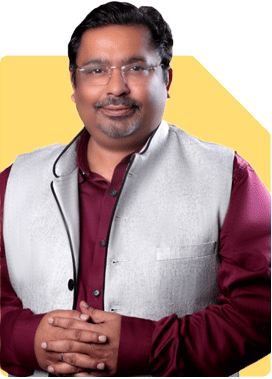
Ramalingam

Ramalingam Kalirajan  |11135 Answers  |Ask -

Mutual Funds, Financial Planning Expert - Answered on Mar 24, 2026

Ramalingam Kalirajan has over 23 years of experience in mutual funds and financial planning.
He has an MBA in finance from the University of Madras and is a certified financial planner.
He is the director and chief financial planner at Holistic Investment, a Chennai-based firm that offers financial planning and wealth management advice.... more

Krishna Question by Krishna on Mar 10, 2026Hindi

Money

Sir, My age is 47 years. I have started investing in mutual funds only two years before. I have a total of 2.25 lakhs in mutual funds at present which is by monthly SIP in (1) Nippon India Multi Cap Fund Direct Plan - Growth (monthly 10K); (2) Parag Parekh Flexi Cap Fund - Direct Plan (monthly 15K); (3) HDFC Balanced Advantage Fund Direct Growth (monthly 15K). Please advise if my MF investments are good or if they require any changes? Regards Krishna

Ans: Your disciplined start in mutual funds and continuing SIPs is appreciable. Starting at age 47 and building Rs 2.25 lakhs in two years shows good commitment. This is a strong base to grow further

» Overall Assessment of Your Current Investments

You are investing consistently through SIP, which is good for long-term wealth creation
You have exposure to diversified equity categories, which helps reduce concentration risk
Monthly investment amount is meaningful and supports long-term goals
Portfolio is growth-oriented, suitable for your age and time horizon

» Portfolio Diversification Review

Your investments are tilted towards equity-oriented strategies
This is good for long-term growth, but some stability component is also useful
Adding one debt-oriented or conservative hybrid allocation can reduce volatility
This helps you stay invested during market corrections without stopping SIP

» Concern About Direct Plans

Direct plans require continuous monitoring and rebalancing by the investor
Many investors delay decisions during market volatility
No professional guidance for asset allocation changes
Behavioural mistakes like stopping SIP during market fall can reduce returns
Portfolio review, tax planning, and goal alignment are often missed

» Benefit of Regular Funds Through MFD with CFP Credential

Proper asset allocation based on age and goals
Periodic rebalancing to control risk
Guidance during market corrections to maintain discipline
Support in tax-efficient withdrawals in future
Integrated planning including insurance, retirement, and emergency corpus
Behavioural coaching improves long-term returns

» SIP Strategy Going Forward

Continue existing SIPs without interruption
Increase SIP amount gradually with income growth
Consider adding one stability-oriented allocation for balance
Avoid too many schemes; keep portfolio simple and manageable
Review once every year instead of frequent changes

» Risk Management Perspective

Maintain emergency fund outside mutual funds
Ensure adequate health insurance coverage
Avoid redeeming during short-term market fluctuations
Long-term consistency matters more than short-term performance

» Finally

Your current investments are on the right path
No immediate need to stop or exit existing SIPs
Add stability component for better balance
Consider moving to guided investing for disciplined long-term execution
Continue SIP and increase gradually to build a strong retirement corpus

Best Regards,

K. Ramalingam, MBA, CFP,

Chief Financial Planner,

www.holisticinvestment.in

https://www.linkedin.com/in/ramalingamcfp/
DISCLAIMER: The content of this post by the expert is the personal view of the rediffGURU. Users are advised to pursue the information provided by the rediffGURU only as a source of information to be as a point of reference and to rely on their own judgement when making a decision.
Money

You may like to see similar questions and answers below

Ramalingam

Ramalingam Kalirajan  |11135 Answers  |Ask -

Mutual Funds, Financial Planning Expert - Answered on Apr 30, 2024

Listen
Money
Question by ASHOK GUGGARI I am 60. I have been reading your replies on Rediff.com and getting a lot of information from them for investment in mutual funds. I need your precious opinion on the following mutual funds in my MF portfolio. Recently, I have started SIPs in SBI contra & small cap fund growth of Rs 5,000 per month in each. And iam having SIP in ICICI prudential india oprtunity and large and mid cap fund Rs 6000 in each. In icici prudential flexi fund invested Rs 13,00,000 one and half year back. Kindly advice whether to change or continue.. Ashok Guggari
Ans: Dear Ashok,

It's wonderful to hear that you've found valuable information in the responses provided. When it comes to managing your MF portfolio, it's essential to regularly review your investments to ensure they align with your financial goals and risk tolerance. Consider factors such as fund performance, investment strategy, and your own investment objectives.

Reflect on whether the funds you've chosen are still suitable for your current circumstances and long-term goals. Are they performing as expected, or are there better alternatives available? Remember, staying informed and proactive is key to optimizing your investment journey.

As you navigate your investment decisions, always keep your financial well-being at the forefront. Seeking guidance from a Certified Financial Planner can offer personalized insights tailored to your specific needs and aspirations.

Wishing you continued success on your investment journey!

..Read more

Sanjeev

Sanjeev Govila  | Answer  |Ask -

Financial Planner - Answered on Feb 06, 2024

Listen
Money
Hello Sir,My name is Girish aged 38 years and I have been going through your suggestions on the MF.I have started SIP in the following mutual funds.1. ICICI Prudential Bluechip Fund (G) - investing since a month - 5,000 per month 2. SBI Blue Chip Fund (G) - investing since a month - 5,000 per month 3. HDFC Balanced Advantage Fund - Direct Plan (IDCW) - investing since 14 months - 2,000 per month4. Nippon India Large Cap Fund - Regular Plan (G) - investing since 2 months - 2,000 per month 5. Parag Parikh Flexi Cap Fund - Direct Plan (G) - investing since 2 years - 2,000 per month 6. UTI MNC Fund - Direct Plan (G) - investing since 14 months - 2,000 per month I would like to know if my portfolio is good. I will be planning to invest for the next 10-15 years. What would be the corpus at the end of 15 years?Do you foresee any changes to be made in my portfolio? Please suggest.
Ans: It's great that you're investing your monthly surplus in SIPs to build your wealth.

You have a well-diversified portfolio and the funds in your portfolio are performing well in the current market scenario. In the finance planning of any portfolio, we consider many factors, including client age, risk profile, current asset allocation, etc.

All mentioned funds are performing good and have good potential in long-term. However, UTI MNC Fund - Sectoral funds focus on a specific sector or industry and it is difficult to predict which sector will perform and how long. Hence, we recommend to go for diversified funds to avoid the concentration risk
.
If you continue the monthly investment of Rs 18,000 for the next 15 years the accumulated corpus will be 89.92 lakhs approx. at the average growth rate of 12% for 15 years.
Note - the amount may get differ at that time as the actual return can be vary.

..Read more

Ramalingam

Ramalingam Kalirajan  |11135 Answers  |Ask -

Mutual Funds, Financial Planning Expert - Answered on May 07, 2024

Asked by Anonymous - Apr 28, 2024Hindi
Listen
Money
Sir, i have 6 No of Mutual fund 1.SBI small cap 1000 per month 2. SBI focused equity 1000 per month 3. SBI blue chip fund 1000 per month 4. Nippon india small cap 500 per month 5.Quant small cap fund 1000 per month 6. Parag parikh flexi cap 1000 per month Is these MF are good or i need to change any fund. SBI fund are almost 2.6 year old. I have time horizon of 10 to 15 years.Now i am 38 year old.
Ans: It's great that you're investing in mutual funds for your future financial goals! Let's review your current mutual fund portfolio and make some suggestions:

SBI Small Cap, SBI Focused Equity, and SBI Blue Chip Fund:
SBI Funds are reputable and have a track record of performance. However, it's essential to review their performance periodically to ensure they continue to meet your investment objectives.
Nippon India Small Cap and Quant Small Cap Fund:
Small-cap funds can offer high growth potential but also come with higher risk. Ensure you have a long-term investment horizon and the risk tolerance to withstand market volatility.
Parag Parikh Flexi Cap:
Flexi-cap funds provide flexibility to invest across market caps. Parag Parikh Flexi Cap Fund is known for its diversified portfolio and focus on quality stocks. It's a good choice for long-term wealth creation.
Suggestions:

Review Performance: Periodically review the performance of your mutual funds to ensure they align with your investment goals and risk tolerance.
Diversification: Consider diversifying your portfolio further by adding funds from different fund houses or investing in different asset classes like debt or international funds.
Regular Monitoring: Keep an eye on the performance of your funds and make adjustments as needed. If any fund consistently underperforms its benchmark or peers, consider replacing it with a better-performing alternative.
Consult a Financial Advisor: Consider consulting a Certified Financial Planner for personalized advice tailored to your financial goals, risk tolerance, and investment horizon. A professional can help optimize your portfolio and ensure it remains aligned with your objectives.
Overall, your mutual fund portfolio seems well-diversified, but it's essential to monitor its performance regularly and make adjustments as needed to stay on track towards your long-term financial goals. Keep up the good work and continue investing systematically for your future!

..Read more

Latest Questions
Nayagam P

Nayagam P P  |10987 Answers  |Ask -

Career Counsellor - Answered on Apr 13, 2026

Career
Sir My son has completed his B.Com Honours from SASTRA during the year 2025. He is interested in pursuing MA from Madras School of Economics in this year 2026. He is currently enrolled in the Executive course of Company Secretary from ICSI. I wanted to know whether pursuing the course in Madras School of Economics is worthwhile and also the likelihood of getting good placements after successful completion of the course. Please provide your advice and suggestions which would help me in taking a decision. Thanks and Regards V NARASIMHAN
Ans: Narasimhan Sir, according to today’s (13th April 2026) Times of India (Education Times) advertisement, Madras School of Economics offers multiple programmes such as a 5?year Integrated MA, MA programmes in five specialisations, MBA, MSc in Data Science, and even PhD. Now, regarding your son’s wish to pursue an MA and also keeping in mind that he is already pursuing the ICSI Executive Course, it is important to know whether he has decided which one of the five MA specialisations—Actuarial Economics, Applied Quantitative Finance, Environmental Economics, Financial Economics, or General Economics—he wants to choose and why. However, since he has already joined the ICSI Executive, it is advisable to go for the MA in Financial Economics, because its core courses and electives in financial markets, asset pricing, corporate finance, risk, and regulation directly complement the CS Executive papers on Corporate Accounting, Financial Management, Capital Markets, and Securities Laws. This combination is very helpful for careers in corporate finance, investment banking, and financial?compliance advisory, where both domain?specific economics knowledge and legal?compliance skills are highly valued. At the same time, your son must be sure and confident that he can comfortably manage the workload of both ICSI and the MA in Financial Economics. As far as placements are concerned, all five MA specialisations—General Economics, Financial Economics, Applied Quantitative Finance, Actuarial Economics, and Environmental Economics—have broadly similar placement outcomes, but Financial Economics and Applied Quantitative Finance usually lean more towards higher?paying jobs in finance and analytics, while Environmental Economics and General Economics often lead more towards policy, research, consulting, and data?heavy roles. It should also be noted that success in placements does not depend only on the specialisation, but also on the student’s skill upgradation, soft skills, a strong LinkedIn profile, and effective networking strategies. ALL the BEST for Your Son's Prosperous Future!

Follow RediffGURUS to Know More on 'Careers | Money | Health | Relationships'.

...Read more

Anu

Anu Krishna  |1787 Answers  |Ask -

Relationships Expert, Mind Coach - Answered on Apr 13, 2026

Asked by Anonymous - Apr 05, 2026Hindi
Relationship
How can one married woman destroy another's life? My husband has been spending more time with his married office colleague whose children have grown up and live abroad. Since I am a homemaker, whenever they meet at our home or during public events when I am around, they talk in riddles that only they seem to understand and laugh about. It used to be annoying and I have also expressed to both of them about how I feel. But I am never taken seriously. They even hug each other so intimately that I feel like the third wheel in their relationship. My husband never appreciates me, he even refuses to acknowledge my feelings. He thinks I am some illiterate homemaker but I had a well paying job. I used to lead a team and I know I am not overreacting. I can tell when a colleague becomes more than a coworker. I can tell that they are having an affair from the way she holds my husband's arm. I am tired of confronting and I don't want to lose my sanity trying to defend my respect. I am just waiting for my daughter to complete her board exam so I can talk to her about this. Anu mam, I need your help. How can I seek divorce while still keeping my dignity?
Ans: Dear Anonymous,
You have two paths n front of you; either you move on or make your marriage work.
Both paths are not easy but the latter can help you rebuild your marriage. But if you feel strongly about moving on, do find a good lawyer who can help you with the legal proceedings.
To maintain your dignity, make sure that you clearly state what you want as a part of your separation and NO, there is no shame or backing out in this; your lawyer should be able to take care of this.
Also, divorce can take a huge toil on your emotional health; make no mistake about it especially since you are the aggrieved one in this case. And if your husband chooses to contest, the battle can turn ugly. Be prepared for these turn of events; keep your family and friends close as you will need to fall back on someone.

All the best!
Anu Krishna
Mind Coach|NLP Trainer|Author
Drop in: www.unfear.io
Reach me: Facebook: anukrish07/ AND LinkedIn: anukrishna-joyofserving/

...Read more

Ramalingam

Ramalingam Kalirajan  |11135 Answers  |Ask -

Mutual Funds, Financial Planning Expert - Answered on Apr 13, 2026

Money
Hi, I'm 24 yrs old now, want to start sip for long term for 30-35 yrs, is this combination a good go: Parag Parikh flexi cap direct + HDFC midcap direct and nifty index fund in 30:30:40 proportion, kindly enlighten me on this.. Also I want to generate a marriage fund 3 yrs from now, how should I approach?? Debt or equity..
Ans: It is very good to see that at age 24 you are already planning SIP for 30–35 years and also thinking about a separate marriage fund. Starting early gives you a very strong advantage in wealth creation.

Your approach shows clarity and discipline.

» Review of your long-term SIP combination (30–35 years)

Your proposed allocation:

– Flexi cap category fund
– Midcap category fund
– Nifty index fund

Allocation: 30 : 30 : 40

This structure has growth potential. But there are two important improvements required.

First improvement:

Index funds are not suitable when your target is very long-term wealth creation like 30–35 years.

Reason:

– index funds only copy market returns
– they cannot select future winning companies early
– they cannot avoid weak sectors
– they cannot manage downside risk actively
– they cannot generate extra return above market

Actively managed funds can:

– adjust sector allocation
– identify emerging companies
– control risk better during corrections
– generate higher long-term alpha

So instead of index category exposure, one more actively managed category fund is better.

Second improvement:

Your portfolio currently has only one large-cap exposure indirectly through flexi cap category. It is better to include a large & midcap category fund or multi-cap category fund for balance.

Suggested improved structure:

– Flexi cap category fund (core foundation)
– Midcap category fund (growth engine)
– Multi-cap or large & midcap category fund (balance + stability)

This improves diversification and return consistency.

» Important observation about investing through direct plans

You mentioned investing through direct option.

Direct plans look attractive because expense ratio is lower. But many investors face practical issues:

– no professional monitoring support
– no asset allocation guidance
– no rebalancing discipline
– emotional switching during market falls
– difficulty in tax planning decisions
– lack of withdrawal strategy planning later

Regular plans through a Mutual Fund Distributor guided by a Certified Financial Planner help in:

– proper category selection
– portfolio correction at right time
– behavioural guidance during volatility
– tax-efficient switching decisions
– retirement income strategy planning

Over a 30–35 year journey, guidance quality matters more than small expense difference.

» Strategy for your marriage fund (3-year goal)

This is a short-term goal.

Equity mutual funds are not suitable for 3-year horizon.

Because:

– markets can fall suddenly
– recovery may take time
– capital may not be available when needed

Safer approach is better.

Suitable categories:

– conservative hybrid category fund
– short duration debt category fund
– bank FD combination approach

This protects your marriage fund from market volatility.

If marriage date is fixed, safety becomes even more important.

» Suggested smart approach to manage both goals together

You are handling two timelines:

– 30–35 year wealth creation
– 3-year marriage goal

So keep investments separate.

Long-term SIP bucket:

– flexi cap category fund
– midcap category fund
– multi-cap or large & midcap category fund

Marriage fund bucket:

– conservative hybrid category fund
– short duration debt category fund

This avoids mixing risk levels.

» Additional steps to strengthen your financial foundation at age 24

Along with SIP planning:

– maintain emergency fund equal to 6 months expenses
– take health insurance if not already taken
– start term insurance after income stabilises
– increase SIP every year when salary increases

These steps multiply long-term wealth success.

» Finally

Your early start itself is your biggest strength.

Replace index exposure with another actively managed category fund.

Keep marriage fund in safer investments.

Continue SIP for 30–35 years with discipline and yearly increase. This approach can create strong wealth over time.

Best Regards,

K. Ramalingam, MBA, CFP,

Chief Financial Planner,

www.holisticinvestment.in

https://www.linkedin.com/in/ramalingamcfp/

...Read more

Ramalingam

Ramalingam Kalirajan  |11135 Answers  |Ask -

Mutual Funds, Financial Planning Expert - Answered on Apr 13, 2026

Money
i am 70 year old. 10,000 i want to sip . pl. suggest MF .
Ans: You are taking a very positive step by continuing investment through SIP even at age 70. This shows strong financial awareness and helps your savings grow better than keeping money idle in savings account.

At this stage, safety and steady growth must come first. High-risk funds should be avoided.

» What should be the investment approach at age 70

At your age, investment focus normally should be:

– capital protection
– regular income support in future
– low volatility
– moderate growth beating inflation

So SIP selection should be balanced, not aggressive.

Small cap category funds are not suitable at this stage because they move up and down sharply.

Midcap allocation also should be limited.

Balanced categories work better.

» Best mutual fund categories suitable for Rs 10,000 SIP

You may consider investing your SIP across these categories:

– Multi asset category fund (Rs 4,000)
This category invests in equity, debt and gold. It gives stability and protection.

– Conservative hybrid category fund (Rs 3,000)
This keeps more money in debt and some in equity. Good for steady returns.

– Flexi cap category fund (Rs 3,000)
This gives controlled growth and flexibility across market caps.

This combination creates safety plus growth balance.

» Why this structure is suitable for you

This mix helps in:

– reducing market risk
– giving reasonable growth
– protecting capital during corrections
– supporting future withdrawal planning

It also prepares your portfolio if you want to start SWP later.

» Important safety steps before starting SIP

Please ensure:

– keep at least 2 years expenses in bank or FD
– maintain emergency reserve
– avoid investing full savings into equity mutual funds
– review nominee details in all investments

These steps protect financial independence.

» How long SIP should continue

Since SIP amount is Rs 10,000:

– continue SIP for 3 to 5 years minimum
– review every year once
– later you can shift to SWP if income needed

This gives flexibility and control.

» Finally

At age 70, the correct strategy is not maximum return. The correct strategy is safe growth with stability.

Multi asset, conservative hybrid and flexi cap category funds together create a strong and safe structure for your SIP journey.

Your decision to continue investing even now is a very good step for financial comfort and independence.

Best Regards,

K. Ramalingam, MBA, CFP,

Chief Financial Planner,

www.holisticinvestment.in

https://www.linkedin.com/in/ramalingamcfp/

...Read more

Ramalingam

Ramalingam Kalirajan  |11135 Answers  |Ask -

Mutual Funds, Financial Planning Expert - Answered on Apr 13, 2026

Money
Hi , 2 question 1) My mutual fund rm suggested me to switch the funds AXIS ELSS FUND & ABSL ELSS FUND which has free units and around 1.50 lacs to Axis small cap & ABSL flexi cap , can you guide if this is a smart move considering the current market situation , 2) my few other funds are Axis Large Cap Fund - Growth , ICICI Prudential Large Cap Fund - Growth , ICICI Prudential Multi Asset Fund - Growth, LIC MF Multi Cap Fund - Growth, SBI Large Cap Fund - Growth, SBI Midcap Fund - Growth eventhough the XIRR has come down to 5 % am still holding it and will hold it. Kindly suggest if any changes to be done in the fund which i hold or should i continue as it is. Will appreciate any valuable guidance
Ans: You are taking a thoughtful approach by reviewing your portfolio before making switches. Many investors change funds without checking suitability. Your habit of evaluating before acting is a strong advantage for long-term wealth creation.

Let us address both your questions clearly.

» Switching ELSS funds into small cap and flexi cap categories

Your mutual fund relationship manager has suggested switching:

– tax-saving category funds (with completed lock-in period)
into
– one small cap category fund
– one flexi cap category fund

This suggestion is partly good, but it should be applied carefully.

Positive aspects of this switch:

– tax-saving category funds are mainly large cap oriented
– flexi cap category gives better flexibility across market caps
– small cap category improves long-term return potential
– lock-in already completed, so liquidity flexibility exists

However one important caution:

Switching entirely into small cap category is not always suitable in the current market phase if your portfolio already has midcap or small cap exposure.

Small caps:

– move very fast during rallies
– fall sharply during corrections
– need strong patience holding ability

So the smarter approach is:

– switching one ELSS fund into flexi cap category is a very good move
– switching the second ELSS fund fully into small cap category should depend on your existing small cap allocation

If you already hold midcap or small cap funds, then allocate only partly into small cap category.

Balanced allocation improves stability and long-term XIRR consistency.

» Whether continuing your existing funds with 5% XIRR is correct

Your current holdings include exposure across:

– multiple large cap category funds
– one multi asset category fund
– one multi cap category fund
– one midcap category fund

The fall in XIRR to around 5% is mainly because:

– last 12–18 months markets moved unevenly
– large caps remained relatively slow
– midcaps corrected after strong rally

So low recent XIRR does not mean fund quality is weak.

Your decision to continue holding is correct.

But there is one improvement opportunity.

Currently you hold multiple funds from the same category (large cap category). This creates duplication instead of diversification.

Better structure normally:

– keep one strong large cap category fund
– keep one flexi cap category fund
– keep one midcap category fund
– keep one multi cap category fund
– keep one hybrid or multi asset category fund

Holding many large cap category funds together does not improve returns meaningfully.

It only spreads investment across similar portfolios.

So instead of exiting immediately, a gradual consolidation strategy is better.

» Role of your multi asset category fund

This category is useful because it invests in:

– equity
– debt
– gold

It reduces volatility and improves stability during market corrections.

So continuing this fund is a good decision.

» Role of your midcap category fund

Midcap exposure supports long-term growth strongly.

Since your horizon appears long-term, continuing this allocation is appropriate.

No change required here.

» Suggested improvement strategy going forward

You are already doing the most important thing correctly — staying invested.

Now only refinement is needed.

Recommended actions:

– switch one matured ELSS fund into flexi cap category
– review whether small cap allocation is already sufficient before shifting second ELSS fund
– gradually reduce duplication across large cap category funds
– continue midcap allocation
– continue multi asset allocation
– avoid frequent switching based on short-term performance

These steps improve return potential without increasing risk sharply.

» Finally

Your discipline in continuing investments despite temporary fall in XIRR is the right behaviour of a successful long-term investor.

Switching part of matured ELSS allocation into flexi cap category is a smart move.

Small cap allocation should be added carefully, not aggressively.

Gradual consolidation of multiple large cap category funds will improve portfolio efficiency over time.

Best Regards,

K. Ramalingam, MBA, CFP,

Chief Financial Planner,

www.holisticinvestment.in

https://www.linkedin.com/in/ramalingamcfp/

...Read more

Ramalingam

Ramalingam Kalirajan  |11135 Answers  |Ask -

Mutual Funds, Financial Planning Expert - Answered on Apr 13, 2026

Asked by Anonymous - Apr 10, 2026Hindi
Money
Dear Team, Recently I have started reading this expert advices and it is like bless for DIY investors. Sometimes pointing out right direction can change life of a persons. You guys are doing the same. I am professional and working in private sector company. I wanted to build wealth and wanted your advice. I have 40 lacs Rs in FD and slowly I am putting this in mutual funds, having 41 lacs in EPF, having 36 lacs in PPF, having 16 lacs in wife's PPF (I am filing her tax separately, hope it will be tax free at the time of redemption), having mutual fund portfolio of 46 lacs as per following. 1. SBI Large cap - 6.82 lacs 2. PP Flexi cap - 5.3 lacs 3. UTI Nifty 50 - 5.29 lacs 4. ICICI Nifty next50 - 4.93 lacs 5. HDFC midcap- 3.52 lacs 6. SBI small cap- 3.29 lacs 7. Mirrae asset large and midcap - 2.93 lacs 8. ABSL focused fund- 2.36 lacs (SIP is stopped) 9. SBI contra - 1.86 lacs 10. Quant mid cap - 1.6 lacs 11. ICICI value - 1.35 lacs (SIP is stopped) 12. Nippon small cap- 1.29 lacs. There are many mutual fund and per fund 5000 to 6000 Rs. SIP is there. (XIRR is 13-14%) Now I am going for following SIP as wanted XIRR around 15-18%. SIP horizon is beyond 15 years then wanted to go for SWP. 1. HDFC Midcap Opportunity fund -20000 2. Parag Parikh Flexi cap- 20000 3. SBI Contra- 10000 4. Bandhan Small cap fund-10000 5. Nippon India Small cap- 10000 6. searching for one more fund - 20000 . Can you suggest, if I am on correct path? Is my portfolio too much debt heavy as of now? Hope to receive guidance from the Money Gurus Experts...
Ans: You are doing a very disciplined job in building wealth across multiple buckets like EPF, PPF, FD and Mutual Funds. This shows strong savings behaviour and long-term thinking. A 13–14% XIRR already reflects good portfolio quality over a meaningful period.

Your plan to move gradually from FD to mutual funds for a 15+ year horizon and later use SWP is a sensible wealth-building strategy.

» Your current asset allocation position

Let us look at your overall structure first.

– EPF: 41 lakhs
– PPF (self): 36 lakhs
– PPF (wife): 16 lakhs
– FD: 40 lakhs
– Mutual Funds: 46 lakhs

Total approx: 179 lakhs

Out of this:

– Debt-oriented bucket (EPF + PPF + FD) ≈ 133 lakhs
– Equity mutual funds ≈ 46 lakhs

So yes, at present your portfolio is debt-heavy.

But this is not a weakness. It is a strength because:

– it gives stability
– it protects capital
– it supports long-term discipline
– it allows gradual equity shift without stress

Your ongoing shift from FD to equity mutual funds is the correct direction.

» Is your target XIRR of 15–18% realistic?

Your horizon is beyond 15 years. That makes your expectation reasonable but not guaranteed.

Possible outcome ranges normally look like:

– Conservative expectation: 12–14%
– Good disciplined portfolio outcome: 13–16%
– Strong cycle-supported outcome: 15–18%

Since your SIP size is strong and horizon is long, your strategy supports the higher range possibility.

Most investors fail because they stop SIP during volatility. Your structure suggests you are not likely to do that.

» Review of your existing mutual fund structure

You currently hold exposure across:

– large cap
– flexi cap
– large & midcap
– midcap
– small cap
– contra
– value
– focused category
– index category

This gives diversification. But number of schemes is slightly high.

Ideal number normally:

– 5 to 7 funds

Your portfolio has crossed that level. So future investing should focus on consolidation instead of adding too many new schemes.

Stopping SIP in focused and value category funds was a sensible move.

» Review of your new SIP structure

Your planned SIP:

– Midcap category fund
– Flexicap category fund
– Contra category fund
– Two small cap category funds
– One more fund under consideration

This structure is growth-oriented and suitable for 15+ year horizon.

However one improvement is required.

Currently:

– small cap allocation is becoming high
– midcap exposure also increasing
– contra already exists in portfolio

So instead of adding another aggressive category fund, the sixth fund should provide balance.

Better choice:

– Multi-cap category fund
or
– Large & midcap category fund

This improves stability without reducing growth potential.

» Important observation about holding two small cap funds

You are already investing in two small cap schemes.

This increases volatility risk.

Instead:

– keep only one small cap SIP long term
– redirect second SIP toward multi-cap category

This improves risk control and consistency of returns.

Small caps perform strongly only during specific market cycles. Too much allocation increases stress during corrections.

» About your index fund exposure

You currently hold index-based investments.

For long-term wealth creation, actively managed funds generally provide stronger outcomes because:

– index funds only copy market performance
– they cannot protect during market falls
– they cannot exit weak sectors
– they cannot select high-growth companies early
– they cannot adjust allocation during valuation extremes

Active funds can:

– move across sectors
– identify emerging businesses
– manage downside risk better
– capture alpha over long horizons

Since your target is 15–18% XIRR, active fund allocation suits your objective better than passive allocation.

Gradually shifting future SIPs toward active strategies supports your goal.

» Tax treatment of your wife’s PPF account

Your approach is correct.

If:

– contribution is within rules
– account is maintained properly

then maturity proceeds remain fully tax-free.

Separate tax filing does not affect PPF exemption status. It remains exempt under current rules.

» Suggested improvement roadmap for next 3–5 years

Your structure is already strong. Only tuning is required.

Action steps:

– Continue shifting FD gradually into equity SIP/STP route
– Reduce duplication across categories
– Keep only one small cap SIP
– Add one multi-cap category SIP as sixth fund
– Continue flexicap allocation as core portfolio engine
– Maintain EPF and PPF as long-term safety anchors
– Avoid frequent portfolio changes

This improves return probability without increasing risk sharply.

» Preparing for future SWP income strategy

Your idea of using SWP after 15 years is very appropriate.

For successful SWP planning later:

– equity allocation should reach 60–70% gradually
– debt bucket (EPF + PPF) should remain intact
– avoid withdrawing during early retirement phase
– rebalance every year once SWP starts

This creates stable retirement-style income flow.

» Finally

You are clearly on the correct wealth-building path.

Your discipline level is higher than most investors.

Only small adjustments are required:

– reduce small cap duplication
– add multi-cap exposure
– continue shifting from FD to equity gradually
– simplify number of schemes over time

With this structure, your probability of achieving long-term 15%+ portfolio growth becomes strong.

Best Regards,

K. Ramalingam, MBA, CFP,

Chief Financial Planner,

www.holisticinvestment.in

https://www.linkedin.com/in/ramalingamcfp/

...Read more

DISCLAIMER: The content of this post by the expert is the personal view of the rediffGURU. Investment in securities market are subject to market risks. Read all the related document carefully before investing. The securities quoted are for illustration only and are not recommendatory. Users are advised to pursue the information provided by the rediffGURU only as a source of information and as a point of reference and to rely on their own judgement when making a decision. RediffGURUS is an intermediary as per India's Information Technology Act.

Close  

You haven't logged in yet. To ask a question, Please Log in below
Login

A verification OTP will be sent to this
Mobile Number / Email

Enter OTP
A 6 digit code has been sent to

Resend OTP in120seconds

Dear User, You have not registered yet. Please register by filling the fields below to get expert answers from our Gurus
Sign up

By signing up, you agree to our
Terms & Conditions and Privacy Policy

Already have an account?

Enter OTP
A 6 digit code has been sent to Mobile

Resend OTP in120seconds

x