Home > Money > Question
Need Expert Advice?Our Gurus Can Help

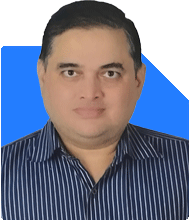
Ramalingam

Ramalingam Kalirajan  |10881 Answers  |Ask -

Mutual Funds, Financial Planning Expert - Answered on Jul 29, 2025

Ramalingam Kalirajan has over 23 years of experience in mutual funds and financial planning.
He has an MBA in finance from the University of Madras and is a certified financial planner.
He is the director and chief financial planner at Holistic Investment, a Chennai-based firm that offers financial planning and wealth management advice.... more
Asked by Anonymous - Jul 09, 2025Hindi

Money

Sir i am 66 years old and retired and have only one daughter married and settled. I have 2 grand children of 5 years and 3 years. I have equity shares of Rs.1.1 cr and a PMS of Rs.88 Lakhs. I have a monthly rental income of Rs.2.5 Lakhs net of taxes. Out of this i contibute SIP of Rs.75K per month for 5 years grandson and Rs.85K for 3 years Grand daughter since 2 years. My assets consists of one commercial bldg valued Rs. 5.5 cr and 2 houses valued at Rs.3 cr and a vacant plot 1.6 cr. I retain Rs.1 lakh per month for my monthly expenses and annual payments towards prooerty tax medical insurance and travels. My question will i be able to create Rs.5 cr for each of my grand children in 15 years with 5% increse in SIP every year. 2 years already completed. My 2nd question is whether our investment are in line and safe.

Ans: ? Strong Financial Foundation and Thoughtful Intentions

– You are showing great care for your grandchildren.
– The SIPs for their future are a strong step.
– Your assets provide a very stable base.
– Rental income of Rs. 2.5 lakh is excellent post-retirement support.
– Holding equity and PMS ensures potential long-term growth.
– Overall, your setup is solid and responsible.

? Review of Monthly SIPs Towards Grandchildren’s Goals

– Rs. 75K for the elder and Rs. 85K for the younger child is generous.
– With 5% annual increase, compounding will boost growth.
– Already two years of SIP is completed.
– That gives you 13 years more of investment time.
– This is a good horizon for equity-focused SIPs.
– With this strategy, Rs. 5 crore per child is achievable.
– But this depends on consistent equity returns over time.
– Market volatility is a factor, but time helps smoothen it.
– SIPs over 15 years usually reward with wealth creation.
– The rising SIP contribution every year also boosts target achievement.

? Portfolio Safety and Risk Allocation Assessment

– Equity shares of Rs. 1.1 crore are good for long-term growth.
– PMS of Rs. 88 lakh adds to the equity exposure.
– However, PMS requires monitoring.
– PMS also comes with higher fees and lower transparency.
– Direct equity too demands active watch and regular reviews.
– In retirement, active management adds stress and risk.
– Shifting some equity to mutual funds via MFD with CFP support is better.
– Actively managed mutual funds bring professional oversight.
– They offer smoother diversification and lower effort for retirees.

? Overexposure to Real Estate: A Review

– Real estate is illiquid and cannot be used quickly in emergencies.
– You own properties worth Rs. 10.1 crore.
– This is a huge chunk of total wealth.
– Commercial property, two houses, and a vacant plot is too much.
– Real estate requires maintenance, taxes, and time to sell.
– Rental income is fine, but too much dependency limits flexibility.
– Consider slowly reducing real estate exposure.
– Use the sale proceeds for safer, more liquid options.
– Use mutual funds aligned with specific goals.
– With the help of a Certified Financial Planner, this can be smooth.

? Emergency Planning and Liquidity Concerns

– You mentioned Rs. 1 lakh/month for expenses.
– But no liquid emergency fund is visible.
– At least 18 months of expenses should be parked separately.
– Keep Rs. 18 to Rs. 24 lakh in safe, low-risk instruments.
– Choose options that are not linked to market volatility.
– This ensures you don’t have to sell assets during downturns.
– Use short-term mutual funds through MFDs with CFP advice.

? Insurance Review for Risk Coverage

– You said annual payments include medical insurance.
– But coverage amount was not mentioned.
– At your age, at least Rs. 15 to 20 lakh health insurance is essential.
– Consider a super top-up plan if needed.
– Don’t let health expenses eat into investment goals.
– Also, review if the policy covers pre-existing conditions and has lifetime renewability.

? Rebalancing Need in Current Portfolio

– You are heavily skewed towards equity and real estate.
– Safe, non-market-linked investments are not visible.
– Rebalancing is needed to reduce risk.
– Allocation to low-risk options brings peace and stability.
– Retired life needs more predictable cash flow.
– Equity is good for growth, but you need balance too.
– Asset mix must suit your age and withdrawal needs.
– Allocate some equity to hybrid mutual funds.
– Balanced approach keeps safety and growth together.

? Reviewing the PMS Approach

– PMS charges are usually 2-2.5% annually.
– They may also take a performance-linked fee.
– These eat into your returns.
– PMS is suitable for very high-risk appetite individuals.
– Also, it lacks daily visibility and flexibility.
– Mutual funds through an MFD with CFP help are more transparent.
– These also allow easier goal tracking.
– Consider shifting some of the PMS corpus to mutual funds.
– This will make the portfolio more aligned to your gifting goals.

? Gifting Strategy and Tax Implications

– Gifts to grandchildren are not taxable in their hands.
– But growth from these investments will be taxed.
– Equity mutual funds: LTCG above Rs. 1.25 lakh taxed at 12.5%.
– STCG taxed at 20%.
– This applies even to investments for grandchildren.
– Plan the gift transfers through proper documentation.
– Joint holding or third-party SIPs in their name is possible.
– Consult a tax advisor to handle the mechanics smoothly.

? Ensuring Estate Planning and Legal Clarity

– You have multiple assets and long-term goals.
– Estate planning is very important now.
– Prepare a registered Will covering all assets.
– Mention clear allocations and ownerships.
– Include mutual funds, PMS, shares, and properties.
– This will avoid future disputes or confusion.
– Also consider creating a Trust if needed.
– Especially for minor grandchildren, Trusts offer smooth control.
– A Certified Financial Planner and lawyer can help draft this properly.

? Inflation-Proofing Your Grandchildren’s Corpus

– You aim for Rs. 5 crore per grandchild in 15 years.
– Inflation will reduce purchasing power.
– That means future education and living costs will be higher.
– Long-term equity SIPs help fight inflation.
– Continue with 5% annual step-up as planned.
– This keeps investments ahead of inflation.
– Reinvest dividends if any, to ensure compounding is not interrupted.

? Reviewing the Real Estate Strategy from Legacy Lens

– You have three large real estate assets.
– This is not easy to divide among two grandchildren.
– Property disputes happen often in such cases.
– Liquidity is a problem during asset division.
– Instead, slowly shift to financial assets.
– Mutual funds or bonds are easier to transfer.
– They are clean, transparent, and hassle-free.
– Legacy planning becomes smoother when assets are financial.
– Discuss a phased exit plan from real estate with a Certified Financial Planner.

? Child-Specific Investment Strategy

– Since the children are minors, use guardian accounts.
– SIPs can be in their name with you as guardian.
– Choose child-oriented mutual funds for better structure.
– These come with lock-ins and purpose alignment.
– You can also use diversified equity mutual funds.
– Avoid investing in their name directly under direct plans.
– Regular plans through MFD + CFP offer better advice and clarity.
– MFDs with CFP certification provide goal-linked fund tracking.
– Direct funds do not offer regular reviews and behavioural coaching.

? Monitoring and Rebalancing Your Investment

– Once a year, review SIP progress.
– Check if fund performance is consistent.
– Replace underperformers if needed.
– Review risk levels with your Certified Financial Planner.
– Make small shifts based on market cycle.
– Don’t stop SIPs during market falls.
– In fact, falling markets add more units.
– That helps the SIP strategy work better.
– Use periodic rebalancing to keep portfolio in shape.

? Finally

– Your goal of Rs. 5 crore per grandchild is very possible.
– The SIP structure and 5% step-up are well planned.
– Continue this discipline for another 13 years.
– Review PMS, direct equities, and real estate exposure.
– Shift to more mutual funds with CFP advice.
– Create a robust Will and Trust structure.
– Protect health and emergency fund needs.
– You’ve done very well so far.
– With a few tweaks, your strategy will be even stronger.

Best Regards,
K. Ramalingam, MBA, CFP,
Chief Financial Planner,
www.holisticinvestment.in
https://www.youtube.com/@HolisticInvestment
DISCLAIMER: The content of this post by the expert is the personal view of the rediffGURU. Users are advised to pursue the information provided by the rediffGURU only as a source of information to be as a point of reference and to rely on their own judgement when making a decision.
Money

You may like to see similar questions and answers below

Ramalingam

Ramalingam Kalirajan  |10881 Answers  |Ask -

Mutual Funds, Financial Planning Expert - Answered on Apr 16, 2024

Asked by Anonymous - Apr 16, 2024Hindi
Listen
Money
Hi, i am 42 years old 2 children 7 and 11 yrs each. earning currently 2 lakh net. I planning to create a retirement plan. I have done some investments but have never planned with specific goals so far. I intend to grow my money as much possible. And i am willing to take few risks, like i have started doing derivatives in options ( only nifty and I am not doing intra day). Please advice if my investment are reasonable and what are the other options i have to invest. Here are my assets and liability Land at current value : 70 lakhs Gold at current value : 21 lakhs Fixed Deposit : 10 lakhs PF balance : 11 lakhs Sukanya samridhi (annual1.5lakh) : 20 lakh Ppf for son ( annual 1.5 lakh): 14 lakh Direct equity ( 6 lakh invested) : current value : 17 lakhs Mutual Funds Franklin templeton tax saver growth( sip 4000) : 12 lakh Pp flexi cap growth(Sip 2000): 77 thousand Newly started Sip Quant small cap (sip 1000) Edelweiss momemtum (SIP) Liability ( car loan) : 20 lakhs
Ans: Given your age, income, and willingness to take risks, you have a decent mix of assets, but there are areas to focus on for a balanced retirement plan:

Assets:
Your assets are well-diversified with real estate, gold, fixed deposits, and various investment instruments like PF, Sukanya Samriddhi, PPF, direct equity, and mutual funds. However, your direct equity and derivatives trading can be volatile; ensure they align with your risk appetite.

Liabilities:
The car loan is a liability that can impact your monthly cash flow. Consider paying it off sooner to reduce interest costs and free up monthly income.

Suggestions:

Increase Equity Exposure: As you're willing to take risks, consider increasing exposure to equity mutual funds and direct equity investments.

Review Derivatives Trading: Be cautious with options trading due to its speculative nature. Ensure it doesn't dominate your portfolio.

Emergency Fund: Build a separate emergency fund to cover 6-12 months of expenses.

Health and Life Insurance: Ensure you have adequate health and life insurance coverage to protect your family's financial future.

Retirement Corpus: Calculate the required corpus for retirement based on your desired lifestyle post-retirement. Use a retirement calculator to estimate the monthly contributions needed to achieve this goal.

Diversify Investments: Explore other investment avenues like debt funds, international funds, to further diversify your portfolio and manage risks better.

..Read more

Ramalingam

Ramalingam Kalirajan  |10881 Answers  |Ask -

Mutual Funds, Financial Planning Expert - Answered on Jun 14, 2024

Money
Sir, I am 43 years old living in UAE, with FD of 10L and current MF accumulation of 1.04 Cr and monthly SIP 50K along. I have a 2BHK apartment in Chennai which yields a rent of 8000 Rs and a 3-bedroom house inherited from my parents as gift where we live currently. Along with this we have 2400 Sq ft of land in Chennai and 3000 Sq ft of land in Madurai. I am contributing 69K yearly for the last 11 years in my name until 2035 (expected returns 30Lakhs), 28K yearly in my daughter’s name until 2034 (expected returns 10Lakhs). Addition to this i have icici pru gift long terms with annual payment of 2L Rs on my name (to pay for another 10 years and the return of 16K per month) icici future perfect 1L Rs (to pay for another 10 years). Will receive a sum of 5L Rs from a LIC policy which is getting matured this year and a Term policy of 2 Cr for which I must pay 47K annually and it must be paid for another 22 years and 20 Lakhs worth of gold. I wish to invest in stocks in the next 7 years with an average risk and stop SIP at the age of 50. I have a 9th grade daughter who wishes to pursue Medicine and a son who is in grade 2. I wish to retire at the age of 50 (7 years from now) and start consulting. Could you please guide me how much corpus I should create in the next 7 years to live a normal lifestyle and ensure to pay the balance ICICI investments and my daughters’ education regards Raj
Ans: Current Financial Situation
Raj, you have done a commendable job in managing your finances and building a diversified portfolio. Let's assess your current financial landscape.

Fixed Deposits and Mutual Funds
You have a fixed deposit (FD) of Rs 10 lakhs and a mutual fund (MF) portfolio worth Rs 1.04 crore. You also contribute Rs 50,000 monthly to SIPs. This shows a disciplined approach towards long-term wealth creation.

Real Estate Holdings
You own a 2BHK apartment in Chennai, which generates a rental income of Rs 8,000 per month, and a 3-bedroom house inherited from your parents. Additionally, you possess 2400 sq ft of land in Chennai and 3000 sq ft of land in Madurai.

Insurance and Investments
You have various insurance and investment plans:

Annual contribution of Rs 69,000 for yourself until 2035 (expected returns Rs 30 lakhs).
Annual contribution of Rs 28,000 for your daughter until 2034 (expected returns Rs 10 lakhs).
ICICI Pru Gift Long Term with an annual payment of Rs 2 lakhs, yielding Rs 16,000 monthly after maturity.
ICICI Future Perfect with an annual payment of Rs 1 lakh for another 10 years.
LIC policy maturing this year with a sum assured of Rs 5 lakhs.
Term policy with a cover of Rs 2 crore, annual premium Rs 47,000 for the next 22 years.
Gold worth Rs 20 lakhs.
Family Commitments
Your daughter, currently in 9th grade, aspires to pursue medicine. Your son is in grade 2. You plan to retire at 50 and transition into consulting.

Financial Goals
To ensure a smooth transition into retirement and meet your financial obligations, let's break down your goals:

Retirement Corpus
Daughter's Education
Continuation of Investments
Living Expenses Post-Retirement
Retirement Corpus
You plan to retire in 7 years. To maintain a comfortable lifestyle post-retirement, you need to determine a retirement corpus. This corpus should cover your monthly expenses, healthcare, and unforeseen emergencies.

Daughter's Education
Medical education is expensive. It is crucial to allocate sufficient funds for your daughter's medical education to avoid financial stress later.

Continuation of Investments
You have ongoing investments that require continued funding. Ensuring these are adequately funded until their maturity is essential for maximizing returns.

Living Expenses Post-Retirement
Post-retirement, you will require a steady income to cover living expenses. Your rental income, SIP returns, and maturity proceeds from insurance plans will contribute to this.

Strategy to Achieve Financial Goals
To meet your financial goals efficiently, consider the following strategies:

Increase SIP Contributions
Currently, you invest Rs 50,000 monthly in SIPs. Increasing this amount will help accumulate a larger corpus. Given your current financial stability, consider increasing your SIP contributions by 10-15% annually. This will compound your wealth significantly over the next 7 years.

Diversify Mutual Fund Investments
Review your mutual fund portfolio and diversify across various sectors and market caps. Actively managed funds tend to outperform index funds in the long run due to professional fund management and active stock selection. This can provide better returns and reduce risks.

Surrender Low-Yield Insurance Policies
Your LIC policy maturing this year will yield Rs 5 lakhs. Reinvest this amount in mutual funds for better returns. Assess the ICICI Pru Gift Long Term and ICICI Future Perfect plans. If they are not performing well, consider surrendering them and reinvesting in higher-yield mutual funds. This can maximize returns and provide better growth opportunities for your investments.

Plan for Daughter's Education
Estimate the total cost of your daughter's medical education, including tuition fees, living expenses, and other costs. Create a dedicated education fund using a mix of debt and equity mutual funds. This will ensure safety and growth of the corpus.

Utilize Gold Holdings
Your gold holdings worth Rs 20 lakhs can be a valuable asset. Consider partial liquidation of gold to fund higher-yield investments. Alternatively, keep the gold as a hedge against inflation and as a contingency fund.

Create an Emergency Fund
Ensure you have an emergency fund covering at least 6-12 months of living expenses. This fund should be in a liquid asset class, such as a liquid mutual fund or a high-interest savings account, to access funds readily in case of emergencies.

Investment in Mutual Funds
Instead of investing directly in stocks, mutual funds can provide a balanced approach to achieving your financial goals with moderate risk. Here are the benefits:

Professional Management: Mutual funds are managed by professional fund managers who have the expertise to make informed investment decisions.
Diversification: Mutual funds provide diversification across various sectors and asset classes, reducing overall risk.
Liquidity: Mutual funds offer liquidity, allowing you to redeem your investments as needed.
Tax Efficiency: Equity mutual funds held for more than a year qualify for long-term capital gains tax benefits.
Increase SIP Contributions in Mutual Funds
Currently, you invest Rs 50,000 monthly in SIPs. Increasing this amount will help accumulate a larger corpus. Given your current financial stability, consider increasing your SIP contributions by 10-15% annually. This will compound your wealth significantly over the next 7 years.

Diversify Mutual Fund Investments
Review your mutual fund portfolio and diversify across various sectors and market caps. Actively managed funds tend to outperform index funds in the long run due to professional fund management and active stock selection. This can provide better returns and reduce risks.

Corpus Calculation for Retirement
To estimate the corpus required for retirement, consider the following:

Monthly Living Expenses: Calculate your current monthly expenses and account for inflation.
Healthcare Costs: Factor in healthcare costs, which tend to rise with age.
Contingency Fund: Include a contingency fund for unforeseen expenses.
Desired Lifestyle: Consider the lifestyle you wish to maintain post-retirement.
Monthly Living Expenses
Assume your current monthly expenses are Rs 50,000. Accounting for inflation at 6%, these expenses will rise over the next 7 years.

Healthcare Costs
Healthcare costs can be substantial post-retirement. Ensure you have comprehensive health insurance and allocate a part of your corpus towards healthcare.

Contingency Fund
Set aside at least 10% of your retirement corpus for emergencies. This ensures financial security during unforeseen circumstances.

Desired Lifestyle
Factor in any lifestyle changes you wish to make post-retirement, such as travel, hobbies, or relocation.

Final Insights
Raj, your current financial situation is strong, with a diversified portfolio and substantial assets. To ensure a comfortable retirement and meet your financial goals, focus on increasing SIP contributions, diversifying mutual fund investments, and planning adequately for your daughter's education. Reviewing insurance policies and reallocating funds to higher-yield investments will optimize your returns. Investing in mutual funds can provide balanced growth and reduce risk, ensuring financial security post-retirement.

Building a robust retirement corpus requires careful planning and disciplined investing. With the right strategies, you can achieve your financial goals and enjoy a comfortable retirement while ensuring your family's financial security.

Best Regards,

K. Ramalingam, MBA, CFP,

Chief Financial Planner,

www.holisticinvestment.in

..Read more

Ramalingam

Ramalingam Kalirajan  |10881 Answers  |Ask -

Mutual Funds, Financial Planning Expert - Answered on Aug 14, 2024

Money
Dear Sir, I aman Army Veteran of 64 years snd wife aged 61. I have a monthly pension of Rs 1,8lakh pm. I have following investments. FDs 1.2 Cr @ 8pc SCSS 30 lakh @7.8pc Gold ETF 6 lakh PPF Rs 22 lakh. Rs12500 pm. Maturing in Mar 28. Equity Rs 1.5 cr. Investment through self study. MF HDFC multy cap Rs 29 lakh. Monthly contribution Rs 10K. MIRAE ASSETS Emerging Blue Chip Rs 23 Lakh. Monthly contribution Rs 12500 pm ICICI Pru bluechip Pru blue chip Rs 33 lakh. Monthly contribution Rs 50K Bandhan Multi Cap Rs 23 lakh. Monthly contribution Rs 15K. Frankin Temp Rs 1.2 lakh. No monthly contribution All MF direct schemes. I have a house to live. Choldren Son 34 married and settled. Daughter 28. Working good package. Responsibilty. Only daughter marriage House Hold expenditure Rs 50K. Covere for medical by ECHS. I have only one goal to leave a corpus of Rs20Cr or more for my children in the next 15 years. Please advise any changes in the investment. Thank you Jasbir Singh
Ans: Dear Mr. Jasbir Singh,

First, I must commend you for your disciplined approach to financial planning and your desire to secure a substantial corpus for your children. At 64 years old, with a stable pension of Rs. 1.8 lakh per month and various well-placed investments, you are in a strong financial position. Your investments are diversified across fixed deposits (FDs), Senior Citizens' Savings Scheme (SCSS), gold ETFs, Public Provident Fund (PPF), equities, and mutual funds.

Your primary goal is to leave a corpus of Rs. 20 crore or more for your children in the next 15 years. With your current financial standing, you have laid a solid foundation to achieve this.

Evaluating Your Existing Portfolio
1. Fixed Deposits (FDs)

You have Rs. 1.2 crore in FDs earning 8% interest. This provides stable, risk-free returns and liquidity, which is essential for your age. However, FDs generally offer lower returns compared to other investment options. Given your long-term horizon, consider the opportunity cost of keeping a large portion of your portfolio in FDs.
2. Senior Citizens’ Savings Scheme (SCSS)

SCSS is a safe investment with a reasonable interest rate of 7.8%, offering quarterly interest payouts. This is a good option for generating regular income, especially given the tax benefits. Keep this investment as it aligns with your risk profile and cash flow needs.
3. Gold ETFs

You have Rs. 6 lakh in gold ETFs, which provide a hedge against inflation and economic uncertainties. This is a good long-term investment, but the returns are generally moderate. Since your portfolio is diversified, maintaining this small allocation to gold is beneficial.
4. Public Provident Fund (PPF)

Your PPF investment of Rs. 22 lakh, with a monthly contribution of Rs. 12,500, will mature in March 2028. PPF is a safe and tax-efficient investment, and you should continue it as part of your retirement planning. Given the current interest rates, PPF offers attractive long-term returns.
5. Equities

You have Rs. 1.5 crore in equities, which you manage through self-study. Equities are vital for long-term growth, and your involvement shows that you are well-versed in market dynamics. However, regular portfolio review and rebalancing are crucial to mitigate risks.
6. Mutual Funds

Your mutual fund portfolio is diversified across different funds, with a significant investment in large-cap and multi-cap funds. The monthly SIP contributions demonstrate a disciplined investment approach.
Suggested Adjustments to Achieve Your Goal
1. Rebalance Your Portfolio

Increase Equity Exposure: Considering your long-term goal of Rs. 20 crore, increasing your equity exposure could enhance your portfolio’s growth potential. You might consider reallocating some funds from FDs to equities or equity mutual funds, as they typically offer higher returns over the long term.

Diversify Equity Investments: While you have a strong base in large-cap and multi-cap funds, consider adding mid-cap and small-cap funds for potentially higher returns, though they come with increased risk.

Monitor and Rebalance Regularly: Review your portfolio at least annually to ensure it remains aligned with your goals. Adjust your asset allocation based on market conditions and your risk tolerance.

2. Optimize Your Tax Efficiency

Maximize Tax Benefits: Continue maximizing tax-saving opportunities through your PPF and SCSS investments. Consider tax-efficient mutual funds under the long-term capital gains tax regime, especially for equity investments held for over a year.

Minimize Tax Liabilities: Given your high pension, you might be in a higher tax bracket. Efficient tax planning, including timing the sale of investments to optimize tax impact, is crucial.

3. Estate Planning and Wealth Transfer

Create a Will: Ensure you have a clear and legally sound will in place to avoid any legal complications for your heirs. Specify how your assets should be distributed among your children.

Trust Planning: Consider setting up a trust if you want to manage the distribution of your wealth after your demise. This can provide more control over how and when your children receive the inheritance.

Nomination and Documentation: Ensure that all your investments have proper nominations. Keep your financial documents and information organized and accessible to your family.

4. Increase SIP Contributions

Gradually Increase SIPs: As your pension and existing investments provide stability, consider gradually increasing your SIP contributions. This will help you take advantage of the power of compounding over the next 15 years.

Focus on Growth-Oriented Funds: Since you are aiming for a Rs. 20 crore corpus, growth-oriented mutual funds with a good track record should be your focus. Regularly review the performance of your current SIPs and adjust if necessary.

5. Review Your Risk Tolerance

Risk Assessment: As you age, your risk tolerance may decrease. Periodically assess your risk tolerance and adjust your equity exposure accordingly. A balanced approach that considers both growth and preservation of capital is essential.

Health Coverage: Although you are covered by ECHS, consider having additional health insurance to cover any unexpected medical expenses not covered under ECHS. This will protect your corpus from being depleted due to medical emergencies.

Final Insights
You are in a commendable financial position with a clear vision for your family's future. By making strategic adjustments to your portfolio, optimizing tax efficiency, and ensuring proper estate planning, you are well on your way to achieving your goal of leaving a substantial corpus for your children.

Keep in mind the importance of regular portfolio reviews and adjustments. The financial landscape can change, and staying informed will help you navigate your investment journey successfully.

Best Regards,

K. Ramalingam, MBA, CFP,

Chief Financial Planner,

www.holisticinvestment.in

..Read more

Milind

Milind Vadjikar  | Answer  |Ask -

Insurance, Stocks, MF, PF Expert - Answered on Oct 31, 2024

Listen
Money
Sir My Age is 38 Now. Running Business In Pune city. Below are the My Assets & Liabilities. Current Values - Assets. Own Industrial Plot - Rs. 2.0 Cr Business Income Yearly Rs. 24.00 Lack Own Company Investment ( Machinery, Debtors Etc ) - Rs 2.40 Cr Mutual Fund & Share Market Investment Rs. 2.10 Cr Bank FD - Rs. 50.00 Lack Own 3 Flats in Pune - Rs. 75 lack, 50 Lack & 35 Lack ( Current Values ) Golds - Rs. 25.00 Lack Land - Agriculture - Rs. 50.00 Lack Term Insurances - Rs. 20.00 Lack ( Till Date Premium Paid ) Labilities. House Loan - Rs. 30.00 Lack ( EMI 26500.00 PM ) Loan will close after 17 years. Car Loan - Rs. 6.35 lack ( EMI 12500.00 PM ) Loan will close after 5 years. This Assets & investment sufficient for maintain 7 family members Expenses after retirement ? ( 4 Adult + 3 Children (Below 5 Years) ). I will retire at the age of 45.
Ans: Hello;

What is the expected monthly rental from industrial plot and machinery?

Are you currently occupying one of the flats mentioned here or are all of them given on rent?

Also your term life insurance is very low. You should have minimum term insurance cover of 2.4 Cr.

You have good assets in agri land, industrial land, gold, real estate but they are relatively illiquid when need arises hence term insurance cover with riders for critical care and accident benefit are an absolute must!

Considering the home loan tenure of 17 years and 3 small kids in the family to be supported for education and decent lifestyle, I am not sure if you can retire in 7 years timeframe from now.

However I would appreciate your reply to my queries above, before I give my firm view about your retirement in 7 years timeframe.

Best wishes;

..Read more

Ramalingam

Ramalingam Kalirajan  |10881 Answers  |Ask -

Mutual Funds, Financial Planning Expert - Answered on Jun 21, 2025

Asked by Anonymous - Jun 18, 2025Hindi
Money
Hi Ramalingam Sir, I'm a working 40 year old women and a mother of 2 kids. my monthly take home is 1.75L. my deductions and investments are house loan EMI 52000 personal loan 22000 car loan 21444 top up loan 8500 LiC premiums per annum 1L Term Life insurance per annum 52k NPS around 5700 i.e. 4% of basic pay Sukanya Samriddhi 6k monthly PPF 6k monthly Mirea Asset Large&Midcap Fund direct 2k SIP upto 3yrs Quant Small Cap Fund 5k SIP upto 3 years Nippon India Multi cap fund 5k SIP upto 3 yars ICICI Prudential Bluechip fund 5k SIP upto 1 year Motilal Oswal Midcap Fund 10k SIP upto 1 year my 1 year SIPs would complete by October 2025. my daughter is 8yrs old and son 3 yrs old. I would like to know if my investments are correct and please suggest if am going in right direction with regards to investments. As I'm working in a software company, I would like to have some pooled up money for my kids for education purpose. my husband is also working and focusing on building physical assets for kids so I want to have right investments and purpose for the money I earn. Thank you Sir in advance.
Ans: You are very organised with your finances.
As a Certified Financial Planner, let me give you a full 360-degree review.

Family and Income Snapshot
You are 40 years old and working in software.

You have two children aged 8 and 3.

Monthly take-home salary is Rs 1.75 lakh.

Your spouse is also earning and focusing on physical assets.

You wish to build a focused education fund for children.

You are already investing with discipline and purpose.
Let’s now study everything in detail and correct where needed.

Existing Loan Commitments
You are currently paying for four types of loans:

Home Loan EMI: Rs 52,000

Personal Loan: Rs 22,000

Car Loan: Rs 21,444

Top-up Loan: Rs 8,500

That is Rs 1,03,944 towards loan EMIs.
This eats up nearly 60% of your salary.
This is high. It increases financial pressure.

Suggestions:

Try to repay the personal loan early.

Check if car loan can be closed faster.

Avoid fresh loans till current loans are cleared.

Do not use top-up loans for non-emergency needs.

Reducing EMI will free money for better investment.

Insurance Portfolio Review
You have:

LIC premiums: Rs 1 lakh per year

Term life insurance: Rs 52,000 per year

LIC premiums are usually part of endowment or money-back.
These are low-return products combining investment and insurance.
They are not good for wealth creation.

Suggestions:

If your LIC is investment-based, surrender it.

Use surrender value to invest in mutual funds.

Term insurance should be plain and high cover.

Coverage should be minimum 15–20 times annual income.

Don’t mix insurance with investment again in future.

NPS Contribution
You contribute Rs 5,700 monthly to NPS.

It is 4% of basic salary.

NPS is good for retirement, but it locks your money till 60.
Returns are decent but come with withdrawal restrictions.

Suggestions:

Continue NPS contribution for tax benefit.

Don’t increase allocation here.

Your main long-term growth must come from mutual funds.

Sukanya Samriddhi and PPF
Sukanya: Rs 6,000 monthly for daughter.

PPF: Rs 6,000 monthly.

These are safe, tax-free investments.
But they give 7–8% return, which is fixed-income category.
Long term, they can’t beat inflation fully.

Suggestions:

Continue Sukanya till age 15 of daughter.

Cap PPF at Rs 6,000/month.

Don’t increase traditional schemes further.

For long-term goals, use mutual funds more.

Mutual Fund Investments
You are investing via SIPs in 6 different funds.

Mirae Large & Midcap – Rs 2,000 (3 years)

Quant Small Cap – Rs 5,000 (3 years)

Nippon Multicap – Rs 5,000 (3 years)

ICICI Bluechip – Rs 5,000 (1 year)

Motilal Oswal Midcap – Rs 10,000 (1 year)

Monthly SIP total = Rs 27,000

This is a good practice, but there are few issues:

All are direct plans.

Small cap and midcap funds are high risk.

Direct plans offer no advisory support.

No proper rebalancing or goal tracking.

Disadvantages of Direct Plans:

You are alone in selecting and reviewing funds.

No expert helps you during market downturns.

You may miss better schemes or exit too late.

Emotional investing can harm results.

Direct plan TER is low, but mistakes cost more.

Better Approach:

Shift to regular plans via Certified Financial Planner.

He tracks, rebalances and aligns with your goals.

You get emotional support and expert monitoring.

Small advisory fee ensures professional help.

Fund Structure Suggestion:

40% in large and flexicap actively managed funds.

30% in hybrid aggressive and balanced funds.

20% in midcap (not small cap for now).

10% in short-term debt for liquidity.

This makes your portfolio stable and growth-oriented.

Your Current SIP Tenure
Three SIPs are running till 2027 (3-year SIPs).

Two SIPs end in October 2025.

Don't stop your SIPs when tenure ends.
Mutual funds don’t work like FD maturity.
Wealth grows if SIP continues for 10–15 years.

Suggestions:

Extend your SIPs for longer duration.

Increase SIP amount slowly as EMI reduces.

Align each SIP with a specific goal.

Kid’s Education Planning
Your daughter is 8. You have 8–10 years for higher education.
Son is 3. You have 12–14 years for him.

Your goal is to build strong education fund for both.
You want to do it alone, while spouse builds physical assets.

Action Plan:

Create two child education buckets.

Assign separate SIPs to each goal.

Use child-focused active equity funds.

Invest monthly through regular plans with a planner.

Review yearly progress of corpus.

Target corpus:

Rs 50–60 lakh per child in today’s value.

Will need Rs 1–1.25 crore combined for both.

With 10–12 years horizon, SIP is best route.

Budget Balance and Cash Flow
Monthly income: Rs 1.75 lakh
Loan EMIs: Rs 1.03 lakh
SIP: Rs 27,000
Sukanya + PPF: Rs 12,000
NPS: Rs 5,700
Insurance premium (annualised): Rs 12,500

You are left with little monthly surplus.
Any bonus or hike should go to reduce loans.

Action Plan:

First, clear personal and car loan.

Reinvest the freed EMI into SIP.

Avoid top-up loans or lifestyle loans.

Maintain an emergency fund of Rs 3–5 lakh.

Keep a health insurance floater for family.

Future Roadmap in Simple Steps
Shift from direct to regular mutual funds.

Engage a CFP to guide every step.

Keep SIPs long-term, goal-linked and diversified.

Reduce loan load over next 2 years.

Use bonuses or hikes to build kids' corpus.

Review portfolio every year.

Avoid any new insurance?cum?investment products.

Final Insights
You are doing a lot of right things already.

But some fine-tuning is needed now.

Direct funds and LIC policies may hold you back.

Loans are heavy, need early closure.

Kids' goals need structured planning and tracking.

Mutual funds must be managed actively by expert.

You have limited earning years ahead.
You can build strong wealth with right plan now.
Let your money grow with clarity and care.
And give your children the financial base they deserve.

Best Regards,

K. Ramalingam, MBA, CFP,
Chief Financial Planner,
www.holisticinvestment.in
https://www.youtube.com/@HolisticInvestment

..Read more

Latest Questions
Nayagam P

Nayagam P P  |10854 Answers  |Ask -

Career Counsellor - Answered on Dec 14, 2025

Asked by Anonymous - Dec 12, 2025Hindi
Career
Hello, I am currently in Class 12 and preparing for JEE. I have not yet completed even 50% of the syllabus properly, but I aim to score around '110' marks. Could you suggest an effective strategy to achieve this? I know the target is relatively low, but I have category reservation, so it should be sufficient.
Ans: With category reservation (SC/ST/OBC), a score of 110 marks is absolutely achievable and realistic. Based on 2025 data, SC candidates qualified with approximately 60-65 percentile, and ST candidates with 45-55 percentile. Your target requires scoring just 37-40% marks, which is significantly lower than general category standards. This gives you a genuine advantage. Immediate Action Plan (December 2025 - January 2026): 4-5 Weeks. Week 1-2: High-Weightage Chapter Focus. Stop trying to complete the entire syllabus. Instead, focus exclusively on high-scoring chapters that carry maximum weightage: Physics (Modern Physics, Current Electricity, Work-Power-Energy, Rotation, Magnetism), Chemistry (Chemical Bonding, Thermodynamics, Coordination Compounds, Electrochemistry), and Maths (Integration, Differentiation, Vectors, 3D Geometry, Probability). These chapters alone can yield 80-100+ marks if practiced properly. Ignore topics you haven't studied yet. Week 2-3: Previous Year Questions (PYQs). Solve JEE Main PYQs from the last 10 years (2015-2025) for chapters you're studying. PYQs reveal question patterns and difficulty levels. Focus on understanding why answers are correct, not memorizing solutions. Week 3-4: Mock Tests & Error Analysis. Take 2-3 full-length mock tests weekly under timed conditions. This is crucial because mock tests build exam confidence, reveal time management weaknesses, and error analysis prevents repeated mistakes. Maintain an error notebook documenting every mistake—this becomes your revision guide. Week 4-5: Revision & Formula Consolidation. Create concise formula sheets for each subject. Spend 30 minutes daily reviewing formulas and key concepts. Avoid learning new topics entirely at this stage. Study Schedule (Daily): 7-8 Hours. Morning (5:00-7:30 AM): Physics concepts + 30 PYQs. Break (7:30-8:30 AM): Breakfast & rest. Mid-morning (8:30-11:00): Chemistry concepts + 20 PYQs. Lunch (11:00-1:00 PM): Full break. Afternoon (1:00-3:30 PM): Maths concepts + 30 PYQs. Evening (3:30-5:00 PM): Mock test or error review. Night (7:00-9:00 PM): Formula revision & weak area focus. Strategic Approach for 110 Marks: Attempt only confident questions and avoid negative marking by skipping difficult questions. Do easy questions first—in the exam, attempt all basic-level questions before attempting medium or hard ones. Focus on quality over quantity as 30 well-practiced questions beat 100 random questions. Master NCERT concepts as most JEE questions test NCERT concepts applied smartly. April 2026 Session Advantage. If January doesn't deliver desired results, April gives you a second chance with 3+ months to prepare. Use January as a practice attempt to identify weak areas, then focus intensively on those in February-March. Realistic Timeline: January 2026 target is 95-110 marks (achievable with focused 50% syllabus), while April 2026 target is 120-130 marks (with complete syllabus + experience). Your reservation benefit means you need only approximately 90-105 marks to qualify and secure admission to quality engineering colleges. Stop comparing yourself to general category cutoffs. Most Importantly: Consistency beats perfection. Study 6 focused hours daily rather than 12 distracted hours. Your 110-mark target is realistic—execute this plan with discipline. All the BEST for Your JEE 2026!

Follow RediffGURUS to Know More on 'Careers | Money | Health | Relationships'.

...Read more

Dr Dipankar

Dr Dipankar Dutta  |1841 Answers  |Ask -

Tech Careers and Skill Development Expert - Answered on Dec 13, 2025

Asked by Anonymous - Dec 12, 2025
Career
Dear Sir/Madam, I am currently a 1st year UG student studying engineering in Sairam Engineering College, But there the lack of exposure and strict academics feels so rigid and I don't like it that. It's like they don't gaf about skills but just wants us to memorize things and score a good CGPA, the only skill they want is you to memorize things and pass, there's even special class for students who don't perform well in academics and it is compulsory for them to attend or else the student and his/her parents needs to face authorities who lashes out. My question is when did engineering became something that requires good academics instead of actual learning and skill set. In sairam they provides us a coding platform in which we need to gain the required points for each semester which is ridiculous cuz most of the students here just look at the solution to code instead of actual debugging. I am passionate about engineering so I want to learn and experiment things instead of just memorizing, so I actually consider dropping out and I want to give jee a try and maybe viteee , srmjeee But i heard some people say SRM may provide exposure but not that good in placements. I may not be excellent at studies but my marks are decent. So gimme some insights about SRM and recommend me other colleges/universities which are good at exposure
Ans: First — your frustration is valid

What you are experiencing at Sairam is not engineering, it is rote-based credential production.

“When did engineering become memorizing instead of learning?”

Sadly, this shift happened decades ago in most Tier-3 private colleges in India.

About “coding platforms & points” – your observation is sharp

You are absolutely right:

Mandatory coding points → students copy solutions

Copying ≠ learning

Debugging & thinking are missing

This is pseudo-skill education — it looks modern but produces shallow engineers.

The fact that you noticed this in 1st year already puts you ahead of 80% students.

Should you DROP OUT and prepare for JEE / VITEEE / SRMJEEE?

Although VIT/SRM is better than Sairam Engineering College, but you may face the same problem. You will not face this type of problem only in some top IITs, but getting seat in those IITs will be difficult.
Instead of dropping immediately, consider:

???? Strategy:

Stay enrolled (degree security)

Reduce emotional investment in college rules

Use:

GitHub

Open-source projects

Hackathons

Internships (remote)

Hardware / software self-projects

This way:

College = formality

Learning = self-driven

Risk = minimal

...Read more

DISCLAIMER: The content of this post by the expert is the personal view of the rediffGURU. Investment in securities market are subject to market risks. Read all the related document carefully before investing. The securities quoted are for illustration only and are not recommendatory. Users are advised to pursue the information provided by the rediffGURU only as a source of information and as a point of reference and to rely on their own judgement when making a decision. RediffGURUS is an intermediary as per India's Information Technology Act.

Close  

You haven't logged in yet. To ask a question, Please Log in below
Login

A verification OTP will be sent to this
Mobile Number / Email

Enter OTP
A 6 digit code has been sent to

Resend OTP in120seconds

Dear User, You have not registered yet. Please register by filling the fields below to get expert answers from our Gurus
Sign up

By signing up, you agree to our
Terms & Conditions and Privacy Policy

Already have an account?

Enter OTP
A 6 digit code has been sent to Mobile

Resend OTP in120seconds

x