


Need Expert Advice?Our Gurus Can Help
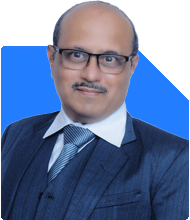
Nitin Narkhede | Answer |Ask -Follow
MF, PF Expert - Answered on Sep 03, 2025
Nitin Narkhede, founder of the Prosperity Lifestyle Hub, is a certified financial advisor with eight years of experience in helping clients design and implement comprehensive financial life plans.
As a mentor, Nitin has trained over 1,000 individuals, many of whom have seen remarkable financial transformations.
Nitin holds various certifications including the Association Of Mutual Funds in India (AMFI), the Insurance Regulatory and Development Authority and accreditations from several insurance and mutual fund aggregators.
He is a mechanical engineer from the J T Mahajan College, Jalgaon, with 34 years of experience of working with MNCs like Skoda Auto India, Volkswagen India and ThyssenKrupp Electrical Steel India.... more
As a mentor, Nitin has trained over 1,000 individuals, many of whom have seen remarkable financial transformations.
Nitin holds various certifications including the Association Of Mutual Funds in India (AMFI), the Insurance Regulatory and Development Authority and accreditations from several insurance and mutual fund aggregators.
He is a mechanical engineer from the J T Mahajan College, Jalgaon, with 34 years of experience of working with MNCs like Skoda Auto India, Volkswagen India and ThyssenKrupp Electrical Steel India.... more
Asked by Anonymous - Sep 02, 2025Hindi

I am 53 with a corpus of 1.2cr in MF, monthly sip of 60k. My take home salary is 1.5lac, I have 60lacs in Post office various schemes. PF 24lac, insurance investment 30lac, NPS 4lac , equity 10lacs. We are a family of 4 ,one son is still in school has 16yrs to be independent and one son is working in a private job. Want to retire by age 55 . Monthly expenses 65k
Ans: Dear Friend, You have built a corpus of around ?2.5 crore spread across mutual funds, post office schemes, PF, insurance, and equities. With a monthly surplus after expenses, continuing systematic investments is key. To sustain a comfortable lifestyle beyond 55, factoring inflation, you’ll require at least ?4–5 crore. To achieve this, maintain current SIPs, shift some low-yield assets into higher-growth mutual funds, and aim for a balanced equity-debt mix (around 60:40). Create a bucket strategy with 2–3 years’ expenses in safe assets and the rest in growth instruments. With disciplined investing and prudent allocation, retirement goals can be comfortably met.
Regards, Nitin Narkhede -Founder, Prosperity Lifestyle Hub,
Free webinar https://bit.ly/PLH-Webinar
Regards, Nitin Narkhede -Founder, Prosperity Lifestyle Hub,
Free webinar https://bit.ly/PLH-Webinar
DISCLAIMER: The content of this post by the expert is the personal view of the rediffGURU. Users are advised to pursue the information provided by the rediffGURU only as a source of information to be as a point of reference and to rely on their own judgement when making a decision.
MoneyReply


You may like to see similar questions and answers below

Ramalingam Kalirajan |10870 Answers |Ask -Follow
Mutual Funds, Financial Planning Expert - Answered on Jul 10, 2024

Ramalingam Kalirajan |10870 Answers |Ask -Follow
Mutual Funds, Financial Planning Expert - Answered on Feb 04, 2025

Ramalingam Kalirajan |10870 Answers |Ask -Follow
Mutual Funds, Financial Planning Expert - Answered on Jun 20, 2025
Ramalingam Kalirajan |10870 Answers |Ask -Follow
Mutual Funds, Financial Planning Expert - Answered on Jul 30, 2025
Ramalingam Kalirajan |10870 Answers |Ask -Follow
Mutual Funds, Financial Planning Expert - Answered on Jul 30, 2025

Latest Questions

Dr Dipankar Dutta |1836 Answers |Ask -Follow
Tech Careers and Skill Development Expert - Answered on Dec 05, 2025



Ulhas Joshi |280 Answers |Ask -Follow
Mutual Fund Expert - Answered on Dec 05, 2025


Dr Dipankar Dutta |1836 Answers |Ask -Follow
Tech Careers and Skill Development Expert - Answered on Dec 04, 2025



Ravi Mittal |676 Answers |Ask -Follow
Dating, Relationships Expert - Answered on Dec 04, 2025


Anu Krishna |1745 Answers |Ask -Follow
Relationships Expert, Mind Coach - Answered on Dec 04, 2025

Anu Krishna |1745 Answers |Ask -Follow
Relationships Expert, Mind Coach - Answered on Dec 04, 2025



Mayank Chandel |2562 Answers |Ask -Follow
IIT-JEE, NEET-UG, SAT, CLAT, CA, CS Exam Expert - Answered on Dec 04, 2025


Mayank Chandel |2562 Answers |Ask -Follow
IIT-JEE, NEET-UG, SAT, CLAT, CA, CS Exam Expert - Answered on Dec 04, 2025

Mayank Chandel |2562 Answers |Ask -Follow
IIT-JEE, NEET-UG, SAT, CLAT, CA, CS Exam Expert - Answered on Dec 04, 2025


Mayank Chandel |2562 Answers |Ask -Follow
IIT-JEE, NEET-UG, SAT, CLAT, CA, CS Exam Expert - Answered on Dec 04, 2025