Home > Money > Question
Need Expert Advice?Our Gurus Can Help
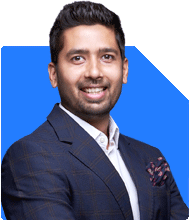
Kirtan

Kirtan A Shah  | Answer  |Ask -

MF Expert, Financial Planner - Answered on Nov 01, 2023

Kirtan A Shah is a certified financial planner and managing director, private wealth, at Credence Family Office.
He is also a Certified International Wealth Manager and Financial Engineering and Risk Manager.
Shah is the co-author of Financial Service Management and Financial Market Operations, which are used as reference books for Mumbai University.
He is frequently seen on CNBC, Zee Business, ET NOW & BQ Prime as an expert guest.... more
Asked by Anonymous - Oct 02, 2023Hindi
Listen
Money

Hi, I am 40 years old working woman, I am investing Rs.10000/month in MF below:1) Nippon India Small Cap fund (1000), 2)Parag Parikh Flexi Cap (2000) 3)Axis focused 25 fund (2000) 4)Kotak Small Cap (1000) 5) Mirae Asset emerging bluechip (2000) 6 ) SBI Bluechip fund (1000). I am looking forward for corpus of 1.5 Cr by retirement, so which of these funds shall I continue and which one to exit? can you suggest additional MF with medium risk appetite to achieve corpus amount . Please advise

Ans: You dont need any additional funds. Just exit the below funds & hold the rest,

- Axis Focused 25
DISCLAIMER: The content of this post by the expert is the personal view of the rediffGURU. Users are advised to pursue the information provided by the rediffGURU only as a source of information to be as a point of reference and to rely on their own judgement when making a decision.
Money

You may like to see similar questions and answers below

Samraat

Samraat Jadhav  |2507 Answers  |Ask -

Stock Market Expert - Answered on Jun 22, 2023

Sanjeev

Sanjeev Govila  | Answer  |Ask -

Financial Planner - Answered on Mar 28, 2024

Ramalingam

Ramalingam Kalirajan  |10881 Answers  |Ask -

Mutual Funds, Financial Planning Expert - Answered on May 08, 2024

Listen
Money
I’m 43 year old working profession, and invest 50,500 per month in MF’s via SIP. I have been investing in MF’s on monthly basis for the past ~5 years. My portfolio consist of following funds - 1) Axis Mid Cap Fund - Regular Growth 2) Canara Robeco Small Cap Fund - Regular Growth 3) Franklin India Focused Equity Fund - Growth 4) HDFC Balanced Advantage Fund - Direct Plan - Growth Option 5) HDFC Mid-Cap Opportunities Fund - Direct Plan - Growth Option 6) HDFC Small Cap Fund - Direct Growth Plan 7) ICICI Prudential Multi-Asset Fund - Growth 8) ICICI Prudential Value Discovery Fund - Growth 9) Kotak Small Cap Fund - Growth (Regular Plan) (Erstwhile Kotak Mid-Cap) 10) Kotak Emerging Equity Fund- Growth (Regular Plan) 11) NIPPON INDIA SMALL CAP FUND - GROWTH PLAN GROWTH OPTION 12) SBI Flexicap Fund - Regular Plan - Growth 13) SBI Contra Fund - Regular Plan - Growth 14) Tata Small Cap Fund - Regular Plan - Growth 15) Kotak Business Cycle Reg Gr I plan to increase my monthly amount to 70K, and look forward to have a corpus of ~3-5cr in the next 15 year. So please can you suggest some more MF where in can invest and is my goal of 3-5 CR achievable.
Ans: It's great to see your commitment to long-term investing and your goal of building a substantial corpus over the next 15 years. Here are some suggestions to enhance your mutual fund portfolio and work towards achieving your financial goal:
1. Diversification: While you have a diversified portfolio across various categories, consider adding exposure to other asset classes like international funds, thematic funds, or debt funds to further diversify your portfolio and reduce risk.
2. International Funds: Explore investing a portion of your portfolio in international funds to gain exposure to global markets and potentially benefit from their growth opportunities. International funds can provide diversification benefits and hedge against currency risk.
3. Thematic Funds: Consider allocating a small portion of your portfolio to thematic funds that focus on specific sectors or themes with growth potential, such as technology, healthcare, or consumption. Thematic funds can offer the opportunity for higher returns but come with higher risk.
4. Debt Funds: Given your long-term investment horizon, consider including debt funds in your portfolio for stability and capital preservation. Debt funds can provide a hedge against market volatility and generate steady returns over time.
5. Regular Review: Regularly review your portfolio's performance, asset allocation, and investment strategy to ensure they align with your financial goals and risk tolerance. Make adjustments as needed based on changing market conditions and personal circumstances.

As for your goal of achieving a corpus of 3-5 crore in the next 15 years, it's certainly achievable with disciplined investing, consistent SIP contributions, and a well-diversified portfolio. However, it's essential to regularly monitor your progress and make any necessary adjustments along the way to stay on track towards your financial objectives.
For personalized advice tailored to your specific financial situation and goals, consider consulting with a Certified Financial Planner (CFP) who can provide comprehensive financial planning services and help optimize your investment strategy.

Best Regards,
K. Ramalingam, MBA, CFP,
Chief Financial Planner,
www.holisticinvestment.in

..Read more

Ramalingam

Ramalingam Kalirajan  |10881 Answers  |Ask -

Mutual Funds, Financial Planning Expert - Answered on Aug 21, 2024

Money
Hello sir, I am 48 yrs old, salaried, just stared to invest in MF. I selected the following funds for monthly SIP of rs 10000 each... 1. Nippon India large cap fund direct growth 2. Motilal Oswal midcap fund direct growth 3. Quant large & Mid cap fund direct growth Please advice all these choices are ok? Also pl advice two more funds to invest sip of rs 10000 each and likely to invest lumpsum of 2 lakhs every 6 months....expecting carpus of 3cr during my retirement age of 60yrs old. Advance thanks
Ans: You are 48 years old and have started investing in mutual funds. You plan to invest Rs 10,000 per month in three selected funds. Additionally, you are looking to invest Rs 10,000 per month in two more funds and a lump sum of Rs 2 lakhs every six months. Your goal is to accumulate a corpus of Rs 3 crore by the time you retire at age 60.

This is a critical time in your financial journey, and it's essential to make informed decisions. Your choices will significantly impact your retirement corpus.

Evaluating Your Current Fund Selections
Nippon India Large Cap Fund (Direct Growth): Large-cap funds offer stability and are generally less volatile. However, direct plans require you to manage the investments yourself. This might be challenging without regular market insights. It’s advisable to invest in regular plans through a Certified Financial Planner (CFP) who can provide ongoing guidance and support.

Motilal Oswal Midcap Fund (Direct Growth): Midcap funds can offer higher growth but come with increased risk. Again, managing direct funds on your own can be complex. A CFP can help you navigate market changes and ensure your investments align with your goals.

Quant Large & Mid Cap Fund (Direct Growth): This fund provides a balance between stability and growth. However, the same concerns apply here regarding the direct plan. A CFP can help you maximize returns while managing risk.

Disadvantages of Direct Funds
Direct funds have lower expense ratios, but they lack the professional advice and management that comes with regular funds. This can lead to missed opportunities or increased risks, especially if you lack the time or expertise to monitor your investments closely.

Investing through a CFP in regular funds ensures that your investments are regularly reviewed and rebalanced. This approach aligns your portfolio with your financial goals and risk tolerance.

Recommendations for Additional Funds
To complement your existing investments and achieve your retirement goal, consider the following:

Diversification: It's crucial to diversify your portfolio across different asset classes and fund categories. This strategy helps in managing risk and improving potential returns.

Balanced or Hybrid Funds: Consider adding a balanced or hybrid fund to your portfolio. These funds invest in both equity and debt instruments, offering a mix of growth and stability. They can be an excellent addition, especially as you approach retirement.

Flexi-Cap Funds: Flexi-cap funds invest across large, mid, and small-cap stocks. This flexibility allows the fund manager to shift investments based on market conditions, potentially enhancing returns while managing risk.

Regular Plans with CFP Guidance: As mentioned earlier, it's advisable to invest in regular plans with the guidance of a CFP. This will ensure that your investments are well-managed and aligned with your retirement goal.

Investing Lump Sum Every Six Months
Lump sum investments can be a great way to boost your corpus. However, investing the entire amount at once can expose you to market volatility. Here’s how to approach it:

Systematic Transfer Plan (STP): Instead of investing the lump sum directly into equity funds, consider using a Systematic Transfer Plan (STP). Start by investing the lump sum in a debt fund, and then gradually transfer it to your equity funds. This strategy helps in averaging the purchase cost and reduces the impact of market volatility.

Diversification Across Funds: Spread your lump sum investments across different funds rather than concentrating it in one. This approach reduces risk and increases the potential for growth.

Achieving Your Rs 3 Crore Retirement Goal
Your goal of accumulating Rs 3 crore by the time you turn 60 is achievable with disciplined investing and proper planning. Here’s how to ensure you stay on track:

Consistent SIPs: Continue with your SIPs diligently. The power of compounding will significantly enhance your corpus over time.

Regular Reviews: Schedule regular reviews of your portfolio with your CFP. This will help in making necessary adjustments based on market conditions and your evolving financial goals.

Adjusting Contributions: As your income grows, consider increasing your SIP amounts. Even a small increase can have a significant impact over the long term.

Focus on Long-Term Growth: Avoid the temptation to withdraw from your investments for short-term needs. Keep your focus on the long-term goal of building a substantial retirement corpus.

Final Insights
You have made a good start by choosing to invest in mutual funds. However, moving forward, it’s crucial to seek guidance from a Certified Financial Planner. This will ensure that your investments are aligned with your goals and are managed effectively.

By diversifying your portfolio, utilizing STPs for lump sum investments, and regularly reviewing your investments, you can achieve your goal of Rs 3 crore by the time you retire. Your commitment to consistent investing will pay off, securing a comfortable retirement for you.

Best Regards,

K. Ramalingam, MBA, CFP,

Chief Financial Planner,

www.holisticinvestment.in

..Read more

Ramalingam

Ramalingam Kalirajan  |10881 Answers  |Ask -

Mutual Funds, Financial Planning Expert - Answered on Oct 11, 2024

Asked by Anonymous - Oct 11, 2024Hindi
Money
Hello Sir, I'm 45 years and starting my MF investment journey, I've selected the below MFs to invest in from a view for my Retirement Planning, If I intend to build a corpus of 5 Cr by 60 yrs of age, are these the right MFs to go with, or do you suggest swapping these for any better ones, kindly suggest. Also can you pls suggest how much amount should I invest lumpsum and via SIPs in these? Thank You !! HDFC Retirement Savings Fund - Equity Plan - G 15yrs(lockin 5 years) Edelwiess Mid Cap Fund - G 12 yrs DSP Health Care Fund - G 10 yrs Bandhan Nifty Alpha 50 Index Fund - G 8 yrs ICICI Pru. Equity & Debt Fund - G - 6 yrs Kotak Low Duration 2 yrs
Ans: It's great to see that you're starting your investment journey at the age of 45. You have a well-thought-out goal of building a Rs. 5 crore corpus by the time you turn 60, and I appreciate the long-term perspective you've adopted.

Let’s dive into a detailed evaluation of the mutual funds you've selected and how they align with your retirement objective. I will also provide insights on how to balance your investments between lump sum and SIPs.

Portfolio Evaluation for Retirement Planning
HDFC Retirement Savings Fund - Equity Plan (15 Years, 5-Year Lock-In)

This fund provides a balanced approach to long-term equity growth with the added advantage of tax saving. However, since it has a five-year lock-in, it restricts flexibility.

Retirement-focused funds often come with higher charges, which may impact returns over the long term. You may want to explore alternatives that offer greater flexibility and lower costs.

It's important to understand that funds specifically marked for retirement often have restrictions on withdrawals, and while that helps you stay disciplined, other diversified equity funds can offer similar returns without the lock-in.

Edelweiss Mid Cap Fund (12 Years)

Mid-cap funds can offer strong growth potential. However, they come with higher volatility. Over a 12-year horizon, the performance can be impressive, but be prepared for periods of market swings.

You could include a diversified large- and mid-cap or flexi-cap fund to balance out the higher volatility associated with mid-caps. While mid-cap exposure is good for growth, diversification will add stability to your portfolio.

DSP Health Care Fund (10 Years)

Sectoral funds, such as healthcare, are typically more volatile and focused on specific sectors. Healthcare can be a long-term growth story, but it is subject to regulatory risks and industry-specific headwinds.

For retirement planning, a more diversified approach may yield better risk-adjusted returns. Instead of concentrating on a single sector, you may want to consider sector rotation or thematic funds that give exposure to broader growth themes.

Bandhan Nifty Alpha 50 Index Fund (8 Years)

Index funds, while low-cost, tend to deliver market-average returns. In this case, the Nifty Alpha 50 Index is based on stocks with strong alpha generation potential. However, index funds lack the active management that can help capture market opportunities and mitigate risks during downturns.

Actively managed funds, handled by experienced fund managers, can outperform during volatile markets and provide you with an opportunity for higher growth. While index funds are low-cost, you may not get the most out of your investment compared to an actively managed fund.

ICICI Prudential Equity & Debt Fund (6 Years)

Hybrid funds like this one balance the risk between equity and debt. They provide a cushion during market corrections due to their debt component while also participating in equity market growth.

For a retirement portfolio, hybrid funds offer a safer route but may not deliver the aggressive growth needed for a Rs. 5 crore corpus in 15 years. These can complement your portfolio, but you may need more equity-focused funds to meet your target.

Kotak Low Duration Fund (2 Years)

Low-duration funds are primarily suited for short-term goals or as a safe parking space for funds. These funds are not ideal for long-term wealth creation due to their limited growth potential.

For retirement planning, equity exposure is essential for generating inflation-beating returns. This fund could be part of your debt allocation, but for a 15-year horizon, you should prioritize equity-heavy investments.

Recommendations for Building a Rs. 5 Crore Corpus
Based on your age and time horizon, achieving Rs. 5 crore in 15 years is a reasonable and attainable goal with the right mix of investments.

Diversification: While you’ve picked a few good funds, the portfolio can benefit from broader diversification. Rather than sector-specific or index funds, consider a mix of large-cap, mid-cap, and multi-cap funds for more balanced growth.

Actively Managed Funds: Actively managed funds often provide higher returns than index funds, particularly in the long term. Fund managers can capitalize on market fluctuations and opportunities that passive index funds cannot.

Flexibility in Retirement Funds: A retirement-focused fund with a lock-in period may limit your options. Consider funds that offer flexibility in withdrawals and fund switches for greater control over your retirement assets.

Balanced Portfolio: A good retirement portfolio should have both equity and debt components, but you should tilt more towards equity for growth in the initial years and gradually increase debt allocation as you approach retirement.

Lump Sum vs. SIP Investments
For retirement planning, the most effective way to invest is a combination of lump sum and SIPs. Here’s how I would recommend you allocate:

SIP Investments: Allocate a larger portion (around 75-80%) of your monthly savings towards systematic investment plans (SIPs). SIPs are great for rupee-cost averaging and help reduce the impact of market volatility over time. For example, if you can invest Rs. 40,000 per month, start SIPs in a diversified portfolio of equity and hybrid funds.

Lump Sum Investments: If you have any surplus funds, invest them in lump sum during market corrections or dips. Lump sum investments can be deployed in balanced hybrid funds to reduce the risk of market timing.

Taxation Considerations
Equity Mutual Funds: Long-term capital gains (LTCG) above Rs. 1.25 lakh are taxed at 12.5%. Short-term capital gains (STCG) are taxed at 20%.

Debt Mutual Funds: LTCG and STCG are taxed according to your income tax slab.

You should also regularly review your investments to ensure you stay on track with your tax-saving strategies.

Suggested Action Plan
Start with SIPs: Begin monthly SIPs in a mix of diversified equity and hybrid funds, focusing on long-term growth.

Use Lump Sum Wisely: Invest any windfall gains or bonus amounts as lump sum during market corrections. Consider parking the lump sum in liquid funds temporarily and then moving it to equity funds.

Monitor and Review: Keep track of your portfolio’s performance and make adjustments based on market conditions, your changing financial needs, and tax implications.

Finally
Your goal of building a Rs. 5 crore corpus is achievable with disciplined and regular investments. By focusing on the right funds, balancing between equity and debt, and leveraging the power of SIPs, you will be able to create a strong retirement corpus.

I encourage you to stay invested for the long term, be consistent, and review your portfolio periodically. A well-diversified portfolio with a greater focus on equity will help you reach your financial goals with ease.

Best Regards,

K. Ramalingam, MBA, CFP,

Chief Financial Planner,

www.holisticinvestment.in

https://www.youtube.com/@HolisticInvestment

..Read more

Latest Questions
Nayagam P

Nayagam P P  |10854 Answers  |Ask -

Career Counsellor - Answered on Dec 14, 2025

Asked by Anonymous - Dec 12, 2025Hindi
Career
Hello, I am currently in Class 12 and preparing for JEE. I have not yet completed even 50% of the syllabus properly, but I aim to score around '110' marks. Could you suggest an effective strategy to achieve this? I know the target is relatively low, but I have category reservation, so it should be sufficient.
Ans: With category reservation (SC/ST/OBC), a score of 110 marks is absolutely achievable and realistic. Based on 2025 data, SC candidates qualified with approximately 60-65 percentile, and ST candidates with 45-55 percentile. Your target requires scoring just 37-40% marks, which is significantly lower than general category standards. This gives you a genuine advantage. Immediate Action Plan (December 2025 - January 2026): 4-5 Weeks. Week 1-2: High-Weightage Chapter Focus. Stop trying to complete the entire syllabus. Instead, focus exclusively on high-scoring chapters that carry maximum weightage: Physics (Modern Physics, Current Electricity, Work-Power-Energy, Rotation, Magnetism), Chemistry (Chemical Bonding, Thermodynamics, Coordination Compounds, Electrochemistry), and Maths (Integration, Differentiation, Vectors, 3D Geometry, Probability). These chapters alone can yield 80-100+ marks if practiced properly. Ignore topics you haven't studied yet. Week 2-3: Previous Year Questions (PYQs). Solve JEE Main PYQs from the last 10 years (2015-2025) for chapters you're studying. PYQs reveal question patterns and difficulty levels. Focus on understanding why answers are correct, not memorizing solutions. Week 3-4: Mock Tests & Error Analysis. Take 2-3 full-length mock tests weekly under timed conditions. This is crucial because mock tests build exam confidence, reveal time management weaknesses, and error analysis prevents repeated mistakes. Maintain an error notebook documenting every mistake—this becomes your revision guide. Week 4-5: Revision & Formula Consolidation. Create concise formula sheets for each subject. Spend 30 minutes daily reviewing formulas and key concepts. Avoid learning new topics entirely at this stage. Study Schedule (Daily): 7-8 Hours. Morning (5:00-7:30 AM): Physics concepts + 30 PYQs. Break (7:30-8:30 AM): Breakfast & rest. Mid-morning (8:30-11:00): Chemistry concepts + 20 PYQs. Lunch (11:00-1:00 PM): Full break. Afternoon (1:00-3:30 PM): Maths concepts + 30 PYQs. Evening (3:30-5:00 PM): Mock test or error review. Night (7:00-9:00 PM): Formula revision & weak area focus. Strategic Approach for 110 Marks: Attempt only confident questions and avoid negative marking by skipping difficult questions. Do easy questions first—in the exam, attempt all basic-level questions before attempting medium or hard ones. Focus on quality over quantity as 30 well-practiced questions beat 100 random questions. Master NCERT concepts as most JEE questions test NCERT concepts applied smartly. April 2026 Session Advantage. If January doesn't deliver desired results, April gives you a second chance with 3+ months to prepare. Use January as a practice attempt to identify weak areas, then focus intensively on those in February-March. Realistic Timeline: January 2026 target is 95-110 marks (achievable with focused 50% syllabus), while April 2026 target is 120-130 marks (with complete syllabus + experience). Your reservation benefit means you need only approximately 90-105 marks to qualify and secure admission to quality engineering colleges. Stop comparing yourself to general category cutoffs. Most Importantly: Consistency beats perfection. Study 6 focused hours daily rather than 12 distracted hours. Your 110-mark target is realistic—execute this plan with discipline. All the BEST for Your JEE 2026!

Follow RediffGURUS to Know More on 'Careers | Money | Health | Relationships'.

...Read more

Dr Dipankar

Dr Dipankar Dutta  |1840 Answers  |Ask -

Tech Careers and Skill Development Expert - Answered on Dec 13, 2025

Asked by Anonymous - Dec 12, 2025
Career
Dear Sir/Madam, I am currently a 1st year UG student studying engineering in Sairam Engineering College, But there the lack of exposure and strict academics feels so rigid and I don't like it that. It's like they don't gaf about skills but just wants us to memorize things and score a good CGPA, the only skill they want is you to memorize things and pass, there's even special class for students who don't perform well in academics and it is compulsory for them to attend or else the student and his/her parents needs to face authorities who lashes out. My question is when did engineering became something that requires good academics instead of actual learning and skill set. In sairam they provides us a coding platform in which we need to gain the required points for each semester which is ridiculous cuz most of the students here just look at the solution to code instead of actual debugging. I am passionate about engineering so I want to learn and experiment things instead of just memorizing, so I actually consider dropping out and I want to give jee a try and maybe viteee , srmjeee But i heard some people say SRM may provide exposure but not that good in placements. I may not be excellent at studies but my marks are decent. So gimme some insights about SRM and recommend me other colleges/universities which are good at exposure
Ans: First — your frustration is valid

What you are experiencing at Sairam is not engineering, it is rote-based credential production.

“When did engineering become memorizing instead of learning?”

Sadly, this shift happened decades ago in most Tier-3 private colleges in India.

About “coding platforms & points” – your observation is sharp

You are absolutely right:

Mandatory coding points → students copy solutions

Copying ≠ learning

Debugging & thinking are missing

This is pseudo-skill education — it looks modern but produces shallow engineers.

The fact that you noticed this in 1st year already puts you ahead of 80% students.

Should you DROP OUT and prepare for JEE / VITEEE / SRMJEEE?

Although VIT/SRM is better than Sairam Engineering College, but you may face the same problem. You will not face this type of problem only in some top IITs, but getting seat in those IITs will be difficult.
Instead of dropping immediately, consider:

???? Strategy:

Stay enrolled (degree security)

Reduce emotional investment in college rules

Use:

GitHub

Open-source projects

Hackathons

Internships (remote)

Hardware / software self-projects

This way:

College = formality

Learning = self-driven

Risk = minimal

...Read more

DISCLAIMER: The content of this post by the expert is the personal view of the rediffGURU. Investment in securities market are subject to market risks. Read all the related document carefully before investing. The securities quoted are for illustration only and are not recommendatory. Users are advised to pursue the information provided by the rediffGURU only as a source of information and as a point of reference and to rely on their own judgement when making a decision. RediffGURUS is an intermediary as per India's Information Technology Act.



Close  

You haven't logged in yet. To ask a question, Please Log in below
Login

A verification OTP will be sent to this
Mobile Number / Email

Enter OTP
A 6 digit code has been sent to

Resend OTP in120seconds

Dear User, You have not registered yet. Please register by filling the fields below to get expert answers from our Gurus
Sign up

By signing up, you agree to our
Terms & Conditions and Privacy Policy

Already have an account?

Enter OTP
A 6 digit code has been sent to Mobile

Resend OTP in120seconds

x