Need Expert Advice?Our Gurus Can Help
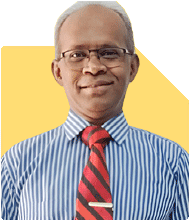
Saurabh

Saurabh Saxena  | Answer  |Ask -

Tech Career Counselling Expert - Answered on May 20, 2025

Saurabh Saxena is the COO of Scaler by InterviewBit, an edtech platform that helps engineers achieve their highest potential and prepare for potential job interviews.
He has over 10 years of experience mentoring the next generation of engineering graduates and software developers.
He holds a bachelor's degree in information technology and business administration from the University of Newcastle, Australia.... more
Asked by Anonymous - May 20, 2025
Career

Which course is better ece or ece with cyber physical systems. Please help me

Ans: Cyber-Physical Systems = next-gen tech (autonomous vehicles, IoT). It’s a future-facing specialization, but check the curriculum and faculty. Sometimes, niche specializations have limited industry exposure. Only if you have evaluated the content and the faculty opt for such a super specialization
Career

You may like to see similar questions and answers below

Latest Questions
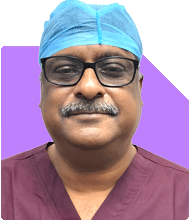
Krishna

Krishna Kumar  |435 Answers  |Ask -

Workplace Expert - Answered on Oct 21, 2026

Asked by Anonymous - Oct 21, 2026
Career
Hi, I am 45 years old and have around 10 years of work experience in the corporate sector. Due to some personal reasons, I had to take a career break for a few years. I am now trying to restart my career, but I am finding it very difficult to get interview calls. I have started learning new skills through online courses, but I am confused about which skills are actually in demand and what kind of jobs I should apply for. I am also worried that companies may prefer younger candidates or people who have been working continuously. I am ready to learn and work hard, but I don't know where to begin or how to present my experience and career gap in a positive way. Could you please guide me on how to choose the right career path, which skills I should focus on, and how I can improve my chances of getting a job at this stage of my career?
Ans: Hi

Restarting after a break at 45 is very doable, many people do it, and 10 years of corporate experience is a real asset. May I suggest following:


1. Choose a path by starting from your past: The fastest way back is usually a role adjacent to what you’ve already done, not a brand-new field. Ask yourself three things:

- What were you good at, and what did colleagues or managers come to you for?
- What industries and functions do you already understand (sales, operations, HR, finance, training, and so on)?
- What kind of work do you want now: full-time, contract, consulting, or part-time?

Aim for roles where your experience counts as a strength, such as mid-level or senior individual contributor, team lead, or specialist roles. If you do not get full time role focus on getting Contract, consulting, and project-based work so that you are in the action mode and also companies are taking less risk on you. These roles often turn into full-time offers.

2. Skills to focus on

Rather than collecting many certificates, pick one or two skill clusters that fit your background:

AI tool fluency: using tools like Claude or ChatGPT for research, writing, analysis, and automation. This is quickly becoming a baseline expectation, and it also shows you’re current.

3. Presenting the career gap

- State it briefly and honestly. In your resume summary or LinkedIn, one line is enough, for example: “Career break (2020–2024) for family responsibilities; returned with updated skills in X and Y.” You don’t owe anyone details.

- Show that the gap was not idle: courses, volunteering, freelance work, or managing a household or family project all count if you frame them well.

Put a 30 day action plan:

- Week 1: List your top achievements from your corporate years and decide on 2 or 3 target roles, talk to your ex colleagues, and friends working currently.
- Week 2: Rewrite your resume and LinkedIn around those roles, with a short, positive line on the gap.
- Week 3: Pick one skill cluster and complete one small, showable project.
- Week 4: Reach out to 15 to 20 people in your network and apply to roles selectively, not in bulk.

Hope this helps.

All the best.

Warm Regards
KK

ps: Please follow me on RediffGurus

...Read more

Krishna

Krishna Kumar  |435 Answers  |Ask -

Workplace Expert - Answered on Oct 21, 2026

Asked by Anonymous - Oct 21, 2026
Career
My son has completed his B.Tech in Computer Science, but he has not been able to get a job through campus placement. He is now looking for job opportunities and is ready to start with an entry-level position. Kindly suggest some good companies where freshers can apply and also guide us on which skills or certifications he should focus on to improve his chances of getting placed.
Ans: Dear Sir

Thanks for your question.

May I suggest following:

Look at companies that regularly hire freshers such as

IT services (largest volume, most accessible): TCS, Infosys, Wipro, HCLTech, Cognizant, Capgemini, Accenture, Tech Mahindra, LTIMindtree

Mid-size firms that are often easier to get into: Persistent Systems, Cybage, Zensar, Mphasis, Coforge, Mastek, KPIT, Hexaware

Global capability centres (GCCs) and product companies such as Goldman Sachs, JPMorgan, Barclays, Deutsche Bank, Walmart Global Tech, SAP Labs, Cisco, Intuit, Adobe, Amazon, Thoughtworks

Many of these hire through coding tests or referrals, so he should check their careers pages often.

Also explore startups and funded companies such as Flipkart, Blinkit, Zomato, Myntra and several others.


Skills to focus on (more important than certificates)

- Data structures and algorithms: Solving easy to medium problems on LeetCode or GeeksforGeeks. This is the main filter in most online tests.
- One language, done well: Java or Python is the safest choice, with solid OOP concepts.
- SQL and DBMS: Almost every fresher interview asks about these, and they’re easy marks if prepared.
- CS fundamentals: Operating systems, computer networks, and basic system design vocabulary.

He should consider putting two or three real projects on GitHub: Ideally a full-stack web app, plus one that uses an AI or API integration. Interviewers ask about these directly.

Aptitude and communication: Many services-company tests are mostly aptitude and verbal. Mock interviews and practice with English communication help a lot.

Everyday use of AI coding tools: Employers increasingly expect freshers to be productive with them, while still understanding the code.

Focus on building AI-ML skills through Google, Microsoft, OpenAI, Anthropic and few others.

Certifications worth considering:

- Cloud: AWS Cloud Practitioner, then Solutions Architect Associate, or Microsoft Azure AZ-900
- AI basics: Microsoft AI-900 or Google’s AI/ML courses
- Java/Oracle or Python certifications, if he’s targeting those roles
- ISTQB Foundation, if he’d consider QA/testing roles, which are a common way into the industry

Be ready to start in services: Many people start there and move to a product company after 1 to 2 years.

Just a word of caution, watch for scams: Genuine employers never ask for money for a job or “training deposit”. Avoid anything that does.

Hope this helps.

All the best to your son.

Warm Regards
KK

ps: Please follow me on RediffGurus
...Read more

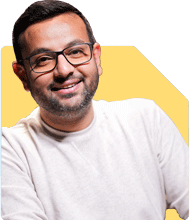
Ramalingam

Ramalingam Kalirajan  |11488 Answers  |Ask -

Mutual Funds, Financial Planning Expert - Answered on Oct 21, 2026

Money
please suggest me mothly return based investment in mutual funds or f.d. I haveinvested five lakhs in axis flexicap mutual fund in last month getting payout but it is not fixed.Fixed deposits investment scares me because I had invested 2 lakhs in Indusind bank and someone broke my f.d.without my knowledge and my son took away ATM card during the same period because I had undergone angioplasty during the same so huge negelct from my side safely landed me in trouble because Indusind is a private bank.Postal insurance and National savings certificates NO.My cousin suggested HDFC bank based mutual fund scheme but I am not confident ,please help
Ans: You have faced a difficult experience with your bank during a period when you were recovering from angioplasty. Your concern about the safety of your money and the need for regular monthly income is understandable.

– Your first priority should be the safety of your capital and a dependable income.

– Mutual funds can provide monthly withdrawals, but the income and capital value are not guaranteed.

– Bank deposits offer more predictable returns, but proper account security and control over your investments are equally important.

» Review of Your Existing Mutual Fund Investment

You have invested Rs. 5 lakhs in an equity-oriented Flexi Cap mutual fund.

– Flexi Cap funds invest in shares of companies of different sizes. Their value can rise or fall with the stock market.

– If you need regular monthly income, an equity-oriented fund may not be the right place for your entire investment.

– If you are receiving payouts through a dividend option, the amount and frequency are not assured. The payout can also reduce the fund value.

– If this money is meant for your monthly expenses, consider reviewing the investment before making any further withdrawals.

» Mutual Funds for Monthly Income

Mutual funds offer options for generating cash flow through a Systematic Withdrawal Plan (SWP). You can withdraw a chosen amount at regular intervals.

– Conservative hybrid funds invest in a mix of debt and equity. They may suit investors who can accept some market risk.

– Short-duration debt funds invest mainly in debt securities. However, they carry interest-rate and credit risks, and returns are not guaranteed.

– A monthly SWP is not the same as interest from a fixed deposit. Your withdrawal may include part of your original investment.

– The withdrawal amount should be decided based on your total savings, monthly expenses, age and other income sources.

» How to Protect Your Capital

Considering your previous banking experience, it is important to improve the safety and control of your investments.

– Avoid keeping all your savings in one bank or one investment.

– For bank deposits, consider a strong bank with good service and secure account controls. A public sector bank may also be worth considering if you feel more comfortable with it.

– Keep your ATM card, PIN, cheque book and banking credentials under your personal control. Do not share OTPs or passwords.

– Set transaction alerts and review your bank statements regularly. Ask the bank about withdrawal limits and additional security controls.

– Remember that eligible bank deposits are insured by DICGC up to Rs. 5 lakhs per depositor per bank, including principal and interest, across branches in the same capacity.

» FD or Mutual Fund: Which Is Better?

Both can have a place in your financial plan.

– Fixed deposits are more suitable for predictable interest income and capital stability, subject to the bank and applicable deposit insurance limits.

– Debt mutual funds can provide flexibility, but neither the returns nor the capital is guaranteed.

– Equity mutual funds are better suited to long-term wealth creation, rather than meeting essential monthly expenses.

– You do not have to choose only one option. A combination of secure deposits and carefully selected mutual funds may be more suitable for your needs.

» Before Making Any Fresh Investment

Please do not invest in another mutual fund simply because a relative or friend has suggested it. The name of the bank associated with a mutual fund does not make its returns guaranteed.

To suggest a suitable monthly income plan, I would like to understand three things:

– Your current age.

– The monthly income you need from your investments.

– Your total savings and investments, apart from the Rs. 5 lakhs invested in the mutual fund, including any pension or other regular income.

With these details, an investment plan can be prepared that focuses on regular cash flow, capital protection, liquidity and your peace of mind.

» Final Insights

You have already taken an important step by seeking guidance before making another investment. There is no need to rush.

The right plan should help you meet your monthly expenses without taking unnecessary risks with your savings. Your financial security and control over your money should come first.

Best Regards,

K. Ramalingam, MBA, CFP,

AMFI-Registered MFD – ARN 4188

www.holisticinvestment.in

https://www.linkedin.com/in/ramalingamcfp/

...Read more

Ramalingam

Ramalingam Kalirajan  |11488 Answers  |Ask -

Mutual Funds, Financial Planning Expert - Answered on Oct 21, 2026

Asked by Anonymous - Oct 18, 2026
Money
I invest ₹2,000 monthly in Parag Parikh Flexi Cap, SBI Midcap, Axis Small Cap, and Nippon India Multi Asset Allocation Fund, with a 5% annual SIP step-up. Is this portfolio suitable for 25 years?
Ans: Your approach of investing regularly for 25 years and increasing your SIP by 5% annually is a good start towards long-term wealth creation.

However, portfolio suitability depends on your age, financial goals, risk-taking ability and the amount of equity exposure you can handle during market falls.

» Review of Your Fund Categories

– Flexi Cap Fund: Provides exposure to large, mid and small-cap companies. It can serve as a core equity holding for long-term wealth creation.

– Mid Cap Fund: Offers growth potential but can experience sharp falls during market corrections. It is suitable only if you can remain invested through difficult periods.

– Small Cap Fund: Carries higher volatility and business-related risks. Keep its allocation at a level you can comfortably hold during market downturns.

– Multi Asset Allocation Fund: Invests across asset classes such as equity, debt and gold, depending on its strategy. It can add diversification, but its actual risk depends on the allocation.

» Is This Portfolio Suitable for 25 Years?

The portfolio can be suitable for a 25-year goal, provided you have a high risk appetite and can tolerate temporary losses.

However, there are three points to review:

– You have three funds with equity exposure, including mid-cap and small-cap exposure. This can make your portfolio volatile.

– Different funds may hold some of the same companies. Four funds do not automatically mean proper diversification.

– The multi-asset fund adds a different asset allocation approach, but its actual diversification depends on how much it invests in equity, debt and gold.

» My Suggestions

– Continue disciplined SIP investing, provided your emergency fund and essential insurance needs are in place.

– Review the actual allocation across all four funds instead of focusing only on the number of schemes.

– Do not increase mid-cap and small-cap exposure just because your investment horizon is long. Your ability to handle risk matters equally.

– Review the portfolio once a year. Avoid frequent switching based on short-term returns or market news.

– As you approach your goal, gradually reduce risk so that a major market fall does not affect money needed soon.

» Importance of Your 5% Annual SIP Step-Up

Increasing your SIP by 5% every year is a useful habit. It helps your investments grow along with your income.

If your income rises faster, consider increasing the SIP further, provided you can still meet your regular expenses and other financial goals.

» Final Insights

Your portfolio has a reasonable starting structure for long-term investing. The main question is whether the combined risk is suitable for you, not whether all four funds are good individually.

As an Investment professional and AMFI-Registered MFD, I would assess your age, target corpus, existing investments and risk tolerance before suggesting any changes.

Please share your current age and the purpose of this 25-year investment — retirement, children's education, or general wealth creation. This will help assess whether your current fund mix is suitable.

Best Regards,

K. Ramalingam, MBA, CFP,

AMFI-Registered MFD – ARN 4188

www.holisticinvestment.in

https://www.linkedin.com/in/ramalingamcfp/

...Read more

Ramalingam

Ramalingam Kalirajan  |11488 Answers  |Ask -

Mutual Funds, Financial Planning Expert - Answered on Oct 16, 2026

Asked by Anonymous - Oct 15, 2026
Money
I am a 50 year old widow, and have a 21 year old daughter. She is currently pursuing her internship (10 k per month). I earn 1 L 20k every month and receive my husband's pension of 1L 20 k every month that will reduce to 88 K after 9 years.I have invested in SIP of 10 k per month in ICICI Value Discovery Fund - Growth through an agent. I am not sure if it was a right decision. She said it will be a SWP from 2035 onwards and 15k will be amount of withdrawal. And also another 10k per month SIP in ICICI India Opportunities Fund Growth. Both were started in Feb 2025. Please advise me if this is a right investment for me or not. How do I stop this autodebit and what will be the tax implications if I stop these SIPs and redeem the amount. It would be great if you could guide me - I am intimidated by numbers. Thanks a lot.
Ans: Thank you for sharing your situation so openly. You have been managing your family finances while supporting your daughter, and it is understandable to feel unsure when investment decisions involve complex numbers.
The good news is that you do not need to understand every technical detail to make sound financial decisions. Your investments should give you clarity, flexibility and peace of mind.
» 1. Are Your Current SIP Investments Right for You?
You are investing Rs.20,000 every month in two mutual funds. Both investments started in February 2025.
– Your income and your husbands pension together provide a strong monthly cash flow today.
– However, your pension will reduce after nine years. Your financial plan should prepare for that change well in advance.
– Your daughter is 21 and may need support for higher education, career development or other important goals.
– At age 50, you should balance long-term growth with financial safety. Investing only for returns is not enough.
Mutual fund SIPs can be useful for long-term goals. But the right investment depends on your existing savings, monthly expenses, emergency funds and future needs.
» 2. Is the Promised SWP of Rs.15,000 from 2035 Reliable?
An SWP, or Systematic Withdrawal Plan, allows you to withdraw a fixed amount from your mutual fund at regular intervals.
However, the Rs.15,000 monthly withdrawal mentioned by your agent is not guaranteed income.
– Your investment value in 2035 will depend on the amount invested, market performance and expenses.
– If withdrawals are higher than the portfolio can support, your investment may reduce over time.
– Mutual fund returns are not fixed like pension income or bank deposit interest.
– A withdrawal of Rs.15,000 per month does not mean that the fund will generate Rs.15,000 as profit every month. Part of the withdrawal may come from your invested capital.
Please ask your agent for a written projection showing the estimated investment value in 2035 under different return assumptions. Treat it as an illustration, not a promise.


» 3. Should You Stop the SIPs or Continue?
My suggestion is not to redeem both investments in a hurry. First, separate two decisions: stopping future monthly investments and withdrawing the money already invested.
– You can stop future SIP instalments without redeeming the units you already own.
– If your monthly income comfortably covers your household expenses, you may continue investing for long-term goals, provided the funds suit your risk level.
– If you are uncomfortable with these investments, stopping the SIPs temporarily while reviewing your finances is a reasonable option.
– Do not continue only because your agent has suggested an SWP from 2035. Your plan should suit your needs, not just a future withdrawal illustration.
» 4. How to Stop the Auto-Debit
You can stop future SIP instalments by contacting the mutual fund company or the platform through which the SIP was registered.
– Check your latest mutual fund statement to confirm the scheme names, SIP amounts and registration details.
– Contact the mutual fund company or your agent and request cancellation of both SIP registrations.
– If the SIPs were registered through your bank mandate, ask your bank how to cancel the relevant recurring debit mandate as well.
– Obtain confirmation that both SIPs and their auto-debits have been cancelled. Do not assume that cancelling the bank mandate automatically cancels every SIP registration.
Stopping the SIP does not automatically sell your existing mutual fund units. You can retain those units and decide what to do later.
» 5. What Are the Tax Implications if You Redeem?
Since you started investing in February 2025, the tax depends on the purchase dates of the units, the redemption date and the profit or loss on the units sold.
For equity-oriented mutual funds, the general current rules are:
– Units held for 12 months or less: short-term capital gains are generally taxed at 20%.
– Units held for more than 12 months: long-term capital gains above the annual aggregate exemption of Rs.1.25 lakh are generally taxed at 12.5%.
– If you redeem at a loss, there may be no capital gains tax on that transaction. Eligible capital losses may be set off or carried forward subject to tax rules.
Each SIP instalment is treated as a separate purchase for tax purposes. An exit load may also apply to some units, depending on the scheme rules and holding period.
You do not pay capital gains tax merely because you stop future SIP instalments. Tax generally arises when you redeem units and realise a taxable gain.
» 6. A More Suitable Financial Plan for You
Your pension and salary provide a good starting point for planning. However, your husbands pension will reduce in nine years, so preparing for that change is important.
I would suggest the following priorities:
– Maintain an emergency fund to cover essential household expenses and unexpected needs.
– Keep money required for your daughters education or other near-term goals in suitable, lower-risk investments.
– Review your retirement savings and estimate your expenses after your pension reduces.
– Continue equity mutual fund investments only for goals that are several years away and can tolerate market ups and downs.
– Review your life and health insurance needs, existing savings and any other liabilities before deciding how much to invest every month.
You do not need to choose investments based on complicated return projections. A simple plan linked to your monthly expenses and future goals can work well.
» 7. What I Need to Know Before Suggesting the Next Step
Please share just these three details:
– Approximately how much do you spend every month on household expenses, including any support for your daughter?
– Do you have any bank deposits, PPF, EPF or other savings apart from these two SIPs?
– Is your main goal to build retirement savings, provide for your daughter, or generate monthly income from 2035 onwards?
With these details, it will be easier to assess whether you should continue both SIPs, stop one, or change your investment approach. There is no need to panic or redeem everything immediately.
Best Regards,
K. Ramalingam, MBA, CFP,
AMFI-Registered MFD – ARN 4188
www.holisticinvestment.in
https://www.linkedin.com/in/ramalingamcfp/
Asked on - Oct 18, 2026 | Answered on Oct 21, 2026
Thanks sir. My monthly expenses are around 40 - 50 k. However I am in a slightly panic mode as I am taking care of my brother's family expenses too. He is 60 yrs, under psychiatric treatment and has a son in 11th Std. He has no pension, no medical insurance - I spend around 45 k every month for him. The amount that I am not touching is my husband's pension and my daughter's stipend. I have an emergency fund of around 5L in a second bank account. I have a PPF account of 1.5 L per year. My goals - retirement savings, and save for my daughter and nephew. I can invest my husband's pension amount - but not sure where to invest. I think I can save around 80k every month safely - I need help to plan this. Not sure if this amount is enough - EPF is also available, also I have FD of around 11 L maturing in 2027 and 5L maturing in 2028. Please advice. Thanks
Ans: You are in a better position than you may feel right now. You have regular income, an emergency fund of Rs.5 lakhs, PPF savings and FDs worth Rs.16 lakhs maturing in 2027 and 2028. Your EPF also supports your retirement planning.

However, supporting your brother's family by Rs.45,000 monthly is a significant responsibility. Your plan must protect your own retirement while helping your brother within affordable limits.

» Suggested Investment Approach

– Continue your PPF contributions if they fit your overall financial plan.

– Keep your Rs.5 lakh emergency fund as a starting point. Given your family responsibilities, consider building a larger reserve for medical and other unexpected expenses.

– Invest part of your monthly savings in diversified equity mutual funds for long-term retirement goals, and keep money needed for your daughter and nephew in suitable lower-risk investments.

– When your FDs mature, review your retirement needs and reinvest based on the timing of your goals.

– Review your existing SIPs before adding more funds. Avoid investing the entire surplus in equity mutual funds.

» Is Rs.80,000 Monthly Savings Enough?

It is a meaningful amount to build your retirement corpus. However, adequacy depends on your current EPF balance, retirement age, future expenses and how long you expect to support your brother's family.

Please also explore health insurance options for your brother, subject to eligibility and policy terms. His ongoing treatment and lack of medical cover make this an important part of your family financial plan.

» Next Step

Please share your current EPF balance, your intended retirement age and whether your salary will continue after retirement. These details will help assess how to allocate your monthly savings between retirement, your daughter's future and your nephew's education.

Best Regards,

K. Ramalingam, MBA, CFP,

AMFI-Registered MFD – ARN 4188

www.holisticinvestment.in

https://www.linkedin.com/in/ramalingamcfp/

...Read more

DISCLAIMER: The content of this post by the expert is the personal view of the rediffGURU. Investment in securities market are subject to market risks. Read all the related document carefully before investing. The securities quoted are for illustration only and are not recommendatory. Users are advised to pursue the information provided by the rediffGURU only as a source of information and as a point of reference and to rely on their own judgement when making a decision. RediffGURUS is an intermediary as per India's Information Technology Act.

Close  

You haven't logged in yet. To ask a question, Please Log in below
Login

A verification OTP will be sent to this
Mobile Number / Email

Enter OTP
A 6 digit code has been sent to

Resend OTP in120seconds

Dear User, You have not registered yet. Please register by filling the fields below to get expert answers from our Gurus
Sign up

By signing up, you agree to our
Terms & Conditions and Privacy Policy

Already have an account?

Enter OTP
A 6 digit code has been sent to Mobile

Resend OTP in120seconds

x