Home > Career > Question
Need Expert Advice?Our Gurus Can Help
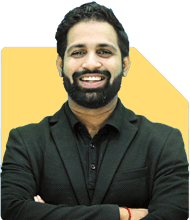
Radheshyam

Radheshyam Zanwar  |6809 Answers  |Ask -

MHT-CET, IIT-JEE, NEET-UG Expert - Answered on Jan 10, 2026

Radheshyam Zanwar is the founder of Zanwar Classes which prepares aspirants for competitive exams such as MHT-CET, IIT-JEE and NEET-UG.
Based in Aurangabad, Maharashtra, it provides coaching for Class 10 and Class 12 students as well.
Since the last 25 years, Radheshyam has been teaching mathematics to Class 11 and Class 12 students and coaching them for engineering and medical entrance examinations.
Radheshyam completed his civil engineering from the Government Engineering College in Aurangabad.... more
Asked by Anonymous - Jan 09, 2026Hindi
Career

sir what is the revised nta dates for jee main?

Ans: It is better to visit the official JEE (Main) website for the most up-to-date information.

Strong Advice - As a JEE aspirant, it is your duty to keep a close eye on the official website, especially daily. (https://jeemain.nta.nic.in/)

Good luck.
Follow me if you receive this reply.
Radheshyam

Career

You may like to see similar questions and answers below

Latest Questions
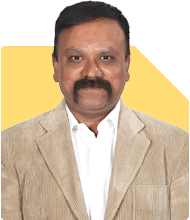
Naveenn

Naveenn Kummar  |256 Answers  |Ask -

Financial Planner, MF, Insurance Expert - Answered on Feb 17, 2026

Money
Hello Sir, I am 41 years old and have been investing in mutual funds and stocks for the past one and a half years. I am currently making monthly SIPs of ₹1500 each in SBI Large & Midcap Fund Direct Plan and Quant Small Cap Fund Direct Plan Growth. In addition, I also made a lump-sum investment of ₹1,50,000 in Quant Small Cap Fund Direct Plan Growth in January 2025. However, my current investment in Quant Small Cap Fund Direct Plan Growth is showing a negative return of ₹12,000. Sir, please review my portfolio and provide appropriate guidance. Sincerely, Surya Prakash Bhatnagar, Awaiting your reply. Thank you.
Ans: Hi Surya,

In situations like this, it would be better to take the guidance of a mutual fund distributor rather than trying to manage allocation decisions entirely on your own.

Small cap funds typically move through sharp market cycles. Over the past couple of years, returns in that segment have largely been flat, and volatility tends to remain higher compared to other categories.

Given the current market environment, you may consider increasing focus on flexi cap and multi asset funds as they provide better allocation flexibility and downside balance.

If your concern is specifically from a returns perspective, you can continue holding exposure through large cap and large & midcap funds, which tend to offer relatively more stability while still participating in growth.

Naveenn Kummar

AMFI Registered Mutual Fund Distributer Arn -284662| Qualified personal Financial Professional |Certified Retirement Advisor
https://members.networkfp.com/member/naveenkumarreddy-vadula-chennai

...Read more

Naveenn

Naveenn Kummar  |256 Answers  |Ask -

Financial Planner, MF, Insurance Expert - Answered on Feb 17, 2026

Naveenn

Naveenn Kummar  |256 Answers  |Ask -

Financial Planner, MF, Insurance Expert - Answered on Feb 17, 2026

Money
I have sold rsu in US E*trade account and money is kept in E*trade account. I wanted to reinvest the amount in US stocks through either Interactive Broker or some other broker. Can you explain me how to avoid taxation. I am Indian resident and all shares are long term shares. I have already paid the taxes when it was vested to me. Also is it possible to wire the money to my sister who is Dubai resident and she can invest in US account. What will be the legal way of doing this?
Ans: Dear Vipul

A. Tax residency & return planning

In which year are you planning to return to India permanently?

How many days do you expect to stay in India during the return year?

Will you qualify as RNOR initially or become Resident immediately?

Do you have clarity on how long RNOR benefits will apply?

Have you consulted a Chartered Accountant on residency classification?

B. Foreign income & continuation

Will foreign salary or consultancy income continue after return?

Any overseas rental or business income?

Do you hold foreign bank accounts or investments?

Are you aware of disclosure requirements under Indian tax laws?

C. FCNR / NRE / NRO taxation

What is the maturity timeline of your FCNR deposits?

Do you know when FCNR interest becomes taxable post return?

Are your NRE deposits planned to be redesignated?

Do you have a tax strategy for deposit maturity sequencing?

D. Investment taxation

Mutual fund holding period and capital gains exposure mapped?

Any plan to redeem equity or debt funds post return?

Have exit timings been aligned with residency status?

Do you understand indexation vs non indexation implications?

E. Insurance & policy taxation

Are maturity proceeds fully tax exempt or partially taxable?

Do policies breach 10% premium to sum assured rule?

Any ULIPs exceeding ?2.5 lakh premium threshold?

Has taxability of money back or surrender proceeds been reviewed?

F. SWP taxation

From which scheme category will SWP start?

Equity or debt oriented fund?

Withdrawal start date aligned with tax residency?

Do you know capital gains tax impact on each withdrawal?

G. Property & capital gains

Any plan to sell house or plot post return?

Holding period classification clear?

Do you know reinvestment exemption options?

Joint ownership or succession structure defined?

H. Compliance & reporting

PAN, Aadhaar, residential status updated?

Foreign assets disclosure required?

Any DTAA benefits applicable?

FATCA / CRS compliance completed?

I. Retirement income taxation

Future annuity or pension expected?

Foreign retirement benefits taxable in India?

Have you evaluated post tax retirement income?


While investment structuring, cash flow design, SWP planning, and asset allocation can be guided from a financial planning perspective, taxation implications require specialised evaluation.

Given the cross border elements, residency transitions, and product specific tax treatments involved, it is advisable that you personally consult a qualified Chartered Accountant.

This ensures that decisions are not taken based on assumptions and that compliance, sequencing, and tax optimisation are handled accurately.

Naveenn Kummar

AMFI Registered Mutual Fund Distributer Arn -284662| Qualified personal Financial Professional |Certified Retirement Advisor
https://members.networkfp.com/member/naveenkumarreddy-vadula-chennai

...Read more

Naveenn

Naveenn Kummar  |256 Answers  |Ask -

Financial Planner, MF, Insurance Expert - Answered on Feb 17, 2026

Money
Hi, I am an NRI working in Nigeria. I am staying alone here. Family is back in India in Kerala. I have Wife, Son and Mother. I have a house worth 70 to 75 lakh. A plot worth 32 lakh. MF investment of 1 cr which I am planning to stop the SIP by Jan. 2026. 30 lakh FD in Indusind bank as FCNR which was started in 2025 and maturity in 2030. Will get 44 lakh after maturity. 25 lakh one time premium investment in Bajaj allianz current value of which is 40 lakh (redemption in 2028). Another Bajaj allianz policy annual premium of 10 lakh - 3 times paid. Remaining 2. Redemption in 2028. Another Bajaj 5 lakh annual premium. 2 paid. remaining 3. Redemption in 2029. 30 lakh FD in ICICI NRI account. 50 lakh SWP investment planned to get SWP from Sept.'2026 onwards @ Rs.25,000 permonth. 12.5 lakh in co.operative society in mother's name. Another 15 lakh investment in different insurance policies - 3 paid. remaining 3. Another 6 lakh investment in Tata aia. 2 paid. Remaining 4. My son is doing 6th semester B.Tech Mechanical. My wife has a stead income of Rs. 55,000 per month. She has gold worth 25 soverign. I was thinking of relocating to India. From FD and SWP and money back from some insurance policies I will get Rs. 50,000 per month. 1 crore in MF I don't want to touch now. I want it to grow. In 2028 Bajaj allianz 25 lakh may become 45 to 50 lakh. FCNR deposit will become 44 lakh in 2030. I will look for some jobs in India to keep myself engaged. I have 15 lakh health insurance for me, wife and son. 10 lakh policy for mother. am i Safe enough to return to India and to live a decent life evenif there is no job.
Ans: Dear Rajeev,

Detailed planning is necessary in my case because multiple financial factors are involved, and most high-level guidance relies on assumptions.

I have staggered cash flows from insurance policies, fixed deposits, systematic withdrawal plans, mutual fund investments, and future maturities. Without accurate modeling, we can't properly assess income sustainability, tax impact, or the longevity of my corpus.

I need to map my relocation timeline, age, retirement plans, my child's higher education needs, healthcare inflation, and long-term income requirements year by year. The withdrawal rates for the systematic withdrawal plan must be structured to last until I am 75 or 80, considering my spouse's continuity and transferring a legacy to my son.

There is also considerable exposure to traditional insurance and fixed-income products with yields around 5.5 to 6 percent. We need a professional evaluation to improve asset allocation efficiency, provide inflation protection, and optimize income.

We should review deposit safety structuring, DICGC coverage limits, and diversification across banks and high-quality bonds. Additionally, we must assess the adequacy of term insurance, the need for enhanced health insurance, and parental medical coverage in detail.

The tax transition from NRI to resident status, RNOR benefits, FCNR interest treatment, and capital gains implications require careful sequencing to prevent unnecessary tax leakage.

Given the complexity and long-term implications, detailed financial modeling and execution planning should not be based on assumptions. It would be wise to engage a qualified financial planner who can create a goal-based, cash flow-aligned financial plan and guide its implementation in a structured way.

To enable precise planning, the minimum data set required includes:

- Your age
- Spouse age
- Planned return year
- Monthly expense estimate
- Intent for your son's higher education
- Any pension eligibility

With this information, sustainability modeling can be accurate and realistic.

For legacy and estate planning, we should establish a basic structure that includes:

- Will creation
- Nominations across assets
- Clarity on property succession

This prevents legal issues later and ensures smooth wealth transfer.

We need to rebalance asset allocation. The current tilt shows a high allocation to traditional products.

The rebalancing approach should be:

- Keep the ?1 crore mutual fund growth bucket untouched.
- Add hybrid or debt funds for systematic withdrawal plan support.
- Reduce exposure to low-yield insurance products.

The goal is to achieve growth that outpaces inflation while generating stable income.

We need to fix the deposit safety structure. Required actions include:

- Moving cooperative society deposits to bank instruments.
- Splitting large fixed deposits across multiple banks.
- Staying within the DICGC ?5 lakh insurance cover per bank where possible.
- Blending public sector and top private sector banks.

The objective is capital safety, not just return optimization.

We must also add pure risk protection. Two gaps need to be addressed:

- Term insurance: ?1.5 to ?2 crore coverage that lasts until my son is financially independent.
- Health insurance: Adding a ?25 to ?30 lakh super top-up cover while maintaining the existing floater and enhancing my mother's coverage if feasible.

This protects the core corpus from medical expenses.

For insurance rationalization, a policy-wise review is necessary due to high exposure. We need to check:

- The IRR of each policy.
- Premium pending vs. maturity value.
- The viability of paid-up options.
- Surrender penalties.

We should continue only the policies that justify holding. Others may be converted to paid-up if it's beneficial.

After retirement, we need to map expenses realistically for living in Kerala, which includes:

- Groceries
- Utilities
- Medical expenses
- Transport
- Insurance premiums
- Travel and lifestyle
- Contingency

This will help identify essential and comfort expenses, determining the withdrawal requirement accurately.

To create an income ladder, we should list guaranteed and semi-guaranteed inflows:

- Wife's salary
- Systematic withdrawal plan income
- Fixed deposit interest
- Policy money backs
- Future maturities

We need to organize this on a timeline, at least until 2035, to identify surplus and deficit years clearly.

We also need to document my current financial position properly. Before moving ahead, everything should be consolidated on a single sheet, including:

**Assets:**

- House value
- Plot value
- Mutual fund portfolio breakdown
- Fixed deposit details by bank
- FCNR maturity value
- Insurance policies with timelines
- Systematic withdrawal plan corpus
- Gold holdings
- Cooperative deposits

**Liabilities:**

- Any loans, if applicable

This document will serve as the base for planning.

We must clarify the relocation timeline by finalizing decision variables, including:

- The planned year of return.
- Whether foreign income will stop fully or taper gradually.
- Whether work in India is required or optional.

These factors will directly impact the start of the systematic withdrawal plan, continuation of SIPs, and liquidity buffers.

Understanding the tax transition risk is also important. When residency changes:

- The RNOR window opens.
- FCNR interest treatment changes later.
- NRE accounts become resident accounts.
- Capital gains taxation shifts.

If this sequencing isn't planned, unnecessary tax leakage can happen. Withdrawal timing must align with residency status.

Evaluating product complexity is essential. My current exposure includes:

- Multiple Bajaj policies.
- ULIP-type investments.
- Money back timelines.
- FCNR deposits.
- NRI fixed deposits.
- Systematic withdrawal planning.
- Mutual fund growth bucket.

Decisions must be based on IRR and opportunity cost, not emotion.

Assumption-based planning is insufficient for the following reasons:

- Expenses are assumed.
- Returns are assumed.
- Inflation is assumed.
- Policy maturity values are assumed.
- Withdrawal sustainability is assumed.

For a ?4 to ?5 crore net worth household, small miscalculations can have a long-term impact.

Examples of risks include:

- Starting systematic withdrawal too early.
- Continuing low-yield policies unnecessarily.
- Not adjusting tax status post-return.
- Underestimating medical costs.
- Overestimating the longevity of fixed deposit income.

These risks may not become evident immediately but can create significant issues later.


Naveenn Kummar

AMFI Registered Mutual Fund Distributer Arn -284662| Qualified personal Financial Professional |Certified Retirement Advisor
https://members.networkfp.com/member/naveenkumarreddy-vadula-chennai

...Read more

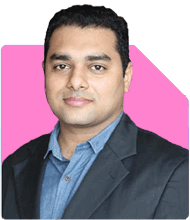
Ravi

Ravi Mittal  |702 Answers  |Ask -

Dating, Relationships Expert - Answered on Feb 17, 2026

Asked by Anonymous - Feb 09, 2026Hindi
Relationship
Hi Sir, My married life has been a complete disaster its been 1.8 yrs. Before marriage, I had only one past relationship. My husband repeatedly asked if I had any physical relationship before marriage. I denied it initially, and when I asked him about his past, he vaguely said he had dated three women for about three months each. Whenever I asked directly about physical involvement or even something as simple as kissing, he avoided the topic or changed the subject. On the first day of our arranged marriage, after intimacy, he said something that confused me. I was already scared and anxious. Later, when he asked me to share something I had never told anyone, I told him the truth—that my past relationship involved physical intimacy, and that it was forced, not by my choice. After that, his behavior completely changed. He stopped talking to me, even during our honeymoon. We were intimate only twice, but emotionally he was completely absent. I cried constantly. After returning home, he started avoiding me, leaving the house despite working from home. He verbally abused me, made derogatory comments about my character, and threatened to tell my parents and divorce me, accusing me of hiding my past. He even went on a Europe trip alone for 15 days, barely contacting me, which made me fear he was cheating. Due to constant fights and emotional abuse, I started looking into his past and discovered disturbing things—multiple physical relationships (8–9), emails linked to prostitutes, a banned Tinder account he tried to restore even after our engagement, and trips with an ex just days before our engagement. He called her “just a friend,” but the evidence said otherwise. I also found intimate photos and videos of his exes saved on his hard disk, even though they were many years old. Despite all this, he continued to accuse and defame me in front of his parents, saying I lied about my past, while he had never disclosed his own. What I saw and experienced has deeply scarred me, and I feel he never had any emotional attachment to me from the beginning. Ever since I told him the truth, he has shown no care, no empathy, and no love. I am left questioning—was I wrong to look into his past when I was being emotionally abused and accused? Or is he simply not the right person for me, someone who lacks emotional maturity, honesty, and compassion?
Ans: Dear Anonymous,
I am so sorry you are in this situation. We can't control or change our past. You were with someone in your past because you believed things will work out with that person. That is completely normal. Whereas, your husband has been dragging his past relationships even after your engagement. It's completely different and borderline cheating. Please rethink whether you want to continue living like this. Confront him directly and show him the proof that you have found. Ask him if your past is so open to criticism, then what about his? Please have a direct and open conversation. A healthy marriage is based on trust and honesty.

Hope this helps.

...Read more

Ramalingam

Ramalingam Kalirajan  |11035 Answers  |Ask -

Mutual Funds, Financial Planning Expert - Answered on Feb 17, 2026

Asked by Anonymous - Feb 17, 2026Hindi
Money
I am 43 yrs old, married, 2 kids (elder one 15yrs and younger one 13yrs old). Currently i have 90 lakh in MF, 52 lakh in stock market, 3.1cr in fd, 1 house where i live with my family (loan free), ppf of 50 lakh. my monthly salary is approx 3lakh, monthly expense is around 50k per month, investment in SIP (MF) 1 lakh per month, LIC term plan (3cr) + car insurance + medical insurance (1cr) + school education - 50k per month (as on date), balance i keep in savings a/c. no loans running at this time. I want to retire at 50yrs of age which is 7 years from now. Can you please advise if this is a right decision or i should continue to work till 60 years of my age. I am expecting life expectancy of around 85yrs for me and my wife.
Ans: You have built a very strong financial base at a young age. High savings, no loans, good insurance cover, and disciplined investing show clarity and maturity. This puts you far ahead of most people in your age group and gives you real choices.

» Your current financial position
– Age 43, married, two children aged 15 and 13
– Large diversified wealth across mutual funds, stocks, fixed deposits, and PPF
– Own house, fully paid
– Monthly income around Rs.3 lakh
– Monthly expenses around Rs.50,000
– Education and protection costs already planned
– Regular SIP of Rs.1 lakh per month continuing
– No financial stress from EMIs

This is a very stable foundation for early retirement planning.

» Understanding your retirement dream at age 50
– Retirement at 50 means no active income for nearly 35 years
– Children’s higher education and possible overseas exposure are still ahead
– Lifestyle expenses will change after retirement
– Medical costs will increase in later years even with insurance
– Inflation will quietly increase your monthly spending over time

Early retirement is possible, but it needs strong discipline and careful structure.

» Can your current wealth support retirement at 50
– You already have a sizable corpus, which is a big positive
– A large portion is sitting in fixed deposits, which gives safety but low growth
– Equity exposure is good but must be managed carefully
– PPF provides long-term stability and tax efficiency
– Savings account balance should not grow too large without purpose

Your wealth is sufficient in size, but it needs better role clarity.

» Key risk of retiring too early
– Long retirement period increases the risk of money finishing early
– Market cycles will come many times during your retired life
– One wrong withdrawal phase can damage long-term sustainability
– Emotional decisions become more frequent when income stops

This does not mean you should not retire early, but you must prepare deeply.

» Children’s future planning
– Major education expenses will come in the next 5 to 10 years
– These expenses must be fully separated from retirement money
– Do not depend on selling long-term assets during market downturns
– Education funding should move to safer options as timelines reduce

Clear separation avoids regret later.

» What the next 7 years should focus on
– Continue aggressive investing while salary is coming
– Gradually reduce idle money in low-growth options
– Increase SIP amounts when income grows
– Avoid lifestyle expansion just because surplus exists
– Build a clear retirement income structure, not just a big corpus

These 7 years are your strongest wealth-building years.

» Should you retire at 50 or continue till 60
– Financially, retirement at 50 is possible with strict discipline
– Emotionally and practically, working longer reduces pressure
– Even part-time or low-stress work after 50 improves safety
– Continuing till 55 or 60 gives a very wide comfort margin
– Working longer protects you from early market shocks

From a Certified Financial Planner’s view, flexibility is the smartest choice.

» Suggested approach instead of a hard stop
– Target financial independence by 50, not full retirement
– Keep the option to work by choice, not by compulsion
– Reduce work stress rather than income completely
– Let investments grow untouched for a few more years

This gives freedom without financial fear.

» Withdrawal discipline after retirement
– Do not withdraw based on mood or market noise
– Use planned and staggered withdrawals
– Keep growth assets alive even after retirement
– Review once a year, not frequently

This protects wealth for your full life expectancy.

» Final Insights
– You are in a rare and strong position at 43
– Retirement at 50 is achievable but requires strict structure
– Continuing to work longer adds peace, not pressure
– Financial independence first, retirement later, is a balanced path
– With discipline, your money can support you till age 85 and beyond

Best Regards,

K. Ramalingam, MBA, CFP,
Chief Financial Planner,
www.holisticinvestment.in

https://www.youtube.com/@HolisticInvestment

...Read more

Ramalingam

Ramalingam Kalirajan  |11035 Answers  |Ask -

Mutual Funds, Financial Planning Expert - Answered on Feb 17, 2026

Asked by Anonymous - Feb 17, 2026Hindi
Money
I am 57 years age. By SIP till now, i have invested value around 1 cr. I have 2 child. daughter at age 25 years, yet to marry and get job. Son 20 years studying BE 2 nd year. I am still working in private job and receive 4 lacs/month salary. i shall work upto 62 years age and will retire then being privately job oriented. i own a house. my question is. i like to have after retierement 2 lacs/month ( after 62 years of my job) , as a regular income. daughter marriage expenses will be their.Existing 1 cr will not be sufficient . i also need to purchase 1 car of worth 30 lacs in a year. how to plan and where to invest and what will be horizon time line. pl give me planning considering present balance and revenue till 62 age.
Ans: You have done very well till now. Building around Rs.1 crore through SIP discipline, owning a house, and earning a strong salary at this stage shows clarity, patience, and consistency. This gives you a solid base to plan the next phase with confidence.
» Present life stage and responsibilities
– Age 57, with 5 years left for active earning till 62
– Monthly salary around Rs.4 lakhs, which is a big strength
– Daughter aged 25, marriage and career yet to be settled
– Son aged 20, education expenses still ahead
– One car purchase of around Rs.30 lakhs planned within a year
– Retirement income need of Rs.2 lakhs per month after age 62
– Existing investment corpus around Rs.1 crore, mainly through SIPs
This is a classic “high earning, high responsibility” phase. The next 5 years are the most powerful years for your financial life.
» Understanding your retirement income need
– Rs.2 lakhs per month after retirement means regular cash flow, not one-time money
– Retirement may last 25 to 30 years, so safety and growth both are needed
– Depending only on interest or fixed income will not support this for long
– A part of the corpus must continue to grow even after retirement
This means your retirement corpus must be larger than what you feel today, and it must be structured properly.
» Why existing Rs.1 crore is not enough by itself
– This Rs.1 crore has done its job well, but it is still in accumulation mode
– Car purchase will reduce future surplus, so planning is needed now
– Daughter’s marriage is a known large expense and must be planned separately
– Inflation will keep pushing monthly needs higher year after year
So, the focus should be on growing this corpus further and protecting it from wrong withdrawals.
» Strategy for the next 5 working years (age 57 to 62)
– These 5 years should be treated as a “wealth acceleration phase”
– Continue SIPs aggressively as long as salary is coming
– Increase SIP amounts every year if possible, even by small steps
– Do not stop equity-oriented investments just because retirement is near
– New investments should be gradually balanced with stability-oriented options
The aim here is not safety alone, but creating a strong retirement base.
» Planning for the Rs.30 lakh car purchase
– Do not disturb long-term retirement investments for the car
– Park money meant for the car separately and safely
– Keep this money away from market volatility due to short time frame
– This ensures retirement planning remains untouched and disciplined
This separation of goals brings peace and control.
» Planning for daughter’s marriage
– Marriage expense should be treated as a medium-term goal
– Do not depend on retirement corpus for this purpose
– Allocate a separate investment bucket with moderate risk
– As the event comes closer, gradually reduce risk in that bucket
This way, emotional decisions at the last moment are avoided.
» How to structure investments going forward
– Growth-oriented investments are still required, even at your age
– Gradual shift towards stability should happen only in phases
– Avoid putting everything into low-return options too early
– Keep part of the money working for growth even after retirement
– Avoid locking money where flexibility is poor
Your income requirement is monthly, but your money must think long-term.
» Retirement phase income planning (post 62)
– Do not withdraw randomly from investments
– Create a planned, regular withdrawal structure
– Ensure one part gives stability and another part gives growth
– Review withdrawals every year, not every month
– Taxes should be managed carefully while withdrawing
This makes income smoother and stress-free.
» Risk management and protection
– Ensure adequate health insurance continues beyond retirement
– Emergency fund should cover at least one year of expenses
– Keep nominee details and documentation updated
– Write a simple will to avoid family stress later
These steps protect your wealth, not just grow it.
» What to avoid at this stage
– Avoid chasing guaranteed-looking high return products
– Avoid stopping SIPs too early out of fear
– Avoid using retirement money for lifestyle upgrades
– Avoid mixing goals like children’s needs and retirement
Clarity is more important than complexity now.
» Time horizon summary
– Next 1 year: Car purchase planning and disciplined execution
– Next 3 to 5 years: Aggressive but sensible wealth building
– Post 62 years: Structured withdrawal with continued growth
– Long term: Retirement corpus should last your full lifetime
» Finally
– You are not late; you are actually in a strong position
– High income years are still ahead, which many people do not have
– With goal-based separation, discipline, and timely reviews, Rs.2 lakhs per month is achievable
– The key is planning early, staying invested, and withdrawing wisely
Best Regards,
K. Ramalingam, MBA, CFP,
Chief Financial Planner,
www.holisticinvestment.in
https://www.youtube.com/@HolisticInvestment

...Read more

Nayagam P

Nayagam P P  |10907 Answers  |Ask -

Career Counsellor - Answered on Feb 17, 2026

DISCLAIMER: The content of this post by the expert is the personal view of the rediffGURU. Investment in securities market are subject to market risks. Read all the related document carefully before investing. The securities quoted are for illustration only and are not recommendatory. Users are advised to pursue the information provided by the rediffGURU only as a source of information and as a point of reference and to rely on their own judgement when making a decision. RediffGURUS is an intermediary as per India's Information Technology Act.

Close  

You haven't logged in yet. To ask a question, Please Log in below
Login

A verification OTP will be sent to this
Mobile Number / Email

Enter OTP
A 6 digit code has been sent to

Resend OTP in120seconds

Dear User, You have not registered yet. Please register by filling the fields below to get expert answers from our Gurus
Sign up

By signing up, you agree to our
Terms & Conditions and Privacy Policy

Already have an account?

Enter OTP
A 6 digit code has been sent to Mobile

Resend OTP in120seconds

x