Home > Career > Question
Need Expert Advice?Our Gurus Can Help

Summer Vacation Learning: 5-6 Week Python Course in Kolkata for 1st-Year Engineering Student?

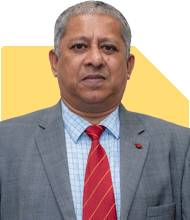
Rajesh Kumar

Rajesh Kumar Singh  | Answer  |Ask -

IIT-JEE, GATE Expert - Answered on Apr 14, 2025

Rajesh Kumar Singh is a mining engineer with 28 years of work experience.
During his career, he has served as the head of the mining department and as vice president of Balasore Alloys. He is currently a visiting professor at Mewar University where he teaches BTech students.
Rajesh Kumar topped his batch in BTech mining from BIT, Sindri.
A gold medallist, he has cracked the GATE (Graduate Aptitude Test in Engineering) twice -- in 1993 and 1994 -- with an All India Rank of 14 in 1994.
He has also cleared the Indian Institute of Corporate Affairs (IICA) Independent Director Test.... more
Asked by Anonymous - Apr 14, 2025Hindi
Listen
Career

Sub: Education (Engineering) Sir / Madam Please recommend a short time (5-6 weeks) course on basic Python which will help student to get an understanding on the forthcoming semesters learning. Online / offline mode; anything as you feel good. For offline, location - Kolkata. My daughter will be completing 1st year (2nd Sem) computer engineering with data sc specialization by early May and want to utilise the upcoming summer vacation. (Note: 1st year dealt with basic engineering and basic Science subjects primarily, nothing much wrt Computer Engineering / DS). Regards

Ans: MCSE Course Better, find similar course at Kolkata
Career

You may like to see similar questions and answers below
Latest Questions
Ramalingam

Ramalingam Kalirajan  |10984 Answers  |Ask -

Mutual Funds, Financial Planning Expert - Answered on Jan 22, 2026

Asked by Anonymous - Jan 22, 2026Hindi
Money
I plan to withdraw ₹6 lakh from my EPF after completing only 3 years of service, and my PAN is linked with my EPF account. Since my service period is less than 5 years, how much TDS at 10% will be deducted at the time of withdrawal? How will this EPF withdrawal be taxed in my income tax return, and can I claim a refund of the TDS deducted if my total income falls below the taxable limit?
Ans: You are thinking ahead, and that is very important. EPF withdrawal before 5 years has tax impact, but with the right understanding, there will be no surprise later.

» EPF withdrawal before completing 5 years of service
– Your total service is only 3 years
– EPF withdrawal is treated as taxable income
– PAN is linked, so TDS applies at a lower rate
– Withdrawal amount mentioned is Rs. 6 lakh

» TDS deduction at the time of EPF withdrawal
– When PAN is linked, EPFO deducts TDS at 10%
– TDS is calculated on the taxable portion of EPF
– In practical terms, EPFO usually deducts around Rs. 60,000 as TDS
– You will receive the balance amount after TDS deduction

» Important clarity on TDS
– TDS is not final tax
– It is only an advance tax collected by EPFO
– Actual tax depends on your total income for the year

» How EPF withdrawal is taxed in your income tax return
– EPF withdrawal is added to your total income
– Employee contribution portion becomes taxable
– Employer contribution portion becomes taxable
– Interest earned also becomes taxable
– The full taxable amount is taxed as per your income tax slab

» Filing income tax return after EPF withdrawal
– EPF withdrawal amount must be declared in the return
– TDS deducted by EPFO will appear in Form 26AS
– You must include both income and TDS details correctly

» Can you claim refund of TDS deducted
– Yes, refund is fully possible
– If your total income including EPF withdrawal is below taxable limit
– Or if your final tax liability is lower than TDS deducted
– The excess TDS will be refunded after return processing

» Common misunderstanding to avoid
– Many people think 10% TDS is final tax, which is not true
– Actual tax may be zero, lower, or higher based on income slab
– Not filing return will result in loss of refund

» Planning insight from a long-term view
– EPF is a retirement-focused asset
– Early withdrawal increases tax and reduces future safety
– Withdraw only if there is real financial need
– If employment resumes soon, transfer is always cleaner

» Finally
– TDS of around Rs. 60,000 will be deducted at withdrawal
– Entire EPF withdrawal is taxable due to service below 5 years
– Refund can be claimed if total income is within limits
– Proper return filing ensures no permanent tax loss

Best Regards,

K. Ramalingam, MBA, CFP,

Chief Financial Planner,

www.holisticinvestment.in

https://www.youtube.com/@HolisticInvestment

...Read more

Ramalingam

Ramalingam Kalirajan  |10984 Answers  |Ask -

Mutual Funds, Financial Planning Expert - Answered on Jan 22, 2026

Asked by Anonymous - Jan 22, 2026Hindi
Money
I applied for EPF transfer, but the request was rejected due to a mismatch in my date of birth between EPFO records and Aadhaar/PAN. My old EPF account has a balance of ₹4.5 lakh. What is the correct procedure to get the date of birth corrected, how long does this correction process usually take, and will my EPF balance continue to earn interest during this period or will there be any loss of interest?
Ans: You have done the right thing by checking this issue early. EPF date of birth mismatch is common, and it is fully correctable. Your Rs. 4.5 lakh balance is safe, and there is no panic situation here. This can be handled in a structured and clean way.

» Why this mismatch happens
– Older EPF records were created based on employer data entry, not Aadhaar
– Even a small difference like day or month swap leads to rejection
– EPFO now treats Aadhaar as the master record
– Until DOB is matched, transfer and withdrawal requests stay on hold

» Correct procedure to update date of birth in EPFO
– Step 1: Ensure Aadhaar DOB is correct

If Aadhaar DOB is wrong, correct Aadhaar first

EPFO will not accept changes unless Aadhaar is accurate

– Step 2: Initiate “Joint Declaration” online

Login to EPFO member portal

Select “Joint Declaration” option

Choose “Date of Birth” for correction

Enter correct DOB as per Aadhaar

– Step 3: Employer verification

Current employer must digitally approve the request

No physical form is required if employer is active on EPFO portal

– Step 4: EPFO field office approval

EPFO officer verifies Aadhaar, PAN and service history

Once approved, DOB gets updated in EPFO records

» Documents usually required
– Aadhaar (mandatory)
– PAN (supporting)
– School certificate or birth certificate only if EPFO asks for extra proof
– In most cases, Aadhaar alone is enough

» How long this correction process takes
– Employer approval: 3 to 10 working days
– EPFO verification: 15 to 30 working days
– In some regional offices, it may go up to 45 days
– Follow up is possible through EPFO grievance if it crosses 30 days

» What happens to your Rs. 4.5 lakh EPF balance meanwhile
– Your EPF account remains active
– Money stays invested with EPFO
– No freeze on balance
– No deduction or penalty

» Will EPF continue to earn interest during correction
– Yes, interest continues to accrue
– EPF interest is calculated yearly, not daily
– As long as account is not withdrawn, interest is credited
– DOB correction or transfer rejection does NOT stop interest
– There is no loss of interest for this delay

» Impact on EPF transfer after DOB correction
– Once DOB is updated, submit transfer request again
– Transfer usually gets approved smoothly
– Past service period is fully preserved
– Pension eligibility and years of service remain intact

» Important points to keep in mind
– Do not apply for withdrawal while correction is pending
– Keep Aadhaar linked and active
– Track request status every week
– If employer delays, raise EPFO grievance online

» Broader financial planning insight
– EPF is a core long-term retirement pillar
– Keeping records clean avoids future delays during retirement
– Small admin issues today prevent big stress later
– You are doing the right thing by fixing this now

» Finally
– DOB correction is a process issue, not a financial loss
– Your money is safe
– Interest continues without break
– Once corrected, your EPF journey becomes smooth and future-ready

Best Regards,

K. Ramalingam, MBA, CFP,

Chief Financial Planner,

www.holisticinvestment.in

https://www.youtube.com/@HolisticInvestment

...Read more

Ramalingam

Ramalingam Kalirajan  |10984 Answers  |Ask -

Mutual Funds, Financial Planning Expert - Answered on Jan 22, 2026

Asked by Anonymous - Jan 22, 2026Hindi
Money
I resigned from my job in April 2024 and my EPF balance is ₹2.1 lakh. If I remain unemployed for 3 months, am I eligible to withdraw the full EPF amount, or is only a partial withdrawal allowed? What are the EPF rules regarding unemployment period, and does it make any difference if I do not join a new employer during this time?
Ans: You have taken a timely step by understanding EPF rules before acting. This clarity will help you avoid mistakes and protect your long-term savings.

» EPF rules after resignation and unemployment
– EPF withdrawal rules depend on the period of unemployment
– Resignation in April 2024 starts the unemployment clock from the last working day
– EPFO treats unemployment as no contribution from employer and employee

» Withdrawal eligibility after 1 month of unemployment
– After completing 1 full month without a job
– You are allowed to withdraw up to 75% of the EPF balance
– This is considered a partial withdrawal
– Remaining balance stays in the EPF account

» Withdrawal eligibility after 2 months of unemployment
– After completing 2 continuous months of unemployment
– You become eligible to withdraw 100% of the EPF balance
– This includes both employee and employer contribution
– Pension portion follows separate rules and is not paid in cash

» What happens if unemployment continues for 3 months
– Staying unemployed for 3 months does not restrict withdrawal
– Full EPF withdrawal remains allowed after 2 months itself
– No additional benefit for waiting beyond 2 months

» Does not joining a new employer make any difference
– Yes, it matters for eligibility
– If you do not join a new employer, withdrawal is allowed
– If you join a new employer, EPFO expects transfer, not withdrawal
– Even a short-term job with EPF contribution restarts employment status

» Interest on EPF during unemployment
– EPF continues to earn interest up to 36 months of no contribution
– Interest credit is done at year-end
– Withdrawing early may stop future interest accumulation

» Tax aspect to be aware of
– If total EPF service is less than 5 years, withdrawal may be taxable
– If service is 5 years or more, withdrawal is tax-free
– This includes service across multiple employers

» Practical decision guidance
– EPF is meant for retirement security
– Withdraw only if cash flow is truly needed
– If job search is ongoing, keeping EPF intact helps future compounding
– Transfer is always better than withdrawal when re-employed

» Common mistakes to avoid
– Withdrawing EPF just because it is available
– Ignoring pension portion rules
– Assuming 3 months wait gives higher benefit

» Finally
– After 2 months of unemployment, full EPF withdrawal is permitted
– 3 months of unemployment does not change eligibility
– Not joining a new employer allows withdrawal
– Joining a new employer shifts the option to transfer

Best Regards,

K. Ramalingam, MBA, CFP,

Chief Financial Planner,

www.holisticinvestment.in

https://www.youtube.com/@HolisticInvestment

...Read more

Ramalingam

Ramalingam Kalirajan  |10984 Answers  |Ask -

Mutual Funds, Financial Planning Expert - Answered on Jan 22, 2026

Asked by Anonymous - Jan 22, 2026Hindi
Money
My monthly basic salary is ₹18,000. As per EPF rules, what percentage of my salary is deducted towards EPF every month? How much EPF contribution goes from my salary, how much does my employer contribute, and how is the employer’s contribution split between EPF and EPS? Please explain with exact amounts.
Ans: EPF rules are simple and helpful for salaried people like you.

» EPF Deduction Basics
– As per EPF rules, 12% of your basic salary gets deducted every month for EPF.
– For your Rs. 18,000 basic salary, your contribution is Rs. 2,160 (12% of 18,000).*
– This amount goes to your EPF account and builds your retirement corpus steadily.*

» Employer’s Total Contribution
– Your employer also puts in 12% of your basic salary, so another Rs. 2,160 each month.
– Total EPF deposit becomes Rs. 4,320 (your share plus employer share).*
– This matching contribution is a big plus, doubling your savings power without extra cost.*

» Split of Employer’s Share
– Out of employer’s Rs. 2,160, most goes to EPF but a part goes to EPS for pension benefits.
– For salary up to Rs. 15,000, EPS gets 8.33% (Rs. 1,250 max), rest to EPF. But since your basic is Rs. 18,000, EPS is still capped at Rs. 1,250.*
– So employer’s EPF gets Rs. 910 (2,160 minus 1,250), giving you good growth in both pension and provident fund.*

» Why This Setup Works Well
– EPF gives tax free interest around 8-9%, safe and better than many options.
– Your total Rs. 4,320 monthly addition grows big over years with compounding.
– Review your EPF statement yearly to track and appreciate this steady wealth builder.*

Final Insights
– EPF is a solid 360 degree start for retirement, insurance, and loan access.
– Keep contributing fully for max benefits. Talk to your HR if salary details change.

Best Regards,

K. Ramalingam, MBA, CFP,

Chief Financial Planner,

www.holisticinvestment.in
https://www.youtube.com/@HolisticInvestment

...Read more

Dr Nagarajan J S K

Dr Nagarajan J S K   |2599 Answers  |Ask -

NEET, Medical, Pharmacy Careers - Answered on Jan 22, 2026

Career
Hello, my daughter wants to opt for Commerce after 10th grade. Eventually we wanted to know if she can do the acctuarial studies. We are not completely aware of what it means, but one of our friends spoke about it and hence I wanted to check with the Gurus here.
Ans: Hi Prasad sir,

It's great that you are planning ahead. However, it’s important to consider whether she is interested in the subjects you have inquired about. Some topics can be explored later on as well. If you’ve decided to move forward, she should select the following subjects for her HSC level: Maths, Statistics, Economics, and Commerce. Make sure to check the availability of these subjects at the school where she will be pursuing her HSC.

I have provided the details below for your reference.

The following are details fo ACCTUARIAL STUDIES:
It is an interdisciplinary field using math, statistics, and finance to assess and manage financial risks, primarily for insurance, pensions, and finance, by analyzing past data to predict future events and their monetary impact, preparing candidates for rigorous professional exams and careers in risk management.

Candidates should develop skills in predictive modeling, statistical analysis, and financial theory, leading to roles where they help organizations set premiums, manage liabilities, and ensure economic stability.

Core Subjects Required:
* Mathecs, & Statistics
* Finance & Economics
* Accounting
* Computer Science & Data Analysis
* Risk Management & Modeling

Role that they plays
* Analyze historical data to identify trends and predict future financial events (e.g., car accidents, natural disasters).
* Develop models to determine financial risks and liabilities for companies.
* Help set insurance premiums and pension fund strategies.
* Use software like Excel, R, and specialized actuarial tools for analysis.


Exams:
* Involves rigorous university education and passing professional exams from bodies like the Institute and Faculty of Actuaries (IFoA) or Institute of Actuaries of India (IAI).
* Career progression is linked to exam success and gaining practical work experience.

Opportunities:* Offers strong career prospects in various sectors, including insurance, healthcare, and finance.

BEST REGARDS

...Read more

Ramalingam

Ramalingam Kalirajan  |10984 Answers  |Ask -

Mutual Funds, Financial Planning Expert - Answered on Jan 22, 2026

Asked by Anonymous - Jan 22, 2026Hindi
Money
Gold rate today is Rs 1.60 lakh per 10 grams of gold. I have 95 lakh worth gold jewellery including bangles, necklace and rings. Gold price has gone up nearly 25% in the last 12 months. I'm 41 years old, already investing regularly in EPFO (8-8.25% returns) and equity mutual funds targeting 10 to 12% over the long term, while also servicing a home loan of around 70 lakh. My salary is Rs 2 lakh per month. I want to retire with a corpus of 20 crore in the next 15 years. Am I on the right track?
Ans: I appreciate the clarity with which you have laid out your numbers, goals, and concerns. At 41, with strong income, disciplined investing, and awareness of risks, you are already ahead of many. The key now is alignment and fine-tuning, not drastic changes.

» Your current financial position at a glance
– Monthly salary of Rs 2 lakh gives you strong earning power
– Regular EPFO contribution brings stability and discipline
– Equity mutual fund investing for long-term growth is the right direction
– Home loan of around Rs 70 lakh is manageable but still a major responsibility
– Gold jewellery worth around Rs 95 lakh is a very significant part of your net worth

» Gold holding – strength with a hidden imbalance
– A 25% rise in gold in one year looks attractive, but it is not repeatable every year
– Jewellery is an emotional and cultural asset, not a growth-focused one
– Making charges and resale discounts reduce effective value when liquidated
– Gold does not create cash flow or support retirement expenses directly
– At current value, gold forms a large and concentrated portion of your wealth

» Role of gold in a 15-year retirement plan
– Gold works best as a hedge and emotional safety net
– It should protect wealth, not be expected to multiply it
– Heavy dependence on gold can slow overall portfolio growth
– For a Rs 20 crore target, growth assets must do most of the work
– Gold should be capped and treated as secondary support

» EPFO – stable but not a growth engine
– EPFO gives predictable and low-risk compounding
– It protects capital and brings retirement discipline
– However, returns remain moderate and may not beat inflation comfortably over long periods
– EPFO alone cannot take you to a Rs 20 crore target
– It should remain a strong foundation, not the main driver

» Equity mutual funds – the core engine for your goal
– A 15-year horizon allows equity to work through cycles
– Actively managed funds can adapt to market valuations and earnings changes
– Index-style investing moves fully with the market, without downside control
– During corrections, index funds fall completely with no protection
– Active funds aim to manage risk and capture opportunities selectively

» Home loan – silent impact on retirement readiness
– Large EMIs reduce long-term investing capacity
– Interest cost over time can dilute wealth creation
– Balancing loan repayment and investing is critical
– Partial prepayment strategy, when cash flow allows, improves flexibility
– Lower debt equals higher freedom closer to retirement

» Rs 20 crore goal – reality check without calculations
– The target is ambitious but not unrealistic with discipline
– Consistency of equity investing matters more than short-term returns
– Lifestyle inflation must be controlled carefully
– Sudden risk-taking or chasing trends can derail progress
– Your income growth and savings rate will decide success more than gold prices

» Key gaps to address now
– Overexposure to gold relative to growth assets
– Need for clearer allocation between growth, stability, and protection
– Home loan impact on long-term cash flow
– Ensuring equity investments are goal-aligned and reviewed regularly
– Avoiding comfort-driven decisions during bull markets

» Behavioural discipline – the biggest differentiator
– Do not let recent gold returns influence future allocation
– Avoid increasing gold exposure just because prices are rising
– Stay consistent with equity even during dull or falling phases
– Review annually, not emotionally
– Keep retirement as a long-term project, not a yearly scorecard

» Finally
– You are on the right path, but the balance needs refinement
– Gold has given comfort, but growth must come from equity
– EPFO provides stability, not speed
– Reducing debt and increasing productive investments improves certainty
– With discipline and timely corrections, a strong retirement outcome is still achievable

Best Regards,

K. Ramalingam, MBA, CFP,

Chief Financial Planner,

www.holisticinvestment.in

https://www.youtube.com/@HolisticInvestment

...Read more

Ramalingam

Ramalingam Kalirajan  |10984 Answers  |Ask -

Mutual Funds, Financial Planning Expert - Answered on Jan 22, 2026

Money
I am 28. I am investing in the mutual funds since September 2024, the sip is worth 20k with a step up of 10% every year. And i have invested my father's 30 lakhs in mutual fund as well through stp. The funds are as follows:- Icici large and mid cap- 8k Bandhan large and mid cap '- 4k Nippon India small cap- 4k Hdfc fifty- 4k Icici balanced advantage fund- 5 lakhs Icici retirement fund- 7.5 lakhs Icici thematic advantage fund of fund- 7.5 lakhs Hdfc multi cap- 5 lakhs Motilal large and mid cap- 5 lakhs Please guide me me on this . What do you reckon looking at the portfolio.
Ans: I appreciate the discipline you have shown at a very young age. Starting SIPs at 28, doing annual step-up, and responsibly handling your father’s Rs 30 lakhs through STP shows maturity and intent. This gives you a strong base to build on, provided the structure is refined.

» Overall portfolio structure – what is working well
– You have exposure across large, mid, and small companies
– SIP with 10% step-up is a very healthy habit for long-term wealth
– STP instead of lump sum investing for your father’s money reduces timing risk
– Use of a balanced style fund adds some stability to the portfolio
– Time is clearly on your side due to your age

» Key concern – overlap and repetition risk
– Too many funds are playing in the same large & mid cap space
– Multiple funds chasing similar stocks reduces true diversification
– Returns may look different on paper, but portfolio behaviour will be similar
– Over-diversification increases monitoring burden without improving outcome
– Fewer, well-chosen funds usually work better than many similar funds

» SIP side review – equity concentration
– Large & mid cap exposure is high across multiple funds
– Small cap allocation is present, which suits your age, but needs control
– Small caps can give high returns but also fall sharply during corrections
– SIP amount should not be emotionally disturbed during market falls
– Portfolio needs clearer role definition for each category

» About index-style fund exposure
– Market-linked funds that simply track an index move fully up and fully down
– There is no downside protection during market corrections
– No flexibility to reduce risky sectors when valuations are high
– Active funds can shift allocation based on market and earnings cycles
– Over long periods, active management helps control volatility better

» Father’s Rs 30 lakhs – risk suitability check
– This money is not yours emotionally or financially
– Capital protection matters more than aggressive growth here
– Too much thematic and equity-heavy exposure increases stress risk
– Retirement and thematic oriented funds tend to have lock-in or style rigidity
– Your father’s age, income needs, and comfort must guide allocation

» Thematic and retirement-oriented funds – caution required
– Thematic funds depend on cycles which may stay weak for long periods
– They can underperform for years even in rising markets
– Retirement-labelled funds still carry equity risk, name alone does not reduce risk
– Such funds should never dominate a parent’s core money
– Simplicity and predictability matter more for family money

» What needs correction, not panic
– Reduce duplication in large & mid cap funds
– Keep small cap exposure meaningful but not excessive
– Re-align father’s money toward stability and smoother return path
– Avoid adding new funds unless there is a clear gap
– Focus on goal-based buckets, not fund count

» Behavioural discipline – the silent risk
– Avoid checking returns daily or monthly
– Do not react to short-term underperformance
– Step-up SIP only if income growth supports it
– Never use father’s portfolio for experiments or trends
– Consistency will matter more than fund selection over time

» Finally
– Your intent and discipline are strong, which is rare at this age
– Portfolio needs simplification, not replacement
– Active equity funds should remain the core growth drivers
– Parent’s money must be treated with extra safety and respect
– With minor restructuring and patience, this portfolio can do very well

Best Regards,

K. Ramalingam, MBA, CFP,

Chief Financial Planner,

www.holisticinvestment.in

https://www.youtube.com/@HolisticInvestment

...Read more

Nayagam P

Nayagam P P  |10888 Answers  |Ask -

Career Counsellor - Answered on Jan 22, 2026

Career
Hello, I am 25 years old have completed MCA in 2024, I have no experience in IT, I want to go in IT but because of current Layoffs i fear if same situation could happen with me, and Because of AI my web development field can be overtaken by AI, so I am worried about it what to do should I pursue IT or should I change my career or should I learn Ai, machine learning, cloud please guide me what to do so that I can have a good career and a good earning so that I can give myself and my family a good life please guide me
Ans: Dev, Your Fear vs. Reality: India's IT sector demand reached 1.8 million roles in 2025 (16% growth); MCA graduates show 71% employability—your qualification is valued. Web development isn't disappearing; it's transforming: AI automates routine coding while developers become "AI managers" solving complex problems, requiring you to develop AI literacy alongside coding skills. Optimal Strategy: Pursue IT immediately but strategically specialize in emerging technologies (AI/ML, Cloud Engineering, DevOps). Entry-level AI/ML roles command ?6–8 LPA rising to ?20–50 LPA for specialists; traditional web development enters at Rs.4–6 LPA with slower progression. India's AI market projects 39% job growth with 30–35% salary premiums for Generative AI and MLOps specialists. Action Plan: (1) Apply aggressively to IT companies offering AI/ML or Cloud projects—largest hiring surge; (2) During first role (12–18 months), simultaneously earn foundational AI certifications (AWS, GCP, TensorFlow) costing Rs.30,000–50,000; (3) Transition to emerging tech role leveraging combined MCA + AI credentials within 24 months. This pathway eliminates your vulnerability to AI disruption while capturing Rs.15–25 LPA earning potential within 3–5 years. Family security depends on your specialization trajectory, not IT industry fear. All the BEST for Your Prosperous Future!

Follow RediffGURUS to Know More on 'Careers | Money | Health | Relationships'.

...Read more

Reetika

Reetika Sharma  |503 Answers  |Ask -

Financial Planner, MF and Insurance Expert - Answered on Jan 22, 2026

Asked by Anonymous - Jan 17, 2026Hindi
Money
Hi. I am middle class person. Age is 32 years. I recently 2 years back i bought 1.2 cr house. Current i am fear about job loss due to AI. I am keep on thinking what if i didn't get job immediately. In this situation how to pay high EMI? I have 3 loans all are home loan related currently 7.30% interest rate for all. 1. took 89 lac already paid 10 lac remaining tenure is 160 months, emi is 77000 2. Took 10 lac already paid 6 lac remaining tenure is 48 months, emi is 10000 3. Took 1.8 lac, already paid 1.4 lac remaining tenure is 29 months emi is 2k. And from income side My salary is 2 lac, my emi comes arround 90 K, my total expenses is 40 K, i invest remaining in savings and mutual funds, even though i have 5 lac in FD, 5 lac in equity mutual fund, 2 lac in savings account , 2 lac in debt mutual fund, 2 lac in stocks. I want to know how to manage these emi during job loss. I want debt free. These emi making me sleepless.Hi. I am middle class person. I recently 2 years back i bought 1.2 cr house. Current i am fear about job loss due to AI. I am keep on thinking what if i didn't get job immediately. In this situation how to pay high EMI? I have 3 loans all are home loan related currently 7.30% interest rate for all. 1. took 89 lac already paid 10 lac remaining tenure is 160 months, emi is 77000 2. Took 10 lac already paid 6 lac remaining tenure is 48 months, emi is 10000 3. Took 1.8 lac, already paid 1.4 lac remaining tenure is 29 months emi is 2k. And from income side My salary is 2 lac, my emi comes arround 90 K, my total expenses is 40 K, i invest remaining in savings and mutual funds, even though i have 5 lac in FD, 5 lac in equity mutual fund, 2 lac in savings account , 2 lac in debt mutual fund, 2 lac in stocks. I want to know how to manage these emi during job loss. I want debt free. These emi making me sleepless.
Ans: Hi,

It is natural to fear advancement in technology but that should not turn into sleepless nights. Rather use this opportunity to learn the same and upskill yourself in that field.
However, let me try to guide you with the correct steps for you to take:

1. Your total EMIs come out to be around 90k per month and fixed monthly expenses are 40k. You are left with 70k per month to invest.
2. Try and close the smaller loans of 40,000 first followed by 4 lakhs loan once your job stabilizes.

>> You have 5 lakhs in FD, 2 lakhs in savings and 2 lakhs in debt mutual funds - total liquid is 9 lakhs.
This can be your emergency fund in case of job loss and will keep your emi's and basic requirements on track for 7 months.
7 months is a sufficient time for you to find another upskilled job.

>> Keep the 5 lakhs of equity mutual funds and 2 lakhs of stocks as is.
In the meantime, pause your SIPs for a while, start accumulating surplus of 70k per month in savings account so as to overcome any uncertain situation.

You can resume your SIPs once your job is stable, you have upskilled yourself and are no longer in dilemma of job loss.

Let me know if you need more help.

Best Regards,
Reetika Sharma, Certified Financial Planner
https://www.instagram.com/cfpreetika/

...Read more

Nayagam P

Nayagam P P  |10888 Answers  |Ask -

Career Counsellor - Answered on Jan 22, 2026

Asked by Anonymous - Jan 21, 2026Hindi
Career
I'm 23 years old guy entered into software industry. I'm earning a salary of 50k .But I'm not interested in job. I have around 10 crores property which includes farm land and plots . I'm getting rent around 50k from plots(This may increase to above 1 lakh if I build a commercial space).From farm land I'm getting around 1.5-2 lakhs yearly.In agriculture we are getting not any profits we may get in next two or three years but not sure. Should I continue with my job? Can I quit my job and plan a business or focus on rental properties? Suggest me a financial advice
Ans: You possess a rare financial advantage at 23: substantial property assets generating Rs.7.5–8 lakhs annual passive income while earning Rs.6 lakhs employment salary. Rather than an impulsive employment exit, you need a structured pathway that converts employment dissatisfaction into wealth creation while protecting family economic security. 3 evidence-based options exist, each addressing your constraints differently while ensuring zero financial loss risk. OPTION 1: Strategic Passive Asset Development (Continue Employment + Active Property Management Optimization). Maintain your Rs.50,000 monthly software employment as an income stability foundation while systematically upgrading property and agricultural assets through professional management. Hire a property manager for Rs.5,000–10,000 monthly to handle day-to-day residential rental operations, freeing your time for strategic commercial conversion planning. Simultaneously, engage an agricultural consultant for Rs.10,000–15,000 annually to validate the "2–3 year profitability" timeline with concrete data; if valid, you've confirmed future income; if invalid, you've avoided business failure before committing capital. Over five years, residential plots generate capital appreciation of 8–10% annually on your Rs.10 crore base (approximately Rs.80 lakh appreciation); plot rental increases from Rs.50,000 to Rs.75,000–100,000 through market escalation; and commercial development conceptual planning establishes a timeline and return on investment (ROI). By year five, passive income growth combined with employment stability creates Rs.20–25 lakhs annual income without employment dissatisfaction escalating into financial crisis. You maintain psychological freedom (planning your exit) while managing transition risks mathematically. This option eliminates the employment-exit financial cliff, allows five-year passive appreciation exceeding Rs.80 lakhs, validates agricultural assumptions risk-free, and enables calculated commercial development decisions post-validation without desperation or hasty judgment. OPTION 2: Hybrid Transitional Model (Employment Continuation → Validation → Strategic Exit) - Execute controlled exit within 24 months through three sequential phases: first, the validation phase (six months) where you hire professionals to verify agricultural profitability timeline, quantify commercial development return-on-investment, and stress-test passive income assumptions against worst-case scenarios; second, the preparation phase (12 months) where you build Rs.25–30 lakhs emergency reserves through employment savings, hire professional property and agricultural managers, establish digital accounting systems, and document all income sources for future bank loan qualification; third, the exit decision phase (months 18–24) where you evaluate whether validation confirms Rs.12–15 lakhs annual sustainable passive income, and only then transition to full-time asset management with employment departure. This approach de-risks employment exit through professional validation, financial buffer accumulation, and systematic management infrastructure establishment. You address employment dissatisfaction within a defined 24-month timeline while maintaining family economic security; neither impulsive exit nor indefinite employment suffering occurs. This option validates passive income assumptions before exit, builds a Rs.25–30 lakh safety buffer, establishes professional management systems, enables data-driven departure decisions, and manages the employment dissatisfaction timeline while securing family stability through structured planning. OPTION 3: Commercial Real Estate Entrepreneurship (Full-Time Asset Development & Scaling) - Exit employment within 12–18 months to pursue aggressive commercial real estate strategy: convert your current Rs.50,000 residential plot rental into Rs.1–2 lakh commercial space through phased development over 18–36 months, while simultaneously identifying undervalued properties within your existing Rs.10 crore portfolio for commercial conversion or redevelopment, unlocking 15–20% annual returns versus current 8–10% residential yields. Maintain agricultural land as cash-generation baseline contributing Rs.1.5–2 lakhs annually post-profitability confirmation. This pathway transforms you from passive landlord into active real estate entrepreneur, leveraging your Rs.10 crore asset base as development capital, building a professional developer network, and scaling wealth through value-creation rather than passive appreciation. During year one post-exit, you'll generate Rs.11–15 lakhs (temporary dip due to development costs and timeline); by year two, Rs.20–27 lakhs; by year three, Rs.32–45 lakhs from multiple commercial developments; by years four through five, potentially Rs.40–60 lakhs annually if three to four commercial projects operate simultaneously. Risk is substantially higher than other options; upside potential reaches Rs.40–60 lakhs annual income within five years if the commercial strategy succeeds, but it requires active management, market knowledge, execution discipline, entrepreneurial competence, and strong risk tolerance. This option converts your Rs.10 crore asset base into a value-creation engine generating 15–20% returns versus 8–10% passive yields, builds entrepreneurial skills and market reputation, enables Rs.40–60 lakhs annual income scaling potential, and transforms employment dissatisfaction into meaningful entrepreneurial work—though it replaces employment stability with business execution risk and requires you possess or rapidly develop construction management, tenant acquisition, and market-timing competencies. Your CHOICE depends on personality and risk tolerance: Option 1 suits stability-seekers willing to wait five years; Option 2 accommodates controlled exit within two years through a validation-first approach; and Option 3 suits entrepreneurial individuals comfortable with managed chaos and willing to actively build a commercial real estate portfolio. Begin immediately with agricultural consultant validation (Rs.15,000–25,000), expense calculation, and emergency reserve accumulation—these cost-effective actions provide decision-making clarity regardless of the pathway chosen. (IMPLEMENTATION PRIORITY: Immediate Actions—Next 30 Days: Regardless of which option you choose, start these immediately: First, clarify ownership by verifying whether your Rs.10 crore assets are individually owned or joint family property, as this directly affects your decision autonomy and financial control. Second, calculate your monthly personal expenses by detailing housing, food, utilities, healthcare, insurance, and leisure costs—this determines your financial sustainability threshold and reveals whether passive income alone can support your lifestyle. Third, hire an agricultural consultant to get professional validation of the "2–3 year profitability" claim within 30 days through a Rs.15,000–25,000 investment; this establishes whether agricultural income projections are realistic or optimistic assumptions. Fourth, build emergency reserves by starting to save Rs.10,000 monthly from your current salary toward a Rs.25–30 lakh emergency fund, as this financial buffer is critical for all three options and provides security during employment transitions or unexpected property income disruptions. Fifth, meet with a banker to discuss property-backed loan options, which gives you financial flexibility and demonstrates that understanding your borrowing capacity is power—you may need this safety net if employment exit occurs and initial passive income doesn't materialize as projected. These five actions cost minimal money but provide the clarity and foundation you need to choose your pathway confidently and execute it successfully. Do not exit employment without establishing this foundation, as doing so without proper validation, expense clarity, professional guidance, emergency reserves, and banking relationships would expose your family to unnecessary financial risk and jeopardize the substantial ?10 crore asset base you've inherited or accumulated.) All the BEST for Your Prosperous Future!

Follow RediffGURUS to Know More on 'Careers | Money | Health | Relationships'.

...Read more

DISCLAIMER: The content of this post by the expert is the personal view of the rediffGURU. Investment in securities market are subject to market risks. Read all the related document carefully before investing. The securities quoted are for illustration only and are not recommendatory. Users are advised to pursue the information provided by the rediffGURU only as a source of information and as a point of reference and to rely on their own judgement when making a decision. RediffGURUS is an intermediary as per India's Information Technology Act.

Close  

You haven't logged in yet. To ask a question, Please Log in below
Login

A verification OTP will be sent to this
Mobile Number / Email

Enter OTP
A 6 digit code has been sent to

Resend OTP in120seconds

Dear User, You have not registered yet. Please register by filling the fields below to get expert answers from our Gurus
Sign up

By signing up, you agree to our
Terms & Conditions and Privacy Policy

Already have an account?

Enter OTP
A 6 digit code has been sent to Mobile

Resend OTP in120seconds

x