Need Expert Advice?Our Gurus Can Help
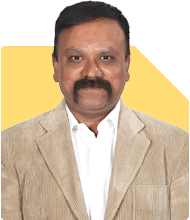
Dr Dipankar

Dr Dipankar Dutta  |1899 Answers  |Ask -

Tech Careers and Skill Development Expert - Answered on Jan 26, 2026

Dr Dipankar Dutta is an associate professor in the computer science and engineering department at the University Institute of Technology, the University of Burdwan, West Bengal.
He has 27 years of experience and his interests include AI, data science, machine learning, pattern recognition, deep learning and evolutionary computation.
Aside from his responsibilities at the college, he also delivers lectures and conducts webinars.
Dr Dipankar has published 25 papers in international journals, written book chapters, attended conferences, served as a board observer for WBJEE (West Bengal Joint Entrance Examination) exams and as a counsellor for engineering college admissions in West Bengal. He helps students choose the right college and stream for undergraduate, masters and PhD programmes.
A senior member of the Institute of Electrical and Electronics Engineers (SMIEEE), he holds a bachelor's degree in engineering from the Jalpaiguri Government Engineering College and a an MTech degree in computer technology from Jadavpur University.
He completed his PhD in engineering from IIEST, Shibpur (formerly BE College).... more
Nagesh Question by Nagesh on Jan 26, 2026Hindi
Career

Hello sir, My son has written jee on 24 second shift and expected to score 260. My question is, is this the good enough score for tip tier NITs or should he attempt to second season foe bettering the marks or utilise all energy to advance. We are in dilema.

Ans: Go for 2nd attempt
Career

You may like to see similar questions and answers below

Nayagam P

Nayagam P P  |12508 Answers  |Ask -

Career Counsellor - Answered on Jan 27, 2026

Career
Hello sir, my son has written jee mains on 24th Jan and expected 260 marks. Is this enough marks for to secure top NITs and CS. We are general category. Or should he take second session to improve his scores or should he divert his energy towards advance
Ans: Nagesh Sir, Your son's expected 260 marks (approximately 95th percentile, rank ~5,000-8,000) guarantee admission to top-tier NITs for Computer Science Engineering based on JoSAA 2023-2025 closing rank data, where NIT Trichy CS closed at ranks 1,449-4,463, NIT Surathkal CS at 1,191-1,827, NIT Warangal CS at 1,521-2,409, and NIT Rourkela CS at 2,442-3,431, all significantly below his expected rank. More likely to get admission in NIT Calicut (Tier 1) at 6,200-7,100 & MNIT Jaipur (Tier 1) at 5,200-5,400. Better not attempt the second JEE Main session—there is minimal improvement headroom above 260 marks and substantial regression risk, wasting critical preparation time. Instead, directly invest 4 months in focused JEE Advanced preparation (January 27 - June 2, 2026), requiring systematic study of Advanced-specific topics (modern physics, electromagnetic induction, complex organic synthesis, 3D coordinate geometry) through structured phases: Foundation Strengthening (Phase 1: Jan 27-Feb 26), Conceptual Deepening (Phase 2: Feb 27-Mar 26), Integrated Problem-Solving (Phase 3: Mar 27-Apr 26), and Final Exam Simulation (Phase 4: Apr 27-Jun 2), with weekly milestones, 2-3 full-length mock tests every 7-10 days, and targeting consistent 150+ marks across consecutive mocks to qualify Advanced. This strategic approach simultaneously secures guaranteed top-tier NIT admission while pursuing the additional IIT consideration pathway through disciplined, focused preparation. (Important Disclaimer: The admission probability assessments provided are estimates based on historical data and should be considered indicative only. Opening and closing ranks experience annual fluctuations due to multiple dynamic factors, including exam difficulty variations, candidate participation rates, performance distributions, institutional seat matrix adjustments, policy modifications in reservation criteria, evolving student preferences across disciplines, shifting institutional rankings, historical cutoff influences, economic trends affecting branch demand, and multi-round counselling processes. Strategic Recommendation: To optimize son's admission prospects, we strongly encourage maintaining a diversified application portfolio by preparing/appearing for 4-5 additional engineering entrance examinations for private institutions alongside JEE/JoSAA. This comprehensive approach ensures multiple pathways to quality engineering education beyond the highly competitive IIT/NIT/IIIT/GFTI ecosystem). All the BEST for Your Son's Prosperous Future!

Follow RediffGURUS to Know More on 'Careers | Money | Health | Relationships'.

..Read more

Latest Questions
Nayagam P

Nayagam P P  |12508 Answers  |Ask -

Career Counsellor - Answered on Aug 12, 2026

Asked by Anonymous - Aug 12, 2026
Career
my daughter has secured admission in CSE-AI at IGDTUW .Going by the reputation of the institute she withdrew from BITSAT,JOSAA, LNMIIT and MHT-CET counselings. But now after attending the college for few days, she has been completely put off by the real bad infra and attitude of teachers there.Only viable option left now for her is COMEDK, where she can get CSE in MSRIT.We are delhi based and budget is not a issue. Please suggest further course of action.
Ans: Your daughter may consider switching to MSRIT CSE through COMEDK if her initial experience at IGDTUW has led her to reassess her choice. MSRIT offers good industry exposure and the advantage of Bengaluru’s strong technology ecosystem. However, it would be advisable to visit MSRIT and interact with current students before making the final decision.

Please also verify the current COMEDK counselling and reporting status, as deadlines and eligibility can vary by round. Before proceeding, confirm that her specific counselling status permits admission/reporting at MSRIT.

At the same time, it is important to remember that no institution is perfect; every college has its own strengths and areas for improvement. The decision should therefore consider academics, campus environment, faculty interaction, placements, peer group, location and overall student experience.

Finally, ensure that your daughter is comfortable and mentally prepared to relocate from Delhi to Bengaluru, and that you as parents are also equally comfortable with the transition. If MSRIT appears to offer a better overall fit after this evaluation, switching can be a reasonable option. If possible, it may be worthwhile to keep RVCE CSE as a preference until the final counselling round, provided your daughter has already included RVCE CSE among her choices. If the option remains available in the subsequent rounds, she can consider it based on the seat availability and her merit position. All The Best for Your Daughter's Prosperous Future!

Follow RediffGURUS to Know More on 'Careers | Money | Health | Relationships'.

...Read more

Ramalingam

Ramalingam Kalirajan  |11390 Answers  |Ask -

Mutual Funds, Financial Planning Expert - Answered on Aug 11, 2026

Asked by Anonymous - Jul 28, 2026
Money
I am a 49 year old working as an E-Surveillance engineer at a Service provider in Chennai. I am on notice period. I am planning to start my own consulting services as free lancing in the same field. I have also got one contract worth 13 lakhs on which I will start working on from August onwards. These are just my annual consulting charges which will be paid by the customer on monthly basis after deducting 10% TDS. I need to understand how will my Tax liability be calculated for this FY. I am expecting one more contract worth 3-4 lakhs. Do I need to register for GST number? I have always done a job for 27 years. This is the first time I am doing something on my own. Hence these queries.
Ans: You have taken a good step by moving towards consulting. Having a Rs.13 Lakhs contract already is a strong starting point. Since this is your first year as a freelancer, keeping tax and compliance organised is important.

» Your Income For This FY

Your consulting receipts will generally be treated as professional income.

Your expected receipts are:

– First contract: Rs.13 Lakhs
– Possible second contract: Rs.3–4 Lakhs
– Total expected professional receipts: around Rs.16–17 Lakhs

The 10% TDS deducted by your customer is not an additional tax.

It is advance tax already collected on your behalf.

The TDS will be available as credit while filing your ITR.

» How Your Taxable Income Works

You will not normally pay income tax on the entire billing amount.

Eligible business or professional expenses can be considered while calculating taxable professional income.

For example:

– Laptop and computer expenses.
– Internet and communication costs.
– Software and subscriptions.
– Professional services.
– Office-related expenses.
– Travel related to consulting work.
– Other genuine business expenses.

Keep proper bills and payment records.

Personal expenses should not be claimed as professional expenses.

» Presumptive Tax Option

You may also check whether the presumptive taxation provisions applicable to specified professionals can be used.

This can simplify compliance for eligible professionals.

However, eligibility depends on the exact nature of your consulting activity and your receipts.

Your CA should confirm this before you choose the method.

» TDS Deduction

Your customer deducting 10% TDS does not mean your final tax rate is 10%.

It only represents tax deducted from your payment.

Your final tax liability will depend on your total taxable income for the year.

You will receive TDS credit while filing your income-tax return.

If the TDS is higher than your final liability, the excess can generally be claimed as refund.

» GST Registration

This needs careful attention.

GST registration is generally linked to aggregate turnover and the nature of services.

For service providers, the normal threshold is generally Rs.20 Lakhs in many states.

However, GST rules have several exceptions.

The place of supply and nature of your customer can also matter.

If your expected consulting turnover is around Rs.16–17 Lakhs, you may be below the normal threshold.

But do not decide only based on turnover.

Your exact consulting arrangement should be checked.

» Important GST Point

If your customer is located outside India, the GST treatment can be different.

Export of services has separate conditions.

Similarly, certain services supplied to customers in other states can require additional review.

Therefore, share the following with your CA:

– Customer location.
– Your location.
– Contract terms.
– Nature of E-Surveillance services.
– Annual contract value.
– Payment terms.
– Whether the customer is Indian or overseas.

» Advance Tax

This is another important point.

TDS may not cover your final tax liability.

If your estimated total tax payable crosses the applicable advance-tax threshold, advance tax may be required.

Do not wait until ITR filing to arrange the full tax amount.

Keep a separate bank balance for tax payments.

This will prevent cash-flow pressure later.

» Business Setup

Since you are starting freelancing after 27 years of employment, keep the setup simple initially.

Maintain:

– Separate bank account for consulting receipts.
– Proper invoices.
– Expense records.
– Customer contracts.
– TDS certificates.
– GST records if registration becomes applicable.
– Advance-tax payment records.

This will make future tax filing much easier.

» Transition From Salary To Consulting

Your first year needs extra care.

You may have salary income for part of the year.

You will then have professional income from consulting.

Both incomes will form part of your overall taxable income.

Also consider your final salary, notice-period payments, leave encashment and other employment-related receipts.

These should be included correctly.

» Retirement And Insurance

At age 49, your retirement planning should continue even after leaving employment.

EPF contributions may reduce or stop after leaving the job.

Therefore, create a separate retirement investment plan from your consulting income.

Also review your health insurance.

Do not depend only on your employer's medical cover after leaving the company.

Maintain adequate personal health insurance.

» Final Insights

Your Rs.13 Lakhs contract gives you a good base for starting consulting.

The possible Rs.3–4 Lakhs additional contract can strengthen your cash flow.

For GST, your expected Rs.16–17 Lakhs turnover appears below the normal service threshold.

Still, GST applicability depends on your customer and service details.

For income tax, the 10% TDS is only a tax credit.

Your final liability depends on your total taxable income and eligible expenses.

Since this is your first year as a consultant, I strongly suggest having a CA set up your invoicing, GST position and advance-tax schedule correctly.

Once the structure is set, managing your consulting income should become quite straightforward.

Best Regards,

K. Ramalingam, MBA, CFP,

AMFI-Registered MFD – ARN 4188

www.holisticinvestment.in

https://www.linkedin.com/in/ramalingamcfp/

...Read more

Ramalingam

Ramalingam Kalirajan  |11390 Answers  |Ask -

Mutual Funds, Financial Planning Expert - Answered on Aug 11, 2026

Asked by Anonymous - Jul 27, 2026
Money
I have invested in the following MFs 1) ICICI prudential BHARAT 22 FOF direct growth ₹210000 2) quant multi asset allocation find ₹318000 3) ICICI prudential multi asset fund ₹210000 4) kotak multi cap fund direct growth ₹150000 5) nippon india large cap fund direct growth ₹150000 6) nippon india multi cap fund direct growth ₹130000 7) HDFC balanced advantage fund direct growth ₹130000 8) ICICI prudential large cap fund direct growth ₹ 120000 9) HDFC flexi cap direct plan growth ₹ 90000 10) parag parikh flexi cap fund direct growth ₹92000 11) motilal oswal large and midcap fund direct growth ₹ 80000 12) motilal oswal BSE enhanced value index fund direct growth ₹ 80000 13) nippon india multi asset allocation fund direct growth ₹ 70000 14) HSBC value fund direct growth ₹ 55000 15) HDFC mid cap fund direct growth ₹ 50000 16) HDFC multi cap fund direct growth ₹ 55000 17) motilal oswal midcap fund direct growth ₹ 58000 18) SBI contra plan direct growth ₹ 54000 19) HDFC focused fund direct growth ₹ 43000 20) kotak debt hybrid fund direct growth ₹ 32000 21) ICICI prudential short term fund direct plan growth ₹ 20000 22) nippon india small cap fund direct growth ₹ 16000 23) HDFC short term debt fund direct plan growth ₹15000 . Please tell me which among them I should continue paying for SIP and which of them I should stop payment for SIP. Some of these are one time investment. I am 50 years old. These investments I have made since November 2024 till June 2026.
Ans: You have made a serious effort to diversify. However, 23 funds at age 50 is more than needed. The bigger issue is overlap, not lack of funds.

» Overall Assessment

Your portfolio has many funds doing similar jobs.

You have several:

– Flexi-cap and multi-cap funds.
– Large-cap funds.
– Multi-asset funds.
– Balanced advantage funds.
– Mid-cap funds.
– Debt funds.
– Value and contra strategies.
– A small-cap fund.
– A Bharat 22 themed exposure.
– An index-based value fund.

This makes monitoring difficult.

At age 50, I would prefer a simpler portfolio.

» SIPs I Would Continue

Based on the information provided, I would retain SIPs mainly in these categories:

– One good flexi-cap fund.
– One good multi-cap fund.
– One mid-cap fund.
– One balanced advantage fund.
– One multi-asset allocation fund.
– One small-cap fund, but with limited allocation.
– One short-duration debt fund, if debt exposure is required.

You do not need multiple funds within each category.

» SIPs I Would Stop

I would stop fresh SIPs in overlapping categories.

Specifically, review and stop SIPs in:

– Additional large-cap funds beyond one.
– Additional multi-cap funds beyond one.
– Additional flexi-cap funds beyond one.
– Additional multi-asset funds beyond one.
– Focused fund.
– Contra fund.
– Value-oriented fund if your core portfolio already has sufficient value exposure.
– Bharat 22 themed exposure.
– Index-based value fund.
– Debt hybrid fund if the balanced advantage and multi-asset allocation already provide enough stability.
– Additional short-term debt fund if one debt fund is sufficient.

Stopping an SIP does not mean selling the existing investment.

That distinction is very important.

» Your Large-Cap Exposure

You currently have multiple large-cap funds.

This creates unnecessary duplication.

One well-selected large-cap strategy is sufficient.

If you already have a strong flexi-cap and multi-cap allocation, even a separate large-cap fund may not be essential.

Therefore, I would stop fresh SIPs in the extra large-cap exposures.

» Your Multi-Cap And Flexi-Cap Exposure

You have several funds across these categories.

There is significant overlap here.

For future SIPs, keep only one core flexi-cap or multi-cap strategy.

You can retain another existing holding temporarily.

But avoid adding fresh money to all of them.

» Your Multi-Asset Exposure

You have multiple multi-asset funds.

This is another clear area of duplication.

Choose one suitable multi-asset strategy for future SIPs.

Stop fresh SIPs in the others.

The existing money need not be sold immediately.

» Mid-Cap Exposure

You have more than one mid-cap-oriented fund.

Keep one strong mid-cap strategy.

Stop SIPs in the additional mid-cap holding.

Mid-cap exposure can still be useful at age 50.

But it should not become an excessive part of your portfolio.

» Small-Cap Exposure

Your small-cap investment is currently relatively small.

A limited small-cap allocation can be retained if your retirement goal is still many years away.

I would not increase it aggressively.

At age 50, portfolio stability becomes more important.

» Bharat 22 And Index-Based Exposure

Your Bharat 22 FOF is a specialised exposure.

It should not be treated as a core diversified equity holding.

The index-based value fund also follows a rules-based index approach.

I would not use either as a core SIP allocation.

For the core portfolio, I prefer actively managed funds.

An active manager can change sector and stock exposure based on valuations and business conditions.

An index strategy generally follows its predefined rules.

It has less flexibility when market conditions change.

» Direct Plans

You have invested mostly through direct plans.

Direct plans have a lower expense ratio.

But there is no distributor-level portfolio service attached.

This becomes more important when you have 23 funds.

Managing overlap, rebalancing and goal allocation can become difficult.

Regular plans through an MFD have a higher expense structure.

But you also get ongoing portfolio review and service support.

For a portfolio of this size and complexity, proper monitoring can be more valuable than simply focusing on the lower expense ratio.

» One-Time Investments

Do not automatically sell one-time investments just because you stop the SIP.

Stopping SIP and redeeming are separate decisions.

First consolidate the future SIP structure.

Then review existing holdings based on:

– Current valuation.
– Tax impact.
– Holding period.
– Portfolio overlap.
– Retirement requirement.
– Exit load, if applicable.

This can avoid unnecessary taxation and unnecessary switching.

» Suggested Portfolio Structure

At age 50, I would aim for a much simpler structure.

A possible structure could have:

– 1 flexi-cap or multi-cap fund.
– 1 mid-cap fund.
– 1 balanced advantage fund.
– 1 multi-asset fund.
– 1 limited small-cap fund.
– 1 suitable debt fund.

That is enough for most investors.

You do not need 23 schemes to achieve diversification.

» Important Point About Your Age

You have around 10–15 years before retirement, depending on your retirement plan.

Therefore, equity should still remain an important growth component.

But taking unnecessary risk is not required.

Your portfolio should gradually become more stable as retirement approaches.

Start reducing equity risk well before the actual retirement date.

» Final Insights

Your biggest improvement will come from consolidation.

Do not keep adding funds simply because each fund looks attractive individually.

A good portfolio is not a collection of good funds.

It is a collection of funds that work well together.

I would stop most duplicate SIPs now.

Retain a small number of core categories.

Then review the existing Rs. amounts separately before deciding what to redeem.

At age 50, simplicity, diversification and retirement readiness should take priority over having many funds.

Best Regards,

K. Ramalingam, MBA, CFP,

AMFI-Registered MFD – ARN 4188

www.holisticinvestment.in

https://www.linkedin.com/in/ramalingamcfp/

...Read more

DISCLAIMER: The content of this post by the expert is the personal view of the rediffGURU. Investment in securities market are subject to market risks. Read all the related document carefully before investing. The securities quoted are for illustration only and are not recommendatory. Users are advised to pursue the information provided by the rediffGURU only as a source of information and as a point of reference and to rely on their own judgement when making a decision. RediffGURUS is an intermediary as per India's Information Technology Act.

Close  

You haven't logged in yet. To ask a question, Please Log in below
Login

A verification OTP will be sent to this
Mobile Number / Email

Enter OTP
A 6 digit code has been sent to

Resend OTP in120seconds

Dear User, You have not registered yet. Please register by filling the fields below to get expert answers from our Gurus
Sign up

By signing up, you agree to our
Terms & Conditions and Privacy Policy

Already have an account?

Enter OTP
A 6 digit code has been sent to Mobile

Resend OTP in120seconds

x