Home > Career > Question
Need Expert Advice?Our Gurus Can Help

Phone Addiction Leading to CA Inter Failure: What Should Abhishek Gupta Do?

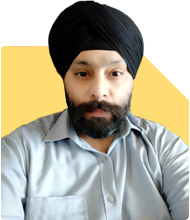
Inderpaul

Inderpaul Singh  | Answer  |Ask -

Leadership Coach - Answered on Feb 20, 2025

Major Inderpaul Singh (retired) served in the Indian Army for eight years.
In the year 2008, he moved to the corporate sector and worked with Century Plyboards for 14 years, specialising in people management and organisation improvement interventions.
He is currently employed as a partner with Amishrit Terrene Pvt Ltd, an IT solutions start-up located in Mohali, Punjab.
A certified life coach, he also helps students and individuals handle challenges in their personal and professional lives.
He holds a commerce degree from DAV College, Amritsar, and a post-graduate diploma in business administration from Symbiosis, Pune. ... more
Asked by Anonymous - Jan 15, 2025Hindi
Listen
Career

Hello Sir, My name is abhishek gupta , 22 year age and i failed in ca inter third attempt what should i do because i have a phone addiction and i am unable to secure Even passing marks in it.

Ans: Hello Abhishek
If you are serious about your career which you should be, try doing following when you sit for studies:-
1. Switch off or put your phone on airplane mode & lock it in some place not close to you
2. Check phone only during your planned breaks
3. You can even look at doing something drastic, as blocking yourself from social media sites/deleting such apps till you clear exam milestones etc.
Above simple steps done religiously make a significant impact in getting concentration/focus.
All the Best!
Major Inderpaul
HR Expert, Career & Relationship Coach
Asked on - Feb 22, 2025 | Answered on Feb 22, 2025
Listen
Thank u sir for suggesting me It is very helpful for me In May 25 CA inter exam, I will appear in it From Jan 15 I followed this strategy by own. After get my results, I will tell u Thank u sir.
Ans: Best of Luck !
Career

You may like to see similar questions and answers below

Nayagam P

Nayagam P P  |10899 Answers  |Ask -

Career Counsellor - Answered on Apr 03, 2025

Listen
Career
Hi I started my CA at the age of 23.5 along with job , and I eventually managed to cleared group 1 of ca inter May 2024 and for second group I gave jan 25 attempt but failed due do poor marks in cost , this wan an first attempt , but now I skipped may 25 attempt because I was not clear shoup I gave one more attempt or not but I didn't, I quit my job due to study but result doesn't came well and i am considering to prepare for govt job while doing job , I lf I prepare for ca it will take 28 If from there I managed to clear infirst attempt , I may be feeling that while working and preparing govt is better decision. Shoul I continued my CA journey or should I quit it , any suggestions please
Ans: At a career crossroads, it's crucial to consider your priorities and interests, such as passion for CA and interest in government jobs. The time and effort required for CA exams or SSC, UPSC, and Banking Exams, should be considered. Financial considerations should also be taken into account, as if FINANCIAL STABILITY is a priority, returning to a job while preparing for a government exam might be a safer option. Alternative approaches include a hybrid approach, switching fully to government jobs for stability, structured work, and benefits, or trying one more CA attempt if you still have the motivation and confidence. If you're passionate about CA and believe you can clear it with focused effort, give it another chance. If you're unsure and more inclined towards job security, it's practical to shift towards government job preparation while working. Commit to your decision fully and avoid constantly second-guessing. All the best for your prosperous future!

Follow RediffGURUS to Know more on 'Careers | Health | Money | Relationships'.

..Read more

Nayagam P

Nayagam P P  |10899 Answers  |Ask -

Career Counsellor - Answered on Jan 25, 2026

Career
Hello Sir I am 20 years old. Become 21 in oct 2026. I cleared my CA foundation in June 24. CA inter first attempt in May 25 but skip it then in sept 25 i failed in both group because I not study, all the time having thoughts that there are other good career than CA. By doing CA I lost my college life(doing bcom externally), friends and mental health. Jan 26 skip and have so much regret because I not do any study of any other exam in this 2 months. I have thoughts of living CA because after CA there is also struggle that's why I searching govt exam firstly SSC CGL and then RBI grade B. But Now I am confuse in doing CA or govt job. SSC CGL in May or June 26 and CA inter also in May. I thought give SSC CGL but if it is not cleared then I regret so much of not doing CA. And if I give CA inter both group then SSC is left. RBI grade B is also there and at last I want work in RBI grade B for work life balance. I want to complete CA because I started it. To prove that I have capability. I thought people(aslo my parents) will think that I left CA because I not able to do it. RBI not this year because I not eligible( age criteria). Next year I can give RBI grade B. Because in income criteria RBI grade B bits CA. I almost quit CA. But when my CA friends ask about my study or relatives starting phone call conversation with hello CA madam it haunts me. So I thought clear CA inter then 2 years articleship and then RBI. CA final study with job. Because articleship not possible with job. But then I thought why do CA if not want to work as CA. Because I want work life balance. Answer is for prestige and if I not like transfers in RBI I have option. But I think I not leave RBI. But it is future. Now I am confused in give SSC CGL or CA inter both group or SSC and CA inter one group. SSC CGL for income tax inspector post only. Then I have reason that I left CA because I become income tax inspector. And told other people aslo. First doing CA and then RBI i thought it's to late. Opportunity cost is there. And if I not clear CA final because of govt or RBI job means happy in that and don't want to study again I regret also that I lost my two years in articleship. So much confusion. Sometimes I thought I think so much about peoples. But CA is my dream how I leave it. But after CA I definitely do RBI because CA is stressful job. My thoughts in past that after CA life is set or easy is not right struggle also there, corporate life is tough. I want a peaceful life and good income also, RBI may give it. But when I thought I never have that CA prefix I once dreamt and that practice of signs of CA Arya is not going to be real I can't express my feelings. I confused in if after getting govt job may I regret of not doing CA when I see other CAs, my friends status of CA convocation or I happy in my life. Plz help only three months are left for May. I have to decide today
Ans: Arya, Here are three viable career pathways for your well-being and professional fulfillment. PATHWAY 1: COMPLETE CA WITH WELL-BEING BOUNDARIES - Pursue CA completion while fundamentally restructuring your approach to eliminate mental health damage. Study 2-3 hours daily with proper breaks, maintain exercise and social connections, and reframe CA as personal achievement rather than societal validation. After CA Inter completion, pursue a two-year articleship in a firm emphasizing work-life balance. Simultaneously prepare for RBI Grade B (eligible next year). This dual-track approach means you achieve the credential validating your capability while building alternative career options. Your mental health recovery becomes the primary success metric. RBI Grade B then becomes your long-term career anchor ensuring sustainable lifestyle. This transforms CA from a burden into a valuable resume credential. PATHWAY 2: STRATEGIC GOVERNMENT JOB FOCUS (RECOMMENDED) - Focus exclusively on SSC CGL (Income Tax Inspector) preparation for May/June 2026, targeting immediate government employment security. This establishes stable career with predictable work hours and excellent job security within weeks. Maintain CA credential eligibility for future enhancement without present pressure. Once employed, you regain financial stability and mental clarity to reassess CA completion interest authentically. This approach honors your original CA dream while respecting that pursuing it under current mental health conditions is unwise. Next year, you become eligible for RBI Grade B with government experience, expanding future options. This pathway prioritizes present mental health and stability while preserving your aspirations as optional future enhancement. PATHWAY 3: GOVERNMENT SERVICES FIRST, THEN SPECIALIST CREDENTIALS BASED ON INTEREST
Secure government employment as immediate step, then explore which professional credential genuinely aligns with your interests after gaining work experience. Rather than choosing between CA, SSC CGL, and RBI now while mentally exhausted, establish financial security first. Spend 12-24 months in government role observing which areas genuinely interest you and whether CA aligns with your authentic goals. This sequential approach respects that major decisions should not be made during mental health crises. You regain clarity through actual work experience rather than examination pressure. This pathway honors your need for well-being while allowing genuine purpose-alignment discovery. IMMEDIATE 10 ACTION STEPS (Next 3 Months) - Step 1: Mental Health Professional Support (Optional. NOT Mandatory). Consult a mental health professional within one week to assess current state and develop evidence-based coping strategies. This is the foundation for all other decisions. Step 2: Clarify Your Personal Values - Spend time identifying YOUR values (not your parents'): Do you prioritize work-life balance, security, autonomy, or prestige? Write these explicitly. Ask: "If no one judged me, what would I choose?" This reveals whether anxiety stems from authentic values conflict or external pressure. Step 3: Assess Your Realistic Study Capacity - Honestly evaluate sustainable daily study hours without triggering mental health relapse. If realistic maximum is 2 hours, structure accordingly. Choose one examination path based on this honest capacity, not ideal expectations. Step 4: Create Personal Success Metrics - For each pathway, list YOUR metrics for success (not society's): improved mental health, adequate sleep, maintaining social connections, skill development. Ignore prestige metrics. This shifts success definition from external validation to internal well-being. Step 5: Seek Mentorship from Aligned Role Models - Identify professionals who: (1) achieved what you're considering, (2) demonstrate work-life balance, (3) made non-traditional choices successfully, (4) support your well-being. Seek their genuine experience, not public versions. Filter out opinions from those not meeting these criteria. Step 6: Communicate with Family About Your Well-Being - Have dedicated conversation: "My mental health is the primary metric. I'm making the decision optimizing my well-being first. I need your support for whichever path I choose." Set boundaries on unsolicited advice. Emphasize that supportive presence is what helps you most. Step 7: Prepare Flexibly for Two Options Maximum - Prepare study materials for maximum two options simultaneously (e.g., SSC CGL and CA Inter basics). Allocate 60% study hours to primary focus, 30% to secondary. By May, reassess and finalize choice. This reduces decision paralysis by building optionality. Step 8: Establish Non-Negotiable Well-Being Practices - Schedule daily: 30 minutes physical activity, 7-8 hours sleep, one weekly social activity, 10 minutes meditation. Track these in a simple chart. Treat these as exam requirements, not luxuries. These practices reduce anxiety measurably. Step 9: Document Your Strengths and Past Achievements - Create detailed list of accomplishments: CA Foundation cleared, B.Com completed despite challenges, overcoming failure and trying again, managing family expectations. Review this whenever fear of judgment arises. Your worth is already proven. Step 10: Schedule Final Decision Review in Late April - Set late April 2026 as decision date for final exam choice. Between now and then, gather information, recover mentally, clarify values. By April 15, finalize your pathway for May with realistic preparation plan. This prevents premature decisions and ensures informed choice. PREFERENCE ORDER: FIRST PREFERENCE: PATHWAY 2 (STRATEGIC GOVERNMENT JOB FOCUS) - This pathway optimally balances your concerns while prioritizing mental health recovery. Securing SSC CGL establishes government employment security, stable income, and predictable work schedule within weeks. This reduces anxiety significantly and provides foundation for future decisions. You maintain optional CA credential for future enhancement without present pressure. Once employed, you regain mental clarity to reassess CA interest authentically. This honors your original dream while respecting current mental health realities. You prove capability through competitive government selection, eliminating judgment concerns. Your parents gain assurance through visible job security, reducing family pressure. Next year, you become eligible for RBI Grade B with enhanced profile. This transforms anxiety from "choose now or fail permanently" to "establish security, then enhance at sustainable pace." SECOND PREFERENCE: PATHWAY 3 (GOVERNMENT FIRST, THEN CREDENTIALS) - This pathway postpones irreversible decisions until mental recovery and clarity are achieved. Securing government employment provides stable income and structured environment for mental health recovery. After 12-24 months of work experience, you decide CA completion authenticity from actual knowledge rather than anxiety-driven pressure. This avoids both scenarios you fear: abandoning CA under pressure (clarity through experience) or continuing despite disinterest (clarified through actual work). Financial stability supports independent decision-making without parental influence. This sequential approach respects that major decisions deserve optimal mental state. Your regret risk decreases because May decision focuses on securing employment (straightforward), not choosing between complex competing options. THIRD PREFERENCE: PATHWAY 1 (COMPLETE CA WITH WELL-BEING BOUNDARIES) - This pathway honors your original aspiration while restructuring the harmful environment. It's viable only if you genuinely want CA (not from pressure), can realistically maintain limited study hours without guilt, and have robust family support. The advantage is proving capability and eliminating "what if" regrets. However, this carries highest risk because CA environment historically damages mental health. Choose this only if: (1) mental health professional confirms stability, (2) you secure work-life balance focused firm, (3) you've separated YOUR desire from social expectations, (4) you understand this requires next-level self-care. If you have doubts, Pathways 2 or 3 are safer. OVERCOMING SOCIAL JUDGMENT AND MAINTAINING SELF-WORTH - Your career validity depends on authentic well-being and values alignment, not others' opinions. When parents or relatives judge your decision, remember their criticism reflects their limited information, not your actual capability. You are gathering actual data (mental health assessment, skill testing, job market research); they recite inherited beliefs. When you see CA friends succeeding, remember you're comparing incomplete information. LinkedIn versions hide burnout extensively. Their path is irrelevant to your optimal path—you have different mental health baselines and aspirations. Recognize that choosing a different path because one damages your well-being is the strongest demonstration of self-knowledge and courage. The strongest leaders made unconventional choices society initially questioned. Write daily affirmations contradicting anxiety: "My mental health proves intelligence. My choice reflects my values. My well-being is my achievement. My worth is not determined by examinations." This practice reduces anxiety significantly within weeks. Remember that only you will live your career consequences. Your parents want your happiness, but they express love through inherited prestige frameworks. You can honor their care while respectfully choosing your own path. Your mental health recovery is your success metric. Everything else follows. You possess the clarity, intelligence, and resilience to navigate this decision. The next three months are for building foundation, not permanent decisions under pressure. You are not failing—you are learning and growing. That is genuine strength. All the BEST for Your Prosperous Future!

Follow RediffGURUS to Know More on 'Careers | Money | Health | Relationships'.

..Read more

Latest Questions
Ramalingam

Ramalingam Kalirajan  |11004 Answers  |Ask -

Mutual Funds, Financial Planning Expert - Answered on Feb 01, 2026

Asked by Anonymous - Jan 31, 2026Hindi
Money
I am fifty two year old. I have two home. One is two bed room one hall and one kitchen flat and it's resale value is fourteen lakh. The other is a kothi, which is near to fourty lakh price in resale. I don't want to sale any one. Only i can rented out my flat in just five thousand rupees per month. I have three members in my family and they are covered by twenty five lakh rupees of mediclaim for each person. I have a PF. In my provident fund nine lakh rupees present and it's pension fund have only one lakh fifty thousand rupees. The provident fund is running since November two thousand thirteen.i have four D-mat account. Each have the value is 2 two lakh rupees now. One of them is totally free, as the value of that dmat tripled, so i sale some parts of the all shares and without any investment that dmat value is niw two lakh. My only daughter is in class eight. I have some LIC policy of sum assured near to twenty six lakh rupees and monthly premium pay for this is six thousand. I have one lakh fixed deposit, as a emergency fund and i have also one lakh rupees of monthly income scheme in indian post office. My monthly expenditure today is near to twenty thousand rupees. I don't stay in any one of my house, because i work outside,so i am living in a monthly rented room. The rent is now seventeen thousand rupees per month. My sallary is now one lakh rupees per month and i will retire from my work place at the age of fifty eight.Now please tell me whether i am in a right way in the path for planing the retirement? My and my wife have life expectency is ninety years. Now i also invest monthly fifty thousand rupees in ETF. Please tell me that does i do right things or wrong?
Ans: I appreciate the honesty and effort you have taken to put all details clearly. At age 52, with steady income, assets, and disciplined savings, you are not late. You are actually in a position where course correction can still create a strong and peaceful retirement life. Your intent is right. Now it needs direction.

» Where You Stand Today – Big Picture
– You have two self-owned properties and you are clear that you do not want to sell them. That emotional clarity is important.
– You have stable salary income till age 58 and a reasonable monthly expense level.
– You have health cover in place, which is a big relief for retirement planning.
– You are investing regularly and thinking long term till age 90, which shows maturity.

» Cash Flow Reality Check
– Monthly salary is Rs 1 lakh.
– Monthly expenses including rent are on the higher side because you are not living in your own house.
– Rental income from your flat is very low compared to its value, which limits support during retirement.
– Post retirement, salary will stop, but rent and living costs will continue.

» Retirement Corpus Readiness
– Provident Fund balance is moderate and will grow till retirement, but by itself it will not support a 32-year retired life.
– Pension fund amount is very small and cannot be relied upon for monthly needs.
– Fixed deposit and post office monthly income scheme amounts are too low for emergencies and long retirement needs.
– Demat holdings show good market exposure, but they are scattered across multiple accounts, making tracking and discipline difficult.

» ETF Investment – Important Concern
– ETFs simply follow the market without judgement. They go up when markets rise and fall fully when markets fall.
– At age 52, protecting downside is as important as growth. ETFs do not offer this protection.
– ETFs cannot shift strategy based on valuations, interest rates, or economic cycles.
– Actively managed mutual funds are better suited now as they can control risk, manage volatility, and rebalance based on conditions.
– Continuing heavy ETF investing at this stage increases retirement risk.

» LIC Policies – Review Is Necessary
– You are holding investment-cum-insurance policies with monthly premium of Rs 6,000.
– Life cover of around Rs 26 lakh is not meaningful considering your income, liabilities, and dependents.
– These policies grow slowly and lock your money for long periods.
– This is one area where surrender and redirection should be evaluated carefully.
– Redirecting future premiums into growth-oriented mutual funds can improve retirement readiness.

» Daughter’s Education Planning
– Your daughter is in Class 8, which means major education expenses are coming soon.
– This goal should be kept separate from retirement money.
– Education planning needs growth with time-bound discipline, not random investments.

» Emergency and Stability Planning
– Emergency fund of Rs 1 lakh is not sufficient considering job risk, rent, and medical needs.
– This should ideally cover several months of expenses.
– Health insurance is well structured, which is a strong positive.

» 360-Degree Corrections Needed
– Consolidate demat holdings to simplify monitoring and reduce emotional decisions.
– Gradually reduce ETF exposure and move towards actively managed funds aligned to goals.
– Review LIC policies and consider surrender where financially sensible.
– Increase emergency fund to avoid touching retirement money.
– Align investments separately for retirement, daughter’s education, and near-term needs.
– Rental income strategy should be realistic and aligned with retirement cash flow needs.

» Final Insights
– You are not on a wrong path, but the path is unorganised.
– Assets are there, income is there, discipline is there, but structure is missing.
– Heavy ETF exposure and slow-moving insurance products are the biggest risks today.
– With six working years left, smart reallocation and simplification can still build a stable retirement till age 90.
– With guided planning by a Certified Financial Planner, your existing resources can be turned into a confident retirement plan.

Best Regards,

K. Ramalingam, MBA, CFP,

Chief Financial Planner,

www.holisticinvestment.in

https://www.youtube.com/@HolisticInvestment

...Read more

Ramalingam

Ramalingam Kalirajan  |11004 Answers  |Ask -

Mutual Funds, Financial Planning Expert - Answered on Feb 01, 2026

Money
I have diabetes also and is there any return of premium policy in term life insurance,so Sir please suggest me..
Ans: I appreciate you for being open about your health condition and for thinking carefully about family protection. Planning insurance with diabetes needs clarity, not fear. With the right structure, you can still build strong protection and long-term comfort.

» Diabetes and Term Life Insurance – Ground Reality
– Diabetes does not mean insurance rejection in all cases.
– Insurers mainly look at: age, duration of diabetes, sugar control, medication, and presence of complications.
– Well-controlled diabetes with regular follow-ups improves acceptance chances.
– Premiums may be higher, but cover is still possible in many cases.

» Return of Premium Term Insurance – How It Works
– In return of premium plans, you pay higher premium compared to pure term plans.
– If you survive the policy term, total premiums paid are returned.
– If death occurs during the term, nominee receives the full sum assured, not double.
– The returned amount does not generate real growth and does not beat inflation over long periods.

» Suitability Check – Is Return of Premium Right for You
– These plans give emotional comfort of “money back,” but not real wealth creation.
– Premiums are much higher, which reduces flexibility in other important goals.
– The return is simply your own money coming back after many years, without meaningful growth.
– From a planning view, insurance should protect risk, not act as an investment.

» Better Way to Think About Protection
– Life insurance should focus on high cover at reasonable cost.
– Savings and wealth creation should be handled separately through growth-oriented options.
– This separation gives clarity, flexibility, and better long-term results.
– Even with diabetes, choosing the right structure helps balance protection and affordability.

» If You Are Emotionally Keen on Premium Return
– If the idea of “no loss if I survive” is very important for your peace of mind, return of premium plans can be considered cautiously.
– Cover amount should still be meaningful, not compromised due to higher premium.
– This choice should be made after checking long-term cash flow comfort.

» 360-Degree Protection Planning
– Ensure adequate life cover based on responsibilities and dependents.
– Review existing insurance policies to avoid overlap or under-coverage.
– Keep health insurance strong, especially with diabetes.
– Align investments separately for retirement and family goals instead of depending on insurance maturity.

» Final Insights
– Diabetes is a factor, not a full stop, in life insurance planning.
– Return of premium plans give emotional relief but not financial growth.
– Clear separation between insurance and investment gives better long-term stability.
– With structured guidance from a Certified Financial Planner, you can design protection that works for your health condition and future goals.

Best Regards,

K. Ramalingam, MBA, CFP,

Chief Financial Planner,

www.holisticinvestment.in

https://www.youtube.com/@HolisticInvestment

...Read more

Ramalingam

Ramalingam Kalirajan  |11004 Answers  |Ask -

Mutual Funds, Financial Planning Expert - Answered on Feb 01, 2026

Asked by Anonymous - Jan 30, 2026Hindi
Money
Hello Sir, I have Jeevan Saral Policy (Plan 165) since Oct 2008. Sum Assured Rs 750000/-. Premium 36030/- per annum, Policy term 35 yrs i.e. maturity in Oct 2043 having Double accident benefit. Can you Pls tell me how will I get after maturity? Is it worth continuing it or not? Pls guide me ?
Ans: I appreciate you for sharing full policy details and for your long-term commitment since 2008. Staying invested for so many years shows discipline and responsibility towards family protection. It is good that you are reviewing this now instead of blindly continuing.

» Understanding What You Will Receive at Maturity
– This is an insurance-cum-investment policy, not a pure investment product.
– At maturity, you will receive:

Sum Assured

Loyalty addition, if declared by the insurer
– The maturity amount is not guaranteed upfront. Loyalty additions depend on the insurer’s performance and are declared closer to maturity.
– Double accident benefit applies only in case of accidental death, not for maturity value.

» Return Expectation – Reality Check
– Over long policy terms, such plans generally generate low returns compared to long-term market-linked options.
– Premiums are locked for decades, reducing flexibility.
– Inflation impact is high over 35 years, which reduces the real value of maturity proceeds.
– The policy is safe, but safety comes at the cost of growth.

» Insurance and Investment – Mixed Role Issue
– This policy combines insurance and savings, which reduces efficiency on both sides.
– Life cover of Rs 7.5 lakh is inadequate for long-term family protection today.
– At the same time, the investment part grows slowly and does not match long-term goals like retirement or children’s education.

» Should You Continue or Exit
– Since this is an investment-cum-insurance policy, it is important to reassess its relevance today.
– If your main objective is wealth creation, continuing may not be optimal.
– If surrender value is reasonable and future premiums are still large, surrendering and redirecting money to better growth-oriented options can make sense.
– The decision should be based on: years already paid, current surrender value, and future cash flow comfort.

» What to Do After Surrender – Direction, Not Guesswork
– After surrender, the focus should be on separating insurance and investment clearly.
– Adequate pure life insurance cover should be ensured separately.
– Long-term investments should be aligned to goals, time horizon, and risk capacity.
– Actively managed mutual funds provide flexibility, professional decision-making, and better inflation-adjusted growth over long periods compared to traditional insurance products.

» 360-Degree View on Your Financial Plan
– Review existing insurance coverage across life and health.
– Align investments with specific goals instead of policy maturity dates.
– Maintain liquidity for emergencies.
– Periodic review with a Certified Financial Planner helps avoid emotional decisions and keeps the plan on track.

» Final Insights
– Your intention to secure the future is absolutely right and deserves appreciation.
– The policy offers safety, but growth is limited and may not meet long-term needs.
– Mixing insurance and investment has worked against optimal wealth creation.
– A structured shift towards goal-based investing, after careful surrender evaluation, can significantly improve your financial outcome over time.

Best Regards,

K. Ramalingam, MBA, CFP,

Chief Financial Planner,

www.holisticinvestment.in

https://www.youtube.com/@HolisticInvestment

...Read more

Ramalingam

Ramalingam Kalirajan  |11004 Answers  |Ask -

Mutual Funds, Financial Planning Expert - Answered on Feb 01, 2026

Money
Hi I have invested in mutual fund SIP Parag parikh flexi cap 3k HDFC flexi cap 2500 Hdfc balance advantage 2k Navi nifty 50 index fund 2500 Edweiss gold and silver ETF FOF 2k Is all the fund good to keep for long term or should I change to another fund. Thank you
Ans: I truly appreciate that you are investing regularly through SIPs and have spread your money across equity, hybrid and gold-related options. This shows discipline and a long-term mindset, which is the most important part of wealth creation. With some fine-tuning, this portfolio can become stronger and more aligned to long-term goals.

» Overall Portfolio Assessment
– Your portfolio has a mix of growth-oriented equity, a balanced component, and a hedge through gold and silver.
– Monthly SIP amount is well distributed, which reduces timing risk.
– However, there is overlap in equity style and also some exposure to options that may not add real long-term value.

» Flexi-cap Equity Exposure
– Flexi-cap funds are suitable for long-term goals as they can move between large, mid and small companies based on market conditions.
– Holding more than one flexi-cap fund can sometimes lead to duplication of stocks, which reduces the benefit of diversification.
– Instead of quantity, quality and role clarity matters. One well-managed active flexi-cap fund is usually sufficient when reviewed periodically.

» Balanced / Dynamic Allocation Exposure
– A balanced or dynamic asset allocation fund helps reduce volatility and is useful for investors who want smoother returns.
– This is a sensible inclusion, especially if you are investing for multiple goals and want some stability along with growth.
– Allocation should be intentional, not accidental. Its role should be clear – risk control, not return chasing.

» Index Fund Exposure – Important Caution
– Index funds simply copy the market and have no ability to protect your portfolio during market excesses or downturns.
– When markets are expensive, index funds still stay fully invested without judgement.
– In long-term investing, especially in India, actively managed funds have the flexibility to avoid overvalued stocks, manage risks, and adapt to changing conditions.
– For investors seeking meaningful wealth creation and downside control, active management plays a crucial role that index funds cannot provide.

» Gold and Silver ETF FoF Exposure
– Gold can act as a hedge, but returns over the long term are limited compared to equity.
– Silver is highly volatile and largely driven by global cycles, making it less predictable for retail investors.
– ETF FoF structures add an extra layer of cost and tracking issues without giving proportional benefit.
– Precious metals should be held in moderation and only as a support asset, not as a growth driver.

» Cost, Monitoring and Behavioural Discipline
– Too many funds increase monitoring burden and can lead to emotional decisions.
– Simplicity improves discipline, especially during market corrections.
– Investing through a Mutual Fund Distributor who is also a Certified Financial Planner helps in regular reviews, behavioural guidance, and timely rebalancing. This support is often missing in self-managed approaches.

» 360-Degree Alignment with Goals
– The right portfolio is not about popular funds, but about matching investments with goals like children’s education, retirement, and financial security.
– Time horizon, risk capacity, and cash flow stability should decide fund selection and allocation.
– Periodic review and rebalancing is more important than frequent switching.

» Final Insights
– Your intention and consistency are excellent and deserve appreciation.
– Some consolidation is advisable to avoid overlap and unnecessary exposure.
– Reducing passive and ETF-based allocations and strengthening active equity exposure can improve long-term outcomes.
– A goal-aligned, simplified, actively managed portfolio reviewed by a Certified Financial Planner can give you clarity, confidence, and peace of mind over the years.

Best Regards,

K. Ramalingam, MBA, CFP,
Chief Financial Planner,
www.holisticinvestment.in

https://www.youtube.com/@HolisticInvestment

...Read more

Komal

Komal Jethmalani  |454 Answers  |Ask -

Dietician, Diabetes Expert - Answered on Feb 01, 2026

Asked by Anonymous - Jan 16, 2026Hindi
Health
Why does Indian thali make you sleepy? Whenever I eat a typical Indian lunch with rice, two rotis, sabzi, dal, and something heavy like paneer gravy or aloo, I start feeling extremely sleepy within 20 to 30 minutes. My head feels heavy, my concentration drops, and all I want is a quick 10-minute nap. This post-lunch sleepiness happens almost every working day. But when I try eating a very light lunch like just fruits or a salad I don’t feel drowsy. Instead, I feel hungry again by 3 pm and end up snacking on biscuits, tea, or other unhealthy foods. So it feels like a no-win situation: heavy lunch makes me sleepy, while light lunch makes me hungry. Is this kind of sleepiness after lunch normal, or is it a sign that something is wrong with how I’m combining foods? Does eating too much rice, oily sabzi, paneer gravies, or sugary items directly affect energy levels and cause the afternoon energy crash? Why does an Indian thali often lead to a post-lunch slump, especially
Ans: A standard thali is high in carbohydrates, fat, volume and low in fiber. The reasons for post-meal drowsiness is as blood sugar rises, your body releases insulin, blood sugar drops again and you feel sleepy, foggy, and low?energy. High fat slows digestion, so your body diverts blood flow to the digestive system which makes you feel sleepy. Rice and roti are both starches and increase the load. Sugary items worsen the blood sugar spikes and make you feel more sleepy. A lighter but balanced meal (not just fruits/salad) will help you stay alert and avoid mid?afternoon cravings.

...Read more

Komal

Komal Jethmalani  |454 Answers  |Ask -

Dietician, Diabetes Expert - Answered on Feb 01, 2026

Asked by Anonymous - Jan 16, 2026Hindi
Health
In our housing society, whenever the ladies sit together for evening chit-chat, the topic of ghee always turns into a big debate. Some of them say ghee is very healthy, especially homemade ghee. They claim it helps digestion, keeps the skin glowing, and is even good for children and older people. One aunty even says, 'Beta, one teaspoon of ghee every day is like medicine.' But then there are others who immediately argue the opposite. They say ghee is nothing but fat, and that eating it daily will increase cholesterol, weight, and worsen heart problems. One of my neighbours keeps telling everyone, 'Avoid ghee completely if you want to lose weight,” while someone else says, 'Arre, without ghee, food has no strength.' Last week, my friend added ghee to her roti and another lady told her she was inviting weight gain. But on the same day, another friend told me that her nutritionist sister advised her to include ghee daily. Is ghee really healthy, or is it something we should eat in very small amounts?
Ans: Ghee is healthy in some ways, but only in moderation. It is rich in fat?soluble vitamins (A, D, E, K) and some studies associate with potential anti?inflammatory benefits. However, ghee is still pure fat, and most of that fat is saturated fat. 1–2 teaspoons of ghee per day can fit comfortably into a balanced diet. It’s a traditional fat with some benefits, but like all saturated fats, it’s best enjoyed in small, intentional amounts. Use it for flavor, not as the main cooking fat.

...Read more

DISCLAIMER: The content of this post by the expert is the personal view of the rediffGURU. Investment in securities market are subject to market risks. Read all the related document carefully before investing. The securities quoted are for illustration only and are not recommendatory. Users are advised to pursue the information provided by the rediffGURU only as a source of information and as a point of reference and to rely on their own judgement when making a decision. RediffGURUS is an intermediary as per India's Information Technology Act.

Close  

You haven't logged in yet. To ask a question, Please Log in below
Login

A verification OTP will be sent to this
Mobile Number / Email

Enter OTP
A 6 digit code has been sent to

Resend OTP in120seconds

Dear User, You have not registered yet. Please register by filling the fields below to get expert answers from our Gurus
Sign up

By signing up, you agree to our
Terms & Conditions and Privacy Policy

Already have an account?

Enter OTP
A 6 digit code has been sent to Mobile

Resend OTP in120seconds

x