Home > Career > Question
Need Expert Advice?Our Gurus Can Help

Confused E&C student seeks advice on additional courses
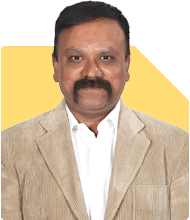
Prof Suvasish

Prof Suvasish Mukhopadhyay  | Answer  |Ask -

Career Counsellor - Answered on Nov 30, 2024

Professor Suvasish Mukhopadhyay, fondly known as ‘happiness guru’, is a mentor and author with 33 years of teaching experience.
He has guided and motivated graduate and postgraduate students in science and technology to choose the right course and excel in their careers.
Professor Suvasish has authored 47 books and counselled thousands of students and individuals about tackling challenges in their careers and relationships in his three-decade-long professional journey.... more

Prashanth Question by Prashanth on Nov 29, 2024Hindi

Listen
Career

Sir, i am firy year E&C btech student.which additional course is good for me

Ans: Right now you can learn some foreign language like German through online certification course. Nothing else is recommended now. Best of luck. Just follow me. GOD BLESS YOU. Professor............:)
Career

You may like to see similar questions and answers below
Latest Questions
Ramalingam

Ramalingam Kalirajan  |10980 Answers  |Ask -

Mutual Funds, Financial Planning Expert - Answered on Jan 22, 2026

Asked by Anonymous - Jan 22, 2026Hindi
Money
Gold rate today is Rs 1.60 lakh per 10 grams of gold. I have 95 lakh worth gold jewellery including bangles, necklace and rings. Gold price has gone up nearly 25% in the last 12 months. I'm 41 years old, already investing regularly in EPFO (8-8.25% returns) and equity mutual funds targeting 10 to 12% over the long term, while also servicing a home loan of around 70 lakh. My salary is Rs 2 lakh per month. I want to retire with a corpus of 20 crore in the next 15 years. Am I on the right track?
Ans: I appreciate the clarity with which you have laid out your numbers, goals, and concerns. At 41, with strong income, disciplined investing, and awareness of risks, you are already ahead of many. The key now is alignment and fine-tuning, not drastic changes.

» Your current financial position at a glance
– Monthly salary of Rs 2 lakh gives you strong earning power
– Regular EPFO contribution brings stability and discipline
– Equity mutual fund investing for long-term growth is the right direction
– Home loan of around Rs 70 lakh is manageable but still a major responsibility
– Gold jewellery worth around Rs 95 lakh is a very significant part of your net worth

» Gold holding – strength with a hidden imbalance
– A 25% rise in gold in one year looks attractive, but it is not repeatable every year
– Jewellery is an emotional and cultural asset, not a growth-focused one
– Making charges and resale discounts reduce effective value when liquidated
– Gold does not create cash flow or support retirement expenses directly
– At current value, gold forms a large and concentrated portion of your wealth

» Role of gold in a 15-year retirement plan
– Gold works best as a hedge and emotional safety net
– It should protect wealth, not be expected to multiply it
– Heavy dependence on gold can slow overall portfolio growth
– For a Rs 20 crore target, growth assets must do most of the work
– Gold should be capped and treated as secondary support

» EPFO – stable but not a growth engine
– EPFO gives predictable and low-risk compounding
– It protects capital and brings retirement discipline
– However, returns remain moderate and may not beat inflation comfortably over long periods
– EPFO alone cannot take you to a Rs 20 crore target
– It should remain a strong foundation, not the main driver

» Equity mutual funds – the core engine for your goal
– A 15-year horizon allows equity to work through cycles
– Actively managed funds can adapt to market valuations and earnings changes
– Index-style investing moves fully with the market, without downside control
– During corrections, index funds fall completely with no protection
– Active funds aim to manage risk and capture opportunities selectively

» Home loan – silent impact on retirement readiness
– Large EMIs reduce long-term investing capacity
– Interest cost over time can dilute wealth creation
– Balancing loan repayment and investing is critical
– Partial prepayment strategy, when cash flow allows, improves flexibility
– Lower debt equals higher freedom closer to retirement

» Rs 20 crore goal – reality check without calculations
– The target is ambitious but not unrealistic with discipline
– Consistency of equity investing matters more than short-term returns
– Lifestyle inflation must be controlled carefully
– Sudden risk-taking or chasing trends can derail progress
– Your income growth and savings rate will decide success more than gold prices

» Key gaps to address now
– Overexposure to gold relative to growth assets
– Need for clearer allocation between growth, stability, and protection
– Home loan impact on long-term cash flow
– Ensuring equity investments are goal-aligned and reviewed regularly
– Avoiding comfort-driven decisions during bull markets

» Behavioural discipline – the biggest differentiator
– Do not let recent gold returns influence future allocation
– Avoid increasing gold exposure just because prices are rising
– Stay consistent with equity even during dull or falling phases
– Review annually, not emotionally
– Keep retirement as a long-term project, not a yearly scorecard

» Finally
– You are on the right path, but the balance needs refinement
– Gold has given comfort, but growth must come from equity
– EPFO provides stability, not speed
– Reducing debt and increasing productive investments improves certainty
– With discipline and timely corrections, a strong retirement outcome is still achievable

Best Regards,

K. Ramalingam, MBA, CFP,

Chief Financial Planner,

www.holisticinvestment.in

https://www.youtube.com/@HolisticInvestment

...Read more

Ramalingam

Ramalingam Kalirajan  |10980 Answers  |Ask -

Mutual Funds, Financial Planning Expert - Answered on Jan 22, 2026

Money
I am 28. I am investing in the mutual funds since September 2024, the sip is worth 20k with a step up of 10% every year. And i have invested my father's 30 lakhs in mutual fund as well through stp. The funds are as follows:- Icici large and mid cap- 8k Bandhan large and mid cap '- 4k Nippon India small cap- 4k Hdfc fifty- 4k Icici balanced advantage fund- 5 lakhs Icici retirement fund- 7.5 lakhs Icici thematic advantage fund of fund- 7.5 lakhs Hdfc multi cap- 5 lakhs Motilal large and mid cap- 5 lakhs Please guide me me on this . What do you reckon looking at the portfolio.
Ans: I appreciate the discipline you have shown at a very young age. Starting SIPs at 28, doing annual step-up, and responsibly handling your father’s Rs 30 lakhs through STP shows maturity and intent. This gives you a strong base to build on, provided the structure is refined.

» Overall portfolio structure – what is working well
– You have exposure across large, mid, and small companies
– SIP with 10% step-up is a very healthy habit for long-term wealth
– STP instead of lump sum investing for your father’s money reduces timing risk
– Use of a balanced style fund adds some stability to the portfolio
– Time is clearly on your side due to your age

» Key concern – overlap and repetition risk
– Too many funds are playing in the same large & mid cap space
– Multiple funds chasing similar stocks reduces true diversification
– Returns may look different on paper, but portfolio behaviour will be similar
– Over-diversification increases monitoring burden without improving outcome
– Fewer, well-chosen funds usually work better than many similar funds

» SIP side review – equity concentration
– Large & mid cap exposure is high across multiple funds
– Small cap allocation is present, which suits your age, but needs control
– Small caps can give high returns but also fall sharply during corrections
– SIP amount should not be emotionally disturbed during market falls
– Portfolio needs clearer role definition for each category

» About index-style fund exposure
– Market-linked funds that simply track an index move fully up and fully down
– There is no downside protection during market corrections
– No flexibility to reduce risky sectors when valuations are high
– Active funds can shift allocation based on market and earnings cycles
– Over long periods, active management helps control volatility better

» Father’s Rs 30 lakhs – risk suitability check
– This money is not yours emotionally or financially
– Capital protection matters more than aggressive growth here
– Too much thematic and equity-heavy exposure increases stress risk
– Retirement and thematic oriented funds tend to have lock-in or style rigidity
– Your father’s age, income needs, and comfort must guide allocation

» Thematic and retirement-oriented funds – caution required
– Thematic funds depend on cycles which may stay weak for long periods
– They can underperform for years even in rising markets
– Retirement-labelled funds still carry equity risk, name alone does not reduce risk
– Such funds should never dominate a parent’s core money
– Simplicity and predictability matter more for family money

» What needs correction, not panic
– Reduce duplication in large & mid cap funds
– Keep small cap exposure meaningful but not excessive
– Re-align father’s money toward stability and smoother return path
– Avoid adding new funds unless there is a clear gap
– Focus on goal-based buckets, not fund count

» Behavioural discipline – the silent risk
– Avoid checking returns daily or monthly
– Do not react to short-term underperformance
– Step-up SIP only if income growth supports it
– Never use father’s portfolio for experiments or trends
– Consistency will matter more than fund selection over time

» Finally
– Your intent and discipline are strong, which is rare at this age
– Portfolio needs simplification, not replacement
– Active equity funds should remain the core growth drivers
– Parent’s money must be treated with extra safety and respect
– With minor restructuring and patience, this portfolio can do very well

Best Regards,

K. Ramalingam, MBA, CFP,

Chief Financial Planner,

www.holisticinvestment.in

https://www.youtube.com/@HolisticInvestment

...Read more

Nayagam P

Nayagam P P  |10888 Answers  |Ask -

Career Counsellor - Answered on Jan 22, 2026

Career
Hello, I am 25 years old have completed MCA in 2024, I have no experience in IT, I want to go in IT but because of current Layoffs i fear if same situation could happen with me, and Because of AI my web development field can be overtaken by AI, so I am worried about it what to do should I pursue IT or should I change my career or should I learn Ai, machine learning, cloud please guide me what to do so that I can have a good career and a good earning so that I can give myself and my family a good life please guide me
Ans: Dev, Your Fear vs. Reality: India's IT sector demand reached 1.8 million roles in 2025 (16% growth); MCA graduates show 71% employability—your qualification is valued. Web development isn't disappearing; it's transforming: AI automates routine coding while developers become "AI managers" solving complex problems, requiring you to develop AI literacy alongside coding skills. Optimal Strategy: Pursue IT immediately but strategically specialize in emerging technologies (AI/ML, Cloud Engineering, DevOps). Entry-level AI/ML roles command ?6–8 LPA rising to ?20–50 LPA for specialists; traditional web development enters at Rs.4–6 LPA with slower progression. India's AI market projects 39% job growth with 30–35% salary premiums for Generative AI and MLOps specialists. Action Plan: (1) Apply aggressively to IT companies offering AI/ML or Cloud projects—largest hiring surge; (2) During first role (12–18 months), simultaneously earn foundational AI certifications (AWS, GCP, TensorFlow) costing Rs.30,000–50,000; (3) Transition to emerging tech role leveraging combined MCA + AI credentials within 24 months. This pathway eliminates your vulnerability to AI disruption while capturing Rs.15–25 LPA earning potential within 3–5 years. Family security depends on your specialization trajectory, not IT industry fear. All the BEST for Your Prosperous Future!

Follow RediffGURUS to Know More on 'Careers | Money | Health | Relationships'.

...Read more

Reetika

Reetika Sharma  |503 Answers  |Ask -

Financial Planner, MF and Insurance Expert - Answered on Jan 22, 2026

Asked by Anonymous - Jan 17, 2026Hindi
Money
Hi. I am middle class person. Age is 32 years. I recently 2 years back i bought 1.2 cr house. Current i am fear about job loss due to AI. I am keep on thinking what if i didn't get job immediately. In this situation how to pay high EMI? I have 3 loans all are home loan related currently 7.30% interest rate for all. 1. took 89 lac already paid 10 lac remaining tenure is 160 months, emi is 77000 2. Took 10 lac already paid 6 lac remaining tenure is 48 months, emi is 10000 3. Took 1.8 lac, already paid 1.4 lac remaining tenure is 29 months emi is 2k. And from income side My salary is 2 lac, my emi comes arround 90 K, my total expenses is 40 K, i invest remaining in savings and mutual funds, even though i have 5 lac in FD, 5 lac in equity mutual fund, 2 lac in savings account , 2 lac in debt mutual fund, 2 lac in stocks. I want to know how to manage these emi during job loss. I want debt free. These emi making me sleepless.Hi. I am middle class person. I recently 2 years back i bought 1.2 cr house. Current i am fear about job loss due to AI. I am keep on thinking what if i didn't get job immediately. In this situation how to pay high EMI? I have 3 loans all are home loan related currently 7.30% interest rate for all. 1. took 89 lac already paid 10 lac remaining tenure is 160 months, emi is 77000 2. Took 10 lac already paid 6 lac remaining tenure is 48 months, emi is 10000 3. Took 1.8 lac, already paid 1.4 lac remaining tenure is 29 months emi is 2k. And from income side My salary is 2 lac, my emi comes arround 90 K, my total expenses is 40 K, i invest remaining in savings and mutual funds, even though i have 5 lac in FD, 5 lac in equity mutual fund, 2 lac in savings account , 2 lac in debt mutual fund, 2 lac in stocks. I want to know how to manage these emi during job loss. I want debt free. These emi making me sleepless.
Ans: Hi,

It is natural to fear advancement in technology but that should not turn into sleepless nights. Rather use this opportunity to learn the same and upskill yourself in that field.
However, let me try to guide you with the correct steps for you to take:

1. Your total EMIs come out to be around 90k per month and fixed monthly expenses are 40k. You are left with 70k per month to invest.
2. Try and close the smaller loans of 40,000 first followed by 4 lakhs loan once your job stabilizes.

>> You have 5 lakhs in FD, 2 lakhs in savings and 2 lakhs in debt mutual funds - total liquid is 9 lakhs.
This can be your emergency fund in case of job loss and will keep your emi's and basic requirements on track for 7 months.
7 months is a sufficient time for you to find another upskilled job.

>> Keep the 5 lakhs of equity mutual funds and 2 lakhs of stocks as is.
In the meantime, pause your SIPs for a while, start accumulating surplus of 70k per month in savings account so as to overcome any uncertain situation.

You can resume your SIPs once your job is stable, you have upskilled yourself and are no longer in dilemma of job loss.

Let me know if you need more help.

Best Regards,
Reetika Sharma, Certified Financial Planner
https://www.instagram.com/cfpreetika/

...Read more

Nayagam P

Nayagam P P  |10888 Answers  |Ask -

Career Counsellor - Answered on Jan 22, 2026

Asked by Anonymous - Jan 21, 2026Hindi
Career
I'm 23 years old guy entered into software industry. I'm earning a salary of 50k .But I'm not interested in job. I have around 10 crores property which includes farm land and plots . I'm getting rent around 50k from plots(This may increase to above 1 lakh if I build a commercial space).From farm land I'm getting around 1.5-2 lakhs yearly.In agriculture we are getting not any profits we may get in next two or three years but not sure. Should I continue with my job? Can I quit my job and plan a business or focus on rental properties? Suggest me a financial advice
Ans: You possess a rare financial advantage at 23: substantial property assets generating Rs.7.5–8 lakhs annual passive income while earning Rs.6 lakhs employment salary. Rather than an impulsive employment exit, you need a structured pathway that converts employment dissatisfaction into wealth creation while protecting family economic security. 3 evidence-based options exist, each addressing your constraints differently while ensuring zero financial loss risk. OPTION 1: Strategic Passive Asset Development (Continue Employment + Active Property Management Optimization). Maintain your Rs.50,000 monthly software employment as an income stability foundation while systematically upgrading property and agricultural assets through professional management. Hire a property manager for Rs.5,000–10,000 monthly to handle day-to-day residential rental operations, freeing your time for strategic commercial conversion planning. Simultaneously, engage an agricultural consultant for Rs.10,000–15,000 annually to validate the "2–3 year profitability" timeline with concrete data; if valid, you've confirmed future income; if invalid, you've avoided business failure before committing capital. Over five years, residential plots generate capital appreciation of 8–10% annually on your Rs.10 crore base (approximately Rs.80 lakh appreciation); plot rental increases from Rs.50,000 to Rs.75,000–100,000 through market escalation; and commercial development conceptual planning establishes a timeline and return on investment (ROI). By year five, passive income growth combined with employment stability creates Rs.20–25 lakhs annual income without employment dissatisfaction escalating into financial crisis. You maintain psychological freedom (planning your exit) while managing transition risks mathematically. This option eliminates the employment-exit financial cliff, allows five-year passive appreciation exceeding Rs.80 lakhs, validates agricultural assumptions risk-free, and enables calculated commercial development decisions post-validation without desperation or hasty judgment. OPTION 2: Hybrid Transitional Model (Employment Continuation → Validation → Strategic Exit) - Execute controlled exit within 24 months through three sequential phases: first, the validation phase (six months) where you hire professionals to verify agricultural profitability timeline, quantify commercial development return-on-investment, and stress-test passive income assumptions against worst-case scenarios; second, the preparation phase (12 months) where you build Rs.25–30 lakhs emergency reserves through employment savings, hire professional property and agricultural managers, establish digital accounting systems, and document all income sources for future bank loan qualification; third, the exit decision phase (months 18–24) where you evaluate whether validation confirms Rs.12–15 lakhs annual sustainable passive income, and only then transition to full-time asset management with employment departure. This approach de-risks employment exit through professional validation, financial buffer accumulation, and systematic management infrastructure establishment. You address employment dissatisfaction within a defined 24-month timeline while maintaining family economic security; neither impulsive exit nor indefinite employment suffering occurs. This option validates passive income assumptions before exit, builds a Rs.25–30 lakh safety buffer, establishes professional management systems, enables data-driven departure decisions, and manages the employment dissatisfaction timeline while securing family stability through structured planning. OPTION 3: Commercial Real Estate Entrepreneurship (Full-Time Asset Development & Scaling) - Exit employment within 12–18 months to pursue aggressive commercial real estate strategy: convert your current Rs.50,000 residential plot rental into Rs.1–2 lakh commercial space through phased development over 18–36 months, while simultaneously identifying undervalued properties within your existing Rs.10 crore portfolio for commercial conversion or redevelopment, unlocking 15–20% annual returns versus current 8–10% residential yields. Maintain agricultural land as cash-generation baseline contributing Rs.1.5–2 lakhs annually post-profitability confirmation. This pathway transforms you from passive landlord into active real estate entrepreneur, leveraging your Rs.10 crore asset base as development capital, building a professional developer network, and scaling wealth through value-creation rather than passive appreciation. During year one post-exit, you'll generate Rs.11–15 lakhs (temporary dip due to development costs and timeline); by year two, Rs.20–27 lakhs; by year three, Rs.32–45 lakhs from multiple commercial developments; by years four through five, potentially Rs.40–60 lakhs annually if three to four commercial projects operate simultaneously. Risk is substantially higher than other options; upside potential reaches Rs.40–60 lakhs annual income within five years if the commercial strategy succeeds, but it requires active management, market knowledge, execution discipline, entrepreneurial competence, and strong risk tolerance. This option converts your Rs.10 crore asset base into a value-creation engine generating 15–20% returns versus 8–10% passive yields, builds entrepreneurial skills and market reputation, enables Rs.40–60 lakhs annual income scaling potential, and transforms employment dissatisfaction into meaningful entrepreneurial work—though it replaces employment stability with business execution risk and requires you possess or rapidly develop construction management, tenant acquisition, and market-timing competencies. Your CHOICE depends on personality and risk tolerance: Option 1 suits stability-seekers willing to wait five years; Option 2 accommodates controlled exit within two years through a validation-first approach; and Option 3 suits entrepreneurial individuals comfortable with managed chaos and willing to actively build a commercial real estate portfolio. Begin immediately with agricultural consultant validation (Rs.15,000–25,000), expense calculation, and emergency reserve accumulation—these cost-effective actions provide decision-making clarity regardless of the pathway chosen. (IMPLEMENTATION PRIORITY: Immediate Actions—Next 30 Days: Regardless of which option you choose, start these immediately: First, clarify ownership by verifying whether your Rs.10 crore assets are individually owned or joint family property, as this directly affects your decision autonomy and financial control. Second, calculate your monthly personal expenses by detailing housing, food, utilities, healthcare, insurance, and leisure costs—this determines your financial sustainability threshold and reveals whether passive income alone can support your lifestyle. Third, hire an agricultural consultant to get professional validation of the "2–3 year profitability" claim within 30 days through a Rs.15,000–25,000 investment; this establishes whether agricultural income projections are realistic or optimistic assumptions. Fourth, build emergency reserves by starting to save Rs.10,000 monthly from your current salary toward a Rs.25–30 lakh emergency fund, as this financial buffer is critical for all three options and provides security during employment transitions or unexpected property income disruptions. Fifth, meet with a banker to discuss property-backed loan options, which gives you financial flexibility and demonstrates that understanding your borrowing capacity is power—you may need this safety net if employment exit occurs and initial passive income doesn't materialize as projected. These five actions cost minimal money but provide the clarity and foundation you need to choose your pathway confidently and execute it successfully. Do not exit employment without establishing this foundation, as doing so without proper validation, expense clarity, professional guidance, emergency reserves, and banking relationships would expose your family to unnecessary financial risk and jeopardize the substantial ?10 crore asset base you've inherited or accumulated.) All the BEST for Your Prosperous Future!

Follow RediffGURUS to Know More on 'Careers | Money | Health | Relationships'.

...Read more

Reetika

Reetika Sharma  |503 Answers  |Ask -

Financial Planner, MF and Insurance Expert - Answered on Jan 22, 2026

Money
I just turned 50 and I have below portfolio and I’m looking to build 10 Crore portfolio when I retire in next 10 years at 60. 1. PF: 50 lac and approx 40K per month contribution will continue till retirement. 2. PPF: Currently 2 Lacs, 8.5k pm only will continue here. 3. Current MF portfolio is 15 lacs. SIP OF 1.25 lac spread across Small cap, large cap, Parag Parekh Flexi cap, Motilal Oswal Large and Midcap and NIFTBEES 25K per month SIP stated from Jan 2026. 4. Sukanya schema: 8 lac current balance but further deposit only 50K per yea 5. Real estate, House#1. Self use 2 bhk in good location worth 1 cr, no loans outstanding. House#2 - 1 BHK in good location worth 50 lac, 22 lac outstanding loan and 19 K rent. House#3- 2 bhk remote location worth 35 lac 12K rent and 10 lac outstanding loan. House#4, 3 bhk flat in good location worth 1.25 crore 35 lac loan will get possession in 3-4 months. 6. Bought land in native of 20 lac currently valued at 1 cr. I’m planning to sell house#2 and repay other house loans as much as possible. EMI that I will save, want to divert the funds to MF investment for next 10 years. Can you suggest me what changes or approach I need to follow to 10 cr at retirement and will this be enough or I need to target higher corpus at retirement. Note. Major expense My daughter Higher education expense coming in next 2 years and I need to allocate 15 to 20 lacs per year. One plan I’m thinking sell house, don’t repay other loans, invest the return from house sale into MF lumpsum 25 lacs and start SWP from 2nd year of higher education so some part from SWP and some from education loan. Pls advice Thanks.
Ans: Hi Pankaj,

It is really great that you have build a good amount at your age. Let us analyse all in detail.

You are looking forward to build a 10 crore retirement corpus in next 10 years. And your current investments include:
- PF - 50 lakhs; 40k monthly contribution will grow it to 2 crores in next 10 years.
- PPF - currently 2 lakhs. Any further contribution is not required as it gives only 7% tax free return. Rather redirect the monthly investment amount to aggressive mutual funds.
- SSY - currently 8 lakhs and further yearly deposit is good for you to continue.
- MF - currently 15 lakhs with a monthly SIP of 1.25 lakhs. This will grow to 4.5 crores if you do a step up of 10% with an assumed CAGR of 13%.
- Another major portion of your current assets is in real estate which offers less liquidity as compared to other assets. Total net value is 28 lakhs + 25 lakhs + 90 lakhs + 1 crore >> totalling to 2.4 crores and a loan of 67 lakhs. (not counting the self use flat as that is a necessity, not an asset that you will sell).

You are considering selling your flat worth 50 lakhs from which you will get 28 lakhs. You can reinvest this entire amount in mutual funds to meet education requirement for your daughter's education.
Although this amount will not be sufficient, you will need more monthly or lumpsum investment for this particular goal.

>> Your goal to reach 10 crores after 10 years will only fulfil if you liquidate another 1 or 2 properties that you hold. This will lessen the burden of education goal, release your EMI burden and increase your focus on increasing monthly SIP to more than double of the current value.

This way you can fulfil your goals. But make sure that the funds you are currently investing in are as per your risk appetite and other factors. Any misalignment can negate the overall required performance.
Thus it is better for you to connect with a professional advisor who will help you wrt mutual fund investment.

Hence do consult a a professional Certified Financial Planner - a CFP who can guide you with exact funds to invest in keeping in mind your age, requirements, financial goals and risk profile. A CFP periodically reviews your portfolio and suggest any amendments to be made, if required.

Let me know if you need more help.

Best Regards,
Reetika Sharma, Certified Financial Planner
https://www.instagram.com/cfpreetika/

...Read more

Nayagam P

Nayagam P P  |10888 Answers  |Ask -

Career Counsellor - Answered on Jan 22, 2026

Asked by Anonymous - Jan 20, 2026Hindi
Career
I'm B.Sc final student. I want to do M.Sc & Phd in physics . Which is best route for me? Please advise. Opting for iiser intg phd program or doing standalone msc? I plan to take NET first and get placed into a job first. Then do phd. But also iiser research facilities are so good. Should I enroll for intg phd? I want to do phd but right after msc is uncertain. Please guide me.
Ans: You face a genuine but resolvable tension between research excellence, geographic accessibility, PhD timing flexibility, and family economic stability. The good news: multiple legitimate pathways exist that address all four constraints simultaneously. Each option offers research-calibre education, institutional credential recognition, and support for your deferred PhD model—where you complete MSc, stabilize family through 2-3 years academic employment, then pursue PhD from a strengthened position. Let's explore your three best options. Option 1: IISER Integrated PhD (Nearest Accessible Campus with Legitimate MSc Exit) - IISER Integrated PhD programs at Pune, Mohali, or Tirupati offer research-intensive physics education where institutional policy explicitly permits voluntary MSc exit after completing 2-year coursework and 5th-6th semester research projects. Your fear about professor judgment regarding early exit is unfounded because thousands of IISER students exit annually with MSc degrees—it's normalized institutional practice, not stigmatized failure. The IISER MSc credential, even with a documented PhD-exit trajectory, remains nationally recognized and highly competitive for academic job market entry. By combining IISER's prestigious brand credibility with your preferred sequencing (MSc → two to three years academic employment → PhD), you address all constraints: geographic flexibility through campus selection, legitimate PhD deferral through institutional exit policy, credential strength through IISER reputation, and family stabilization through employment phase before doctoral commitment. Pursuing this pathway requires: first, identifying which IISER campus (Pune, Mohali, or Tirupati) is geographically accessible from your home; second, preparing strongly for the IISER Aptitude Test; third, explicitly stating in your admission interview that you intend strategic career sequencing (MSc exit after research phase, employment period, then later PhD)—which demonstrates mature planning, not weak commitment; fourth, performing excellently in coursework and research projects to secure strong faculty recommendations; fifth, leveraging your MSc credential to apply for academic positions at colleges, universities, or research institutions like ISRO, DRDO, TIFR; and sixth, after three years professional stability and family consolidation, pursuing PhD from significantly strengthened research background. The unique advantage is that IISER provides a fellowship (Rs.35,000–60,000 monthly) covering relocation costs, allowing gradual family adjustment while building your independent research profile. Option 2: Harish-Chandra Research Institute (HRI) Standalone MSc Physics - Harish-Chandra Research Institute in Prayagraj, Uttar Pradesh, recently launched a standalone MSc Physics program taught directly by faculty members who are Padma Bhushan, Dirac Medal, and Bhatnagar Award recipients—ensuring internationally recognized research mentorship without integrated PhD pressure. The profound advantage here is that MSc is the terminal degree by design, eliminating any concern about "incompleteness" or exit stigma entirely; you're pursuing exactly what you intend from day one. The Prayagraj location in central North India is likely far more geographically accessible than distant southern IISER campuses, addressing your family's relocation constraints meaningfully. HRI's standalone structure naturally accommodates your preferred timeline: complete two-year MSc, pursue two to three years academic employment (leveraging HRI's faculty network connections with universities and research institutions), then undertake PhD from a professionally stabilized position. The research-calibre faculty mentorship ensures that HRI MSc graduates are positioned competitively for both immediate academic positions and future doctoral admissions at premier institutions globally. During your two-year MSc, you'll engage in directed research projects with world-class theoretical physicists in string theory, particle physics, quantum information, and astrophysics—building both technical competence and publication records. Your faculty advisors will provide recommendations unambiguously endorsing your research capabilities and employment readiness without any concern about "only pursuing MSc." Post-MSc, the HRI alumni network facilitates transitions to positions at IISc Bangalore, TIFR Mumbai, IISER campuses, central universities, or research agencies like BARC, DRDO, and ISRO. The financial structure offers affordable living costs compared to metro IISERs, reducing family economic burden. After securing teaching or research positions, typically within 2–3 years you'll have sufficient stability, savings, and professional experience to pursue PhD at premier institutions—with your HRI MSc credential and employment background making you exceptionally competitive for scholarships and selective admissions. Option 3: IIT Madras MSc Physics with Research-Track Employment Pathway - IIT Madras MSc Physics offers a two-year research-calibre program with fifty-four seats and ninety-five percent placement rate specifically in research institutions—directly supporting your academic employment objective without any integrated PhD pressure or ambiguity. Admission occurs through CUET-PG (Common University Entrance Test), which is widely accessible and geographically neutral. The program's unique strength is its direct recruitment ecosystem: ISRO, DRDO, BARC, TIFR, and CSIR-affiliated research institutes conduct campus interviews seeking MSc graduates for research officer and senior research fellow positions, with starting salaries of Rs.35,000–50,000 monthly and clear pathways to scientific positions. While this represents lower initial compensation than industry placement, it's directly aligned with your research-academic career objective and provides government job security, pension benefits, and sabbatical possibilities for later doctoral study. During your two-year MSc, you'll complete rigorous coursework in quantum mechanics, statistical mechanics, and electromagnetic theory alongside advanced electives in particle physics, condensed matter, or astrophysics—your choice depending on research interests. The research project component (thirty credits) is structured with faculty mentors who maintain active research grants and publications, ensuring recommendations carry weight for future opportunities. Critically, IIT Madras faculty networks include connections with academic institutions across India, facilitating pathways to assistant professor positions if research institution employment leads you in that direction. The Chennai location provides a major metropolitan ecosystem: proximity to ICTS (International Center for Theoretical Studies), ISRO Satish Dhawan Space Centre (fifty kilometers away), and diverse professional networking opportunities. After two years MSc completion, you'll transition into documented research institution employment (ISRO or DRDO roles offering clear progression), allowing three years of family economic consolidation, household stabilization, and professional credibility building. Your government position during this phase provides income certainty your family requires while you accumulate research credentials and professional maturity. The post-employment PhD application, supported by both IIT Madras MSc credentials and three years institutional research experience, positions you exceptionally strongly for doctoral admission at IITs, IISERs, IISc, or international universities—with research background making you far more competitive than MSc-direct applicants. Your core anxieties—about professor judgment, credential legitimacy, and PhD deferral competitiveness—are psychologically understandable but empirically unfounded. All three pathways are institutionally legitimate, research-credible, and professionally respected. Your MSc-to-employment-to-PhD sequencing is increasingly normative and enhances, not diminishes, doctoral applications. Choose the pathway nearest your home and execute with excellence; credential recognition and career progression will follow naturally. All the BEST for Your Prosperous Future!

Follow RediffGURUS to Know More on 'Careers | Money | Health | Relationships'.

...Read more

Nayagam P

Nayagam P P  |10888 Answers  |Ask -

Career Counsellor - Answered on Jan 22, 2026

Asked by Anonymous - Jan 20, 2026Hindi
Career
I want to study in iiser. But thing is they don't have standalone msc physics program. Iiser Tvm does have but it is very very far from my home. My parents won't let me go that far. And if i opt for iiser intg phd in physics, i am uncertain i really want to switch to phd just right after msc. I mean would like to think and give time before starting phd. If I chose msc exit option, i'm afraid I won't get recommendations letters from professors or everyone will think me I chose this program just to get stipend. I have plan to do phd but not right after msc. I want to take up a academic job first to stabilize myself and family. But if msc is done from a good college that will give me credibility. Please guide me.
Ans: You face a genuine but resolvable tension between research excellence, geographic accessibility, PhD timing flexibility, and family economic stability. The good news: multiple legitimate pathways exist that address all four constraints simultaneously. Each option offers research-calibre education, institutional credential recognition, and support for your deferred PhD model—where you complete MSc, stabilize family through 2-3 years academic employment, then pursue PhD from a strengthened position. Let's explore your three best options. Option 1: IISER Integrated PhD (Nearest Accessible Campus with Legitimate MSc Exit) - IISER Integrated PhD programs at Pune, Mohali, or Tirupati offer research-intensive physics education where institutional policy explicitly permits voluntary MSc exit after completing 2-year coursework and 5th-6th semester research projects. Your fear about professor judgment regarding early exit is unfounded because thousands of IISER students exit annually with MSc degrees—it's normalized institutional practice, not stigmatized failure. The IISER MSc credential, even with a documented PhD-exit trajectory, remains nationally recognized and highly competitive for academic job market entry. By combining IISER's prestigious brand credibility with your preferred sequencing (MSc → two to three years academic employment → PhD), you address all constraints: geographic flexibility through campus selection, legitimate PhD deferral through institutional exit policy, credential strength through IISER reputation, and family stabilization through employment phase before doctoral commitment. Pursuing this pathway requires: first, identifying which IISER campus (Pune, Mohali, or Tirupati) is geographically accessible from your home; second, preparing strongly for the IISER Aptitude Test; third, explicitly stating in your admission interview that you intend strategic career sequencing (MSc exit after research phase, employment period, then later PhD)—which demonstrates mature planning, not weak commitment; fourth, performing excellently in coursework and research projects to secure strong faculty recommendations; fifth, leveraging your MSc credential to apply for academic positions at colleges, universities, or research institutions like ISRO, DRDO, TIFR; and sixth, after three years professional stability and family consolidation, pursuing PhD from significantly strengthened research background. The unique advantage is that IISER provides a fellowship (Rs.35,000–60,000 monthly) covering relocation costs, allowing gradual family adjustment while building your independent research profile. Option 2: Harish-Chandra Research Institute (HRI) Standalone MSc Physics - Harish-Chandra Research Institute in Prayagraj, Uttar Pradesh, recently launched a standalone MSc Physics program taught directly by faculty members who are Padma Bhushan, Dirac Medal, and Bhatnagar Award recipients—ensuring internationally recognized research mentorship without integrated PhD pressure. The profound advantage here is that MSc is the terminal degree by design, eliminating any concern about "incompleteness" or exit stigma entirely; you're pursuing exactly what you intend from day one. The Prayagraj location in central North India is likely far more geographically accessible than distant southern IISER campuses, addressing your family's relocation constraints meaningfully. HRI's standalone structure naturally accommodates your preferred timeline: complete two-year MSc, pursue two to three years academic employment (leveraging HRI's faculty network connections with universities and research institutions), then undertake PhD from a professionally stabilized position. The research-calibre faculty mentorship ensures that HRI MSc graduates are positioned competitively for both immediate academic positions and future doctoral admissions at premier institutions globally. During your two-year MSc, you'll engage in directed research projects with world-class theoretical physicists in string theory, particle physics, quantum information, and astrophysics—building both technical competence and publication records. Your faculty advisors will provide recommendations unambiguously endorsing your research capabilities and employment readiness without any concern about "only pursuing MSc." Post-MSc, the HRI alumni network facilitates transitions to positions at IISc Bangalore, TIFR Mumbai, IISER campuses, central universities, or research agencies like BARC, DRDO, and ISRO. The financial structure offers affordable living costs compared to metro IISERs, reducing family economic burden. After securing teaching or research positions, typically within 2–3 years you'll have sufficient stability, savings, and professional experience to pursue PhD at premier institutions—with your HRI MSc credential and employment background making you exceptionally competitive for scholarships and selective admissions. Option 3: IIT Madras MSc Physics with Research-Track Employment Pathway - IIT Madras MSc Physics offers a two-year research-calibre program with fifty-four seats and ninety-five percent placement rate specifically in research institutions—directly supporting your academic employment objective without any integrated PhD pressure or ambiguity. Admission occurs through CUET-PG (Common University Entrance Test), which is widely accessible and geographically neutral. The program's unique strength is its direct recruitment ecosystem: ISRO, DRDO, BARC, TIFR, and CSIR-affiliated research institutes conduct campus interviews seeking MSc graduates for research officer and senior research fellow positions, with starting salaries of Rs.35,000–50,000 monthly and clear pathways to scientific positions. While this represents lower initial compensation than industry placement, it's directly aligned with your research-academic career objective and provides government job security, pension benefits, and sabbatical possibilities for later doctoral study. During your two-year MSc, you'll complete rigorous coursework in quantum mechanics, statistical mechanics, and electromagnetic theory alongside advanced electives in particle physics, condensed matter, or astrophysics—your choice depending on research interests. The research project component (thirty credits) is structured with faculty mentors who maintain active research grants and publications, ensuring recommendations carry weight for future opportunities. Critically, IIT Madras faculty networks include connections with academic institutions across India, facilitating pathways to assistant professor positions if research institution employment leads you in that direction. The Chennai location provides a major metropolitan ecosystem: proximity to ICTS (International Center for Theoretical Studies), ISRO Satish Dhawan Space Centre (fifty kilometers away), and diverse professional networking opportunities. After two years MSc completion, you'll transition into documented research institution employment (ISRO or DRDO roles offering clear progression), allowing three years of family economic consolidation, household stabilization, and professional credibility building. Your government position during this phase provides income certainty your family requires while you accumulate research credentials and professional maturity. The post-employment PhD application, supported by both IIT Madras MSc credentials and three years institutional research experience, positions you exceptionally strongly for doctoral admission at IITs, IISERs, IISc, or international universities—with research background making you far more competitive than MSc-direct applicants. Your core anxieties—about professor judgment, credential legitimacy, and PhD deferral competitiveness—are psychologically understandable but empirically unfounded. All three pathways are institutionally legitimate, research-credible, and professionally respected. Your MSc-to-employment-to-PhD sequencing is increasingly normative and enhances, not diminishes, doctoral applications. Choose the pathway nearest your home and execute with excellence; credential recognition and career progression will follow naturally. All the BEST for Your Prosperous Future!

Follow RediffGURUS to Know More on 'Careers | Money | Health | Relationships'.

...Read more

Ramalingam

Ramalingam Kalirajan  |10980 Answers  |Ask -

Mutual Funds, Financial Planning Expert - Answered on Jan 22, 2026

Asked by Anonymous - Jan 21, 2026Hindi
Money
Hi sir, i have around 10 lakhs loan which i initially bought for investing in bitcoin and lost 10 lakhs in the bitcoin scam. To repay my online loan EMI i took new loans which were short term ones which have high interest. 30k loan approved I used to get 26k credited and the repayment amount was 51k. My monthly salary is 50 and my emi payment was more than 1.5 lakhs, I'm trapped in debt and enrolled with lawyer anel for assistance. I missed 3 repayments and had to take expert help but now I thought to check if lawyer panel can really help me with this or not. To recover and get relief from debts i checked for loan consolidation and top loan but no banks are ready to help me with this. Hence I thought to go for loan settlement with the help of lawyer panel. Please suggest whether this is the right step. I have monthly family expenses for around 25k
Ans: I truly appreciate your honesty and courage in sharing this situation. Accepting the mistake, stopping further damage, and asking for help are the most important steps. Many people fall into such debt traps silently. You are choosing to face it, and that itself gives hope.

» Understanding your current financial reality
– Your monthly income is around Rs 50,000
– Family expenses are about Rs 25,000, which are essential and cannot be cut deeply
– EMI burden crossing Rs 1.5 lakh was never sustainable and was bound to collapse
– High-interest short-term online loans are designed in a way that keeps borrowers trapped
– What happened was not poor planning alone, but a structure meant to exploit urgency

» About the bitcoin loss and debt spiral
– The loss is painful, but it is already done and cannot be reversed
– Chasing recovery through fresh loans made the problem bigger
– Taking new loans to pay old EMIs is a classic debt spiral sign
– The most important thing now is to stop taking any new loan, fully and permanently

» Is loan settlement the right step in your case
– When income is not sufficient even for basic expenses plus EMIs, settlement becomes a practical option
– Banks rejecting consolidation clearly shows repayment capacity is broken for now
– Loan settlement is usually the last option, but sometimes it is the right option
– It gives breathing space when repayment has already failed
– It is not a moral failure; it is a financial reset tool

» Role of lawyer panel or debt assistance firms
– Such panels can help in negotiation, documentation, and dealing with recovery pressure
– They can slow down harassment and bring structure to communication
– However, they cannot erase loans magically or protect credit score fully
– You must clearly understand their fees, timeline, and written scope of work
– Never sign blank papers or give full control without transparency

» Important risks you must be aware of before settlement
– Credit score will be damaged for some years
– Future loans will be difficult or costly in the short to medium term
– Settlement requires discipline to save lump sums as agreed
– Any missed commitment during settlement can restart pressure

» What you must immediately stop doing
– Stop all new loans, apps, or borrowing from friends
– Stop believing any promise of “easy recovery” or “quick repair”
– Do not invest or trade with borrowed money again
– Do not hide calls or messages; route everything through one channel

» Cash flow survival plan for the next 12–24 months
– Protect your Rs 25,000 family expense without guilt
– Keep basic living stable; stress-free mind helps recovery
– Whatever remains from salary should go only toward settlement savings
– No investments, no trading, no shortcuts during this phase

» Emotional side and mindset reset
– Guilt and fear are natural but should not control decisions
– This phase is about damage control, not wealth creation
– Once debts are settled and income stabilises, rebuilding is possible
– Many financially strong people today have gone through such low points

» What comes after debt relief
– First priority will be emergency savings
– Then gradual rebuilding of credit discipline
– Only later, slow and controlled investing through proper guidance
– For now, survival and stability are success

» Finally
– Given your income, expenses, and failed repayment structure, loan settlement is a reasonable step
– Lawyer panel can help, but only with full clarity and strict self-control
– Accept temporary credit score damage to protect long-term life stability
– This phase will pass if you stay disciplined and patient
– Financial recovery is slow, but it is absolutely possible

Best Regards,

K. Ramalingam, MBA, CFP,

Chief Financial Planner,

www.holisticinvestment.in

https://www.youtube.com/@HolisticInvestment

...Read more

DISCLAIMER: The content of this post by the expert is the personal view of the rediffGURU. Investment in securities market are subject to market risks. Read all the related document carefully before investing. The securities quoted are for illustration only and are not recommendatory. Users are advised to pursue the information provided by the rediffGURU only as a source of information and as a point of reference and to rely on their own judgement when making a decision. RediffGURUS is an intermediary as per India's Information Technology Act.

Close  

You haven't logged in yet. To ask a question, Please Log in below
Login

A verification OTP will be sent to this
Mobile Number / Email

Enter OTP
A 6 digit code has been sent to

Resend OTP in120seconds

Dear User, You have not registered yet. Please register by filling the fields below to get expert answers from our Gurus
Sign up

By signing up, you agree to our
Terms & Conditions and Privacy Policy

Already have an account?

Enter OTP
A 6 digit code has been sent to Mobile

Resend OTP in120seconds

x