Home > Career > Question
Need Expert Advice?Our Gurus Can Help

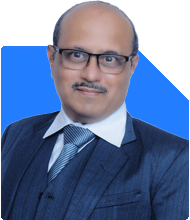
Nayagam P

Nayagam P P  |10854 Answers  |Ask -

Career Counsellor - Answered on Aug 26, 2025

Nayagam is a certified career counsellor and the founder of EduJob360.
He started his career as an HR professional and has over 10 years of experience in tutoring and mentoring students from Classes 8 to 12, helping them choose the right stream, course and college/university.
He also counsels students on how to prepare for entrance exams for getting admission into reputed universities /colleges for their graduate/postgraduate courses.
He has guided both fresh graduates and experienced professionals on how to write a resume, how to prepare for job interviews and how to negotiate their salary when joining a new job.
Nayagam has published an eBook, Professional Resume Writing Without Googling.
He has a postgraduate degree in human resources from Bhartiya Vidya Bhavan, Delhi, a postgraduate diploma in labour law from Madras University, a postgraduate diploma in school counselling from Symbiosis, Pune, and a certification in child psychology from Counsel India.
He has also completed his master’s degree in career counselling from ICCC-Mindler and Counsel, India.
... more

Visu Question by Visu on Aug 25, 2025Hindi
Career

I am 61, healthy with NOILL AND NO PILL life style, a retired and well disciplined bachelor, no financial or family commitment residing in metro city in Tamilnadu for over 50 years. I have been offered a position in a social organisation at Arunchal Pradesh. (I am financially independant and No problem on compensation) I am comfortable with Hindi, apart from other language including internatinal language swahali. Valuing and considering the Pro-Con, I prefer to have an expert opinion before I go with firm decision. Veterans please guide me.

Ans: Visu Sir, Your profile presents an ideal candidate for meaningful social work in Arunachal Pradesh. At 61 with excellent health, financial independence, multilingual skills including Hindi, and decades of metro experience, you possess valuable assets for social sector contribution. Post-retirement engagement significantly enhances mental health, provides purpose, and maintains cognitive function through social interaction and community service. Arunachal Pradesh offers robust healthcare infrastructure for senior citizens, including cashless coverage up to Rs 5 lakh under CMAAY scheme and extensive public health facilities with 92% utilization rates.

Pros: Enhanced life purpose through meaningful impact on vulnerable communities; excellent physical and mental health benefits from active engagement; utilization of professional expertise in structured environment; strong state healthcare support systems for seniors; opportunity for personal growth in culturally diverse setting; reduced isolation and depression risks through community integration.

Cons: Challenging terrain with heavy rainfall (3500mm annually) and natural disaster risks including landslides and floods; potential healthcare access limitations in remote areas; significant climate adjustment from Tamil Nadu's tropical conditions; isolation from established social networks; infrastructure challenges in mountainous regions.

Recommendation: Accept this opportunity as social work provides proven health benefits, utilizes your skills meaningfully, and offers structured engagement essential for successful aging. All the BEST for Your Prosperous Future & Healthy Life!

Follow RediffGURUS to Know More on 'Careers | Money | Health | Relationships'.
Career

You may like to see similar questions and answers below
Krishna

Krishna Kumar  | Answer  |Ask -

Workplace Expert - Answered on Apr 12, 2024

Listen
Ramalingam

Ramalingam Kalirajan  |10881 Answers  |Ask -

Mutual Funds, Financial Planning Expert - Answered on Jun 23, 2025
Asked by Anonymous - Jun 20, 2025Hindi
Money
I am from a single child famil now at 31 years, having 50 lacs retirement corpus in equity and flexi cap funds and giving solid returns of 12% on an average. I am unmarried bachelor and lead celibacy and being a very minimalist continue to hold unmarried bachelor. I am at staturation, planning to retire from profession being employed at MNC and planning to join as voluteer in non-profit and social organisation for rest and relax. I understand that I will not get the remuneration or Honororium, which will not be equal to the amount of the salary I am getting now. but the amount of Honororium is enough alongside my passive income of Rs.3 lacs pa. Above all, I will be getting 1.5 Cr corpus from family share in next 5 years. I have life cover of 1.5 cr in term plan and Rs.10 lacs in traditional plan. The health Insurance cover is Rs.40 lacs. The premium of which will be taken care by TDS (other than salary) refund, without pinching my pocket. I am stable and healthy with no bad habits and lead a disciplined and conservative minimalist life style. I have no EMI commitments or financial debt or family commitments except the routine chores, which are taken care by my passive income. Since I am planning to retire in next 2-3 years; my accrued gratuity and provident fund corpus will be appx Rs.20 lacs. Is my decision to retire in 2-3 years is correct? will all this available corpus, estimated legacy and accrued corpus is enough along side honororium from voluteering and passive income is enough to take the bold decision. !! please guide and advise.
Ans: Reviewing Your Current Situation
You are 31 years old and a bachelor from a single?child family.

You have Rs?50 lakh invested in equity and flexi?cap funds, yielding ~12% annualized returns.

You also have passive income of Rs?3 lakh per annum.

You expect to receive Rs?1.5 crore legacy from family in about 5 years.

Health insurance cover is Rs?40 lakh, funded by TDS refund.

You have life cover of Rs?1.5 crore (term) and Rs?10 lakh (traditional).

You plan to retire in 2–3 years and volunteer with minimal honorarium.

You expect gratuity and provident fund of ~Rs?20 lakh upon retirement.

You have no debt, liabilities, or EMI commitments.

You lead a minimalist and disciplined lifestyle; healthy with no bad habits.

This shows a stable financial base and clear planning ahead.

Clarifying Your Retirement Life Vision
Your core plan is to retire, rest, relax, and volunteer.

You seek peace and purpose over salary.

Honorarium, passive income, and corpus support your lifestyle.

You aim for professional freedom and community service.

Your life requires modest income, but meaningful impact.

Estimating Your Comprehensive Income Sources
Let us tally your future income and corpus for clarity:

1. Passive Income

Rs?3 lakh per annum from investments

2. Honorarium from Volunteering

Estimate comfortable Honorarium (variable)

3. Corpus Withdrawals

Rs?50 lakh equity corpus

Rs?20 lakh gratuity/ provident fund

Rs?1.5 crore inheritance arriving over 5 years

Total current and future assets: ~Rs?2.2 crore (excluding returns).

Understanding Your Expenses and Budget
What is your current annual expense?

Likely Rs?3–4 lakh per annum based on passive income need.

Factor annual inflation at conservative estimate of 5–6%.

In 20–30 years, Rs?3 lakh becomes Rs?12 lakh at 6% inflation.

Expense modelling steps:

Define current annual budget post?retirement.

Project inflation adjusted needs over time.

Add health?care buffer, travel, contingency costs.

Identify buffer for rising life costs in later years.

Aligning Your Portfolio with Retirement Needs
You aim for growth, preservation, and withdrawal flexibility. Here is a proposed investment structure post?retirement:

1. Equity and Flexi-cap (~50%)

Equity is your growth engine; preserves corpus in long term.

Flexi?cap allows dynamic allocation across market caps.

Manage volatility with passive income covering shortfalls.

2. Hybrid or Multi-Asset Funds (~20%)

These funds contain equity and debt for smoother returns.

They support portfolio reduction errors and retirement phasing.

Hybrid funds act as bridge between equity and debt.

3. Debt and Short-term Bonds (~20%)

Income funds, short-term bond funds for safety.

Buffer for near-term expenses, reducing equity withdrawals.

Lower risk helps during market downturns.

4. Liquid and Ultra-Short Funds (~5%)

For immediate emergency cash or ad-hoc needs.

Can be parked for upcoming volunteer travel or medical needs.

5. Gold Allocation (~5%)

Gold cushions inflation and equity volatility.

You already hold ~Rs?50 lakh in equity; maintain gold hedge.

Total portfolio is ~100% of corpus + future inheritance. Each asset class supports different needs.

Cashflow Planning and Withdrawal Strategy
Use the 4% safe withdrawal rule as starting point.

From Rs?2.2 crore, 4% gives Rs?8.8 lakh per year.

Combine that with Rs?3 lakh passive income plus honorarium.

This totals Rs?11.8 lakh per year—higher than estimated expenses.

If withdraw is too high, reduce withdrawal rate or shift allocation.

Phased withdrawal approach:

Use more equity in early retirement (first 10 years).

Gradually shift to debt/hybrid as corpus depletes.

Dividend-generating hybrid and debt funds provide stable income.

Handling the Rs?1.5 Crore Inheritance
Since the legacy arrives over 5 years:

Do not invest large lumps immediately—use systematic plan.

Employ staggered investment yearly or semi-annually.

Helps reduce timing risk and build allocation gradually.

Align investments with asset allocation above.

Evaluating Life and Health Insurance Needs
Your Rs?1.5 crore term cover safeguards dependents.

You have no dependents currently; term cover may be rebalanced.

Traditional plan of Rs?10 lakh carries poor return and costs.

Consider surrendering traditional plan and redeploy funds to mutual funds.

Health insurance Rs?40 lakh seems adequate given usage pattern.

Continue cover, renew annually to avoid issues.

Reviewing Retirement Corpus Adequacy
Your corpus (equity + inheritance) is strong. Using the given allocation:

4–5% withdrawal provides comfortable net income.

Low expenses help stabilize long-term sustainability.

Passive income adds cushion during market dips.

Hybrid/debt allocation provides cashflow stability.

Inflation-adjusted increases will come from equity growth.

This supports early retirement plan, provided discipline is maintained.

Risks and Contingencies to Mitigate
Market Volatility

Equity returns fluctuate; buffer cash reduces impact.

Healthcare Inflation

Keep emergency medical fund separate.

Increase health cover as age increases.

Longevity Risk

If lifespan exceeds 90+, corpus must last.

Plan partial fixed income or annuity to cover long maturity risk.

Lifestyle Changes

Respect your minimalist preference—avoid lifestyle creep.

Unexpected Expenses

Maintain a buffer of 1–2 years’ expenses in liquid funds.

Why Active Funds Suit Your Plan
Active funds are managed dynamically; they adapt to market cycles.

They can exit sectors before downturns or take advantage of trends.

In retirement, downside protection becomes important.

Your equity and flexi?cap funds already benefit from active management.

Avoid index funds—they don’t protect in downturns.

Retaining Professional Fund Management Support
Direct funds lack advisory oversight and behavioural guidance.

Regular plans via CFP?backed MFD offer monitoring, rebalancing and tax planning.

At retirement, asset allocation needs careful tweaks.

CFP?supported MFD can help with periodical reviews and changing needs.

Tax Planning in Retirement
Equity LTCG above Rs?1.25 lakh taxed at 12.5%; STCG taxed at 20%.

Debt fund gains and withdrawals taxed at slab rate.

Hybrid fund taxation depends on equity component.

Dividends from mutual funds are taxable in your hands.

Use strategic selling—harvest LTCG quota smartly each year.

CFP assistance aides in optimizing redemption schedules and tax planning.

Tracking and Governing Your Portfolio
Set your annual review schedule with your CFP.

Track asset allocation drift—rebalance using fresh funds or switches.

Monitor passive income cover and withdrawal rate.

Check health cover renewals and inflationary pressures.

Adjust investments for life changes, travel, volunteer abroad, etc.

Transitioning to Volunteer and Legacy Phase
As you prepare to join NGO work, plan liquidity timelines.

Keep hybrid or liquid funds for initial 2–3 years of volunteering.

Build up cash for relocation, training, or travel costs.

Honorarium plus passive income may fluctuate—review yearly.

As corpus matures, shift more to bonds for stability.

Final Insights
Your plan shows clarity, stability, and financial strength.
The projected corpus, passive income, honorarium and inheritance support early retirement.
Asset allocation balance across equity, hybrid, debt and gold aligns with risk and need.
You should refine portfolio by:

Adding hybrid and debt envelopes for stability,

Surrending low?yield traditional plan,

Using phased inheritance investment,

Proper health cover,

Strategic tax planning,

Annual reviews for rebalancing.

With disciplined execution, your early retirement and volunteer life can be financially secure and fulfilling.
You have crafted a well-thought-out lifestyle plan. Your financial system can support this path admirably.

Best Regards,
K. Ramalingam, MBA, CFP,
Chief Financial Planner,
www.holisticinvestment.in
https://www.youtube.com/@HolisticInvestment

..Read more

Ramalingam

Ramalingam Kalirajan  |10881 Answers  |Ask -

Mutual Funds, Financial Planning Expert - Answered on Oct 06, 2025

Asked by Anonymous - Oct 06, 2025Hindi
Money
I am 48 years old, married, Government employee (Class-1 officer) in Pune. Currently I have accumulated 28 lakhs in mutual funds, 35 lakhs in fixed deposits, 18 lakhs in PPF, and 52 lakhs in my GPF account. I also own our ancestral home in my hometown along with a 3 BHK flat in Pune worth approximately 95 lakhs which is fully paid. My monthly salary is Rs. 1,45,000 and we spend around Rs. 85,000 per month. My wife is a homemaker and we have one son who is 22 years old, recently graduated and currently job hunting. My elderly parents, both above 75 years, are dependent on me with monthly medical expenses of around Rs. 15,000. My department is offering VRS (Voluntary Retirement Scheme) with 25 lakhs payout. Should I take VRS at 50 or continue till 60? What will be the financial impact?
Ans: You have built a very disciplined and secure financial base. Your savings across mutual funds, FDs, GPF, and PPF show strong commitment. You also have no housing loan burden, which gives you a comfortable financial position at this stage. Still, deciding between continuing service till 60 or taking VRS at 50 is a serious life decision. It needs deep understanding of both financial and emotional impacts.

Below is a detailed assessment from a Certified Financial Planner’s perspective.

» Present Financial Position and Income Stability

– You are 48, earning Rs. 1.45 lakh monthly.
– Your total family spending is Rs. 85,000 including parents’ medical expenses.
– You save around Rs. 60,000 per month, which is a healthy saving rate.
– You already hold investments worth around Rs. 1.33 crore (MFs + FDs + PPF + GPF).
– Your house is fully paid, reducing financial stress.
– You have one dependent son and two elderly parents.

This overall structure reflects financial maturity and low risk exposure. You are already on a strong base, but the VRS decision requires clarity about long-term income replacement and security.

» Understanding the Impact of VRS at 50

– VRS will give you Rs. 25 lakh one-time payout.
– But you will lose 10 years of secure government salary income.
– If you continue till 60, you will earn another 10 years of regular salary.
– That will mean approximately Rs. 1.45 lakh x 12 x 10 = Rs. 1.74 crore income before tax.
– You will also continue receiving yearly increments and promotions, increasing savings.
– You will keep adding to your GPF and get higher pension base.
– Retiring early will stop these future benefits completely.
– So, financially, continuing service gives higher total lifetime wealth.

The VRS payout is short-term relief. But losing a decade of salary income is a very large long-term cost.

» Analysing Post-VRS Financial Pressure

– After VRS, you will no longer receive monthly salary.
– You will depend on interest, dividends, or capital withdrawals from your savings.
– With expenses of Rs. 85,000 per month, your annual family spending will be Rs. 10.2 lakh.
– To maintain this lifestyle, you must generate Rs. 10–12 lakh per year from savings.
– Your current corpus of Rs. 1.33 crore + Rs. 25 lakh VRS payout = Rs. 1.58 crore total.
– If you withdraw Rs. 10–12 lakh per year, your savings will reduce quickly.
– It may not last comfortably till 85 or 90 years.
– Rising medical expenses for parents and self will add more pressure.
– Inflation will also reduce purchasing power over time.

So, early retirement at 50 without alternate income can risk your financial stability.

» Benefits of Continuing till Age 60

– You will receive regular salary for 10 more years, giving peace and structure.
– You will continue building your pension base, leading to higher monthly pension.
– Your GPF and PPF will grow strongly through compounding.
– You can increase mutual fund SIPs for higher long-term wealth creation.
– Parents’ medical expenses can be easily handled from monthly income.
– You can support your son till he becomes fully independent.
– You will also be eligible for full gratuity, higher leave encashment, and post-retirement perks.
– Financial independence will remain intact without depending on your investments early.

This 10-year extension of service gives you both financial and emotional security.

» Health Insurance and Medical Safety

– You must review your current health insurance coverage immediately.
– Government employees usually have CGHS or departmental medical benefits.
– Still, you can add a personal health cover for yourself, wife, and son of around Rs. 15–20 lakh.
– Also, add a senior citizen policy for parents if not already covered.
– Ensure the plan has no room rent cap, lifetime renewability, and good claim record.
– Future healthcare inflation will be high, so protection is essential before VRS.

If you retire early, employer-linked medical benefits may stop, so personal cover is critical.

» Parents’ Care and Future Planning

– Your parents’ monthly medical cost is Rs. 15,000, which can rise every year.
– You must maintain a separate medical reserve fund for them.
– Keep at least Rs. 10–12 lakh in a liquid or ultra-short-term fund dedicated to parents.
– This will reduce pressure on your main corpus.
– Also ensure they have adequate health insurance if possible.
– If not, this medical fund will be your backup.

Taking VRS without this protection may create liquidity stress during medical emergencies.

» Your Son’s Career and Dependency Factor

– Your son is 22 and still looking for a job.
– He will likely take 1–2 years to become financially independent.
– During this period, his expenses will depend on you.
– Retiring early may create emotional pressure if your savings start shrinking.
– Better to continue job till he stabilises in career and settles.
– Once he starts earning, your financial load will reduce significantly.

It is wiser to retire only after he becomes self-sufficient.

» Retirement Corpus Assessment

– Your total investable corpus now is around Rs. 1.33 crore.
– If you retire at 50, this corpus must sustain your family for nearly 35 years.
– You must also handle rising medical and lifestyle inflation.
– Without fresh income, this corpus will deplete faster.
– If you continue till 60, this corpus may grow to Rs. 3 crore or more, depending on investment growth.
– Plus, you will receive full pension benefits and retirement lumpsum.
– So, the retirement comfort improves greatly if you serve till 60.

The 10-year compounding and continued savings make a very big difference to future peace.

» Investment Portfolio Assessment

– You have Rs. 28 lakh in mutual funds which is excellent for long-term growth.
– These should be a mix of diversified equity and hybrid funds.
– Ensure investments are through regular plans under a Certified Financial Planner’s monitoring.
– Regular plans provide ongoing advisory and portfolio review.
– Direct funds lack professional guidance and may result in poor asset balance.
– Avoid index funds as they simply copy market and cannot outperform.
– Actively managed funds can adjust allocation and deliver better returns.

Your portfolio should be reviewed annually and aligned with your retirement goal horizon.

» Fixed Deposits and GPF Evaluation

– Your Rs. 35 lakh in FDs is a good liquidity source.
– But FDs give low post-tax return, below inflation level.
– You can shift part of FDs to medium-term hybrid or debt funds for better returns and flexibility.
– Keep about Rs. 10 lakh in FDs as emergency and short-term need reserve.
– The rest can earn better returns through managed mutual fund portfolios.
– GPF is your safest long-term component.
– Continue contributing till retirement for guaranteed and tax-free growth.

This balanced allocation improves growth without taking unnecessary risk.

» PPF and Long-Term Tax-Free Growth

– Your Rs. 18 lakh in PPF is excellent for safety and tax-free returns.
– Continue contribution till full maturity.
– It can act as a safe portion of your retirement pool.
– You can also extend it in 5-year blocks after maturity for steady compounding.

This safe component balances your overall portfolio volatility.

» VRS Lump Sum Utilisation (If You Still Take It)

If you decide to take VRS despite the above assessment:

– First, keep 6–12 months expenses in liquid fund as emergency reserve.
– Second, use part of the Rs. 25 lakh payout to strengthen parents’ medical corpus.
– Third, invest remaining amount into diversified mutual funds for growth.
– Avoid putting entire money in FDs as it reduces long-term value.
– Plan monthly withdrawals only from returns, not from the principal.
– Avoid early withdrawals from GPF or PPF.

Still, you must remember that this strategy will give limited monthly income compared to your current salary.

» Emotional and Lifestyle Aspects

– Many government officers face psychological emptiness after early retirement.
– The daily structure, professional identity, and team network get lost suddenly.
– Unless you have a clear post-retirement plan or alternate income, this can cause restlessness.
– If you have hobbies, freelance interest, or consultancy scope, plan them before taking VRS.
– Financial stability alone cannot ensure peace; meaningful engagement is also needed.

Retirement should be planned as a purpose-based life, not an escape from work stress.

» Future Financial Goals

– Within next 5 years, your son may need support for higher studies or marriage.
– Parents’ healthcare costs may rise sharply.
– Your own retirement planning must target stable income for 30+ years.
– These goals require both savings growth and liquidity.
– Hence, continuing your service will strengthen all three fronts.
– Your pension and gratuity will also provide guaranteed income after 60.

It is therefore more beneficial to continue in service till 60 unless health or work stress forces otherwise.

» Action Plan to Strengthen Finances for Next 10 Years

– Continue government service and regular savings till age 60.
– Increase monthly SIPs in diversified mutual funds using your current surplus.
– Review insurance needs and upgrade medical cover for all family members.
– Build a separate contingency fund for parents’ health expenses.
– Prepare a will to ensure smooth inheritance of your properties.
– Once your son becomes independent, increase your retirement allocation further.
– Review your asset allocation once every year with a Certified Financial Planner.

These actions will help you enter retirement at 60 with full peace, not pressure.

» Finally

You are in a strong and comfortable position today. But retiring at 50 will shrink your income window, limit future savings, and increase withdrawal pressure. Continuing till 60 will grow your corpus, pension, and peace significantly. The extra 10 years of salary, promotion, and compounding will make your retirement more relaxed and independent. Hence, from a Certified Financial Planner’s view, continuing service till 60 is financially and emotionally wiser unless health concerns force VRS.

Best Regards,

K. Ramalingam, MBA, CFP,

Chief Financial Planner,

www.holisticinvestment.in

https://www.youtube.com/@HolisticInvestment

..Read more

Latest Questions
Nayagam P

Nayagam P P  |10854 Answers  |Ask -

Career Counsellor - Answered on Dec 14, 2025

Asked by Anonymous - Dec 12, 2025Hindi
Career
Hello, I am currently in Class 12 and preparing for JEE. I have not yet completed even 50% of the syllabus properly, but I aim to score around '110' marks. Could you suggest an effective strategy to achieve this? I know the target is relatively low, but I have category reservation, so it should be sufficient.
Ans: With category reservation (SC/ST/OBC), a score of 110 marks is absolutely achievable and realistic. Based on 2025 data, SC candidates qualified with approximately 60-65 percentile, and ST candidates with 45-55 percentile. Your target requires scoring just 37-40% marks, which is significantly lower than general category standards. This gives you a genuine advantage. Immediate Action Plan (December 2025 - January 2026): 4-5 Weeks. Week 1-2: High-Weightage Chapter Focus. Stop trying to complete the entire syllabus. Instead, focus exclusively on high-scoring chapters that carry maximum weightage: Physics (Modern Physics, Current Electricity, Work-Power-Energy, Rotation, Magnetism), Chemistry (Chemical Bonding, Thermodynamics, Coordination Compounds, Electrochemistry), and Maths (Integration, Differentiation, Vectors, 3D Geometry, Probability). These chapters alone can yield 80-100+ marks if practiced properly. Ignore topics you haven't studied yet. Week 2-3: Previous Year Questions (PYQs). Solve JEE Main PYQs from the last 10 years (2015-2025) for chapters you're studying. PYQs reveal question patterns and difficulty levels. Focus on understanding why answers are correct, not memorizing solutions. Week 3-4: Mock Tests & Error Analysis. Take 2-3 full-length mock tests weekly under timed conditions. This is crucial because mock tests build exam confidence, reveal time management weaknesses, and error analysis prevents repeated mistakes. Maintain an error notebook documenting every mistake—this becomes your revision guide. Week 4-5: Revision & Formula Consolidation. Create concise formula sheets for each subject. Spend 30 minutes daily reviewing formulas and key concepts. Avoid learning new topics entirely at this stage. Study Schedule (Daily): 7-8 Hours. Morning (5:00-7:30 AM): Physics concepts + 30 PYQs. Break (7:30-8:30 AM): Breakfast & rest. Mid-morning (8:30-11:00): Chemistry concepts + 20 PYQs. Lunch (11:00-1:00 PM): Full break. Afternoon (1:00-3:30 PM): Maths concepts + 30 PYQs. Evening (3:30-5:00 PM): Mock test or error review. Night (7:00-9:00 PM): Formula revision & weak area focus. Strategic Approach for 110 Marks: Attempt only confident questions and avoid negative marking by skipping difficult questions. Do easy questions first—in the exam, attempt all basic-level questions before attempting medium or hard ones. Focus on quality over quantity as 30 well-practiced questions beat 100 random questions. Master NCERT concepts as most JEE questions test NCERT concepts applied smartly. April 2026 Session Advantage. If January doesn't deliver desired results, April gives you a second chance with 3+ months to prepare. Use January as a practice attempt to identify weak areas, then focus intensively on those in February-March. Realistic Timeline: January 2026 target is 95-110 marks (achievable with focused 50% syllabus), while April 2026 target is 120-130 marks (with complete syllabus + experience). Your reservation benefit means you need only approximately 90-105 marks to qualify and secure admission to quality engineering colleges. Stop comparing yourself to general category cutoffs. Most Importantly: Consistency beats perfection. Study 6 focused hours daily rather than 12 distracted hours. Your 110-mark target is realistic—execute this plan with discipline. All the BEST for Your JEE 2026!

Follow RediffGURUS to Know More on 'Careers | Money | Health | Relationships'.

...Read more

Dr Dipankar

Dr Dipankar Dutta  |1841 Answers  |Ask -

Tech Careers and Skill Development Expert - Answered on Dec 13, 2025

Asked by Anonymous - Dec 12, 2025
Career
Dear Sir/Madam, I am currently a 1st year UG student studying engineering in Sairam Engineering College, But there the lack of exposure and strict academics feels so rigid and I don't like it that. It's like they don't gaf about skills but just wants us to memorize things and score a good CGPA, the only skill they want is you to memorize things and pass, there's even special class for students who don't perform well in academics and it is compulsory for them to attend or else the student and his/her parents needs to face authorities who lashes out. My question is when did engineering became something that requires good academics instead of actual learning and skill set. In sairam they provides us a coding platform in which we need to gain the required points for each semester which is ridiculous cuz most of the students here just look at the solution to code instead of actual debugging. I am passionate about engineering so I want to learn and experiment things instead of just memorizing, so I actually consider dropping out and I want to give jee a try and maybe viteee , srmjeee But i heard some people say SRM may provide exposure but not that good in placements. I may not be excellent at studies but my marks are decent. So gimme some insights about SRM and recommend me other colleges/universities which are good at exposure
Ans: First — your frustration is valid

What you are experiencing at Sairam is not engineering, it is rote-based credential production.

“When did engineering become memorizing instead of learning?”

Sadly, this shift happened decades ago in most Tier-3 private colleges in India.

About “coding platforms & points” – your observation is sharp

You are absolutely right:

Mandatory coding points → students copy solutions

Copying ≠ learning

Debugging & thinking are missing

This is pseudo-skill education — it looks modern but produces shallow engineers.

The fact that you noticed this in 1st year already puts you ahead of 80% students.

Should you DROP OUT and prepare for JEE / VITEEE / SRMJEEE?

Although VIT/SRM is better than Sairam Engineering College, but you may face the same problem. You will not face this type of problem only in some top IITs, but getting seat in those IITs will be difficult.
Instead of dropping immediately, consider:

???? Strategy:

Stay enrolled (degree security)

Reduce emotional investment in college rules

Use:

GitHub

Open-source projects

Hackathons

Internships (remote)

Hardware / software self-projects

This way:

College = formality

Learning = self-driven

Risk = minimal

...Read more

DISCLAIMER: The content of this post by the expert is the personal view of the rediffGURU. Investment in securities market are subject to market risks. Read all the related document carefully before investing. The securities quoted are for illustration only and are not recommendatory. Users are advised to pursue the information provided by the rediffGURU only as a source of information and as a point of reference and to rely on their own judgement when making a decision. RediffGURUS is an intermediary as per India's Information Technology Act.

Close  

You haven't logged in yet. To ask a question, Please Log in below
Login

A verification OTP will be sent to this
Mobile Number / Email

Enter OTP
A 6 digit code has been sent to

Resend OTP in120seconds

Dear User, You have not registered yet. Please register by filling the fields below to get expert answers from our Gurus
Sign up

By signing up, you agree to our
Terms & Conditions and Privacy Policy

Already have an account?

Enter OTP
A 6 digit code has been sent to Mobile

Resend OTP in120seconds

x