Need Expert Advice?Our Gurus Can Help

Purshotam Lal | Answer |Ask -Follow
Financial Planner, MF and Insurance Expert - Answered on Nov 14, 2025
Purshotam Lal has over 38 years of experience in investment banking, mutual funds, insurance and wealth management.
He is an Association of Mutual Funds in India (AMFI)-registered mutual fund distributor, an Insurance Regulatory and Development Authority of India (IRDAI)-certified insurance advisor and founder of Finphoenix Services LLP.
He holds an MBA in finance from the Faculty of Management Studies (FMS), Delhi University and a chartered financial analyst (CFA) degree. He also holds certified associate of the Indian Institute of Bankers (CAIIB), fellow of the Insurance Institute of India (FIII) and National Institute of Securities Markets (NISM) certifications.... more
He is an Association of Mutual Funds in India (AMFI)-registered mutual fund distributor, an Insurance Regulatory and Development Authority of India (IRDAI)-certified insurance advisor and founder of Finphoenix Services LLP.
He holds an MBA in finance from the Faculty of Management Studies (FMS), Delhi University and a chartered financial analyst (CFA) degree. He also holds certified associate of the Indian Institute of Bankers (CAIIB), fellow of the Insurance Institute of India (FIII) and National Institute of Securities Markets (NISM) certifications.... more
 Question by Asis on Sep 23, 2025Hindi
Sir, I would take your advice on my future planning, planninby 55 years. Below details, need your help I am 50 years old, having wife with two kids, daughter 14 years (class 8) and son 8 years (class 3) standard. Saving and investment till date: PPF (own and son account) Rs. 18.40 lakh, Sukanya (in my daughter name) RS. 5 lakh, Axis ELSS, Mirae ELSS, Quant ELSS Total Rs. 11.23 Lakh (combined), NPS Rs. 5.27 lakh, Paragh Parekh and UTI Flexi Cap Fund Rs. 5.30 lakh, Bandha Small Cap Rs. 5K, Direct Investment in equity Rs. 34.00 Lakh. Saving account balance Rs. 10 Lakh, Fol Bond 20 grams, Some ornament about 100 grams. One house (staying) value about Rs. 1 CR and one flat (vacant) value about Rs. 1 Cr. Home Loan outstanding Rs. 11.40 Lakh (EMI Rs. 25K), Insurance cover against Home loan EMI Rs. 1K Monthly Expenses about Rs. 1 Lakh PM. (including education and house hold expenses). Earning INR 2.5 Lakh PM. Wated to be reture by 55, can you please advice how to allocate my investment so that my earning can be generated Rs. 2 Lkah PM.
Ans: You are already on the right course to providing for your corpus for proposed retirement at your age 55. However you also need to provide for future marriages of your daughter & son, say at their age 25 i.e. after 11 years and 17 years respectively. Current cost of marriage of say Rs 25L may go-up at assumed inflation rate of 8% to Rs 58.29L & Rs 92.50L in 11 & 17 Years. At assumed ROI of 13% Equity MF SIP shall be required of Rs 16.5K, Rs 13.5K per month which will continue even after your proposed retirement age of 55. Additionally there seems to be scope for 70K PM Equity MF SIP for next 5 Years. On vacant flat you can assume rental income of say 35K per month. It is also assumed that investment in Sukanya Samriddhi will continue till her Marriage and shall be utilised for daughter's marriage expenses.
However with respect to your retirement plan at Age 55 years, at conservative return of 6% from annuity funds and rental incomes net of continuing MF SIP of Rs 30K, it is expected to generate around Rs 1 L PM at your age 55. Hence it is suggested not to retire by 55 as being proposed. Also please note that returns on MF, NPS & Direct Equities are linked to market performance and very volatile and are also subject to market, Interest rate risks etc. It is suggested to contact a Certified Financial Planner and/or Certified Financial Advisor for charting your path to retire peacefully. Goodluck.
Purshotam, CFP®, MBA, CAIIB, FIII
Certified Financial Planner
Insurance advisor
www.finphoenixinvest.com
However with respect to your retirement plan at Age 55 years, at conservative return of 6% from annuity funds and rental incomes net of continuing MF SIP of Rs 30K, it is expected to generate around Rs 1 L PM at your age 55. Hence it is suggested not to retire by 55 as being proposed. Also please note that returns on MF, NPS & Direct Equities are linked to market performance and very volatile and are also subject to market, Interest rate risks etc. It is suggested to contact a Certified Financial Planner and/or Certified Financial Advisor for charting your path to retire peacefully. Goodluck.
Purshotam, CFP®, MBA, CAIIB, FIII
Certified Financial Planner
Insurance advisor
www.finphoenixinvest.com
DISCLAIMER: The content of this post by the expert is the personal view of the rediffGURU. Users are advised to pursue the information provided by the rediffGURU only as a source of information to be as a point of reference and to rely on their own judgement when making a decision.
MoneyReply


You may like to see similar questions and answers below

Ramalingam Kalirajan |10872 Answers |Ask -Follow
Mutual Funds, Financial Planning Expert - Answered on Jul 27, 2024

Ramalingam Kalirajan |10872 Answers |Ask -Follow
Mutual Funds, Financial Planning Expert - Answered on Oct 08, 2024

Latest Questions

Radheshyam Zanwar |6735 Answers |Ask -Follow
MHT-CET, IIT-JEE, NEET-UG Expert - Answered on Dec 06, 2025


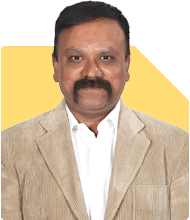
Dr Nagarajan J S K |2576 Answers |Ask -Follow
NEET, Medical, Pharmacy Careers - Answered on Dec 06, 2025


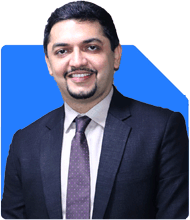
Mihir Tanna |1090 Answers |Ask -Follow
Tax Expert - Answered on Dec 06, 2025
Asked by Anonymous - Dec 04, 2025Hindi

Ramalingam Kalirajan |10872 Answers |Ask -Follow
Mutual Funds, Financial Planning Expert - Answered on Dec 06, 2025

Radheshyam Zanwar |6735 Answers |Ask -Follow
MHT-CET, IIT-JEE, NEET-UG Expert - Answered on Dec 06, 2025

Radheshyam Zanwar |6735 Answers |Ask -Follow
MHT-CET, IIT-JEE, NEET-UG Expert - Answered on Dec 06, 2025

Radheshyam Zanwar |6735 Answers |Ask -Follow
MHT-CET, IIT-JEE, NEET-UG Expert - Answered on Dec 06, 2025



Dr Dipankar Dutta |1837 Answers |Ask -Follow
Tech Careers and Skill Development Expert - Answered on Dec 05, 2025



Dr Shyam Jamalabad |108 Answers |Ask -Follow
Dentist - Answered on Dec 05, 2025


Dr Shyam Jamalabad |108 Answers |Ask -Follow
Dentist - Answered on Dec 05, 2025