Home > Money > Question
Need Expert Advice?Our Gurus Can Help
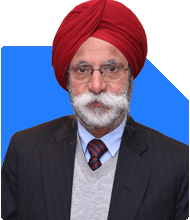
T S Khurana

T S Khurana   |547 Answers  |Ask -

Tax Expert - Answered on Apr 26, 2025

A certified management accountant since 1993, T S Khurana is a fellow member of The Institute of Cost Accountants of India. His areas of expertise are income tax, specifically litigation cases, and GST.

Since the last 21 years, he has also been providing expert advice on financial matters, including investments and diversification of funds, and wealth building in the long term to his clients.
He believes that investment in real estate is the safest way for better returns and wealth generation over a period of time.

A former chairman of the Chandigarh Chapter of Institute of Cost Accountants of India, T S Khurana has also served as member of its technical committee.... more
muthu Question by muthu on Apr 25, 2025
Money

What are the ways in which a son can avoid Income tax while receiving an amount from his father, while his father sells is own land in India?

Ans: Whatever tax is payable, the same is payable by his father & not by son.
If the son gets any amount from his father, it is a Gift & not Income for the son.
Most welcome for any further clarifications. Thanks.
DISCLAIMER: The content of this post by the expert is the personal view of the rediffGURU. Users are advised to pursue the information provided by the rediffGURU only as a source of information to be as a point of reference and to rely on their own judgement when making a decision.
Money

You may like to see similar questions and answers below
Mahesh

Mahesh Padmanabhan  | Answer  |Ask -

Tax Expert - Answered on Feb 14, 2023

Listen
Money
I have a query pertaining to treatment of the amount for Income Tax purposes. We have an ancestral land in our village. A portion of the said land has been acquired by Government for a new highway. Currently the land is in the name of my father (~68 years old), a pensioner. He is likely to receive compensation of around 75 lakhs. He intends to use around 25 lakhs for construction of go-down/ shops for commercial use at village while the balance amount he intends to transfer equally to both his sons (myself & my younger brother). How does my father declare the amount in his Income Tax Return and what sort of tax he needs to pay on the total amount received. What will be the tax liability for us brothers on the amount received from him. Whether all three of us (my father & we two brothers) are free to spend the amount as deemed fit OR are we required to invest it in a particular way only. What happens if the amount is transferred to both his Daughter In Laws (non tax payer). Any other suggestion
Ans: Hi Rajan

As the owner of the land is your father, the taxability would apply to him alone and not to you or your brother.

The query would need further clarity in terms of the following aspects:

Whether this was an agricultural land?
What is the distance of the land from the nearest municipality jurisdiction?
What is the population of the place where the land is located?

In case this is an urban non-agricultural land then you may need to get the valuation report for the land as on April 1, 2001 from an Income Tax approved valuer. This would become your basic cost reference on which you would need to apply indexation. An example is stated below for easy understanding.

Suppose the valuation report brings out a value of Rs. 20 Lakhs as on April 1, 2001

Current Cost Inflation Index (CII) is 331 and base year (2001) index is 100

So indexed cost of acquisition would be Rs. 20 Lakhs x 331 / 100, which is Rs. 66.20 Lakhs

So capital gain would be Rs. 75 Lakhs - Rs. 66.20 Lakhs = Rs. 8.80 Lakhs on which your father would need to pay 20+% of tax.

As this is a regular asset, in case he wants to pay NIL tax then he would need to reinvest the full sale consideration in some eligible asset such as residential house or capital gains bonds (go-downs / shops are not eligible assets).

If he reinvests in eligible asset partially then he would get exemption only proportionately. Taking the same example:

Suppose he reinvests Rs. 50 Lakhs in capital gain bond (say NHAI or REC) then the eligible proportionate exemption would be as follows:

Rs. 50 Lakhs / Rs. 75 Lakhs x Rs. 8.80 Lakhs = Rs. 5.87 Lakhs

He would need to pay the 20+% tax on Rs. 2.93 Lakhs. He would be eligible to marginal relief provisions if his pension income is not substantial. Also, he may end up with Nil tax if his total income is below Rs. 5 Lakhs

..Read more

Latest Questions
Reetika

Reetika Sharma  |524 Answers  |Ask -

Financial Planner, MF and Insurance Expert - Answered on Feb 03, 2026

Money
sir, I am 28 year old Engineer working in IT field for 6 years. Recently married and my wife is also working in a IT Company. I have started investment in MF since my first salary and at present total the corpus is 15 L and my present SIP amount is 60K. In addition I am having 6L in PPF, 8L in Bank FD, 15L PLI and 5L Health Policy. My parents are well settled. My portfolio is as given below. 1. ICICI Prud. NASDAQ - 3K 2. Parag Parikh Flexi Cap - 10K 3. Quant ELSS - 7K 4. HDFC Retirement Saving - 10K 5. Kotak Mid Cap - 6K 6. SBI Focused Equity - 8K 7. Bandhan Small Cap - 8K 8. Nippon India Multi Asset - 8K My investment time horizon is 20+ years. Please review and suggest changes required if any. With Thanks & Regards, S. Salvankar
Ans: Hi Sarvothama,

You are doing great with your iverall investments at such age. Early investment really helps you in the long run. Let us analyse everything in detail:
1. Make sure to have ample emrgency fund in FD or liquid funds.
2. You should have proper term insurance and health insurance for yourself and family. As your spouse is working, she should also have an independent term insurance.
3. 8 lakhs in FD - can be treated as your emergency fund.
4. 6 lakhs in PPF - not recommended as a=you must have your EPF being an IT Professional. PPF is just like EPF, hence make minimum contributions to keep the account active and close it when 15 years tenure is over.
5. Health policy - 5 lakhs >> insufficient keeping in mind rising medical costs. Increase it to a minimum of 25 lakhs family floater for yourself and spouse.
6. 15 lakhs PLI - continue.
7. 15 lakhs + 60k monthly SIP in mutual funds. Very good and you should continue. However, the funds chosen are not exactly great. Entire allocation needs a proper plan in alignment to your profile and long term goal. It is better to work with a professional to choose better funds for your 20+ years goal.
I will not recommend continuing your SIPs in - Quant ELSS, HDFC Retirement Savings, Nippon multi asset and Focused Equity fund.

Hence overall reallocation and distribution in required here.
Do consult a professional Certified Financial Planner - a CFP who can guide you with exact funds to invest in keeping in mind your age, requirements, financial goals and risk profile. A CFP periodically reviews your portfolio and suggest any amendments to be made, if required.

Let me know if you need more help.

Best Regards,
Reetika Sharma, Certified Financial Planner
https://www.instagram.com/cfpreetika/

...Read more

Reetika

Reetika Sharma  |524 Answers  |Ask -

Financial Planner, MF and Insurance Expert - Answered on Feb 03, 2026

Money
Sir, I am a 44 years old male and have made following investments in Mutual Funds, which are as follows, please let me know if it is good to go: DSP India T.I.G.E.R. (The Infrastructure Growth and Economic Reforms Fund) Direct Growth (Rs. 1,000) Nippon India Small Cap Fund Direct Growth (Rs. 1,500) Axis Silver FoF Direct Growth (Rs. 1,000) LIC MF Gold ETF FoF Direct Growth (Rs. 1,000) Parag Parikh Flexi Cap Fund Direct Growth (Rs. 1,000) Motilal Oswal Midcap Fund Direct Growth (Rs. 500) SBI PSU Direct Plan Growth (lumpsum - Rs. 7,000) Aditya Birla Sun Life PSU Equity Fund Direct Growth (lumpsum - Rs. 6,000) I urge you to review my above portfolio as a whole and thereafter appropriately guide me whether I need to switch any of the above SIPs or stay invested as it is, particularly I am more worried about ‘Nippon India Small Cap Fund Direct Growth’ (keeping in consideration that my SIP becomes more than 1.5 years old with this Fund), it has generated negative returns more often, which now becomes my cause of concern, as a result sometimes I felt that I had invested in a wrong fund. My intent for the above investment is to create sufficient wealth, till the time of my retirement. Now, I seek your valuable guidance over the above, enabling me to reach to a decision. Thanks & regards, Ashish
Ans: Hi Ashish,

You have long 16 years till your retirement and proper guided investment can do wonders with your monthly SIPs.
Your concern regarding Nippon Small Cap fund is genuine but this is exactly how markets work. One cannot expect their money to double in an overnight. It needs patience and proper plan to generate even bare minimum of 12% annual return.

I see all the funds you invest in are direct funds. while direct funds are more preferred as they have lower expense ratio of about 0.5%, regular funds are better as they come with proper plan and guidance throughout.
Generating 2-4% returns in these types of direct funds v/s getting 12% return in regular funds - there is always an option.

However, continue with Nippon small cap, Parag Parikh Flexicap, and Motilal Oswal Midcap fund. Stop SIPs in other funds and work with a proper advisor to redirect these funds into better new funds.

Hence do consult a professional Certified Financial Planner - a CFP who can guide you with exact funds to invest in keeping in mind your age, requirements, financial goals and risk profile. A CFP periodically reviews your portfolio and suggest any amendments to be made, if required.

Let me know if you need more help.

Best Regards,
Reetika Sharma, Certified Financial Planner
https://www.instagram.com/cfpreetika/

...Read more

Reetika

Reetika Sharma  |524 Answers  |Ask -

Financial Planner, MF and Insurance Expert - Answered on Feb 03, 2026

Money
Dear Sir, I'm 54 year old and My sons are 23 and 21 years old. I would like to know, in SBI Life Policies / any other brand of Life Policies, Term Insurance and Health Insurance. At present, specifically what are the best beneficial wealth policies, Term Insurance and Health Insurance Vs PPF, Vs MF, vs. NPS v FD vs Trading in the Share Market including ETFs, as well as with Sudden Death Protection, which suits for me and my both son's age and all of three income source, such as a salary of 6-8L /Annum. Pls.elaborate all these request with PROS and CONS on each segment for three of us including Retirement plan and policies/investments. .Thanks, from Chennai (1st Feb 2026)
Ans: Hi,

I understand that 3 of you come under salary bracket of 6 to 8 lakhs. And you want to know products suitable for you and both sons. Let us discuss pros and cons of each below along with other major necessities you should have:

- As a family, have a dedicated emergency fund of 6 months worth expenses in FD. If your monthly expense is 50k, have 3 lakhs FD and if monthly expense is 1 lakh, habe 6 lakhs worth FD. This fund will safeguard your expenses in case of any uncertain situation.
- As earning members, all of you should have a pure term cover of 1 crore each. Make sure to take proper term insurance and do not mix with any other rider / policy.
- Proper health insurance for family. Avoid mixing it with wealth policies and other policies. Buy proper health insurance for whole family. Can go for HDFC Ergo as it has the highest claim settlement ratio. Avoid going for cheaper premium policies.

Now, when these 3 requirements are done, start investing the surplus to meet your financial goals. Firstly, list all financial goals and invest.
- SBI Life policies - not recommended. Go for proper Term Insurance of Max Life or HDFC Life.
- Wealth Policies - not recommended as these come with high commission end products. It is always better to keep insurance and investment separate. One shall not expect insurance premiums as investment, insurance is always a cover against unforeseen risk and it should be kept like that.
Hence, do not mix your insurance with investment. Avoid all wealth policies and ULIPs and LIC policies.

For investment, choose the following:
- PPF - not recommended if you have an ongoing EPF.
- NPS - not for your sons as the amounts will be locked till 60 years.
- MF - recommended for all. you can choose from a variety of equity and debt instruments wrt your goals and risk capacity. It will generate upto 15% annual returns to meet your financial goals. Funds in MF is not locked and flexible.
- FD - use it only for emergency fund.
- Share market - not recommended. The way you will not google and cure yourself for an illness, same way you cannot google and invest. Take proper help.

You should work with an advisor who will understand your risk appetite and make an investment plan for your family.
Hence do consult a professional Certified Financial Planner - a CFP who can guide you with exact funds to invest in keeping in mind your age, requirements, financial goals and risk profile. A CFP periodically reviews your portfolio and suggest any amendments to be made, if required.

Let me know if you need more help.

Best Regards,
Reetika Sharma, Certified Financial Planner
https://www.instagram.com/cfpreetika/

...Read more

Ramalingam

Ramalingam Kalirajan  |11010 Answers  |Ask -

Mutual Funds, Financial Planning Expert - Answered on Feb 03, 2026

Money
I have invested in SBI silver ETF FoF Direct Fund Growth. In 30 days i was getting 60percent returns but silver rates down the return is only 28percent. So may i stay invested OR withdraw the investment.
Ans: Appreciate your timely observation and honesty in reviewing your investment. Many investors ignore such sharp movements. You noticed it early, which itself is a strength.

» Understanding What Happened
– Silver is a highly volatile asset
– Price movements are driven by global factors, not business growth
– Sharp rises are often followed by sharp corrections
– A 60 percent short-term rise was abnormal and not sustainable

» Nature of Silver as an Asset
– Silver does not generate earnings or cash flow
– Returns come only from price movement
– It does not compound like equity mutual funds
– Long-term wealth creation from silver is uncertain

» Risk of Staying Fully Invested
– High volatility can test patience and emotions
– Gains can reduce very fast, as you already experienced
– If markets turn against commodities, recovery may take long
– Silver should not be treated as a core long-term investment

» Direct Fund Concern
– You are holding a Direct Fund, which lacks professional handholding
– No Certified Financial Planner is guiding entry, exit, or allocation
– In volatile assets like silver, emotional decisions are common
– Regular funds through an MFD with CFP credential help manage timing and discipline

» Decision Insight: Stay or Withdraw
– If the investment was made for short-term profit, partial or full exit is sensible
– Booking gains protects capital and avoids regret
– If held for diversification, allocation should be very limited
– Silver exposure should never dominate a long-term portfolio

» Better Portfolio Alignment
– Long-term goals need assets that grow steadily
– Actively managed equity mutual funds adjust to market cycles
– They reduce downside risk through active decisions
– This supports your wealth goal better than commodities

» Tax Awareness
– Short-term gains on such investments can attract higher tax
– Frequent entry and exit reduces post-tax return
– Discipline matters more than timing in long-term planning

» Finally
– Do not let recent high returns anchor your decision
– Protect gains where the asset lacks compounding power
– Keep commodities as a small support, not a return engine
– Align investments with goals, not market excitement

Best Regards,

K. Ramalingam, MBA, CFP,

Chief Financial Planner,

www.holisticinvestment.in

https://www.youtube.com/@HolisticInvestment

...Read more

Ramalingam

Ramalingam Kalirajan  |11010 Answers  |Ask -

Mutual Funds, Financial Planning Expert - Answered on Feb 03, 2026

Asked by Anonymous - Feb 03, 2026Hindi
Money
Hi Sir, I'm 38 years old. Currently doing an SIP of 55000 in these funds in 2 separate portfolios (mine and wife's). My risk profile is moderate to high. I'm targeting to keep investing for next 9 years. Currently my mutual fund portfolio corpus is 24 lac. Target corpus is 1.75 Cr to 2 Cr in 2035. Is this achievable? Do I need any step-ups yearly? Portfolio 1: parag parikh flexicap - 12000 hdfc mid cap - 5500 mirae asset large & mid cap - 8000 sbi gold fund - 5000 sbi multi asset fund - 5500 Portfolio 2: invesco midcap - 5500 ICICI multi asset allocation - 2000 hdfc flexicap - 4500 icici pru nasdaq 100 - 6000 axis silver FOF - 1000 Please review and suggest any changes needed.
Ans: Appreciate your discipline and clarity at a young age. A monthly SIP of Rs 55,000 across two portfolios, a long holding period, and a clear target already put you ahead of many investors. Your question is practical and well-thought.

» Current Position and Direction
– Age 38 gives you time, which is the biggest strength in wealth creation
– Existing corpus of around Rs 24 lakh provides a good base
– Nine years is a meaningful but not very long horizon, so portfolio balance matters
– Moderate to high risk profile is suitable, but risk must be controlled, not pushed blindly

» Target Corpus Reality Check
– A target of Rs 1.75 Cr to Rs 2 Cr by 2035 is ambitious but possible
– With the current SIP alone, reaching the higher end will be challenging without increases
– Markets do not grow in straight lines; returns will be uneven across years
– The gap between “possible” and “comfortable” will be filled by step-ups, not by taking extra risk

» Need for Yearly Step-Ups
– Yearly SIP step-up is strongly recommended
– Even a small annual increase linked to income growth improves probability a lot
– Step-ups reduce pressure on returns and improve outcome consistency
– This approach respects your risk profile and avoids stress during market volatility

» Portfolio Structure Assessment
– Overall equity exposure is on the higher side, which suits your age
– Mid-oriented exposure is meaningful, but concentration risk must be watched
– Flexi and diversified equity funds play a stabilising role and should remain core
– Having two portfolios is fine, but both are moving in a similar direction

» Observations on Overseas and Passive-Style Exposure
– Exposure linked to overseas market trackers increases currency and policy risk
– Passive-style funds move exactly with the market and do not protect on the downside
– In falling or sideways markets, there is no decision-making support
– Actively managed equity funds can shift sectors, reduce cash burn, and manage risk better
– For long goals, active management adds value through discipline, not prediction

» Commodity-Linked Allocations Insight
– Gold and silver-linked funds are not growth assets
– They do not compound like equity over long periods
– Such allocations are useful only as small stabilisers, not return drivers
– Higher allocation here may slow your journey towards the target corpus

» Diversification and Overlap Check
– Multiple funds with similar styles may create overlap without adding value
– Too many themes dilute focus and tracking ability
– A cleaner structure with clear roles for each fund improves control
– Both portfolios can be aligned better to avoid duplication

» Tax Awareness for Long-Term Planning
– Equity mutual fund gains beyond Rs 1.25 lakh are taxed at 12.5% for long term
– Short-term equity gains attract higher tax, so holding discipline is important
– Churn and frequent switching reduce post-tax returns
– A stable portfolio is more tax-efficient than an active trading mindset

» What Changes Are Sensible
– Reduce dependence on passive or commodity-linked exposure
– Strengthen core actively managed diversified equity allocation
– Maintain balance between growth and stability, not themes
– Introduce annual SIP step-ups aligned with income growth
– Review once a year, not every market cycle

» Final Insights
– Your goal is achievable with discipline, not aggression
– Time, consistency, and step-ups will matter more than chasing returns
– Simplification will improve clarity and confidence
– Staying invested during dull phases will decide success more than fund selection

Best Regards,

K. Ramalingam, MBA, CFP,

Chief Financial Planner,

www.holisticinvestment.in

https://www.youtube.com/@HolisticInvestment

...Read more

DISCLAIMER: The content of this post by the expert is the personal view of the rediffGURU. Investment in securities market are subject to market risks. Read all the related document carefully before investing. The securities quoted are for illustration only and are not recommendatory. Users are advised to pursue the information provided by the rediffGURU only as a source of information and as a point of reference and to rely on their own judgement when making a decision. RediffGURUS is an intermediary as per India's Information Technology Act.

Close  

You haven't logged in yet. To ask a question, Please Log in below
Login

A verification OTP will be sent to this
Mobile Number / Email

Enter OTP
A 6 digit code has been sent to

Resend OTP in120seconds

Dear User, You have not registered yet. Please register by filling the fields below to get expert answers from our Gurus
Sign up

By signing up, you agree to our
Terms & Conditions and Privacy Policy

Already have an account?

Enter OTP
A 6 digit code has been sent to Mobile

Resend OTP in120seconds

x