Need Expert Advice?Our Gurus Can Help

Ramalingam Kalirajan |10893 Answers |Ask -Follow
Mutual Funds, Financial Planning Expert - Answered on May 15, 2025
Ramalingam Kalirajan has over 23 years of experience in mutual funds and financial planning.
He has an MBA in finance from the University of Madras and is a certified financial planner.
He is the director and chief financial planner at Holistic Investment, a Chennai-based firm that offers financial planning and wealth management advice.... more
He has an MBA in finance from the University of Madras and is a certified financial planner.
He is the director and chief financial planner at Holistic Investment, a Chennai-based firm that offers financial planning and wealth management advice.... more
 Question by Sonali on May 14, 2025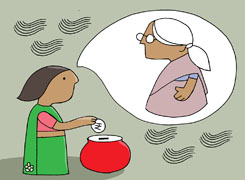
I am a single parent of a 17 years daughter. I am Working as a school teacher with a salary of 60k. I am not able to do savings. I am 48 years of age with health issues. How do I manage expenses.
Ans: I truly understand your concern. You are doing your best.
Managing alone with health issues and a teenage daughter is tough.
But with a plan, it is possible to get control.
Let us go step-by-step.
We will make things better slowly.
Assess and Organise Monthly Income
Your income is Rs. 60,000 per month.
Track your monthly spending for the next 3 months.
Write down all expenses. Include fixed, variable, and random ones.
This will help you understand where money is going.
You will find small areas where cuts are possible.
Use a notebook or a mobile app. Whatever is easy for you.
Try to divide your income into three parts:
Needs – 60%,
Responsibilities – 20%,
Future – 20%.
Right now, the savings part is zero. But we can fix it step-by-step.
Cut Expenses Without Impacting Quality
Review food, electricity, mobile, and school costs.
Buy in bulk where possible.
Use local kirana for cheaper essentials.
Prefer government health care for check-ups and medicines.
Limit eating out, online orders, and entertainment subscriptions.
Take help from trusted friends or neighbours to reduce travel costs.
If you have house help, review their hours and charges.
Any old policies with high premium can be reviewed and paused.
Focus on needs now. Wants can wait.
Explore Additional Income Options
Use your teaching skills for tuition after school hours.
Try home tuitions, or online through student networks.
You can also prepare notes, worksheets or question banks and sell.
If health permits, even 1-2 extra hours a day can help.
Involve your daughter to assist you. This will build her awareness.
Do you have any unused items? Sell them through local channels.
Old jewellery, old phone, furniture – all can generate cash if not used.
Review Your Health and Protection First
You mentioned health issues. Please get a basic mediclaim policy.
Check if your school offers one. If not, go for a basic one.
You need at least Rs. 5–10 lakh health cover.
It protects you from hospital expenses.
Do not depend only on government schemes.
Ask your school if they can help with a group cover.
Term insurance may be tough at this stage due to age and health.
If you have any existing LIC or ULIP or endowment plans, pause and review.
These are not good for wealth creation. Surrender value can be reinvested.
Avoid buying investment-linked insurance. They are expensive and confusing.
Secure Your Daughter’s Education
She is 17 now. She will need money soon for college.
If she has a good academic record, help her apply for scholarships.
Many colleges have financial aid for single-parent children.
Encourage her to consider government colleges. They are affordable.
Ask your school if they offer teacher quota for children.
Let her take part-time jobs once she turns 18. It builds confidence.
Education loan can also be an option. It is available after Class 12.
Don’t feel shy to ask for help. You are doing it for her better life.
Build Emergency Fund Slowly
Try to save Rs. 1,000 to Rs. 2,000 every month first.
Keep it in a separate savings account. Do not touch it.
Once it reaches Rs. 30,000 to Rs. 50,000, you can feel more secure.
This is your safety money. Use it only for hospital or school needs.
Avoid keeping cash at home. It can be spent unknowingly.
Add to this every time you get extra income or gift money.
This is not an investment. It is for peace of mind.
Start Small SIPs When You Are Ready
Do not start SIPs now. First fix your budget and emergency fund.
Once you can save Rs. 2,000–Rs. 3,000 monthly, then consider SIPs.
Choose regular mutual funds. Avoid direct plans.
Regular plans allow MFDs to guide and support your goals.
Also, regular funds managed by Certified Financial Planners give better clarity.
Direct plans can confuse first-time investors like you.
A good CFP will align investments with your daughter’s education and your health.
SIPs are good for long-term goals. But right now, you need liquidity more.
Always check fund performance and consistency before investing.
Don’t follow news or friends. Follow a guided plan.
Avoid These Financial Mistakes
Do not take any new loans now. Your income won’t support EMI.
Avoid chit funds, loan apps, or money rotation schemes.
Don’t give personal guarantee for others. Not even friends.
Do not withdraw PF unless it is a real emergency.
Don’t lend money even if someone promises high returns.
Avoid expensive gadgets, jewellery or impulsive festival spending.
Don’t buy products with “zero interest” or EMI temptations.
Take Support From Right Sources
Talk to a Certified Financial Planner. They will give a customised plan.
They won’t sell products. They work with long-term planning.
Try free online budget templates or budgeting YouTube channels.
Get your daughter involved in managing your home expenses.
She will learn early about money habits. That is a big gift.
Share your struggle openly with trusted friends or family.
You are not alone. Help comes when we ask.
Think About Long-Term Self-Security
In the next 10 years, your daughter will be working.
You must build income from multiple small sources.
Teaching tuitions, small business like food, stitching, or rental income can help.
Keep health as your top goal. Without health, wealth is of no use.
Do yearly check-ups. Follow your medicine plan.
Don’t skip appointments. Prevention is cheaper than treatment.
Take simple yoga or walking every morning. It helps with mood and energy.
Stay connected with other teachers and women groups. They give mental strength.
Once daughter is settled, focus fully on your retirement fund.
EPF and PPF are good options when income improves.
Avoid land or house buying. Real estate locks your money and brings stress.
Finally
You are already doing great by being responsible for your daughter.
Managing health, home, job and child alone is not easy.
Don’t be harsh on yourself. You deserve peace too.
Begin small, but stay regular.
Always choose need over desire.
Stick to simple steps. Review every 3 months.
Every saved rupee brings you closer to peace.
One decision at a time. One improvement every week.
Don’t compare your life with others. You are on your own journey.
Stay hopeful. You are stronger than you think.
Best Regards,
K. Ramalingam, MBA, CFP,
Chief Financial Planner,
www.holisticinvestment.in
https://www.youtube.com/@HolisticInvestment
Managing alone with health issues and a teenage daughter is tough.
But with a plan, it is possible to get control.
Let us go step-by-step.
We will make things better slowly.
Assess and Organise Monthly Income
Your income is Rs. 60,000 per month.
Track your monthly spending for the next 3 months.
Write down all expenses. Include fixed, variable, and random ones.
This will help you understand where money is going.
You will find small areas where cuts are possible.
Use a notebook or a mobile app. Whatever is easy for you.
Try to divide your income into three parts:
Needs – 60%,
Responsibilities – 20%,
Future – 20%.
Right now, the savings part is zero. But we can fix it step-by-step.
Cut Expenses Without Impacting Quality
Review food, electricity, mobile, and school costs.
Buy in bulk where possible.
Use local kirana for cheaper essentials.
Prefer government health care for check-ups and medicines.
Limit eating out, online orders, and entertainment subscriptions.
Take help from trusted friends or neighbours to reduce travel costs.
If you have house help, review their hours and charges.
Any old policies with high premium can be reviewed and paused.
Focus on needs now. Wants can wait.
Explore Additional Income Options
Use your teaching skills for tuition after school hours.
Try home tuitions, or online through student networks.
You can also prepare notes, worksheets or question banks and sell.
If health permits, even 1-2 extra hours a day can help.
Involve your daughter to assist you. This will build her awareness.
Do you have any unused items? Sell them through local channels.
Old jewellery, old phone, furniture – all can generate cash if not used.
Review Your Health and Protection First
You mentioned health issues. Please get a basic mediclaim policy.
Check if your school offers one. If not, go for a basic one.
You need at least Rs. 5–10 lakh health cover.
It protects you from hospital expenses.
Do not depend only on government schemes.
Ask your school if they can help with a group cover.
Term insurance may be tough at this stage due to age and health.
If you have any existing LIC or ULIP or endowment plans, pause and review.
These are not good for wealth creation. Surrender value can be reinvested.
Avoid buying investment-linked insurance. They are expensive and confusing.
Secure Your Daughter’s Education
She is 17 now. She will need money soon for college.
If she has a good academic record, help her apply for scholarships.
Many colleges have financial aid for single-parent children.
Encourage her to consider government colleges. They are affordable.
Ask your school if they offer teacher quota for children.
Let her take part-time jobs once she turns 18. It builds confidence.
Education loan can also be an option. It is available after Class 12.
Don’t feel shy to ask for help. You are doing it for her better life.
Build Emergency Fund Slowly
Try to save Rs. 1,000 to Rs. 2,000 every month first.
Keep it in a separate savings account. Do not touch it.
Once it reaches Rs. 30,000 to Rs. 50,000, you can feel more secure.
This is your safety money. Use it only for hospital or school needs.
Avoid keeping cash at home. It can be spent unknowingly.
Add to this every time you get extra income or gift money.
This is not an investment. It is for peace of mind.
Start Small SIPs When You Are Ready
Do not start SIPs now. First fix your budget and emergency fund.
Once you can save Rs. 2,000–Rs. 3,000 monthly, then consider SIPs.
Choose regular mutual funds. Avoid direct plans.
Regular plans allow MFDs to guide and support your goals.
Also, regular funds managed by Certified Financial Planners give better clarity.
Direct plans can confuse first-time investors like you.
A good CFP will align investments with your daughter’s education and your health.
SIPs are good for long-term goals. But right now, you need liquidity more.
Always check fund performance and consistency before investing.
Don’t follow news or friends. Follow a guided plan.
Avoid These Financial Mistakes
Do not take any new loans now. Your income won’t support EMI.
Avoid chit funds, loan apps, or money rotation schemes.
Don’t give personal guarantee for others. Not even friends.
Do not withdraw PF unless it is a real emergency.
Don’t lend money even if someone promises high returns.
Avoid expensive gadgets, jewellery or impulsive festival spending.
Don’t buy products with “zero interest” or EMI temptations.
Take Support From Right Sources
Talk to a Certified Financial Planner. They will give a customised plan.
They won’t sell products. They work with long-term planning.
Try free online budget templates or budgeting YouTube channels.
Get your daughter involved in managing your home expenses.
She will learn early about money habits. That is a big gift.
Share your struggle openly with trusted friends or family.
You are not alone. Help comes when we ask.
Think About Long-Term Self-Security
In the next 10 years, your daughter will be working.
You must build income from multiple small sources.
Teaching tuitions, small business like food, stitching, or rental income can help.
Keep health as your top goal. Without health, wealth is of no use.
Do yearly check-ups. Follow your medicine plan.
Don’t skip appointments. Prevention is cheaper than treatment.
Take simple yoga or walking every morning. It helps with mood and energy.
Stay connected with other teachers and women groups. They give mental strength.
Once daughter is settled, focus fully on your retirement fund.
EPF and PPF are good options when income improves.
Avoid land or house buying. Real estate locks your money and brings stress.
Finally
You are already doing great by being responsible for your daughter.
Managing health, home, job and child alone is not easy.
Don’t be harsh on yourself. You deserve peace too.
Begin small, but stay regular.
Always choose need over desire.
Stick to simple steps. Review every 3 months.
Every saved rupee brings you closer to peace.
One decision at a time. One improvement every week.
Don’t compare your life with others. You are on your own journey.
Stay hopeful. You are stronger than you think.
Best Regards,
K. Ramalingam, MBA, CFP,
Chief Financial Planner,
www.holisticinvestment.in
https://www.youtube.com/@HolisticInvestment
DISCLAIMER: The content of this post by the expert is the personal view of the rediffGURU. Users are advised to pursue the information provided by the rediffGURU only as a source of information to be as a point of reference and to rely on their own judgement when making a decision.
MoneyReply


You may like to see similar questions and answers below
Sanjeev Govila | Answer |Ask -Follow
Financial Planner - Answered on Nov 27, 2023

Ramalingam Kalirajan |10893 Answers |Ask -Follow
Mutual Funds, Financial Planning Expert - Answered on Apr 25, 2025

Ramalingam Kalirajan |10893 Answers |Ask -Follow
Mutual Funds, Financial Planning Expert - Answered on Jun 02, 2025

Ramalingam Kalirajan |10893 Answers |Ask -Follow
Mutual Funds, Financial Planning Expert - Answered on Jul 29, 2025


Naveenn Kummar |235 Answers |Ask -Follow
Financial Planner, MF, Insurance Expert - Answered on Sep 11, 2025
Latest Questions
Ramalingam Kalirajan |10893 Answers |Ask -Follow
Mutual Funds, Financial Planning Expert - Answered on Dec 15, 2025

Ramalingam Kalirajan |10893 Answers |Ask -Follow
Mutual Funds, Financial Planning Expert - Answered on Dec 15, 2025


Radheshyam Zanwar |6746 Answers |Ask -Follow
MHT-CET, IIT-JEE, NEET-UG Expert - Answered on Dec 15, 2025


Ramalingam Kalirajan |10893 Answers |Ask -Follow
Mutual Funds, Financial Planning Expert - Answered on Dec 15, 2025

Ramalingam Kalirajan |10893 Answers |Ask -Follow
Mutual Funds, Financial Planning Expert - Answered on Dec 15, 2025

Ramalingam Kalirajan |10893 Answers |Ask -Follow
Mutual Funds, Financial Planning Expert - Answered on Dec 15, 2025



Samraat Jadhav |2508 Answers |Ask -Follow
Stock Market Expert - Answered on Dec 15, 2025


Ramalingam Kalirajan |10893 Answers |Ask -Follow
Mutual Funds, Financial Planning Expert - Answered on Dec 15, 2025


Reetika Sharma |425 Answers |Ask -Follow
Financial Planner, MF and Insurance Expert - Answered on Dec 15, 2025


Radheshyam Zanwar |6746 Answers |Ask -Follow
MHT-CET, IIT-JEE, NEET-UG Expert - Answered on Dec 15, 2025