Home > Money > Question
Need Expert Advice?Our Gurus Can Help

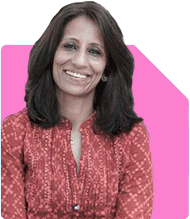
Jinal

Jinal Mehta  | Answer  |Ask -

Financial Planner - Answered on Mar 12, 2024

Jinal Mehta is a qualified certified financial professional certified by FPSB India. She has 10 years of experience in the field of personal finance.
She is the founder of Beyond Learning Finance, an authorised education provider for the CFP certification programme in India.
In addition, she manages a family office organisation, where she handles investment planning, tax planning, insurance planning and estate planning.
Jinal has a bachelor's degree in management studies. She also has a diploma in in financial management from NMIMS, Mumbai.
... more

Balu Question by Balu on Mar 04, 2024Hindi
Listen
Money

Iam 45 afford to invest rs 10000 per month for 15 years and want to accumulate 1Cr. How much should I invest monthly

Ans: Right now start with whatever amount you are comfortable with. You can subsequently start increasing by 10% or 20% as per your convenience.
DISCLAIMER: The content of this post by the expert is the personal view of the rediffGURU. Users are advised to pursue the information provided by the rediffGURU only as a source of information to be as a point of reference and to rely on their own judgement when making a decision.
Money

You may like to see similar questions and answers below

Ramalingam

Ramalingam Kalirajan  |10895 Answers  |Ask -

Mutual Funds, Financial Planning Expert - Answered on May 17, 2024

Listen
Money
Hi sir, how much I should invest to accumulate 1Cr in 15 years
Ans: Accumulating ?1 crore in 15 years is a commendable and achievable goal with the right strategy. It requires discipline, patience, and a sound investment plan. Your focus on long-term planning is excellent and necessary for building substantial wealth.

The Power of SIPs
Systematic Investment Plans (SIPs) are a great way to invest regularly without timing the market. They help in averaging the purchase cost and benefit from the power of compounding. For long-term goals, equity mutual funds are preferable due to their potential for higher returns compared to other asset classes.

Expected Returns
For a goal of ?1 crore in 15 years, we will assume an annual return of 12%. This is a realistic expectation for diversified equity mutual funds, which have historically provided such returns over long periods.

Monthly Investment Calculation
To accumulate ?1 crore in 15 years with a 12% annual return, you need to invest a specific amount every month. The formula used for calculating the future value of SIPs helps in determining this monthly investment amount.

Based on the calculations, you will need to invest approximately ?15,000 to ?18,000 per month to achieve your goal. This range takes into account slight variations in returns due to market conditions.

Steps to Achieve Your Goal
1. Choose the Right Mutual Funds:
Diversify your investments across different categories like large-cap, mid-cap, and flexi-cap funds. Avoid thematic funds like infrastructure as they come with higher risks.

2. Regular Monitoring:
Review your portfolio at least once a year to ensure it aligns with your goals. Make adjustments based on performance and changes in your financial situation.

3. Increase SIP Amount:
Consider stepping up your SIP amount annually in line with salary increments. This practice can significantly boost your corpus.

4. Stay Invested:
Remain invested for the long term and avoid the temptation to withdraw during market volatility. Staying invested helps in reaping the benefits of compounding.

Benefits of Actively Managed Funds
Actively managed funds are managed by professional fund managers who aim to outperform the market. They have the flexibility to change the portfolio allocation based on market conditions, which can potentially provide better returns compared to index funds.

Disadvantages of Index Funds:
Index funds simply replicate the performance of a market index. They lack the flexibility to adapt to market changes and might not perform well during downturns.

Benefits of Regular Funds:
Investing through regular funds with the help of a Certified Financial Planner (CFP) ensures you get professional advice and ongoing portfolio management. This can enhance your investment strategy and help in achieving your goals more efficiently.

Emergency Fund
Before starting your SIPs, ensure you have an emergency fund equivalent to six months of expenses. This fund provides a financial cushion during unforeseen circumstances and prevents the need to dip into your investments.

Conclusion
Your goal of accumulating ?1 crore in 15 years is achievable with disciplined investing and regular reviews. Investing ?15,000 to ?18,000 per month in a diversified portfolio of actively managed equity mutual funds can help you reach your target. Working with a Certified Financial Planner ensures you get expert advice and stay on track with your financial goals.

Best Regards,

K. Ramalingam, MBA, CFP,

Chief Financial Planner,

www.holisticinvestment.in

..Read more

Ramalingam

Ramalingam Kalirajan  |10895 Answers  |Ask -

Mutual Funds, Financial Planning Expert - Answered on May 02, 2024

Listen
Money
I m 43 yrs. old, working in pvt company and getting Rs. 60,000 per month after deduction, how much and where I have to invest to get Rs 1cr. after 20yrs, and what will be the value of 1 cr. 20yrs.
Ans: To achieve a corpus of 1 crore in 20 years, you need to start investing regularly and systematically to benefit from the power of compounding. Here's a general approach:

Investment Amount: Determine how much you can afford to invest each month after accounting for your expenses and other financial obligations. Aim to invest consistently to benefit from rupee-cost averaging and compound growth.
Investment Avenues: Consider investing in a mix of equity mutual funds, which offer higher growth potential over the long term, and debt instruments for stability. Equity investments can include diversified equity funds or index funds, while debt instruments may include fixed deposits or debt mutual funds.
Asset Allocation: Your asset allocation should align with your risk tolerance and investment horizon. As you have a 20-year time frame, you can afford to have a higher allocation to equity, which historically offers higher returns over extended periods.
Regular Review: Periodically review your investment portfolio to ensure it remains aligned with your financial goals and risk tolerance. Make adjustments as needed based on changes in market conditions, personal circumstances, or investment objectives.
Regarding the value of 1 crore after 20 years, it's essential to consider the impact of inflation. The purchasing power of 1 crore after 20 years will be significantly lower due to the erosion of value caused by inflation. To estimate the future value of 1 crore, you can use a simple inflation calculator, taking into account historical inflation rates and projecting future inflation trends.

Remember, investing for the long term requires discipline, patience, and a well-thought-out strategy. Consider consulting with a Certified Financial Planner to develop a personalized investment plan tailored to your financial goals, risk tolerance, and investment horizon. They can provide valuable guidance and help you navigate the complexities of investing for the future.

..Read more

Latest Questions
Ramalingam

Ramalingam Kalirajan  |10895 Answers  |Ask -

Mutual Funds, Financial Planning Expert - Answered on Dec 17, 2025

Money
Dear rediffGuru, I am 48 year having private job, I have started MF investment from 2017 and currently monthly SIP 50K as below. I want to have corpus of 2.5 Cr at the age of 58. Please advice me if any changes/increase need in below SIP. 1. Nippon India small cap -Growth Rs 5,000 2. Sundaram Mid Cap fund Regular plan-Growth Rs 5,000 3.ICICI Prudential Small Cap- Growth Rs 10,000 4. ICICI Prudential Large Cap fund-Growth Rs 5,000 5. ICICI Prudential Balanced Adv. fund-Growth Rs 5,000 6. DSP Small Cap fund Regular Growth Rs 5,000 7. Nippn India Pharma Fund- Growth Rs 5,000 8. SBI focused Fund Regular plan- Growth Rs 5,000 9. SBI Dynamic Asset Allocation Active FoF-Regular-Growth Rs 5,000
Ans: Your discipline since 2017 deserves real appreciation.
You stayed invested for many years.
You already think long term.
This habit creates wealth over time.

» Your Goal Clarity
– You want Rs.2.5 Crores by age fifty-eight.
– You have ten years left.
– Time is still supportive.
– Regular investing helps greatly.
– Clarity itself improves outcomes.

» Present Investment Effort
– Monthly SIP is Rs.50,000.
– Investments are fully market linked.
– Exposure is mainly equity oriented.
– Risk appetite looks high.
– Commitment level is good.

» Portfolio Structure Observation
– Too many funds exist.
– Categories are repeating often.
– Small companies exposure is heavy.
– Sector exposure is present.
– Portfolio looks cluttered.

» Small Company Funds Concentration
– Many funds invest in smaller businesses.
– These funds give high returns sometimes.
– They also fall sharply during stress.
– Volatility increases with age.
– This needs careful control.

» Mid and Large Company Exposure
– Mid company exposure is moderate.
– Large company exposure looks limited.
– Large companies provide stability.
– Stability matters nearing retirement.
– Balance is essential now.

» Sector Focus Risks
– Sector funds depend on one theme.
– Performance cycles are unpredictable.
– Long underperformance periods happen.
– SIP discipline becomes difficult.
– Allocation should be limited.

» Dynamic Allocation Exposure
– Asset allocation funds manage equity levels.
– They help reduce downside risk.
– They suit late career investors.
– Allocation size matters.
– One such fund is enough.

» Over Diversification Concern
– Many funds dilute impact.
– Monitoring becomes difficult.
– Overlap increases silently.
– Returns may disappoint.
– Simplicity improves control.

» Suitability for Ten Year Horizon
– Ten years is medium term.
– Aggressive risk needs moderation.
– Capital protection gains importance.
– Drawdowns hurt goals.
– Adjustments are timely now.

» Expected Corpus Reality Check
– Rs.50,000 SIP alone may fall short.
– Market returns are uncertain.
– Inflation eats purchasing power.
– Increasing SIP helps.
– Step-up becomes very important.

» Importance of SIP Increase
– Income generally rises with age.
– SIP should rise yearly.
– Even small increases help.
– This supports target achievement.
– Discipline matters more than returns.

» Asset Allocation Improvement
– Equity should remain primary.
– Debt exposure should slowly increase.
– Stability increases closer to goal.
– This reduces panic risk.
– Allocation needs yearly review.

» Why Active Management Matters
– Actively managed funds adjust portfolios.
– Fund managers handle valuation risks.
– They exit overheated stocks.
– Index funds fall fully with markets.
– Passive funds offer no protection.

» Disadvantages of Index Investing
– No downside control exists.
– Full market falls are painful.
– Retirement timing risk increases.
– Investor emotions suffer.
– Active funds suit your stage better.

» Why Regular Plans Help
– Guidance improves behaviour.
– Rebalancing happens on time.
– Panic decisions reduce.
– Long term discipline strengthens.
– Cost difference is justified.

» Monitoring and Review Discipline
– Annual review is essential.
– Performance alone is insufficient.
– Risk alignment must be checked.
– Goal progress should be tracked.
– Reviews avoid surprises later.

» Tax Awareness During Accumulation
– Equity gains face capital gains tax.
– Long-term gains have exemptions.
– Short-term gains cost more.
– Holding period matters.
– Churning should be avoided.

» Emergency and Protection Planning
– Emergency fund is important.
– Job risk always exists.
– Insurance coverage should be adequate.
– Medical costs rise fast.
– Protection safeguards investments.

» Retirement Age Shift Possibility
– Retirement may shift slightly.
– Working longer reduces pressure.
– Even two extra years help.
– Flexibility increases success.
– Keep this option open.

» Behavioural Discipline Importance
– Market falls test patience.
– SIP continuity builds wealth.
– Stopping SIP hurts goals.
– Emotions damage returns.
– Discipline protects outcomes.

» Key Portfolio Refinement Direction
– Reduce fund count gradually.
– Avoid repeated category exposure.
– Increase large company allocation.
– Limit sector exposure.
– Maintain one dynamic allocation option.

» SIP Amount Enhancement Guidance
– Increase SIP annually.
– Use bonuses wisely.
– Direct increments into SIPs.
– This bridges corpus gap.
– Consistency beats timing.

» Goal Tracking Approach
– Review goal progress yearly.
– Adjust SIP if needed.
– Markets change yearly.
– Plans must adapt.
– Static plans fail often.

» Role of a Certified Financial Planner
– Helps align risk with age.
– Simplifies portfolio structure.
– Ensures tax efficiency.
– Supports emotional discipline.
– Improves goal probability.

» Final Insights
– Your investing habit is strong.
– Goal clarity is impressive.
– Portfolio needs simplification.
– Risk needs gradual control.
– SIP increase is necessary.
– Active funds suit your stage.
– Discipline will decide success.
– Time is still on your side.

Best Regards,

K. Ramalingam, MBA, CFP,

Chief Financial Planner,

www.holisticinvestment.in

https://www.youtube.com/@HolisticInvestment

...Read more

DISCLAIMER: The content of this post by the expert is the personal view of the rediffGURU. Investment in securities market are subject to market risks. Read all the related document carefully before investing. The securities quoted are for illustration only and are not recommendatory. Users are advised to pursue the information provided by the rediffGURU only as a source of information and as a point of reference and to rely on their own judgement when making a decision. RediffGURUS is an intermediary as per India's Information Technology Act.

Close  

You haven't logged in yet. To ask a question, Please Log in below
Login

A verification OTP will be sent to this
Mobile Number / Email

Enter OTP
A 6 digit code has been sent to

Resend OTP in120seconds

Dear User, You have not registered yet. Please register by filling the fields below to get expert answers from our Gurus
Sign up

By signing up, you agree to our
Terms & Conditions and Privacy Policy

Already have an account?

Enter OTP
A 6 digit code has been sent to Mobile

Resend OTP in120seconds

x