Home > Money > Question
Need Expert Advice?Our Gurus Can Help
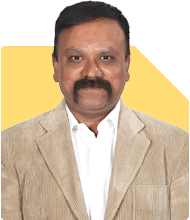
Sanjeev

Sanjeev Govila  | Answer  |Ask -

Financial Planner - Answered on Oct 11, 2023

Colonel Sanjeev Govila (retd) is the founder of Hum Fauji Initiatives, a financial planning company dedicated to the armed forces personnel and their families.
He has over 12 years of experience in financial planning and is a SEBI certified registered investment advisor; he is also accredited with AMFI and IRDA.... more
Asked by Anonymous - Oct 10, 2023Hindi
Listen
Money

How to delete MF script from my portfolio?

Ans: Just go ahead and sell the particular mutual fund(s) you wish to get out of. It will automatically get deleted from your portfolio.
DISCLAIMER: The content of this post by the expert is the personal view of the rediffGURU. Users are advised to pursue the information provided by the rediffGURU only as a source of information to be as a point of reference and to rely on their own judgement when making a decision.
Money

You may like to see similar questions and answers below

Ramalingam

Ramalingam Kalirajan  |10998 Answers  |Ask -

Mutual Funds, Financial Planning Expert - Answered on Jul 09, 2025

Money
Good Evening Sir. I am 37 years old Government Salaried. Request to please review my MF portfolio and kindly suggest which funds should I remove as I feel I have too many funds. Parag Parikh Flexi Cap fund 10000, Nifty index fund10000, Kotak Multi cap 10000, Motilal Midcap 10000, Nippon Small Cap 10000, Quant Small Cap 5000, Edelweiss Aggressive Hybrid Fund 5000, SBi Contra 5000.Thank you
Ans: At 37, you are at a strong wealth-building phase of life. Being a government employee adds to the financial stability needed for long-term investing. It is good to see your interest in aligning and optimising your mutual fund portfolio.

From a Certified Financial Planner’s point of view, your portfolio is diversified but over-crowded. It has overlapping categories. This can dilute overall performance. Too many funds can also make it difficult to track and manage.

Let’s evaluate your portfolio from all key angles — category overlap, suitability, tax-efficiency, consistency, and how it aligns with your financial future.

Portfolio Summary – What You Hold Now
Here’s a breakdown of your monthly SIP investments:

Parag Parikh Flexi Cap Fund – Rs. 10,000

Nifty Index Fund – Rs. 10,000

Kotak Multi Cap Fund – Rs. 10,000

Motilal Oswal Midcap Fund – Rs. 10,000

Nippon Small Cap Fund – Rs. 10,000

Quant Small Cap Fund – Rs. 5,000

Edelweiss Aggressive Hybrid Fund – Rs. 5,000

SBI Contra Fund – Rs. 5,000

Total SIP: Rs. 65,000 per month

What’s Good About Your Portfolio
Disciplined SIP investment
You are investing regularly and consistently. This builds long-term wealth.

Allocation across equity categories
You have exposure to large cap, mid cap, small cap, multi-cap, flexi-cap and hybrid. This adds diversification.

No exposure to insurance or ULIPs
This shows maturity. You are using mutual funds for investment.

What Needs Improvement
Your portfolio has too many funds. Some of them overlap in purpose and holdings.

Too many small cap and thematic-type funds increase volatility.

You also hold index fund, which brings in some hidden limitations. Let’s address that separately.

Why Too Many Funds Are a Problem
More funds don’t mean better returns
Returns don’t improve by adding more schemes. Quality matters more than quantity.

Overlap in stock holdings
Flexi cap, multi cap and index funds often invest in the same large-cap stocks.

Difficult to review and monitor
Managing 8 funds is time-consuming. Harder to know which fund is actually performing.

Over-diversification leads to average returns
Instead of strong performance, your portfolio behaves like a blended index.

Tax planning gets complicated
Selling multiple funds in future may trigger tax without any planning.

Scheme-Specific Assessment
Let us assess each scheme from a suitability and performance perspective.

1. Parag Parikh Flexi Cap Fund – Rs. 10,000
Well-managed flexi-cap fund.

Invests in Indian and global stocks.

Suitable for long-term wealth building.

You can continue this fund.

2. Nifty Index Fund – Rs. 10,000
Passive fund mimicking the Nifty 50.

Not suitable if you want alpha or outperformance.

Most index funds lack flexibility.

Doesn’t adapt to market changes.

Avoids active stock selection and risk management.

Better to exit this and shift to actively managed fund.

3. Kotak Multi Cap Fund – Rs. 10,000
Invests in large, mid, and small cap.

Provides a well-balanced allocation.

Suitable to continue.

Keep this for diversified exposure.

4. Motilal Oswal Midcap Fund – Rs. 10,000
Midcap funds carry moderate risk.

Volatility is higher than large caps.

Long-term performance needed to justify holding.

Keep only one dedicated mid cap fund.

Retain this only if 5-year returns are consistent.

5. Nippon Small Cap Fund – Rs. 10,000
6. Quant Small Cap Fund – Rs. 5,000
Both are aggressive small cap funds.

Small caps are high risk and volatile.

Not suitable to hold two small cap funds.

Exit Quant Small Cap, which is more tactical and aggressive.

Retain Nippon Small Cap only if your risk appetite is high.

7. Edelweiss Aggressive Hybrid Fund – Rs. 5,000
Conservative allocation (65% equity, 35% debt).

Suitable for cushioning market volatility.

Good for asset balancing.

Can continue this with current allocation.

8. SBI Contra Fund – Rs. 5,000
Follows contrarian approach.

Strategy may underperform in regular cycles.

Not ideal for every investor.

Consider exiting this to simplify portfolio.

Suggested Revised Portfolio
Based on performance, risk level and duplication:

Recommended to Keep:

Parag Parikh Flexi Cap – Rs. 10,000

Kotak Multi Cap – Rs. 10,000

Motilal Midcap – Rs. 10,000 (only if long-term returns are consistent)

Nippon Small Cap – Rs. 10,000

Edelweiss Aggressive Hybrid – Rs. 5,000

Suggested to Exit:

Nifty Index Fund – Rs. 10,000 (switch to active fund)

Quant Small Cap – Rs. 5,000 (overlap with Nippon Small Cap)

SBI Contra – Rs. 5,000 (complex strategy, avoid if not tracking closely)

You can consolidate and redirect the released Rs. 20,000 into:

One large cap fund – for consistent and less volatile growth

One focused fund – for concentrated, high-conviction investments

Or increase allocation in existing strong performers

Additional Suggestions
Direct Plans vs. Regular Plans

If you are investing in direct plans, consider switching to regular plans through a trusted MFD.

Direct plans offer low expense ratio, but no personalised advice.

Regular plans via a CFP-guided MFD help in better monitoring and periodic reviews.

It helps in rebalancing, taxation, retirement alignment, and behavioural coaching.

Avoid DIY if you’re unable to review quarterly. Guided investing helps avoid mistakes.

Your Risk Profile and Age
At 37, you can take calculated equity exposure.

But aggressive funds should not dominate.

Hybrid and multi-cap add some stability.

Avoid chasing past performance or market trends.

Your portfolio must support retirement and life goals.

Taxation Angle to Keep in Mind
Long-term capital gains above Rs. 1.25 lakh in equity mutual funds taxed at 12.5%.

Short-term capital gains taxed at 20%.

Any switches, redemptions should be tax-optimised.

Do not redeem in panic. Take help to calculate capital gain tax impact.

Asset Allocation View
Let’s also consider these important portfolio perspectives:

You can keep 80% in equity.

Remaining 20% in hybrid or low-risk funds.

Rebalance once a year to protect gains.

You can gradually increase hybrid allocation as you reach 45+.

Action Plan
Exit 3 funds.

Consolidate and reduce overlap.

Do not exceed 5 to 6 funds.

Ensure each fund has a clear purpose.

Focus on quality over quantity.

Keep SIPs long-term without interruption.

Review performance every year, not every month.

Final Insights
You are on the right track. Keep it simple now.

Too many funds reduce focus and increase confusion.

Keep 1 flexi cap, 1 multicap, 1 midcap, 1 small cap and 1 hybrid.

Avoid index funds for active wealth building.

Invest through a certified MFD for regular reviews and timely action.

Use direct plans only if you track markets deeply and review quarterly.

Mutual fund investing is not just about selecting funds. It's also about long-term discipline, asset allocation, proper rebalancing, and emotional control. A simplified and guided approach always leads to better results.

Less funds. More focus. More clarity. Better results.

Best Regards,
K. Ramalingam, MBA, CFP,
Chief Financial Planner,
www.holisticinvestment.in
https://www.youtube.com/@HolisticInvestment

..Read more

Latest Questions
Ravi

Ravi Mittal  |694 Answers  |Ask -

Dating, Relationships Expert - Answered on Jan 28, 2026

Asked by Anonymous - Jan 27, 2026Hindi
Relationship
My family is pressurising me to get married to a girl I am not interested in. I am 36 and the girl is 28. I am traditional, old school and she looks younger, the partying, late night kinds. She is very active on social media. In fact, she was very judgemental about my clothes and totally non-committed about relationships when we spoke in our first meeting. I can say with confidence that our vibes don't match but my parents don't seem to understand my expectations. There was no formal engagement but my parents are proceeding with the marriage formalities because our parents are business partners. They feel I am overthinking and overreacting. I feel like no one is listening to me, what I want, including my grandparents. What should I do? I want to run away from all this drama.
Ans: Dear Anonymous,
I understand your concern and how difficult it is sometimes to convince family members about our feelings. Please have one on one conversations with your parents. Instead of sitting with both parents, speak to them individually. Ask them direct questions based on realistic examples, like, “She enjoys partying and I don’t. What if that leads to a huge fight and in the end, divorce?” “What if we never love each other and stay in an unhappy marriage?” This might help them imagine the situation a little better. Next, speak to the girl. Ask her what she feels about this marriage, if she would be able to adjust and eventually love you. Ask her if she is okay with a lifetime of adjustment and compromise. Have an honest conversation; don’t try to convince her to break the marriage, rather have a clear discussion and see how she feels about this honestly. I am sure this will help you in the situation.

Hope this helps.

...Read more

Reetika

Reetika Sharma  |514 Answers  |Ask -

Financial Planner, MF and Insurance Expert - Answered on Jan 28, 2026

Asked by Anonymous - Jan 25, 2026Hindi
Money
Hello, I have been investing in mutual funds using regular plans. Recently couple of my friends have been pushing me to stop SIPs and investments for Regular plans and go in with Direct plans. While I understand that the commissions that I pay to the financial advisor is considerable, I want to understand typically what how much am I losing by not investing in Direct plans. I read in a Sample report of an RIA that I will be losing around 15% due to regular plans. Is it a real thing? any thoughts about it? The inputs provided by my mutual fund distributor are good, but I do feel that I can also invest in flexi funds and achieve the same results. Kindly share your inputs.
Ans: Hi,

Yes there is a difference between regular and direct plans.
Direct plans are for people who have a very good understanding and can manage their portfolio. But even those people need an advisor at some point once their portfolio grows into lakhs and crores.
Hence it is always better to go for regular plans from the start as an early guidance helps you achieve your goals in a more planned way.

Choosing a wrong direct plan can adversely affect the portfolio and instead of saving 1% on commissions, one may end up losing upto 10% on an yearly basis.
Also choosing some random plans such as flexicap along with your regular portfolio is not a good idea. An advisor critically measures your profile and work accordingly.
It is always better to listen to your advisor.

Let me know if you need more help.

Best Regards,
Reetika Sharma, Certified Financial Planner
https://www.instagram.com/cfpreetika/

...Read more

Reetika

Reetika Sharma  |514 Answers  |Ask -

Financial Planner, MF and Insurance Expert - Answered on Jan 28, 2026

Asked by Anonymous - Jan 22, 2026Hindi
Money
I am 41 yrs old working as a Senior Manager in PSB, living with my wife and no children. Due to work pressure, Stress, Transfer posting , etc. i am planning for semi-retirement at the middle of this year. Kindly advice is it too risky or fine to retire with my Asset & Liabilities as below ASSETS 1. NPS: 32.00 lakhs 2.Mutual Fund & Stock: 25.00 lakhs 3. FD: 16 Lakhs 4. Land: 40.00 lakhs 5. PPF: 3.5 lakhs LIABILITIES Car loan: 3.5 lakhs,EMI:7000/- After retirement I am planning for Banking & Financial consultancy business and DSA with Bank (Earning: Unpredictable). My current monthly expanses is Rs.50000/- per month. Living in Urban area.
Ans: Hi,

Your current assets are not sufficient for you to leave your job currently.
However, setup the business along with your job and then check the status after 6 months. If you are able to earn more than your expenses, you can consider getting retirement.
But make sure to have enough savings for other financial goals such as travel , health, other major liabilities etc.

You need atleast assets worth 1.1 crores in mutual funds for you to retire to fund your retirement forever (assuming xirr 11% pa.)

Hence try setting up a business side by side. And increase your investments in mutual funds substantially with help of a professional to get it aligned with your plans.

Consider consulting a professional Certified Financial Planner - a CFP who can guide you with exact funds to invest in keeping in mind your age, requirements, financial goals and risk profile. A CFP periodically reviews your portfolio and suggest any amendments to be made, if required.

Let me know if you need more help.

Best Regards,
Reetika Sharma, Certified Financial Planner
https://www.instagram.com/cfpreetika/

...Read more

Reetika

Reetika Sharma  |514 Answers  |Ask -

Financial Planner, MF and Insurance Expert - Answered on Jan 28, 2026

Money
Hi Guru, I'm 43 Yrs old and investing in SIPs since last 4 years in the following - 1. SBI Small Cap Regular plan Growth - 5,000 2. ICICI Prudential Value Fund - 10,000 3. Motilal Oswal mid Cap fund - 5,000 4. Kotak Flexicap fund Regular Plan growth - 10,000 I also have the following policies - 1. ICICI Prudential Smartlife RP (ULIP) - 10,000 Per Month 2. Kotak Assured Savings Plan - 13,433 Per Month. Please check and let me know if everything is ok or else help me with any other SIPs or Policies. Many Thanks in Advance ..! Suresh G
Ans: Hi Suresh,

It is good that you have built a discipline for investing over the past 4 years.

The SIP funds you mentioned are good for long term, but selection can be improved more to generate better returns in alignment to your long term goals. You can try including large cap fund and make changes accordignly. Or choose to connect with a professional who will help you in improving fund selection.

The policies mentioned are not recommended to continue. Policies like this have a cagd of 5-6% annually when calculated accurately which is even less than FD. Hence you may choose to surrender and close these and redirect the investments into mutual funds for better returns and performance.

Hence do consult a professional Certified Financial Planner - a CFP who can guide you with exact funds to invest in keeping in mind your age, requirements, financial goals and risk profile. A CFP periodically reviews your portfolio and suggest any amendments to be made, if required.

Let me know if you need more help.

Best Regards,
Reetika Sharma, Certified Financial Planner
https://www.instagram.com/cfpreetika/

...Read more

Ramalingam

Ramalingam Kalirajan  |10998 Answers  |Ask -

Mutual Funds, Financial Planning Expert - Answered on Jan 28, 2026

Money
Considering current and future economic and situations, between fixed or floating home loan, which is better ? I'm going to take home loan from HDFC Bank for around 40 to 45 lakhs for 15 yrs. Pls suggest me also tell me what terms needs to be checked in loan agreement before signing
Ans: Appreciate your intent to choose the right loan structure with clear thinking. Choosing between fixed and floating rate for a home loan of around Rs 40–45 lakhs for 15 years is a big financial decision. It can impact your monthly cash flow, overall cost, and peace of mind.

» Difference between fixed and floating interest rates
– Fixed rate means your interest rate stays the same throughout the chosen fixed period. Your monthly EMI does not change during that period.
– Floating rate means the interest can go up or down with market benchmarks like the repo rate or bank’s internal benchmarks. Your EMI or loan tenure may adjust when rates change.

» What current and future economic conditions mean
– Interest rates globally and domestically have seen rises due to inflationary pressure, central bank policy tightening, and costlier funds for banks.
– In a rising rate scenario, fixed rates protect you from future rate hikes.
– In a falling or stable rate scenario, floating rates may cost less over time.

» Why floating rate usually works well for 15-year loans
– Floating rate typically starts lower than fixed rate, giving you initial cost advantage.
– Over long horizons, banks may adjust rates downward when economic pressure eases.
– You retain flexibility to prepay or refinance when rates soften.
– Many borrowers pay lower total interest with floating when rates stabilise.

» When fixed rate can be appropriate
– If you prioritise certainty of EMI and peace of mind even if rates rise in future.
– If you are not comfortable with EMI changes in your monthly budgeting.
– If your income is tight and you prefer predictable cash flows.

» Practical view for your case
– With a 15-year term and current rate cycle, floating rate is generally more suitable.
– It gives you lower initial cost and flexibility to refinance or prepay when rates soften.
– Fixed rate may feel secure but often costs more in long term if rates do not rise significantly.

» Key terms to check in loan agreement before signing
– Interest rate type and reset clause – How often the floating rate can change and by what benchmark.
– Processing fees and other charges – Upfront cost that adds to your total cost of borrowing.
– Prepayment and part-prepayment terms – Whether prepayment is allowed without penalty and how often you can prepay.
– Conversion options – Whether you can switch from floating to fixed (or vice versa) and at what cost.
– Penal interest – Charges if you delay EMI payments and how they are calculated.
– Loan disbursement schedule – Especially for under-construction properties, how and when funds are released.
– Foreclosure charges – Fees if you fully close the loan before term ends.
– Interest computation method – Whether interest is calculated on a reducing balance basis.

» How to structure your loan for comfort and cost efficiency
– Choose floating rate with a short initial lock-in if you prefer lower cost.
– Keep prepayment and part-payment flexibility open so you can reduce outstanding principal with surplus funds.
– Monitor rate environment annually to decide if converting to fixed or refinancing makes sense.
– Keep an emergency buffer so you are not pressured if floating rates tick up temporarily.

» Final Insights
– Floating rate home loan typically suits you better over 15 years in current economic context.
– Fixed rate gives peace but often costs more if rates do not rise sharply.
– Focus on key loan terms before signing so no surprises later.
– With careful planning and periodic review, your housing finance cost can be controlled well.

Best Regards,

K. Ramalingam, MBA, CFP,

Chief Financial Planner,

www.holisticinvestment.in

https://www.youtube.com/@HolisticInvestment

...Read more

DISCLAIMER: The content of this post by the expert is the personal view of the rediffGURU. Investment in securities market are subject to market risks. Read all the related document carefully before investing. The securities quoted are for illustration only and are not recommendatory. Users are advised to pursue the information provided by the rediffGURU only as a source of information and as a point of reference and to rely on their own judgement when making a decision. RediffGURUS is an intermediary as per India's Information Technology Act.

Close  

You haven't logged in yet. To ask a question, Please Log in below
Login

A verification OTP will be sent to this
Mobile Number / Email

Enter OTP
A 6 digit code has been sent to

Resend OTP in120seconds

Dear User, You have not registered yet. Please register by filling the fields below to get expert answers from our Gurus
Sign up

By signing up, you agree to our
Terms & Conditions and Privacy Policy

Already have an account?

Enter OTP
A 6 digit code has been sent to Mobile

Resend OTP in120seconds

x