Home > Money > Question
Need Expert Advice?Our Gurus Can Help

How Crypto Currency Taxation Will Affect My Finances?

T S Khurana

T S Khurana   |563 Answers  |Ask -

Tax Expert - Answered on Nov 04, 2024

A certified management accountant since 1993, T S Khurana is a fellow member of The Institute of Cost Accountants of India. His areas of expertise are income tax, specifically litigation cases, and GST.

Since the last 21 years, he has also been providing expert advice on financial matters, including investments and diversification of funds, and wealth building in the long term to his clients.
He believes that investment in real estate is the safest way for better returns and wealth generation over a period of time.

A former chairman of the Chandigarh Chapter of Institute of Cost Accountants of India, T S Khurana has also served as member of its technical committee.... more
Asked by Anonymous - Oct 16, 2024Hindi
Listen
Money

Hello, I would like to know Crypto currency taxation slabs and rules

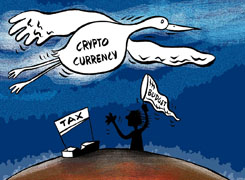
Ans: 01. Crypto Currency or Virtual Digital Assets are taxed @ 30% + SC + HEC.
02. Tax Rate remains the same whether it is reported under any head of Income, i.e., Capital Gains or Business Income or Other Income.
03. Ant loss under this head cnanot be set-off against under other heads of Income or even other transactions, under the same head of Income.
04. If reported under Capital Gains, benefit of Indexation is not allowed.
05. Except Cost of Purchase, no other expenditure is allowed as deduction, like Cost of Improvement or Transfer expenses etc.
Most welcome for any further clarifications. Thanks.
DISCLAIMER: The content of this post by the expert is the personal view of the rediffGURU. Users are advised to pursue the information provided by the rediffGURU only as a source of information to be as a point of reference and to rely on their own judgement when making a decision.
Money

You may like to see similar questions and answers below

Ramalingam

Ramalingam Kalirajan  |11161 Answers  |Ask -

Mutual Funds, Financial Planning Expert - Answered on May 03, 2024

Asked by Anonymous - Jan 10, 2024Hindi
Listen
Money
Hi Sir, I am planning to buy crypto tokens in FY 2023-24. As per the tax law, I have to pay 1% TDS which will be debited by the crypto exchange. when I sell my crypto tokens in any of the subsequent financial years, I will have to pay 30% tax on the profit (plus surcharge). I wanted to know how will this 1 % surcharge be adjusted when I sell my cryptos in coming years? Or will I have to pay 1% this financial year and additional 30% taxes (plus surcharge) when I sell my cryptos. Kindly clarify the matter. I look forward to your response.
Ans: Your inquiry reflects a responsible approach to understanding the tax implications of investing in cryptocurrencies. The 1% TDS (Tax Deducted at Source) levied by the crypto exchange is an advance tax payment, akin to a prepayment of your tax liability on the profit from cryptocurrency transactions.

When you sell your crypto tokens in subsequent financial years, the 1% TDS already deducted will be adjusted against your final tax liability. Therefore, you won't have to pay the 1% TDS again when you sell your cryptos.

However, it's important to note that the profit from cryptocurrency transactions will be subject to a 30% tax (plus surcharge) when you sell them in the future. This tax will be calculated on the gains made from your crypto investments, after deducting any allowable expenses or losses.

To ensure compliance with tax regulations and maximize your tax efficiency, consider consulting with a tax advisor or a Certified Financial Planner. They can provide personalized guidance based on your financial circumstances and help you navigate the complexities of cryptocurrency taxation.

..Read more

Ramalingam

Ramalingam Kalirajan  |11161 Answers  |Ask -

Mutual Funds, Financial Planning Expert - Answered on May 22, 2024

Asked by Anonymous - Jan 10, 2024Hindi
Listen
Money
Hi Sir, I am planning to buy crypto tokens in FY 2023-24. As per the tax law, I have to pay 1% TDS which will be debited by the crypto exchange. when I sell my crypto tokens in any of the subsequent financial years, I will have to pay 30% tax on the profit (plus surcharge). I wanted to know how will this 1 % surcharge be adjusted when I sell my cryptos in coming years? Or will I have to pay 1% this financial year and additional 30% taxes (plus surcharge) when I sell my cryptos. Kindly clarify the matter. Thanks in advance.
Ans: You're right about the crypto tax regulations in India for FY 2023-24. Here's a breakdown of how the 1% TDS and 30% capital gains tax work:

1% TDS on Crypto Purchase:

This 1% Tax Deducted at Source (TDS) applies when you buy crypto tokens exceeding a certain limit (?50,000 per year or ?10,000 in specific cases) through a crypto exchange in India.
It's deducted by the exchange itself and deposited with the government.
30% Tax on Capital Gains:

This tax applies when you sell your crypto tokens for a profit (selling price > buying price).
You'll need to pay 30% tax (plus applicable surcharge and cess) on the capital gains earned.
Important Note: Unlike stocks, there's no distinction between short-term and long-term capital gains for crypto. So, the entire profit is taxed at 30%.
How the 1% TDS is Adjusted:

The 1% TDS you pay doesn't directly get deducted from your capital gains tax.
It acts as a pre-payment towards your overall tax liability.
When you file your income tax return, you can claim credit for the 1% TDS deducted at the time of purchase. This will reduce your total tax payable.
Here's an example:

You buy Rs.1 lakh worth of crypto tokens and the exchange deducts 1% TDS (Rs.1,000).
Later, you sell these tokens for Rs.1.2 lakh, making a capital gain of Rs.20,000.
You'll need to pay 30% tax (plus surcharge and cess) on Rs.20,000 (capital gains).
However, you can claim credit for the Rs.1,000 TDS already deducted.
This will reduce your final tax liability.
Word of Caution on Crypto Investment:

It's important to be aware of the high volatility associated with cryptocurrency investments. The value of your tokens can fluctuate significantly, leading to potential losses.
Unlike stocks, the Indian government doesn't regulate cryptocurrencies. This means your investment isn't protected by any regulatory bodies.
Recommendation:

While crypto can be a high-risk, high-reward investment opportunity, it's wise to carefully consider your risk tolerance and conduct thorough research before investing. There are established and regulated investment options available that might better suit your financial goals.

Best Regards,

K. Ramalingam, MBA, CFP

Chief Financial Planner

www.holisticinvestment.in

..Read more

Latest Questions
Ramalingam

Ramalingam Kalirajan  |11161 Answers  |Ask -

Mutual Funds, Financial Planning Expert - Answered on May 04, 2026

Money
I am 61 self Disciplined minimalist. I am now in SWP segment. 4% SWP and step up SWP are all okay and understandable but much worried on flip side which am often not thinking much. Considering next 30 years block 1. Inflation may also shoot up from 6% to 15% 2. Normally market crash once in 10 years assuming 30% crash 3. Recovery phase may take slow say 5 to 7 years 4. War natural calamities etc influence market once in 7 year 5.expected return may hit bottom from 10% With all this sequential risk, the worry is will my corpus empty earlier should I be with half starving and my SWP is good only in paper or any corrections needs to be done? Because when age grows, expenses can't be reduced, only rebalance the ratio from travel to utility like that So please guide me will my SWP corpus empty earlier, and should I do now as preparedness
Ans: Your concern is very valid and very mature. Most people focus only on returns, but you are thinking about risks like inflation, crashes, and long recovery. This is exactly what protects a retirement plan.

» The Real Risk – Sequence of Returns
Your worry is not wrong.

If market falls early in retirement and you keep withdrawing
Then recovery is slow
Corpus can reduce faster than expected

This is called sequence risk
And yes, this can impact SWP sustainability

But this can be managed with structure, not by stopping SWP

» Inflation Risk – Bigger Than Market Risk

If inflation moves from 6% to even 10–12%, pressure increases
Expenses rise continuously, but corpus may not match

Reality:

Inflation risk is permanent
Market crash is temporary

So your plan must protect against inflation first

» Is 4% SWP Safe?

4% is generally considered reasonable
But not “guaranteed safe” in all conditions

In your scenario (high inflation + poor returns):

4% may become slightly aggressive

Better approach:

Keep flexibility between 3.5% to 4%
Reduce withdrawal slightly during bad market years

» Biggest Protection – Bucket Strategy
This is the most important correction

Divide your corpus into 3 buckets:

Bucket 1 (0–5 years expenses)
Keep in safe instruments (liquid / low risk)
This funds your SWP
Bucket 2 (5–10 years)
Hybrid or balanced funds
Bucket 3 (10+ years)
Equity funds for growth

How this helps:

During crash, you do not touch equity
You spend from Bucket 1
Equity gets time to recover

This directly reduces sequence risk

» Dynamic SWP – Very Important Adjustment
Instead of fixed thinking:

In good years → continue or increase SWP
In bad years → pause increase or reduce slightly

Even a small 5–10% temporary cut:

Greatly increases corpus life

This is practical, not theoretical

» Rebalancing Discipline

Once a year, review allocation
When equity grows → shift some to safe bucket
This “locks gains”

This creates a natural buffer for future crashes

» Extreme Scenario Planning (Your Concern)
You mentioned:

30% crash
5–7 year recovery
High inflation

In such case:

Bucket 1 should cover at least 5–7 years expenses
This is your survival shield

If this is in place:

You will not be forced to sell at loss
Corpus will not empty early

» Expense Behaviour – Practical Reality
You are right:

Expenses don’t reduce easily with age
They only shift (travel → medical, lifestyle → essentials)

So plan should:

Keep medical buffer separately
Not depend on cutting expenses

» Mental Model Shift
Do not think:
“Will my corpus finish?”

Think:
“How do I protect withdrawals during bad phases?”

Because:

Markets recover
But wrong withdrawals during crash cause damage

» Final Adjustments You Should Do Now

Maintain 5–7 years expenses in safe bucket
Keep equity allocation for long-term growth
Use flexible SWP (not rigid)
Rebalance yearly
Be ready to reduce withdrawal slightly in extreme conditions

» Finally

Your fear is not overthinking, it is intelligent thinking
SWP does not fail because of market alone
It fails due to poor withdrawal strategy during bad years

If you structure your buckets and keep flexibility, your corpus can comfortably last 30 years and more without “half starving” situations.

You are already ahead because you are asking the right question at the right time.

Best Regards,

K. Ramalingam, MBA, CFP,

Chief Financial Planner,

www.holisticinvestment.in

https://www.linkedin.com/in/ramalingamcfp/

...Read more

DISCLAIMER: The content of this post by the expert is the personal view of the rediffGURU. Investment in securities market are subject to market risks. Read all the related document carefully before investing. The securities quoted are for illustration only and are not recommendatory. Users are advised to pursue the information provided by the rediffGURU only as a source of information and as a point of reference and to rely on their own judgement when making a decision. RediffGURUS is an intermediary as per India's Information Technology Act.

Close  

You haven't logged in yet. To ask a question, Please Log in below
Login

A verification OTP will be sent to this
Mobile Number / Email

Enter OTP
A 6 digit code has been sent to

Resend OTP in120seconds

Dear User, You have not registered yet. Please register by filling the fields below to get expert answers from our Gurus
Sign up

By signing up, you agree to our
Terms & Conditions and Privacy Policy

Already have an account?

Enter OTP
A 6 digit code has been sent to Mobile

Resend OTP in120seconds

x