


Need Expert Advice?Our Gurus Can Help
Education Loan Canceled Due to Co-Borrower's Low Credit Score - What Can I Do?

Ramalingam Kalirajan |10908 Answers |Ask -Follow
Mutual Funds, Financial Planning Expert - Answered on Sep 02, 2024
Ramalingam Kalirajan has over 23 years of experience in mutual funds and financial planning.
He has an MBA in finance from the University of Madras and is a certified financial planner.
He is the director and chief financial planner at Holistic Investment, a Chennai-based firm that offers financial planning and wealth management advice.... more
He has an MBA in finance from the University of Madras and is a certified financial planner.
He is the director and chief financial planner at Holistic Investment, a Chennai-based firm that offers financial planning and wealth management advice.... more
 Question by Aishwarya on Aug 09, 2024Hindi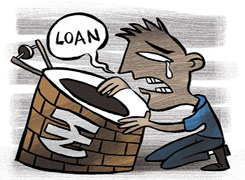
My education loan 7.5 lakh is cancelled due to low cibil score of co- borrower ( father) how can i get... Education loan Instantly
Ans: You were looking forward to getting an education loan of Rs. 7.5 lakh. Unfortunately, the loan was canceled because of your co-borrower’s low CIBIL score. I understand how crucial this loan is for your education. Let's explore the steps you can take to secure the required funds.
Assessing the CIBIL Score Impact
CIBIL Score Role: The CIBIL score is critical for loan approvals. Banks rely on it to assess the risk associated with lending money. A low score of your co-borrower indicates a higher risk, leading to loan rejection.
Focus on Your Own Score: If your own CIBIL score is good, you can reapply with yourself as the primary applicant. Sometimes, banks may overlook the co-borrower’s score if the primary applicant has a strong credit history.
Exploring Alternative Co-Borrowers
Consider Another Co-Borrower: If possible, consider another family member with a good CIBIL score as the co-borrower. A better score improves the chances of loan approval significantly.
Involving a Guarantor: Some banks allow adding a guarantor instead of a co-borrower. A guarantor with a strong credit history can enhance your loan eligibility.
Approaching Different Lenders
Public Sector Banks: Public sector banks are generally more lenient with education loans. They may have different criteria, so it’s worth applying to a few of them.
NBFCs: Non-Banking Financial Companies (NBFCs) are another option. They may offer education loans with more flexible terms, even if the CIBIL score isn’t perfect.
Private Lenders: Some private lenders specialize in education loans and may consider your overall profile rather than just the CIBIL score. However, interest rates might be higher.
Government Schemes and Subsidies
Government Schemes: Look into government schemes like the Credit Guarantee Fund Scheme for Education Loans (CGFSEL). This scheme reduces the risk for banks, making them more willing to lend.
Interest Subsidies: If you meet certain criteria, you may be eligible for interest subsidies under various government schemes. This could make it easier to secure a loan.
Improving the Loan Application
Re-Check Documents: Ensure all documents are complete and accurate. Incomplete or incorrect documentation can lead to loan rejection.
Highlight Academic Performance: Emphasize your academic achievements and future potential in the application. A strong academic profile can sometimes compensate for a co-borrower’s low CIBIL score.
Consider Collateral: If you have any assets, offering collateral can strengthen your loan application. Secured loans are less risky for banks and might be approved even if the CIBIL score is low.
Immediate Financial Alternatives
Personal Loans: If time is of the essence, you can consider applying for a personal loan. Though interest rates might be higher, it can provide immediate funds for your education.
Family Loans: Consider borrowing from family members. It can be a quick and interest-free solution, although it requires clear communication and repayment terms.
Crowdfunding: Crowdfunding platforms can also be an option. If you have a compelling story and clear goals, you might be able to raise funds for your education through donations.
Final Insights
Do Not Get Discouraged: The rejection due to a low CIBIL score is just a temporary setback. There are multiple other avenues to explore.
Explore Multiple Options: Don't rely on a single lender. Apply to multiple banks, NBFCs, and even explore government-backed schemes to increase your chances.
Long-Term Planning: While securing funds immediately is crucial, consider working on improving the CIBIL score of the co-borrower. This could help in future financial needs as well.
Consult a Certified Financial Planner: Before making any decisions, consult with a Certified Financial Planner. They can help tailor the right financial strategy for your situation and guide you through the process.
Best Regards,
K. Ramalingam, MBA, CFP,
Chief Financial Planner,
www.holisticinvestment.in
Assessing the CIBIL Score Impact
CIBIL Score Role: The CIBIL score is critical for loan approvals. Banks rely on it to assess the risk associated with lending money. A low score of your co-borrower indicates a higher risk, leading to loan rejection.
Focus on Your Own Score: If your own CIBIL score is good, you can reapply with yourself as the primary applicant. Sometimes, banks may overlook the co-borrower’s score if the primary applicant has a strong credit history.
Exploring Alternative Co-Borrowers
Consider Another Co-Borrower: If possible, consider another family member with a good CIBIL score as the co-borrower. A better score improves the chances of loan approval significantly.
Involving a Guarantor: Some banks allow adding a guarantor instead of a co-borrower. A guarantor with a strong credit history can enhance your loan eligibility.
Approaching Different Lenders
Public Sector Banks: Public sector banks are generally more lenient with education loans. They may have different criteria, so it’s worth applying to a few of them.
NBFCs: Non-Banking Financial Companies (NBFCs) are another option. They may offer education loans with more flexible terms, even if the CIBIL score isn’t perfect.
Private Lenders: Some private lenders specialize in education loans and may consider your overall profile rather than just the CIBIL score. However, interest rates might be higher.
Government Schemes and Subsidies
Government Schemes: Look into government schemes like the Credit Guarantee Fund Scheme for Education Loans (CGFSEL). This scheme reduces the risk for banks, making them more willing to lend.
Interest Subsidies: If you meet certain criteria, you may be eligible for interest subsidies under various government schemes. This could make it easier to secure a loan.
Improving the Loan Application
Re-Check Documents: Ensure all documents are complete and accurate. Incomplete or incorrect documentation can lead to loan rejection.
Highlight Academic Performance: Emphasize your academic achievements and future potential in the application. A strong academic profile can sometimes compensate for a co-borrower’s low CIBIL score.
Consider Collateral: If you have any assets, offering collateral can strengthen your loan application. Secured loans are less risky for banks and might be approved even if the CIBIL score is low.
Immediate Financial Alternatives
Personal Loans: If time is of the essence, you can consider applying for a personal loan. Though interest rates might be higher, it can provide immediate funds for your education.
Family Loans: Consider borrowing from family members. It can be a quick and interest-free solution, although it requires clear communication and repayment terms.
Crowdfunding: Crowdfunding platforms can also be an option. If you have a compelling story and clear goals, you might be able to raise funds for your education through donations.
Final Insights
Do Not Get Discouraged: The rejection due to a low CIBIL score is just a temporary setback. There are multiple other avenues to explore.
Explore Multiple Options: Don't rely on a single lender. Apply to multiple banks, NBFCs, and even explore government-backed schemes to increase your chances.
Long-Term Planning: While securing funds immediately is crucial, consider working on improving the CIBIL score of the co-borrower. This could help in future financial needs as well.
Consult a Certified Financial Planner: Before making any decisions, consult with a Certified Financial Planner. They can help tailor the right financial strategy for your situation and guide you through the process.
Best Regards,
K. Ramalingam, MBA, CFP,
Chief Financial Planner,
www.holisticinvestment.in
DISCLAIMER: The content of this post by the expert is the personal view of the rediffGURU. Users are advised to pursue the information provided by the rediffGURU only as a source of information to be as a point of reference and to rely on their own judgement when making a decision.
MoneyReply


You may like to see similar questions and answers below
Ramalingam Kalirajan |10908 Answers |Ask -Follow
Mutual Funds, Financial Planning Expert - Answered on May 29, 2025

Ramalingam Kalirajan |10908 Answers |Ask -Follow
Mutual Funds, Financial Planning Expert - Answered on Jun 03, 2025
Ramalingam Kalirajan |10908 Answers |Ask -Follow
Mutual Funds, Financial Planning Expert - Answered on Aug 28, 2025


Latest Questions
Ramalingam Kalirajan |10908 Answers |Ask -Follow
Mutual Funds, Financial Planning Expert - Answered on Dec 20, 2025


Ramalingam Kalirajan |10908 Answers |Ask -Follow
Mutual Funds, Financial Planning Expert - Answered on Dec 20, 2025


Naveenn Kummar |237 Answers |Ask -Follow
Financial Planner, MF, Insurance Expert - Answered on Dec 20, 2025


Ramalingam Kalirajan |10908 Answers |Ask -Follow
Mutual Funds, Financial Planning Expert - Answered on Dec 19, 2025

Nayagam P P |10859 Answers |Ask -Follow
Career Counsellor - Answered on Dec 19, 2025

Ramalingam Kalirajan |10908 Answers |Ask -Follow
Mutual Funds, Financial Planning Expert - Answered on Dec 19, 2025


Ramalingam Kalirajan |10908 Answers |Ask -Follow
Mutual Funds, Financial Planning Expert - Answered on Dec 19, 2025


Ramalingam Kalirajan |10908 Answers |Ask -Follow
Mutual Funds, Financial Planning Expert - Answered on Dec 19, 2025


Radheshyam Zanwar |6751 Answers |Ask -Follow
MHT-CET, IIT-JEE, NEET-UG Expert - Answered on Dec 19, 2025


Radheshyam Zanwar |6751 Answers |Ask -Follow
MHT-CET, IIT-JEE, NEET-UG Expert - Answered on Dec 19, 2025
