Home > Money > Question
Need Expert Advice?Our Gurus Can Help
Reetika

Reetika Sharma  |627 Answers  |Ask -

Financial Planner, MF and Insurance Expert - Answered on Jan 22, 2026

Reetika Sharma is a certified financial planner and CEO of F-Secure Solutions.
She advises clients about investments, insurance, tax and estate planning and manages high net-worth individual’s portfolios.
Reetika has an MBA in finance from the Institute of Chartered Financial Analysts of India (ICFAI) and an engineer degree from NIT, Jalandhar.
She also holds certifications from the Financial Planning Standards Board India (FPSB), Association of Mutual Funds in India (AMFI) and Insurance Regulatory and Development Authority of India (IRDAI).... more
Asked by Anonymous - Jan 22, 2026Hindi

Money

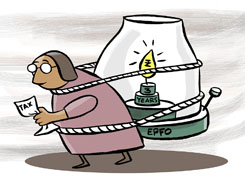
I earn a basic salary of ₹25,000 per month and have completed 4 years and 6 months of continuous service in my organization. I am planning to withdraw my Employees’ Provident Fund (EPF) balance of ₹3.8 lakh. Since my total service period is less than 5 years, will this withdrawal be taxable? How much TDS will be deducted if my PAN is linked, and how will the final tax liability be calculated while filing my income tax return?

Ans: Hi,

As the servicable tenure is less than 5 years, your withdrawal will be taxable. You can expect a TDS of 10% on that but final tax would be as per your Income Tax slab.
Hence, unless absolutely necessary, avoid withdrawing the EPF and let it as is for your retirement.

Let me know if you need more help.

Best Regards,
Reetika Sharma, Certified Financial Planner
https://www.instagram.com/cfpreetika/
DISCLAIMER: The content of this post by the expert is the personal view of the rediffGURU. Users are advised to pursue the information provided by the rediffGURU only as a source of information to be as a point of reference and to rely on their own judgement when making a decision.
Money

You may like to see similar questions and answers below

Ramalingam

Ramalingam Kalirajan  |11151 Answers  |Ask -

Mutual Funds, Financial Planning Expert - Answered on Jun 14, 2024
Asked by Anonymous - Jun 14, 2024Hindi
Money
Hi expert, I need your input with regards to my EPF. I have worked for 3 companies. The last company I worked for from 2014 to 2018 (approx 3.8 years). Since 2018 I am into business so I haven't contributed to my EPF. Now I plan to withdraw my EPF as its been over 6 years I haven't contributed. A few quick questions - Is the total amount taxable? - In total I have 5.1 years of experience but when I am withdrawing online its just taking into consideration my last job experience (3.8 years). Under reason for leaving its showing "CESSATION (SHORT SERVICE) - Any other reason" Under service history its showing the entire experience of 3 companies and a total of 5.1 years. I am just worried as I don't want to commit any error while withdrawing. We checked with EPF office and he mentioned that if in the service history its showing then you don't need to worry and all your experience will be taken. But when I am withdrawing its showing the current experience and also on reason for leaving showing short service which is worrying since it would be taxed (under 5 years) Kindly suggest how do I go about this and what forms I need to fill / select in order for it to be a smooth and error free transaction. Kindly respond at the earliest as this very important for me.
Ans: Firstly, let me appreciate your diligence in seeking clarity about your Employee Provident Fund (EPF) withdrawal. This shows your commitment to managing your finances wisely, which is commendable. Let's dive into your concerns and provide a detailed guide to ensure a smooth and error-free EPF withdrawal process.

Tax Implications of EPF Withdrawal
Withdrawing EPF after a period of non-contribution raises valid concerns about tax implications. Here's what you need to know:

Tax-Free Withdrawal Conditions: If the total period of your service is five years or more, the EPF withdrawal amount is tax-free. This is crucial for you, as your total service across three companies sums up to 5.1 years. Hence, you meet the criterion for tax-free withdrawal.

Taxable Withdrawal: If the service period is less than five years, the withdrawal is taxable. Given that your service history includes over five years, you should not face this issue. However, the concern arises from the online system only recognizing your last employment period of 3.8 years.

Service History and Withdrawal Process
Your apprehension about the system showing only 3.8 years of service during the withdrawal process is understandable. Here's an analytical perspective on how to handle this:

Service History Verification: Ensure that your service history in the EPF records correctly reflects your total tenure across all three companies. This consolidated history should be visible in the unified portal.

Cessation (Short Service): The reason "CESSATION (SHORT SERVICE)" might appear due to a system limitation or an error. To address this, consider the following steps:

EPF Office Confirmation: Since the EPF office has assured you that your entire experience is considered, keep a record of this communication. This could be useful if any discrepancies arise later.
Document Submission: While applying online, if possible, attach a detailed service certificate or a document from your previous employers that validates your total service period.
Withdrawal Forms and Selection
Navigating the withdrawal forms is critical for a smooth transaction. Here's what you need to focus on:

Form 19: This form is typically used for final settlement of EPF accounts. Ensure that all details are correctly filled in, particularly your service duration and reason for leaving.

Form 10C: This form is for pension withdrawal benefits. Given your tenure, this might also be relevant. Ensure your pensionable service years are correctly mentioned.

Steps for Error-Free Transaction
To avoid any errors and ensure a smooth withdrawal process, follow these steps meticulously:

Cross-Check Personal Details: Ensure your personal details such as name, date of birth, and Aadhar number match exactly with your EPF records.

Verify Bank Details: Double-check your bank account details to ensure the funds are transferred without any issues.

Update KYC: Make sure your KYC details are up-to-date in the EPF portal. This includes your Aadhar, PAN, and bank details.

Service Certificate: Obtain a comprehensive service certificate from all your previous employers. This should detail your employment periods clearly.

Consult EPF Office: Given your unique situation, a visit to the local EPF office or a detailed email explaining your concern might help. Attach all supporting documents and the assurance you received regarding your total service period.

Empathy and Understanding
I understand that dealing with bureaucratic processes can be stressful. Your diligence and proactive approach in seeking guidance are highly commendable. Remember, the objective is to ensure your rightful EPF amount is withdrawn without any undue tax implications.

Benefits of Actively Managed Funds
In the context of reinvestment, let me shed light on the advantages of actively managed funds over other options:

Expert Management: Actively managed funds are overseen by professional fund managers who make informed decisions based on market trends and economic indicators. This expertise can potentially yield better returns compared to passive strategies.

Flexibility: These funds have the flexibility to adjust portfolios in response to market conditions, which can be beneficial during volatile times.

Performance Potential: Historically, actively managed funds have the potential to outperform the market, particularly in sectors experiencing growth or economic upturns.

Reinvesting for Future Growth
Once your EPF amount is successfully withdrawn, consider reinvesting it to maximize your financial growth. Here are some strategies:

Mutual Funds: Investing in mutual funds, especially through a Certified Financial Planner (CFP), can offer a diversified portfolio. A CFP can help tailor investments to your risk profile and financial goals.

Systematic Investment Plans (SIPs): SIPs in mutual funds allow you to invest a fixed amount regularly, reducing the impact of market volatility and inculcating financial discipline.

Diversified Portfolio: Building a diversified portfolio with a mix of equity, debt, and hybrid funds can help balance risk and reward.

Importance of Professional Guidance
Given the complexities involved in financial planning, consulting a Certified Financial Planner (CFP) can be immensely beneficial. A CFP can offer personalized advice, helping you navigate tax implications, investment strategies, and long-term financial goals.

Final Insights
Your proactive approach to understanding the EPF withdrawal process and ensuring compliance with tax regulations is commendable. By verifying your service history, carefully filling out the necessary forms, and considering professional advice, you can navigate this process smoothly. Reinvesting your EPF wisely can secure your financial future and help achieve your long-term goals.

Best Regards,

K. Ramalingam, MBA, CFP,

Chief Financial Planner,

www.holisticinvestment.in

..Read more

Nitin

Nitin Narkhede  | Answer  |Ask -

MF, PF Expert - Answered on Sep 24, 2024

Listen
Money
Dear Sir, I am working in IT industry for past 20 years and have worked in multiple companies (10) and have not worked in any company for more than 4 years. I have EPF corpus for 25 lacs. so I am part of EPF for past 20 years but I dont have continuous EPF in any organization for 5 years. If I withdraw EPF will it be taxed at my income tax slab.
Ans: About EPF Continuous Service -Since you’ve been contributing to EPF for 20 years across different companies, your overall service with the EPF remains uninterrupted.
About Tax-Free EPF Withdrawal- According to EPF rules, if you have completed 5 years of continuous service (which includes service across multiple employers without withdrawing the balance between jobs), your EPF withdrawal is tax-free. So, despite changing jobs, your service duration with the EPF is counted collectively.
Since you've been contributing for 20 years without breaking the EPF continuity, your withdrawal will not be taxed. You can withdraw the EPF corpus of Rs 25 lakh without worrying about it being taxed at your income tax slab rate.
However, if at any point your EPF service was discontinued and restarted (without a transfer of funds between accounts), the period might reset, leading to taxation concerns. If you are unsure, you could consult with your EPF office or a tax advisor to confirm your exact status. Think about linking all the old accounts in to the current account so that your continuity of service can be verified by PF authorities. Now EPF office have started unified account and you linking your old accounts to the latest account will give you combined value and tax benefits. within my Prosperity Lifestyle Hub community we share such topics to get our financial challenges resolved.
Best regards,
Nitin Narkhede
Founder & MD, Prosperity Lifestyle Hub https://Nitinnarkhede.com
Free Webinar https://bit.ly/PLH-Webinar

..Read more

Ramalingam

Ramalingam Kalirajan  |11151 Answers  |Ask -

Mutual Funds, Financial Planning Expert - Answered on Jan 22, 2026

Asked by Anonymous - Jan 22, 2026Hindi
Money
I plan to withdraw ₹6 lakh from my EPF after completing only 3 years of service, and my PAN is linked with my EPF account. Since my service period is less than 5 years, how much TDS at 10% will be deducted at the time of withdrawal? How will this EPF withdrawal be taxed in my income tax return, and can I claim a refund of the TDS deducted if my total income falls below the taxable limit?
Ans: You are thinking ahead, and that is very important. EPF withdrawal before 5 years has tax impact, but with the right understanding, there will be no surprise later.

» EPF withdrawal before completing 5 years of service
– Your total service is only 3 years
– EPF withdrawal is treated as taxable income
– PAN is linked, so TDS applies at a lower rate
– Withdrawal amount mentioned is Rs. 6 lakh

» TDS deduction at the time of EPF withdrawal
– When PAN is linked, EPFO deducts TDS at 10%
– TDS is calculated on the taxable portion of EPF
– In practical terms, EPFO usually deducts around Rs. 60,000 as TDS
– You will receive the balance amount after TDS deduction

» Important clarity on TDS
– TDS is not final tax
– It is only an advance tax collected by EPFO
– Actual tax depends on your total income for the year

» How EPF withdrawal is taxed in your income tax return
– EPF withdrawal is added to your total income
– Employee contribution portion becomes taxable
– Employer contribution portion becomes taxable
– Interest earned also becomes taxable
– The full taxable amount is taxed as per your income tax slab

» Filing income tax return after EPF withdrawal
– EPF withdrawal amount must be declared in the return
– TDS deducted by EPFO will appear in Form 26AS
– You must include both income and TDS details correctly

» Can you claim refund of TDS deducted
– Yes, refund is fully possible
– If your total income including EPF withdrawal is below taxable limit
– Or if your final tax liability is lower than TDS deducted
– The excess TDS will be refunded after return processing

» Common misunderstanding to avoid
– Many people think 10% TDS is final tax, which is not true
– Actual tax may be zero, lower, or higher based on income slab
– Not filing return will result in loss of refund

» Planning insight from a long-term view
– EPF is a retirement-focused asset
– Early withdrawal increases tax and reduces future safety
– Withdraw only if there is real financial need
– If employment resumes soon, transfer is always cleaner

» Finally
– TDS of around Rs. 60,000 will be deducted at withdrawal
– Entire EPF withdrawal is taxable due to service below 5 years
– Refund can be claimed if total income is within limits
– Proper return filing ensures no permanent tax loss

Best Regards,

K. Ramalingam, MBA, CFP,

Chief Financial Planner,

www.holisticinvestment.in

https://www.youtube.com/@HolisticInvestment

..Read more

Latest Questions
Ramalingam

Ramalingam Kalirajan  |11151 Answers  |Ask -

Mutual Funds, Financial Planning Expert - Answered on Apr 22, 2026

Money
If I want to withdraw 1.5 lac per month, which SWP is better and how much should I invest in it?
Ans: It is very good that you are planning SWP (Systematic Withdrawal Plan) in advance. Planning monthly income properly helps protect your capital and gives stable cash flow.

To withdraw Rs 1.5 lakh per month, the correct SWP structure depends mainly on:

– your age
– investment horizon
– whether income is required lifelong or for limited years
– existing retirement corpus
– risk tolerance

Still, I will guide you with a practical structure that suits most long-term SWP income needs.

» How much investment is required to withdraw Rs 1.5 lakh per month

Normally, safe SWP withdrawal rate should be around:

– 6% yearly for very safe structure
– 7% yearly for balanced structure
– 8% yearly for growth-oriented structure

Based on this:

Approximate investment required:

– Conservative structure: around Rs 3 crore
– Balanced structure: around Rs 2.5 crore
– Growth-oriented structure: around Rs 2.25 crore

This allows income sustainability without early capital depletion.

If withdrawal period is limited (example 15 years), required corpus may be lower.

If income required lifelong, higher corpus is safer.

» Which mutual fund categories are best for SWP income

Best SWP income normally comes from a combination approach.

Ideal structure:

– 40% Multi asset allocation category fund
– 30% Balanced advantage category fund
– 20% Flexi cap category fund
– 10% Short duration debt category fund

This structure provides:

– income stability
– inflation protection
– market downside control
– long-term capital sustainability

Avoid using only pure equity category funds for SWP.

Avoid using only debt category funds also because inflation reduces value.

Combination approach works best.

» Why multi asset allocation category fund works well for SWP

This category invests across:

– equity
– debt
– gold

It adjusts allocation automatically and supports stable withdrawal planning.

Very suitable for retirement-style monthly income planning.

» Tax efficiency advantage of SWP

SWP is more tax-efficient compared to interest income.

Because:

– only capital gain portion is taxed
– equity mutual fund LTCG above Rs 1.25 lakh taxed at 12.5%
– debt fund gains taxed as per income slab

So proper category selection improves post-tax income.

» How to structure SWP correctly

Better approach:

– keep 2 years withdrawal amount in short duration debt category fund
– keep remaining corpus in multi asset + balanced advantage category funds
– review once per year
– increase withdrawal gradually based on inflation

This protects income continuity during market corrections.

» Important preparation before starting SWP

Before starting SWP ensure:

– emergency fund available separately
– health insurance active
– no high-interest loans pending
– nominee details updated

These steps protect retirement income stability.

» Finally

To withdraw Rs 1.5 lakh monthly comfortably, target corpus should ideally be between Rs 2.25 crore and Rs 3 crore depending on risk level.

Use combination of multi asset, balanced advantage, flexi cap and short duration debt category funds instead of relying on a single category. This improves income stability and protects capital for long-term sustainability.

Best Regards,

K. Ramalingam, MBA, CFP,

Chief Financial Planner,

www.holisticinvestment.in

https://www.linkedin.com/in/ramalingamcfp/

...Read more

Nayagam P

Nayagam P P  |11050 Answers  |Ask -

Career Counsellor - Answered on Apr 22, 2026

Career
Namaskar, My son has got 93.60 percentile in JEE mains 2026 with General rank 100144 and OBC NCL rank 32618. I request you to kindly guide me can he get admission in SGSITS, Indore in CSE / IT / ETC branch having MP domicile or any other better option as per your recommendation.
Ans: Govind Sir, With 93.60 percentile, CRL 1,00,144 and OBC-NCL rank 32,618 (MP domicile), your son should try both MP BE counselling and JoSAA. For SGSITS Indore, recent MP-counselling data show General home-state closing ranks around CSE 18,410, IT 37,589, ETC 48,484 in 2025, so CSE looks difficult, IT is borderline, and ETC appears the most realistic; OBC-MP quota may improve chances somewhat. For JoSAA, at OBC 32,618, expect mainly lower-demand branches in mid/lower NITs, IIITs and GFTIs, not CSE/IT in top institutes. My recommendation: SGSITS ETC/IT first, then good MP colleges like IET-DAVV/JEC, while keeping JoSAA + CSAB as backup. (I suggest you also cross-check the JoSAA opening and closing ranks data from the last 2–3 years before filling in the maximum number of your son’s preferred institutions and branches during counselling). ALL the BEST for Your Son's Prosperous Future!

Follow RediffGURUS to Know More on 'Careers | Money | Health | Relationships'.

...Read more

Nayagam P

Nayagam P P  |11050 Answers  |Ask -

Career Counsellor - Answered on Apr 22, 2026

DISCLAIMER: The content of this post by the expert is the personal view of the rediffGURU. Investment in securities market are subject to market risks. Read all the related document carefully before investing. The securities quoted are for illustration only and are not recommendatory. Users are advised to pursue the information provided by the rediffGURU only as a source of information and as a point of reference and to rely on their own judgement when making a decision. RediffGURUS is an intermediary as per India's Information Technology Act.

Close  

You haven't logged in yet. To ask a question, Please Log in below
Login

A verification OTP will be sent to this
Mobile Number / Email

Enter OTP
A 6 digit code has been sent to

Resend OTP in120seconds

Dear User, You have not registered yet. Please register by filling the fields below to get expert answers from our Gurus
Sign up

By signing up, you agree to our
Terms & Conditions and Privacy Policy

Already have an account?

Enter OTP
A 6 digit code has been sent to Mobile

Resend OTP in120seconds

x