Home > Money > Question
Need Expert Advice?Our Gurus Can Help

Debt-Ridden Student: How Can I Raise 80k?
Milind

Milind Vadjikar  | Answer  |Ask -

Insurance, Stocks, MF, PF Expert - Answered on Feb 16, 2025

Milind Vadjikar is an independent MF distributor registered with Association of Mutual Funds in India (AMFI) and a retirement financial planning advisor registered with Pension Fund Regulatory and Development Authority (PFRDA).
He has a mechanical engineering degree from Government Engineering College, Sambhajinagar, and an MBA in international business from the Symbiosis Institute of Business Management, Pune.
With over 16 years of experience in stock investments, and over six year experience in investment guidance and support, he believes that balanced asset allocation and goal-focused disciplined investing is the key to achieving investor goals.... more

Vishal Question by Vishal on Feb 15, 2025Hindi
Listen
Money

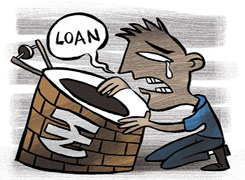
I have debt of 80k and i dont have any source of Income as because my just a student.Also my parents are not capable to pay that much amount.How can i fundraise?

Ans: Hello;

You may take-up part time job somewhere so as to atleast pay the loan EMIs.

You may let the loan company impound asset acquired under the loan(bike, cell phone) and close the loan sighting inability to repay. This will impact your cibil score but it can be improved later on.

Seek help from a friend or relative to close the loan. You may repay them later when you get employed.

Avoid credit cards, BNPL, MTF and other borrowings as much as possible.

Best wishes;
DISCLAIMER: The content of this post by the expert is the personal view of the rediffGURU. Users are advised to pursue the information provided by the rediffGURU only as a source of information to be as a point of reference and to rely on their own judgement when making a decision.
Money

You may like to see similar questions and answers below

Ramalingam

Ramalingam Kalirajan  |11028 Answers  |Ask -

Mutual Funds, Financial Planning Expert - Answered on Oct 15, 2024

Asked by Anonymous - Oct 15, 2024Hindi
Listen
Money
Sir I have a debt of 10 lakhs with no income right now.
Ans: You currently have a debt of Rs 10 lakhs, but no income at the moment. This can seem overwhelming, but with proper planning, you can overcome it. The key is to stay focused and work towards improving your financial position step by step.

Prioritising Debt Management
Paying off your debt should be your first priority. Without a regular income, it can be challenging, but you have options to consider. Let's break it down into actionable steps:

Assess Your Current Expenses: List down all your monthly expenses. This will help you identify areas where you can cut costs. The goal is to reduce unnecessary spending until you are back on track.

Consider a Side Income: Even if you don’t have a regular job, explore other avenues for generating income. Freelancing, part-time work, or online services can help you start earning something, even if it's small.

Approach Lenders for Restructuring: Reach out to your lender or bank. Explain your situation and explore the possibility of restructuring your loan. Many banks offer relief options for borrowers struggling with repayment, such as extending the tenure or reducing the EMI.

Prioritise High-Interest Debt: If this debt has a high-interest rate, it’s important to pay it off as soon as you can. High-interest debt grows quickly, making it more difficult to clear in the long run.

Loan Consolidation Options
If you have multiple loans, consolidating them might be a good option. It allows you to combine your loans into one, usually at a lower interest rate. This can ease the financial burden by reducing your monthly EMI.

Loan Consolidation: Explore personal loan consolidation options if available. This can help bring down the overall interest rate and make repayment more manageable.

Debt Counselling: In case the situation worsens, debt counselling services can offer professional help. They can negotiate with creditors and help you set up a more affordable repayment plan.

Focus on Building an Emergency Fund
Even though your priority is paying off the debt, it is essential to have some financial safety net. Once you start earning, set aside a small amount for emergencies. Having even Rs 5,000 to Rs 10,000 as an emergency fund can make a big difference.

Small Contributions: Even with limited income, putting aside small amounts for emergencies is a good habit. This way, if any sudden expenses arise, you won’t have to take on more debt.
Long-Term Financial Stability
Once you regain your income, your focus should shift to not only paying off the debt but also building a stable financial future.

Systematic Savings: Once you are in a better financial position, start small investments in a savings plan or recurring deposit to develop the habit of saving regularly.

Building Retirement Corpus: When your financial situation stabilises, consider contributing to your PF or NPS for retirement. You can increase contributions once your debt is cleared.

Avoid Unnecessary Loans
During this phase, avoid taking any new loans or credit cards. More debt will only make the situation worse. Focus on clearing what you owe before considering any new credit.

Insurance for Financial Security
In case you don’t already have insurance, getting a basic health insurance plan is essential once your income stabilises. It prevents unexpected medical costs from derailing your financial progress.

Health Insurance: Start with a small cover if you don’t already have one. This will protect you and your family from sudden large medical bills.

Term Insurance: Once you have a steady income, a term insurance plan ensures that your dependents are financially protected in case anything happens to you.

Final Insights
Managing debt without income is difficult but not impossible. Your focus should be on reducing expenses, seeking additional sources of income, and restructuring your loan. Once you are back on your feet financially, build savings for emergencies and long-term goals. Avoid taking on new debt, and ensure that you protect your financial future with insurance.

By following these steps, you will gradually improve your financial health and move towards a debt-free future.

Best Regards,

K. Ramalingam, MBA, CFP,
Chief Financial Planner,
www.holisticinvestment.in
https://www.youtube.com/@HolisticInvestment

..Read more

Ramalingam

Ramalingam Kalirajan  |11028 Answers  |Ask -

Mutual Funds, Financial Planning Expert - Answered on Nov 14, 2024

Asked by Anonymous - Nov 13, 2024Hindi
Money
Sir i am in 12 lakh rupees debt.I am student .I have no earning sources and no savings also.Im my family there is my mother only.please guide sir.please help sir.
Ans: I appreciate your courage to seek help during these challenging times. As a Certified Financial Planner, I'll provide you with a 360-degree plan to help you overcome your debt. Let's work step-by-step to ease your burden.

Understanding Your Financial Situation
Your current debt of Rs 12 lakh is a significant challenge. However, with the right approach, it is possible to clear it.

Since you are a student with no current earnings, we will need to take a strategic approach to manage and eventually eliminate your debt.

It's crucial to remain calm, take control, and focus on practical solutions. We will also look at how to reduce financial stress on your mother.

Immediate Steps to Reduce Debt Pressure
Prioritise Your Expenses: Identify necessary expenses and cut down on any non-essential spending. Every rupee saved can be directed toward reducing your debt.

Speak to Your Creditors: If you have taken loans from banks or other institutions, consider reaching out to them. Many lenders offer restructuring options for those who are genuinely struggling.

Explore Moratorium Options: Some banks may provide a temporary pause on repayments. If this is available, it can provide short-term relief.

Avoid Taking More Loans: It may seem tempting to take another loan to pay off existing debt, but this can worsen your financial situation.

Seek Family or Community Support: If possible, reach out to extended family members or friends who may be able to support you, even if it's a small amount. This can help reduce the burden temporarily.

Exploring Income Opportunities
Since you are currently a student, let’s explore ways you can earn without impacting your studies.

Freelancing: Look for online freelance work in areas like content writing, graphic design, tutoring, or data entry. These are often flexible and can provide some income.

Part-Time Jobs: Explore part-time jobs in your area, such as teaching, retail work, or any other skill you possess.

Online Teaching: If you have expertise in certain subjects, platforms like Chegg or Byju’s offer tutoring jobs. This can be a good source of income.

Use Your Hobbies: If you have any hobbies like photography, painting, or crafting, consider selling your creations online. Websites like Etsy or social media platforms can help you reach buyers.

These small income streams may not solve your debt immediately, but they can ease some of your financial pressures.

Financial Relief Programs and Scholarships
Government Schemes: Check if there are any government relief schemes available for students or families with financial hardships. These could offer temporary support.

Scholarships and Grants: Since you are a student, explore scholarships, grants, or financial aid programs that may be available. This can help reduce your educational expenses.

NGO Support: Certain non-profit organisations provide assistance to families in debt. Reach out to them for any support.

Protecting Your Mother's Finances
It is essential to protect your mother from taking on more financial burdens. If your family has any LIC policies, ULIPs, or other investment-cum-insurance plans, it might be worth exploring if surrendering these can provide some cash flow.

However, consult with a Certified Financial Planner before surrendering any insurance policies. This will help you understand the financial impact and ensure you do not lose coverage unnecessarily.

Building a Long-Term Strategy
Focus on Education and Skill Development: Your education is your best asset right now. Concentrate on completing your studies and developing skills that can lead to higher-paying job opportunities in the future.

Create a Debt Repayment Plan: Once you have a steady income, create a structured plan to repay your debt. Focus on high-interest debts first.

Emergency Fund: Once you are earning, start building a small emergency fund to handle unforeseen expenses. This will prevent future debt.

Investing for Future: As you stabilise your finances, consider investing through mutual funds to build wealth. But for now, focus on reducing debt.

Some Final Insights
Overcoming debt will take time, effort, and persistence. The journey will not be easy, but it is definitely possible.

Focus on income generation, reducing expenses, and gradually paying off your debt. With determination, you can come out of this difficult phase.

Do not hesitate to reach out for help whenever needed. Financial struggles are tough, but seeking support from community, friends, or professionals can ease the burden.

Remember, every small step you take will contribute to improving your financial health. Stay strong and keep moving forward.

Best Regards,

K. Ramalingam, MBA, CFP,
Chief Financial Planner,
www.holisticinvestment.in
https://www.youtube.com/@HolisticInvestment

..Read more

Ramalingam

Ramalingam Kalirajan  |11028 Answers  |Ask -

Mutual Funds, Financial Planning Expert - Answered on Jul 08, 2025

Money
what should i do i have having 2 lakh debt and no source of income and not having any savings or money in my hand how i manage to pay them and no friends and other people are helping me to pay
Ans: It needs a clear and strong action plan.
Right now, your goal is simple—get stable, earn income, and repay.

Let’s look at it from all angles.

Accept the Situation Without Blame
You have Rs 2 lakh loan.

No income. No savings. No support.

This can feel heavy. But it can be handled.

You are not alone. Many have faced this and come out.

You must now focus only on practical steps.

Stop the Debt From Growing
Talk to the lender immediately.

Ask for a pause on EMI or lower interest.

Don’t delay. Hiding will worsen your situation.

If it is credit card debt, avoid minimum payments.

Ask for settlement option if needed.

Document every conversation with lender.

Try converting high interest into low EMI if possible.

No More Borrowing Anymore
Don’t borrow from anyone now.

Don’t take payday or app loans.

Don’t give in to online loan offers.

They increase your stress and risk.

Break this debt chain now.

Focus only on earning and repaying what’s due.

Start a Job or Work Immediately
Even small income is better than no income.

Start with temporary, part-time or gig work.

Choose food delivery, customer care, retail helper, warehouse, or typing jobs.

Try home tuitions, ironing services, cooking support, packaging work.

Check Swiggy, Zomato, Blinkit, UrbanClap, Taskmo, Amazon Flex.

Try YouTube channels or blogs for zero-investment side income ideas.

Any job is a good start.
From zero, even Rs 500 a day is a win.

Sell What You Can Spare
Check if you have any small gold jewellery.

Sell unwanted gadgets, phone, speakers, old laptop.

Sell furniture or clothes you don’t need.

Use Facebook Marketplace, OLX, Quickr.

Even Rs 10,000–15,000 can give relief.

Use this money to pay part of debt.
This builds lender confidence.

Join Government Free Skilling Programs
Join PMKVY (Pradhan Mantri Kaushal Vikas Yojana).

Many courses are free with placement help.

Learn data entry, tailoring, mobile repair, electrician, housekeeping.

Check nearest govt ITI or District Skill Center.

One certificate can get a Rs 8K–15K/month job.
That’s enough to begin repaying.

Reduce Your Monthly Costs
Shift to very low-cost living for next 6–12 months.

Ask relatives for temporary stay if possible.

Don’t eat out. Avoid transport costs.

Use ration shops and free food centers.

Borrow clothes, avoid buying new ones.

Don’t buy on EMI or credit.

Every rupee saved helps you rebuild.

Handle Mental Pressure Calmly
Financial crisis hurts confidence.

Take daily walks. Practice deep breathing.

Write down 3 actions every morning.

Focus only on that.

Your mental health is your real asset.
Strong mind = strong comeback.

Free Help You Can Try
Approach NGOs giving emergency help.

Try Milaap, GiveIndia, Ketto for verified assistance.

Join local self-help groups.

Ask old teachers, colleagues, or ex-employers.

Even strangers can support if you ask with clarity.

Once You Earn, Follow This Plan
Start by saving Rs 500 monthly.

Keep Rs 5,000–10,000 as emergency fund.

Pay Rs 1,000–2,000 monthly to lender.

Once income stabilizes, pay faster.

After clearing debt:

Start SIPs through certified MFD only.

Never invest in direct mutual funds.

Don’t use index funds or ETFs.

Actively managed mutual funds give better results.

Use regular funds with MFD advice.

Invest for future—not under panic.

Don’t Invest in ULIPs or Policies
If someone sells you insurance + investment plan, avoid it.

They are high-cost and give low returns.

No LIC, ULIP, or endowment for now.

Just focus on savings and mutual fund SIPs.

You need simple, flexible plans, not fancy products.

Don’t Fall for Quick Money Scams
Don’t try crypto or forex for quick returns.

Don’t join MLM or chain business schemes.

Don’t pay anyone who promises fast loan approval.

Anything that looks magical will take your money away.

Final Insights
You are strong for asking for help.

Many fear to face it. You are not hiding.

Your comeback will begin with action—not emotion.

Today is your first day of financial rebuilding.

You will repay the Rs 2 lakh. Slowly but surely.

You will build Rs 5 lakh in next 3–5 years.

And more after that.

Keep this plan close. Follow it daily.
You will rise again—step by step.

Best Regards,
K. Ramalingam, MBA, CFP,
Chief Financial Planner,
www.holisticinvestment.in
https://www.youtube.com/@HolisticInvestment

..Read more

Ramalingam

Ramalingam Kalirajan  |11028 Answers  |Ask -

Mutual Funds, Financial Planning Expert - Answered on Jul 30, 2025

Money
Sir i m getting 85K salary on hand and i have more loans than my commitment.. I need around 80k every month extra other than the salary.. What is the way i need to come out of these problems
Ans: Thank you for being honest and open. That’s a strong first step. Managing financial pressure needs clarity, planning, and action. You still have control. You can work your way out.

? Assess Your Monthly Cash Flow
– Your take-home salary is Rs.85,000.
– You need Rs.80,000 more every month.
– That shows your outflow is very high.
– First, list all your loans and EMIs.
– Then list your household and lifestyle expenses.
– Categorise essential and non-essential items.
– Identify leakages in your monthly spending.
– This will give you control over cash flow.

? Reduce Lifestyle Expenses Immediately
– Cut down on eating out and shopping.
– Cancel unused subscriptions and apps.
– Reduce mobile, cable, and OTT bills.
– Avoid online impulse purchases completely.
– Use public transport if possible.
– Stop personal luxuries for a few months.
– Inform your family and get their support.

? Prioritise Loan Repayments Smartly
– List loans from highest interest to lowest.
– Credit card dues and personal loans usually top the list.
– Pay off high-interest loans first.
– Pay minimum for low-interest loans now.
– Avoid taking new loans unless unavoidable.
– Don’t use new loans to pay old ones.
– That increases the problem.
– Try negotiating interest rates with lenders.
– Some banks reduce rates for prompt payers.

? Try Loan Consolidation if It Helps
– Combine high-interest loans into one low EMI loan.
– It can reduce monthly burden.
– This works only if interest is lower.
– Approach a bank, not an informal lender.
– Ensure tenure is not too long.
– Keep the EMI within your limits.
– But don’t stop paying after consolidation.
– Use extra cash to prepay aggressively.

? Sell Non-Essential Assets or Items
– Sell unused electronics or gadgets.
– Sell extra vehicles or bikes if possible.
– Sell gold ornaments if not emotionally attached.
– Use sale proceeds to repay debt.
– Even small amounts help in reducing interest burden.
– Every rupee saved from EMI adds up.

? Avoid Quick-Fix Income Traps
– Don't fall for chit funds or money-doubling schemes.
– Don’t invest in unregistered plans.
– Stay away from risky trading platforms.
– They can worsen your financial condition.
– Easy-looking solutions often come with big losses.

? Improve Income Through Side Hustles
– Use skills to earn extra part-time.
– Freelance jobs like data entry, design, tutoring are options.
– Consider weekend part-time work.
– Rent out spare rooms if you own a house.
– Teach online or offer services locally.
– Every Rs.5,000–Rs.10,000 extra helps cover EMI.
– Use extra income only for loan repayment.

? Check for Existing Insurance or Policies
– If you hold LIC, ULIP, or endowment plans:
– Check surrender value today.
– These give poor returns and long lock-ins.
– If terms allow, surrender and exit wisely.
– Reinvest in mutual funds after clearing debt.
– Buy separate term insurance for protection.
– Mixing investment and insurance never works.
– You need flexibility and liquidity now.

? Pause Investments Temporarily
– If you are investing in SIPs now, pause them.
– Restart once your cash flow improves.
– Use that money to prepay high-interest loans.
– Reinvestment can wait until stability is back.

? Don’t Withdraw PF or Emergency Funds Yet
– These funds are last-resort options.
– Withdraw only if loan burden is life-threatening.
– Try every other step before touching PF.
– Emergency funds must be rebuilt again later.

? Mutual Fund Investments Can Resume Later
– Once loans reduce, start SIPs again.
– Choose active funds with good track record.
– Always invest through a Certified Financial Planner.
– Avoid direct plans as they lack guidance.
– Regular plans come with review and support.
– They help align your investments with life goals.
– A good CFP prevents mistakes and delays.

? Avoid Index Funds in the Future
– Index funds don’t give active management.
– They copy market blindly.
– They don’t avoid weak sectors or poor stocks.
– Active funds manage risk better.
– Active funds give scope for outperformance.
– Index funds fall fully during market crashes.
– That’s risky when you are already under stress.

? Use a Certified Financial Planner Once Stable
– A CFP can structure your debt payoff plan.
– They will replan your investments later.
– They will give long-term wealth direction.
– DIY plans without experience can backfire.
– You don’t need stress on top of stress.
– Focus your energy on recovery.

? Track Your Monthly Progress Closely
– Make a repayment tracker in a notebook or app.
– Note every EMI paid and interest saved.
– Watch your loan balances shrink.
– That gives hope and motivation.
– Celebrate small milestones quietly.
– Don’t celebrate by spending.

? Discuss with Family Openly
– Be transparent with your spouse or parents.
– Involve them in monthly budgeting.
– They may support with some temporary help.
– Children can also understand basic sacrifices.
– Family support reduces emotional stress.

? Don't Compare with Others
– Everyone’s financial life is different.
– Social media shows only happy sides.
– Focus on your own progress.
– Stick to your path and improve steadily.

? Rebuild Step by Step
– First clear urgent dues and high-interest loans.
– Then stabilise your household monthly budget.
– Next, rebuild emergency fund for 3–6 months.
– Then, start SIP in mutual funds gradually.
– Protect with term insurance and health cover.
– Then aim for life goals like retirement, education.

? Income Protection Should Come Next
– Once loans reduce, get a term insurance.
– Your income supports your household.
– Protect it with life cover.
– Don’t mix insurance with investment again.

? Stay Away From Loan Apps and Personal Lenders
– These loans have harsh terms and illegal pressure.
– They worsen your stress and credit history.
– They are not long-term solutions.
– Always deal with RBI-approved institutions only.

? Monitor Credit Score Once You Settle
– Loan repayments improve your credit score.
– A good score helps in future emergencies.
– Don’t close all credit lines at once.
– Keep one active with low usage.

? Avoid EMI Cards or BNPL Products
– These give fake buying power.
– They make you borrow more unknowingly.
– You already need to reduce debt, not increase it.

? Protect Your Mental Health Too
– Financial pressure creates emotional stress.
– Take care of your sleep, food, and focus.
– Talk to friends or well-wishers regularly.
– Maintain your health for long-term productivity.

? Finally
– You are not alone in this struggle.
– You are still in your earning years.
– Act now, be disciplined, and follow a clear plan.
– Don’t try to fix everything overnight.
– Reduce waste, repay smart, and stay focused.
– Avoid risky shortcuts that delay recovery.
– Once stable, begin fresh investments wisely.
– Take support from Certified Financial Planners.
– Make your future stronger than your past.
– With right steps, financial peace is still possible.

Best Regards,
K. Ramalingam, MBA, CFP,
Chief Financial Planner,
www.holisticinvestment.in
https://www.youtube.com/@HolisticInvestment

..Read more

Latest Questions
Reetika

Reetika Sharma  |541 Answers  |Ask -

Financial Planner, MF and Insurance Expert - Answered on Feb 12, 2026

Money
Sir, How can we reduce the Commision on Regular MF ?What is Steps to avoid the Tax if wants to Switch from Regular to Direct?.
Ans: Hi Amit,

Your concern regarding commision in regular funds is quite genuine and common these days due to the misleading content shared by some people.
You should understand that a whilst regular funds have comparatively lower expense ratio than direct funds, and this has risen to the direct fund popularity. But in actual a direct fund portfolio is only good if you know all ins and out of the market, have proper knowledge and knows the correct way to invest perse your individual profile.

There are few benefits of regular fund portfolio which is highly overlooked:
- a professional builds your portfolio keeping in mind your detailed profile, funds selction are done based on your risk profile
- a professional knows the best time to invrease your investments, to hold and to shift. They constantly monitor the same and periodically review them

And a regular fund portfolio definitely beats the direct fund portfolio made with random tips and zero or less knowledge.
Hence I would not suggest you to switch from regular to direct funds if you are working with a professional.

Also switching from regular funds to direct will attract tax, there is no way to avoid the taxation.

However, you can get your portfolio reviewed from another advisor and ask them to guide you to make necessary changes.

If you do not have an advisor, connect with a professional Certified Financial Planner - a CFP who can guide you with exact funds to invest in keeping in mind your age, requirements, financial goals and risk profile. A CFP periodically reviews your portfolio and suggest any amendments to be made, if required.

Let me know if you need more help.

Best Regards,
Reetika Sharma, Certified Financial Planner
https://www.instagram.com/cfpreetika/

...Read more

Naveenn

Naveenn Kummar  |249 Answers  |Ask -

Financial Planner, MF, Insurance Expert - Answered on Feb 11, 2026

Asked by Anonymous - Dec 11, 2025Hindi
Money
Hi there, I am 53 years and retiring on 31/12/2025. I hvae a daughter and son, both studing and un-married. I am curently holding mutual fund (investment only) of around 15lacs. I am doing a SIP of 12000/- PM. Beside this, i have an equity investment of 15.50 lacs. I do have 65lacs in FD and the same amunt is expected upon retirement. I have a own house and there is no loan obligations currently. i have another 50lacs given to relatives and there is no timeline when I will be receiving this amount. I have around 100000 monthly expense and ofcourse the marriage expenses of my daughter and son in next 3-4 years. Kindly advise the best strategy and utilization of funds. Thank you.
Ans: Hi sir ,
You are entering a very sensitive financial phase where protection of capital becomes more important than aggressive growth. At the same time, you still have 30 plus years of life expectancy to fund, along with two large near-term goals children’s marriages and ongoing household expenses. So the strategy has to balance income, liquidity, and moderate growth.

Let me break this down in a practical way.

1. Where you stand today

Assets available / expected

Mutual Funds approx 15 lakh

Direct Equity approx 15.5 lakh

FD 65 lakh

Retirement proceeds expected approx 65 lakh

Money given to relatives 50 lakh uncertain timeline

Own house no loan

Total financial assets (excluding relatives money)
~160 lakh

If relatives repay, corpus rises to ~210 lakh but we should not depend on it for planning.

2. Monthly expense reality check

You mentioned ?1,00,000 per month = ?12 lakh per year.

Assuming 6 percent inflation, this expense will double in ~12 years.

So retirement planning must create income + growth, not just fixed income.

3. Immediate financial buckets to create

Think in 4 separate buckets instead of one pool.

A. Emergency + Liquidity bucket

Keep 18–24 months expenses.

?20–25 lakh
Park in:

Savings + sweep FD

Liquid / money market funds

Purpose: medical, family, urgent needs without breaking investments.

B. Marriage funding bucket (3–4 years)

Do not keep this in equity markets due to time risk.

Estimate requirement realistically. Suppose:

Daughter marriage 25–30 lakh

Son marriage 20–25 lakh

Total say 50 lakh

Park in:

Short duration debt funds

Bank FD ladder

RBI bonds

Capital safety is priority here.

C. Income generation bucket

This is the most critical post-retirement engine.

From your corpus, allocate ~70–80 lakh.

Options mix:

Senior Citizen Saving Scheme (SCSS)

Post Office MIS

RBI Floating Rate Bonds

High quality Corporate FD

Debt mutual funds with SWP

Target blended return: 7–8 percent.

This can generate ?45k–?55k monthly income.

D. Growth bucket (Long term)

You still need equity to beat inflation.

Allocate 25–30 lakh minimum.

Continue SIP (even post retirement if possible).

Suitable allocation:

Large Cap funds

Balanced Advantage / Dynamic Asset Allocation

Multi Asset funds

Time horizon: 10–20 years.

This bucket funds late retirement and healthcare inflation.

4. What to do with existing investments
Mutual Funds (15 lakh)

Keep invested. Review fund quality. Shift to:

Balanced Advantage

Large Cap / Flexi Cap

Avoid small cap concentration now.

Direct Equity (15.5 lakh)

Gradually reduce risk.

Move profits into hybrid funds or debt over 12–18 months. Do not exit in one shot to avoid tax and timing risk.

5. Retirement corpus deployment illustration

Here is a simple structure using your ~160 lakh corpus:

Bucket Amount Purpose
Emergency 25 L Liquidity
Marriage 50 L 3–4 yr goals
Income 60 L Monthly cashflow
Growth 25 L Inflation hedge

If relatives repay 50 lakh later:

Add 20 lakh to growth

Add 15 lakh to medical reserve

Add 15 lakh to income bucket

6. Monthly income gap

Expense: ?1,00,000

Income possible:

SCSS + MIS + Bonds: ~?50,000

SWP from debt / hybrid: ~?20,000

Equity dividends / growth withdrawal later: ~?10,000–?15,000

Gap may still exist initially.

So you may need:

Part time income / consulting (even ?25k helps)

Delay large withdrawals till age 60 when senior schemes expand

7. Important risks to manage
Healthcare

Take a family floater + super top up if not already.

Longevity risk

Plan till age 90, not 75.

Relatives money

Treat as “bonus”, not retirement funding.

Document repayment if possible.

Inflation

Do not over-allocate to FD.

That is the biggest mistake retirees make.

8. Action checklist

Finalize marriage budget realistically

Create 2-year emergency fund

Invest in SCSS immediately after retirement

Restructure equity to hybrid orientation

Continue SIP from surplus if feasible

Arrange health insurance buffer

Write a will and nominations

...Read more

DISCLAIMER: The content of this post by the expert is the personal view of the rediffGURU. Investment in securities market are subject to market risks. Read all the related document carefully before investing. The securities quoted are for illustration only and are not recommendatory. Users are advised to pursue the information provided by the rediffGURU only as a source of information and as a point of reference and to rely on their own judgement when making a decision. RediffGURUS is an intermediary as per India's Information Technology Act.

Close  

You haven't logged in yet. To ask a question, Please Log in below
Login

A verification OTP will be sent to this
Mobile Number / Email

Enter OTP
A 6 digit code has been sent to

Resend OTP in120seconds

Dear User, You have not registered yet. Please register by filling the fields below to get expert answers from our Gurus
Sign up

By signing up, you agree to our
Terms & Conditions and Privacy Policy

Already have an account?

Enter OTP
A 6 digit code has been sent to Mobile

Resend OTP in120seconds

x