Home > Money > Question
Need Expert Advice?Our Gurus Can Help
Milind

Milind Vadjikar  | Answer  |Ask -

Insurance, Stocks, MF, PF Expert - Answered on May 14, 2025

Milind Vadjikar is an independent MF distributor registered with Association of Mutual Funds in India (AMFI) and a retirement financial planning advisor registered with Pension Fund Regulatory and Development Authority (PFRDA).
He has a mechanical engineering degree from Government Engineering College, Sambhajinagar, and an MBA in international business from the Symbiosis Institute of Business Management, Pune.
With over 16 years of experience in stock investments, and over six year experience in investment guidance and support, he believes that balanced asset allocation and goal-focused disciplined investing is the key to achieving investor goals.... more
Abhijit Question by Abhijit on May 14, 2025
Money

Hi Sir, I'm 42years old. I've a outstanding HL of 32 lakhs with EMI OF 35OOO,12 more years of prepayment left and a car loan of 2 lakhs with 5k emi and 4 years left.I've 10lakhs in MF,14 lakhs in PPF,7 lakhs in FD's and 4 lakhs in stocks.My take home is 1.70 lakhs pm. Should i repay a part of my HL using my savings.Please suggest.

Ans: Hello;

You should repay your car loan fully and part of the home loan by utilising FD amount and direct stocks.

The MF and PPF holding should preferably be kept untouched.

The reduction in EMI should be transferred to more investments for retirement and other financial goals.

Best wishes;
DISCLAIMER: The content of this post by the expert is the personal view of the rediffGURU. Users are advised to pursue the information provided by the rediffGURU only as a source of information to be as a point of reference and to rely on their own judgement when making a decision.
Money

You may like to see similar questions and answers below

Ramalingam

Ramalingam Kalirajan  |10881 Answers  |Ask -

Mutual Funds, Financial Planning Expert - Answered on May 25, 2024

Asked by Anonymous - May 24, 2024Hindi
Listen
Money
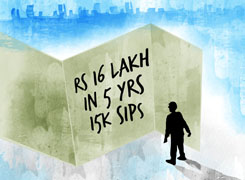
Hi , I am 30 yrs old and currently investing 15k in SIP since 2023.. I had an outstanding HL of amounting 15 lacs ..should I repay HL or keep investing in SIP .pls suggest
Ans: It's great that you are investing in a SIP (Systematic Investment Plan) and considering your financial options thoughtfully. You are on the right track by seeking advice on whether to continue your SIP or repay your home loan (HL). Both choices have their pros and cons.

Evaluating the Benefits of SIP
Investing in SIPs has numerous benefits. SIPs help in averaging out the cost of investment, reducing market volatility risks, and inculcating a disciplined savings habit. SIPs also provide the potential for higher returns over the long term, which can help in wealth creation.

Considering Home Loan Repayment
Repaying your home loan early can save you from paying substantial interest over the loan's tenure. It provides a guaranteed return on your money equal to the interest rate on your home loan. Additionally, being debt-free brings peace of mind and financial security.

Balancing Investment and Debt Repayment
It's crucial to strike a balance between investing and repaying debt. Consider the interest rate on your home loan versus the expected returns from your SIP investments. If the loan interest rate is higher than the expected SIP returns, prioritizing loan repayment could be wiser.

Evaluating Market Conditions
Current market conditions play a significant role in this decision. If the market is expected to perform well, continuing with your SIPs might yield higher returns. Conversely, in a bearish market, loan repayment could be more advantageous.

Asset Allocation Strategy
Your suggested allocation of 50% large-cap, 30% mid-cap, and 20% small-cap is a balanced approach. Large-cap funds provide stability, mid-cap funds offer growth potential, and small-cap funds can give high returns with higher risk.

Disadvantages of Index Funds
Index funds, while popular, have some drawbacks. They are passive investments and do not seek to outperform the market. During market downturns, index funds cannot mitigate losses. Actively managed funds, on the other hand, aim to outperform the market through expert management.

Benefits of Actively Managed Funds
Actively managed funds provide the advantage of professional management. Certified Financial Planners (CFPs) can help you select funds that align with your financial goals and risk tolerance. These funds have the potential to outperform the market, especially in volatile conditions.

Disadvantages of Direct Funds
Direct funds might seem appealing due to lower costs, but they lack professional guidance. Investing through a Mutual Fund Distributor (MFD) with a CFP credential offers expert advice and tailored investment strategies. This guidance can help you make informed decisions and optimise returns.

Understanding Your Financial Goals
Your financial goals and timeline are crucial in making this decision. If you aim for short-term financial stability, repaying your home loan might be better. For long-term wealth creation, continuing with SIPs could be advantageous.

Tax Implications
Consider the tax benefits of both options. Home loan repayment offers tax deductions on principal and interest components. SIP investments in equity-linked saving schemes (ELSS) provide tax benefits under Section 80C. Evaluate which option offers better tax efficiency.

Conclusion
Your decision should align with your financial goals, risk tolerance, and market conditions. Consulting with a Certified Financial Planner can provide personalised advice tailored to your unique situation. Balancing between debt repayment and investments is key to financial success.

Best Regards,

K. Ramalingam, MBA, CFP,

Chief Financial Planner,

www.holisticinvestment.in

..Read more

Ramalingam

Ramalingam Kalirajan  |10881 Answers  |Ask -

Mutual Funds, Financial Planning Expert - Answered on May 25, 2024

Listen
Money
Jitendra Asked on - May 24, 2024 Hi , I am 30 yrs old and currently investing 15k in SIP since 2023.. I had an outstanding HL of amounting 15 lacs ..should I repay HL or keep investing in SIP .pls sugges 50% large cap 30% mid 20% small
Ans: It's great that you are investing in a SIP (Systematic Investment Plan) and considering your financial options thoughtfully. You are on the right track by seeking advice on whether to continue your SIP or repay your home loan (HL). Both choices have their pros and cons.

Evaluating the Benefits of SIP
Investing in SIPs has numerous benefits. SIPs help in averaging out the cost of investment, reducing market volatility risks, and inculcating a disciplined savings habit. SIPs also provide the potential for higher returns over the long term, which can help in wealth creation.

Considering Home Loan Repayment
Repaying your home loan early can save you from paying substantial interest over the loan's tenure. It provides a guaranteed return on your money equal to the interest rate on your home loan. Additionally, being debt-free brings peace of mind and financial security.

Balancing Investment and Debt Repayment
It's crucial to strike a balance between investing and repaying debt. Consider the interest rate on your home loan versus the expected returns from your SIP investments. If the loan interest rate is higher than the expected SIP returns, prioritizing loan repayment could be wiser.

Evaluating Market Conditions
Current market conditions play a significant role in this decision. If the market is expected to perform well, continuing with your SIPs might yield higher returns. Conversely, in a bearish market, loan repayment could be more advantageous.

Asset Allocation Strategy
Your suggested allocation of 50% large-cap, 30% mid-cap, and 20% small-cap is a balanced approach. Large-cap funds provide stability, mid-cap funds offer growth potential, and small-cap funds can give high returns with higher risk.

Disadvantages of Index Funds
Index funds, while popular, have some drawbacks. They are passive investments and do not seek to outperform the market. During market downturns, index funds cannot mitigate losses. Actively managed funds, on the other hand, aim to outperform the market through expert management.

Benefits of Actively Managed Funds
Actively managed funds provide the advantage of professional management. Certified Financial Planners (CFPs) can help you select funds that align with your financial goals and risk tolerance. These funds have the potential to outperform the market, especially in volatile conditions.

Disadvantages of Direct Funds
Direct funds might seem appealing due to lower costs, but they lack professional guidance. Investing through a Mutual Fund Distributor (MFD) with a CFP credential offers expert advice and tailored investment strategies. This guidance can help you make informed decisions and optimise returns.

Understanding Your Financial Goals
Your financial goals and timeline are crucial in making this decision. If you aim for short-term financial stability, repaying your home loan might be better. For long-term wealth creation, continuing with SIPs could be advantageous.

Tax Implications
Consider the tax benefits of both options. Home loan repayment offers tax deductions on principal and interest components. SIP investments in equity-linked saving schemes (ELSS) provide tax benefits under Section 80C. Evaluate which option offers better tax efficiency.

Conclusion
Your decision should align with your financial goals, risk tolerance, and market conditions. Consulting with a Certified Financial Planner can provide personalised advice tailored to your unique situation. Balancing between debt repayment and investments is key to financial success.

Best Regards,

K. Ramalingam, MBA, CFP,

Chief Financial Planner,

www.holisticinvestment.in

..Read more

Ramalingam

Ramalingam Kalirajan  |10881 Answers  |Ask -

Mutual Funds, Financial Planning Expert - Answered on Jun 12, 2025

Asked by Anonymous - Jun 12, 2025
Money
I am 35 now and getting in hand salary of around 275000. I have 3 years son and new born daughter. I have one flat where I am staying which has around 55L loan to be repaid with emi 65k. I am owning one more flat which gives me 20k rent and it has no loan dues. I have MF and Shares worth rupees 22L and ongoing SIP of 40k. I have bought one land of 35L as well for future migration purpose. What should be my next steps to repay loan or increase SIP? I am planning to repay 50K extra each month to home loan and increase SIP to 70k. My home loan is having overdraft facility which gives me feasibility of liquid cash.Will this be fine? I am planning to retire early by 45. Whatever I work beyond that will be extra.
Ans: You are 36 years old and debt-free. You also have Rs. 16–17 lakhs ready. That gives you a strong base. Now, let us look at your decision between plot purchase and mutual funds from a full 360-degree view.

Present Financial Strength
You have no loans. That is a good position.

You are already in a better financial place than most peers.

You have Rs. 16–17 lakhs free. This gives you flexibility.

Being loan-free and liquid at 36 is a powerful place.

Now your next step needs proper thought.

Investment in Plot – Reality Check
A plot looks attractive. But it is not flexible.

Once you buy, you lock your full money into one asset.

A plot does not generate monthly cash flow.

Maintenance, tax and legal issues can arise with plots.

Selling it quickly is tough during emergencies.

Growth in land price is very slow in many cases.

Location may not always favour appreciation.

You may need to spend more to develop it later.

No regular return means wealth is just stuck.

Plot investment is emotional, not financial.

It is not suitable for all financial goals.

If you plan to build a house, that’s different.

But for investment, it is not ideal.

Mutual Funds – A Better Path
Mutual funds offer variety and liquidity.

You can start small or big, as per your plan.

You can invest for short, medium or long term.

You can also pause or withdraw if needed.

They are professionally managed.

They bring diversification across sectors.

You don’t need large capital to start.

You also don’t carry holding cost or legal worries.

Mutual funds offer long-term compounding benefits.

They have transparency and regular reporting.

You stay in control, always.

Understanding Active Funds over Index
You didn’t mention index funds. Still, a quick word.

Index funds just copy the market. Nothing more.

They don’t adjust to risks or themes.

They fall as much as market does.

Actively managed funds try to reduce downside.

Fund managers try to beat market returns.

Active funds give more flexibility in asset selection.

They also follow investment discipline.

For goal-based planning, active funds are better.

Direct Plans vs Regular Plans
You didn’t mention direct mutual funds. Still, let’s clarify.

Direct plans may save cost, but offer no guidance.

When markets fall, they leave you confused.

You may act emotionally and harm your goals.

A Certified Financial Planner adds behavioural support.

A good Mutual Fund Distributor with CFP will guide you.

This is more important than cost saving.

Regular plans include advisory support.

So invest through qualified professionals.

Financial Goal Alignment
Think clearly—what do you want from the money?

Do you have goals like retirement, home, child education?

If yes, mutual funds fit better than land.

Plots don’t match financial goals well.

They can’t be sold in parts to meet needs.

Mutual funds can be used goal-by-goal.

You can create multiple funds for multiple goals.

Emergency Readiness
Plot doesn’t help during emergencies.

It is not liquid and can’t be partly sold.

Mutual funds give access within 1–3 days.

Liquid funds and ultra-short-term funds support emergencies.

Always keep 6–9 months of expenses in these.

Plots have no role in your emergency fund.

Taxation Understanding
Plot sale attracts capital gains tax.

You also need to reinvest sale value to avoid tax.

Mutual fund taxation is clearer and easier.

Long-term equity fund gains above Rs. 1.25 lakh taxed at 12.5%.

Short-term gains from equity taxed at 20%.

Debt funds taxed as per your slab.

Payout and reinvestment are flexible.

Tax filing for funds is also simple.

Growth and Wealth Creation
Mutual funds grow gradually with compounding.

Even small SIPs grow big with time.

You can add more each year as income grows.

You can track and review performance every quarter.

A plot may not grow consistently.

Land markets have ups and downs too.

Many plots stay stagnant for years.

With mutual funds, value creation is more visible.

Psychological Comfort
A plot may feel tangible.

It feels safe because we can touch it.

But this is emotional, not financial.

Mutual funds feel boring but are efficient.

Wealth creation does not need emotional attachment.

Rational decision wins in the long run.

Mistakes to Avoid
Don’t invest in plot without a clear personal use plan.

Don’t put all Rs. 16–17 lakhs into one asset.

Don’t invest just because others are doing it.

Don’t ignore liquidity while chasing growth.

Don’t take emotional decisions with big money.

Don’t delay decision thinking market is high.

Don’t invest directly in mutual funds without guidance.

Better Way to Use Rs. 16–17 Lakhs
Keep Rs. 2–3 lakhs in emergency liquid fund.

Allocate rest in 3–4 mutual fund schemes.

Choose based on goals: 3, 5, 10 years and beyond.

Use goal-based buckets with SIP and lump sum both.

Invest through MFD or Certified Financial Planner.

Review and adjust your portfolio yearly.

Increase SIPs each year as income grows.

Role of a Certified Financial Planner
A CFP will align investments with goals.

They help track your financial life clearly.

They offer behavioural support in tough markets.

They plan for taxes, cash flow and risks.

They help you avoid emotional decisions.

They don’t just sell products—they build strategy.

They keep your financial plan on track.

If You Already Have LIC or ULIP
If you have investment-cum-insurance policies, check returns.

Most give poor returns of 3–5%.

Surrender them if lock-in is over.

Reinvest that amount into mutual funds.

It will help you reach goals faster.

Use term insurance for protection only.

Final Insights
You are 36 and debt-free. This is your strength. Rs. 16–17 lakhs is a big opportunity. A plot may look attractive but has many limits. It locks capital, has no returns, and poor liquidity. Mutual funds are flexible, diversified, and goal-focused. You can start small and build big. You can track progress and change anytime. You can manage risk better with professional help. Avoid direct and index funds. Use regular plans through MFDs with CFP credential. If you have LIC or ULIPs, exit smartly. Mutual funds give you more freedom, growth and control. Take your next step wisely.

Best Regards,
K. Ramalingam, MBA, CFP,
Chief Financial Planner,
www.holisticinvestment.in
https://www.youtube.com/@HolisticInvestment

..Read more

Ramalingam

Ramalingam Kalirajan  |10881 Answers  |Ask -

Mutual Funds, Financial Planning Expert - Answered on Jul 30, 2025

Asked by Anonymous - Jul 14, 2025Hindi
Money
Dear sir, I am 37 years and i have a home loan which i took just 24 months ago of 85lac, (remaining balance 70 lakhs emi 89k pending 115 months) personal loan of 29 lac, (emi 66k, pending 5.5 yrs). my corpus collected in PF is 20 lakhs, 8 lakhs in NPS, 8 lakhs in Stocks and 8 lakhs in. Mutual funds. My current mutual fund SIP is 15k. Credit card bill comes upto 25k (mostly necessities like fuel, meds, groceries etc) and household / regular expenses workout to 80k (which includes childs expense, day to day expenses like ordering food, eating out, maid etc). My monthly take home is 3lakhs. My intention is to clear the HL as soon as possible, is that a correct method or should i lower the emi and put more money towards investment. Need assistance with planning my finance as i want to retire by 50 and want a stable income of at least 1.5lakhs per month post retirement (given my current expenses work out to 80k).
Ans: At 37, your retirement goal at 50 is ambitious yet achievable.
Your income of Rs. 3 lakh is strong.
But high EMIs and loans are slowing your wealth creation.

Let’s address this step-by-step with a full 360° approach.

? Your current cashflow – understanding the reality

– Monthly take-home: Rs. 3 lakh
– Home loan EMI: Rs. 89,000
– Personal loan EMI: Rs. 66,000
– Credit card spends: Rs. 25,000
– Monthly expenses: Rs. 80,000
– SIP: Rs. 15,000

– Total outflow: Rs. 2.75 lakh
– Net surplus left: Just Rs. 25,000

– Surplus is low, considering your income level
– Interest burden from loans is eating your savings
– This must be restructured immediately

? Assets and investments – where you stand today

– EPF corpus: Rs. 20 lakh
– NPS: Rs. 8 lakh
– Mutual Funds: Rs. 8 lakh
– Stocks: Rs. 8 lakh
– SIP: Rs. 15,000/month

– Net liquid investment: Rs. 24 lakh
– Retirement accounts (EPF + NPS): Rs. 28 lakh
– But EPF and NPS are not easily liquid

– Mutual fund SIP is too low for your income
– Credit card usage may be blocking fresh savings
– Loans are restricting your investing potential

– You are investing only 5% of income
– You must raise this to 25% in phased manner

? Personal loan – the main cashflow blocker

– Loan size: Rs. 29 lakh
– EMI: Rs. 66,000/month
– Tenure left: 5.5 years

– This loan is eating 22% of income
– These are high-interest, non-asset loans
– No tax benefit and no long-term value

– These EMIs must be your top priority
– Do not keep investing Rs. 15,000 SIP if loan is dragging
– Focus on closing this in 2.5 to 3 years

– Redirect bonuses, incentives, or gift income toward prepayment
– Every Rs. 1 lakh prepayment reduces EMI burden
– Avoid credit card rollovers. Pay in full every month

– Personal loan closure frees Rs. 66,000
– That alone can double your monthly investment

? Home loan – EMI is high but manageable

– Remaining balance: Rs. 70 lakh
– EMI: Rs. 89,000
– Tenure left: 115 months (~9.5 years)

– Loan is secured against appreciating asset
– Interest is lower than personal loan
– You also get tax benefits under Section 24

– Do not rush to close this first
– Instead, aim for 3 to 5 years closure of personal loan
– After that, target home loan aggressively

– You can consider EMI reduction by extending tenure
– But only if bank allows without extra charges
– Or shift to better ROI through balance transfer

– Once personal loan is cleared, use Rs. 50,000 monthly to prepay home loan
– That will reduce tenure by many years

? Retirement planning – time and goal setting

– Retirement age goal: 50 (13 years left)
– Target income: Rs. 1.5 lakh/month
– Adjusted for inflation, this will be Rs. 3 lakh/month at age 60

– Post-retirement, need minimum Rs. 4.5–5 crore corpus
– That requires aggressive investing and consistent increase in SIPs

– You already have Rs. 28 lakh in EPF and NPS
– Add Rs. 24 lakh in mutual funds and stocks
– Total corpus so far: Rs. 52 lakh approx

– But future value depends on how you invest from now
– A major SIP boost will be required after loan closure

– Do not use EPF or NPS for prepaying loan
– These are critical for retirement cushion
– Protect them and grow them

? How to structure savings and loan payments – recommended plan

– Pause SIP for 1 year and increase personal loan prepayment
– Allocate Rs. 40,000–45,000 monthly towards loan
– Pay minimum SIP of Rs. 5,000 to maintain MF continuity
– Reduce credit card spend by Rs. 5,000–8,000 per month
– Reduce unnecessary spends like eating out and OTTs

– After 18–24 months, your personal loan balance will reduce heavily
– Resume SIPs at Rs. 25,000–30,000 once freed
– Raise SIP by 10% yearly

– After personal loan closure, put Rs. 50,000 toward MF SIPs
– Rs. 25,000 toward home loan prepayment
– This strategy balances both long-term wealth and EMI relief

– Do not invest lumpsum while loan interest is higher than return

? Mutual fund investments – increase depth and quality

– Your SIP of Rs. 15,000 is low for Rs. 3 lakh income
– Ideally, 20% of income (Rs. 60,000) should go to SIPs
– After 2 years, increase SIP to this level gradually

– Choose only regular plans through MFD with CFP credential
– Avoid direct funds. You need ongoing guidance

– Direct funds seem cheaper
– But they lack expert review, exit advice, and rebalancing
– One wrong fund or timing can erase years of gain

– Regular plans offer better support and strategy
– Fund switching, risk alignment, and goal planning is done for you

– Active funds are better than index funds
– Index funds give no protection in falling markets
– Active funds shift to safer sectors and reduce losses

– SIP in active funds gives better peace and long-term returns

? Stock portfolio – keep it minimal

– You have Rs. 8 lakh in stocks
– Don’t increase this without professional support
– Mutual funds should be your main growth tool

– Stocks need time, skill, and discipline
– If not reviewed regularly, they underperform

– Avoid intraday or F&O
– Stay long-term and stick to large cap if continuing

– Don’t sell stocks for short-term needs
– But don’t increase exposure either until debt is cleared

? NPS and EPF – long-term assets, keep them growing

– Rs. 20 lakh EPF is solid
– Rs. 8 lakh NPS is also growing well

– Don’t touch EPF or NPS till retirement
– Let them compound quietly

– Continue EPF as per salary
– You may increase NPS voluntary contribution if tax slab is high
– But do this only after loan is cleared

– NPS is helpful for Section 80CCD(1B) tax benefit
– But has restrictions in withdrawal
– Use MF as main retirement vehicle, not just EPF and NPS

? Credit card usage – reduce or switch to debit

– Rs. 25,000 monthly spend on credit card is high
– This indicates overspending or delayed payments

– Use credit card only for planned essentials
– Pay full amount before due date

– Never convert to EMI
– That increases debt burden and interest cost

– Monitor spends weekly. Set alerts if needed
– Try to reduce card spends by 20% slowly

– Shift more payments to UPI or debit card
– This reduces mindless swiping and improves control

? Family protection – insurance and medical coverage

– You haven’t mentioned insurance coverage
– Buy a pure term insurance of Rs. 1 crore minimum
– Protect family from income loss due to death

– Premiums are low if taken early
– Don’t mix insurance and investments

– If you already hold ULIP or LIC endowment, surrender them
– Reinvest proceeds in mutual funds for better return

– Health insurance must be minimum Rs. 10 lakh
– Prefer family floater plan, even if employer gives cover

– Medical bills can wipe savings fast
– Health cover protects your financial planning

? Lifestyle spending – hidden leakages

– Rs. 80,000 monthly expenses include eating out and services
– These can be reduced slightly

– Try cutting Rs. 5,000–8,000 by adjusting lifestyle
– Every Rs. 1,000 saved can be redirected to SIP or EMI

– You don’t need to live like a miser
– But you must remove wasteful spending

– Track all spends for one month
– You’ll see many expenses that can be avoided

– Financial freedom comes from small changes, not sudden sacrifices

? Finally

– Your income is your biggest strength today
– But loan EMIs are pulling you back

– Clear personal loan in 2–3 years
– Don’t touch EPF or NPS for this

– Don’t try to close home loan first
– That is long-term and has tax benefit

– Focus on growing SIP after debt is reduced
– Move from 5% to 20% of income in SIP slowly

– Avoid direct funds, index funds, ULIPs, and endowments
– Use MFD backed by CFP for all MF investing

– Aim for Rs. 5 crore corpus by age 50
– With discipline and debt clearance, this goal is very possible

– Protect your family with term and health insurance
– Live below means today to live above needs tomorrow

Best Regards,
K. Ramalingam, MBA, CFP,
Chief Financial Planner,
www.holisticinvestment.in
https://www.youtube.com/@HolisticInvestment

..Read more

Latest Questions
Nayagam P

Nayagam P P  |10854 Answers  |Ask -

Career Counsellor - Answered on Dec 14, 2025

Asked by Anonymous - Dec 12, 2025Hindi
Career
Hello, I am currently in Class 12 and preparing for JEE. I have not yet completed even 50% of the syllabus properly, but I aim to score around '110' marks. Could you suggest an effective strategy to achieve this? I know the target is relatively low, but I have category reservation, so it should be sufficient.
Ans: With category reservation (SC/ST/OBC), a score of 110 marks is absolutely achievable and realistic. Based on 2025 data, SC candidates qualified with approximately 60-65 percentile, and ST candidates with 45-55 percentile. Your target requires scoring just 37-40% marks, which is significantly lower than general category standards. This gives you a genuine advantage. Immediate Action Plan (December 2025 - January 2026): 4-5 Weeks. Week 1-2: High-Weightage Chapter Focus. Stop trying to complete the entire syllabus. Instead, focus exclusively on high-scoring chapters that carry maximum weightage: Physics (Modern Physics, Current Electricity, Work-Power-Energy, Rotation, Magnetism), Chemistry (Chemical Bonding, Thermodynamics, Coordination Compounds, Electrochemistry), and Maths (Integration, Differentiation, Vectors, 3D Geometry, Probability). These chapters alone can yield 80-100+ marks if practiced properly. Ignore topics you haven't studied yet. Week 2-3: Previous Year Questions (PYQs). Solve JEE Main PYQs from the last 10 years (2015-2025) for chapters you're studying. PYQs reveal question patterns and difficulty levels. Focus on understanding why answers are correct, not memorizing solutions. Week 3-4: Mock Tests & Error Analysis. Take 2-3 full-length mock tests weekly under timed conditions. This is crucial because mock tests build exam confidence, reveal time management weaknesses, and error analysis prevents repeated mistakes. Maintain an error notebook documenting every mistake—this becomes your revision guide. Week 4-5: Revision & Formula Consolidation. Create concise formula sheets for each subject. Spend 30 minutes daily reviewing formulas and key concepts. Avoid learning new topics entirely at this stage. Study Schedule (Daily): 7-8 Hours. Morning (5:00-7:30 AM): Physics concepts + 30 PYQs. Break (7:30-8:30 AM): Breakfast & rest. Mid-morning (8:30-11:00): Chemistry concepts + 20 PYQs. Lunch (11:00-1:00 PM): Full break. Afternoon (1:00-3:30 PM): Maths concepts + 30 PYQs. Evening (3:30-5:00 PM): Mock test or error review. Night (7:00-9:00 PM): Formula revision & weak area focus. Strategic Approach for 110 Marks: Attempt only confident questions and avoid negative marking by skipping difficult questions. Do easy questions first—in the exam, attempt all basic-level questions before attempting medium or hard ones. Focus on quality over quantity as 30 well-practiced questions beat 100 random questions. Master NCERT concepts as most JEE questions test NCERT concepts applied smartly. April 2026 Session Advantage. If January doesn't deliver desired results, April gives you a second chance with 3+ months to prepare. Use January as a practice attempt to identify weak areas, then focus intensively on those in February-March. Realistic Timeline: January 2026 target is 95-110 marks (achievable with focused 50% syllabus), while April 2026 target is 120-130 marks (with complete syllabus + experience). Your reservation benefit means you need only approximately 90-105 marks to qualify and secure admission to quality engineering colleges. Stop comparing yourself to general category cutoffs. Most Importantly: Consistency beats perfection. Study 6 focused hours daily rather than 12 distracted hours. Your 110-mark target is realistic—execute this plan with discipline. All the BEST for Your JEE 2026!

Follow RediffGURUS to Know More on 'Careers | Money | Health | Relationships'.

...Read more

Dr Dipankar

Dr Dipankar Dutta  |1840 Answers  |Ask -

Tech Careers and Skill Development Expert - Answered on Dec 13, 2025

Asked by Anonymous - Dec 12, 2025
Career
Dear Sir/Madam, I am currently a 1st year UG student studying engineering in Sairam Engineering College, But there the lack of exposure and strict academics feels so rigid and I don't like it that. It's like they don't gaf about skills but just wants us to memorize things and score a good CGPA, the only skill they want is you to memorize things and pass, there's even special class for students who don't perform well in academics and it is compulsory for them to attend or else the student and his/her parents needs to face authorities who lashes out. My question is when did engineering became something that requires good academics instead of actual learning and skill set. In sairam they provides us a coding platform in which we need to gain the required points for each semester which is ridiculous cuz most of the students here just look at the solution to code instead of actual debugging. I am passionate about engineering so I want to learn and experiment things instead of just memorizing, so I actually consider dropping out and I want to give jee a try and maybe viteee , srmjeee But i heard some people say SRM may provide exposure but not that good in placements. I may not be excellent at studies but my marks are decent. So gimme some insights about SRM and recommend me other colleges/universities which are good at exposure
Ans: First — your frustration is valid

What you are experiencing at Sairam is not engineering, it is rote-based credential production.

“When did engineering become memorizing instead of learning?”

Sadly, this shift happened decades ago in most Tier-3 private colleges in India.

About “coding platforms & points” – your observation is sharp

You are absolutely right:

Mandatory coding points → students copy solutions

Copying ≠ learning

Debugging & thinking are missing

This is pseudo-skill education — it looks modern but produces shallow engineers.

The fact that you noticed this in 1st year already puts you ahead of 80% students.

Should you DROP OUT and prepare for JEE / VITEEE / SRMJEEE?

Although VIT/SRM is better than Sairam Engineering College, but you may face the same problem. You will not face this type of problem only in some top IITs, but getting seat in those IITs will be difficult.
Instead of dropping immediately, consider:

???? Strategy:

Stay enrolled (degree security)

Reduce emotional investment in college rules

Use:

GitHub

Open-source projects

Hackathons

Internships (remote)

Hardware / software self-projects

This way:

College = formality

Learning = self-driven

Risk = minimal

...Read more

DISCLAIMER: The content of this post by the expert is the personal view of the rediffGURU. Investment in securities market are subject to market risks. Read all the related document carefully before investing. The securities quoted are for illustration only and are not recommendatory. Users are advised to pursue the information provided by the rediffGURU only as a source of information and as a point of reference and to rely on their own judgement when making a decision. RediffGURUS is an intermediary as per India's Information Technology Act.

Close  

You haven't logged in yet. To ask a question, Please Log in below
Login

A verification OTP will be sent to this
Mobile Number / Email

Enter OTP
A 6 digit code has been sent to

Resend OTP in120seconds

Dear User, You have not registered yet. Please register by filling the fields below to get expert answers from our Gurus
Sign up

By signing up, you agree to our
Terms & Conditions and Privacy Policy

Already have an account?

Enter OTP
A 6 digit code has been sent to Mobile

Resend OTP in120seconds

x