Home > Money > Question
Need Expert Advice?Our Gurus Can Help

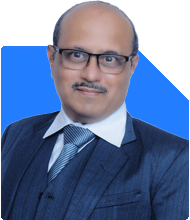
Ramalingam

Ramalingam Kalirajan  |10881 Answers  |Ask -

Mutual Funds, Financial Planning Expert - Answered on Jul 09, 2025

Ramalingam Kalirajan has over 23 years of experience in mutual funds and financial planning.
He has an MBA in finance from the University of Madras and is a certified financial planner.
He is the director and chief financial planner at Holistic Investment, a Chennai-based firm that offers financial planning and wealth management advice.... more
Asked by Anonymous - Jul 02, 2025Hindi

Money

Hi sir, I'm 41. 10 years Late into IT now earning 66000 per month salary in Bangalore. No savings. Married 1 daughter studying 8th in CBSE. Kindly suggest me a financial investment procedure and I have corporate insurance for me n my wife. Shall I add my parents to it?

Ans: You have taken a responsible step in seeking help. At 41, with no savings yet, it’s not too late. With proper steps, you can build a solid financial base for your family. Let's break it down in a simple, practical and long-term way.
________________________________________
Family and Financial Overview
• Age: 41 years
• Location: Bangalore
• Monthly income: Rs. 66,000
• No current savings
• Married with one daughter (8th Standard, CBSE)
• Corporate health cover for self and wife
• Parents are not yet added to cover
You are starting slightly late, but not too late. Let’s start the process step-by-step.
________________________________________
First Focus – Budget and Cash Flow Planning
This is the first and most important part.
• Track your monthly expenses clearly
• Separate needs and wants every month
• Create a spending limit for each category
• Avoid personal loans and credit card dues
• Make sure there is always surplus every month
Suggested Budget Breakup:
• Household + daily expenses: Rs. 25,000 – Rs. 30,000
• Rent + utilities (if applicable): Rs. 12,000 – Rs. 15,000
• School + child expenses: Rs. 6,000 – Rs. 8,000
• Savings target: Rs. 10,000 – Rs. 12,000
You should aim to save at least 15–20% now and increase later.
________________________________________
Step 1 – Emergency Fund First
Before you invest, build an emergency fund.
• Keep 4 to 5 months’ expenses in hand
• This protects you during job loss or health issues
• Keep Rs. 1.5 to 2 lakhs in liquid fund or sweep-in FD
• Do not invest this money in equity or risky options
• You can build this slowly over 6 months
This gives confidence and reduces stress.
________________________________________
Step 2 – Term Life Insurance is Must
You are the only earning member. So your family depends on your income.
• Take a term insurance of Rs. 50 lakhs to start
• Premium will be very low if taken early
• This is pure insurance. No returns.
• Do not buy any ULIP or money-back plans
• Increase cover in future when income grows
Term plan ensures your family is protected.
________________________________________
Step 3 – Health Insurance Beyond Corporate Cover
Corporate health cover is not enough.
• You should have one personal health policy
• Cover for you, wife and daughter
• Minimum Rs. 5 lakhs coverage
• If your parents are senior citizens, get separate policy for them
• Do not mix all members in one floater plan
You can’t depend only on company cover. It may go if job changes.
________________________________________
Step 4 – Start SIP for Long-Term Wealth
You must now begin SIP for wealth building.
• Start with Rs. 5,000–7,000 per month
• Increase slowly every year
• Invest in 2–3 well-diversified actively managed mutual funds
• Avoid index funds. They don’t beat market returns
• Don’t go for direct funds. Regular plan via MFD with CFP is better
Your SIP can be split like this:
• 50% in flexi-cap or large-cap fund
• 30% in mid-cap or multi-cap fund
• 20% in hybrid or conservative equity fund
This will help you build wealth for retirement and child’s future.
________________________________________
Step 5 – Plan for Daughter’s Education
Your daughter is now in class 8.
In next 4–5 years, she will need money for higher studies.
• Set a clear goal for education cost
• Start a separate SIP for this purpose
• If you can set aside Rs. 3,000–5,000 monthly, it will help
• Keep this money only for her education
• Don’t use it for other needs
You can also invest yearly bonus or incentives into this fund.
________________________________________
Step 6 – Retirement Planning
At 41, you still have about 18–20 working years.
• Use NPS to build retirement fund
• Also keep a SIP in mutual fund separately
• Even Rs. 3,000 per month now will grow big later
• Do not depend only on EPF or employer benefits
• Do not delay this, or you will miss compounding benefit
Your retirement is your own responsibility.
________________________________________
Step 7 – Add Parents to Insurance Carefully
If your company allows, you may add parents to corporate health cover.
• It will help in basic hospitalisation cases
• But corporate cover has limits and co-pay
• Also, it may go away if job changes or company policy changes
• It’s better to take separate senior citizen health plan for them
• That gives peace of mind
If you can’t afford separate policy now, keep a medical buffer for them.
________________________________________
Step 8 – Avoid These Common Mistakes
• Don’t delay investments any more
• Don’t buy policies for investment
• Don’t rely on FD or RD for long-term goals
• Don’t mix insurance and investment
• Don’t invest in direct mutual funds without guidance
Always invest with clarity and purpose.
________________________________________
Step 9 – Increase Investments Every Year
• Increase SIP with each salary hike
• Top-up SIP at least 5–10% every year
• Put any bonus or incentives in lump sum in mutual fund
• Don’t upgrade lifestyle too fast
• Stick to your savings ratio
Wealth is built slowly with consistency.
________________________________________
Step 10 – Track and Review Every Year
• Keep all investments and goals in one place
• Use apps or Excel to track growth
• Review performance every 6 months
• Rebalance only when needed
• Take help from Certified Financial Planner for yearly check-up
This ensures you stay on the right path.
________________________________________
Final Insights
You are 41 now. You still have time to secure your future.
But the right time to act is now.
Start with basics – emergency fund, term insurance, SIP.
Build each step one by one.
Don’t wait for perfect income to start saving.
Start with what you can and grow slowly.
Use mutual funds in regular plan via MFD with CFP.
Avoid index funds. They offer only average returns.
Avoid direct funds. You need expert hand-holding.
Don’t rely on company insurance or EPF alone.
Take responsibility for your family’s financial safety.
With right action, you can still build a good future.
________________________________________
Best Regards,
K. Ramalingam, MBA, CFP
Chief Financial Planner,
www.holisticinvestment.in
https://www.youtube.com/@HolisticInvestment
DISCLAIMER: The content of this post by the expert is the personal view of the rediffGURU. Users are advised to pursue the information provided by the rediffGURU only as a source of information to be as a point of reference and to rely on their own judgement when making a decision.
Money

You may like to see similar questions and answers below
Ramalingam

Ramalingam Kalirajan  |10881 Answers  |Ask -

Mutual Funds, Financial Planning Expert - Answered on Apr 30, 2024

Asked by Anonymous - Dec 18, 2023Hindi
Listen
Money
I have two daughters and their age is 16 and 15 and i own 50 lakhs bank FD , 9 lakhs invested in MF me and my wife have invest 60 lakhs in share market and my age 51 year old. Can you plz suggest the best option for investment . for my future education of two kids and my and my wife upcoming old age( My family ) i have 3 lakhs mediclaim and have few LIC policies. I request you to give me the best advice or suggest the best investment for my growth of money and as a monthly income ( Home expenses ) plz reply
Ans: Given your family's financial situation and goals, it's crucial to create a comprehensive investment plan that considers both growth and stability. Here's a suggested approach:

Education Fund for Daughters: Since your daughters are nearing college age, consider setting aside a portion of your investments specifically for their education expenses. You may allocate a portion of your bank FDs and MF investments towards this goal, ensuring it grows over time to meet their educational needs.
Retirement Planning: As you and your wife approach retirement, it's essential to prioritize building a sufficient corpus to support your lifestyle in old age. Consider diversifying your investment portfolio to include a mix of equity, debt, and balanced funds, along with retirement-focused instruments like the National Pension System (NPS) or Senior Citizen Savings Scheme (SCSS).
Health and Insurance: Ensure you have adequate health insurance coverage for your family's medical needs. Additionally, review your existing LIC policies to ensure they align with your current financial goals and provide adequate coverage for your family's future needs.
Monthly Income: To generate regular income for your household expenses during retirement, consider investing in dividend-paying stocks, mutual funds with dividend options, or fixed income instruments like Senior Citizen Savings Scheme (SCSS) or Post Office Monthly Income Scheme (POMIS).
Regular Review and Adjustment: Regularly review your investment portfolio to track its performance, make necessary adjustments, and ensure it remains aligned with your financial goals and risk tolerance.
Consulting with a Certified Financial Planner can provide personalized guidance tailored to your family's specific financial situation and goals. Together, you can create a customized investment plan that addresses your needs for growth, income, and financial security.

..Read more

Ramalingam

Ramalingam Kalirajan  |10881 Answers  |Ask -

Mutual Funds, Financial Planning Expert - Answered on Jun 02, 2025

Money
Respected sir, I'm vijay. working in central government office as sr.accountant. I'm 38 years old with 2 children. Elder son age 8 years and younger daughter age 5 years old. my present home pay salary 72000 per month after deductions. PLI - 4000, NPS - 10% of my basic + DA deductions are from salary itself. PLI going to be end @ 2031. PLI policy amount 10 lakhs. It may comes more than 20 lakhs after maturity. 12000/- paying for short term loan for my flat which will close in 2 years. I was stayed in tier 1 city but came tier 2 city now and I won't get any transfers hereafter too because I refused my promotion.. I purchased a flat recently which I'm paying 35000 as EMI. I've 12500/- SSY for my daughter. Initially (2021) started with 6000 but increased after 2 years to 12500. I've 1 crore Term insurance and my office provides health insurance (CGHS). I want to start investment for my daughter and son so please inform how to start investment hereafter for my children further studies. My wife also housewife so please let me know how to invest for my children future.
Ans: You have a stable job and good benefits, which is a strong base for your family’s financial planning. Let’s assess your current situation and suggest a 360-degree investment plan for your children’s education and future needs.

Current Income and Expense Assessment
Your net salary is Rs. 72,000 per month after deductions.

You contribute to PLI and NPS directly from salary, which is good for discipline.

PLI maturity expected around 2031 with a corpus likely above Rs. 20 lakhs.

You have a short-term loan for flat repayment with Rs. 12,000 EMI closing in 2 years.

Current home loan EMI is Rs. 35,000, a sizeable outgoing.

You are also paying Rs. 12,500 monthly in children’s savings scheme for your daughter.

Your wife is a housewife, so sole income responsibility is on you.

Existing Insurance and Protection
Your term insurance cover of Rs. 1 crore is adequate for family protection.

Office health insurance (CGHS) covers medical expenses, good for emergencies.

Review health insurance limits and top-up options as children grow.

Adequate insurance reduces financial stress if unforeseen events occur.

Children’s Education and Future Financial Needs
Children are aged 8 and 5, meaning education expenses will start soon.

Higher education and related costs in tier 2 or tier 1 city could be significant.

Your current contribution to daughter’s savings is Rs. 12,500 monthly.

No similar savings mentioned yet for your son.

It is important to start and maintain systematic investments for both children.

Investment Planning for Children’s Education
Start separate systematic investment plans (SIPs) for each child.

Allocate based on age and expected education timeline.

For elder child (8 years), medium-term investments for 10 years.

For younger child (5 years), longer-term investments for 13-15 years.

SIPs provide rupee cost averaging and compound returns over time.

Focus on actively managed equity mutual funds for growth portion.

Equity funds have potential to beat inflation over 10-15 years.

Avoid index funds as they lack flexibility and may underperform in volatile markets.

Use regular mutual funds through a Certified Financial Planner for professional monitoring.

Balancing Risk and Time Horizon
Younger child’s investment can have higher equity exposure due to longer time.

Older child’s investment should gradually move towards safer assets as time nears.

Mix equity with debt or balanced funds for risk management.

Debt funds provide stability and reduce portfolio volatility near goal.

Maximising Benefits of Government Savings Schemes
Continue contributions to children’s savings scheme for tax benefits and safety.

Consider government schemes as part of the overall portfolio, not sole investment.

Government schemes usually have lower returns than equity funds but add stability.

Post Loan Repayment Strategy
After short-term loan closure in 2 years, redirect Rs. 12,000 towards children’s investments.

Consider increasing monthly SIP amount after EMI reduces to build corpus faster.

Maintain home loan EMI as long as manageable without compromising savings.

Emergency Fund and Liquidity
Maintain emergency fund equivalent to 6 months of expenses for household.

Keep emergency fund liquid in safe instruments.

This fund safeguards family during income disruptions.

Tax Planning and Investment Efficiency
Use tax saving investments to optimise income tax liabilities.

Your NPS and PLI contributions already provide some tax relief.

Children’s education funds do not have direct tax benefits but are important goals.

Invest systematically in tax-efficient instruments.

Equity mutual funds have capital gains tax; keep this in mind during withdrawals.

Expense Management and Budgeting
Track monthly expenses and identify saving opportunities.

Prioritise goals: loan repayment, emergency fund, children’s education corpus.

Avoid increasing expenses drastically with current liabilities.

Maintain financial discipline to achieve targets smoothly.

Role of a Certified Financial Planner
Engage with a Certified Financial Planner for personalized monitoring.

CFPs help in fund selection, portfolio review, and risk management.

They also help in adjusting plans based on changing circumstances.

Regular reviews ensure investments align with goals and market conditions.

Behavioral Tips for Investment Success
Start early and stay consistent with investments.

Avoid panic withdrawals during market downturns.

Resist temptation to chase short-term market trends.

Focus on long-term goals and compounding benefits.

Family financial conversations help in aligning priorities.

Final Insights
Your financial discipline is strong; loan repayment and insurance in place.

Start SIPs for both children, adjusted for age and horizon.

Balance equity and debt to match risk tolerance and timelines.

Use government schemes as supplementary but not sole investment.

Increase investment amounts as loan burden reduces.

Keep emergency fund intact for security.

Regular reviews with a Certified Financial Planner will improve outcomes.

Best Regards,

K. Ramalingam, MBA, CFP,

Chief Financial Planner,

www.holisticinvestment.in

https://www.youtube.com/@HolisticInvestment

..Read more

Ramalingam

Ramalingam Kalirajan  |10881 Answers  |Ask -

Mutual Funds, Financial Planning Expert - Answered on Aug 01, 2025

Asked by Anonymous - Jul 14, 2025Hindi
Money
I will breif you about my family investment as i stay with my both parents. My father is 76 and mom age is close to 68 . Following are investment done by our family We own 4 flats in mumbai, pune and thane. Of which we are staying in one house in mumbai and our pune and thane is rent out getting monthly rent as 62,000 pm , we have shop too in thane with 60000 pm as rent. I am earning close to 1,70,000 pm form salary , my mom handle her business which she earn 1,50,000 pm , my dad is retired so he earn close 50000 pm as pension , we have close to 2 cr of which 1.85 cr in shares and 15 lakhs in mutual fund . Plus i am holding 10 lakhs in FD for emergency fund. We dont have any loan on us . We invest monthly close to 2,00,000 on shares and mutual fund and additional remaining 1,00,000 as lumpsum investment . Our monthly household expenses is close to 1,50,000 pm . I have small kid i need to save money for his future , please let me know how to plan for him. I have my family health insurance form the company i am working for 5 lakhs.
Ans: You have built a strong base with good income, zero debt, and a solid investment portfolio. Your clarity in goals and discipline in investments is excellent. Let us now plan for your child’s future in a comprehensive way.

++Your Family’s Financial Position

– Monthly income from all sources is close to Rs 4.3 lakhs.
– Monthly expenses are around Rs 1.5 lakhs, which is well-controlled.
– Rs 2 lakhs invested monthly in shares and mutual funds is a very good habit.
– Additional Rs 1 lakh invested as lumpsum is a strong surplus deployment.
– Rs 1.85 Cr in stocks shows wealth creation focus, but it adds risk.
– Rs 15 lakhs in mutual funds is a good start, but needs expansion.
– Rs 10 lakhs FD as emergency fund is sufficient for your lifestyle.
– No loans or liabilities make the structure financially stress-free.

Your foundation is very strong and ideal to build your child’s future plan on.

++Child’s Future: Key Financial Goals

– You must focus on two major child-related financial goals.
– First is higher education corpus, usually needed after 15–17 years.
– Second is partial support for wedding or life setup corpus, if possible.
– Education corpus will require focused and disciplined equity allocation.
– You already invest in equity, but need to earmark a portion for the child.

++Ideal Approach to Education Planning

– Cost of higher education is rising 8–10% per year.
– A good Indian or international degree may cost Rs 50 lakhs to Rs 1 Cr.
– You need a focused goal-based fund for this, separate from other wealth.
– Start earmarking Rs 50,000–75,000 from your monthly investments for this.
– Prefer mutual funds instead of direct equity for this goal.
– Avoid investing in index funds. They lack flexibility during market cycles.
– Actively managed diversified equity mutual funds are more suitable.
– These funds are better aligned to dynamic economic changes.
– Fund managers take tactical calls to protect and grow wealth better.

++Avoid Direct Equity for Child’s Corpus

– Direct equity is more volatile and emotionally draining in the short term.
– You may panic-sell or over-invest during emotional market phases.
– Not all stocks create long-term value.
– For child’s future, consistent compounding matters more than high returns.
– Mutual funds ensure professional management and diversification.
– They are audited, regulated and more suitable for long-term goal-based plans.

++Regular vs Direct Mutual Funds for Child’s Goal

– Do not go for direct mutual funds for this goal.
– Direct funds lack personal guidance and review support.
– For goal-based planning, regular funds via a Certified Financial Planner are better.
– A CFP will guide you to track the goal, switch assets when needed, and rebalance.
– Regular plans are also useful to avoid emotional investing behaviour.
– Slight cost is worth the long-term discipline and alignment it brings.

++Suggested Strategy to Allocate Investments

– Dedicate Rs 75,000 monthly for child’s higher education goal.
– Out of this, Rs 50,000 in diversified equity mutual funds via SIP.
– Rs 25,000 to be kept flexible for tactical lump-sum during market dips.
– Don’t invest this corpus in real estate. Avoid physical gold also.
– Maintain allocation review once in 6–12 months with your CFP.

++For Child’s Wedding or Life Setup Goal

– This is optional and depends on your surplus and values.
– You may start a small SIP of Rs 10,000–15,000 for this goal.
– Allocate this to balanced advantage or equity savings category funds.
– This goal may not need high growth, but low volatility matters more.
– Continue for next 15–20 years without withdrawals.

++Insurance Coverage and Risk Protection

– Your current health insurance is employer-linked.
– It will lapse if you quit or retire from your job.
– You must buy a standalone family floater health insurance of Rs 15–20 lakhs.
– Include both parents, spouse and child in the plan.
– Consider super-top-up of Rs 25 lakhs for low cost, high cover.
– Also check if your parents need senior citizen plans separately.
– Take a term life insurance of at least Rs 1 Cr if not already done.
– This ensures that your child’s plan runs uninterrupted in your absence.

++Emergency Fund and Backup Liquidity

– Rs 10 lakhs in FD is a very good emergency fund.
– Do not touch this for investments or expenses.
– Keep it in joint names, with sweep-in FD option if possible.
– You may also explore liquid funds for slightly better returns.
– But keep at least 50% in FD for guaranteed liquidity.

++Rental Income and Asset Usage

– Rs 1.22 lakhs rental income gives excellent support.
– Do not use this income for monthly expenses.
– Consider this as a passive inflow to be used for child’s fund or parents’ care.
– If possible, invest part of this rental income into your child’s goal corpus.
– Avoid selling any of the flats or shop for this goal.
– Real estate exit is slow and lacks liquidity when needed for education.

++Mutual Fund Taxation Rules

– When you redeem equity mutual funds, gains above Rs 1.25 lakhs/year are taxed at 12.5%.
– If redeemed before 1 year, then taxed at 20%.
– For debt funds, all gains are taxed as per your income slab.
– Hence, keep your child’s education corpus in equity-oriented hybrid or equity funds.
– Time your redemptions across financial years to reduce tax.
– Plan in advance. Don’t wait till last year of college.

++Child's Name Investments – Pros and Cons

– You can invest in your name and tag goal as "Child’s Education".
– Or you can invest in child’s name using minor account with parent as guardian.
– Minor accounts require more documentation for withdrawal.
– Taxation is clubbed with parent till child turns 18.
– Keeping in your name makes tracking and management easier.
– Use goal tracking in app or spreadsheet to stay aligned.

++Retain Flexibility in Investment Style

– Avoid rigid structures like insurance-cum-investment policies.
– They give low returns and lock your money.
– If you already have ULIP or LIC endowment policies, consider surrendering them.
– Redeploy funds in mutual funds for higher growth.
– Keep your child’s corpus liquid, flexible and market-linked.
– Equity SIPs give compounding with full liquidity and no lock-in.

++Parental Wealth and Succession Planning

– Parents are financially independent. That is excellent.
– Do prepare a Will for both parents.
– Ensure shop and rental property rights are clearly documented.
– You may create a family trust if you want future income to go to child.
– Succession planning ensures your child benefits from family wealth smoothly.

++Education Inflation vs Investment Returns

– Education cost rises 8–10% per year.
– Mutual fund SIPs in equity give 11–14% CAGR over long term.
– You are beating inflation by a healthy margin.
– Maintain SIPs for 10–15 years to reach Rs 1–1.5 Cr easily.
– Avoid stopping SIPs in market corrections. That’s when wealth is created.

++Track, Review and Rebalance Regularly

– Tag all SIPs and investments clearly as per goal.
– Review once in 6 months or 1 year.
– Rebalance if any fund is underperforming consistently for 2–3 years.
– Avoid emotional decisions. Stay with plan even in volatility.
– Use Certified Financial Planner to guide you with regular reviews.
– Don’t follow market tips or YouTube noise for child’s goal.

++Final Insights

– Your financial base is very strong. That gives you a big advantage.
– Now, add structure and discipline around your child’s future goal.
– Use mutual funds with SIP, not direct equity or real estate.
– Keep portfolio flexible, liquid and tax-efficient.
– Avoid insurance-linked investments and direct funds.
– Involve a Certified Financial Planner for personalised guidance.
– Protect your family with proper term and health insurance.
– Tag, track, review, and stay invested with patience.
– In 15 years, your child’s future will be fully secured.

Best Regards,
K. Ramalingam, MBA, CFP,
Chief Financial Planner,
www.holisticinvestment.in
https://www.youtube.com/@HolisticInvestment

..Read more

Nayagam P

Nayagam P P  |10854 Answers  |Ask -

Career Counsellor - Answered on Aug 19, 2025

I am 60+ , qualified CMA and working in Gulf, have an investment in FD of 30 L. Invested in Mutual . fund (ICICI prudential pru Elite life super 28.0 L for the period 2017-24)& ICICI pru life time classic . (5.0L for the period 2017-22. Both maturing in Sep 27. Annuity return of 40,831 under ICICI Pension scheme, started receiving since 2025 Plan to invest around another 25.0L from my after benefits .Have a medical insurance policy for myself and wife. Daughter is in 2nd year CS at BMS college. her fees is separately invested in FD for the remaining 3 years and the interest earned takes care of her monthly expenses.Mostly in the 1st quarter of 2027 will be closing on my service tenure. Have 2 house property, 1 inherited, pls suggest any further investments I need to do to cater to my monthly expense (40-50k) I have
Ans: With a corpus comprising fixed deposits of ?30 L, mutual fund investments of ?33 L maturing in 2027, an ongoing annuity yielding ?40,831 annually since 2025, medical cover for both spouses, and earmarked FDs for your daughter’s fees, you have a diversified base. To generate a sustainable monthly income of ?40–50 K, maintain liquidity and inflation protection, consider allocating the planned additional ?25 L into a laddered portfolio of debt and hybrid instruments. Senior Citizen Savings Scheme (SCSS) offers assured interest and quarterly payouts with sovereign safety, while Post Office Monthly Income Scheme (POMIS) provides steady monthly credits. Balancing these with a Systematic Withdrawal Plan from a Conservative Hybrid Fund yielding 7–8 percent can help offset inflation. Keep at least 6 months’ expenses in liquid funds for emergencies. Your annuity and rental income from two properties further support cash flow; ensure maintenance costs are factored in. Continue reinvesting annuity receipts into short-duration debt funds to enhance yield. Regular reviews every six months will help rebalance your portfolio in line with interest rate movements and liquidity needs, ensuring you meet monthly obligations without depleting capital prematurely.

Recommendation:
Invest the additional ?25 L in a mix of SCSS and POMIS for guaranteed quarterly payouts, complemented by conservative hybrid funds via SIPs for moderate growth and inflation protection.

..Read more

Latest Questions
Nayagam P

Nayagam P P  |10854 Answers  |Ask -

Career Counsellor - Answered on Dec 14, 2025

Asked by Anonymous - Dec 12, 2025Hindi
Career
Hello, I am currently in Class 12 and preparing for JEE. I have not yet completed even 50% of the syllabus properly, but I aim to score around '110' marks. Could you suggest an effective strategy to achieve this? I know the target is relatively low, but I have category reservation, so it should be sufficient.
Ans: With category reservation (SC/ST/OBC), a score of 110 marks is absolutely achievable and realistic. Based on 2025 data, SC candidates qualified with approximately 60-65 percentile, and ST candidates with 45-55 percentile. Your target requires scoring just 37-40% marks, which is significantly lower than general category standards. This gives you a genuine advantage. Immediate Action Plan (December 2025 - January 2026): 4-5 Weeks. Week 1-2: High-Weightage Chapter Focus. Stop trying to complete the entire syllabus. Instead, focus exclusively on high-scoring chapters that carry maximum weightage: Physics (Modern Physics, Current Electricity, Work-Power-Energy, Rotation, Magnetism), Chemistry (Chemical Bonding, Thermodynamics, Coordination Compounds, Electrochemistry), and Maths (Integration, Differentiation, Vectors, 3D Geometry, Probability). These chapters alone can yield 80-100+ marks if practiced properly. Ignore topics you haven't studied yet. Week 2-3: Previous Year Questions (PYQs). Solve JEE Main PYQs from the last 10 years (2015-2025) for chapters you're studying. PYQs reveal question patterns and difficulty levels. Focus on understanding why answers are correct, not memorizing solutions. Week 3-4: Mock Tests & Error Analysis. Take 2-3 full-length mock tests weekly under timed conditions. This is crucial because mock tests build exam confidence, reveal time management weaknesses, and error analysis prevents repeated mistakes. Maintain an error notebook documenting every mistake—this becomes your revision guide. Week 4-5: Revision & Formula Consolidation. Create concise formula sheets for each subject. Spend 30 minutes daily reviewing formulas and key concepts. Avoid learning new topics entirely at this stage. Study Schedule (Daily): 7-8 Hours. Morning (5:00-7:30 AM): Physics concepts + 30 PYQs. Break (7:30-8:30 AM): Breakfast & rest. Mid-morning (8:30-11:00): Chemistry concepts + 20 PYQs. Lunch (11:00-1:00 PM): Full break. Afternoon (1:00-3:30 PM): Maths concepts + 30 PYQs. Evening (3:30-5:00 PM): Mock test or error review. Night (7:00-9:00 PM): Formula revision & weak area focus. Strategic Approach for 110 Marks: Attempt only confident questions and avoid negative marking by skipping difficult questions. Do easy questions first—in the exam, attempt all basic-level questions before attempting medium or hard ones. Focus on quality over quantity as 30 well-practiced questions beat 100 random questions. Master NCERT concepts as most JEE questions test NCERT concepts applied smartly. April 2026 Session Advantage. If January doesn't deliver desired results, April gives you a second chance with 3+ months to prepare. Use January as a practice attempt to identify weak areas, then focus intensively on those in February-March. Realistic Timeline: January 2026 target is 95-110 marks (achievable with focused 50% syllabus), while April 2026 target is 120-130 marks (with complete syllabus + experience). Your reservation benefit means you need only approximately 90-105 marks to qualify and secure admission to quality engineering colleges. Stop comparing yourself to general category cutoffs. Most Importantly: Consistency beats perfection. Study 6 focused hours daily rather than 12 distracted hours. Your 110-mark target is realistic—execute this plan with discipline. All the BEST for Your JEE 2026!

Follow RediffGURUS to Know More on 'Careers | Money | Health | Relationships'.

...Read more

Dr Dipankar

Dr Dipankar Dutta  |1841 Answers  |Ask -

Tech Careers and Skill Development Expert - Answered on Dec 13, 2025

Asked by Anonymous - Dec 12, 2025
Career
Dear Sir/Madam, I am currently a 1st year UG student studying engineering in Sairam Engineering College, But there the lack of exposure and strict academics feels so rigid and I don't like it that. It's like they don't gaf about skills but just wants us to memorize things and score a good CGPA, the only skill they want is you to memorize things and pass, there's even special class for students who don't perform well in academics and it is compulsory for them to attend or else the student and his/her parents needs to face authorities who lashes out. My question is when did engineering became something that requires good academics instead of actual learning and skill set. In sairam they provides us a coding platform in which we need to gain the required points for each semester which is ridiculous cuz most of the students here just look at the solution to code instead of actual debugging. I am passionate about engineering so I want to learn and experiment things instead of just memorizing, so I actually consider dropping out and I want to give jee a try and maybe viteee , srmjeee But i heard some people say SRM may provide exposure but not that good in placements. I may not be excellent at studies but my marks are decent. So gimme some insights about SRM and recommend me other colleges/universities which are good at exposure
Ans: First — your frustration is valid

What you are experiencing at Sairam is not engineering, it is rote-based credential production.

“When did engineering become memorizing instead of learning?”

Sadly, this shift happened decades ago in most Tier-3 private colleges in India.

About “coding platforms & points” – your observation is sharp

You are absolutely right:

Mandatory coding points → students copy solutions

Copying ≠ learning

Debugging & thinking are missing

This is pseudo-skill education — it looks modern but produces shallow engineers.

The fact that you noticed this in 1st year already puts you ahead of 80% students.

Should you DROP OUT and prepare for JEE / VITEEE / SRMJEEE?

Although VIT/SRM is better than Sairam Engineering College, but you may face the same problem. You will not face this type of problem only in some top IITs, but getting seat in those IITs will be difficult.
Instead of dropping immediately, consider:

???? Strategy:

Stay enrolled (degree security)

Reduce emotional investment in college rules

Use:

GitHub

Open-source projects

Hackathons

Internships (remote)

Hardware / software self-projects

This way:

College = formality

Learning = self-driven

Risk = minimal

...Read more

DISCLAIMER: The content of this post by the expert is the personal view of the rediffGURU. Investment in securities market are subject to market risks. Read all the related document carefully before investing. The securities quoted are for illustration only and are not recommendatory. Users are advised to pursue the information provided by the rediffGURU only as a source of information and as a point of reference and to rely on their own judgement when making a decision. RediffGURUS is an intermediary as per India's Information Technology Act.

Close  

You haven't logged in yet. To ask a question, Please Log in below
Login

A verification OTP will be sent to this
Mobile Number / Email

Enter OTP
A 6 digit code has been sent to

Resend OTP in120seconds

Dear User, You have not registered yet. Please register by filling the fields below to get expert answers from our Gurus
Sign up

By signing up, you agree to our
Terms & Conditions and Privacy Policy

Already have an account?

Enter OTP
A 6 digit code has been sent to Mobile

Resend OTP in120seconds

x