Home > Health > Question
Need Expert Advice?Our Gurus Can Help
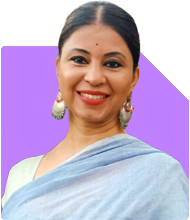
Radhika

Radhika Iyer  | Answer  |Ask -

Yoga Expert - Answered on Jul 29, 2023

Radhika Iyer is a yogini, mountaineer and philanthropist.
After being diagnosed with cancer, Radhika benefitted from training in yoga and meditation.
In 2009, she founded the yoga studio Raa Foundation to share what she had learnt. She has also founded Anahata Organics, a sustainable lifestyle brand.
Radhika has been helping individuals develop a positive mindset through wellness activities that engage the mind, body and soul for over two decades now.... more

Vijit Question by Vijit on Jul 24, 2023Hindi
Listen
Health

Hi I am having bp of 143/80, my doctor has recommended medicine. Is there any good ayurvedic medicine which I can take along Vijit Nair

Ans: Namaste
Best is to consult an Ayurvedic physician in your area. Pranayam will help a lot. Anulom Vilom to start with and Brahmari to end with every single day.
DISCLAIMER: The answer provided by rediffGURUS is for informational and general awareness purposes only. It is not a substitute for professional medical diagnosis or treatment.
Health

You may like to see similar questions and answers below
Latest Questions
Ramalingam

Ramalingam Kalirajan  |10885 Answers  |Ask -

Mutual Funds, Financial Planning Expert - Answered on Dec 15, 2025

Asked by Anonymous - Dec 14, 2025Hindi
Money
I am 41 years old and started from this year and sip 40k monthly. My portfolio is HDFC NIFTY 50 ICICI NIFTY NEXT 50 PARAG PARIKH FLEXI WHITEOAK MIDCAP suggest my portfolio is for wealth creation for next 18years?
Ans: Your decision to start investing at 41 deserves appreciation.
Starting now is far better than waiting longer.
Your monthly commitment of Rs.40,000 shows discipline.
This habit is the real foundation of wealth.
Hope is clearly present with your time horizon.

» Age and Investment Horizon Perspective
– You are 41 years old.
– Your horizon is around 18 years.
– This is still a strong growth window.
– Equity works well over long horizons.
– Time can absorb market volatility.
– Discipline will decide final outcomes.

» Wealth Creation Goal Assessment
– Wealth creation needs growth assets.
– It also needs patience and structure.
– Returns come in cycles.
– Short-term underperformance is normal.
– Long-term consistency matters most.
– Your horizon supports equity focus.

» Monthly SIP Commitment Review
– Rs.40,000 monthly is meaningful.
– It shows strong savings intent.
– Consistency matters more than amount.
– Annual step-ups can improve results.
– SIP automation reduces emotional mistakes.
– This habit must never stop.

» Portfolio Composition Overview
– Your portfolio has four equity-oriented holdings.
– Two are market-linked index based.
– One is flexi oriented.
– One is mid-cap oriented.
– Equity exposure is high.
– Debt exposure is missing.

» Index Fund Exposure Evaluation
– Two of your holdings track market indices.
– Index funds simply copy market movements.
– They rise and fall fully with markets.
– There is no downside protection.
– There is no valuation discipline.
– They offer zero flexibility.

» Disadvantages of Index Funds for Long-Term Goals
– Index funds stay fully invested always.
– They cannot exit overheated sectors.
– They cannot increase cash during bubbles.
– They fall equally during crashes.
– Emotional pressure increases during corrections.
– Behavioural mistakes become common.

– Index funds assume investors stay disciplined forever.
– Real investors are emotional humans.
– Panic selling destroys long-term returns.
– Index funds offer no handholding.
– They offer no active risk management.
– This is risky for long journeys.

» Benefits of Actively Managed Equity Funds
– Active funds adapt to market cycles.
– Fund managers adjust exposure dynamically.
– They reduce risk during overvaluation.
– They increase opportunity during corrections.
– They focus on quality businesses.
– This improves downside protection.

– Active funds support investor behaviour.
– Lower drawdowns improve holding ability.
– Consistency matters more than cost.
– Long-term wealth favours discipline.
– Active management supports discipline better.
– This suits long-term goals.

» Flexi-Oriented Holding Assessment
– One holding offers flexible allocation.
– Flexi strategies invest across market caps.
– This provides internal diversification.
– It reduces dependency on one segment.
– This suits long horizons well.
– One such allocation is sufficient.

» Mid-Cap Exposure Review
– You have one mid-cap oriented holding.
– Mid-caps offer higher growth potential.
– They also carry higher volatility.
– Long-term holding is essential here.
– SIP mode reduces timing risk.
– Allocation size must be controlled.

» Overlap and Concentration Risk
– Index holdings overlap significantly.
– Large-cap stocks repeat across indices.
– Overlap reduces diversification benefit.
– Too much market-linked exposure increases risk.
– Portfolio efficiency reduces.
– Simplicity often works better.

» Missing Asset Allocation Balance
– Portfolio is 100 percent equity focused.
– No stabilising component exists.
– Volatility will be high during crashes.
– Emotional discipline may be tested.
– Balanced portfolios survive longer.
– Stability improves long-term success.

» Behavioural Risk Assessment
– Market falls are inevitable.
– Corrections test investor patience.
– High volatility causes fear.
– Fear leads to stopping SIPs.
– Stopped SIPs destroy compounding.
– Structure should protect behaviour.

» Role of Debt in Long-Term Planning
– Debt provides stability and liquidity.
– It cushions equity volatility.
– It supports rebalancing during crashes.
– It reduces regret during downturns.
– It improves emotional comfort.
– Long-term plans need balance.

» Tax Awareness for Long-Term Equity
– Equity gains attract capital gains tax.
– Long-term gains above Rs.1.25 lakh are taxable.
– Short-term equity gains attract higher tax.
– Tax applies at exit stage.
– Holding long term improves tax efficiency.
– Avoid frequent churning.

» SIP Duration and Compounding Insight
– Eighteen years is powerful.
– Compounding accelerates after many years.
– Early years feel slow.
– Later years feel rewarding.
– Staying invested matters most.
– Consistency beats timing.

» Portfolio Suitability for Wealth Creation
– Equity exposure is appropriate for growth.
– However, structure needs refinement.
– Index exposure is excessive.
– Active management is underutilised.
– Balance is missing.
– Adjustments can improve outcomes.

» Portfolio Simplification Need
– Too many similar strategies confuse monitoring.
– Simpler portfolios improve discipline.
– Fewer funds are easier to manage.
– Rebalancing becomes effective.
– Over-diversification reduces conviction.
– Conviction supports patience.

» Suggested Directional Changes
– Reduce dependence on index strategies gradually.
– Increase focus on actively managed equity.
– Maintain one flexible growth strategy.
– Retain controlled mid-cap exposure.
– Introduce stability through non-equity allocation.
– Avoid abrupt changes.

» Annual Review Discipline
– Review portfolio once every year.
– Check asset allocation drift.
– Rebalance if equity grows too much.
– Avoid reacting to short-term returns.
– Focus on goal alignment.
– Discipline is key.

» SIP Step-Up Strategy
– Increase SIP amount annually.
– Use salary hikes for step-ups.
– This accelerates corpus growth.
– Lifestyle inflation should be controlled.
– Pay yourself first.
– Future self will thank you.

» Emergency and Protection Check
– Ensure adequate emergency fund exists.
– Six months expenses is ideal.
– Health insurance should be sufficient.
– Job-linked cover alone is risky.
– Protection supports investment journey.
– Safety enables discipline.

» Family and Responsibility Angle
– Family needs increase with age.
– Education expenses may arise.
– Medical costs rise later.
– Investments must support family security.
– Avoid excessive volatility.
– Stability matters with responsibility.

» Emotional Strength Building
– Markets will test confidence.
– News will create noise.
– Ignore short-term headlines.
– Trust the long-term process.
– Stay focused on goals.
– Patience creates wealth.

» Long-Term Wealth Philosophy
– Wealth is built slowly.
– Short-term returns are unpredictable.
– Long-term discipline is predictable.
– Good structure reduces mistakes.
– Mistake avoidance improves results.
– Behaviour matters more than returns.

» Retirement and Later Years View
– At 59, risk tolerance reduces.
– Gradual de-risking will be needed.
– This planning starts closer to goal.
– Today, growth is priority.
– Later, preservation matters more.
– Planning evolves with age.

» Monitoring Without Obsession
– Avoid daily portfolio checking.
– Quarterly review is enough.
– Annual deep review is sufficient.
– Obsession creates anxiety.
– Anxiety leads to wrong actions.
– Calm investors succeed more.

» Correct Mindset for Next 18 Years
– Accept volatility as normal.
– Focus on process, not predictions.
– Stay invested during bad phases.
– Bad phases create future gains.
– Discipline creates opportunity.
– Opportunity rewards patience.

» Final Insights
– Starting at 41 is still powerful.
– Rs.40,000 SIP is a strong base.
– Portfolio intent is positive.
– Index exposure needs reduction.
– Active management suits your goal better.
– Balance will improve behaviour and outcomes.
– With refinement, wealth creation is achievable.
– Stay disciplined and review annually.

Best Regards,

K. Ramalingam, MBA, CFP,

Chief Financial Planner,

www.holisticinvestment.in

https://www.youtube.com/@HolisticInvestment

...Read more

Ramalingam

Ramalingam Kalirajan  |10885 Answers  |Ask -

Mutual Funds, Financial Planning Expert - Answered on Dec 15, 2025

Asked by Anonymous - Dec 14, 2025Hindi
Money
Hi, i am 49 and no savings due to parents health. Want to retire at 60, please advise how i can create retirement corpous
Ans: Your honesty and responsibility deserve appreciation.
Supporting parents during illness shows strong values.
Starting late does not mean failure.
It only means strategy must be sharper.
Hope is very much alive here.

» Life Stage and Reality Check
– You are 49 years old now.
– Retirement goal age is 60 years.
– You have around eleven earning years.
– This phase needs focused action.
– There is no room for delay.
– Still, meaningful wealth can be built.

» Emotional and Financial Context
– Medical responsibilities drained earlier savings.
– This situation was unavoidable.
– You prioritised family over money.
– That choice reflects character.
– Now it is time to prioritise yourself.
– Both can coexist with planning.

» Retirement Expectation Assessment
– Retirement does not mean stopping life.
– It means income replacement is needed.
– Expenses will continue after retirement.
– Medical costs may rise further.
– Inflation will reduce money value.
– Planning must consider all these.

» Understanding Retirement Corpus
– Retirement corpus is a safety net.
– It supports regular monthly expenses.
– It supports medical and emergencies.
– It protects dignity and independence.
– It reduces dependency on children.
– This goal deserves seriousness.

» Income and Expense Mapping
– First, assess current monthly income.
– Next, track unavoidable monthly expenses.
– Identify possible savings amount.
– Even small savings matter now.
– Consistency matters more than size.
– Savings must be non-negotiable.

» Emergency Fund Priority
– Emergency fund is the foundation.
– It avoids future disruptions.
– Medical shocks can repeat.
– At least six months expenses needed.
– Keep it liquid and safe.
– Do not invest emergency money.

» Insurance and Protection Review
– Health insurance is critical now.
– Coverage should be adequate.
– Family floater may be cost-effective.
– Top-up cover should be considered.
– Term insurance is also important.
– Protection supports investment success.

» Late Start Investment Reality
– Late start increases pressure.
– Risk-taking must be controlled.
– Aggressive mistakes can hurt badly.
– Balanced growth is more suitable.
– Discipline replaces lost time.
– Patience is still required.

» Equity Role in Your Plan
– Equity is essential for growth.
– Without equity, corpus will struggle.
– However, allocation must be sensible.
– Extreme volatility should be avoided.
– Behaviour control is crucial.
– Equity must be managed actively.

» Why Actively Managed Funds Matter
– Actively managed funds adjust with markets.
– Fund managers reduce risk during stress.
– They increase defensive exposure when needed.
– They avoid overvalued sectors.
– This protects downside better.
– Behavioural comfort improves significantly.

» Why Index Funds Are Not Suitable Here
– Index funds fully follow market cycles.
– They fall equally during corrections.
– There is no downside protection.
– No valuation-based decision exists.
– Emotional pressure becomes very high.
– Late starters cannot afford panic exits.

» Asset Allocation Balance
– Equity drives growth over years.
– Debt provides stability and predictability.
– Hybrid strategies combine both.
– Balance reduces regret and anxiety.
– Allocation must be reviewed annually.
– Avoid frequent tinkering.

» Monthly Investment Discipline
– Start monthly investing immediately.
– Automate the process.
– Treat it like a bill.
– Increase amount with income hikes.
– Avoid stopping during market falls.
– Continuity is the real power.

» Annual Bonus or Windfall Usage
– Any bonus should not be spent fully.
– Allocate part towards retirement.
– Lump sums must be invested carefully.
– Prefer staggered deployment.
– Avoid emotional timing decisions.
– Discipline beats timing.

» Debt Instruments Role
– Debt stabilises the portfolio.
– It reduces volatility impact.
– It provides liquidity when needed.
– It supports rebalancing during crashes.
– Debt returns are modest.
– But stability is priceless.

» Tax Awareness and Planning
– Tax efficiency improves net returns.
– Equity gains attract capital gains tax.
– Long-term equity gains above Rs.1.25 lakh are taxable.
– Short-term equity gains attract higher tax.
– Debt taxation depends on slab.
– Tax should not dominate decisions.

» Retirement Lifestyle Planning
– Retirement lifestyle must be realistic.
– Expenses may reduce in some areas.
– Medical costs may increase.
– Travel plans should be budgeted.
– Avoid overestimating future income.
– Conservative assumptions are safer.

» Post-Retirement Income Strategy
– Retirement needs regular cash flow.
– Corpus should generate income.
– Capital preservation becomes important.
– Volatility tolerance reduces after retirement.
– Gradual de-risking is needed.
– Planning must start before retirement.

» Children and Family Expectations
– Avoid assuming children will support.
– Self-reliance brings confidence.
– Financial independence improves relationships.
– Do not burden next generation.
– This mindset improves discipline.
– Retirement planning is self-respect.

» Behavioural Discipline Importance
– Markets will test patience.
– Corrections will occur repeatedly.
– Fear causes wrong exits.
– Wrong exits destroy plans.
– Structure should protect emotions.
– Active management helps behaviour.

» Monitoring and Review Process
– Review once every year.
– Check asset allocation drift.
– Rebalance if required.
– Avoid reacting to news.
– Avoid checking daily values.
– Focus on long-term direction.

» Increasing Income Possibilities
– Explore skill upgrades if possible.
– Side income can accelerate savings.
– Consultancy or freelancing may help.
– Extra income should be invested.
– Lifestyle inflation should be avoided.
– Every extra rupee matters.

» Mental Shift Required
– Stop regretting lost years.
– Focus on next eleven years.
– Action matters more than regret.
– Discipline beats perfect planning.
– Small steps create momentum.
– Momentum creates confidence.

» Retirement Age Flexibility
– Keep slight flexibility if possible.
– Even one extra working year helps.
– It reduces pressure significantly.
– It increases corpus and confidence.
– Do not rigidly fix age.
– Flexibility is strength.

» Family Communication
– Discuss retirement goals with family.
– Align expectations early.
– Transparency reduces stress.
– Family support improves discipline.
– Shared goals feel lighter.
– Communication is underrated asset.

» Health and Wellness Focus
– Health directly impacts finances.
– Preventive care reduces expenses.
– Fitness supports longer earning ability.
– Stress management improves decisions.
– Health is real wealth.
– Do not ignore this area.

» Finally
– Your situation is challenging but manageable.
– Starting now is still meaningful.
– Discipline can compensate lost time.
– Active management suits your stage better.
– Protection and balance are essential.
– Retirement at 60 is possible with focus.
– Consistency will change your story.

Best Regards,

K. Ramalingam, MBA, CFP,

Chief Financial Planner,

www.holisticinvestment.in

https://www.youtube.com/@HolisticInvestment

...Read more

Ramalingam

Ramalingam Kalirajan  |10885 Answers  |Ask -

Mutual Funds, Financial Planning Expert - Answered on Dec 15, 2025

Money
Hi I am 31 year old working for an US based MNC getting 96k monthly in-hand with 1.3lacks variable pay once a year and 11k monthly deposit in PF account ( employee and employer contribution). Below are my current outstanding loans Home loan - 27.8 lacks principal with 27k monthly EMi and 161 months tenure left. PF balance -6 lacks PPF- 2 lacks Saving account -1 lack Monthly Expenses excluding EMi House hold expenses -15 k Personal expenses - 10-20 k I am married and have a 1 child (5yr) , I have company sponsored medical policy for 8 lack each member. I am planning to pay off my home loan in next 4 years by paying 40k extra every 2 months and 1 lack lumpsum payment once in a year. My question is by doing this I will left with very little amount in my savings account for any future emergency but I will still have my PF balance cover any future emergency. The only advantage is I will be loan free before I turn 35. Am I making right decision about my finances????
Ans: Your clarity, discipline, and detailed thinking deserve appreciation.
At 31, you are already thinking long term.
That itself puts you ahead of many peers.
Your responsibility towards family is visible.
Your intent to be debt free is admirable.
Hope and scope are clearly present.

» Life Stage and Financial Maturity
– You are 31 years old.
– You have long earning years ahead.
– Career stability seems reasonable now.
– Income visibility is fairly good.
– Family responsibilities are increasing gradually.
– This stage needs balance, not extremes.

» Income Structure Assessment
– Monthly in-hand income is Rs.96,000.
– Annual variable pay is Rs.1.3 lakh.
– PF contribution is Rs.11,000 monthly.
– This shows strong forced savings.
– Income diversification is moderate.
– Cash flow planning becomes important.

» Expense Pattern Review
– Household expenses are around Rs.15,000.
– Personal expenses range between Rs.10,000 to Rs.20,000.
– EMIs consume Rs.27,000 monthly.
– Total monthly outflow is manageable.
– There is room for structured planning.
– Lifestyle inflation seems controlled currently.

» Family Responsibility Context
– You are married.
– You have a five-year-old child.
– Education costs will rise steadily.
– Health expenses may increase later.
– Family goals need early planning.
– This requires liquidity and flexibility.

» Existing Asset Snapshot
– PF balance is around Rs.6 lakh.
– PPF balance is around Rs.2 lakh.
– Savings account holds around Rs.1 lakh.
– These assets provide some cushion.
– However, liquidity varies across assets.
– Not all assets are emergency-friendly.

» Home Loan Overview
– Outstanding principal is around Rs.27.8 lakh.
– EMI is Rs.27,000 monthly.
– Remaining tenure is 161 months.
– Interest cost is significant over time.
– Emotional burden of debt exists.
– Early closure feels attractive psychologically.

» Your Prepayment Strategy
– You plan Rs.40,000 extra every two months.
– You plan Rs.1 lakh lump sum annually.
– Goal is loan closure in four years.
– This is an aggressive plan.
– It needs careful evaluation.
– Aggression must not create vulnerability.

» Psychological Benefit of Debt Freedom
– Being loan free by 35 feels powerful.
– Mental peace improves significantly.
– Cash flow becomes flexible.
– Risk appetite may increase later.
– Confidence rises post loan closure.
– These benefits are real and valuable.

» Opportunity Cost Consideration
– Money used for prepayment has alternatives.
– Long-term investments could compound.
– Home loan interest is relatively moderate.
– Equity growth potential is higher long term.
– Time is strongly on your side.
– Balance is more important than speed.

» Emergency Fund Reality
– Current savings are only Rs.1 lakh.
– This is not sufficient for emergencies.
– Family size increases emergency needs.
– Job risks always exist.
– Medical surprises can still occur.
– Emergency fund must be non-negotiable.

» Misconception About PF as Emergency Fund
– PF is meant for long-term retirement.
– PF withdrawals have procedural delays.
– PF access is not instant.
– PF should not replace emergency fund.
– Using PF breaks retirement discipline.
– This assumption needs correction.

» Liquidity Versus Safety Balance
– Emergency funds need instant access.
– They should be stress-free.
– Market-linked assets are unsuitable here.
– PF is semi-liquid, not liquid.
– Liquidity protects dignity during crises.
– Safety without liquidity is incomplete.

» Risk of Over-Aggressive Prepayment
– Draining savings increases vulnerability.
– One emergency can force borrowing again.
– Borrowing later may cost more.
– Emotional stress can increase.
– Financial flexibility reduces.
– Risk management weakens.

» Health Insurance Review
– Company medical cover is Rs.8 lakh per member.
– This is helpful now.
– Job-linked insurance is not permanent.
– Coverage may stop with job loss.
– Top-up coverage should be explored.
– Health planning must be independent.

» Child Future Planning Angle
– Child education costs will rise sharply.
– Early planning reduces pressure later.
– Time advantage is huge here.
– Small amounts now grow meaningfully.
– This goal needs separate allocation.
– Loan prepayment should not delay this.

» Retirement Perspective
– PF and PPF support retirement.
– Retirement planning should start early.
– Delaying investments increases future burden.
– Home loan closure alone is insufficient.
– Wealth creation needs parallel effort.
– Debt freedom is not wealth creation.

» Asset Allocation View
– Debt assets already exist through PF and PPF.
– Home loan is also a debt exposure.
– Equity allocation is currently missing.
– Growth assets are essential now.
– Time horizon favours growth.
– Balance is currently tilted towards safety.

» Why Equity Cannot Be Ignored
– Inflation erodes savings silently.
– Fixed returns struggle to beat inflation.
– Equity helps long-term purchasing power.
– Starting early reduces risk.
– Waiting reduces compounding benefit.
– Growth needs patience and discipline.

» Behavioural Aspect of Loans
– Emotional dislike of loans is common.
– Fear of debt drives aggressive decisions.
– Not all debt is bad.
– Long-term low-cost debt can coexist with investments.
– Emotional comfort must align with financial logic.
– Extremes often harm outcomes.

» Balanced Approach Recommendation
– Partial prepayment is sensible.
– Full liquidity sacrifice is risky.
– Emergency fund must come first.
– Investments must start alongside prepayment.
– Goals must run in parallel.
– Balance builds resilience.

» Suggested Priority Order
– Build emergency fund first.
– Maintain minimum cash buffer always.
– Continue regular EMI without stress.
– Use surplus for selective prepayment.
– Start long-term investments early.
– Review annually and adjust.

» Emergency Fund Target Thought
– Aim for at least six months expenses.
– Include EMI in calculation.
– This fund must be untouched.
– Keep it separate from investments.
– This creates confidence.
– Confidence improves decision quality.

» Cash Flow Management
– Annual variable pay can support goals.
– Part can build emergency fund.
– Part can support prepayment.
– Part can start investments.
– Avoid spending full variable pay.
– Windfalls should strengthen balance sheet.

» Tax Efficiency Awareness
– Home loan interest has tax benefits.
– PF and PPF offer tax efficiency.
– Equity gains have capital gains tax.
– Long-term equity gains above Rs.1.25 lakh are taxable.
– Short-term equity gains attract higher tax.
– Tax should support, not dictate, strategy.

» Time Value of Money Insight
– Money today is more valuable.
– Early investing multiplies outcomes.
– Delaying investments increases pressure later.
– Four years is precious time.
– Using it only for loan closure is costly.
– Parallel growth is wiser.

» Career Risk and Income Stability
– US-based MNCs offer good pay.
– They also face global uncertainties.
– Job continuity cannot be assumed.
– Liquidity protects during transitions.
– Debt-free status without cash can still hurt.
– Cash flow safety matters more.

» Mental Peace Versus Financial Strength
– Debt freedom brings mental peace.
– Financial flexibility brings real strength.
– Both are important.
– One should not destroy the other.
– Balanced planning gives lasting peace.
– Extremes give temporary comfort.

» Long-Term Wealth Vision
– Wealth is not only absence of debt.
– Wealth is presence of assets.
– Assets generate choices.
– Choices give freedom.
– Freedom supports family goals.
– This vision must guide actions.

» Review of Your Current Plan
– Your intent is positive.
– Discipline is clearly strong.
– Aggression level needs moderation.
– Emergency planning is currently weak.
– Growth planning is currently missing.
– Small corrections can improve outcomes.

» Corrected Direction Suggestion
– Do not empty savings completely.
– Maintain strong emergency buffer.
– Continue some prepayment, not extreme.
– Start structured long-term investments.
– Review yearly as income grows.
– Adjust prepayment pace gradually.

» Behavioural Discipline Reminder
– Markets will fluctuate.
– Loans feel safer to close.
– Investments need patience.
– Avoid reacting emotionally.
– Stick to process.
– Process creates results.

» Finally
– Your thinking shows maturity beyond age.
– Being loan free early is attractive.
– But liquidity is non-negotiable.
– PF cannot replace emergency fund.
– Balanced prepayment is the right approach.
– Parallel investing is essential now.
– With small changes, your plan strengthens greatly.
– You are moving in the right direction overall.

Best Regards,

K. Ramalingam, MBA, CFP,

Chief Financial Planner,

www.holisticinvestment.in

https://www.youtube.com/@HolisticInvestment

...Read more

Ramalingam

Ramalingam Kalirajan  |10885 Answers  |Ask -

Mutual Funds, Financial Planning Expert - Answered on Dec 15, 2025

Money
Hello and namaskar.. I am 36 years old. Need your guidance in the following funds- (a) parag parekh flexi cap - 7500/- per month (B) GROWW nifty midcap 150 index fund -2500/- per month (C) mirae asset ELLS tax saver -5000/- (D) pGIM india mid cap opp. Fund -5000/- (E) quant small cap fund-4000/- (F) ICICI prudential equity and debt fund - 3000 (G) HDFC FLEXI CAP FUND - 4000 (H) Uti nifty 50 index fund - 5000 Additionally I want to invest 1lakh annually. Tell me where to invest this additional amount. These funds are ok or I should exit from any fund. I want to get 2 crore till the end of 2035. Am I going on the right track.
Ans: You are doing many things right at a young age.
Your discipline and clarity deserve appreciation.
Starting early gives you a strong advantage.
Your intent to review shows maturity and responsibility.

» Age and Time Advantage
– You are 36 years old.
– You have around ten years till 2035.
– This is a solid wealth building phase.
– Time is your biggest ally now.
– Compounding works best during this stage.
– Consistency matters more than perfection.

» Goal Clarity and Expectation Review
– Your target is Rs.2 crore by 2035.
– The goal is ambitious but not unrealistic.
– It needs focus and proper portfolio structure.
– The journey must stay smooth and disciplined.
– Returns cannot be chased blindly.
– Risk control is equally important.

» Current Monthly Investment Behaviour
– Your monthly SIP total is meaningful.
– You are investing across market segments.
– Diversification intent is clearly visible.
– However, overlaps are also visible.
– Too many similar funds reduce efficiency.
– Portfolio simplicity improves outcomes.

» Flexi Cap Exposure Assessment
– You hold more than one flexi category fund.
– Flexi funds already offer wide diversification.
– Multiple flexi funds create duplication.
– Overlapping stocks reduce incremental benefit.
– Monitoring becomes harder over time.
– One well-managed option is usually sufficient.

» Mid Cap Exposure Review
– You hold two mid-oriented strategies.
– Mid caps offer strong growth potential.
– They also carry higher volatility risk.
– Too much mid exposure increases swings.
– Emotional discipline becomes difficult during corrections.
– Allocation must match your risk comfort.

» Small Cap Exposure Evaluation
– You have one small cap allocation.
– Small caps boost long-term return potential.
– They are highly volatile in short periods.
– Allocation size matters more than fund count.
– This portion needs patience and long holding.
– Avoid increasing this exposure aggressively.

» Equity and Debt Hybrid Holding
– You hold one equity and debt option.
– Hybrid funds reduce volatility naturally.
– They bring stability during market stress.
– This helps protect behaviour during corrections.
– Such balance is healthy in portfolios.
– However, allocation proportion needs review.

» ELSS Tax Saving Exposure
– You have one tax-saving equity holding.
– ELSS suits long-term disciplined investors.
– Lock-in supports behavioural discipline.
– However, ELSS is pure equity.
– It should align with overall equity allocation.
– Avoid adding multiple ELSS unnecessarily.

» Index Fund Exposure Assessment
– You hold two index-based options.
– Index funds simply follow the market.
– They cannot protect during market extremes.
– There is no downside risk management.
– They offer no flexibility in allocation.
– You remain fully exposed during corrections.

– Index funds mirror market emotions fully.
– They do not avoid overvalued stocks.
– They do not exit risky sectors early.
– They cannot adapt to economic cycles.
– Volatility impact is fully passed to you.

– Actively managed funds adjust allocations.
– Fund managers reduce risk during excess valuations.
– They increase cash or defensive exposure.
– They aim to protect capital during stress.
– Long-term consistency matters more than cost.

– Behavioural comfort is critical for wealth creation.
– Active strategies support investor discipline better.
– Index exposure should not dominate portfolios.
– Especially for goal-based investing.

» Over-Diversification Concern
– You currently hold eight equity-oriented funds.
– Many belong to similar categories.
– This causes unnecessary overlap.
– Portfolio tracking becomes confusing.
– Rebalancing becomes inefficient.
– Returns may average out lower.

» Need for Portfolio Rationalisation
– Reducing fund count improves clarity.
– Fewer funds improve focus.
– Monitoring becomes simpler.
– Behavioural discipline improves significantly.
– Rebalancing becomes effective.
– Goal alignment becomes clearer.

» Suggested Exit and Retain Strategy
– Retain limited flexi exposure.
– Retain one strong mid-cap exposure.
– Retain controlled small-cap exposure.
– Retain one hybrid allocation.
– Reduce index fund exposure gradually.
– Avoid abrupt exits during market volatility.

» Annual Rs.1 Lakh Investment Guidance
– Annual investments should support long-term goals.
– Lump sum investing needs timing discipline.
– Market valuations must be respected.
– Phased deployment reduces timing risk.
– Annual amount should strengthen core allocation.

– Prefer diversified active equity strategy.
– Focus on long-term wealth creation.
– Avoid thematic or narrow strategies.
– Stability matters more for lump sums.
– This amount should not chase trends.

» Asset Allocation Perspective
– Equity should remain the primary growth driver.
– Debt supports stability and risk control.
– Hybrid strategies offer automatic balancing.
– Allocation must match your emotional comfort.
– Avoid extreme aggressive positioning.

» Risk Management and Behaviour Control
– Market corrections are inevitable.
– Your portfolio must help you stay invested.
– Excess volatility causes panic exits.
– Panic destroys long-term wealth.
– Structure should protect behaviour.

» Taxation Awareness
– Equity gains attract capital gains tax.
– Long-term equity gains above Rs.1.25 lakh are taxable.
– Short-term equity gains attract higher tax.
– Tax should not drive investment decisions.
– Post-tax returns matter more.

» Goal Feasibility Assessment
– Rs.2 crore target needs sustained discipline.
– SIP continuity is critical.
– Annual increments will improve probability.
– Portfolio efficiency improves success chances.
– Behavioural consistency is the key driver.

» Monitoring and Review Discipline
– Annual reviews are sufficient.
– Avoid frequent changes.
– Review allocation, not returns.
– Rebalance when deviations arise.
– Avoid reacting to market noise.

» Emergency and Protection Check
– Ensure adequate emergency reserve exists.
– Six months expenses is ideal.
– Health insurance should be sufficient.
– Term insurance must cover liabilities.
– Investments work best with protection support.

» Lifestyle and Cash Flow Alignment
– Investments must not strain cash flow.
– Lifestyle balance is important.
– Avoid over-commitment to SIPs.
– Flexibility reduces stress.
– Sustainable plans succeed longer.

» Behavioural Insights
– Wealth creation is emotional journey.
– Simplicity supports discipline.
– Over-monitoring creates anxiety.
– Trust the process.
– Stay patient during dull phases.

» Finally
– You have started well.
– Your age gives strong advantage.
– Portfolio needs simplification.
– Index exposure should be reduced gradually.
– Active management suits your goal better.
– Annual investments must support core structure.
– Rs.2 crore target is achievable with discipline.
– Stay consistent and avoid frequent changes.

Best Regards,

K. Ramalingam, MBA, CFP,

Chief Financial Planner,

www.holisticinvestment.in

https://www.youtube.com/@HolisticInvestment

...Read more

Nayagam P

Nayagam P P  |10854 Answers  |Ask -

Career Counsellor - Answered on Dec 14, 2025

Asked by Anonymous - Dec 12, 2025Hindi
Career
Hello, I am currently in Class 12 and preparing for JEE. I have not yet completed even 50% of the syllabus properly, but I aim to score around '110' marks. Could you suggest an effective strategy to achieve this? I know the target is relatively low, but I have category reservation, so it should be sufficient.
Ans: With category reservation (SC/ST/OBC), a score of 110 marks is absolutely achievable and realistic. Based on 2025 data, SC candidates qualified with approximately 60-65 percentile, and ST candidates with 45-55 percentile. Your target requires scoring just 37-40% marks, which is significantly lower than general category standards. This gives you a genuine advantage. Immediate Action Plan (December 2025 - January 2026): 4-5 Weeks. Week 1-2: High-Weightage Chapter Focus. Stop trying to complete the entire syllabus. Instead, focus exclusively on high-scoring chapters that carry maximum weightage: Physics (Modern Physics, Current Electricity, Work-Power-Energy, Rotation, Magnetism), Chemistry (Chemical Bonding, Thermodynamics, Coordination Compounds, Electrochemistry), and Maths (Integration, Differentiation, Vectors, 3D Geometry, Probability). These chapters alone can yield 80-100+ marks if practiced properly. Ignore topics you haven't studied yet. Week 2-3: Previous Year Questions (PYQs). Solve JEE Main PYQs from the last 10 years (2015-2025) for chapters you're studying. PYQs reveal question patterns and difficulty levels. Focus on understanding why answers are correct, not memorizing solutions. Week 3-4: Mock Tests & Error Analysis. Take 2-3 full-length mock tests weekly under timed conditions. This is crucial because mock tests build exam confidence, reveal time management weaknesses, and error analysis prevents repeated mistakes. Maintain an error notebook documenting every mistake—this becomes your revision guide. Week 4-5: Revision & Formula Consolidation. Create concise formula sheets for each subject. Spend 30 minutes daily reviewing formulas and key concepts. Avoid learning new topics entirely at this stage. Study Schedule (Daily): 7-8 Hours. Morning (5:00-7:30 AM): Physics concepts + 30 PYQs. Break (7:30-8:30 AM): Breakfast & rest. Mid-morning (8:30-11:00): Chemistry concepts + 20 PYQs. Lunch (11:00-1:00 PM): Full break. Afternoon (1:00-3:30 PM): Maths concepts + 30 PYQs. Evening (3:30-5:00 PM): Mock test or error review. Night (7:00-9:00 PM): Formula revision & weak area focus. Strategic Approach for 110 Marks: Attempt only confident questions and avoid negative marking by skipping difficult questions. Do easy questions first—in the exam, attempt all basic-level questions before attempting medium or hard ones. Focus on quality over quantity as 30 well-practiced questions beat 100 random questions. Master NCERT concepts as most JEE questions test NCERT concepts applied smartly. April 2026 Session Advantage. If January doesn't deliver desired results, April gives you a second chance with 3+ months to prepare. Use January as a practice attempt to identify weak areas, then focus intensively on those in February-March. Realistic Timeline: January 2026 target is 95-110 marks (achievable with focused 50% syllabus), while April 2026 target is 120-130 marks (with complete syllabus + experience). Your reservation benefit means you need only approximately 90-105 marks to qualify and secure admission to quality engineering colleges. Stop comparing yourself to general category cutoffs. Most Importantly: Consistency beats perfection. Study 6 focused hours daily rather than 12 distracted hours. Your 110-mark target is realistic—execute this plan with discipline. All the BEST for Your JEE 2026!

Follow RediffGURUS to Know More on 'Careers | Money | Health | Relationships'.

...Read more

Dr Dipankar

Dr Dipankar Dutta  |1841 Answers  |Ask -

Tech Careers and Skill Development Expert - Answered on Dec 13, 2025

Asked by Anonymous - Dec 12, 2025
Career
Dear Sir/Madam, I am currently a 1st year UG student studying engineering in Sairam Engineering College, But there the lack of exposure and strict academics feels so rigid and I don't like it that. It's like they don't gaf about skills but just wants us to memorize things and score a good CGPA, the only skill they want is you to memorize things and pass, there's even special class for students who don't perform well in academics and it is compulsory for them to attend or else the student and his/her parents needs to face authorities who lashes out. My question is when did engineering became something that requires good academics instead of actual learning and skill set. In sairam they provides us a coding platform in which we need to gain the required points for each semester which is ridiculous cuz most of the students here just look at the solution to code instead of actual debugging. I am passionate about engineering so I want to learn and experiment things instead of just memorizing, so I actually consider dropping out and I want to give jee a try and maybe viteee , srmjeee But i heard some people say SRM may provide exposure but not that good in placements. I may not be excellent at studies but my marks are decent. So gimme some insights about SRM and recommend me other colleges/universities which are good at exposure
Ans: First — your frustration is valid

What you are experiencing at Sairam is not engineering, it is rote-based credential production.

“When did engineering become memorizing instead of learning?”

Sadly, this shift happened decades ago in most Tier-3 private colleges in India.

About “coding platforms & points” – your observation is sharp

You are absolutely right:

Mandatory coding points → students copy solutions

Copying ≠ learning

Debugging & thinking are missing

This is pseudo-skill education — it looks modern but produces shallow engineers.

The fact that you noticed this in 1st year already puts you ahead of 80% students.

Should you DROP OUT and prepare for JEE / VITEEE / SRMJEEE?

Although VIT/SRM is better than Sairam Engineering College, but you may face the same problem. You will not face this type of problem only in some top IITs, but getting seat in those IITs will be difficult.
Instead of dropping immediately, consider:

???? Strategy:

Stay enrolled (degree security)

Reduce emotional investment in college rules

Use:

GitHub

Open-source projects

Hackathons

Internships (remote)

Hardware / software self-projects

This way:

College = formality

Learning = self-driven

Risk = minimal

...Read more

DISCLAIMER: The content of this post by the expert is the personal view of the rediffGURU. Investment in securities market are subject to market risks. Read all the related document carefully before investing. The securities quoted are for illustration only and are not recommendatory. Users are advised to pursue the information provided by the rediffGURU only as a source of information and as a point of reference and to rely on their own judgement when making a decision. RediffGURUS is an intermediary as per India's Information Technology Act.

Close  

You haven't logged in yet. To ask a question, Please Log in below
Login

A verification OTP will be sent to this
Mobile Number / Email

Enter OTP
A 6 digit code has been sent to

Resend OTP in120seconds

Dear User, You have not registered yet. Please register by filling the fields below to get expert answers from our Gurus
Sign up

By signing up, you agree to our
Terms & Conditions and Privacy Policy

Already have an account?

Enter OTP
A 6 digit code has been sent to Mobile

Resend OTP in120seconds

x