Home > Career > Question
Need Expert Advice?Our Gurus Can Help
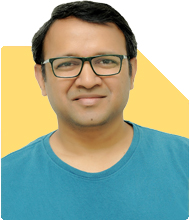
Patrick

Patrick Dsouza  |1439 Answers  |Ask -

CAT, XAT, CMAT, CET Expert - Answered on Nov 24, 2025

Patrick Dsouza is the founder of Patrick100.
Along with his wife, Rochelle, he trains students for competitive management entrance exams such as the Common Admission Test, the Xavier Aptitude Test, Common Management Admission Test and the Common Entrance Test.
They also train students for group discussions and interviews.
Patrick has scored in the 100 percentile six times in CAT. He achieved the first rank in XAT twice, in CET thrice and once in the Narsee Monjee Management Aptitude Test.
Apart from coaching students for MBA exams, Patrick and Rochelle have trained aspirants from the IIMs, the Jamnalal Bajaj Institute of Management Studies and the S P Jain Institute of Management Studies and Research for campus placements.
Patrick has been a panellist on the group discussion and panel interview rounds for some of the top management colleges in Mumbai.
He has graduated in mechanical engineering from the Motilal Nehru National Institute of Technology, Allahabad. He has completed his masters in management from the Jamnalal Bajaj Institute of Management Studies, Mumbai.... more

Eshan Question by Eshan on Nov 23, 2025Hindi
Career

Why should i prefer jbims for mba ?

Ans: Low fees, high salary. Good profiles. Great Faculty and Peer group. One of the top MBA institutes in India.
Career

You may like to see similar questions and answers below

Nayagam P

Nayagam P P  |10894 Answers  |Ask -

Career Counsellor - Answered on Jun 29, 2025

Asked by Anonymous - Jun 29, 2025Hindi
Career
Which one is better NMIMS Shirpur B Pharma +MBA Pharmatech vs JSS Ooty for b pharmacy?
Ans: NMIMS Shirpur's B.Pharm + MBA in Pharmaceutical Technology offers a unique 5-year dual degree program with 80 seats, achieving placement rates above 90% in recent years. The integrated program recorded the highest package of ?14.31 LPA in 2023-24 and an average of ?7.62 LPA, with top recruiters including Cipla, Dr. Reddy's, Cognizant, and Microsoft. The NAAC A+ accredited institution established in 2007 provides management skills alongside pharmaceutical expertise, making graduates suitable for leadership roles in the pharmaceutical industry. JSS College of Pharmacy Ooty, established in 1980, holds the prestigious NIRF rank #4 among pharmacy colleges in India for 2024 and maintains NAAC A+ accreditation. The traditional B.Pharmacy program achieved placement rates of 75-84% with a median package of ?7.80 LPA for B.Pharm graduates in 2021-22. The college attracts 23 recruiters including Pfizer, GSK, Novartis, Biocon, and AstraZeneca, placing 48 B.Pharm students annually. JSS Ooty emphasizes core pharmaceutical education with strong industry connections across leading pharmaceutical companies, while NMIMS Shirpur's dual degree provides broader career opportunities combining pharmaceutical knowledge with business management skills.

Recommendation: Choose NMIMS Shirpur B.Pharm + MBA Pharmatech for superior placement rates above 90%, higher packages, and valuable dual qualification offering management expertise alongside pharmaceutical knowledge; opt for JSS Ooty B.Pharmacy only if you prefer traditional pharmaceutical education at a top-ranked institution with established industry reputation, though placement percentages and packages are lower than NMIMS Shirpur's integrated program. All the BEST for the Admission & a Prosperous Future!

Follow RediffGURUS to Know More on 'Careers | Money | Health | Relationships'.

..Read more

Latest Questions
T S Khurana

T S Khurana   |547 Answers  |Ask -

Tax Expert - Answered on Jan 27, 2026

Money
i invested 18L own money and 6 Lakhs from MTF borrowing in Oct'22 to Oct'23 periods, now 24 Lakhs become 14 Lakhs, 10 Lakhs down, Alklyamine 98 @ 3300, relaxo 135@1083, PVRINOX 87@1865, tatainvest 250@1120,vstindustries 484@429,suntv 160@836,concor 250@860,clean 19@2060,bajajauto 14@11935,AWL 357@432,ATGL 20@1030,ADANIGREEN 20@1975,ADANIENT39@3390,ADANENSOL50@1324,ACC52@2600,COCHINSHIP10@2650,DATAPATTERN 10@3186,GRSE19@2975,MAZDOCK10 @3500,HONDAPOWER 10@4000,TATAELXSI17@7320,VBL30@660,BHARATFORG20@1740. GUILTY TO OVERRIDE WIFE SUGGESTION TO BUY JEWELS FOR DAUGHTER'S 3 YEARS AGO WHEN PF AMOUNT WITHDRAWN 13L, NOW THIS ALSO LOSS AND JEWEL ALSO 2.5 TIMES HIGHER THAN THAT TIME. WRONG DECISION. PLS CORRECT & SUGGEST. AGE 51
Ans: 01. What I can suggest is that an individual who is not expert with Equity Market should avoid over exposure to investments in this segment. In cases like this, I would suggest to make your investments in MUTUAL FUNDS instead. You may consider shifting from Equity to Mutual Funds, in phased manner.
Investment in precious metals (Gold & Silver) is very attractive today. It may continue to be so till International environment/conditions are uncertain or unpredictable. Present indication does not support stable International economies, so I feel strongly, that precious metals may keep an upward trend. But shifting all your funds to this segment is again not advisable. Keep your investment portfolio diversified, keeping some percentage of your investments in easily liquid conditions.
Real Estate is also another good option, but small funds cannot be parked in this segment.
Most Welcome for further clarifications, if any. Thanks.

...Read more

T S Khurana

T S Khurana   |547 Answers  |Ask -

Tax Expert - Answered on Jan 27, 2026

Ramalingam

Ramalingam Kalirajan  |10997 Answers  |Ask -

Mutual Funds, Financial Planning Expert - Answered on Jan 27, 2026

Money
If I have 1 crore financial crisis how I pay if i get one crore
Ans: You are thinking responsibly. Asking this question itself shows maturity and awareness. A sudden Rs 1 crore inflow during a financial crisis can solve the problem, only if it is handled with clarity and discipline.

» First understand the nature of the Rs 1 crore
– Is this money received as inheritance, insurance claim, bonus, business sale, or asset liquidation
– Is the crisis short-term (medical, business loss, job loss) or long-term (debt overload, income mismatch)
– Do not rush to use the full amount immediately

Clarity first, action later.

» Priority-based usage of the Rs 1 crore
– Medical emergencies should be settled immediately
– High-interest personal loans and credit card dues should be cleared first
– Business or income-stopping issues should be stabilised next
– Do not deploy money emotionally or under pressure

The aim is stability, not quick fixes.

» How to pay liabilities smartly
– Clear unsecured and high-cost debts fully
– Avoid closing long-term low-cost loans in one shot
– Keep sufficient liquidity for next 12 months
– Do not exhaust the full Rs 1 crore at once

Liquidity gives confidence during crisis.

» Protection before investment
– Ensure adequate health insurance is active
– Ensure sufficient pure life insurance cover
– Emergency fund must be parked safely

Without protection, another crisis can repeat.

» Where not to put this Rs 1 crore
– Do not put entire amount in equity at one time
– Do not chase high-return promises
– Do not lock full money in illiquid products
– Do not mix insurance and investment

Safety first, growth later.

» How to deploy the balance amount
– Keep part of money in low-risk instruments for stability
– Invest remaining amount gradually into equity-oriented options
– Use phased investing instead of lump sum
– Choose actively managed funds due to flexibility and downside control

Active management matters more during uncertain times.

» Tax awareness while using the money
– If you sell investments to manage crisis, tax may apply
– Equity short-term exits attract higher tax
– Plan withdrawals in a tax-aware manner
– Avoid unnecessary churn

Taxes silently reduce available money.

» Emotional discipline during crisis
– Crisis creates fear-based decisions
– Money received suddenly can disappear fast without plan
– Write down priorities before spending
– Review every big payment calmly

Money solves crisis only when mind is steady.

» Finally
– Rs 1 crore is a powerful support, not a permanent solution
– Use it to restore stability, not lifestyle
– Protect, stabilise, then grow
– A structured plan converts crisis money into long-term security

Best Regards,

K. Ramalingam, MBA, CFP,

Chief Financial Planner,

www.holisticinvestment.in

https://www.youtube.com/@HolisticInvestment

...Read more

Ramalingam

Ramalingam Kalirajan  |10997 Answers  |Ask -

Mutual Funds, Financial Planning Expert - Answered on Jan 27, 2026

Asked by Anonymous - Jan 26, 2026Hindi
Money
Dear Sir, I do have decent exposure to Mutual fund investments, I am doing SIPs since 8-9 years however I am really clueless about future of Quants funds. I started SIPs in Quant Small and Mid fund from June 2024, both funds are in negative, appreciations are -8% and -15% respectively. I have Mid fund's SIP. Looking forward to you what to next, shall I continue Small Cap's SIP and keep Mid Cap in AMC for future appreciation or withdraw the fund.
Ans: You have done well by staying invested for 8–9 years. That itself shows discipline and patience. Temporary negative returns can shake confidence, but they do not erase your long-term effort. Your question is valid and many long-term investors are thinking the same.

» Understanding what is happening now
– You started these SIPs only from June 2024
– The investment period is still short
– Mid and small segments are more volatile
– Recent market corrections have hit these segments more

Negative returns in the first 1–2 years are not unusual in such funds.

» About strategy-driven funds and future visibility
– These funds follow a fast-changing investment style
– They may move sharply up and down
– Performance comes in phases, not steadily
– When the market does not suit the strategy, returns can stay weak

This does not mean the strategy has failed, only that the cycle is not supportive right now.

» Evaluating your small-cap SIP
– Small-cap investing needs long holding capacity
– Minimum useful horizon is 7–10 years
– SIPs during weak phases help lower average cost
– Stopping SIP after a fall usually hurts future returns

If this SIP is meant for long-term goals, it should continue.

» Evaluating your mid-cap investment
– Mid-cap funds usually recover faster than small caps
– Holding without SIP still allows recovery participation
– No urgency to exit just because current returns are negative
– Selling now converts temporary loss into permanent loss

Holding patiently is better than reacting emotionally.

» Should you withdraw now
– Withdrawing after recent decline locks in loss
– You miss recovery when the cycle turns
– Taxes may also apply depending on holding period
– Decision should be goal-based, not return-based

Exit only if the fund no longer fits your goal or risk level, not due to short-term pain.

» What you should do instead
– Continue SIP in small-cap if goal horizon is long
– Keep mid-cap investment and review annually
– Avoid frequent switching based on 6–12 month returns
– Ensure these funds are not too large a part of total portfolio

Balance and patience matter more than timing.

» Risk control and portfolio view
– Mid and small caps should not dominate portfolio
– Large and flexible equity styles add stability
– Debt and gold bring balance during equity stress
– Asset allocation should guide decisions, not fund performance

A calm structure reduces future stress.

» Tax angle to remember if you sell
– Equity selling within short term attracts higher tax
– Long-term gains above Rs 1.25 lakh are taxable
– Unplanned exits increase tax leakage

Tax should not be the main reason to stay or exit, but it must be considered.

» Finally
– Your investing habit is strong
– Current underperformance is a phase, not a verdict
– Staying invested usually rewards patience
– Review with a clear goal lens, not daily NAV movement
– Long-term wealth is built by staying calm during such periods

Best Regards,

K. Ramalingam, MBA, CFP,

Chief Financial Planner,

www.holisticinvestment.in

https://www.youtube.com/@HolisticInvestment

...Read more

Ramalingam

Ramalingam Kalirajan  |10997 Answers  |Ask -

Mutual Funds, Financial Planning Expert - Answered on Jan 27, 2026

Asked by Anonymous - Jan 23, 2026Hindi
Money
Mujhe 100 crore ka fund 10 saal m bnane ke liye kya kya Krna chahiye jabki meri investment capacity 25000/- monthly hai
Ans: I appreciate your ambition and honesty. Big goals give direction in life. At the same time, financial planning works best when dreams are aligned with mathematical reality. This clarity will protect you from disappointment and wrong decisions.

» First, understand the gap between goal and capacity
– Your desire is Rs 100 crore in 10 years
– Your current investment capacity is Rs 25,000 per month
– This goal cannot be achieved through normal investing routes
– Even very high market returns cannot bridge this gap

This is not about lack of effort, but about scale.

» Why Rs 100 crore in 10 years is not realistic with SIP investing
– SIP works well for wealth creation, but needs time and higher capital
– Markets do not give miracle returns consistently
– Anyone promising such growth is misleading you
– Chasing such promises usually leads to losses or fraud

Being realistic is the first step to becoming truly wealthy.

» What Rs 25,000 monthly investment can actually do
– It can build strong long-term financial security
– It can help you reach crores over a longer time
– It can give freedom, stability, and dignity
– It can change your family’s financial future

This is powerful, even if it is not Rs 100 crore.

» If Rs 100 crore is your life dream, what must change
– Investment alone is not enough
– You need income growth, not just savings
– Business ownership, entrepreneurship, or equity participation is required
– Your earning capacity must multiply many times

Wealth of this scale comes from value creation, not SIPs.

» Where investing still plays an important role
– Investing protects and grows surplus money
– Mutual funds help compound wealth over time
– Actively managed mutual funds are suitable for disciplined growth
– SIPs build habit and long-term discipline

Investing supports wealth; it does not replace income growth.

» A practical and healthy approach going forward
– Continue SIP of Rs 25,000 consistently
– Increase SIP amount whenever income increases
– Focus on skill growth and career expansion
– Explore additional income streams carefully
– Avoid shortcuts and unrealistic return expectations

This path builds real and lasting wealth.

» What you must strictly avoid
– Avoid schemes promising guaranteed high returns
– Avoid trading or speculation to chase big money
– Avoid borrowing to invest for unrealistic goals
– Avoid comparing your journey with social media stories

Peace of mind is also wealth.

» Finally
– Rs 100 crore in 10 years is not achievable with Rs 25,000 monthly investment
– This truth protects you from financial harm
– Focus on increasing income and steady investing
– Build achievable milestones first
– Wealth is a journey, not a single number

If you stay disciplined, informed, and patient, your financial life will still be successful and stress-free.

Best Regards,

K. Ramalingam, MBA, CFP,

Chief Financial Planner,

www.holisticinvestment.in

https://www.youtube.com/@HolisticInvestment

...Read more

Ramalingam

Ramalingam Kalirajan  |10997 Answers  |Ask -

Mutual Funds, Financial Planning Expert - Answered on Jan 27, 2026

Money
i am 46yrs old investing in MF-SIP , Mirae Asset Large & Midcap Dir Gr-5k, Parag Parikh Flexi Cap Fund- Direct plan-8k, DSP Mid cap fund - Direct Plan-5k, HDFC midcap oppurtinuty fund growth-5k,Bajaj Finserv Flexi cap fund growth- Direct plan-6k and Jio BlackRock Flexi Cap-6k plz advice for continuing SIP and by 2036 i need 1.5cr. also i had 20,00,000/- in hand ( ULIP maturity amount) where i have to invest this amount plz advice
Ans: I appreciate your discipline and clarity. At 46, having a clear target of Rs 1.5 crore by 2036 and running SIPs regularly shows strong intent. You are not late. With the right corrections, the goal is achievable.

» Your current SIP structure – what it shows
– You are investing regularly and consistently
– Exposure is largely towards equity, which suits your time horizon
– Portfolio is tilted more towards mid-cap and flexi-cap styles
– This gives growth potential but also higher volatility

The effort is right, but structure needs refinement.

» One important observation on your existing SIPs
– You are holding too many similar equity styles
– Overlap risk is high when funds follow similar strategies
– Monitoring and rebalancing becomes difficult over time
– More funds do not mean better diversification

Simplification will improve control and results.

» Direct plans – a reality you should understand
– Direct plans look cheaper, but they lack guidance
– No professional support during market falls
– No discipline support during emotional phases
– No ongoing review or rebalancing advice

Regular funds through a Mutual Fund Distributor with CFP credential provide behaviour control, review support, and long-term discipline, which matters more than small cost difference.

» How you should restructure SIPs going forward
– Reduce the number of equity funds
– Maintain a balance between large, flexi, and mid-cap exposure
– Avoid frequent fund changes based on recent performance
– Increase SIP amount gradually instead of adding new funds

Consistency and clarity beat complexity.

» Can you reach Rs 1.5 crore by 2036
– Time horizon of around 10 years is reasonable
– Goal is achievable with disciplined SIP continuation and step-ups
– Equity volatility will come, but staying invested is critical
– Portfolio must be reviewed annually, not emotionally

Your behaviour will decide success more than market returns.

» About the Rs 20 lakh ULIP maturity amount
– It is good that ULIP has already matured
– This amount should not be parked fully in bank deposits
– Do not invest the entire amount in equity at one time
– Use a staggered approach to reduce timing risk

This money is a powerful booster for your goal.

» How to deploy the Rs 20 lakh smartly
– Keep a small portion in liquid or low-risk instruments for stability
– Gradually move the remaining amount into equity-oriented mutual funds
– Align investments with your 2036 goal, not short-term market views
– Ensure liquidity is available for emergencies

This balances growth and peace of mind.

» Risk management you must not ignore
– Ensure adequate term insurance cover
– Health insurance should be independent of employer
– Emergency fund must be clearly set aside
– These protect your investments from forced withdrawals

Protection comes before returns.

» What to avoid from now till 2036
– Avoid chasing new or trending funds
– Avoid stopping SIPs during market corrections
– Avoid overexposure to mid and small caps
– Avoid investing without periodic review

Calm discipline is your biggest asset.

» Final Insights
– Continue SIPs, but simplify and rebalance the portfolio
– Shift from direct plans to regular plans for long-term guidance
– Use ULIP maturity amount in a phased and structured manner
– Annual review is essential, not frequent changes
– With discipline, Rs 1.5 crore by 2036 is realistic

Best Regards,

K. Ramalingam, MBA, CFP,

Chief Financial Planner,

www.holisticinvestment.in

https://www.youtube.com/@HolisticInvestment

...Read more

Ramalingam

Ramalingam Kalirajan  |10997 Answers  |Ask -

Mutual Funds, Financial Planning Expert - Answered on Jan 27, 2026

Money
On fd i am getting only 7 present. Where i will get more intrest than bank deposit.
Ans: You are rightly questioning whether keeping money at around 7 percent is efficient, especially when inflation and tax reduce real returns. This thinking itself helps wealth grow steadily.

» First, understand the trade-off clearly
– Higher return always comes with higher risk
– Bank deposits give safety but poor post-tax growth
– The goal is not chasing the highest rate, but improving risk-adjusted return
– Money should be placed based on time horizon and purpose

Once this is clear, decisions become calm and logical.

» Better alternatives to bank deposits for stable money
– High-quality debt-oriented mutual funds can give better post-tax efficiency
– Returns may look similar on paper, but taxation works in your favour
– Suitable for money needed after 2–3 years or more
– Liquidity is higher compared to fixed deposits

These are good substitutes for medium-term deposits.

» Corporate fixed-income instruments – caution needed
– They offer higher interest than bank deposits
– Credit risk exists and cannot be ignored
– Avoid concentrating large amounts in one issuer
– Only suitable if you understand the risk fully

Higher return here is compensation for higher uncertainty.

» Equity-oriented investments for long-term money
– Equity is the only asset that can clearly beat inflation over time
– Best suited for goals beyond 5–7 years
– Volatility is normal, but long-term trend is positive
– SIP route reduces timing stress

This is not a replacement for FD, but a growth engine.

» Why actively managed mutual funds are better than index funds
– Index funds move exactly with the market, up and down
– No protection during market falls
– No flexibility to avoid weak sectors
– Active fund managers aim to control downside and rebalance

In uncertain markets, judgement matters more than automation.

» Tax reality you should not ignore
– FD interest is fully taxable every year
– Debt mutual fund gains are taxed only on withdrawal
– Equity mutual funds get favourable long-term taxation
– Post-tax return matters more than headline rate

Many investors lose money only because of tax ignorance.

» How to restructure FD money smartly
– Keep emergency fund in bank deposits
– Short-term needs can stay in safe debt options
– Long-term surplus should gradually move to equity mutual funds
– Avoid shifting everything at one time

Gradual movement keeps peace intact.

» What to avoid while chasing higher interest
– Avoid unregulated schemes promising high returns
– Avoid concentrating money only for interest income
– Avoid locking long-term money without exit flexibility

Safety plus growth must go together.

» Finally
– Bank deposits are fine for safety, not for wealth creation
– Better post-tax returns are possible with proper asset allocation
– Actively managed mutual funds suit long-term goals well
– A mix of debt and equity works better than chasing interest
– The right structure beats the highest interest rate

Best Regards,

K. Ramalingam, MBA, CFP,

Chief Financial Planner,

www.holisticinvestment.in

https://www.youtube.com/@HolisticInvestment

...Read more

DISCLAIMER: The content of this post by the expert is the personal view of the rediffGURU. Investment in securities market are subject to market risks. Read all the related document carefully before investing. The securities quoted are for illustration only and are not recommendatory. Users are advised to pursue the information provided by the rediffGURU only as a source of information and as a point of reference and to rely on their own judgement when making a decision. RediffGURUS is an intermediary as per India's Information Technology Act.

Close  

You haven't logged in yet. To ask a question, Please Log in below
Login

A verification OTP will be sent to this
Mobile Number / Email

Enter OTP
A 6 digit code has been sent to

Resend OTP in120seconds

Dear User, You have not registered yet. Please register by filling the fields below to get expert answers from our Gurus
Sign up

By signing up, you agree to our
Terms & Conditions and Privacy Policy

Already have an account?

Enter OTP
A 6 digit code has been sent to Mobile

Resend OTP in120seconds

x