Home > Career > Question
Need Expert Advice?Our Gurus Can Help
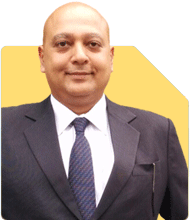
Dr Karan

Dr Karan Gupta  | Answer  |Ask -

International Education Counsellor - Answered on Jul 28, 2025

Dr Karan Gupta is an internationally recognised education counsellor, TEDx speaker and the founder of Karan Gupta Consulting and the Karan Gupta Education Foundation.
An alumnus of Harvard Business School, he has advised thousands of students and professionals since 1999, helping them secure admission to top global universities.
He has been honoured by the governments of India and Spain for his contributions to education and women’s empowerment.
With a global perspective shaped by his education in the US, Europe and India, he is committed to empowering individuals through education, leadership and career development.
Dr Gupta holds a bachelor’s degree in law and a master’s degree in psychology from Mumbai University.
He has completed his general management programme at Harvard.
He earned his MBA from the IE Business School, Spain, and his PhD from Ecole Superieure Robert de Sorbon, France.
... more
Asked by Anonymous - Jul 03, 2025Hindi

Career

I want to sent my son for masters studies in CS (cybersecurity or AI or Cloud) to Germany,he completed his Engineering in CS, with CGP6.8. Please suggest the best university for the said course and placement assurance. It will be also appreciated if could name few agency who can help to support for documentation to get VISA & Admission.

Ans: 1. Eligibility & Profile:
• CGPA 6.8 is low for top public universities in Germany, but some applied science universities (HAW/FH) may still accept if other documents (SOP, LOR, resume) are strong.
• Suggest applying to Universities of Applied Sciences (practice-oriented, good for jobs).
2. Courses to Target:
• Cybersecurity / AI / Cloud Computing – good demand in Germany.
• Look for programs like:
o MSc in IT Security
o MSc in Cloud Computing or Data Engineering
o MSc in AI or Data Science
3. Suggested Universities (Moderate profile fit):
• SRH Hochschule Heidelberg / Berlin
• IUBH (now IU International University)
• Hochschule Darmstadt (h_da)
These may offer programs in English and have practical learning + career services.
4. Job/Placement Support in Germany:
• No job guarantee, but applied science universities have industry links and career fairs.
• Jobs in cybersecurity and AI are in demand—German language helps for local companies.
You can contact us for more information
www.karangupta.com
Career

You may like to see similar questions and answers below
Sushil

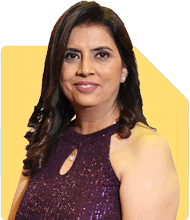
Sushil Sukhwani  | Answer  |Ask -

Study Abroad Expert - Answered on Nov 03, 2023

Asked by Anonymous - Aug 22, 2023Hindi
Listen
Career
My son is studying 3rd year B.Tech CSE. His CGPA upto end of 4th semsester is 7.90. He wishes to pursue his masters in Cyber Security in Germany. Which University is Better for Cyber Security? Whether he should opt for Technical University or Applied Science University? Whether GRE, TOEFL and German Language certification is necessary. Thanks in Anticipation.
Ans: Hello,

First and foremost, thank you for getting in touch with us. I am glad to know that your son is currently in the third year of his Bachelor’s of Technology in Computer Science Engineering degree and aspires to pursue his Master's in Cyber Security in Germany. As an answer to your query, I would like to tell you that there are a number of German universities viz., the University of Stuttgart, Ruhr University Bochum, Technical University of Munich (TUM), and University of Passau, that are renowned for the Cyber Security programs they offer. Nevertheless, your son will need to consider his own choices, the quality of the program he wishes to apply to, as well as his professional objectives when deciding on a university in Germany to pursue his Master's in Cyber Security. To answer your question as to whether your son should opt for a Technical University or an Applied Science University, I would like to tell you that programs in Cyber Security are offered by both these types of universities. However, remember that relatively more hands-on, industry-focused training is imparted by Applied Science Universities as opposed to Technical Universities that focus more on research. When deciding, I would recommend that your son takes into account his educational as well as his professional objectives.

Concerning your query as to whether GRE, TOEFL and German Language certification is necessary, I would suggest that you look into the admission prerequisites for each individual university your son is considering. Universities often require students to submit their TOEFL and GRE test scores, nevertheless, English language competency tests viz., the IELTS are also favored by certain universities. Although holding a German language certification is not a necessity, possessing a basic understanding of the language can prove advantageous for daily living in the country. In order for your son to improve his chances of getting admitted, I recommend that he investigates the admission criteria for each university he is interested in, as well as begins his exam preparation.

For more information, you can visit our website.

..Read more

Latest Questions
Ramalingam

Ramalingam Kalirajan  |11000 Answers  |Ask -

Mutual Funds, Financial Planning Expert - Answered on Jan 30, 2026

Money
Is it advisable to invest in Midcap and Smallcap ETFs in India compared to Midcap and Smallcap mutual funds? While I understand that Midcap and Smallcap mutual funds may offer higher percentage returns compared to ETFs, the main issue is that no mutual fund consistently remains at the top in terms of returns. The best-performing mutual funds can change over time, making it necessary to monitor and switch from underperforming funds to top-performing ones regularly – a process that can be quite cumbersome and also incurs capital gains tax when exiting a fund. On the other hand, since ETFs track their respective indices, their percentage returns closely mirror those indices, eliminating the need for frequent switching or selling like in the case of mutual funds. However, I am uncertain whether keeping investments in ETFs over the long term (10 years or more) will yield returns comparable to mutual funds once capital gains tax is factored in during fund switches. Could you provide some insight into this?
Ans: I appreciate your thoughtful comparison of ETFs versus mutual funds. You are asking a very practical question and it shows good financial awareness. Let’s look at this carefully so you get clarity without confusion.

» What ETFs and index-linked products really do
– ETFs that track midcap and smallcap indices simply mirror the performance of those market benchmarks.
– There is no active management or stock picking to protect you during weak markets.
– When indices fall sharply, ETFs will fall by almost the same percentage. There is no defensive action.
– Index-linked products may seem low maintenance, but they do not adapt to market changes.

» Why actively managed midcap and smallcap mutual funds are different
– Actively managed funds have professional managers who choose stocks based on research, valuation and risk.
– They can adjust exposure to sectors and companies depending on market conditions.
– This means that in volatile phases, they can protect capital better than index trackers.
– Over long periods, learning to stay invested in well-managed funds often leads to better risk-adjusted outcomes.

» The challenge of “top performing” funds changing over time
– It is true that past performance ranking changes every year. No mutual fund stays number one forever.
– This is why selection should be based on long-term consistency, process, risk management and quality of management. Returns alone should not be the only criterion.
– A Certified Financial Planner helps you choose funds with good fundamentals, not just recent high returns.

» About monitoring and switching funds
– Frequent switching based only on short term performance is not a strong investment habit.
– Every switch can trigger capital gains tax for equity funds if sold within one year at higher short term tax rate, or after one year you still need to consider LTCG above Rs 1.25 lakh at 12.5%.
– Good investing means giving time for your chosen strategy to work unless there is a clear reason to change.

» Why ETFs are not always better for long-term goals
– Just because ETFs avoid switching does not mean they give better returns after tax. They still rise and fall strictly with the index.
– In falling markets, index trackers cannot reduce risk, but actively managed funds can.
– Even though ETFs may look simple, they can lead to larger drawdowns when markets are weak since they cannot adapt.
– In the long term, protecting capital during weak phases is as important as chasing returns.

» When actively managed funds make sense in midcap and smallcap space
– If you have a long-term horizon (10 years or more), actively managed funds can add value through stock research and risk calibration.
– They aim for better risk-adjusted returns over full market cycles, not just bull phases.
– With a CFP’s guidance, you can build a diversified portfolio that balances midcap, smallcap and broader equity exposure without frequent tax-triggering switches.

» Practical investor behaviour perspective
– ETFs can make investing easy, but easy does not always mean better outcomes.
– Investors often buy ETFs and then fail to rebalance or adjust when markets change.
– With actively managed funds, the fund manager’s decisions complement your long term holding discipline and take some burden off you.

» Final Insights
– Avoid choosing investments just by how they are labelled (ETF or mutual fund). Look at what they actually do in markets.
– For midcap and smallcap exposure over 10 years, actively managed funds tend to offer better alignment with long-term goals and risk control than index ETFs.
– The idea that ETFs avoid switching costs is true, but it is not a strong enough reason to ignore the flexibility and risk management that active funds provide.
– Tax impact matters, and with wise planning you can manage gains efficiently without frequent switches.

Best Regards,

K. Ramalingam, MBA, CFP,

Chief Financial Planner,

www.holisticinvestment.in

https://www.youtube.com/@HolisticInvestment

...Read more

Ramalingam

Ramalingam Kalirajan  |11000 Answers  |Ask -

Mutual Funds, Financial Planning Expert - Answered on Jan 30, 2026

Money
I have invested Rs. 50000 in Motilal Oswal Midcap Fund and another Rs. 50000 in HDFC Flexicap Fund in July 2025 and while the former is always in red the latter is giving around 4- 5% return. Should I continue to remain invested in them or would you suggest switching to a a different fund.
Ans: First, I appreciate your discipline in investing and reviewing your funds soon after you started. That habit itself is a strong pillar of long-term financial success.

» Understanding your current investment situation
– You invested Rs. 50,000 in an actively managed mid-cap fund (Motilal Oswal Midcap Fund) in July 2025
– You also invested Rs. 50,000 in a flexi-cap equity fund (HDFC Flexicap Fund) at the same time
– The mid-cap fund is currently showing negative returns
– The flexi-cap fund is showing around 4–5 percent return

» Why performance can differ between funds
– Mid-cap funds tend to be more volatile, especially over short periods
– Early investment performance is not a reliable signal of future outcomes in equity funds
– Actively managed funds can differ significantly based on stock picks, sector bets and market cycles
– Equity funds need time (typically 5+ years) to smooth out ups and downs

» What to assess before deciding to continue or switch
– Time horizon: How long can you stay invested? Equity should ideally be for medium to long term (5 years or more)
– Risk appetite: Mid-cap funds swing more than diversified equity funds and need higher risk tolerance
– Fund objectives and style: Does the fund’s approach match your goals and conviction?
– Consistency of performance: Compare returns over multiple periods (1 year, 3 years, 5 years) relative to peers, not just since inception
– Fund manager experience: Long-term funds often benefit from stable and experienced management

» Should you remain invested or switch? (Practical assessment)
– For the mid-cap fund showing negative returns early:

Equity markets can move up and down in the short term. A few months of red should not be the sole reason to exit if your time horizon is 5 years or more.

If your comfort with volatility is low, consider shifting part or all of the amount to a less volatile equity category or balanced equity oriented option.
– For the flexi-cap fund with modest positive return:

Flexi-cap funds dynamically adjust allocation across market caps and help moderate volatility.

If the fund continues to align with your risk and goals, holding it makes sense.
– Do not make decisions based on short-term returns alone. Give equity adequate time to perform.

» Why actively managed funds serve you better in your case
– Market benchmarks (like index funds) simply mirror market movements without risk management choices. In falling phases, index funds have no active decision to protect capital.
– Actively managed funds can take defensive steps when markets weaken, and reallocate to sectors or stocks with better risk-reward prospects.
– For individual investors, this active oversight brings discipline and better behavioral support, especially in turbulent markets.

» How to decide if switching is needed (Step by step)
– Re-evaluate the mid-cap fund’s long-term prospects rather than recent performance
– Compare its performance with similar actively managed mid-cap peers, not the index
– If you find its strategy, risk profile or management lacking, consider a more diversified actively managed equity option suitable for your horizon
– Avoid switching too frequently, as this can erode returns and incur costs

» Final Insights
– Stay invested if your time horizon is 5 years or more and you can accept volatility
– Early red in mid-cap is not a reason by itself to exit, but do assess comfort level
– Actively managed equity funds offer better risk management than passive index approaches
– Periodic review every 12–18 months, not monthly, should guide your decisions

Best Regards,

K. Ramalingam, MBA, CFP,

Chief Financial Planner,

www.holisticinvestment.in

https://www.youtube.com/@HolisticInvestment

...Read more

DISCLAIMER: The content of this post by the expert is the personal view of the rediffGURU. Investment in securities market are subject to market risks. Read all the related document carefully before investing. The securities quoted are for illustration only and are not recommendatory. Users are advised to pursue the information provided by the rediffGURU only as a source of information and as a point of reference and to rely on their own judgement when making a decision. RediffGURUS is an intermediary as per India's Information Technology Act.

Close  

You haven't logged in yet. To ask a question, Please Log in below
Login

A verification OTP will be sent to this
Mobile Number / Email

Enter OTP
A 6 digit code has been sent to

Resend OTP in120seconds

Dear User, You have not registered yet. Please register by filling the fields below to get expert answers from our Gurus
Sign up

By signing up, you agree to our
Terms & Conditions and Privacy Policy

Already have an account?

Enter OTP
A 6 digit code has been sent to Mobile

Resend OTP in120seconds

x