Home > Career > Question
Need Expert Advice?Our Gurus Can Help

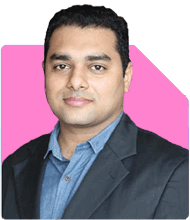
Radheshyam

Radheshyam Zanwar  |6904 Answers  |Ask -

MHT-CET, IIT-JEE, NEET-UG Expert - Answered on Jul 19, 2025

Radheshyam Zanwar is the founder of Zanwar Classes which prepares aspirants for competitive exams such as MHT-CET, IIT-JEE and NEET-UG.
Based in Aurangabad, Maharashtra, it provides coaching for Class 10 and Class 12 students as well.
Since the last 25 years, Radheshyam has been teaching mathematics to Class 11 and Class 12 students and coaching them for engineering and medical entrance examinations.
Radheshyam completed his civil engineering from the Government Engineering College in Aurangabad.... more

Gowtham Question by Gowtham on Jul 19, 2025Hindi

Career

For a reason why you prefer ECE instead of enlarging developing computer course?

Ans: ECE is a traditional engineering route with flexibility, which gives you early industry entry. Go for M.Sc. Data Science if you're comfortable with the five-year duration and focused on data-driven careers. Many students are not interested in research. The aim of this five-year course is to motivate students for research work. Considering these parameters, ECE is recommended. If you are dissatisfied with our views or suggestions, the final decision will be yours as mentioned in the earlier reply.
Career

You may like to see similar questions and answers below

Latest Questions
Mayank

Mayank Chandel  |2666 Answers  |Ask -

IIT-JEE, NEET-UG, SAT, CLAT, CA, CS Exam Expert - Answered on Apr 08, 2026

Ramalingam

Ramalingam Kalirajan  |11125 Answers  |Ask -

Mutual Funds, Financial Planning Expert - Answered on Apr 08, 2026

Money
Hello Mihir : I wanted to ask about capital gain tax for the below scenario. I purchased a flat in 2021 with loan from ICICI that still has a balance of around 75 lakhs to be paid off. The property price on agreement was Rs. 1.25 Crores, while the original loan amount was around 100 lakhs. I plan to sell this property this year after 5 years of purchasing this property and may be able to get total 160 lakhs as an estimate. a) I plan to repay the loan of Rs.75 lakhs from this sale and close the loan a/c . Will I need to pay Capital gain tax If I to buy a shop for commercial use or use the money to build a house in a plot I own? If yes what are the alternatives to avoid please suggest.
Ans: You are planning correctly by reviewing tax impact before selling the property. Since the flat was purchased in 2021 and sold after 5 years, the gain will be treated as long-term capital gain.

» Loan repayment and tax impact

Repaying the outstanding loan of about Rs 75 lakhs does not reduce capital gain tax. Tax is calculated only on the difference between sale value and indexed purchase cost plus expenses.

» Buying a commercial shop

If you invest the sale proceeds in a commercial shop, you cannot claim capital gain exemption. Tax will be payable.

» Constructing a house on your own plot

If you construct a residential house on your existing plot:

– You can claim exemption under capital gain rules
– Construction must complete within 3 years from sale date
– This is the most suitable tax-saving option in your case

» Other alternative

You may also invest the capital gain amount in capital gain bonds within 6 months to reduce tax liability.

» Finally

Closing the loan gives no tax benefit. Buying a commercial property gives no exemption. Constructing a residential house can help you save capital gain tax effectively.

Best Regards,

K. Ramalingam, MBA, CFP,

Chief Financial Planner,

www.holisticinvestment.in

https://www.linkedin.com/in/ramalingamcfp/

...Read more

Ramalingam

Ramalingam Kalirajan  |11125 Answers  |Ask -

Mutual Funds, Financial Planning Expert - Answered on Apr 08, 2026

Asked by Anonymous - Feb 24, 2026Hindi
Money
Hello, I'm 46 living in own flat with my wife & 2 Kids. I don't have any loans. Monthly, I invest on the following. VPF - 39000, Sukhanya -12500, Bank RD for son - 10000 & 2500 (SIP - ICICI Pru Eq& debt). For myself - Parag flexicap - 10000,ICICI Large & midcap - 10000, canara robeco smallcap - 7000,Nippon Largecap - 3000, quant multiasset - 2000. Local jeweler - 10000. I have personal health insurance for 7.5 lakhs (apart from co provided) & term insurance of 50 lakhs. I have 28 lakhs in PF, 17 Lakhs PO MIS, 13 lakhs - PPF, NPS- 5 lakhs, Mutual funds - 6 lakhs, stocks - 7.5 lakhs. Please suggest for any changes. My goal is to build a healthy finance for family in next 5 years.
Ans: You have already built a very strong financial base for your family. Having your own house, no loans, disciplined monthly investments, PF savings, and insurance coverage at age 46 shows very good planning. This gives you a strong platform to prepare for the next 5 years confidently.

» Overall financial strength assessment

– You have good diversification across PF, PPF, NPS, mutual funds, stocks and post office schemes
– You are investing regularly for children through structured savings
– You are maintaining retirement-oriented investments like VPF and NPS
– Having both employer and personal health insurance is a strong protection step
– Term insurance is already present which supports family safety

Your financial structure is stable and moving in the right direction.

» Review of monthly investment structure

Your monthly investments are well spread. But some improvement can make them more efficient for the next 5-year goal.

– VPF contribution is excellent and builds safe retirement corpus
– Sukanya investment is strong support for daughter’s education or marriage goal
– Recurring deposits are safe but returns are moderate
– Equity and hybrid mutual fund SIPs support long-term growth
– Small allocation to multi-asset category improves diversification

However, since your target is a healthy financial position in 5 years, some shift towards growth-oriented allocation is helpful.

» Improvement suggestion for bank recurring deposits

– Recurring deposits are safe but give limited growth
– For a 5-year horizon, partial redirection towards hybrid mutual funds can improve returns
– Continue some portion for safety but reduce excess dependence

This improves growth without increasing risk too much.

» Review of gold purchase through local jeweller

Your monthly gold purchase shows disciplined saving behaviour. That is very positive.

But there are practical concerns:

– Jewellery has making charges
– Resale value is lower
– It does not generate income
– Storage risk exists

Instead of jewellery-heavy allocation:

– Reduce monthly jewellery purchase gradually
– Redirect part of that amount towards diversified mutual funds

This improves liquidity and growth.

» Review of mutual fund portfolio structure

Your mutual fund selection already covers multiple categories.

Strength areas:

– Flexi category supports diversification
– Large and mid category supports balanced growth
– Small category supports long-term wealth creation
– Multi-asset category supports stability

However, for a 5-year timeline:

– Slight increase in hybrid category allocation will improve stability
– Avoid increasing exposure further in small category now
– Continue disciplined SIP without frequent switching

This helps reduce volatility during market correction periods.

» Retirement readiness progress

Your retirement bucket already includes:

– PF corpus
– PPF savings
– NPS investment
– Equity mutual funds
– Stocks allocation

This combination is strong.

But one important improvement is needed:

– Increase NPS contribution gradually if possible
– Continue VPF contribution consistently

These steps strengthen retirement income stability.

» Insurance protection review

Your protection planning is good but needs strengthening.

Health insurance:

– Personal health cover of Rs 7.5 lakhs is helpful
– Increasing cover to at least Rs 15–20 lakhs total family protection is advisable

Term insurance:

– Rs 50 lakhs may be lower considering family dependency
– Increasing cover improves long-term security

Insurance is the base layer of financial planning.

» Asset allocation adjustment for next 5 years goal

To prepare a strong family financial position within 5 years:

– Continue VPF and Sukanya without change
– Reduce recurring deposit allocation slightly
– Reduce jewellery purchase allocation gradually
– Increase hybrid mutual fund exposure moderately
– Continue existing equity SIPs with discipline
– Avoid increasing small category exposure further

This improves balance between safety and growth.

» Emergency fund readiness

You already hold post office monthly income scheme and PF savings.

Still ensure:

– Maintain at least 6 to 12 months expenses in liquid form
– Keep emergency money separate from investment corpus

This protects your plan during unexpected situations.

» Finally

You already created a strong financial structure for your family. Only small adjustments are required now. Reducing jewellery exposure slightly, improving hybrid allocation, strengthening insurance protection, and continuing disciplined SIPs can help you build a healthier financial position within the next 5 years with better stability and confidence.

Best Regards,

K. Ramalingam, MBA, CFP,

Chief Financial Planner,

www.holisticinvestment.in

https://www.linkedin.com/in/ramalingamcfp/

...Read more

Ramalingam

Ramalingam Kalirajan  |11125 Answers  |Ask -

Mutual Funds, Financial Planning Expert - Answered on Apr 08, 2026

Asked by Anonymous - Mar 08, 2026Hindi
Money
Hi sir can you please suggest me any good mutual funds to invest now for good % of returns for horizon of 3 yrs. Regards
Ans: It is very good that you are planning your investment with a clear time horizon of 3 years. Having a defined time period helps in choosing the correct mutual fund categories and managing risk properly. For a 3-year goal, the focus should be on stability along with reasonable growth.

» Understanding the right approach for a 3-year horizon

– A 3-year period is considered a short to medium-term investment horizon
– Pure equity mutual funds alone may carry higher volatility in this time frame
– A mix of equity-oriented hybrid funds and selective diversified equity funds can improve balance
– The goal should be steady growth instead of chasing very high returns

Expecting very high percentage returns in 3 years is not practical. But disciplined selection can help create meaningful growth with controlled risk.

» Suitable mutual fund categories to consider now

You may consider investing across the following categories:

– Balanced Advantage Funds
These funds adjust equity exposure based on market conditions. They help reduce downside risk and improve stability.

– Aggressive Hybrid Funds
They invest mostly in equity and partly in debt. Suitable for moderate growth over 3 years.

– Large & Mid Cap Funds (actively managed)
These provide a mix of stability from large companies and growth from mid-sized companies.

– Multi Asset Allocation Funds
They invest across equity, debt and sometimes gold. This improves diversification and reduces volatility risk.

» Suggested allocation strategy for better balance

A simple allocation structure can be:

– 40% in Balanced Advantage Funds
– 30% in Aggressive Hybrid Funds
– 20% in Large & Mid Cap Funds
– 10% in Multi Asset Allocation Funds

This structure helps manage risk while still aiming for growth.

» Expected return guidance for 3 years

– Returns are market-linked and not guaranteed
– A reasonable expectation may be moderate growth rather than aggressive returns
– Trying to chase very high returns in short duration may increase risk unnecessarily

Consistency and discipline matter more than selecting aggressive options.

» Investment method matters for better results

– Prefer SIP if investing monthly
– Prefer staggered investment if investing lump sum
– Review portfolio once every 6–12 months
– Avoid frequent switching between funds

Regular monitoring improves outcome quality.

» Tax awareness before investing

If equity-oriented mutual funds are sold within 3 years:

– Short-term capital gains taxed at 20%

If held beyond 1 year but within your 3-year window planning, taxation should still be considered while exiting.

Planning exit timing carefully can improve net returns.

» Finally

For a 3-year horizon, the correct strategy is balance between safety and growth. A combination of hybrid and diversified actively managed equity funds is more suitable than aggressive equity-only exposure. Staying disciplined with allocation and review will improve the probability of achieving a good outcome.

Best Regards,

K. Ramalingam, MBA, CFP,

Chief Financial Planner,

www.holisticinvestment.in

https://www.linkedin.com/in/ramalingamcfp/

...Read more

Ramalingam

Ramalingam Kalirajan  |11125 Answers  |Ask -

Mutual Funds, Financial Planning Expert - Answered on Apr 08, 2026

Money
I have SIP In these mutual funds HDFC Nifty Next 50 Index FUND -- 6.5K , SBI ELSS TAX SAVER-- 3K, UTI NIFTY 50-- 6.5K, MIRAE ASSET ELSS -- 3K, BANDHAN ELSS -- 3K, PARAG PARIKH FLEXI CAP -- 5K, CANARA ROBECO ELSS--3K, AXIS ELSS-- 3K I THIK MY PORTFOLIO IS OVER DIVERSIFIED. PLEASE SUGGEST WHICH ONE TO CONTUNUIE AND WHICH ONE TO STOP. THANKS
Ans: You are doing a very good job by investing regularly through SIP. Also, you have taken steps for tax saving and long-term wealth creation together. Your observation that the portfolio is over diversified is correct. This awareness itself is a strong step towards better planning.

Your portfolio currently has multiple tax saving funds and two index funds. Too many funds in the same category can reduce portfolio strength instead of improving it.

Here is a structured review and suggestion.

» What is happening in your current portfolio

– You are investing in two index-based large cap funds
– You are investing in four tax saving equity funds
– You are investing in one flexi cap fund

This creates overlap because many funds hold similar large companies.

Instead of improving returns, this spreads your investment too thin.

» Why too many tax saving funds is not required

– Only one tax saving fund is enough for Section 80C purpose
– Holding four tax saving funds creates duplication
– Monitoring performance becomes difficult
– Portfolio clarity reduces

Keeping one strong tax saving fund is normally sufficient.

» Disadvantages of index funds in your portfolio

Since you already hold index funds, it is important to understand their limitations.

– Index funds always give market-level returns only
– They cannot protect during market fall
– They cannot avoid weak companies inside the index
– They do not generate extra performance above benchmark
– No active decision making during changing market conditions

In India, markets are still evolving. Active fund management can capture opportunities better across sectors and market cycles.

Actively managed funds try to:

– select strong companies
– reduce exposure to weak sectors
– adjust portfolio during volatility
– aim to generate better-than-market returns over time

Because of this, active funds are usually more suitable for long-term wealth creation.

» Role of flexi cap fund in your portfolio

Your flexi cap investment is a strong component.

This category can:

– invest across large companies
– invest in mid-sized companies
– invest in emerging companies
– shift allocation based on market conditions

It provides flexibility and balance.

Continuing this category is a good decision.

» Suggested portfolio correction strategy

You can simplify your portfolio like this:

– Continue one tax saving fund (choose one consistent performer)
– Continue your flexi cap fund
– Stop both index funds gradually
– Stop remaining three tax saving funds after completing lock-in period

This will reduce duplication and improve portfolio clarity.

» Suggested ideal structure going forward

For long-term wealth creation, a simple structure works better:

– One flexi cap fund
– One large & mid cap fund
– One mid cap fund
– One tax saving fund (only if tax benefit required)

This creates balance between stability and growth.

» Importance of investing through regular plan with Certified Financial Planner support

Regular plans help investors because:

– you get guidance during market volatility
– portfolio review happens periodically
– fund changes are suggested when needed
– emotional investment mistakes reduce
– long-term discipline improves

Support from a Mutual Fund Distributor with CFP qualification ensures better monitoring and structured decisions.

» Additional improvements for 360 degree financial strength

Along with SIP restructuring, also check:

– emergency fund equal to 6 months expenses
– adequate family health insurance
– pure term insurance protection
– retirement-focused SIP allocation
– yearly portfolio review

These steps make your investment journey stronger and safer.

» Final Insights

Yes, your portfolio is currently over diversified. Reducing multiple tax saving funds and stopping index exposure gradually will improve efficiency. Continuing flexi cap exposure and adding selective active diversified funds will help better long-term growth and control.

Best Regards,

K. Ramalingam, MBA, CFP,

Chief Financial Planner,

www.holisticinvestment.in

https://www.linkedin.com/in/ramalingamcfp/

...Read more

Ramalingam

Ramalingam Kalirajan  |11125 Answers  |Ask -

Mutual Funds, Financial Planning Expert - Answered on Apr 08, 2026

Asked by Anonymous - Apr 08, 2026Hindi

Money
I'm 28 years old earning 115000 monthly and investing in MFs through SIPs. I saved my emergency funds in FDs and liquid funds along with adequate health insurance hence investing mostly through SIPs. Kindly review the portfolio and suggest a change if any for a long term wealth generation. Open to a change. Parag parikh flexi cap: 15000; HDFC nifty fifty: 10000; Motilal Oswal mid cap: 8000 Tata small cap: 7000 Thank you for the support.
Ans: You have taken very strong financial steps at age 28. Maintaining emergency funds in FDs and liquid funds, having health insurance in place, and investing consistently through SIPs shows maturity and discipline. This creates a powerful base for long-term wealth creation.

Your current monthly SIP total of Rs 40,000 is also very healthy compared to your income of Rs 1,15,000. This is a strong savings ratio.

» Portfolio structure assessment

Your portfolio currently has exposure across major market segments:

– Large-cap exposure through one large-cap oriented fund
– Flexi-cap exposure through one diversified strategy fund
– Mid-cap exposure through one mid-sized companies fund
– Small-cap exposure through one emerging companies fund

This is a well-diversified structure suitable for long-term wealth creation.

At age 28, your risk-taking capacity is naturally high. So having mid-cap and small-cap exposure is appropriate.

However, allocation balance can be slightly improved.

» Allocation improvement suggestion

Your present allocation is roughly:

– Large-cap segment: moderate allocation
– Flexi-cap segment: strong allocation
– Mid-cap segment: strong allocation
– Small-cap segment: meaningful allocation

For long-term wealth creation, a better structure could be:

– Large-cap oriented funds: 25% to 30%
– Flexi-cap funds: 35% to 40%
– Mid-cap funds: 20% to 25%
– Small-cap funds: 10% to 15%

Currently your small-cap exposure is slightly on the higher side relative to stability needs over long horizons.

Small-cap funds generate strong returns but also create volatility. Reducing this slightly and strengthening flexi-cap exposure improves long-term comfort.

» About your large-cap index allocation

You are currently investing in a large-cap index-based strategy. While index investing looks simple, it has certain limitations when compared with actively managed funds.

Disadvantages of index-based investing:

– No ability to avoid weak companies in the index
– No flexibility during market corrections
– Cannot increase exposure to emerging opportunities
– Always mirrors market ups and downs fully
– No active risk management during crises

Benefits of actively managed large-cap strategies:

– Fund managers select quality businesses
– Poor performers can be removed actively
– Better downside protection historically
– Tactical allocation improves returns over cycles
– More suitable for wealth creation in Indian markets where active management still adds value

So gradually shifting from index-based exposure towards actively managed large-cap strategy can improve portfolio efficiency over time.

» SIP strategy strength

Your SIP mix already supports long-term compounding because:

– Exposure across market caps exists
– Exposure across investment styles exists
– Equity allocation suits your age
– Emergency funds already secured separately

This combination supports wealth creation over 12 to 15 years horizon.

If you continue this discipline with annual SIP increase of even 8% to 10%, your long-term corpus potential improves significantly.

» Additional strategic suggestions for 360-degree planning

Along with SIP continuation, consider strengthening these areas:

– Increase SIP amount every year with salary growth
– Maintain emergency fund equal to at least 6 months expenses
– Ensure adequate term life insurance coverage (minimum 15 to 20 times annual income)
– Continue health insurance independent of employer coverage
– Start retirement-specific allocation early through long-term equity exposure
– Keep separate goal-based investments for marriage, house, children, travel etc if required later

These steps make your plan stronger and more structured.

» Tax awareness for future planning

When redeeming equity mutual funds:

– Gains above Rs 1.25 lakh after one year taxed at 12.5%
– Gains within one year taxed at 20%

So long-term holding is always beneficial.

» Finally

You already have a strong portfolio structure and excellent investment discipline at a young age. Only small allocation adjustments and replacement of index exposure with actively managed large-cap strategy can improve long-term outcomes further.

Continue SIP consistency. Increase investment yearly. Stay invested during market volatility. These three actions alone can build significant wealth over time.

Best Regards,

K. Ramalingam, MBA, CFP,

Chief Financial Planner,

www.holisticinvestment.in

https://www.linkedin.com/in/ramalingamcfp/

...Read more

Ramalingam

Ramalingam Kalirajan  |11125 Answers  |Ask -

Mutual Funds, Financial Planning Expert - Answered on Apr 07, 2026

Asked by Anonymous - Mar 27, 2026Hindi

Money
35 male earning 100000 per month home loan outstanding principal 1080000 paying emi 21300 tenure 5.5 yrs still there my savings ppf monthly 10000 ssy for my daughter 10000 monthly mf 10000 nps 3500 fd 160000 as emergency fund rd 8000 monthly for daughter school fees Monthly house expense 20000..my overall savings as of now ppf 4.5 lakh mf 1.5 lakh nps 2.5 lakh ssy 3lakhs epf 9.6 lakh my wife have share worth 4.5 lakhs.. Am i in the right path i have a 4 yr old daughter i have to save for her education and marriage .. Kindly suggest what more i can add
Ans: You are doing many things correctly for your age of 35. Your discipline in saving across multiple areas like retirement, daughter’s future, and emergency fund shows strong financial responsibility. With income of Rs 1,00,000 per month and structured savings already running, you are clearly on the right path.

Let me review your situation and guide what more can be added for your daughter’s education, marriage, and your long-term stability.

» Present Financial Strengths

– You already maintain retirement savings through EPF, NPS, and PPF
– You are saving separately for your daughter through SSY and RD
– You have mutual fund exposure for long-term wealth creation
– You maintain an emergency fund of Rs 1.6 lakh
– Your home loan balance is manageable and tenure left is only 5.5 years
– Your monthly household expense is controlled at Rs 20,000
– Your wife also holds investments worth Rs 4.5 lakh

This is a very balanced foundation for a young family.

Your total long-term retirement-oriented assets already include:

– EPF Rs 9.6 lakh
– PPF Rs 4.5 lakh
– NPS Rs 2.5 lakh
– Mutual fund Rs 1.5 lakh

This gives a strong starting retirement base.

» Emergency Fund Adequacy

Your emergency fund should ideally cover 6 months of expenses plus EMI.

Currently:

– EMI Rs 21,300
– Expenses Rs 20,000

So required safety buffer is around Rs 2.5 lakh.

You already have Rs 1.6 lakh. This is good. Increase it slowly to Rs 2.5 lakh and then stop adding more.

» Home Loan Strategy

Only 5.5 years left is excellent progress.

Continue EMI as planned.

Avoid prepayment unless:

– bonus income available
– or emergency fund already completed
– or retirement investments are running smoothly

Because your interest burden is already reducing.

» Daughter Education Planning

Your daughter is 4 years old. Education goal is about 14 years away. This is a long-term opportunity window.

Currently you are investing:

– SSY Rs 10,000 monthly
– RD Rs 8,000 monthly

SSY gives safety but limited growth. RD is mainly short-term support for school expenses.

For higher education planning:

Increase mutual fund SIP gradually by another Rs 5,000 to Rs 8,000 monthly dedicated only for education goal.

This will create strong growth over 14 years.

» Daughter Marriage Planning

Marriage goal is long-term and flexible.

SSY already supports this partially.

Instead of depending fully on SSY:

Add a separate mutual fund SIP of about Rs 3,000 to Rs 5,000 monthly in your wife’s name for marriage planning.

This improves diversification and flexibility.

» Retirement Planning Status

Your retirement investments already include:

– EPF
– PPF
– NPS
– Mutual fund SIP

This combination is excellent.

However retirement planning works best when equity exposure increases slowly over time.

Increase mutual fund SIP from Rs 10,000 to Rs 15,000 gradually over next 12 months if income allows.

This will significantly improve retirement strength.

» Insurance Protection Check (Very Important)

For a single-income family with child responsibility, protection is critical.

Ensure you have:

– pure term insurance covering at least Rs 1 crore
– family floater health insurance minimum Rs 10 lakh (separate from employer policy)

Without this protection, savings plans remain incomplete.

» Tax Efficiency Strength

Your structure already includes:

– EPF
– PPF
– NPS
– SSY

This is a strong tax-efficient portfolio.

Continue maintaining this mix.

» Investment Balance Observation

Your current savings distribution is slightly tilted towards safe instruments like:

– PPF
– SSY
– RD
– EPF

These provide stability but lower long-term growth.

Mutual fund exposure should increase slowly to improve wealth creation for:

– retirement
– daughter education
– inflation protection

A gradual increase is enough. No sudden change required.

» Monthly Cash Flow Improvement Suggestion

Your monthly structured savings already include:

– PPF Rs 10,000
– SSY Rs 10,000
– MF Rs 10,000
– NPS Rs 3,500
– RD Rs 8,000

Total saving discipline is excellent.

If future salary increases happen:

Direct at least 50% increment into mutual fund SIP increase.

This single habit can transform your financial future.

» Finally

Yes, you are clearly on the correct financial path.

To strengthen your plan further:

– Increase emergency fund to Rs 2.5 lakh
– Add education-focused mutual fund SIP
– Add marriage-focused SIP in wife’s name
– Gradually increase retirement SIP contribution
– Ensure strong term insurance and health insurance coverage

With this structure, your daughter’s future and your retirement both can become financially secure and comfortable.

Best Regards,

K. Ramalingam, MBA, CFP,

Chief Financial Planner,

www.holisticinvestment.in

https://www.linkedin.com/in/ramalingamcfp/

...Read more

DISCLAIMER: The content of this post by the expert is the personal view of the rediffGURU. Investment in securities market are subject to market risks. Read all the related document carefully before investing. The securities quoted are for illustration only and are not recommendatory. Users are advised to pursue the information provided by the rediffGURU only as a source of information and as a point of reference and to rely on their own judgement when making a decision. RediffGURUS is an intermediary as per India's Information Technology Act.

Close  

You haven't logged in yet. To ask a question, Please Log in below
Login

A verification OTP will be sent to this
Mobile Number / Email

Enter OTP
A 6 digit code has been sent to

Resend OTP in120seconds

Dear User, You have not registered yet. Please register by filling the fields below to get expert answers from our Gurus
Sign up

By signing up, you agree to our
Terms & Conditions and Privacy Policy

Already have an account?

Enter OTP
A 6 digit code has been sent to Mobile

Resend OTP in120seconds

x