Need Expert Advice?Our Gurus Can Help
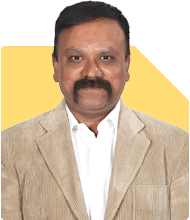
Dr Dipankar

Dr Dipankar Dutta  |1901 Answers  |Ask -

Tech Careers and Skill Development Expert - Answered on Aug 22, 2026

Dr Dipankar Dutta is an associate professor in the computer science and engineering department at the University Institute of Technology, the University of Burdwan, West Bengal.
He has 27 years of experience and his interests include AI, data science, machine learning, pattern recognition, deep learning and evolutionary computation.
Aside from his responsibilities at the college, he also delivers lectures and conducts webinars.
Dr Dipankar has published 25 papers in international journals, written book chapters, attended conferences, served as a board observer for WBJEE (West Bengal Joint Entrance Examination) exams and as a counsellor for engineering college admissions in West Bengal. He helps students choose the right college and stream for undergraduate, masters and PhD programmes.
A senior member of the Institute of Electrical and Electronics Engineers (SMIEEE), he holds a bachelor's degree in engineering from the Jalpaiguri Government Engineering College and a an MTech degree in computer technology from Jadavpur University.
He completed his PhD in engineering from IIEST, Shibpur (formerly BE College).... more
Dev Question by Dev on Aug 20, 2026
Career

Hello, I am confused between Web development and Ai Ml. Which should I learn first between these two which is more necessary to get a good sustainable career, fast income whether a full time job or freelance project. I am confused because I need money whether full time or freelance role main thing to have a good income source so which to choose please help me.

Ans: What is your age and qualification?
Asked on - Sep 06, 2026 | Answered on Sep 08, 2026
Sir I have done MCA , so I am confused what should I chose web development or Ai ml
Ans: You should choose AI ML, but the market is very competitive.
Career

You may like to see similar questions and answers below

Nayagam P

Nayagam P P  |12559 Answers  |Ask -

Career Counsellor - Answered on Jan 22, 2026

Career
Hello, I am 25 years old have completed MCA in 2024, I have no experience in IT, I want to go in IT but because of current Layoffs i fear if same situation could happen with me, and Because of AI my web development field can be overtaken by AI, so I am worried about it what to do should I pursue IT or should I change my career or should I learn Ai, machine learning, cloud please guide me what to do so that I can have a good career and a good earning so that I can give myself and my family a good life please guide me
Ans: Dev, Your Fear vs. Reality: India's IT sector demand reached 1.8 million roles in 2025 (16% growth); MCA graduates show 71% employability—your qualification is valued. Web development isn't disappearing; it's transforming: AI automates routine coding while developers become "AI managers" solving complex problems, requiring you to develop AI literacy alongside coding skills. Optimal Strategy: Pursue IT immediately but strategically specialize in emerging technologies (AI/ML, Cloud Engineering, DevOps). Entry-level AI/ML roles command Rs.6–8 LPA rising to Rs.20–50 LPA for specialists; traditional web development enters at Rs.4–6 LPA with slower progression. India's AI market projects 39% job growth with 30–35% salary premiums for Generative AI and MLOps specialists. Action Plan: (1) Apply aggressively to IT companies offering AI/ML or Cloud projects—largest hiring surge; (2) During first role (12–18 months), simultaneously earn foundational AI certifications (AWS, GCP, TensorFlow) costing Rs.30,000–50,000; (3) Transition to emerging tech role leveraging combined MCA + AI credentials within 24 months. This pathway eliminates your vulnerability to AI disruption while capturing Rs.15–25 LPA earning potential within 3–5 years. Family security depends on your specialization trajectory, not IT industry fear. All the BEST for Your Prosperous Future!

Follow RediffGURUS to Know More on 'Careers | Money | Health | Relationships'.

..Read more

Latest Questions
Dr Nagarajan J S K

Dr Nagarajan J S K   |3310 Answers  |Ask -

NEET, Medical, Pharmacy Careers - Answered on Sep 15, 2026

Career
Namastai sir mai aapasai yaha puchana chahata hu ki marai pass MHT CET exama kai leai sirf 90 din hai aour mai abataka aasi koi khasa padhai nahi ki jasi karani chahiye thi vaiseai sirf tution jata hu vo jo bolatai hai vo sunta hu lekha leta hu jo lekhana padata hai vo aour fira bahi routine shuru hai mera aor exama kai leai to bachai hai sirf 90 dina to app batao agara mai aajasai mana lagakara 8 ya 9 ghantai ki padhai shuru karu to in 90 dina mai muzai 200 outof MHT CET exama mai kitanai mark mila sakatai hai real real batao mai pura ka pura aaapnpar trust karakara yaha question pucha raha hu
Ans: HI ABHISHEK,
GREETINGS FROM THE REDIFFGURUS!

Hi,

You can achieve a score of 200/200!

Before addressing your query, I noticed you didn’t mention whether you're focusing on Engineering or Pharmacy.

If you’re aiming for Engineering, there’s no need to worry about Biology. However, if you’re concentrating on Pharmacy, the syllabus indicates that questions will come from Chemistry, Biology, and Physics. Indirectly, it suggests that you should also have a good grasp of Math, as you need it to solve problems in Physics.

Regarding your timeline, you have 85 days left. This is the perfect time to revise subjects rather than preparing new topics. You should have reached the revision stage by now, but if not, you should aim to complete your initial preparation within the next 5-10 days.

To make your revisions more efficient, combine topics that are common in Physics and Chemistry. This will reduce your revision time and help you answer questions more effectively.

Similarly in Chemistry, you can combine hydrocarbons, alcohols, and aldehydes along with their properties and preparations.

By organizing your study materials in this way, you’ll easily reach your target.

Additionally, to help improve your focus, try practicing meditation for half an hour each day before starting your daily activities.

All the best!

...Read more

Nayagam P

Nayagam P P  |12559 Answers  |Ask -

Career Counsellor - Answered on Sep 15, 2026

Ramalingam

Ramalingam Kalirajan  |11464 Answers  |Ask -

Mutual Funds, Financial Planning Expert - Answered on Sep 15, 2026

Asked by Anonymous - Sep 14, 2026
Money
It's been 15 days since I have posted a question and still no answers. This is really pathetic. If you cant respond a basic question in a week or two then the same should be mentioned. Its really unprofessional and dissatisfying service provide by Redid gurus. Reposting for your reference, Hi expert, In 2010, I made a one-time lump-sum investment of approximately 50000k each in the following 13 funds. I have not added fresh capital to these funds since 2010: DSP-BR India TIGER Fund – Regular Plan - IDCW DSP-BR Top 100 Equity Fund – Regular Plan - IDCW Franklin India Flexi Cap Fund – Regular Plan - IDCW HSBC Large Cap Fund – Regular Plan - IDCW (Formerly L&T India Large Cap Fund / HSBC Advantage India Fund) HSBC Progressive Themes Fund – Regular Plan - IDCW Nippon India Growth Fund – Regular Plan - IDCW Nippon India Power & Infra Fund – Regular Plan - IDCW SBI Magnum Midcap Fund – Regular Plan - IDCW SBI Contra Fund – Regular Plan - IDCW (Formerly SBI Magnum Sector Funds Umbrella Contra) Sundaram Large Cap Fund – Regular Plan - IDCW Sundaram Diversified Equity Fund – Regular Plan - IDCW HDFC Infrastructure Fund – Regular Plan - IDCW Edelweiss Mid Cap Fund – Regular Plan - IDCW (Payout) Part from the above active monthly SIPs (Current Portfolio – ₹40,000/month total) I am currently investing ₹10,000 per month in each of the following 4 funds: HDFC Children's Gift Fund – Regular Plan (Growth) (Includes lock-in) Mirae Asset Large & Midcap Fund – Regular Plan (Growth) (Formerly Mirae Asset Emerging Bluechip Fund) Parag Parikh Flexi Cap Fund – Regular Plan (Growth) HDFC Multi Cap Fund – Regular Plan (Growth). Considering my current valuation in the legacy 2010 funds alongside my 40,000 monthly SIPs, what is a realistic, risk-adjusted corpus projection for 2035 (10 years) and 2040 (15 years) assuming standard equity growth rates? Also the one time payments I made should I leave those funds or reallocate? Basically which are the food funds and which arent.
Ans: You have actually done the difficult part well — you started investing early and continued your SIPs. The main issue now is not whether to invest more, but whether 13 old holdings are still needed in the portfolio.

» One correction in the old investment amount

You mentioned approximately “Rs.50,000k each”. I assume you mean around Rs.50,000 each.

If so, the original investment across 13 funds was roughly Rs.6.5 lakh. Since these investments are from 2010, the present value could be substantially higher, but the current valuation is essential before giving a proper corpus estimate.

» What I see in the legacy portfolio

The 13 old funds have a lot of overlap.

You have exposure to:

– Large-cap equity
– Mid-cap equity
– Flexi-cap/diversified equity
– Contra/value-oriented equity
– Infrastructure and thematic funds
– Sector-oriented funds

The biggest concern is not that all these funds are bad.

The concern is having too many funds doing similar jobs.

Some of these old funds may still be good investments. But a fund that was suitable in 2010 does not automatically remain the best choice in 2026.

» What should be retained

I would broadly divide the legacy holdings into three groups.

First, diversified equity categories.

– These can continue if their long-term performance, portfolio quality and fund-management consistency remain good.

Second, thematic/sector funds.

– These need more caution.

– Infrastructure, power and theme-based funds can perform very well during favourable cycles.

– But they can also go through long periods of underperformance.

– They should not form a major part of a core retirement portfolio.

Third, overlapping large-cap funds.

– Holding several large-cap funds does not necessarily give better diversification.

– There is usually considerable overlap in the underlying companies.

Therefore, the portfolio can be simplified without reducing its equity exposure.

» Your current Rs.40,000 SIP

This is actually the stronger part of your present strategy.

You are putting Rs.10,000 each into four different equity categories.

The broad structure gives you exposure to:

– Children's long-term goal
– Large and mid-sized companies
– Flexible diversified equity
– Multi-cap equity

This is much cleaner than maintaining 13 old funds.

However, even here, I would review the overlap between the diversified categories.

More funds does not mean more diversification.

» Should you immediately sell the 2010 investments?

No.

I would not recommend selling all the old investments just because they are old.

There are three things to check first:

– Current value of each fund
– Capital gains and tax impact
– Whether each fund still has a clear role in your portfolio

Since your investments are from 2010, many of them may have substantial accumulated gains.

A wholesale switch could create an unnecessary tax liability.

Also, do not judge a fund only by its current return.

Fund consistency, downside protection, portfolio quality, category performance and fund-management changes also matter.

» What I would do with the old funds

My preference would be consolidation rather than complete disruption.

– Stop fresh investment into weak or unnecessary categories.

– Retain the better diversified holdings where they still fit your asset allocation.

– Gradually exit excessive thematic/sector exposure.

– Consolidate overlapping funds.

– Redirect future SIPs towards a smaller number of well-selected categories.

This can make the portfolio much easier to monitor.

You dont need 17 funds to build a strong long-term portfolio.

» 2035 corpus expectation

There is one important limitation.

You have not provided the current market value of each of the 13 legacy investments.

Therefore, a precise projection would be misleading.

Your Rs.40,000 monthly SIP alone can become a meaningful corpus over the next 10 years if equity markets deliver reasonable long-term returns.

The existing 2010 corpus will be an additional and potentially significant contributor.

So your 2035 corpus should be assessed using:

– Current value of all legacy investments
– Rs.40,000 monthly SIP
– Any future SIP increases
– Reasonable equity return assumptions
– Tax and costs at the time of withdrawals

I would use a range rather than promise a single number.

» 2040 corpus expectation

The 15-year horizon is even more favourable for equity investing.

Compounding becomes much more powerful over this period.

If you maintain Rs.40,000 monthly SIPs and increase them gradually with your income, your eventual corpus can be considerably higher than what a flat Rs.40,000 SIP would produce.

This is where your strategy can become really powerful.

The most important factor is not finding the perfect fund.

It is maintaining a disciplined investment rate for the next 10–15 years.

» IDCW option needs review

Almost all your old investments are in IDCW options.

For long-term wealth creation, IDCW is generally not my preferred structure.

IDCW payouts are not extra returns. The NAV gets adjusted when a distribution is made.

If you do not need periodic cash from these investments, the growth option is generally more suitable for a long-term accumulation objective.

But do not switch blindly.

First check the current value, accumulated gains and tax impact.

» A better portfolio structure

Instead of maintaining 13 legacy funds plus 4 SIP funds, I would aim for a simpler structure.

– Core diversified equity allocation

– Large and mid-cap exposure

– Multi-cap/flexi-cap exposure

– Limited mid-cap exposure where suitable

– Limited thematic exposure, only if there is a clear reason

– Separate debt/PPF/FD allocation for stability and near-term goals

This gives you a much clearer portfolio.

» One more important point

Your Children's Fund has a lock-in.

Therefore, that investment should be linked specifically to the child's goal and the required year of money.

As the goal approaches, gradually reducing equity exposure becomes important.

Do not remain 100% equity just because the investment has performed well historically.

» My overall assessment

Your investing discipline since 2010 is a big positive.

The portfolio does not look like something that needs to be completely thrown away.

It needs cleaning.

I would rate the situation like this:

– Long-term investing discipline: Strong
– Equity exposure: Good
– Number of funds: Too many
– Category overlap: High
– Thematic exposure: Needs review
– IDCW usage: Needs review
– Current SIP structure: Reasonably well organised
– Need for consolidation: High

The next step should be a fund-by-fund assessment of the 13 legacy holdings, but without looking only at past returns.

If you provide the current value of each of those 13 investments, I can classify them into “Continue”, “Hold but gradually consolidate” and “Consider exiting”, while also assessing the likely 2035 and 2040 corpus more meaningfully.

» Final Insights

You do not have a bad portfolio.

You have an old portfolio that has accumulated too many moving parts over 16 years.

That is actually a much easier problem to solve.

I would avoid unnecessary churning, protect the benefit of your old investments, control taxation, simplify overlapping holdings and continue the Rs.40,000 SIP with periodic increases.

With a 10–15 year horizon, disciplined investing and a cleaner portfolio, you have a good opportunity to build a substantial corpus.

Best Regards,

K. Ramalingam, MBA, CFP,
AMFI-Registered MFD – ARN 4188
www.holisticinvestment.in
https://www.linkedin.com/in/ramalingamcfp/

...Read more

Ramalingam

Ramalingam Kalirajan  |11464 Answers  |Ask -

Mutual Funds, Financial Planning Expert - Answered on Sep 15, 2026

Asked by Anonymous - Sep 14, 2026
Money
Hi I'm 34 yo working female. Employed in central government earning 51k pm inhand. I hv around 8L in mf, 1.4L in stocks, 3L in ppf, 4.7L in fds n rd...I have another 4L liquid cash available for investment, which I want to use to generate monthly income without locking in, so that it's accessible incase of emergency What are my options?
Ans: You have built a good base already, with MF, PPF, FDs/RD, stocks and liquid cash. The key is to separate emergency money from money meant for monthly income.

» First priority – emergency fund

Since you are a central government employee with regular income, your job gives you some stability. Still, keep a proper emergency reserve.

– From the Rs.4 lakh available, I would first keep around 3–6 months of essential expenses in a highly liquid bank deposit/savings arrangement.

– This portion is not for generating returns. Its job is to be available immediately when required.

– Your existing FDs/RD can also form part of the emergency reserve, depending on their maturity and withdrawal conditions.

» For monthly income without a lock-in

For the remaining amount, a short-duration debt-oriented mutual fund can be considered.

– It can provide better flexibility than putting the entire amount into a long-term FD.

– You can use a systematic withdrawal facility when you actually need regular cash flow.

– There is no fixed monthly income guarantee. The withdrawal should be planned based on your requirement and the portfolio value.

– Debt funds can also have some market-related movement, so they are not the same as a bank FD.

Another option is a sweep-in/sweep-out FD or a suitable short-term bank deposit.

– This gives easy access to money.

– Returns are generally more predictable than debt funds.

– However, the interest may not be as attractive as some other options, and premature withdrawal conditions need to be checked.

» Do not chase high monthly income

This is important.

Rs.4 lakh cannot safely generate a large monthly income while also preserving the capital forever.

If someone promises a high fixed monthly return with easy liquidity, be careful.

Your main objective should be:

– Capital safety
– Easy access during emergencies
– Reasonable return
– Tax efficiency
– Gradual wealth creation

» Your overall portfolio needs some structure

You currently have approximately Rs.17 lakh across MF, stocks, PPF, FDs/RD and the additional liquid cash.

Your portfolio is already reasonably diversified.

But I would not put the entire Rs.4 lakh into an income-producing investment.

A better approach may be:

– Keep an emergency reserve separately.

– Use only the surplus portion for monthly income.

– Continue long-term MF investments for wealth creation.

– Keep PPF as a long-term debt component.

– Avoid increasing direct stock exposure unless you have the time and knowledge to monitor it.

» One important point about monthly withdrawals

If your actual need is only occasional access to money, do not create a compulsory monthly withdrawal.

Instead, keep the money invested and withdraw only when required.

This gives your corpus more opportunity to grow.

If you genuinely need a fixed monthly amount, then a planned withdrawal strategy can be considered after checking your expenses, existing SIPs and future goals.

» 360-degree view

At age 34, your biggest advantage is time.

Your Rs.8 lakh MF portfolio can potentially become a much larger retirement corpus if you continue investing for the next 20–25 years.

So I would not convert a large part of your portfolio into an income-focused portfolio at this stage.

Your monthly salary should ideally fund your regular expenses, while investments should primarily build wealth.

The Rs.4 lakh should therefore be treated as a liquidity decision, not just a return decision.

» Final Insights

You are in a good starting position. The next step is to clearly divide your money into emergency fund, short-term needs and long-term wealth creation.

For the Rs.4 lakh, keep the emergency portion immediately accessible. The balance can be considered for a suitable short-duration debt option or flexible deposit, based on your risk level and tax position.

For a more precise 360-degree plan, your monthly household expenses, existing MF SIP amount, dependants, insurance cover and major goals such as house, marriage or retirement would be important.

Best Regards,

K. Ramalingam, MBA, CFP,
AMFI-Registered MFD – ARN 4188
www.holisticinvestment.in
https://www.linkedin.com/in/ramalingamcfp/

...Read more

Nayagam P

Nayagam P P  |12559 Answers  |Ask -

Career Counsellor - Answered on Sep 15, 2026

Career
good afternoon sir i am a student passed my class 12th from cbse in pcb stream with 85% marks now in 2027 i want to give jee mains mhtcet nd comedk exams for engineering for that i have taken nios maths as an additional subject and opted for on demand exam in feb 2027 so i wanted to ask am i eligible for the addmissions in clg through these exams with holding two 12th marksheets??? pls ans asap it would be alot helpful... sir u speicifcally tell me abt mhtcet cap eound addmissions into colleges like coep pict spit vit nd etc cause i am more focused on it
Ans: Atharv, You are potentially eligible for engineering admissions, subject to the 2027 eligibility rules and acceptance of your NIOS Mathematics marksheet as an additional qualifying subject. For MHT-CET B.E./B.Tech CAP, Mathematics is compulsory, and your CBSE and NIOS documents must collectively meet the eligibility criteria.

Admission to colleges such as COEP, PICT, SPIT, and VIT through MHT-CET CAP cannot be confirmed until the 2027 CAP brochure clarifies the policy on two-board/additional-subject combinations. Please note that COMEDK (for Karnataka private engineering colleges) has historically not accepted marksheets from two different boards; therefore, your current combination may not be eligible for COMEDK counselling. We recommend reviewing the COMEDK 2027 notification once released to confirm the latest eligibility and admission criteria.

Additionally, it is strongly advisable to apply to at least 4–5 private engineering colleges through their respective entrance exams as backup options, rather than relying solely on MHT-CET and COMEDK. All The Best for Your Prosperous Future!

Follow RediffGURUS to Know More on 'Careers | Money | Health | Relationships'.

...Read more

Ramalingam

Ramalingam Kalirajan  |11464 Answers  |Ask -

Mutual Funds, Financial Planning Expert - Answered on Sep 13, 2026

Asked by Anonymous - Sep 11, 2026
Money
I am a 25 yo looking to fix my money problems. Plsssss help!!!!!!!
Ans: At 25, you have something very valuable: plenty of time to correct money mistakes.

You do not need a perfect investment plan today. You need a simple system that you can follow every month.

» Step 1: Know Where Your Money Goes

For the next 2–3 months, track every rupee coming in and going out.

Separate expenses into:

– Essential expenses
– Family commitments
– Lifestyle spending
– EMIs and other debts
– Savings and investments

This will show where your money problem actually is.

» Step 2: Clear Costly Debt First

If you have credit-card outstanding, personal loans or other high-cost debt, give priority to clearing them.

Do not take more investment risk while expensive debt is eating into your income.

» Step 3: Build An Emergency Fund

Before increasing mutual fund investments, create an emergency reserve.

Keep around 4–6 months of essential expenses in easily accessible, safe options.

This money is not for wealth creation. It is for emergencies such as job loss, family needs or sudden expenses.

» Step 4: Start Investing Systematically

After your emergency fund and debt are under control, start a monthly SIP.

A diversified equity mutual fund portfolio can be considered for goals that are at least 7–10 years away.

Do not select funds simply because they gave high returns recently.

The investment should match your goal, time period and ability to handle market ups and downs.

» Step 5: Increase Savings With Income

At 25, your income may grow considerably over the next 10 years.

Whenever your salary increases:

– Increase your SIP.
– Avoid increasing lifestyle expenses at the same speed.
– Keep bonuses partly for financial goals.
– Build separate funds for short-term and long-term goals.

This can make a much bigger difference than trying to find the highest-return investment.

» Step 6: Protect Yourself

A 360-degree money plan also needs protection.

– Maintain adequate health insurance.
– If you have financial dependants, consider suitable term insurance.
– Keep nominees updated on your financial accounts.
– Avoid mixing insurance and investment without understanding the costs and benefits.

» Step 7: Keep Goals Separate

Create separate buckets for:

– Emergency money
– Short-term goals within 3 years
– Medium-term goals of 3–7 years
– Long-term wealth creation

Money needed soon should not be exposed heavily to equity market risk.

» Finally

At 25, even if your finances currently feel messy, you are very far from being financially stuck.

Start with three things: control expenses, remove costly debt and build an emergency fund. Then increase your long-term investments gradually.

If you share your monthly income, expenses, existing loans, savings, investments and major goals, an Investment professional can assess the complete picture and suggest a more suitable 360-degree structure.

Best Regards,

K. Ramalingam, MBA, CFP,
AMFI-Registered MFD – ARN 4188

www.holisticinvestment.in/

https://www.linkedin.com/in/ramalingamcfp/

...Read more

Ramalingam

Ramalingam Kalirajan  |11464 Answers  |Ask -

Mutual Funds, Financial Planning Expert - Answered on Sep 13, 2026

Asked by Anonymous - Sep 13, 2026
Money
Hello sir, I am a mbbs second year student (about to finish) and currently earn about 50K from a part time job. After house expenses my savings are around 20K. I have recently invested in following sip- Parag Parikh direct growth 2.5K monthly ; hdfc large and mid cap 2.5K monthly ; hdfc defense 1K monthly I wish to grow this money in 5 years to somewhat amount to afford a down payment for a house on home loan as soon as I start my pg Any suggestions about my current sip and where should I put rest of my money?
Ans: It is good that you have started investing while still in your second year of MBBS. Building the saving habit at this stage can give you a strong financial base when your medical career grows.

You currently save around Rs.20,000 every month. Your present SIP is Rs.6,000, leaving around Rs.14,000 for other financial priorities.

» Your 5-Year House Goal

A 5-year period is relatively short for an equity-heavy portfolio, especially when the money is specifically required for a house down payment.

Your PG admission and career transition may also bring large expenses. So, the house fund should not depend entirely on equity market returns.

I would suggest keeping the house down-payment goal separate from your long-term wealth creation.

– Money required within 5 years: moderate-risk investments with increasing debt allocation as the goal approaches.

– Money required after 10 years: equity-oriented mutual funds can have a larger role.

» Review of Your Existing SIPs

Your portfolio has three different exposures:

– A diversified equity fund gives broad exposure and can remain a core long-term holding.

– A large and mid-cap fund can also be useful for long-term wealth creation.

– A defence-sector fund is a thematic investment. It can be more volatile because its performance depends heavily on one sector.

For a 5-year house goal, I would not make the thematic fund a major part of your savings. You may consider keeping the exposure limited and directing fresh money towards diversified investments.

» Direct Plan Vs Regular Plan

You are currently using direct mutual fund plans. Direct plans have a lower expense ratio because there is no distributor commission.

However, for a young investor starting his financial journey, the service and review support available through an MFD can be valuable.

A regular plan through an AMFI-registered MFD can provide:

– Portfolio review and rebalancing support.

– Help in matching investments with your changing goals.

– Guidance when markets fall sharply.

– Assistance with nominations, transactions and documentation.

– Review when your income changes substantially after MBBS and during PG.

The cost difference should therefore be evaluated along with the service you actually receive. If you are comfortable selecting, monitoring and reviewing everything yourself, direct plans can be suitable. Otherwise, regular plans through an MFD can offer useful ongoing support.

» Where To Put The Remaining Rs.14,000

I would not immediately put the entire balance into equity SIPs.

Your first priority should be an emergency reserve. Since you are studying and working part-time, your income may change during PG.

You can divide the remaining savings broadly into:

– Rs.8,000–Rs.10,000 towards a safe house/PG reserve.

– Rs.4,000–Rs.6,000 towards additional long-term wealth creation.

The safe portion can be built through suitable bank deposits or high-quality short-duration debt-oriented investments, depending on your exact need and tax position.

» Do Not Take A Large Home Loan Too Early

This is especially important in your case.

Your income may rise significantly after PG, but your education and career path can also involve relocation, fees and other expenses.

Buying a house immediately after starting PG may therefore put unnecessary pressure on your cash flow.

It may be better to first build:

– Emergency fund.

– PG education fund.

– House down-payment fund.

– Adequate health insurance.

– Personal term insurance when you have financial dependants.

Then decide the home-loan amount based on your stable post-PG income.

» A Better 360-Degree Approach

Your present age gives you a major advantage: time.

Do not focus only on maximising the SIP return. Focus on building financial flexibility.

For the next few years:

– Continue disciplined monthly investing.

– Keep the house corpus separate from retirement/long-term wealth.

– Reduce dependence on the thematic fund.

– Build an emergency reserve.

– Avoid unnecessary loans and lifestyle commitments.

– Increase SIPs whenever your income rises.

Once you complete PG and your income becomes stable, you can substantially increase your equity SIP and build wealth much faster.

» Final Insights

Your starting point is quite strong for an MBBS student. The important thing now is not to chase very high returns.

Your 5-year house goal needs capital protection as the date comes closer. Your long-term wealth goal can take more equity risk.

With disciplined saving now and a meaningful SIP increase after PG, you can create a much stronger financial position before taking a home loan.

Best Regards,

K. Ramalingam, MBA, CFP,
AMFI-Registered MFD – ARN 4188

www.holisticinvestment.in/

https://www.linkedin.com/in/ramalingamcfp/

...Read more

DISCLAIMER: The content of this post by the expert is the personal view of the rediffGURU. Investment in securities market are subject to market risks. Read all the related document carefully before investing. The securities quoted are for illustration only and are not recommendatory. Users are advised to pursue the information provided by the rediffGURU only as a source of information and as a point of reference and to rely on their own judgement when making a decision. RediffGURUS is an intermediary as per India's Information Technology Act.

Close  

You haven't logged in yet. To ask a question, Please Log in below
Login

A verification OTP will be sent to this
Mobile Number / Email

Enter OTP
A 6 digit code has been sent to

Resend OTP in120seconds

Dear User, You have not registered yet. Please register by filling the fields below to get expert answers from our Gurus
Sign up

By signing up, you agree to our
Terms & Conditions and Privacy Policy

Already have an account?

Enter OTP
A 6 digit code has been sent to Mobile

Resend OTP in120seconds

x