Home > Career > Question
Need Expert Advice?Our Gurus Can Help

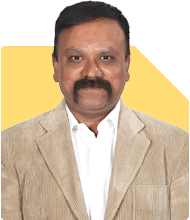
Radheshyam

Radheshyam Zanwar  |6939 Answers  |Ask -

MHT-CET, IIT-JEE, NEET-UG Expert - Answered on Feb 20, 2026

Radheshyam Zanwar is the founder of Zanwar Classes which prepares aspirants for competitive exams such as MHT-CET, IIT-JEE and NEET-UG.
Based in Aurangabad, Maharashtra, it provides coaching for Class 10 and Class 12 students as well.
Since the last 25 years, Radheshyam has been teaching mathematics to Class 11 and Class 12 students and coaching them for engineering and medical entrance examinations.
Radheshyam completed his civil engineering from the Government Engineering College in Aurangabad.... more
Aryan Question by Aryan on Feb 19, 2026Hindi
Career

Sir can i give nios exam same year of cbse exam because i git compartment or can i seat in cet if i got compartment

Ans: Yes. If you get a compartment in CBSE, you can register with NIOS in the same year (subject to their admission dates), but for CET you must clear the compartment before counselling/admission, as most CET authorities require you to have passed 12th at that stage.

Good luck.
Follow me if you receive this reply.
Radheshyam
Career

You may like to see similar questions and answers below

Nayagam P

Nayagam P P  |11031 Answers  |Ask -

Career Counsellor - Answered on Mar 13, 2025

Listen
Career
Sir I have got 155 marks in jee mains obc-ncl category uttar pradesh can I get cse or ecce in NIT
Ans: Vashu, please provide percentile please. Based on your percentile, here is, How to Predict Your Chances of Admission into NIT or IIIT or GFTI After JEE Main Results – A Step-by-Step Guide

Once the January JEE Main session results was declared, many students and JEE applicants started asking common questions about eligibility for specific institutes (NITs, IIITs, GFTIs, etc.) based on their percentile, category, preferred branch, and home state.

Providing precise admission chances for each student can be challenging. Some reputed educational websites offer ‘College Predictor’ tools where you can check possible college options based on your percentile, category, and preferences. However, for a more accurate understanding, here’s a simple yet effective 9-step method using JoSAA’s past-year opening and closing ranks. This approach gives you a fair estimate (though not 100% exact) of your admission chances based on the previous year’s data.

Step-by-Step Guide to Check Your Admission Chances Using JoSAA Data
Step 1: Collect Your Key Details
Before starting, note down the following details:

Your JEE Main percentile (Convert your percentile into All India Rank with the help of a formula available in Google).
Your category (General-Open, SC, ST, OBC-NCL, EWS, PwD categories)
Preferred institute types (NIT, IIIT, GFTI)
Preferred locations (or if you're open to any location in India)
List of at least 3 preferred academic programs (branches) as backups (instead of relying on just one option)
Step 2: Access JoSAA’s Official Opening & Closing Ranks
Go to Google and type: JoSAA Opening & Closing Ranks 2024
Click on the first search result (official JoSAA website).
You will land directly on JoSAA’s portal, where you can enter your details to check past-year cutoffs.
Step 3: Select the Round Number
JoSAA conducts five rounds of counseling.
For a safer estimate, choose Round 4, as most admissions are settled by this round.
Step 4: Choose the Institute Type
Select NIT, IIIT, or GFTI, depending on your preference.
If you are open to all types of institutes, check them one by one instead of selecting all at once.
Step 5: Select the Institute Name (Based on Location)
It is recommended to check institutes one by one, based on your preferred locations.
Avoid selecting ‘ALL’ at once, as it may create confusion.
Step 6: Select Your Preferred Academic Program (Branch)
Enter the branches you are interested in, one at a time, in your preferred order.
Step 7: Submit and Analyze Results
After selecting the relevant details, click the ‘SUBMIT’ button.
The system will display Opening & Closing Ranks of the selected institute and branch for different categories.
Step 8: Note Down the Opening & Closing Ranks
Maintain a notebook or diary to record the Opening & Closing Ranks for each institute and branch you are interested in.
This will serve as a quick reference during JoSAA counseling.
Step 9: Adjust Your Expectations on a Safer Side
Since Opening & Closing Ranks fluctuate slightly each year, always adjust the numbers for safety.
Example Calculation:
If the Opening & Closing Ranks for NIT Delhi | Mechanical Engineering | OPEN Category show 8622 & 26186 (for Home State), consider adjusting them to 8300 & 23000 (on a safer side).
If the Female Category rank is 34334 & 36212, adjust it to 31000 & 33000.
Follow this approach for Other State candidates Option also and different categories.
Pro Tip: Adjust your expected rank slightly lower than the previous year's cutoffs for realistic expectations during JoSAA counseling.

Can This Method Be Used for JEE April & JEE Advanced?
Yes! You can repeat the same steps after your April JEE Main results to refine your admission possibilities.
You can also follow a similar process for JEE Advanced cutoffs when applying for IITs.

Want to Learn More About JoSAA Counseling?
If you want detailed insights on JoSAA counseling, engineering entrance exams, and preparation strategies, check out EduJob360’s 180+ YouTube videos on this topic!

Hope this guide helps! All the best for your admissions!

Follow RediffGURUS to Know more on 'Careers | Health | Money | Relationships'.

..Read more

Latest Questions
Ramalingam

Ramalingam Kalirajan  |11150 Answers  |Ask -

Mutual Funds, Financial Planning Expert - Answered on Apr 21, 2026

Money
I am a 43 year old, have a dependend wife & 12 yr old daughter (7 STD). Earing 2.25 L per month. Monthly expenses 80k. No debts and staying in my own flat.& 1 more flat (earn rent Rs. 28 k monthly), 2 lac as emergency fund in savings. I invested 3 lakhs in equity stocks, 23 lakhs in MF lumpsum(Current Value 32 lacs), 18 lac in FD and 10 lac in NSC. Till date my PF is 36 lacs. I pay 80 k SIP monthly (investment value 19.50 lacs and market value 25 lac), PPF 1.50 lac p.a -Current value 9 lacs, NPS 1 lac p.a -Current value 6.5 lacs, SSY 1.5 lacs p.a.( Current value 9.5 lacs) and PPF for wife 1 lacs p.a (Current value 5.50 lacs) and PPF for daughter 50k p.a.from 2023( Current value 1.73 lac) Also Family medical insurance of 10 lacs.. and myself term insurance of 50 lakhs and LIC of 10 lakhs. Also I purchased LIC Child Money back of 10 lacs and SBI smart chap 5 lacs for my daughter education. I want to retire by 50's with the total corpus of 5 cr. Is it possible with above or increase investments??
Ans: You have built a very strong financial structure already at age 43. Your disciplined SIP of Rs 80,000 monthly, multiple long-term investments, rental income and debt-free lifestyle are powerful advantages for early retirement planning before 50s.

» Present Financial Strength Overview

– Monthly income Rs 2.25 lakh
– Monthly expense Rs 80,000
– Rental income Rs 28,000 monthly
– No liabilities
– Strong PF corpus Rs 36 lakh
– Mutual fund investments growing well
– Regular SIP Rs 80,000 monthly
– PPF contributions for self, wife and daughter
– SSY contribution for daughter
– NSC and FD holdings available

This is a very balanced portfolio structure.

» Retirement Target Rs 5 Crore by Age 50

Your goal is ambitious but achievable with disciplined continuation.

Positive factors supporting success:

– high monthly SIP already running
– strong PF accumulation ongoing
– additional rental income support
– low household expense ratio
– no debt burden

These are excellent strengths.

However, timeline is short (about 7 years).

So investment efficiency becomes very important.

» Emergency Fund Needs Improvement

Currently emergency fund is Rs 2 lakh.

Recommended level:

– minimum 6 to 12 months expenses
– should be around Rs 5 to 10 lakh range

Increase this gradually for safety.

» Role of Fixed Income Investments in Your Plan

Your portfolio includes:

– FD Rs 18 lakh
– NSC Rs 10 lakh
– multiple PPF accounts

These provide stability but lower growth compared to equity mutual funds.

For early retirement goal before 50:

– some portion of future investments should move towards growth assets
– continue existing safe investments but avoid increasing them further heavily

This improves corpus growth speed.

» Mutual Fund SIP Strength is the Key Driver

Your SIP of Rs 80,000 monthly is your biggest retirement engine.

To reach Rs 5 crore comfortably:

– increase SIP yearly when income increases
– even Rs 10,000 yearly increase helps strongly
– continue long-term discipline without interruption

This creates strong compounding impact.

» Review of Insurance Planning

Current protection:

– health insurance Rs 10 lakh
– term insurance Rs 50 lakh

Suggestions:

– increase health cover if possible
– term insurance ideally should be higher considering dependent wife and child

Protection planning strengthens retirement safety.

» Child Education Policies Review

You mentioned:

– child education insurance policies already taken

Generally these plans give lower returns compared to mutual funds.

Better approach after checking surrender values:

– consider partial surrender or paid-up option
– redirect future premium savings towards mutual fund SIP for education goal

This improves long-term growth.

» Rental Income Advantage in Retirement Planning

Rental income Rs 28,000 monthly is a strong support.

This helps:

– reduce retirement dependency on corpus
– provide inflation-adjusted support over time
– improve early retirement feasibility

Very useful strength in your case.

» Action Steps to Improve Probability of Rs 5 Crore Target

Simple improvements can help:

– increase emergency fund to safer level
– increase SIP gradually every year
– avoid increasing new fixed-return investments
– review child education insurance policies
– strengthen health insurance cover
– maintain investment discipline for next 7 years strictly

These steps improve goal achievement chances strongly.

» Finally

Based on your current savings rate, strong SIP discipline, rental income support and low expenses, reaching Rs 5 crore by your early 50s looks achievable. Increasing SIP gradually and improving protection planning will make this target more comfortable and realistic.

Best Regards,

K. Ramalingam, MBA, CFP,

Chief Financial Planner,

www.holisticinvestment.in

https://www.linkedin.com/in/ramalingamcfp/

...Read more

Ramalingam

Ramalingam Kalirajan  |11150 Answers  |Ask -

Mutual Funds, Financial Planning Expert - Answered on Apr 21, 2026

Asked by Anonymous - Apr 11, 2026Hindi
Money
Hi gurus...I am 33yr married female. I am making the following investments monthly 1. Sip of 17000pm 2. I invest in RD to be able to deposit in my ppf account ( trying to utilise full 1.5Lakh limit) 3. Every month my contribution ( including employer contribution ) to NPS is 9670pm Since my spouse is working in pvt sector, I would like to accumulate retirement money required to lead post retirement withdrawing 1.5 lakh monthly. Also, I will need to withdraw 10-15 lakh for home buying (planning in 5-7 years), and kids education after 15-18 years requiring 20 lakhs Pls suggest if this investment plan is good for my goal or I need to make any tweaks to achieve my goals
Ans: You have already started retirement planning at age 33 and that is a very strong step. Also, you are investing regularly through SIP, PPF and NPS. This shows discipline and long-term thinking. With some adjustments, your goals can become more comfortable and achievable.
» Understanding Your Present Investment Structure
Your current monthly investments are:
– SIP investment Rs 17,000
– RD for PPF contribution up to Rs 1.5 lakh yearly
– NPS contribution (employee + employer) Rs 9,670 monthly
These three together create a solid base for retirement planning. But since you have multiple goals, allocation planning becomes important.
» Retirement Goal Requirement Reality
You want retirement income of about Rs 1.5 lakh per month.
Important points:
– retirement may be after 25 to 27 years
– inflation will increase expenses strongly
– future monthly need may be much higher than today’s value
– so retirement corpus requirement will be large
This means present SIP amount alone may not be enough over long term.
Increasing equity mutual fund exposure gradually is important.
» Home Purchase Goal in 5 to 7 Years
You plan to withdraw Rs 10 to 15 lakh for house purchase.
Current approach:
– RD supporting PPF contribution is safe
– but PPF has long lock-in period
– withdrawal flexibility is limited
Better approach:
– create a separate mutual fund investment bucket for house goal
– choose balanced allocation between safety and growth
– avoid depending only on PPF for this goal
This improves liquidity and timing comfort.
» Children Education Goal After 15 to 18 Years
Education goal of Rs 20 lakh today will increase in future.
So planning should include:
– growth-oriented mutual fund investments
– long-term SIP increase gradually
– separate goal-based investment tracking
This will help you reach education target without disturbing retirement savings.
» Role of NPS in Your Retirement Planning
NPS contribution of Rs 9,670 monthly including employer share is a strong advantage.
Benefits:
– long-term disciplined retirement saving
– tax efficiency support
– employer contribution adds extra strength
Continue this without interruption.
» Importance of Increasing SIP Every Year
Your retirement success depends mainly on equity exposure.
Recommended action:
– increase SIP amount every year with salary increase
– even small yearly increase creates big future impact
– goal-based SIP planning gives better clarity
This improves retirement confidence.
» Need for Emergency Fund Planning
Before increasing investments further, check:
– minimum 6 months household expense reserve
– kept in safe liquid investment
– separate from long-term goals
This protects your financial plan during unexpected situations.
» Simple Allocation Improvement Strategy
For stronger goal achievement:
– continue NPS contribution
– continue PPF contribution for safety portion
– increase SIP gradually for retirement goal
– create separate SIP for house purchase goal
– create separate SIP for children education goal
Goal separation improves clarity and success rate.
» Finally
Your current investment plan is a strong starting structure. But to achieve retirement income of Rs 1.5 lakh monthly along with house purchase and children education goals, increasing SIP gradually and creating separate investments for each goal will make your plan much stronger and safer.
Best Regards,
K. Ramalingam, MBA, CFP,
Chief Financial Planner,
www.holisticinvestment.in
https://www.linkedin.com/in/ramalingamcfp/

...Read more

DISCLAIMER: The content of this post by the expert is the personal view of the rediffGURU. Investment in securities market are subject to market risks. Read all the related document carefully before investing. The securities quoted are for illustration only and are not recommendatory. Users are advised to pursue the information provided by the rediffGURU only as a source of information and as a point of reference and to rely on their own judgement when making a decision. RediffGURUS is an intermediary as per India's Information Technology Act.

Close  

You haven't logged in yet. To ask a question, Please Log in below
Login

A verification OTP will be sent to this
Mobile Number / Email

Enter OTP
A 6 digit code has been sent to

Resend OTP in120seconds

Dear User, You have not registered yet. Please register by filling the fields below to get expert answers from our Gurus
Sign up

By signing up, you agree to our
Terms & Conditions and Privacy Policy

Already have an account?

Enter OTP
A 6 digit code has been sent to Mobile

Resend OTP in120seconds

x