Home > Money > Question
Need Expert Advice?Our Gurus Can Help

Senior Citizen Seeking Best Mutual Fund: Adity Birla, HDFC, DSP, or Mahindra & Mahindra?
Milind

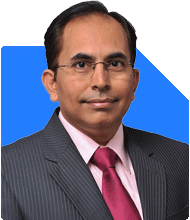
Milind Vadjikar  | Answer  |Ask -

Insurance, Stocks, MF, PF Expert - Answered on Feb 14, 2025

Milind Vadjikar is an independent MF distributor registered with Association of Mutual Funds in India (AMFI) and a retirement financial planning advisor registered with Pension Fund Regulatory and Development Authority (PFRDA).
He has a mechanical engineering degree from Government Engineering College, Sambhajinagar, and an MBA in international business from the Symbiosis Institute of Business Management, Pune.
With over 16 years of experience in stock investments, and over six year experience in investment guidance and support, he believes that balanced asset allocation and goal-focused disciplined investing is the key to achieving investor goals.... more

D Question by D on Feb 14, 2025Hindi
Listen
Money

Which is the best MF now for Sr.Citizens among the Adity Birla, HDFC and DSP or Mahindra & Mahindra, tell I can.

Ans: Hello;

Equity savings type mutual fund with low to moderate risk rating would be optimal for senior citizens for a 3-5 year horizon.

Best wishes;
DISCLAIMER: The content of this post by the expert is the personal view of the rediffGURU. Users are advised to pursue the information provided by the rediffGURU only as a source of information to be as a point of reference and to rely on their own judgement when making a decision.
Money

You may like to see similar questions and answers below

Ramalingam

Ramalingam Kalirajan  |11062 Answers  |Ask -

Mutual Funds, Financial Planning Expert - Answered on Apr 30, 2024

Listen
Money
Hi Dev, I,m a defence pensioner and 60 years old. I want to invest Rs 5 lakhs in MF for a duration of 1-3 years, please advise which MF will be better for me. Thanks
Ans: Given your investment horizon of 1-3 years and considering your age and risk profile, it's essential to prioritize capital preservation while aiming for modest returns. Here are some mutual fund options that may suit your investment needs:

Short-Term Debt Funds: These funds invest in fixed-income securities with relatively shorter maturities, providing stability and liquidity. They are suitable for investors looking to preserve capital while generating better returns than traditional savings accounts or fixed deposits. Consider investing in reputable short-term debt funds with a track record of delivering consistent returns and maintaining low volatility.
Liquid Funds: Liquid funds invest in short-term money market instruments with very high liquidity and minimal interest rate risk. They offer stability of capital and can be an excellent option for parking funds temporarily or meeting short-term financial goals. Liquid funds typically have a low expense ratio and can provide relatively higher returns compared to savings accounts or fixed deposits.
Ultra Short Duration Funds: These funds invest in fixed-income securities with short to ultra-short maturities, offering a balance between stability and yield. They can be suitable for investors with a slightly longer investment horizon of 1-3 years who are willing to take on slightly higher risk for potentially higher returns than traditional fixed deposits or savings accounts.
Arbitrage Funds: Arbitrage funds aim to generate returns by exploiting price differentials between cash and derivative markets. They offer relatively low volatility and tax-efficient returns, making them suitable for short-term investments. However, it's essential to note that arbitrage funds are subject to market risks and may not guarantee fixed returns.
Before making any investment decisions, it's advisable to consult with a certified financial planner or investment advisor who can assess your financial goals, risk tolerance, and investment horizon. They can help you select mutual funds that align with your investment objectives and provide personalized guidance based on your unique financial situation. Additionally, carefully review the fund's investment objectives, past performance, expense ratio, and risk factors before investing.

..Read more

Ramalingam

Ramalingam Kalirajan  |11062 Answers  |Ask -

Mutual Funds, Financial Planning Expert - Answered on Jul 24, 2024

Asked by Anonymous - Jul 14, 2024Hindi
Listen
Money
Which MF from SBI MF group is best in between SBI schemes?
Ans: SBI Mutual Funds offer a variety of schemes.

It's tempting to invest in top-performing best funds.

However, chasing returns may not be the best strategy.

Consistency Over Performance
Consistent Performance: Look for funds with consistent performance over the long term.

Quality of Fund Management: Choose funds managed by experienced and reputed fund managers.

Diversification: Ensure the fund aligns with your risk tolerance and investment goals.

Avoiding Costly Investment Mistakes
Consult a Professional: Seek advice from a Certified Financial Planner (CFP) or Mutual Fund Distributor (MFD).

Tailored Advice: Professionals can provide tailored advice based on your financial situation.

Long-Term Perspective: Focus on long-term growth rather than short-term gains.

Evaluating Funds
Historical Performance: Review the fund's performance over at least 5-10 years.

Expense Ratio: Check the expense ratio, as higher costs can impact your returns.

Risk Assessment: Evaluate the risk associated with the fund and ensure it aligns with your risk profile.

Final Insights
Investing in mutual funds requires careful evaluation and planning. While top-performing funds may seem attractive, focusing on consistency and quality is more important. Consulting a Certified Financial Planner or Mutual Fund Distributor can help you avoid costly mistakes and make informed investment decisions.

Best Regards,

K. Ramalingam, MBA, CFP,

Chief Financial Planner,

www.holisticinvestment.in

..Read more

Ramalingam

Ramalingam Kalirajan  |11062 Answers  |Ask -

Mutual Funds, Financial Planning Expert - Answered on Mar 06, 2025

Listen
Money
I am currently investing 28000/- in following mf . Kindly suggest me whether i am investing in right MF or not. Suggest if to be switched in to which MF HDFC LARGE AND MID CAP FUND - REGULAR PLAN - GROWTH SIP Amount 5000 HDFC NIPPON INDIA SMALL CAP FUND - GROWTH PLAN - GROWTH OPTION SIP Amount 5000 HDFC LARGE CAP FUND - REGULAR PLAN - GROWTH SIP Amount 3000 HDFC FOCUSED 30 FUND - REGULAR PLAN - GROWTH SIP Amount 3000 NIPPON INDIA POWER AND INFRA FUND- GROWTH PLAN-GROWTH OPTION SIP Amount 3000 HDFC MID-CAP OPPORTUNITIES FUND - GROWTH OPTION SIP Amount 3000 ICICI PRUDENTIAL INFRASTRUCTURE FUND - GROWTH SIP Amount 3000 INVESCO INDIA INFRASTRUCTURE FUND - GROWTH SIP Amount 3000
Ans: Your portfolio consists of multiple actively managed funds across different categories. While it has a good mix of large-cap, mid-cap, and small-cap funds, there are areas where adjustments can improve diversification and risk management.

Strengths of Your Portfolio
Your long-term investment horizon of 10 years allows for compounding and wealth creation.

You have exposure to different market caps, which provides a balance of stability and growth.

Actively managed funds can generate higher returns compared to passive funds.

Concerns in Your Portfolio
You are holding too many funds, leading to unnecessary duplication. More funds do not always mean better diversification.

Your portfolio has excessive allocation to sectoral funds, which increases concentration risk. If the sector underperforms, your returns will be affected.

Some funds have overlapping holdings, reducing the overall diversification benefit.

You have multiple funds from the same asset management company, limiting exposure to different investment styles.

Recommended Portfolio Adjustments
Retain a well-performing large & mid-cap fund instead of holding multiple funds in this category.

Maintain exposure to small-cap or mid-cap funds but avoid holding multiple funds with similar strategies.

A single focused fund is sufficient. Too many concentrated portfolios increase risk without adding significant benefits.

Reduce exposure to sector-specific funds. While sectoral funds can deliver high returns, they carry higher volatility and depend heavily on the sector’s performance. A more diversified approach is recommended.

Instead of multiple funds in the same category, consolidate into a few high-quality diversified equity funds that provide stable long-term growth.

Include a flexi-cap fund to enhance diversification and give fund managers the flexibility to invest across market capitalizations.

Final Insights
Your investment approach is well-structured, but simplifying your portfolio will improve returns and make it easier to manage.

Reducing sectoral allocation and consolidating overlapping funds will improve efficiency and stability.

A diversified and well-balanced portfolio with a mix of large-cap, mid-cap, small-cap, and flexi-cap funds will ensure long-term growth with controlled risk.

Best Regards,

K. Ramalingam, MBA, CFP

Chief Financial Planner,

www.holisticinvestment.in
https://www.youtube.com/@HolisticInvestment

..Read more

Janak

Janak Patel  |74 Answers  |Ask -

MF, PF Expert - Answered on Mar 06, 2025

Listen
Money
I am currently investing 28000/- in following mf . Kindly suggest me whether i am investing in right MF or not. Suggest if to be switched in to which MF HDFC LARGE AND MID CAP FUND - REGULAR PLAN - GROWTH SIP Amount 5000 HDFC NIPPON INDIA SMALL CAP FUND - GROWTH PLAN - GROWTH OPTION SIP Amount 5000 HDFC LARGE CAP FUND - REGULAR PLAN - GROWTH SIP Amount 3000 HDFC FOCUSED 30 FUND - REGULAR PLAN - GROWTH SIP Amount 3000 NIPPON INDIA POWER AND INFRA FUND- GROWTH PLAN-GROWTH OPTION SIP Amount 3000 HDFC MID-CAP OPPORTUNITIES FUND - GROWTH OPTION SIP Amount 3000 ICICI PRUDENTIAL INFRASTRUCTURE FUND - GROWTH SIP Amount 3000 INVESCO INDIA INFRASTRUCTURE FUND - GROWTH SIP Amount 3000
Ans: Hi Sandeep,

You have mentioned a total of 8 MF schemes for your investment of 28000 per month.
As details regarding your goal and requirement is not available, it is difficult to judge the overall portfolio from that point of view.
The schemes mentioned though are different names but will have a lot of overlap especially when you consider large cap stocks in their portfolio - HDFC Large & Mid / HDFC Large / HFDC Focused 30 and even the 3 Infra funds.

I believe the idea was to diversify your portfolio thru multiple schemes and if so, that is not really achieved.

Assuming you want to invest for over 10 year period, I suggest you keep your portfolio relatively simple with 4-5 schemes - 1 large cap (6000 in HDFC Large is ok), 1 Mid cap (6000 in HDFC Mid-cap or Motilal Oswal Midcap), 1 Small Cap (6000 in Nippon Small cap is ok) and 1 Infra (as you have shown inclination to Infra, 4000 in ICICI Pru Infra is ok) and add 1 Flexicap (6000 in Parag Parikh Flexicap which also has some overseas exposure). This will provide good diversification and less overlap.

This will provide good diversification and asset allocation across market caps.

Thanks & Regards
Janak Patel
Certified Financial Planner.

..Read more

Latest Questions
Ramalingam

Ramalingam Kalirajan  |11062 Answers  |Ask -

Mutual Funds, Financial Planning Expert - Answered on Mar 14, 2026

Money
I am 61, minimalist with no bad habits in the life style of NO PILL; NO ILL. Now, the market is down and NAV falls down. my investments are comfortably positive even in the negative market. becuase the investment started very early and unis purchased at very low price. Now, the question is should I withdraw the funds; a portion of profit and invest in the downward trend so that I will get more units and i will not loose the capital because I am planning to withdraw only the portion of the profits. Please guide me should I need to reshuffle by withdrawing and re investing ..!!
Ans: Your disciplined lifestyle and long investing journey are truly inspiring. Starting early and holding investments patiently has created a comfortable cushion for you. Even when the market is falling, your portfolio remains positive. That itself shows the power of long-term investing.

Now your question is about withdrawing profit and reinvesting during the market fall. Let us examine this carefully.

» Understanding What You Are Trying To Do

Your idea is:

– Withdraw only the profit portion
– Reinvest when NAV is lower
– Get more units
– Protect original capital

This approach looks logical on the surface. But in practice it becomes very difficult to execute consistently.

» The Challenge of Timing the Market

To succeed in this strategy two things must happen correctly.

– You must sell at the right time
– You must reinvest at the correct lower level

Predicting market movement precisely is extremely difficult. Even experienced investors struggle with this.

If markets suddenly recover after you redeem, you may lose the opportunity of further growth.

» Impact of Taxes on Withdrawal

Whenever you redeem equity mutual funds:

– Long term capital gains above Rs 1.25 lakh are taxed at 12.5%
– Short term capital gains are taxed at 20%

So withdrawing profit may trigger tax liability. This reduces the benefit of trying to buy more units.

Frequent reshuffling can quietly reduce long-term wealth.

» Your Age and Investment Objective

At 61, your goal should shift slightly.

Earlier the focus was:

– Maximum growth

Now the focus should be:

– Capital protection
– Controlled growth
– Income stability

So instead of frequent buying and selling, gradual portfolio balance is more suitable.

» A Better Approach for Your Situation

Rather than timing the market, consider this approach:

– Keep the core long-term equity investments untouched
– If equity allocation has grown very large, slowly shift small portion into safer assets
– Continue enjoying compounding from existing units purchased at low prices

This maintains growth while protecting accumulated wealth.

» Systematic Withdrawal Planning

If you need regular income later:

– You can withdraw small amounts periodically
– This reduces market timing risk
– Portfolio continues to grow while providing income

This is usually more comfortable for retired investors.

» Emotional Discipline

Your biggest strength so far has been patience.

The temptation to reshuffle during market movements often disturbs long-term success.

Many investors lose wealth not because of bad investments but because of unnecessary switching.

» Finally

Since your investments were made early and units were bought at very low prices, the best strategy is usually to stay invested and allow compounding to continue.

Avoid frequent profit booking and reinvestment based on market movements.

Instead:

– Maintain a balanced asset allocation
– Protect capital gradually
– Allow long-term equity investments to keep growing

Your disciplined journey has already created strong financial security. Preserving that strength is now more important than trying to capture short-term opportunities.

Best Regards,

K. Ramalingam, MBA, CFP,

Chief Financial Planner,

www.holisticinvestment.in

https://www.youtube.com/@HolisticInvestment

...Read more

Ramalingam

Ramalingam Kalirajan  |11062 Answers  |Ask -

Mutual Funds, Financial Planning Expert - Answered on Mar 14, 2026

Money
I am a retired doctor with 1lac pension kindly suggest to invest 30000per month
Ans: Your disciplined habit of investing even after retirement is very encouraging. With a pension of Rs 1 lakh per month, planning to invest Rs 30,000 shows that you are thinking about preserving and growing your wealth in a structured manner.

At this stage of life, the focus should be balanced between safety, regular growth, and liquidity.

» Understanding Your Financial Stage

You are a retired professional receiving steady pension income.

This means:

– Your regular expenses are already supported
– Investment goal is wealth preservation and moderate growth
– Liquidity for health and family needs is important

So the investment approach should be balanced and not aggressive.

» Emergency and Medical Reserve

Before starting monthly investment, ensure:

– At least 12 months of expenses kept in safe liquid instruments
– Adequate health insurance coverage

Medical expenses increase with age. Having a dedicated medical reserve prevents disturbance to investments.

» Balanced Investment Approach

For a retired person, full equity exposure is not suitable. But avoiding equity completely also reduces growth.

A balanced structure is ideal.

For the Rs 30,000 monthly investment:

– Around Rs 15,000 in actively managed diversified equity mutual funds
– Around Rs 10,000 in short duration or conservative debt mutual funds
– Around Rs 5,000 in gold allocation for diversification

This structure provides growth with stability.

» Importance of Actively Managed Funds

Actively managed mutual funds are suitable because:

– Fund managers actively select strong companies
– They adjust portfolio when market conditions change
– Aim to generate better returns than the market

This professional management helps investors who prefer not to monitor markets regularly.

» Investment Horizon and Liquidity

Even after retirement, investments can continue for 10 to 15 years.

So:

– Continue SIP regularly
– Review portfolio once every year
– Keep sufficient liquidity for emergencies

Avoid locking large amounts into instruments with long lock-in periods.

» Tax Awareness

If you redeem equity mutual funds:

– Long term capital gains above Rs 1.25 lakh taxed at 12.5%
– Short term gains taxed at 20%

Debt mutual fund gains are taxed as per your income tax slab.

Planning withdrawals carefully can reduce tax impact.

» Finally

Your plan to invest Rs 30,000 monthly is a strong step toward maintaining financial independence.

A balanced portfolio with equity, debt, and gold can help:

– Preserve your wealth
– Provide moderate growth
– Maintain liquidity for future needs

Regular review with a Certified Financial Planner can ensure that your investments remain aligned with your lifestyle and health needs during retirement.

Best Regards,

K. Ramalingam, MBA, CFP,

Chief Financial Planner,

www.holisticinvestment.in

https://www.youtube.com/@HolisticInvestment

...Read more

DISCLAIMER: The content of this post by the expert is the personal view of the rediffGURU. Investment in securities market are subject to market risks. Read all the related document carefully before investing. The securities quoted are for illustration only and are not recommendatory. Users are advised to pursue the information provided by the rediffGURU only as a source of information and as a point of reference and to rely on their own judgement when making a decision. RediffGURUS is an intermediary as per India's Information Technology Act.

Close  

You haven't logged in yet. To ask a question, Please Log in below
Login

A verification OTP will be sent to this
Mobile Number / Email

Enter OTP
A 6 digit code has been sent to

Resend OTP in120seconds

Dear User, You have not registered yet. Please register by filling the fields below to get expert answers from our Gurus
Sign up

By signing up, you agree to our
Terms & Conditions and Privacy Policy

Already have an account?

Enter OTP
A 6 digit code has been sent to Mobile

Resend OTP in120seconds

x