Home > Career > Question
Need Expert Advice?Our Gurus Can Help

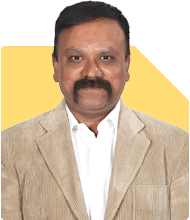
Nayagam P

Nayagam P P  |10931 Answers  |Ask -

Career Counsellor - Answered on Jul 27, 2025

Nayagam is a certified career counsellor and the founder of EduJob360.
He started his career as an HR professional and has over 10 years of experience in tutoring and mentoring students from Classes 8 to 12, helping them choose the right stream, course and college/university.
He also counsels students on how to prepare for entrance exams for getting admission into reputed universities /colleges for their graduate/postgraduate courses.
He has guided both fresh graduates and experienced professionals on how to write a resume, how to prepare for job interviews and how to negotiate their salary when joining a new job.
Nayagam has published an eBook, Professional Resume Writing Without Googling.
He has a postgraduate degree in human resources from Bhartiya Vidya Bhavan, Delhi, a postgraduate diploma in labour law from Madras University, a postgraduate diploma in school counselling from Symbiosis, Pune, and a certification in child psychology from Counsel India.
He has also completed his master’s degree in career counselling from ICCC-Mindler and Counsel, India.
... more
Asked by Anonymous - Jul 26, 2025Hindi

Career

Sir, In jee mains 2026 minimum marks needed for cse in decent nit for sc catogory

Ans: Securing admission to the Computer Science and Engineering (CSE) branch at a-10 NIT as an SC-category student generally requires aiming for roughly the following JEE Main percentile and corresponding marks in 2026. These targets are based on the closing ranks of Round 6 in JoSAA 2025, converted to percentiles and approximate marks out of 300.

Achieve at least a 75–78 percentile (≈115–130/300 marks) to comfortably qualify for higher-ranked NITs such as Trichy, Surathkal, Warangal, Rourkela, and Calicut, where SC closing ranks ranged from about 268 to 731. For NITs like Jaipur and Kurukshetra, target around the 70–75 percentile band (≈100–115/300 marks), reflecting SC closing ranks near 1,500–3,500. For slightly lower-ranked NITs such as Jalandhar, Bhopal (MANIT), and Durgapur, a 65–70 percentile (≈90–100/300 marks) should suffice, matching SC closing ranks of approximately 4,000–8,000 in 2025.

Beyond raw scores, focus on five institutional excellence factors: modern infrastructure with dedicated CSE labs; faculty actively engaged in research and industry collaborations; strong placement cells offering mock interviews and technical workshops; robust industry partnerships ensuring high recruiter diversity; and vibrant research culture promoting internships and student innovation.

Recommendation: Prioritise achieving at least 75 percentile in JEE Main 2026 to align with SC closing ranks at top NITs Trichy, Surathkal, Warangal, Rourkela, and Calicut, while also reinforcing programming skills, undertaking CSE-related projects, leveraging peer study groups, and consistently practising mock tests to cement both conceptual clarity and exam strategy for optimal admission prospects. All the BEST for a Prosperous Future!

Follow RediffGURUS to Know More on 'Careers | Money | Health | Relationships'.
Career

You may like to see similar questions and answers below

Nayagam P

Nayagam P P  |10931 Answers  |Ask -

Career Counsellor - Answered on Jul 29, 2025

Career
Sir, In jee mains 2026 minimum marks needed for cse in decent nit for obc catogory
Ans: Sayali, For JEE Main 2026, securing admission to a decent NIT for the Computer Science and Engineering (CSE) branch as an OBC category candidate typically requires both a high percentile and a competitive All India Rank. Recent cut-off data across reliable educational portals indicates that the cut-off percentile for qualifying JEE Main as an OBC candidate is usually in the 79–80 range, but actual admissions to CSE at NITs—especially well-regarded ones—demand a much higher percentile, often above 93, and a corresponding rank within roughly the top 2,500–8,000 for OBC category students. For example, 2024 JoSAA Round 4 closing ranks for CSE in NIT Trichy and NIT Warangal were around 369 and 629, respectively, while more accessible NITs such as NIT Jalandhar, Raipur, and Hamirpur reported closing OBC ranks between 3,000 and 10,000. For moderately ranked NITs—considered “decent”—the OBC closing ranks for CSE generally fall in the range of 4,000 to 9,000. In percentile terms, a safe range to target is at least 96–97 percentile, equivalent to a normalized mark typically above 165–175 out of 300 in JEE Main, subject to exam difficulty and normalization each year. Minimum marks required fluctuate annually, but scoring above 150–160 marks is advisable to ensure a competitive OBC rank for CSE in most NITs; higher marks increase the range of NITs available. Additionally, factors such as home state quota, seat allocation trends, and seat matrix changes may influence branch allotment but do not substantially change the need for a strong JEE Main score.

In summary, OBC candidates aiming for CSE in a decent NIT through JEE Main 2026 should target a percentile of at least 96, strive for a rank below 7,000, and secure marks above 150 for maximum options and admission flexibility. All the BEST for Your JEE Preparation!

Follow RediffGURUS to Know More on 'Careers | Money | Health | Relationships'.

..Read more

Nayagam P

Nayagam P P  |10931 Answers  |Ask -

Career Counsellor - Answered on Nov 16, 2025

Asked by Anonymous - Nov 16, 2025Hindi
Career
Sir i am from ews category preparing for jee main 2026 about how much marks I needed to get cse in mid tier nit or iiit
Ans: For an EWS category student targeting Computer Science Engineering (CSE) in mid-tier NITs and IIITs through JEE Main 2026, the expected cutoff metrics based on the last two years' data (2024-2025) demonstrate realistic benchmarks for strategic preparation. The JEE Main 2025 qualifying cutoff for the EWS category established at 80.3830119 percentile (approximately 80 marks minimum) creates the foundational threshold, while actual NIT/IIIT admission cutoffs for EWS CSE range significantly higher. Mid-tier NIT CSE admissions for EWS candidates typically close between ranks 8,000-15,000, translating to approximately 155-170 marks out of 300, representing 85-90 percentile range. For mid-tier IIITs like IIIT Gwalior, IIIT Kalyani, IIIT Allahabad, and IIIT Lucknow, EWS CSE cutoffs historically close around ranks 3,500-5,600, requiring approximately 150-165 marks (corresponding to the 82-88 percentile). IIIT Kalyani Round 6 (2025) data shows EWS CSE closing at rank 5,640 (approximately 165 marks); IIIT Gwalior EWS CSE closing around rank 8,200 (approximately 155 marks). Specific institution trends: NIT Warangal EWS CSE closing rank approximately 13,847, requiring ~165 marks; NIT Jaipur closing around rank 11,000, requiring ~160 marks; NIT Surathkal EWS CSE approximately rank 8,000-9,000, requiring ~160-165 marks. The 2024-2025 data consistently demonstrates EWS candidates securing mid-tier NIT/IIIT CSE seats with scores spanning 150-170 marks (82-90 percentile), suggesting a realistic target for 2026 preparation aligns with achieving 155-170 marks minimum (85-90 percentile equivalent). Competition intensity remains moderate-to-high for CSE branch; achieving marks above 170 provides a comfortable margin for premium mid-tier seat acquisition, while 150-155 marks offer realistic prospects in lower mid-tier institutions, with the EWS reservation advantage substantially improving admission probability compared to general category candidates requiring 20-30 additional marks for identical institution admission.? Important Disclaimer: The admission probability assessments provided are estimates based on historical data and should be considered indicative only. Opening and closing ranks experience annual fluctuations due to multiple dynamic factors including exam difficulty variations, candidate participation rates, performance distributions, institutional seat matrix adjustments, policy modifications in reservation criteria, evolving student preferences across disciplines, shifting institutional rankings, historical cutoff influences, economic trends affecting branch demand, increase/decrease in students' intake, and multi-round counselling processes.

Strategic Recommendation: Include as many institute-branch combinations as possible in JoSAA Counselling Process, beginning with your preferred options first. Also, to optimize your admission prospects, we strongly encourage maintaining a diversified application portfolio by preparing/appearing for 4-5 additional engineering entrance examinations for private institutions alongside JEE/JoSAA. This comprehensive approach ensures multiple pathways to quality engineering education beyond the highly competitive IIT/NIT/IIIT/GFTI ecosystem. All the BEST for Your JEE 2026 & for Your Prosperous Future!

Follow RediffGURUS to Know More on 'Careers | Money | Health | Relationships'.

..Read more

Latest Questions
Nayagam P

Nayagam P P  |10931 Answers  |Ask -

Career Counsellor - Answered on Mar 02, 2026

Career
Hello sir I am currently in class 12th pcm stream and confused which college to chose as I want to pursue cse from a reputable college. I scored less in my jee mains january attempt so I am considering taking a drop too but since I mostly prepared for boards for my entire year I am looking forward to get a seat in SASTRA university in Thanjavur I am from Uttar Pradesh though can you guide me what should I do and what other college options based on class 12th marks will be best for me. I am from isc board.
Ans: Kartikeya, You are from UP. I'm curious to know—what draws you to SASTRA in Thanjavur, TN? Do you have specific reasons? Northern India offers excellent alternatives like LPU, Thapar, Galgotias, Amity, GLA, and Sharda, many accepting ISC marks too.

Apply to 6-7 more reputed colleges as backup options instead of relying only on Sastra & Government Institutions. Consider a drop only if you're confident of the 95+ percentile next year. All the BEST for Your Prosperous Future!

Follow RediffGURUS to Know More on 'Careers | Money | Health | Relationships'.

...Read more

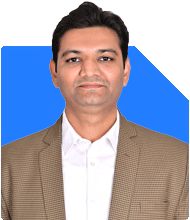
Ramalingam

Ramalingam Kalirajan  |11047 Answers  |Ask -

Mutual Funds, Financial Planning Expert - Answered on Mar 02, 2026

Money
I have borrow a 36.50 lakh loan against property from hdfc bank. is property inssurance mandatory for the mortgage loan on property?
Ans: You have taken a Loan Against Property of Rs 36.50 lakh. First, I appreciate that you are checking the legal and financial side carefully. That shows responsibility.

Now let us understand clearly.

» Is Property Insurance Mandatory for Loan Against Property?

– Legally, property insurance is not compulsory under Indian law.
– But practically, most banks including HDFC Bank insist on insuring the property.
– It is usually mentioned in the loan agreement as a condition.

So technically it is not a government rule. But contractually, the bank can make it compulsory.

Why? Because the property is the security for your loan.

» Why Bank Insists on Property Insurance

– The property is pledged to the bank.
– If there is fire, flood, earthquake or major damage, the value reduces.
– If the property is damaged badly, the bank’s security becomes weak.

Insurance protects both you and the bank.

So from risk management point of view, it is practical and sensible.

» Is It Mandatory to Buy Insurance From the Same Bank?

– No bank can force you to buy insurance only from their partner company.
– You are free to choose any general insurance company.
– You only need to assign the policy in favour of the bank.

If bank is forcing bundled insurance, you can politely request separate policy.

» What Type of Insurance Is Needed?

For mortgage loan, usually:

– Structure insurance (building insurance) is required.
– Contents insurance is optional but useful.

If it is an apartment:

– The society may already have a master policy.
– Still, individual unit insurance is better.

Do not confuse this with loan protection insurance (life cover). That is different.

» Should You Take It Even If Not Forced?

Yes, I strongly recommend taking it.

Why?

– Property is a large asset.
– One accident can destroy years of savings.
– Premium is very small compared to property value.

It is not an expense. It is protection.

» Check These Points Carefully

– Insured value should match reconstruction cost, not market value.
– Natural calamities must be covered.
– Policy should be renewed every year without fail.
– Bank clause (assignment clause) must be correctly mentioned.

Do not ignore renewal. If policy lapses, risk comes back to you.

» 360 Degree Protection View

Since you have a loan:

– Ensure you have adequate term insurance to cover outstanding loan.
– Ensure you have proper health insurance.
– Maintain emergency fund for EMI continuity.

If something happens to income, EMI must not suffer.

Property insurance protects asset.
Term insurance protects family.
Emergency fund protects EMI discipline.

All three together create safety.

» Finally

Property insurance may not be legally compulsory, but practically it is required and financially wise.

Do not see it as bank pressure. See it as risk control.

A small premium today can prevent a huge financial shock tomorrow.

Best Regards,

K. Ramalingam, MBA, CFP,

Chief Financial Planner,

www.holisticinvestment.in

https://www.youtube.com/@HolisticInvestment

...Read more

Ramalingam

Ramalingam Kalirajan  |11047 Answers  |Ask -

Mutual Funds, Financial Planning Expert - Answered on Mar 02, 2026

Money
Hello Sir, I am 43 year old, having investment in 1. Own House-No Loan 2. MF holding 14.0 Lac, 3. FD 44.0 Lac, 4. Pure Gold 40.0 Lac, 5. PPF 5.0 Lac, 6. EPF 27.5 Lac, 7. NPS 9.0 Lac 8. Bank Account 10.0 Lac 9. Monthly SIP 44000 Rs [Multicap, Two Mid Cap, Two Small Cap, Large and Mid Cap] 10. Term Plan 50.0 Lac My child is 16 years old, i need your advice for my child education, marriage as well as my retirement.
Ans: You have built a very strong foundation at 43. Own house without loan, good savings in FD, gold, EPF and mutual funds – this shows discipline and stability. Many people at your age struggle with liabilities. You are in a safe position. Now we must organise it properly for your child’s higher education, marriage and your retirement.

» Current Financial Position – Overall Assessment

– Own house without loan gives you emotional security.
– Total financial assets are well diversified across FD, gold, PF and mutual funds.
– Large allocation to FD and gold gives safety but lower long-term growth.
– Mutual fund exposure is moderate and SIP is healthy at Rs 44,000 per month.
– Term cover of Rs 50 lakh is on the lower side considering child age and future costs.

You are financially stable. Now the focus must shift to growth and protection.

» Child Higher Education – 2 to 4 Year Planning Window

Your child is already 16. That means higher education funding is very near.

– Education corpus should not depend on equity-heavy assets now.
– Avoid taking high risk in small and mid caps for this goal.
– Start segregating money required in next 2–3 years into safe instruments like short-term debt or high-quality fixed income.
– Do not disturb EPF and NPS for education unless absolutely necessary.

If needed, you can use part of FD and bank balance. Education goal is priority one.

Important: Avoid selling equity mutual funds in panic. If you sell equity funds:
– LTCG above Rs 1.25 lakh is taxed at 12.5%.
– STCG is taxed at 20%.

Plan redemption carefully and gradually.

» Child Marriage – Long-Term Goal (8–12 Years)

Marriage is not urgent. So this can stay in growth assets.

– Continue SIP.
– You are currently investing across multicap, midcap, smallcap and large-midcap. That is fine for long term.
– But review allocation. Too much mid and small cap increases volatility.

Keep marriage goal in a separate mutual fund bucket. Track it independently.

» Retirement Planning – The Most Important Goal

You are 43. You have around 15–17 years for retirement.

Current retirement assets:
– EPF Rs 27.5 lakh
– NPS Rs 9 lakh
– PPF Rs 5 lakh
– Mutual Funds Rs 14 lakh

This is a decent start but not enough for long retirement life.

You must:

– Increase retirement-focused equity allocation gradually.
– Continue EPF contribution strongly.
– Continue NPS for tax and discipline, but do not depend fully on it.
– Increase SIP gradually every year, at least 5–10% step-up.

At your age, growth is still required. Too much FD and gold will reduce long-term wealth creation.

» Asset Allocation Correction

Current allocation shows heavy weight in:

– FD Rs 44 lakh
– Gold Rs 40 lakh

Gold and FD together form a very large portion. Gold does not give income. FD gives safety but post-tax returns are moderate.

Suggestion:

– Do not exit gold fully. Keep reasonable allocation.
– Slowly reduce excess FD over next few years and move towards diversified equity mutual funds for long-term goals.
– Keep emergency fund of 6–9 months in bank and FD. Beyond that, excess idle cash should work harder.

» Insurance Review

Term cover of Rs 50 lakh is low.

– Considering child age and inflation in education, you should review and increase total term cover.
– Aim for at least 10–12 times annual income protection.

Health insurance is not mentioned. If not adequate, increase family floater coverage.

» Risk Management & Behaviour Discipline

– Do not frequently change funds based on market noise.
– Review once a year.
– Keep goals separated mentally and financially.

Your SIP structure is good. Just rebalance and align with time horizon.

» Tax Awareness

– Equity mutual fund gains above Rs 1.25 lakh (long term) are taxed at 12.5%.
– Short term gains are taxed at 20%.
– Debt fund gains are taxed as per slab.

So plan withdrawals smartly. Do not redeem in one single financial year if avoidable.

» Action Plan – Next 12 Months

– Separate education corpus immediately.
– Increase term insurance.
– Gradually rebalance FD surplus into long-term mutual funds.
– Step-up SIP yearly.
– Create clear written retirement number target.
– Review NPS asset allocation to ensure enough equity exposure.

» Finally

You are not late. You are actually ahead in discipline and savings. Only re-alignment is required.

Education funding needs safety now.
Marriage needs growth.
Retirement needs structured and increasing equity exposure.

If you implement these corrections calmly, you can achieve all three goals without stress.

Best Regards,

K. Ramalingam, MBA, CFP,

Chief Financial Planner,

www.holisticinvestment.in

https://www.youtube.com/@HolisticInvestment

...Read more

DISCLAIMER: The content of this post by the expert is the personal view of the rediffGURU. Investment in securities market are subject to market risks. Read all the related document carefully before investing. The securities quoted are for illustration only and are not recommendatory. Users are advised to pursue the information provided by the rediffGURU only as a source of information and as a point of reference and to rely on their own judgement when making a decision. RediffGURUS is an intermediary as per India's Information Technology Act.

Close  

You haven't logged in yet. To ask a question, Please Log in below
Login

A verification OTP will be sent to this
Mobile Number / Email

Enter OTP
A 6 digit code has been sent to

Resend OTP in120seconds

Dear User, You have not registered yet. Please register by filling the fields below to get expert answers from our Gurus
Sign up

By signing up, you agree to our
Terms & Conditions and Privacy Policy

Already have an account?

Enter OTP
A 6 digit code has been sent to Mobile

Resend OTP in120seconds

x