Home > Money > Question
Need Expert Advice?Our Gurus Can Help
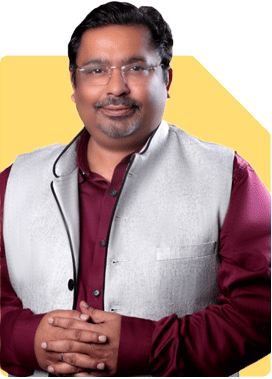
Omkeshwar

Omkeshwar Singh  | Answer  |Ask -

Head, Rank MF - Answered on Nov 03, 2022

Mutual Fund Expert... more
Amol Question by Amol on Nov 03, 2022Hindi
Listen
Money

I have just started SIPs in different mutual funds the details are as follows

Large Cap: Quant focused - 1k

Mid Cap:

Quant Mid Cap - 1k

PGIM India Midcap Opportunities - 1k

Small Cap:

Quant Small Cap -1k

Axis Small Cap -1k

Other:

Quant Active Fund -1k

Quant Tax Plan -1k

Quant Flexi Cap -1k

Are all the funds okay or should I change some of them? If yes please let me know which to change and with what.

Ans: No need to change

DISCLAIMER: The content of this post by the expert is the personal view of the rediffGURU. Users are advised to pursue the information provided by the rediffGURU only as a source of information to be as a point of reference and to rely on their own judgement when making a decision.
Money

You may like to see similar questions and answers below

Ramalingam

Ramalingam Kalirajan  |10870 Answers  |Ask -

Mutual Funds, Financial Planning Expert - Answered on May 30, 2024

Listen
Money
Hi Sir, I invest in mutual funds via SIP's. My SIP's as listed below. Please review and let me know if I have to change anything. Axis Small Cap Fund Direct Growth - 4k ICICI Prudential Technology Direct Plan Growth - 2.5k Bandhan Midcap Fund Direct Growth - 1.5K Kotak Emerging Equity Fund Direct Growth - 1.5K Axis Long Term Equity Fund Growth - 1k DSP Tax Saver Fund - 2k HDFC Tax Saver Fund Growth - 1 K Invesco India Tax Plan Growth - 2k Nippon India Tax Saver Fund Growth - 1k WhotOak Capital Midcap Fund Growth - 1.5k Let me know if I have to change any on the SIP
Ans: Evaluating Your Mutual Fund SIP Portfolio: Advantages and Considerations
Your current SIP portfolio showcases a commendable commitment to wealth creation. Let's delve deeper into its components and address the advantages and considerations for each fund. Additionally, we'll discuss the disadvantages of investing in direct funds over regular funds through a mutual fund distributor (MFD).

Diversification and Risk Management

Your portfolio encompasses various fund categories, offering diversification across market segments. However, it's essential to balance potential returns with associated risks.

Assessment of Individual Funds

Axis Small Cap Fund Direct Growth (Rs. 4k): Small-cap funds offer high growth potential but carry increased volatility and risk. Regular monitoring is crucial.

ICICI Prudential Technology Direct Plan Growth (Rs. 2.5k): Technology funds provide exposure to a dynamic sector but may be susceptible to market fluctuations.

Bandhan Midcap Fund Direct Growth (Rs. 1.5k): Mid-cap funds present growth opportunities but entail higher risk due to market volatility.

Advantages of Direct Funds:

Lower Expense Ratio: Direct funds typically have lower expense ratios compared to regular funds, potentially leading to higher returns over the long term.

No Distributor Commission: Investing directly means bypassing distributor commissions, resulting in higher investment amounts and better returns.

Direct Control and Flexibility: Investors have direct control over their investments, allowing for greater flexibility in portfolio management.

Disadvantages of Direct Funds:

Lack of Expert Advice: Direct investors miss out on personalized advice and guidance from mutual fund distributors, which could be valuable, especially for novice investors.

Research and Monitoring Required: Direct investors need to conduct their research and monitor their investments regularly, which can be time-consuming and challenging for some individuals.

Behavioral Biases: Without the guidance of an advisor, investors may fall prey to behavioral biases, such as chasing past performance or panicking during market downturns.

Considerations for Your Portfolio:

Risk Assessment: Evaluate your risk tolerance and ensure your portfolio aligns with your financial goals and investment horizon.

Regular Review: Monitor the performance of your funds periodically and make adjustments as necessary to maintain alignment with your objectives.

Professional Guidance: Consider consulting a Certified Financial Planner or mutual fund distributor for personalized advice and guidance tailored to your needs.

Conclusion

While direct funds offer cost-saving advantages, they require investors to take on additional responsibilities in terms of research and monitoring. Given the complexities of the financial markets, seeking professional guidance can provide valuable insights and support for optimizing your investment strategy.

Best Regards,

K. Ramalingam, MBA, CFP,

Chief Financial Planner,

www.holisticinvestment.in

..Read more

Ramalingam

Ramalingam Kalirajan  |10870 Answers  |Ask -

Mutual Funds, Financial Planning Expert - Answered on May 29, 2024

Money
I have the following SIP investments in the below Mutual Fund plans . Please advise if I should change any ? Also ,Please advise where can I put an additional 20k per month for more investment?[SA] Quant MIdCap Direct growth Fund 5025 Quant Large and Midcap Direct Fund Growth 2025 SBI Magnum Midcap Direct Plan Growth 3001 Quant Active Direct Fund Growth 4001 Axis Nift Smallcap 50 index direct plan growth 3501 HDFC Small cap direct Plan growth 2501 ICICI Prudential BHARAT 22 FOF Direct Plan growth 5003 SBI Large and Midcap direct plan growth 3004 Nippon india Small cap Direct plan growth 5006 Quant small plan direct plan growth 3010 Quant multi assest direct plan growth 2010 ICICI Prudential Bluechip Direct plan Growth 2110
Ans: You have taken significant steps towards securing your financial future with a diversified SIP portfolio. Your commitment to regular investing is commendable.

Review of Existing SIP Investments:

Let’s analyze your current mutual fund investments to ensure they align with your financial goals and risk tolerance.

Quant MidCap Direct Growth Fund:

This fund focuses on mid-cap stocks, which offer high growth potential but come with higher volatility.

Quant Large and Midcap Direct Fund Growth:

A balanced mix of large and mid-cap stocks, providing a blend of stability and growth.

SBI Magnum Midcap Direct Plan Growth:

Another mid-cap fund adding diversity within the mid-cap segment.

Quant Active Direct Fund Growth:

A diversified equity fund that invests across various sectors and market capitalizations.

Axis Nifty Smallcap 50 Index Direct Plan Growth:

An index fund focused on small-cap stocks, offering potential high returns with higher risk.

HDFC Small Cap Direct Plan Growth:

A small-cap fund that focuses on companies with high growth potential.

ICICI Prudential BHARAT 22 FOF Direct Plan Growth:

A fund of funds investing in the Bharat 22 ETF, providing exposure to a diversified portfolio of public sector companies.

SBI Large and Midcap Direct Plan Growth:

Invests in both large and mid-cap stocks, providing a balance between growth and stability.

Nippon India Small Cap Direct Plan Growth:

A small-cap fund known for aggressive growth strategies.

Quant Small Cap Direct Plan Growth:

Another small-cap fund, adding to the exposure in the small-cap segment.

Quant Multi Asset Direct Plan Growth:

Invests across multiple asset classes, providing diversification and reducing risk.

ICICI Prudential Bluechip Direct Plan Growth:

A large-cap fund that offers stability and consistent returns.

Recommendations for Portfolio Optimization
Diversification and Overlap:

Your portfolio has a heavy allocation towards small-cap and mid-cap funds. While these can provide high returns, they also come with higher risk.

Reducing Overlap:

Consider reducing the number of small-cap funds to avoid excessive overlap and potential volatility.

Balancing with Large-Cap Funds:

Increase allocation in large-cap funds for stability and consistent returns.

Suggested Changes
Retain:

Quant MidCap Direct Growth Fund
Quant Large and Midcap Direct Fund Growth
ICICI Prudential Bluechip Direct Plan Growth
Consider Replacing or Reducing:

Nippon India Small Cap Direct Plan Growth: Consider reducing allocation due to significant overlap with other small-cap funds.
Quant Small Cap Direct Plan Growth: Similar to above, reduce or replace to minimize risk.
Balanced Funds:

Introduce balanced funds or hybrid funds to achieve a mix of equity and debt, providing growth with reduced volatility.

New Investment Recommendations
Additional Rs. 20,000 Allocation:

Here’s how you can allocate your additional Rs. 20,000 per month for optimal returns.

Diversified Equity Funds:

Invest in diversified equity funds with a proven track record for stable growth.

Large-Cap and Bluechip Funds:

Increase allocation in large-cap funds for stability.

Balanced or Hybrid Funds:

Introduce balanced funds for a mix of equity and debt, providing growth with lower risk.

Creating a Stable Portfolio
Balanced Allocation:

Ensure a balanced allocation between large-cap, mid-cap, and small-cap funds.

Regular Review and Rebalancing:

Review your portfolio regularly and rebalance annually to maintain desired asset allocation.

Risk Management:

Ensure your portfolio aligns with your risk tolerance and investment horizon.

Perils of Direct Investing
Market Volatility:

Direct investing in the stock market can expose you to significant market volatility. Prices can fluctuate widely, affecting the value of your investments.

Lack of Diversification:

Investing in individual stocks may lead to a lack of diversification. This increases risk as your investment is concentrated in fewer securities.

Research and Knowledge:

Direct investing requires extensive research and market knowledge. Without proper understanding, you may make uninformed decisions leading to losses.

Emotional Investing:

Investors often make emotional decisions based on market movements, leading to buying high and selling low, which can erode returns.

Time-Consuming:

Managing a portfolio of individual stocks is time-consuming. It requires continuous monitoring and adjustment based on market conditions.

Benefits of Investing Through MFD with CFP Credential:

Professional Management:

Certified Financial Planners (CFPs) and Mutual Fund Distributors (MFDs) provide professional management, ensuring your investments are well-researched and diversified.

Holistic Financial Planning:

CFPs offer holistic financial planning, aligning your investments with your financial goals, risk tolerance, and time horizon.

Regular Monitoring and Rebalancing:

Professionals regularly monitor and rebalance your portfolio to ensure it remains aligned with your objectives.

Reduced Emotional Bias:

Professional management helps in reducing emotional bias, making investment decisions based on logic and analysis.

Suggested Mutual Fund Allocation
Equity Funds:

Large-Cap Funds: 40%
Mid-Cap Funds: 30%
Small-Cap Funds: 20%
Balanced/Hybrid Funds:

Balanced Funds: 10%
Summary
Compliment and Encouragement:

Your commitment to regular investing and seeking advice shows your dedication to achieving financial goals. Keep up the excellent work.

Action Plan:

Review and adjust your current SIPs to reduce overlap.
Increase allocation in large-cap and balanced funds.
Allocate additional Rs. 20,000 to diversified and balanced funds for stability and growth.
Best Regards,

K. Ramalingam, MBA, CFP,

Chief Financial Planner,

www.holisticinvestment.in

..Read more

Ramalingam

Ramalingam Kalirajan  |10870 Answers  |Ask -

Mutual Funds, Financial Planning Expert - Answered on Apr 13, 2024

Listen
Money
Hello Team, I am investing via SIP in axis Small cap 1000 pm, axis bluechip fund direct paln growth 1500pm, Mirae Asset aggreasive fund 1000pm, parag parikh flexi cap 1000pm, canara small cap 2000pm, quant small cap 2.5k pm, PGIM india midcap 1000pm. Please review my funds. Should i need any changes in my SIPs. My view is for 15 years. I am investing since 2019..
Ans: You've built a diversified portfolio covering different market segments, which is a good strategy for long-term growth. Here's a quick review:

Axis Small Cap & Canara Small Cap: You have exposure to small-cap funds which can offer higher growth potential but come with higher volatility. Given your 15-year horizon, these can be suitable, but be prepared for fluctuations.

Axis Bluechip & Mirae Asset Aggressive Fund: These funds provide stability with large-cap and well-diversified equity exposure. They can act as a counterbalance to the volatility of small and mid-cap funds.

Parag Parikh Flexi Cap: A flexible fund that invests across market caps and can provide consistent returns. It offers international diversification which can be beneficial.

Quant Small Cap & PGIM India Midcap: These funds further increase your exposure to mid and small-cap segments. Ensure you're comfortable with the higher risk associated with these categories.

Given your portfolio, it seems well-balanced for long-term growth. However, consider the following suggestions:

Review Fund Performance: Regularly check the performance of your funds against their benchmarks and peers.

Risk Assessment: Ensure you're comfortable with the risk levels, especially with higher allocations to small and mid-cap funds.

Asset Allocation: As you progress, you might want to rebalance your portfolio to maintain desired asset allocation.

New SIPs: Consider adding a large-cap or a diversified equity fund to further diversify your portfolio and reduce risk.

Remember, while these are general guidelines, personal financial planning should be tailored to your specific goals, risk tolerance, and financial situation. It's always advisable to consult with a financial advisor for a comprehensive review and advice tailored to your needs.

..Read more

Ramalingam

Ramalingam Kalirajan  |10870 Answers  |Ask -

Mutual Funds, Financial Planning Expert - Answered on Oct 29, 2025

Money
I am doing SIP in following mutual fund with 2K in each. can you let me know if i need to stop some sip or reccomend the changes needed in this ? Tata Digital India Fund Direct Plan Growth Tata Silver fund HDFC Small Cap Fund HDFC Innovation Fund ICICI Prudential Silver fund ICICI Prudential All Seasons Bond Fund Axis Greater China Equity Fund of Fund Axis Gold fund SBI Contra Fund Direct Growth HSBC Midcap Fund
Ans: It’s good that you have taken action towards financial growth. As a Certified Financial Planner, I’ll review your fund mix, point out what I see, give insight and suggest changes from a 360-degree perspective. You should still consult directly for tailored figures.

You are doing SIPs of Rs 2,000 each in the following mutual funds:

Fund 1: Tata Digital India Fund (growth)

Fund 2: Tata Silver Fund

Fund 3: HDFC Small Cap Fund

Fund 4: HDFC Innovation Fund

Fund 5: ICICI Prudential Silver Fund

Fund 6: ICICI Prudential All Seasons Bond Fund

Fund 7: Axis Greater China Equity Fund of Fund

Fund 8: Axis Gold Fund

Fund 9: SBI Contra Fund (Direct Growth)

Fund 10: HSBC Mid-cap Fund

Here are the observations, assessment and recommendations.

» Portfolio review – what you hold
You have diversified across asset types: equity (small-cap, mid-cap, innovation), commodities (silver, gold), international equity (China), and bonds. That shows you are thinking variety.
The inclusion of bonds (ICICI All Seasons Bond) gives you some stable asset in your mix. That is good to lower some risk.
You are using SIPs which is appropriate for long-term investing and rupee cost averaging.

» What I see — strengths

You have diversified well across sectors and themes.

Your SIP habit shows discipline.

Inclusion of debt fund balances equity risk.

» What I see — areas of concern

You have many funds (10 SIPs) which could lead to over-diversification or overlapping exposures. Too many funds may dilute focus and increase costs.

You hold two silver funds plus a gold fund. Commodities can have a role, but when you have multiple commodity-fund exposures, it adds volatility and correlation of risk.

The “international equity” exposure (China equity fund) is a high risk, high reward part and may be volatile, currency risk is there.

Many funds are small-cap or innovation type (high risk) — good for growth but they can swing heavily. For example small-cap funds come with high volatility.

With direct-plan vs regular plan: you did not specify direct vs regular for all but you stated “Direct Growth” for SBI Contra Fund. If others are direct too, fine; but if they are direct, you must note the disadvantage of direct funds in your scenario.

You haven’t given your overall goals, time-horizon, risk tolerance, or other investments (e.g., PPF, EPF, insurance). Without that, assessment is partial.

Taxation: For the equity-oriented funds, the new tax rule is: long-term capital gains above Rs 1.25 lakh are taxed at 12.5 %. Short-term gains are taxed at 20 %. For debt funds (or bond funds) they are taxed per slab rate.

You are investing in many thematic funds (innovation, digital, commodities) which may be more speculative and might require stronger conviction and time-horizon.

» Disadvantage of “direct funds only” approach (since direct funds are in your list)
Since you are savvy to pick direct funds, you have to understand:

Direct funds remove the distributor / intermediary cost. But you lose the structured advice and monitoring that a regular fund with an MFD (mutual fund distributor) plus CFP partnership gives.

Without professional oversight (CFP + MFD), you may get carried away into frequent switching or chasing themes rather than disciplined portfolio management.

Direct funds may tempt you into managing everything yourself; if you don’t have the time or deep expertise, you may under-monitor.

In a regular fund structure with MFD + CFP, you typically get periodic review, behavioural guidance, rebalancing and check on overlaps and risk. This is a benefit you risk missing with pure direct funds unless you compensate.
Hence if you hold direct plans exclusively, you should ensure you are comfortable with active monitoring and rebalancing.
From my vantage as professional planner I lean towards regular funds via a trusted MFD + CFP structure for most investors because it adds oversight and helps you stay disciplined.

» Suggestions for changes / rebalancing
Here are my recommendations, assuming your time horizon is long-term (10+ years) and you can accept moderate-high risk. If your horizon is shorter or risk lower, these should be adapted.

Reduce number of funds: Consolidate some exposures to reduce overlap and cost.

For commodity funds (silver, gold) you might pick one exposure rather than two silver + gold. For example keep gold fund, drop one silver fund (either Tata Silver or ICICI Prudential Silver) depending on performance/cost/manager comfort.

For high risk segments (small-cap, innovation, China equity) ensure you allocate these as “satellite” exposures, not the core of your equity allocation. For core equity you might keep a mid-cap or large-cap fund with wider diversification (your HSBC mid-cap is good for core-equity).

Re-check overlaps: Some funds may invest in similar stocks or sectors; check fund house factsheet for overlap and decide which fund gives unique value.

For the international fund (Axis Greater China Equity FoF) treat it as high-risk and allocate only a portion of your portfolio. If it is taking too large a share, consider trimming.

The bond fund (ICICI All Seasons Bond) is a good anchor for stability; ensure you keep it as part of balanced mix.

Think about your overall asset allocation: for example, you might consider a broad diversification like: 50-60% domestic equity, 10-15% international equity, 10-15% commodity/alternative, 15-20% debt/fixed income. Then pick funds within each bucket.

Since you have many niche funds, you may benefit by choosing fewer but better diversified large/mid equity fund(s) as the core, and keep the niche ones as smaller weights.

Review cost, fund manager track record, consistency of return relative to risk (for small-cap funds look at standard deviation, Sharpe ratio etc).

Make sure your SIP amounts reflect priority. If you have limited savings you might pick say 3-5 funds maximum, rather than 10.

Keep reviewing at least annually: assess fund performance, changes in strategy or team, risk metrics, how they fit your goals.

» Specific funds – what to consider

Regarding HDFC Small Cap Fund: Good growth potential, but high volatility. You need to be comfortable with swings and keep horizon long.

Regarding HDFC Innovation Fund: Thematic/innovation funds can give high returns but they are riskier and require conviction.

Tata Digital India Fund: Also thematic. Good theme, but thematic funds are not core diversification.

ICICI All Seasons Bond Fund: Good role for stability; you may consider increasing its share if you want lower risk.

Axis Greater China Equity FoF: International exposure is good, but China market risk/currency risk may be high.

Axis Gold Fund & silver funds: Commodities add inflation hedge, but they may underperform for long periods; ensure you are comfortable with that.

SBI Contra Fund: Contra style equity funds may outperform but also underperform in certain cycles; make sure you understand the investment style and stick with long horizon.

HSBC Mid-cap Fund: Good to anchor equity with a mid-cap diversified fund; this can act as a core.

Tata Silver Fund & ICICI Prudential Silver Fund: Consider if both are required. Maybe pick the one with better fit/cost and drop the other.

For each fund check expense ratio, fund size, liquidity, exit load, investment philosophy.

» Taxation & treatment implications

For your equity-oriented funds (those that invest >65% in equity) the LTCG (long-term capital gains) will be taxed at 12.5% on gains above Rs 1.25 lakh in a financial year. The STCG will be taxed at 20%. (As per new rules)

For your bond fund (debt fund) gains will be taxed as per your income tax slab (post April 2023 acquisitions) with no indexation benefit.

Because you have many funds, tracking holding periods for each SIP and calculating tax may become complex — keep records carefully.

If you ever redeem or switch, understand that each SIP installment has its own holding period for tax; this is especially true post new rules.

» Re-assessing your goal, risk & timeline

Clarify your goal: Are you saving for retirement, children’s education, house purchase, or general wealth creation?

Time horizon matters: For small-cap, thematic and international equity funds you should be ready for at least 7-10 years or more.

Risk tolerance: If you cannot accept large drawdowns (say 20-30% falls) then you may want fewer high-risk funds and more stable core.

Liquidity needs: If you anticipate needing money in short term (2-3 years) then high-volatility funds may not be suitable.

Emergency fund: Ensure you have a separate emergency fund (liquid cash) before layering many high-risk funds.

» Final insights
You are to be appreciated for building a diversified portfolio and for your disciplined SIP investing. You have chosen good fund houses and thoughtful categories. The main issue is too many funds and high thematic exposure. Simplify your structure. Keep fewer, stronger funds as your base and let smaller, riskier themes play only a minor part. Maintain your SIP habit, review once a year with a Certified Financial Planner, and align your portfolio to your long-term life goals. That will help your wealth grow with balance, discipline, and confidence.

Best Regards,

K. Ramalingam, MBA, CFP,

Chief Financial Planner,

www.holisticinvestment.in

https://www.youtube.com/@HolisticInvestment

..Read more

Latest Questions
Dr Dipankar

Dr Dipankar Dutta  |1837 Answers  |Ask -

Tech Careers and Skill Development Expert - Answered on Dec 05, 2025

Career
Dear Sir, I did my BTech from a normal engineering college not very famous. The teaching was not great and hence i did not study well. I tried my best to learn coding including all the technologies like html,css,javascript,react js,dba,php because i wanted to be a web developer But nothing seem to enter my head except html and css. I don't understand a language which has more complexities. Is it because of my lack of experience or not devoting enough time. I am not sure. I did many courses online and tried to do diplomas also abroad which i passed somehow. I recently joined android development course because i like apps but the teaching was so fast that i could not memorize anything. There was no time to even take notes down. During the course i did assignments and understood the code because i have to pass but after the course is over i tend to forget everything. I attempted a lot of interviews. Some of them i even got but could not perform well so they let me go. Now due to the AI booming and job markets in a bad shape i am re-thinking whether to keep studying or whether its just time waste. Since 3 years i am doing labour type of jobs which does not yield anything to me for survival and to pay my expenses. I have the quest to learn everything but as soon as i sit in front of the computer i listen to music or read something else. What should i do to stay more focused? What should i do to make myself believe confident. Is there still scope of IT in todays world? Kindly advise.
Ans: Your story does not show failure.
It shows persistence, effort, and desire to improve.

Most people give up.
You didn’t.
That means you will succeed — but with the right method, not the old one.

...Read more

Ravi

Ravi Mittal  |676 Answers  |Ask -

Dating, Relationships Expert - Answered on Dec 04, 2025

Asked by Anonymous - Dec 02, 2025Hindi
Relationship
My married ex still texts me for comfort. Because of him, I am unable to move on. He makes me feel guilty by saying he got married out of family pressure. His dad is a cardiac patient and mom is being treated for cancer. He comforts me by saying he will get separated soon and we will get married because he only loves me. We have been in a relationship for 14 years and despite everything we tried, his parents refused to accept me, so he chose to get married to someone who understands our situation. I don't know when he will separate from his wife. She knows about us too but she comes from a traditional family. She also confirmed there is no physical intimacy between them. I trust him, but is it worth losing my youth for him? Honestly, I am worried and very confused.
Ans: Dear Anonymous,
I understand how difficult it is to let go of a relationship you have built from scratch, but is it really how you want to continue? It really seems to be going nowhere. His parents are already in bad health and he married someone else for their happiness. Does it seem like he will be able to leave her? So many people’s happiness and lives depend on this one decision. I think it’s about time you and your BF have a clear conversation about the same. If he can’t give a proper timeline, please try to understand his situation. But also make sure he understands yours and maybe rethink this equation. It really isn’t healthy. You deserve a love you can have wholly, and not just in pieces, and in the shadows.

Hope this helps

...Read more

DISCLAIMER: The content of this post by the expert is the personal view of the rediffGURU. Investment in securities market are subject to market risks. Read all the related document carefully before investing. The securities quoted are for illustration only and are not recommendatory. Users are advised to pursue the information provided by the rediffGURU only as a source of information and as a point of reference and to rely on their own judgement when making a decision. RediffGURUS is an intermediary as per India's Information Technology Act.

Close  

You haven't logged in yet. To ask a question, Please Log in below
Login

A verification OTP will be sent to this
Mobile Number / Email

Enter OTP
A 6 digit code has been sent to

Resend OTP in120seconds

Dear User, You have not registered yet. Please register by filling the fields below to get expert answers from our Gurus
Sign up

By signing up, you agree to our
Terms & Conditions and Privacy Policy

Already have an account?

Enter OTP
A 6 digit code has been sent to Mobile

Resend OTP in120seconds

x