Home > Money > Question
Need Expert Advice?Our Gurus Can Help

Stuck in debt at 19: Informal loans, family stress, and UPSC dreams

Ramalingam

Ramalingam Kalirajan  |10894 Answers  |Ask -

Mutual Funds, Financial Planning Expert - Answered on Sep 23, 2024

Ramalingam Kalirajan has over 23 years of experience in mutual funds and financial planning.
He has an MBA in finance from the University of Madras and is a certified financial planner.
He is the director and chief financial planner at Holistic Investment, a Chennai-based firm that offers financial planning and wealth management advice.... more
Asked by Anonymous - Sep 23, 2024Hindi
Money

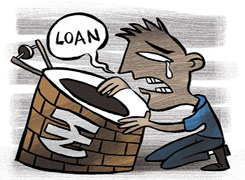
Respected sir My Family is stuckin informal loan of about 25lac rupees We have monthly income of about 45000 but the interest paid monthly is worth 1-2 lacs... Principle amount also required to be given after some time... The monthly exorbitant interest rate cause us to borrow more and more.... We've decided to get loan against property so as to consolidate the loan amount...and relieve ourselves from the informal borrowings... But the bank is now asking for Guarantors... And ITR of about 5-6 lacs... And 6 month bank account statement.. My Family works informally though... And iam 19 college student preparing for UPSC... Who due to all these problems is facing stress day and night... Please help!!!

Ans: You are currently facing a difficult financial situation where your family is caught in a debt cycle due to informal loans. This has created a tremendous burden on you as a 19-year-old student. You are planning to consolidate the debt using a loan against property (LAP), but you are facing issues with the bank's requirements for ITRs, guarantors, and bank statements. Let me provide a structured approach to help you handle this situation more effectively.

Understanding the Current Debt Situation
The debt burden is overwhelming, especially with monthly interest payments ranging between Rs 1-2 lakhs. This is an exorbitant rate compared to your monthly family income of Rs 45,000.

You are in a vicious cycle where borrowing more is necessary to meet interest payments. This is dangerous and unsustainable.

It’s important to stop this cycle as soon as possible to prevent further financial damage. Consolidating the loan under more reasonable terms can be a potential solution.

Evaluating Loan Against Property (LAP)
You are planning to consolidate the Rs 25 lakh loan by taking a loan against property. LAP can be a good option because it allows you to access funds at a much lower interest rate compared to informal loans.

The main challenge you are facing with the LAP is that the bank is asking for guarantors, ITRs (Income Tax Returns) of Rs 5-6 lakhs, and a six-month bank account statement.

Since your family works informally and does not have a formal ITR, you are facing difficulties meeting these criteria. The good news is that there may be alternative ways to meet the bank’s requirements.

Alternative Solutions for Loan Consolidation
While the LAP is a good solution, there are other alternatives that you can explore:

1. Negotiating with Lenders:

If possible, try to negotiate with your informal lenders to lower the interest rate or extend the loan term.

Explain your financial situation to them. Sometimes, informal lenders are willing to adjust terms when they realize that the borrower cannot keep up with the current terms.

Focus on stabilizing the loan by reducing the monthly interest payments. This will allow you to focus on repaying the principal rather than spiraling into more debt.

2. Approach Microfinance Institutions:

Microfinance institutions often provide loans to individuals without formal income proof or ITRs. These institutions have more relaxed lending criteria and are focused on helping low-income individuals.

Microfinance loans come with lower interest rates than informal loans, though they may still be higher than bank loans.

You can use the microfinance loan to pay off the high-interest informal loans and consolidate your debt at a more manageable interest rate.

3. Consider Peer-to-Peer Lending Platforms:

Peer-to-peer lending platforms can be another option. These platforms connect borrowers directly with individual lenders, and the lending criteria are often more flexible than banks.

These platforms generally require some basic financial information but are more accessible for individuals without formal income proof.

The interest rates on peer-to-peer lending platforms are usually lower than those of informal loans but higher than traditional bank loans.

4. Seek Help from Non-Banking Financial Companies (NBFCs):

NBFCs often have more lenient criteria compared to traditional banks. They may be more willing to provide loans against property without strict ITR or guarantor requirements.

You can approach NBFCs to see if they can offer you a loan at a reasonable interest rate. NBFC loans may still have higher rates than banks, but they are a far better option than informal loans.

5. Family and Friends Support:

If possible, reach out to trusted family members or friends for a loan. Borrowing from family and friends can offer you an interest-free or low-interest alternative to paying exorbitant informal loan interest rates.

Make sure to formalize the loan terms even when borrowing from family and friends, to maintain transparency and avoid future conflicts.

Building a Financial Strategy
1. Prioritize Interest Payments:

Your immediate focus should be on stopping the high-interest payments. This is draining your family’s monthly income and leaving no room for savings or principal repayment.

Once you consolidate your debt under a lower interest rate, you will free up cash flow to start paying off the principal amount.

2. Create a Budget and Track Expenses:

It is important to know exactly how much your family is earning and where the money is going.

Create a budget that includes all necessary expenses, and try to cut down on unnecessary spending. The more you can save, the more you can allocate toward repaying the loan.

3. Build an Emergency Fund:

Once your debt burden is reduced, focus on building a small emergency fund to prevent future borrowing.

Even a small amount, like Rs 5,000 a month, can help build a cushion for emergencies, which will prevent you from taking more informal loans in the future.

4. Increase Income Opportunities:

If possible, your family could consider increasing their income by taking up additional work or exploring side businesses. Even a small increase in monthly income can make a big difference when trying to pay off debt.

You, too, may explore part-time or freelance work while studying for UPSC. This will help alleviate some of the financial pressure on the family and give you more control over your situation.

Coping with Stress and Mental Health
It’s completely understandable that you are feeling overwhelmed by this situation. The stress of family financial problems, combined with your UPSC preparations, can feel unbearable at times.

It’s important to prioritize your mental health and well-being. Consider talking to a counselor or therapist if you’re finding it hard to cope.

Try to manage your stress through healthy habits like exercise, meditation, or talking to someone you trust. Your long-term goal is to clear UPSC, and you must stay mentally and physically healthy for that.

Make sure to take small breaks from your studies and financial stress. Find time to engage in activities that help you relax and recharge.

Seeking Professional Help
While I understand that hiring a financial expert may not be affordable at this time, it might be worth consulting with a certified financial planner (CFP) for a one-time session. They can help you structure a repayment plan and possibly negotiate with lenders.

Some financial experts offer free or low-cost services for individuals in financial distress. You can explore these options for a professional assessment of your situation.

Finally
Your decision to consolidate the loan through a loan against property is wise. However, if the bank’s requirements are too strict, consider alternative solutions such as microfinance institutions, peer-to-peer lending platforms, or NBFCs.

Start by prioritizing the reduction of monthly interest payments and creating a clear repayment plan for the principal.

At the same time, focus on budgeting, increasing income opportunities, and building a financial buffer to prevent future debt cycles.

Remember to take care of your mental health. Financial stress can be overwhelming, but with the right plan, you can overcome it step by step.

Stay focused on your UPSC preparation. Your long-term success will greatly improve your family's financial future.

Best Regards,

K. Ramalingam, MBA, CFP,
Chief Financial Planner,
www.holisticinvestment.in
Instagram: https://www.instagram.com/holistic_investment_planners/
Asked on - Oct 14, 2024 | Answered on Oct 15, 2024
Listen
Sir could you suggest the name of the nbfcs/microfinance institutions/peer to peer lending platforms it could've been helpfull Kindly understand the urgency
Ans: NBFCs like Bajaj Finserv, Tata Capital, and microfinance institutions like Bandhan Bank offer higher returns but carry credit and liquidity risks. Popular P2P lending platforms in India include Faircent and LenDenClub, but they come with significant default risk and liquidity concerns. While these options can provide good returns, they are riskier than traditional investments. Ensure proper research, check credit ratings, and diversify your investments to manage risk. Always assess your risk tolerance before choosing these alternatives, as they are more suited for those comfortable with potential losses.

Best Regards,

K. Ramalingam, MBA, CFP,

Chief Financial Planner,
www.holisticinvestment.in
https://www.youtube.com/@HolisticInvestment
Asked on - Oct 15, 2024 | Answered on Oct 16, 2024
Listen
Not asking for investment purpose but for lap purpose as stated above
Ans: For Loan Against Property (LAP), consider Bajaj Finserv, Tata Capital, and HDFC Ltd for competitive rates and flexible repayment. Piramal Capital and L&T Finance are also reliable, offering loans up to 70% of property value. Microfinance institutions like Bandhan Bank can offer smaller loans. For higher loan amounts, NBFCs are better suited than microfinance or peer-to-peer lending platforms, which typically focus on smaller loans with higher risks.

Best Regards,
K. Ramalingam, MBA, CFP
Chief Financial Planner
www.holisticinvestment.in
https://www.youtube.com/@HolisticInvestment
Asked on - Oct 16, 2024 | Answered on Oct 16, 2024
Listen
Sir tried all the nbfcs They all replied you are not eligible.. One of the most terrible situations of life we are facing right now.. Kindly provide some help..
Ans: I'm sorry to hear about your situation. Here are a few options to consider:

Improve Credit Score: Review your credit report for errors and pay off any outstanding debts.

Explore Other Lenders: Look into smaller banks or credit unions that might have more flexible lending criteria.

Peer-to-Peer Lending: Consider platforms that connect borrowers directly with investors.

Personal Loan: If possible, consider a personal loan, which may have different eligibility requirements.

Co-signer: Find someone with a strong credit history who can co-sign for you.

Financial Counseling: Seek advice from a financial planner to explore alternative solutions.

Stay hopeful and explore all avenues available to you.

Best Regards,

K. Ramalingam, MBA, CFP,
Chief Financial Planner,
www.holisticinvestment.in
https://www.youtube.com/@HolisticInvestment
DISCLAIMER: The content of this post by the expert is the personal view of the rediffGURU. Users are advised to pursue the information provided by the rediffGURU only as a source of information to be as a point of reference and to rely on their own judgement when making a decision.
Money

You may like to see similar questions and answers below

Ramalingam

Ramalingam Kalirajan  |10894 Answers  |Ask -

Mutual Funds, Financial Planning Expert - Answered on Jun 04, 2024

Listen
Money
Hello Sir, I am 37 year old and earning 2lac/month. I save 33k per month, 13k in SIP(small call, blue chip and flexi) and 20k in post office RD. I have a home loan of 1.50 cr whose monthly installment is 1.29 lakh. I do have 3 childrens ( 2 teenage kids and 1 small kid). I need your guidance to pay the loan amount ASAP and also want to save the corpus amount for my kids higher studies. Note. For my monthly needs i do have another passive income which fullfil our basic needs.
Ans: Securing Your Family's Future: A Financial Roadmap
It's great that you're thinking about paying off your home loan early and saving for your children's education! You're taking charge of your family's financial well-being. Let's explore some strategies to help you achieve your goals:

1. Analyzing Your Cash Flow:

Track Your Expenses: For a month, track all your income sources and expenses (including your passive income). This will help you identify areas where you can potentially cut back and free up more cash for debt repayment and savings.

Debt-to-Income Ratio: Calculate your debt-to-income ratio (total monthly debt payments divided by gross monthly income). A lower ratio indicates better debt management. A CFP can help you analyze this ratio and suggest strategies for improvement.

2. Prioritizing Debt Repayment:

Additional Lump Sums: Do you have any upcoming bonuses or windfalls? Consider using them for additional home loan payments to reduce the principal faster.

Part Pre-Payment: Explore the option of a part pre-payment on your home loan. This can significantly bring down your overall interest outgo.

3. Exploring Refinancing Options:

Compare Interest Rates: Research current home loan interest rates offered by different lenders. If you find a significantly lower rate than your existing one, refinancing your loan can save you money in the long run.

Processing Fees: Consider any processing fees associated with refinancing and weigh them against the potential interest savings.

4. Saving for Children's Education:

Investment Time Horizon: For your older children (likely closer to needing funds for education), a 5-8 year investment horizon might be suitable. This allows for some aggressive investment options.

Younger Child: For your younger child (with a longer horizon, say 10-15 years), a balanced actively managed SIP can offer growth with some stability.

5. Choosing Actively Managed SIPs:

Actively Managed vs. Index Funds: Actively managed funds have fund managers who try to outperform the market by selecting promising stocks. This has the potential for higher returns than passively managed options like index funds, but also involves more risk. A CFP can help you choose the right option based on your risk tolerance.

Diversification: Consider investing in a diversified mix of actively managed SIPs across different market segments (large-cap, mid-cap) to spread your risk and maximize growth potential.

Remember, a CFP can't recommend specific schemes. However, they can help you understand the features and risks of different actively managed fund categories based on your goals.

Additional Considerations:

Emergency Fund: Ensure you have an emergency fund with 3-6 months of living expenses to handle unexpected situations.

Life Insurance: Review your life insurance coverage to ensure your family is financially protected in case of an unfortunate event.

Taking Action:

Schedule a CFP Consultation: A CFP can create a personalized roadmap considering your specific situation, risk tolerance, and financial goals.

Review and Monitor: Your financial situation and goals might change over time. Regularly review your progress with your CFP and make adjustments to your plan as needed.

By following these steps and seeking professional guidance, you can effectively manage your debt, save for your children's education, and achieve your long-term financial goals. Remember, actively managed funds can be a powerful tool for growth, but they also carry risk. Consulting a CFP can help you make informed investment decisions for a secure future.

Don't wait! Take charge of your financial well-being today.

Best Regards,

K. Ramalingam, MBA, CFP,

Chief Financial Planner,

www.holisticinvestment.in

..Read more

Ramalingam

Ramalingam Kalirajan  |10894 Answers  |Ask -

Mutual Funds, Financial Planning Expert - Answered on Jun 02, 2025

Money
Sir I am a central government pensioner aged 64 years drawing pension of Rs 80000 per month. I have a car loan taken in May 2023 with EMI of Rs 17900. Loan getting over in May 2028 Outstanding as on May 2025 is rs 5.26 lakhs. Personal loan taken during July 2023 with EMI of rs 7748. Outstanding as on May 2025 is rs 3.05 lakhs. Loan getting over in July 2029. Total outstanding as on May 2025 is rs 8.31 lakhs. Personal savings not encouraging and my spouse is a homemaker. Children are pursuing higher studies. Now I am in urgent need of Rs 1 to 1.5 lakhs. Hence i have decided to close both the outstanding loans by taking a personal loan of rs 9.21 lakhs for 6 years at 11.65% with EMI of rs 17839 thereby savings in emi of rs 7809 per month. I request you Sir to please advise as to whether this financial proposal is a worthy and beneficial to me. Or alternatively please suggest any other option deemed fit Regards Narasimhan
Ans: Understanding Your Current Situation

You are a central government pensioner aged 64 years.

Your monthly pension is Rs 80,000.

You have a car loan of Rs 5.26 lakhs outstanding.

You also have a personal loan of Rs 3.05 lakhs outstanding.

Together, your loan outstanding is Rs 8.31 lakhs as of May 2025.

Your car loan EMI is Rs 17,900, which will end in May 2028.

Your personal loan EMI is Rs 7,748, which will end in July 2029.

Your current monthly EMI total is Rs 25,648.

You want to take a new personal loan of Rs 9.21 lakhs for 6 years.

The interest rate for this new loan is 11.65%.

With this new loan, your EMI will be Rs 17,839.

This will reduce your monthly EMI outgo by Rs 7,809.

You plan to use the extra money saved for urgent needs of Rs 1 lakh to Rs 1.5 lakh.

Your spouse is a homemaker and you have children in higher studies.

Your personal savings are not encouraging.

Your main source of income is your pension.

Let us assess if this new loan will be beneficial for you.

Assessing Your Current Loan Burden

Your existing loans have EMIs totalling Rs 25,648.

This EMI is a significant portion of your pension income.

Paying Rs 25,648 from Rs 80,000 leaves you with Rs 54,352 for living.

Your personal expenses, family needs, and children's education costs must be managed with this.

You mentioned urgent need for Rs 1 lakh to Rs 1.5 lakh.

Taking a new loan might help you handle this immediate requirement.

But it is important to check if this new loan reduces your stress in the long run.

Evaluating the Proposed Loan Swap

You plan to take Rs 9.21 lakhs as a new personal loan.

The EMI for this loan is Rs 17,839 for 6 years.

Compared to your current EMI of Rs 25,648, you will save Rs 7,809 monthly.

The new loan will consolidate your existing two loans into one loan.

This will help you manage your EMIs better.

Your cash flow will improve with the monthly savings.

The Rs 7,809 monthly saving can be used for your immediate family needs.

This will also help you in meeting urgent expenses.

Analysing the Interest Costs

While this new loan helps monthly cash flow, total interest paid may increase.

You will be extending your loan tenure to 6 years.

Over 6 years, you may pay more interest compared to the original loans.

The longer tenure increases total cost.

But because your monthly EMI burden is lower, you might find it more comfortable.

You should consider if paying more interest is acceptable to you for immediate relief.

Balancing short-term comfort with long-term interest cost is key.

Alternatives to a New Loan

Let us also explore if there are other ways to reduce your loan stress.

Check if you have any savings in fixed deposits or recurring deposits.

If you have old insurance policies, you can check if loans can be taken on them.

If you have PPF or other small savings, partial withdrawal might help.

This can help you avoid taking a new loan.

It may reduce your total interest cost in the long run.

However, avoid breaking long-term retirement savings like PPF fully.

Reviewing Family Support and Additional Income Sources

Discuss with family members if they can support you temporarily.

Children or relatives may be able to offer a temporary loan.

This might be cheaper than a bank personal loan.

Explore if there are small part-time jobs you can do to boost income.

Even small extra income can reduce reliance on loans.

Emergency Fund Planning

You mentioned personal savings are not encouraging.

It is very important to create an emergency fund.

Emergency fund can help avoid new loans in future.

Even Rs 1 lakh set aside will help meet sudden needs.

Try to save at least 10% of your pension in a monthly plan.

Start small, but be consistent to build up this safety net.

Considerations on Current Expenses

Review your current monthly expenses carefully.

Identify any unnecessary spending you can cut down.

Even Rs 1,000-2,000 cut in expenses will add up over time.

The money saved can go into a monthly emergency fund.

This is very important as you are already retired.

Debt Consolidation Loan Impact

Taking the Rs 9.21 lakh loan is one way to reduce EMI stress.

It gives you monthly relief of Rs 7,809.

It also meets your urgent need of Rs 1 lakh to Rs 1.5 lakh.

But remember the total interest cost will be more over 6 years.

This is a trade-off between monthly comfort and total interest.

Role of a Certified Financial Planner

Working with a Certified Financial Planner can help you review your full financial picture.

A Certified Financial Planner can help you plan your cash flow.

They can help you create an emergency fund step by step.

They can also assess if the new loan is really best for you.

They will work with you to reduce your total debt burden over time.

They will suggest strategies to pay off debt faster.

Certified Financial Planners offer unbiased, expert advice for your goals.

360 Degree Financial Planning Approach

Let us take a 360 degree view of your situation:

You are retired with a steady pension.

You have two loans already.

You need Rs 1 to Rs 1.5 lakh urgently.

Your monthly EMI is very high compared to your pension.

You are considering a new personal loan to reduce EMI stress.

You also have family obligations and children’s education to consider.

Your spouse is not earning, so you are the sole breadwinner.

Emergency fund is not strong.

New loan will give relief now, but at higher total cost later.

If you have any insurance-cum-investment policies, check if surrender is wise.

Sometimes, surrendering and moving to better plans can give higher returns.

Avoid real estate investments at this stage.

They are not liquid and may create more burden.

Loan Repayment Discipline

Once you take the new loan, keep your EMIs regular.

Never miss payments to avoid penalties and credit score damage.

If you get any extra income, use it to part prepay the new loan.

Prepaying loan early will reduce total interest paid.

Even small part prepayments help in reducing your burden.

Insights on Emotional Stress and Financial Health

Carrying loan burden can create emotional stress.

Reducing EMI outgo helps you sleep better at night.

It gives peace of mind and freedom to meet daily expenses.

But remember to plan so that this does not become a long-term cycle.

Taking new loans repeatedly to repay old ones can become a habit.

Work to break this cycle with budgeting and planned saving.

How to Build Future Financial Security

Pension income is steady. Build a small saving plan from it.

Use monthly savings to build an emergency fund of Rs 1 lakh first.

Once emergency fund is built, focus on paying loan faster.

After loans are cleared, direct that EMI amount to monthly investment.

Mutual funds through a Certified Financial Planner can help grow savings.

Avoid direct investing or risky options that you may not understand well.

Certified Financial Planners give regular reviews to adjust for your needs.

Final Insights

Your idea to take a new personal loan to close old loans is understandable.

It will give you monthly relief of Rs 7,809.

It also helps you manage urgent needs of Rs 1 lakh to Rs 1.5 lakh.

But it increases total interest paid over 6 years.

Think if the relief in EMI is worth the higher total interest.

Explore help from family, partial withdrawals, or other support first.

Avoid real estate or risky investments now.

Work to build a small emergency fund over time.

Start a disciplined repayment plan and monthly savings plan.

Talk to a Certified Financial Planner to get a clear 360 degree plan.

This will give you comfort now and security for the future.

Your financial well-being is very important, so take it step by step.

Best Regards,

K. Ramalingam, MBA, CFP,

Chief Financial Planner,

www.holisticinvestment.in
https://www.youtube.com/@HolisticInvestment

..Read more

Ramalingam

Ramalingam Kalirajan  |10894 Answers  |Ask -

Mutual Funds, Financial Planning Expert - Answered on Jun 05, 2025

Asked by Anonymous - Jun 01, 2025
Money
HELLO SIR, My salary is 1.5 lakh after the PF deduction it gets 1.35 lakh. In which house rent is 20k and other house expenses total is 65000. The remaining my salary amount is 70k I have 5 Active loans of total 15 lakhs Every month the total EMI of this 5 loans are about 92k. I have 7 active credit cards , the total outstanding amount is 7.5 lakh. I am currently paying minimum EMI amount for 6 credit card. As of I have a lot of shortage, so I take that amount back after paying it. And another one card I am paying emi amount of 6k without taking it back. And I have a outstanding of 9 lakh in finance from 3 person, they require interest in every month until I pay them fully. From each of them I have taken 3 lakhs so total is 9 lakh. The required interest every month is 29k total. I also have to give my friends 1 lakh total. So I have total outstanding amount of around 32 lakhs. So I have to pay the loan emi amount of 92k + the finance Interest amount 29k + the credit card minimum bill interest and charges without deducting the original amount of credit, as I am taking it back to pay the others is around 25k. My salary = 1.35 lakh -65k (house expenses)- 92k - 29k - 25k So total shortage is around -80k to pay the monthly payment. I have asked my family to help, but nobody is willing to help me. What to do sir . Please help as soon as possible.
Ans: Assessing Your Current Financial Position
You earn Rs. 1.35 lakh per month. That’s your only inflow.

Your monthly expenses are Rs. 65,000. That’s almost half your income.

Your total debt outstanding is Rs. 32 lakh. That includes loans, cards, and private borrowings.

Monthly liability payments exceed Rs. 1.46 lakh. This includes EMIs, card payments, and finance interest.

You are facing a monthly shortfall of around Rs. 80,000. This is alarming.

Family is not supporting. That adds emotional burden too.

You are stuck in a debt trap. A bold, structured action plan is needed.

Step-by-Step Emergency Strategy
1. Classify the Debt

Break your debt into 3 groups.

Group A: Personal loans and formal EMIs – Rs. 15 lakh

Group B: Credit cards – Rs. 7.5 lakh

Group C: Private borrowings from individuals – Rs. 9 lakh

You are paying interest without reducing the principal in Group B and C.

This structure will help in planning repayment in right order.

2. Immediately Stop Using Credit Cards

Using credit again after paying minimum is worsening your debt.

This creates a loop of fresh interest every month.

Cut cards physically. Stop all discretionary expenses.

Do not reuse paid limits. Consider it locked.

3. Consolidate Your Debt into One Loan

Approach your salary bank for a personal loan.

Target amount: Rs. 20 to 25 lakh.

Use this to settle credit cards and private borrowings.

Interest on personal loan is lower than card finance or private loan.

Ask for 5 years tenure to reduce EMI.

4. Reduce Monthly Fixed Outflow

Ask bank for loan restructuring on existing loans.

Seek longer tenure to lower EMI burden.

Include private lenders in mutual settlement discussions.

Negotiate lump-sum payment to reduce principal.

Inform them you are unable to sustain interest-only model.

5. Approach a Certified Credit Counsellor

Contact a certified credit counsellor or a bank-supported DSA.

They help structure repayments officially.

They also negotiate with lenders and credit card companies.

No new credit should be applied now.

6. Use Emergency Measures to Raise Funds

Sell off any non-essential assets.

Sell gold jewellery or vehicle if possible.

Avoid emotional attachment now.

Temporary sacrifices now will give permanent relief.

Explore a part-time income source. Weekend or remote work.

Wife or other family members can explore earning options.

7. Evaluate Household Expenses

Reduce monthly expenses from Rs. 65,000 to Rs. 45,000.

Cut cable, OTT, dine-out, online orders, travel.

Every Rs. 1,000 saved is Rs. 1,000 earned now.

8. Build a Negotiation Plan for Private Loans

The Rs. 9 lakh loan is costing you Rs. 29,000 interest per month.

That’s Rs. 3.5 lakh per year just interest.

Offer a part payment of Rs. 3 lakh and ask them to close 1 account.

Keep record of all these settlements in writing.

Do not pay cash. Transfer digitally only.

9. Create a Weekly Cash Flow Plan

Track every rupee inflow and outflow.

Map your bank statement weekly.

Write down on paper.

Keep 2 columns: Essentials and Non-Essentials.

Non-essentials must be zero for next 12 months.

10. Do Not Panic or Go for Loan Apps

Avoid taking loans from unregulated apps or quick finance agents.

These will trap you in harassment and high penalty.

Trust only bank or RBI-licensed lenders.

Long-Term Financial Clean-Up Plan
1. After Consolidation, Start Credit Repair

Start repaying consolidated EMI on time for 12 months.

This will slowly improve CIBIL score.

Do not delay even a single EMI.

2. Slowly Close All Old Credit Cards

Once balance is zero, request card closure letter.

Don’t keep unused cards active.

Keep only one card for emergencies.

3. Rebuild Savings Slowly

Once debt stress is eased, start saving Rs. 5,000 monthly.

Put this in a liquid mutual fund through a regular plan.

Use only MFD services and not direct.

Certified financial planner can assist in fund tracking.

4. Stop Relying on Borrowings in Future

Build emergency fund of Rs. 1 lakh after debt resolution.

Avoid taking new loans unless necessary.

Learn budgeting monthly. Stay disciplined.

5. Create a Debt-Free Goal Timeline

Give yourself 5 years to become completely debt-free.

Celebrate each closed loan as a success.

Keep financial goal posters at home.

Remind yourself why you’re doing it.

Final Insights
You are under extreme financial pressure.

But you are taking the right step by asking help.

Take one step at a time.

Cut down lifestyle, negotiate settlements, raise income.

Consolidate high interest debts into one loan.

Rebuild savings only after all EMIs are managed.

Protect mental health during this tough phase.

Take support from your spouse if possible.

A 100% financial turnaround is possible in 3 to 5 years.

Focus on survival today, stability tomorrow and savings later.

Best Regards,
K. Ramalingam, MBA, CFP,
Chief Financial Planner,
www.holisticinvestment.in
https://www.youtube.com/@HolisticInvestment

..Read more

Ramalingam

Ramalingam Kalirajan  |10894 Answers  |Ask -

Mutual Funds, Financial Planning Expert - Answered on Sep 08, 2025

Asked by Anonymous - Aug 15, 2025Hindi
Money
I am 27 years old, and I have 20 Lakh in personal loan that I had given to my brother for his business. His business did not go well and all money just vanished. Also, my mom had given him 10 lakhs keeping her gold as a collectral. Also my brother took loan from other family members of around 10 Lakhs, which I am liable to pay. I need to pay all these loans because, he himself has taken around 60lakhs from bank and he lost all of that and there is no possible way for him to pay this loan (My personal loan, mom gold loan and family members loan) as well. My salary is 1Lakh per month and 51,000 directly goes to Loan EMI. Apart from that, i spend around 30,000 for rent, groceries, travel, shopping, bill payment and others. Currently there is no savings, I am planning to get married in next 3 years, I need atleast 8 lakh for both marriage and engagement. Also, i need to atleast do some minimum modification for my dad built home like buying furniture, painting, reparing costs that costs around 5 lakh. The maximum amount that I can save us around 20,000. I am not sure what to do. Please help
Ans: – You have faced a tough family situation with honesty.
– Many hide or delay in such matters.
– You are facing it now. That is very important.
– You are taking responsibility. That shows maturity and strength.
– With proper steps, even this problem can be solved over time.

» Understanding your present money position
– Salary is Rs.1 lakh per month.
– Rs.51,000 goes to loan EMIs.
– Rs.30,000 goes to monthly living.
– Rs.20,000 is left as potential savings.
– There are also upcoming needs like marriage and home repairs.
– Family loans and gold loan also create pressure.
– Brother’s loans are not in your control.
– Bank loans and family dues now sit on your head.

» Identifying priority areas
– First, protect your essential needs.
– Food, rent, medical, basic transport should always continue.
– Second, stop any new expenses that are not essential.
– Third, restructure debts for relief.
– Fourth, plan marriage and home work only after debt under control.
– Fifth, avoid new loans for non-essential purposes.

» Managing your debt situation step by step
– You need to combine some loans if possible.
– A personal loan top-up or balance transfer at lower rate can help.
– If interest rates differ widely, bring them together under one lower rate.
– A structured repayment plan can reduce EMI burden and free cash flow.
– Some banks allow tenure extension to reduce monthly EMI pressure.
– This gives breathing space to build a buffer.
– Discuss with banks about hardship restructuring. They sometimes allow step-up EMIs.

» Handling family obligations
– Family loans are emotional. But you must treat them as financial liabilities.
– Talk openly with family members.
– Explain your cash flow and commitments.
– Create a repayment timeline with them.
– Avoid paying everything at once by borrowing more.
– Negotiate partial settlements or phased repayment.
– Most relatives will understand if you are transparent and sincere.

» Managing your mother’s gold loan
– Gold loan has collateral. The gold is at risk.
– Try to repay this loan first if interest rate is high.
– Gold is an emotional asset, not just financial.
– If needed, restructure it into a personal loan at lower rate.
– Once gold is released, you can keep it safe for family security.

» Saving for marriage and home repairs
– Marriage budget of Rs.8 lakh is big under current load.
– Reduce wedding costs if possible.
– Small, simple marriage now can save stress.
– Any saved money can reduce debt.
– Home repairs of Rs.5 lakh can wait till stability returns.
– Focus on safety repairs only. Luxury changes can be postponed.
– Avoid mixing loans for marriage or home upgrades now.

» Building an emergency buffer
– With all pressure, a safety net is missing.
– Even Rs.50,000 in bank can help during sudden needs.
– Use the Rs.20,000 monthly savings to build small emergency fund first.
– After that, direct it towards debt prepayment.
– Do not start new investments till loans are under control.

» Emotional and behavioural money control
– Say no to unnecessary expenses for next 2–3 years.
– Stop any lending to others, even family, until you are stable.
– Keep your partner informed before marriage. Transparency builds trust.
– Avoid guilt for brother’s mistakes. You are already helping beyond duty.
– Keep mental health strong. Money stress can harm decision-making.
– Small progress every month will build confidence.

» Long-term investment preparation
– Once debt pressure reduces, investments must start.
– Use mutual funds through MFD with CFP guidance for growth.
– Avoid direct funds. They do not provide guidance or handholding.
– Regular funds with CFP support give rebalancing, review, and tax optimisation.
– Active mutual funds beat market average over time with right selection.
– Index funds lack protection in falling markets. They follow market down fully.
– Active funds help handle risk better for long-term wealth creation.

» Retirement and future goals
– After clearing debt, save at least 25% of salary.
– Split into equity mutual funds, PPF, and small emergency fund.
– Review goals every year with a Certified Financial Planner.
– This ensures you stay on track even if income or expenses change.
– Keep gold or property for emotional needs only, not primary investments.
– Do not repeat high-risk family funding.
– Help only from surplus, never from core savings or loans.

» Professional support importance
– You have many moving parts: debt, marriage, family, and future.
– A Certified Financial Planner can create a debt repayment and savings path.
– They will help you with restructuring, negotiation, and asset allocation.
– This reduces pressure and increases clarity.
– You do not have to solve everything alone.

» Finally
– You are already on the right track by asking for guidance.
– You have income, willpower, and time. These three can fix this.
– First, secure essentials, then reduce debt pressure.
– Next, build small savings and emotional stability.
– Later, plan marriage within a budget you can handle.
– Finally, shift focus to long-term investments for wealth and retirement.
– With discipline, you can recover from this phase fully.
– Keep patience and steady action. Big problems need steady, small solutions.

Best Regards,

K. Ramalingam, MBA, CFP,

Chief Financial Planner,

www.holisticinvestment.in

https://www.youtube.com/@HolisticInvestment

..Read more

Latest Questions
Nayagam P

Nayagam P P  |10858 Answers  |Ask -

Career Counsellor - Answered on Dec 16, 2025

Asked by Anonymous - Dec 13, 2025Hindi
Career
Hello sir I have literally confused between which university to pick if not good marks in mht cet Like sit Pune or srm college or rvce or Bennett as I am planning to study here bachelors and masters in abroad so is it better to choose a government college which coep and them if I get them my home college which Kolhapur institute of technology what should I choose a good university? If yes than which
Ans: Based on my extensive research of official college websites, NIRF rankings, international recognition metrics, placement data, and masters abroad admission requirements, your choice between COEP Pune, RVCE Bangalore, SRM Chennai, Bennett University Delhi, and Kolhapur Institute of Technology (KIT) fundamentally depends on five critical institutional aspects essential for successful masters admission abroad: global research output and international collaborations, CGPA-based competitiveness (minimum 7.5-8.0 required for top international programs), faculty expertise in emerging technologies, international student exchange partnerships, and proven alumni track records at globally-ranked universities. COEP Pune ranks nationally at NIRF #90 Engineering with India Today #14 Government Category ranking, offering robust infrastructure and 11 academic departments with research centers in AI and renewable energy, though international research collaborations are moderate compared to IITs. RVCE Bangalore demonstrates strong national standing with consistent COMEDK admissions competitiveness, excellent placements averaging Rs.35 LPA with highest at Rs.92 LPA, and established international collaborations through Karnataka PGCET-based MTech programs, providing solid foundations for masters applications. SRM Chennai maintains extensive research partnerships with 100+ companies visiting campus, highest packages reaching Rs.65 LPA, and documented international research linkages through sponsored programs like Newton Bhaba funded projects, significantly strengthening masters abroad candidacy through diverse research exposure. Bennett University Delhi distinctly outperforms others in international institutional alignment, recording highest placements at Rs.137 LPA with average Rs.11.10 LPA, explicit academic collaborations with University of British Columbia Canada, Florida International University USA, University of Nebraska Omaha, University of Essex England, and King's University College Canada—these partnerships directly facilitate seamless masters transitions abroad and represent unparalleled institutional bridges to international graduate programs. KIT Kolhapur records respectable placements at Rs.41 LPA highest with average Rs.6.5 LPA, NAAC A+ accreditation, autonomous institutional status under Shivaji University, and 90%+ placement consistency across technical streams, though international research visibility and foreign university partnerships remain comparatively limited. For international masters admission success, universities globally prioritize bachelors institution reputation, minimum CGPA 7.5-8.0 (Bennett and SRM facilitate this through curriculum rigor), GRE/GATE scores (minimum 90 percentile), English proficiency (TOEFL ≥75 or IELTS ≥6.5), research output documentation, and faculty recommendation quality reflecting institution's research culture—criteria most strongly supported by Bennett's explicit international collaborations, SRM's documented research partnerships, and COEP's autonomous departmental research centers. Bennett simultaneously offers global pathway programs reducing masters abroad costs through articulation agreements and provides curriculum aligned internationally with partner institution standards, representing optimal intermediate bridge structure versus direct masters application. The cost-effectiveness and structured transition support through international partnerships, combined with demonstrated placement success and faculty research visibility, position these institutions distinctly above KIT Kolhapur for masters abroad aspirations. For your specific objective of pursuing masters abroad, prioritize Bennett University Delhi first—its explicit international university partnerships with Canadian, American, and European institutions, highest placement packages (Rs.137 LPA), and structured global pathway programs create seamless masters transitions with reduced costs. Second choice: SRM Chennai, offering extensive research collaborations, documented international linkages, and competitive placements (Rs.65 LPA highest) strengthening masters applications. Third: COEP Pune, delivering strong national standing and autonomous research infrastructure. Avoid RVCE and KIT due to limited international visibility and explicit foreign university partnerships compared to the above three institutions. All the BEST for a Prosperous Future!

Follow RediffGURUS to Know More on 'Careers | Money | Health | Relationships'.

...Read more

Ramalingam

Ramalingam Kalirajan  |10894 Answers  |Ask -

Mutual Funds, Financial Planning Expert - Answered on Dec 16, 2025

Money
I have 450000 on hand, looking into my kids goingto university in 13 years
Ans: I truly appreciate your clear goal and long planning horizon.
Planning children’s education early shows care and responsibility.
Your patience of thirteen years is a strong advantage.
Having Rs. 4,50,000 ready gives a solid starting base.

» Understanding the Education Goal Clearly
University education costs rise faster than general inflation.
Professional courses usually cost much more.
Foreign education costs can rise even faster.
Thirteen years allows equity exposure with control.
Time gives scope to correct mistakes calmly.
Clarity today reduces stress later.

Education is a non-negotiable goal.
Money should be ready when needed.
Returns are important, but certainty matters more.
Risk must reduce as the goal nears.

» Time Horizon and Its Advantage
Thirteen years is a long investment window.
Long horizons help equity recover from volatility.
Short-term market noise becomes less relevant.
Compounding works better with patience.
This time allows phased asset changes.

Early years can take moderate growth risk.
Later years need capital protection.
This shift must be planned in advance.
Discipline matters more than market timing.

» Role of Rs. 4,50,000 Lump Sum
A lump sum gives immediate market participation.
It saves time compared to slow investing.
However, timing risk must be managed carefully.
Markets can be volatile in short periods.
Staggered deployment reduces regret risk.

This amount should not sit idle.
Inflation silently erodes unused money.
Cash gives comfort, but no growth.
Balanced deployment creates confidence.

» Asset Allocation Approach
Education goals need growth with safety.
Pure equity creates unnecessary stress.
Pure debt fails to beat education inflation.
A blended structure works best.

Equity provides long-term growth.
Debt gives stability and predictability.
Gold can add limited diversification.
Each asset has a specific role.

Allocation must change with time.
Static plans often fail near goals.
Dynamic rebalancing improves outcomes.

» Equity Exposure Assessment
Equity suits long-term education goals.
It handles inflation better than fixed returns.
Active management helps during market shifts.
Fund managers can adjust sector exposure.

Active strategies respond to changing economies.
They manage downside better than passive options.
They avoid blind market tracking.
Skill matters during volatile phases.

Equity volatility is emotional, not permanent.
Time reduces its impact significantly.
Regular reviews keep risks under control.

» Why Actively Managed Funds Matter
Education money cannot follow markets blindly.
Index-based investing copies market mistakes.
It cannot avoid overvalued sectors.
It lacks flexibility during crises.

Active funds can reduce exposure early.
They can increase cash when needed.
They can protect capital during downturns.
They aim for better risk-adjusted returns.

Education planning needs judgment, not automation.
Human decisions add value here.

» Debt Allocation and Stability
Debt balances equity volatility.
It provides visibility of future value.
It helps during market corrections.
It offers smoother return paths.

Debt is important as the goal nears.
It protects accumulated wealth.
It reduces last-minute shocks.
It supports planned withdrawals.

Debt returns may look modest.
But stability is its true benefit.
Peace of mind has real value.

» Role of Gold in Education Planning
Gold is not a growth asset.
It works as a hedge during stress.
It protects during global uncertainties.
It diversifies portfolio behaviour.

Gold allocation should remain limited.
Excess gold reduces long-term growth.
Its price movement is unpredictable.
Moderation is essential here.

» Phased Investment Strategy
Deploying lump sum gradually reduces timing risk.
It avoids emotional regret from market falls.
It allows participation across market levels.
This approach suits cautious planners.

Phasing also improves confidence.
Confidence helps stay invested long term.
Consistency beats perfect timing always.

» Ongoing Contributions Alongside Lump Sum
Education planning should not rely only on lump sum.
Regular investments add discipline.
They average market volatility.
They build habit-based wealth.

Future income growth can support step-ups.
Small increases matter over long periods.
Consistency outweighs size in investing.

» Risk Management Perspective
Risk is not market volatility alone.
Risk includes goal failure.
Risk includes panic withdrawals.
Risk includes poor planning.

Diversification reduces risk effectively.
Rebalancing controls excess exposure.
Regular reviews catch issues early.
Emotions need structured guardrails.

» Behavioural Discipline and Emotional Control
Markets test patience frequently.
Education goals demand calm decisions.
Fear and greed harm outcomes.
Plans fail due to emotions mostly.

Pre-decided strategies reduce mistakes.
Written plans improve commitment.
Periodic review gives reassurance.
Staying invested is crucial.

» Importance of Review and Monitoring
Thirteen years bring many changes.
Income levels may change.
Family needs may evolve.
Education preferences may shift.

Annual reviews keep plans relevant.
Asset allocation needs adjustment.
Performance must be evaluated objectively.
Corrections should be timely.

» Tax Efficiency Awareness
Tax impacts net education corpus.
Equity taxation applies during withdrawal.
Long-term gains get favourable rates.
Short-term exits cost more.

Debt taxation follows income slab rules.
Planning withdrawals reduces tax impact.
Staggered exits help manage tax burden.
Tax planning should align with goal timing.

Avoid frequent unnecessary churning.
Taxes quietly reduce returns.
Simplicity supports efficiency.

» Liquidity Planning Near Goal Year
Final three years need special care.
Market risk must reduce steadily.
Liquidity becomes priority over returns.
Funds should be easily accessible.

Avoid last-minute equity exposure.
Sudden crashes hurt planned education.
Gradual shift reduces anxiety.
Preparation avoids forced selling.

» Inflation Impact on Education Costs
Education inflation exceeds normal inflation.
Fees rise faster than salaries.
Accommodation costs also rise.
Foreign education adds currency risk.

Growth assets are essential initially.
Ignoring inflation leads to shortfall.
Planning must consider future realities.
Hope alone is not a strategy.

» Currency Risk Consideration
Overseas education includes currency exposure.
Rupee depreciation increases cost burden.
Diversification helps partially manage this.
Early planning reduces shock later.

This aspect needs periodic reassessment.
Flexibility helps adjust plans.
Preparation gives confidence.

» Emergency Fund and Education Goal
Education funds should not handle emergencies.
Separate emergency money is essential.
This avoids disturbing long-term plans.
Liquidity prevents panic selling.

Emergency planning supports education planning indirectly.
Stability improves decision quality.

» Insurance and Protection Perspective
Parent income supports education plans.
Adequate protection is important.
Unexpected events disrupt goals severely.
Risk cover ensures plan continuity.

Insurance supports planning discipline.
It protects dreams, not investments.
Coverage must match responsibilities.

» Avoiding Common Education Planning Mistakes
Starting too late increases pressure.
Taking excess equity near goal is risky.
Ignoring inflation leads to shortfall.
Reacting emotionally harms returns.

Chasing past performance disappoints.
Over-diversification reduces clarity.
Lack of review causes drift.
Simplicity works best.

» Role of Professional Guidance
Education planning needs structure.
Product selection is only one part.
Behaviour guidance adds real value.
Ongoing review ensures discipline.

A Certified Financial Planner adds perspective.
They align money with life goals.
They manage risks beyond returns.

» 360 Degree Integration
Education planning connects with retirement planning.
Cash flow planning supports investments.
Tax planning improves efficiency.
Risk planning ensures stability.

All areas must align together.
Isolated decisions create future stress.
Integrated thinking brings peace.

» Adapting to Life Changes
Career shifts may happen.
Income gaps may occur.
Expenses may increase unexpectedly.

Plans must remain flexible.
Flexibility prevents panic decisions.
Adjustments should be calm and timely.

» Final Insights
Your early start is a major strength.
Thirteen years provide meaningful flexibility.
Rs. 4,50,000 is a solid foundation.
Structured investing can multiply its value.

Balanced allocation with discipline works best.
Active management suits education goals well.
Regular review keeps risks controlled.
Emotional stability protects outcomes.

Stay patient and consistent.
Education planning rewards long-term commitment.
Clear goals reduce anxiety.
Prepared parents raise confident children.

Best Regards,

K. Ramalingam, MBA, CFP,

Chief Financial Planner,

www.holisticinvestment.in

https://www.youtube.com/@HolisticInvestment

...Read more

Nitin

Nitin Narkhede  |113 Answers  |Ask -

MF, PF Expert - Answered on Dec 15, 2025

Money
I am 44 age having son 8yrs., having Health Cover plan, I have MF 12lacs+ Investments in direct Equity MF (Large+MID+Small+Digital fund) +Post Investment 7lacs, PPF 7Lacs + PPF 5Lacs, Wife & Me both have total SIP Investments Total of Rs. 20,000 SIP and PPF 5000p.m. planning for 10-11Years, I want, child Edu 30lacs + Retirement Plan 70,000 p.m. + Health cover after 10-11 years till life age 80. Pls. Advice above plan is ok?. and Please don't share my Deatils to anyone or display any where. Thanks in advance.
Ans: You are 44 years old with an 8-year-old son and have already built a strong financial base through mutual funds, direct equity, PPF, post office schemes, and regular SIPs. Your current investments include around ?12 lakh in mutual funds, ?7 lakh in post office savings, ?12 lakh combined in PPF accounts, and ongoing SIPs of ?20,000 per month, along with ?5,000 monthly PPF contributions. You also have health insurance in place, which is a major positive.

Your key goals are funding your child’s education (?30 lakh in 10–11 years), securing retirement income of ?70,000 per month, and ensuring lifelong health coverage up to age 80. With a 10–11 year horizon, your education goal is achievable by allocating about ?15,000–?18,000 per month to equity-oriented mutual funds and gradually shifting to debt funds closer to the goal. For retirement, a corpus of roughly ?1.6–?1.8 crore is required, and your current savings put you on track, though a small increase in SIPs during income growth years will strengthen the plan. Maintain a balanced asset allocation, increase protection via a super top-up health plan later, and stay disciplined to achieve all goals.
Regards, Nitin Narkhede -Founder, Prosperity Lifestyle Hub,
Free webinar https://bit.ly/PLH-Webinar

...Read more

Nitin

Nitin Narkhede  |113 Answers  |Ask -

MF, PF Expert - Answered on Dec 15, 2025
Asked by Anonymous - Dec 15, 2025Hindi
Money
Hi, i am now 29 and i am seriously in debt trap. My salary is only 35k but i am kind of messed up in payday loans which are not offering more than 30 days. So due to which i have to repay by taking loan against a loan. In this way i could see my repayment has become 3X of my monthly salary. Please suggest me what to do. I am feeling embarassed, as my family members doesnt know this. I need help and suggestions on how to overcome this. Even if i apply for debt consolidation, everytime i am getting rejected due to high obligations. Help me to get out frob payday loans..
Ans: Dear Friends,
You are facing a payday-loan debt trap, which is stressful but solvable. The most important step is to stop taking any new loans or rollovers immediately, as they worsen the situation. List all existing loans with amounts, due dates, and penalties to regain control. Contact each lender and request hardship support such as penalty freezes, installment plans, or settlements—many lenders agree when approached honestly. If possible, close all payday loans using one safer option like a salary advance, employer loan, NBFC loan, or limited family support, as a single structured loan is better than multiple high-cost ones. Share your situation with one trusted person to reduce emotional pressure. Follow a strict short-term budget focusing only on essentials and direct any extra income toward loan closure. Avoid absconding, illegal lenders, or using credit cards for cash. With discipline and negotiation, recovery is achievable within 12–18 months. Regards, Nitin Narkhede -Founder, Prosperity Lifestyle Hub,
Free webinar https://bit.ly/PLH-Webinar

...Read more

DISCLAIMER: The content of this post by the expert is the personal view of the rediffGURU. Investment in securities market are subject to market risks. Read all the related document carefully before investing. The securities quoted are for illustration only and are not recommendatory. Users are advised to pursue the information provided by the rediffGURU only as a source of information and as a point of reference and to rely on their own judgement when making a decision. RediffGURUS is an intermediary as per India's Information Technology Act.

Close  

You haven't logged in yet. To ask a question, Please Log in below
Login

A verification OTP will be sent to this
Mobile Number / Email

Enter OTP
A 6 digit code has been sent to

Resend OTP in120seconds

Dear User, You have not registered yet. Please register by filling the fields below to get expert answers from our Gurus
Sign up

By signing up, you agree to our
Terms & Conditions and Privacy Policy

Already have an account?

Enter OTP
A 6 digit code has been sent to Mobile

Resend OTP in120seconds

x